


Login
Get Instant Pricing On 23,000+ Aircraft

>
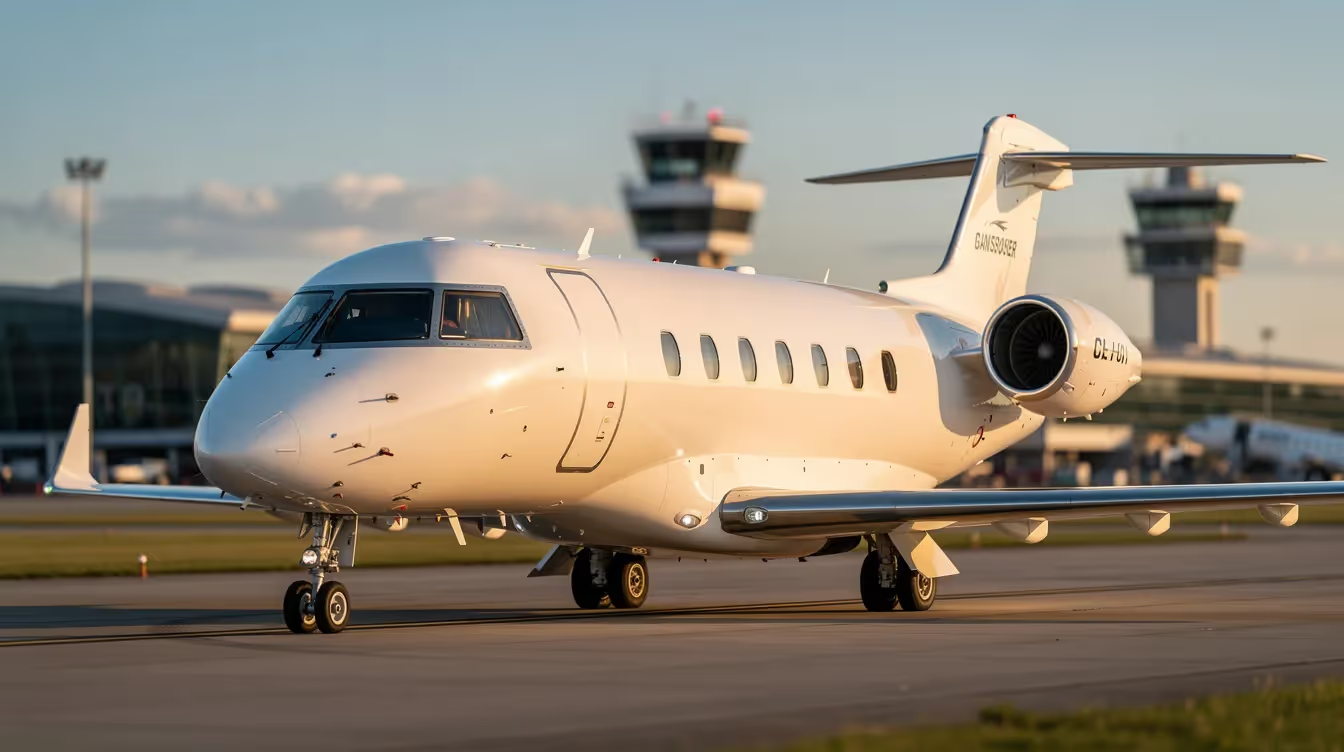
The Bombardier Challenger 600 series is a cornerstone of private jet aviation, known for its spacious cabin, reliable performance, and versatility. Since its introduction in 1980, the CL 600 Bombardier has set new standards for comfort and efficiency in business jet travel. This guide explores the history, design, performance, and chartering options of the Challenger 600 family, highlighting why it remains a popular choice for private jet travelers worldwide. Whether for business or leisure, the Challenger 600 series offers a compelling blend of range, cabin space, and operational economy, accessible through platforms like Jettly that simplify private jet charter booking.
The cl 600 bombardier story began with the Bombardier Challenger 600, a wide-cabin business jet that entered service in 1980 and shaped the Challenger 600 series.
The original production version used twin Avco Lycoming ALF-502L turbofans, a supercritical wing, and a spacious walk-around cabin typically fitted for 8–12 charter passengers.
Later new models, including the 601, 604, 605, and 650, improved range, avionics, reliability, and comfort.
Jettly gives travelers access to Challenger aircraft through digital search, transparent pricing, and on-demand booking.
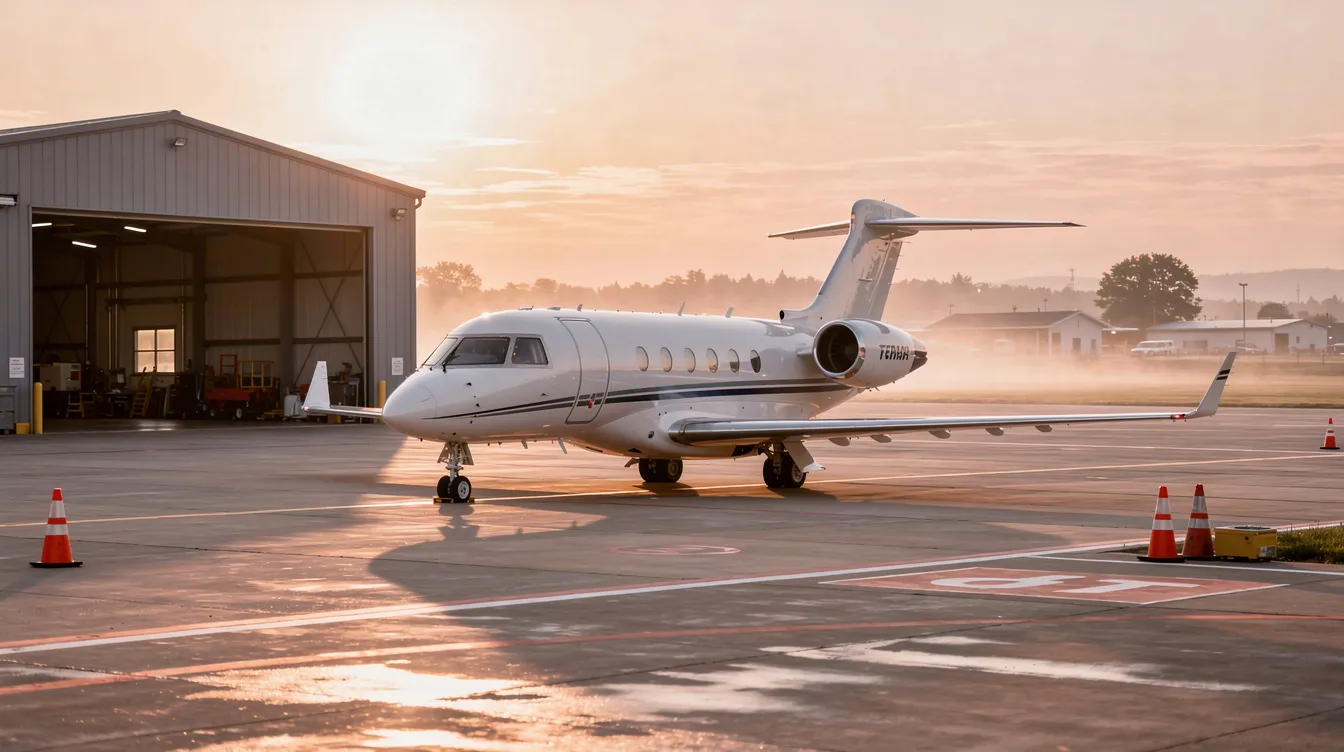
The Bombardier Challenger 600, also called the CL 600, is a large-cabin private jet originally developed by Canadair and later supported by Bombardier Aerospace. The first prototype made its maiden flight in November 1978, and type certification from Transport Canada and the FAA followed in 1980.
Production ran from 1978 to 1982, with about 81 aircraft built. The Challenger 600 was 68 feet 5 inches in length, with a wingspan of 64 feet 4 inches. It became the first production model of the Challenger series and the base for the 601, 604, 605, and 650.
Compared with other private jets of its era, the CL 600 Bombardier stood out for its widened fuselage, unusually wide cabin, and early supercritical wing design. It helped pioneer the “wide-body” cabin concept in corporate aviation, giving passengers space closer to larger commercial aircraft than to many previous aircraft in its class.
The Challenger 600 is a large airframe with a T-tail, rear fuselage engine mounting, and a wing built for efficient medium-to-long trips. It features stand-up movement through the cabin, low noise and vibration levels, and a comfortable cabin for corporate travel or medical transport.
Cabin width is about 2.49 m, cabin height is over 6 feet, and cabin length is about 28 feet. The cabin has an unobstructed floor, enabling the walkabout cabin design. In a standard executive configuration, the cabin is divided into a forward galley and two seating zones: often a four-chair club section and a conference grouping with a divan that can convert into a bed.
The interior includes fully reclining and swiveling chairs, foldaway tables, lighting controls, cabin walls designed for acoustic comfort, and wardrobes for storing hand luggage. The galley systems are robust, with full-sized ovens and comprehensive water management. This spacious layout also supports medical evacuations by integrating stretchers and medical equipment.
The CL 600 is powered by twin Avco Lycoming ALF-502L turbofans. Each engine provides 7,500 pounds of thrust, enabling efficient flight for such an aircraft. Its maximum range is approximately 2,800 to 3,000 nautical miles, depending on payload and passenger configuration. The service ceiling is 41,000 feet, and the maximum cruise speed is Mach 0.83. Some references describe the broader Bombardier Challenger 600 family as offering up to 4,000 nautical miles, allowing transcontinental flights across North America and direct flights between major European cities, which makes specialized tools like Jettly’s airport locator platform for private jet charter useful when planning routes into secondary airports.
At MTOW and sea level, the Challenger 600 can take off in 5,684 feet. For missions under 800 nautical miles, it may require 3,500 to 4,000 feet. Landing distance is about 3,050 feet, helping it reach smaller regional airports.
Its dual-channel Sperry SPZ-600 automatic flight control system includes a flight director and air data computers. The aircraft is certifiable for Category 3A automatic landings. The flight control system has significant redundancy, including three individual hydraulic systems, maintaining control over key flight surfaces even after the complete failure of one actuator. Standard avionics include Primus 400 weather radar, Marconi-built solid-state instrument displays, and a Collins Proline 1 radio set, with optional long-range radio-based navigational aids and other backup power systems, sometimes described alongside four backup power systems in fleet documentation.
The Challenger 600 series originated from a concept developed by Bill Lear in the late 1970s. It was initially called the Learstar 600 before Canadair acquired the rights in 1976 and rebranded it as the Challenger 600. In simple terms, Lear lacked the production resources to bring it to a viable level, and Canadair purchased the idea, then redesigned it with a wider fuselage, a new tail, and a refined wing.
The first prototype flew in 1978, while the second and third prototypes supported testing in 1979. The aircraft entered service in 1980. The Canadian government later sold Canadair to Bombardier in 1986, bringing the program under Bombardier Aerospace.
By 1982, Canadair had begun promoting a new model, the CL-601, with upgraded engines. Feedback from charter operators and corporate flight departments pushed the shift toward General Electric CF34 power, better fuel burn, and more reliable dispatch. Today, aircraft such as Jettly’s Challenger 601 private jet for rent continue that legacy in charter operations. Early operators were concentrated in North America, with aircraft also used in South America, Africa, and Asia by corporations, charter companies, and government officials.
“Challenger 600 series” is the umbrella term for several generally similar but progressively improved jets.
|
Variant |
Key points |
|---|---|
|
CL 600 / CL-600-1A11 |
Original Lycoming-powered version, produced 1978–1982. Known for its wide cabin, supercritical wing, and payload capacity. |
|
Challenger 601 |
Introduced CF34 engines from 1982, winglets, improved fuel efficiency, and better hot-and-high performance. Modern charter examples include aircraft similar to Jettly’s Challenger 605 rental jet. |
|
Challenger 604 |
Launched in 1995 with upgraded CF34 engines, higher fuel capacity, higher MTOW, and a range of nearly 4,000 nm in favorable conditions. |
For travelers who need a large-cabin business jet without ownership, the CL 600 Bombardier family is a practical option. Jettly connects users with Challenger aircraft worldwide through a digital marketplace that supports instant pricing where available, route searches, and online booking, drawing on a global inventory of private charter aircraft across all major categories.
On Jettly, a Bombardier Challenger, Challenger 600, 601, 604, 605, or 650 is often configured for 8–12 passengers. Common missions include New York–Los Angeles, Toronto–Vancouver, New York–Caribbean routes, and London–Dubai. These routes show why range, cabin space, and a quiet work setting matter.
The process is straightforward:
Enter route, date, and passenger count.
Compare jets by range, seating, baggage space, and estimated cost using tools such as Jettly’s private jet charter cost estimator.
Review amenities such as Wi-Fi, power, catering, and aft end lavatory layout.
Book on-demand or consider Jettly private jet memberships for more predictable costs.
Learn more about Jettly’s charter options at https://www.jettly.com.

Travelers often compare the CL 600 Bombardier family with light, midsize, and other large-cabin jets.
|
Aircraft type |
Cabin size |
Typical passengers |
Approx. range |
Hourly charter estimate |
|---|---|---|---|---|
|
Challenger 600/650 |
Wide, stand-up cabin |
8–12 |
2,800–4,000 nm |
$6,000–$9,000+ |
|
Midsize jet, such as Citation XLS |
Smaller cabin |
6–8 |
2,000–2,500 nm |
$4,000–$6,000 |
|
Light jet, such as Learjet 45 |
Compact cabin |
4–6 |
1,500–2,000 nm |
$3,000–$4,000 |
Travelers weighing these options often look at overall trip budgets, and resources like Jettly’s guide to affordable private jet charter pricing can help frame realistic expectations.
A Challenger makes sense for groups of 8–12, nonstop legs above 2,500 nm, heavy baggage, or in-flight meetings. A smaller aircraft may be better for short regional hops with two to four passengers. Jettly helps compare the Challenger against other supercritical wings, smaller jets, turboprops, and other private jets before booking.
The Challenger series is known for low direct hourly operating costs among large jets because of extended maintenance intervals and affordable parts availability. Operating costs for a Bombardier Challenger 600 series jet are approximately $4,000 per flight hour, though charter pricing also includes crew, fuel, repositioning, airport fees, and demand; Jettly’s jet card flight cost estimator helps frequent flyers translate these variables into predictable program pricing.
Scheduled maintenance for the Challenger 600 is performed every 200 flight hours or six months. Major inspections are required every 96 months, and the landing gear overhaul is also required approximately every 96 months, at a cost of around $110,000.
Safety depends on operator discipline. Charter operations must meet rules such as FAA Part 135 or EASA equivalents. The Challenger 600’s assisted control architecture, redundant hydraulics, thrust reversers, weather radar, and automatic landings capability support safe operations when properly maintained. By 2019, public summaries noted about 18 hull-loss accidents across the broader fleet, which is why Jettly emphasizes regulated operators, current records, and safety audit information such as ARGUS or Wyvern,, where available, both on partner profile pages and operator overviews like Dexter Air Taxi’s private jet services.
Many charter aircraft have upgraded avionics, connectivity, and cabin systems, improving situational awareness and operational efficiency during long-range cruise speed operations.
The CL 600 Bombardier family fits executive teams, families, sports staff, medical teams, and event groups, including travelers who may wish to lower per-seat costs through crowdsourced private jet flights and shared empty seats.
Corporate roadshow: 10 passengers fly Teterboro to Van Nuys, using the entire length of the cabin for meetings, rest, and private discussion.
Family vacation: Toronto to Cancun on a Challenger 604 or 605, with space for hand luggage, golf clubs, and direct routing without airline connections, often enhanced by bespoke in-flight dining through Jettly Eats private jet catering.
European business trip: London to Istanbul or Geneva to Dubai, where the range margin and a consistent cabin layout simplify planning.
Specialized missions: The Challenger 600 has significant payload capacity, making it popular for corporate travel and specialized missions such as medical transport.

Most charter layouts carry 8–12 passengers. Later Challenger 604, 605, and 650 cabins often use club chairs, divans, and conference seating rather than maximum-density seating, while larger derivatives such as the Challenger 850 business jet can stretch capacity for bigger groups.
The early CL 600 usually supports about 2,800 to 3,000 nautical miles, depending on payload and conditions. Newer 604, 605, and 650 models can approach 3,800 to 4,000 nautical miles in favorable configurations, and some operators field larger platforms like Jettly’s Challenger 850 charter aircraft for extended-range missions with higher seating counts.
Yes, within limits. It needs more runway than a light jet, but the 3,050-foot landing distance and strong regional-airport capability make it flexible for many secondary airports, especially when compared with regional types like the Canadair CRJ-200 that typically serve scheduled airline routes.
Often, yes. Many 604, 605, and 650 aircraft have Wi-Fi, power outlets, updated entertainment, and refurbished interiors. Earlier CL 600 and 601 aircraft vary by refurbishment; across the broader market, a wide range of charter airlines and private operators now prioritize modern cabins and connectivity.
It usually costs more per hour than light or midsize jets, but the per-passenger value can be strong when the cabin is filled. Jettly’s instant pricing, supported by its private jet charter cost estimator tool, helps compare options for each route and date.
The Bombardier Challenger 600 series remains relevant because it combines a proven airframe, wide cabin, strong range, and support from Bombardier Aerospace. The original CL 600 established the platform, while the 604, 605, and 650 added modern avionics, better reliability, and improved passenger comfort.
For travelers comparing the CL 600 Bombardier family with other jets, Jettly makes it easier to review aircraft, pricing, amenities, and routing without buying a jet card or committing to ownership.
Ready to experience private travel on your terms? Explore Bombardier Challenger 600 series flights or request a quote at https://www.jettly.com.
Share this post:
Jay Franco Serevilla
May 24, 2026
|
5
min read
Discover tips and trends in the industry.

5
min read
When Do Flights Have Sales? Timing, Patterns, and How to Catch the Best Deals
Understanding flight sales can lead to significant savings for travelers. Airlines typically offer promotions during specific months and weekdays, with the best deals often found for off-peak travel. By being flexible with travel dates and monitoring sales, both commercial and private jet travelers can secure the best prices.
Read More
5
min read
Do Travel Agents Get Discounts on Flights? (And How That Compares to Private Jet Booking)
Travel agents do receive discounts on flights, but these are not as significant or universal as many believe. The landscape has changed, with most agents relying on service fees and negotiated rates rather than deep discounts. Private jet booking platforms like Jettly offer transparent pricing and alternatives for travelers seeking flexibility and convenience.
Read MoreStay updated with our latest insights and tips to elevate your journey with us.
MEMBERSHIPS AND ASSOCIATIONS



Disclaimer: Jettly operates as a charter broker, offering access to a global digital jet charter marketplace. Jettly is not a direct air carrier and does not own or operate aircraft. All advertised flights are conducted by third-party air carriers that are fully licensed and hold the appropriate Part 135 or Part 121 certifications issued by the Federal Aviation Administration (FAA) or equivalent regulatory authorities under U.S. or foreign law. Jettly complies fully with the U.S. Department of Transportation's Part 295 and Part 298 Charter Broker regulations. Jettly does not carry additional liability insurance. Passengers are covered by aircraft operator insurance. TICO: 50023770


