


Login
Get Instant Pricing On 23,000+ Aircraft

>
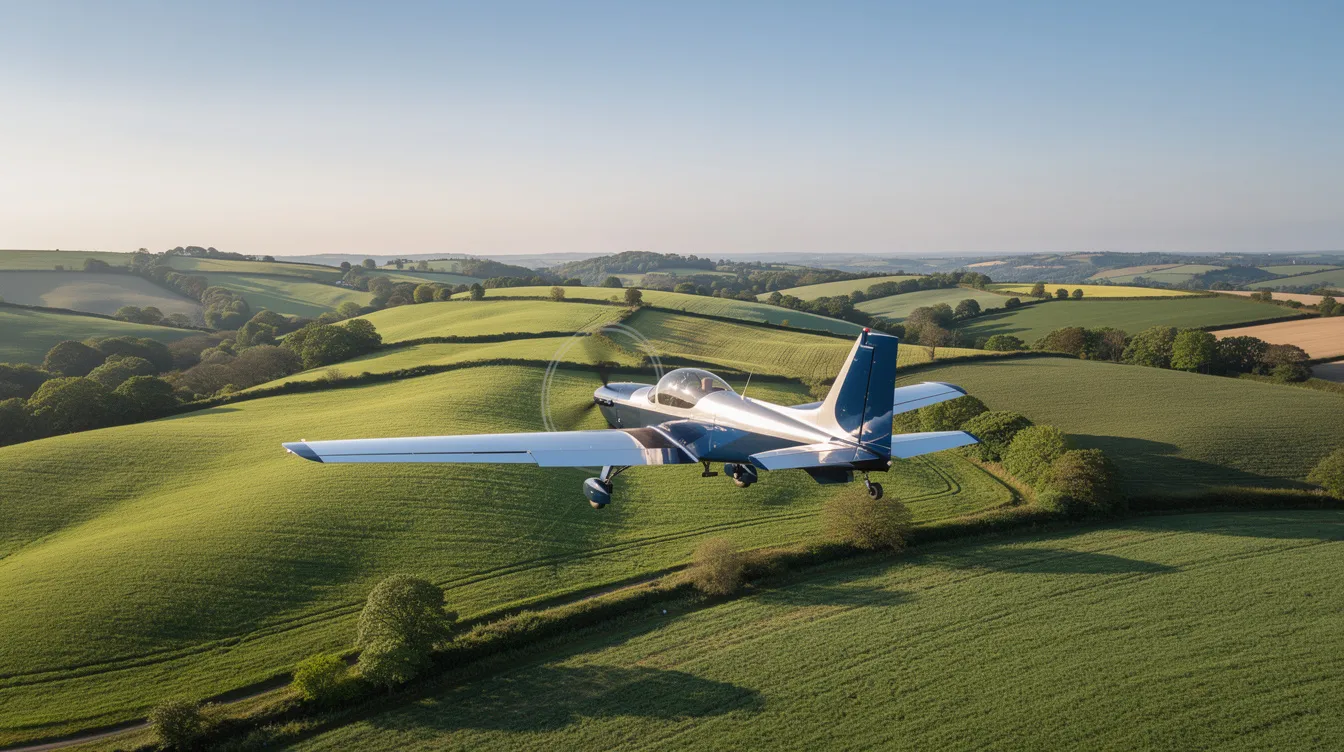
The Cirrus SR22 is a high-performance, four-to-five-seat, single-engine composite piston aircraft that reshaped expectations for personal and regional private flying. Certified in November 2000 and entering production in 2001, it has set the standard for speed, safety technology, and cabin comfort in general aviation. Its composite construction maintains lightweight strength and high structural integrity, while features like the Cirrus Airframe Parachute System (CAPS) have made it one of the best-known aircraft in its class.
For private travelers, frequent flyers, business executives, and prospective owners comparing efficient alternatives to larger turboprops or light jets, the SR22 stands out as a cost-conscious way to access modern private air travel without giving up safety or performance. Whether you fly one yourself or book a charter through a platform like Jettly, understanding the SR22 means looking at its design, model generations, performance, avionics, safety systems, cabin experience, operating strengths and tradeoffs, and how it compares with other aircraft used for regional trips.
The Cirrus SR22 is a high-performance, four-to-five-seat, single-engine, composite airplane first certified in November 2000. It has been the best-selling four- to five-seat aircraft since 2004, with Cirrus producing its 11,000th SR-series aircraft by December 2025.
Its signature safety technologies include the Cirrus Airframe Parachute System (CAPS), electronic stability protection, and Safe Return autoland in later generations. CAPS has saved over 400 lives to date.
Major variants span from the original SR22 through the SR22 G2, G3, G5 (introduced in 2013 with a gross weight of 3,600 lb), G6 (launched in 2017 with major avionics upgrades), and G7 (announced in January 2024 with interior overhauls), plus turbocharged SR22T models introduced in 2006 with a certified ceiling of 25,000 feet.
SR22s serve diverse real-world roles: personal travel, air taxi operations, advanced flight training, law enforcement, and record flights.
For travelers exploring private flight options, the SR22 represents a cost-effective entry point into charter aviation, especially for regional trips. Jettly's marketplace lets clients compare SR22-class piston aircraft alongside turboprops and jets to find the right fit.
The Cirrus SR22 is a composite, four-to-five-seat single-engine piston aircraft manufactured by Cirrus Aircraft, a company founded in 1984 and headquartered in Duluth, Minnesota. Its fixed tricycle landing gear design simplifies operation compared to retractable-gear aircraft, eliminating gear-up landing risks. The SR22 features modern cockpit technology including Garmin Perspective+ avionics, promoting high-speed performance and advanced safety technology not found in legacy aircraft.
Founders Dale and Alan Klapmeier originally built the company around kit airplanes before pivoting to certified aircraft in the mid-1990s. The smaller SR20 came first, and the SR22 evolved from it with a larger airframe and a more powerful 310 hp Continental IO-550-N piston engine.
The SR22 is designed for personal and business travel, as well as advanced flight training. It operates at a typical range of up to 1,200 nautical miles with a maximum cruise speed of about 183 knots on normally aspirated models.
For private charter users, the SR22 is relevant because it operates efficiently on regional hops, accesses smaller airports, and costs far less per hour than turboprops or jets. For many travelers exploring affordable aircraft rental options, that makes it a logical entry point into private flying.
The original SR22 received FAA certification in late 2000. The Cirrus design featured a 310 hp Continental IO-550-N engine, fixed tricycle landing gear, composite airframe, and a wide four-to-five-seat cabin. Composite construction allows the SR22 to maintain a lightweight and highly durable structure while enabling aerodynamic shaping that aluminum structures can't easily match.
The fixed gear simplifies operation compared to retractable-gear aircraft, eliminating gear-up landing risk entirely. The aircraft features a five-seat cabin arrangement on later models.
Here is how the SR series aircraft evolved generation by generation:
G1 (2001–2003): The baseline SR22 with Avidyne Entegra avionics, CAPS from day one, and a max gross weight around 3,400 lb.
G2 (2004–2007): The SR22 G2 was introduced in 2004 with improved cabin ergonomics, dual alternators as standard equipment, air conditioning options, and a higher CAPS deployment speed limit.
G3 (2008–2012): Garmin Cirrus Perspective avionics replaced Avidyne. The turbocharged SR22T entered around 2006–2010 with a certified ceiling of 25,000 feet. Known icing (FIKI) approval arrived.
G5 (2013–2016): Cirrus introduced the SR22 G5 in 2013 with a gross weight of 3,600 lb (1,633 kg), a "+1" fifth seat option, improved CAPS canopy, and swept propeller blades.
G6 (2017–2023): Launched in 2017 with major avionics upgrades including Garmin Perspective+ avionics, LED lighting, stronger sound insulation, modern connectivity via Cirrus IQ, USB-C charging, and angle-of-attack indicators.
G7 (2024+): Announced in January 2024 with a major interior overhaul and avionics upgrades. The G7+ variant, announced in 2025, added Safe Return Emergency Autoland as standard—making it the first piston aircraft with FAA-approved autoland capability.
A 2003 SR22 is reportedly displayed in the Smithsonian National Air and Space Museum (Steven F. Udvar-Hazy Center), recognizing the model's impact on modern general aviation design.
The core powerplant on non-turbo SR22 models is a Continental IO-550-N—a fuel-injected, horizontally opposed piston engine producing 310 hp at 2,700 rpm. The Cirrus SR22 balances speed and fuel efficiency for a single-engine plane.
Key performance figures for a mid-generation SR22 (G5/G6):
Max cruise speed: About 183 knots (75% power)
Typical range: Up to 1,200 nautical miles
Service ceiling: ~17,500 ft (normally aspirated)
Takeoff roll: ~1,082 ft
Landing over a 50 ft obstacle: ~1,200 ft
Rate of climb: 1,200 to 1,400 feet per minute
Stall speed (flaps down): 60 knots
Useful load: ~1,328 lb
These short-field numbers allow operations from many regional and municipal airports where jets cannot go. Compared with other single-engine piston aircraft like the Cessna 182 (~145 KTAS) or Beech Bonanza (~165 KTAS), the SR22 is notably faster.
|
Feature |
Cirrus SR22 |
Cessna 400/TTx |
Beechcraft Bonanza |
Pilatus PC-12 (Turboprop) |
|---|---|---|---|---|
|
Engine Type |
Single piston |
Single piston |
Single piston |
Single turboprop |
|
Cruise Speed (Knots) |
~183 (normally aspirated), 211 (turbo) |
~235 |
~165 |
~280 |
|
Pressurized Cabin |
No |
No |
No |
Yes |
|
Safety Features |
Cirrus Airframe Parachute System (CAPS), Electronic Stability Protection, Safe Return Autoland |
None |
None |
None |
|
Seating Capacity |
4–5 |
4 |
4–6 |
Up to 9 |
|
Typical Charter Cost per Hour |
Lowest tier |
Similar |
Similar |
2–3 times higher |
|
Range (Nautical Miles) |
Up to 1,200 |
~1,200 |
~850 |
~1,800 |
|
Service Ceiling (Feet) |
~17,500 (normally aspirated), 25,000 (turbo) |
~20,000 |
~18,500 |
30,000 |
|
Landing Gear |
Fixed tricycle |
Retractable tricycle |
Retractable tricycle |
Retractable tricycle |
|
Avionics |
Garmin Perspective+ glass cockpit |
Garmin G1000 or equivalent |
Garmin G1000 or equivalent |
Advanced turboprop avionics |
|
Cabin Comfort |
Spacious, air conditioning options |
Spacious, air conditioning |
Comfortable, air conditioning |
Large cabin, pressurized |
|
Typical Use |
Personal, business, training, charter |
Personal, business |
Personal, business |
Executive transport, cargo |
Pilots note relatively high wing loading, which provides a smoother ride in turbulence but means monitoring airspeed closely on approach. On hot days or at high altitudes, managing engine cooling requires attention, as most models lack cowl flaps.
Cirrus began offering turbocharged SR22 models around 2006 using twin turbonormalizers and intercoolers, maintaining sea-level power at higher altitudes. The factory-turbocharged SR22T arrived around 2010 with a 315 hp Continental TSIO-550-K engine. The turbocharged SR22T has a certified ceiling of 25,000 feet and a maximum cruise speed of 211 knots.
Built-in oxygen systems and air conditioning are standard on many SR22Ts. For charter-style missions, the turbo advantage is significant: better true airspeed at altitude, stronger performance in hot and high conditions, and the ability to fly above much of the weather limiting non-turbo models, especially when compared with other private charter aircraft categories.
In 2009, Cirrus earned Flight Into Known Icing (FIKI) approval for the SR22 and SR22T using a TKS fluid ice protection system, which pumps de-icing fluid through porous leading edges on wings, tail, and propeller.
While FIKI-equipped models allow dispatch into forecast known icing conditions, charter operators follow strict risk management guidelines. Weather remains a factor in piston aircraft incidents, and conservative flight planning is standard practice.
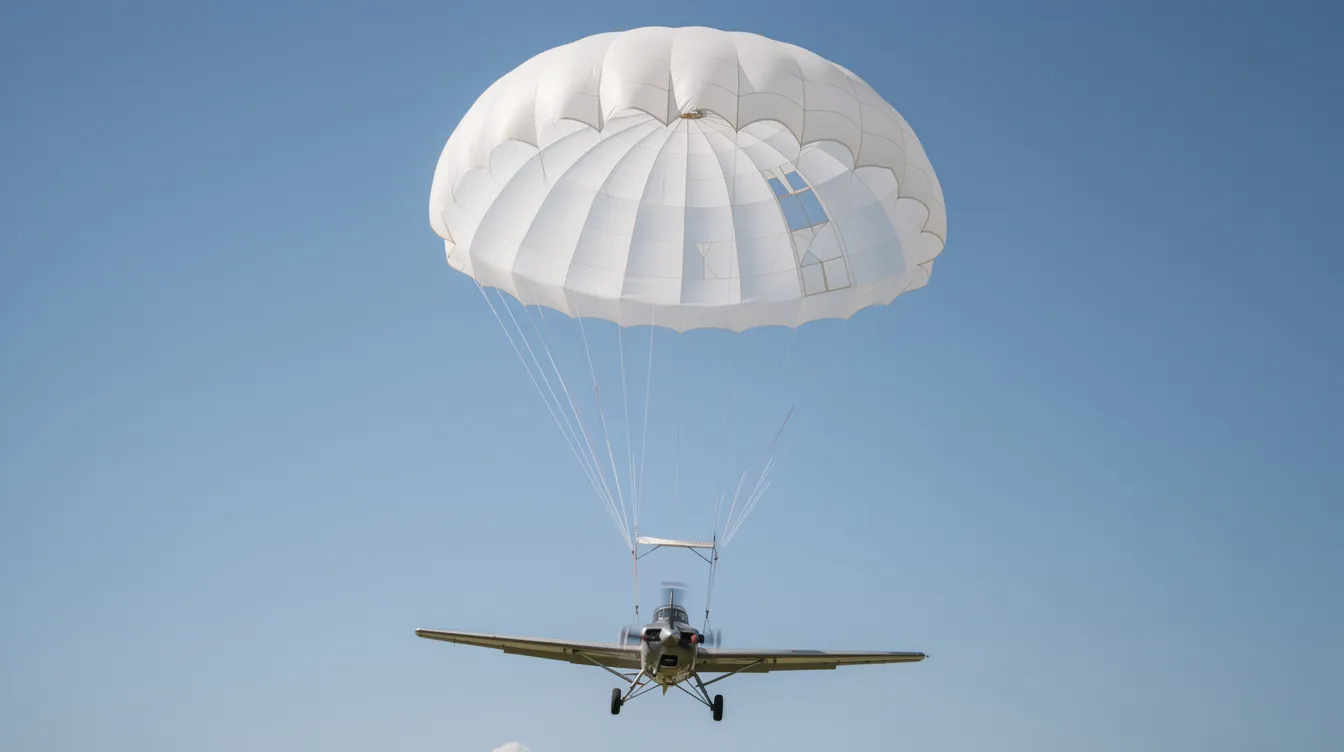
The Cirrus Airframe Parachute System (CAPS) is a rocket-deployed canopy integrated into the fuselage that can lower the entire aircraft gently in emergencies such as structural damage, loss of control, or engine failure over hostile terrain.
As of September 2018, CAPS was deployed 79 times with 163 survivors. Since then, deployments have continued to climb, with the system credited for saving over 400 lives across the SR series fleet. In 2021, Cirrus issued a service bulletin after a failed CAPS deployment, demonstrating the company's commitment to continuous improvement.
The SR22's fatal accident rate improved from 1.01 per 100,000 flight hours in 2013 to 0.42 per 100,000 flight hours in 2014, one of the industry's lowest, attributed to better training and avionics like electronic stability protection (ESP).
ESP, integrated into Garmin Perspective and later avionics suites, provides gentle automatic control inputs to prevent overspeed, stalls, or extreme bank angles while allowing pilot override. Newer SR22 models include advanced safety features and sophisticated automation.
The Safe Return Emergency Autoland system on G7+ models allows a passenger to press a single button that triggers automated navigation to the nearest suitable runway, coordination with air traffic control, approach, landing, braking, and engine shutdown—adding a new safety tier beyond the parachute.
Combined with synthetic vision, traffic alerts, terrain warning, and situational awareness tools, the SR22 is one of the most safety-focused piston aircraft in general aviation.
The SR22's avionics story began with the Avidyne Entegra—one of the first fully integrated glass cockpits in a piston aircraft when it debuted in 2003. Moving maps, synthetic terrain views, and digital engine gauges replaced analog dials, reducing pilot workload and improving situational awareness.
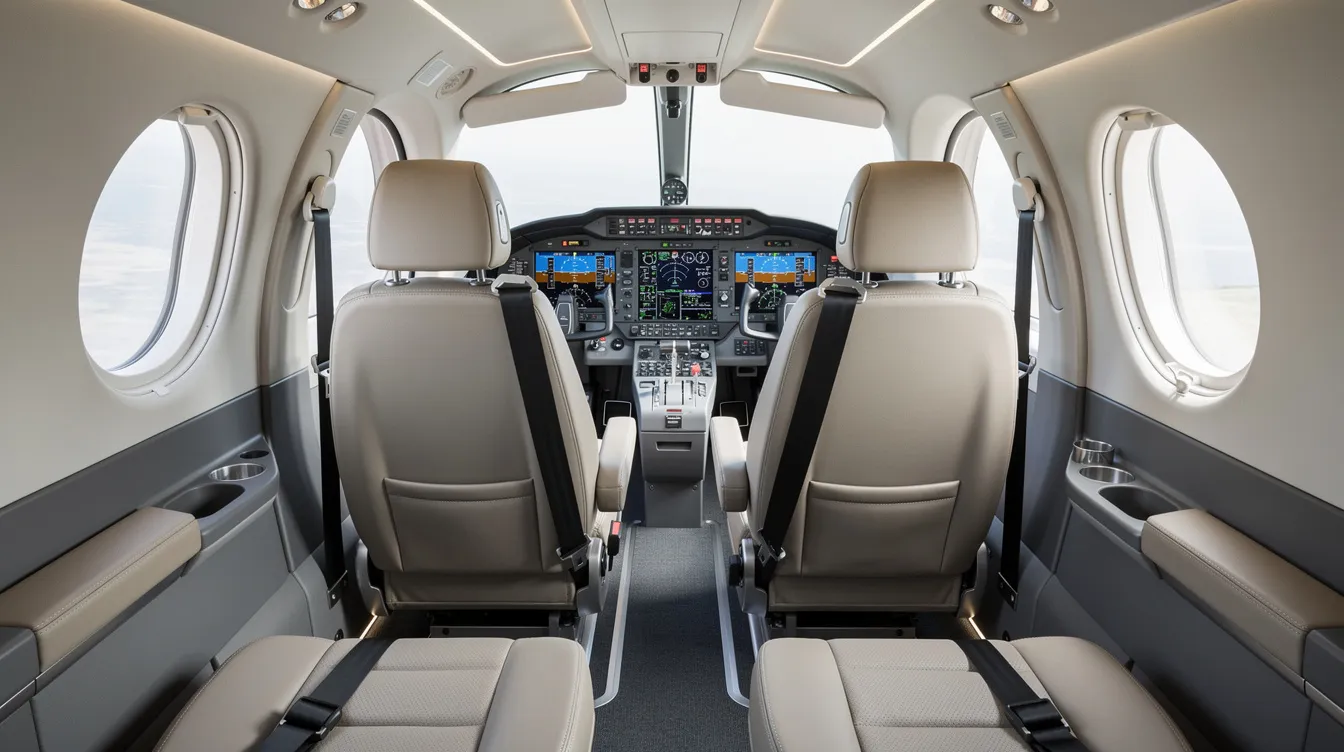
In 2008, Cirrus shifted to the Garmin Cirrus Perspective system, later upgraded to Perspective+ and Perspective Touch+. The SR22 features modern cockpit technology including Garmin Perspective+ avionics with integrated autopilot, synthetic vision, flight envelope protection, and datalink weather—essential tools for IFR operations and flight planning.
The Cirrus IQ app, introduced in the mid-2010s and continuously updated, lets owners and operators check aircraft status from a smartphone: GPS location, fuel quantity, oil temperature, battery voltage, oxygen levels, and recent flight hours. For an airplane that can sit at remote airfields, this connectivity is a practical advantage.
For charter operators listed on platforms like Jettly, these monitoring tools support proactive maintenance and dispatch reliability. When a client books an SR22 flight, the operator already knows the plane's status before heading to the airport and can plan around nearby fields using an airport locator tool.
The Cirrus SR22 offers a spacious and luxurious cabin experience that surprises people accustomed to cramped cockpit layouts in traditional piston aircraft. The cabin measures roughly 49 inches wide, with large upward-and-forward-opening doors that ease boarding compared to climbing over a wing spar.
Later G5 and G6 models added the "+1" fifth seat option, air conditioning on many configurations, ergonomic leather seating, sound insulation, and USB power outlets. The SR22 is known for luxury, high speed, and safety features—a combination that helps passengers new to small aircraft feel at ease.
For private travelers comparing an SR22 charter to regional commercial flights, the benefits are tangible: a quieter, more personal environment, direct routing, customized departure times, and the ability to bring a family of four travelers, colleagues, or pets.
Jettly clients booking an SR22 flight typically experience short pre-flight briefings, access to smaller airports closer to their final destination, and tailored snacks or light catering where feasible through dedicated in‑flight catering services.
That said, the cabin has limitations versus light jets: passengers sit lower, turbulence is more noticeable at lower altitudes, baggage volume is modest when all seats are occupied, and nonstop legs max out around 1,000–1,200 nautical miles. Jettly's platform can address this by proposing alternative aircraft when the mission calls for more capability.
Several operators have built businesses around the SR22. ImagineAir, a US-based air taxi service active from 2007 to 2018, used SR22 aircraft for regional point-to-point travel. Fly Aeolus operates a European fractional and on-demand fleet of Cirrus SR aircraft for short business hops, sitting alongside many other charter airlines and private operators in the broader on-demand aviation ecosystem. Military organizations including the French Air Force and Royal Saudi Air Force have used SR20 and SR22 models for training.
Law enforcement agencies and survey companies employ the SR22 for patrol, mapping, and liaison flights. The airplane has also been the platform for solo circumnavigation attempts and long-distance charity flights, demonstrating its endurance when properly managed.
The SR22's accident record improved significantly over its production life. Early fatal accident rates (2001–2010) were higher, partly because Cirrus pilots were not always trained to deploy CAPS in time. As transition training programs matured and avionics like ESP became standard, rates declined sharply. Pilot training around CAPS proved to be the single biggest factor in reducing fatalities.
Air facts commentary from experienced operators paints a balanced picture: the SR22 delivers exceptional speed, safety technology, and cabin comfort. But it has quirks—such as free castering nose wheels requiring differential braking for ground handling, modest braking capacity, and engine cooling needs on climb. These are manageable issues for trained crews.
Advantages:
Cruise speeds of 183 knots (normally aspirated) to 211 knots (turbo) - fast for any single-engine piston type
Relatively low fuel burn, often under 15–18 gallons per hour at economy cruise
Advanced avionics for IFR flight, including moving maps and synthetic vision
CAPS as a unique safety net among single-engine piston aircraft
Comfortable seating, climate control, low vibration from composite construction
Modern styling that builds passenger confidence
Drawbacks:
Differential braking instead of nosewheel steering complicates taxiing
Modest braking capacity compared with some retractable-gear types
No rudder trim on most models, increasing pilot workload in climb
Complex composite repairs can be more expensive and difficult compared to traditional aluminum aircraft
CAPS parachute repack intervals, avionics upkeep, and turbo engine maintenance add to ownership costs
Cirrus SR22 prices range from $199,900 to $1,525,000 depending on year, generation, and equipment, with 361 listings currently available
For charter decisions on Jettly, the SR22 makes sense when carrying 2–3 passengers on sub-1,000 nm regional hops in day VFR or light IFR conditions. When weather deteriorates, payload increases, or schedule rigidity matters, clients are better matched to turboprops or light jets; understanding how many passengers different private jets can carry helps frame those upgrades. Jettly's platform handles this comparison directly.
Some operators on Jettly's marketplace use Cirrus SR22 aircraft for on-demand charter, air taxi, and shuttle services. Typical routes include short business hops—think Phoenix to Las Vegas or similar regional pairings where the SR22's speed and small-airport access create competitive trip times versus commercial options, especially when you account for total trip cost using a private jet charter cost estimator.
The real market for SR22 charters centers on 1–3 passengers with light luggage on flights of 1–3 hours. Compared with light jets, hourly operating costs are significantly lower. For clients who don't need jet-level speed or cabin size, this is just such an airplane—capable, comfortable, and cost-effective, whether booked as a full charter or part of shared charter flight arrangements.
Jettly's instant pricing and global aircraft inventory let users filter by aircraft category—single-engine piston, turboprop, or jet—and see SR22-class options side by side with alternatives for a given route and date. For anyone curious about how private jet charter works, the booking process is the same regardless of aircraft size, and tools that explain affordable private jet charter costs make budgeting more straightforward.
Learn more about Jettly's charter options and fleet categories at https://www.jettly.com, or use the dedicated jet card flight cost estimator to price frequent one-way trips.
|
Feature |
Cirrus SR22 |
Cessna 400/TTx |
Beechcraft Bonanza |
Pilatus PC-12 (turboprop) |
|---|---|---|---|---|
|
Engine type |
Single piston |
Single piston |
Single piston |
Single turboprop |
|
Cruise speed |
~183 KTAS |
~235 KTAS |
~165 KTAS |
~280 KTAS |
|
Pressurized |
No |
No |
No |
Yes |
|
Parachute |
CAPS standard |
No |
No |
No |
|
Seats |
4–5 |
4 |
4–6 |
Up to 9 |
|
Typical charter cost/hr |
Lowest tier |
Similar |
Similar |
2–3× higher |
The SR22's strengths—CAPS, glass cockpits, and overall cabin refinement—set it apart from other prop planes in its class. But when missions demand pressurization, higher airspeed, or heavy payload, turboprops like the PC-12 are a clear upgrade.
By no means is the SR22 a long shot for serious travel. It excels as a feeder to larger hubs, a flexible day-trip platform between nearby cities, or an access tool for remote airfields with shorter runways where jets aren't practical, and can even participate in crowdsourced and shared private flights to make regional missions more economical.
Travelers should consider their typical group size, distance, and flexibility, then use Jettly's tools or flight advisors to decide whether a Cirrus SR22 or another category fits a specific itinerary.
Below are answers to common questions about the SR22 that supplement the detail covered above, with practical context for charter and private travel decisions.
Statistically, commercial airlines still hold the lowest accident rate in aviation. Within general aviation, though, the Cirrus SR22 has seen significant safety improvements. CAPS, electronic stability, and structured training programs have driven the fatal accident rate down to 0.42 per 100,000 flight hours as of 2014. When flown by professional crews under Part 135 commercial standards, risk is further managed through maintenance requirements, recurrent training, and operational oversight. Families booking through Jettly should review operator safety ratings, pilot experience, and whether the aircraft is equipped with CAPS and modern avionics, just as they would when evaluating the best planes for a family of four.
A normally aspirated SR22 at economy cruise can cover up to about 1,200 nautical miles with standard fuel reserves—though practical charter legs are often planned at 400–700 nautical miles to allow for weather deviations and comfortable fuel margins. Winds aloft, payload, and power settings all affect range. Jettly's trip planning and operator input factor in these variables when estimating routing and potential fuel stops for any SR22-based itinerary, including which fields are available along the way via an airport locator tool.
Only FIKI-equipped SR22 and SR22T models with certified TKS ice protection systems should fly into forecast icing. The TKS system pumps de-icing fluid through porous leading edges and prop slingers to shed or prevent ice on critical surfaces. Even in FIKI aircraft, operators dispatch conservatively. For more robust winter performance, Jettly may recommend turboprops or light jets as alternatives during flight planning.
The SR20 is the smaller, lower-power sibling with about 200 hp, slower cruise speeds, and lower useful load. The SR22 offers higher cruise speed, better climb performance, more range, and typically richer avionics and cabin options. For time-sensitive business or multi-passenger leisure trips, the SR22 is generally the better fit. On Jettly's marketplace, SR20s are less commonly offered for charter—clients typically see SR22-class aircraft or step up to turboprops and light jets.
Ownership involves significant capital: purchase prices for Cirrus SR22 models range from $199,900 to $1,525,000, plus hangar fees, insurance, maintenance, overhaul reserves, and CAPS repack costs. Chartering through Jettly means paying only for the flights you take, with no long-term commitment, capital risk, or scheduling burden. Frequent flyers can use private jet memberships or on-demand access to replicate many ownership benefits—flexibility, direct routing, privacy—while retaining the option to choose different aircraft categories as mission needs change.
The Cirrus SR22 remains a landmark in general aviation—a fast, comfortable single-engine piston aircraft with signature safety features including the Cirrus Airframe Parachute System, sophisticated avionics, and a global fleet exceeding 11,000 SR series aircraft. Cirrus Aircraft has produced the SR22 since 2001, and its influence extends to newer Cirrus models like the Vision Jet.
Its capabilities—180+ knot cruise, electronic stability, optional known icing systems, and Cirrus IQ connectivity—translate into real value for regional business trips and personal travel. For charter clients, the SR22 delivers just such an airplane experience: efficient, modern, and equipped with safety systems that no competitor in its class can match, particularly when paired with a NetJets alternative like Jettly for on-demand access.
Ready to see how an SR22-class aircraft compares to jets for your next trip? Explore flight options or request a quote at https://www.jettly.com.
Share this post:
Jay Franco Serevilla
Aug 2, 2026
|
5
min read
Discover tips and trends in the industry.
5
min read
Falcon 100: Specs, History, and Charter Guide
The Dassault Falcon 100 is a light-to-midsize business jet known for its speed and operational efficiency, ideal for short-to-medium-range travel. Produced from 1983 to 1989, it features a compact cabin accommodating up to six passengers and advanced avionics for its time. Despite its age, the Falcon 100 remains popular in the charter market, offering flexibility and access to smaller airports.
Read More
5
min read
Embraer Legacy 650: Longer-Range Business Jet for Global Charters
The Embraer Legacy 650 is a large-cabin business jet designed for long-range travel, accommodating up to 13 passengers with a range of 3,900 nautical miles. Ideal for transatlantic flights and corporate travel, it features a spacious three-zone cabin and advanced avionics for safety and efficiency. With its impressive baggage capacity and comfort, the Legacy 650 is a top choice for those seeking flexible private jet charters.
Read MoreStay updated with our latest insights and tips to elevate your journey with us.
MEMBERSHIPS AND ASSOCIATIONS



Disclaimer: Jettly operates as a charter broker, offering access to a global digital jet charter marketplace. Jettly is not a direct air carrier and does not own or operate aircraft. All advertised flights are conducted by third-party air carriers that are fully licensed and hold the appropriate Part 135 or Part 121 certifications issued by the Federal Aviation Administration (FAA) or equivalent regulatory authorities under U.S. or foreign law. Jettly complies fully with the U.S. Department of Transportation's Part 295 and Part 298 Charter Broker regulations. Jettly does not carry additional liability insurance. Passengers are covered by aircraft operator insurance. TICO: 50023770


