


Login
Get Instant Pricing On 23,000+ Aircraft

>
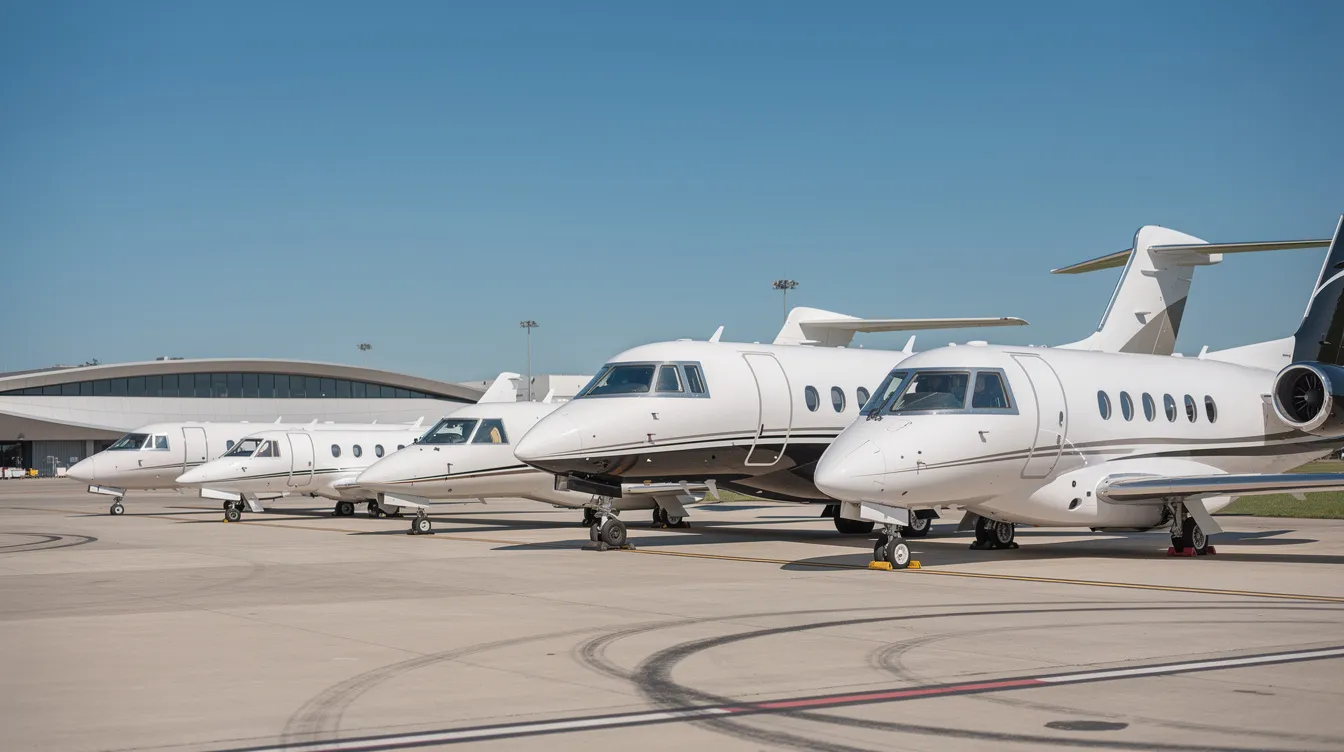
Finding a cheap private jet price might sound like an oxymoron, but 2026's charter market offers more cost-efficient options than most travelers expect. Whether you need a quick regional hop or a cross-country flight for a small team, the right combination of aircraft category, timing, and booking strategy can bring private aviation within reach. This guide breaks down real pricing by jet size, route, and trip type — so you can decide exactly where the value is.
This guide is designed for travelers, business professionals, and anyone curious about how to access private jet travel at the lowest possible cost.
When people search for a cheap private jet price, they usually mean one of two things: the lowest possible hourly charter rate for renting the entire aircraft, or the lowest acquisition and operating costs of owning one. In neither case does "cheap" mean luxury for pennies. It means getting the most efficient aircraft for a given mission at the lowest realistic price.
Private jet flights typically cost between $2,000 and $15,000+ per flight hour depending on aircraft size. Aircraft charter prices typically range based on size, route, and operational factors. Here are the 2026 benchmarks:
Very light jets: roughly $2,300–$3,500 per hour
Light jets: approximately $3,500–$5,500 per hour
Midsize jets: around $5,500–$8,000 per hour
Super-midsize jets: $7,500–$10,000 per hour
Large jets and ultra-long-range aircraft: $8,000–$18,000+ per hour
These rates are for chartering a private jet - meaning the entire aircraft, not per seat. A 7.5% federal excise tax applies to all U.S. domestic flights, and additional fees for landing, handling, and crew come on top. The total trip cost for chartering a private jet is typically 20% to 40% higher than base hourly rates once additional fees are included.
Jettly operates as a digital marketplace that surfaces the most affordable private jet options - including empty leg flights — in real time across a global fleet of over 20,000 aircraft.
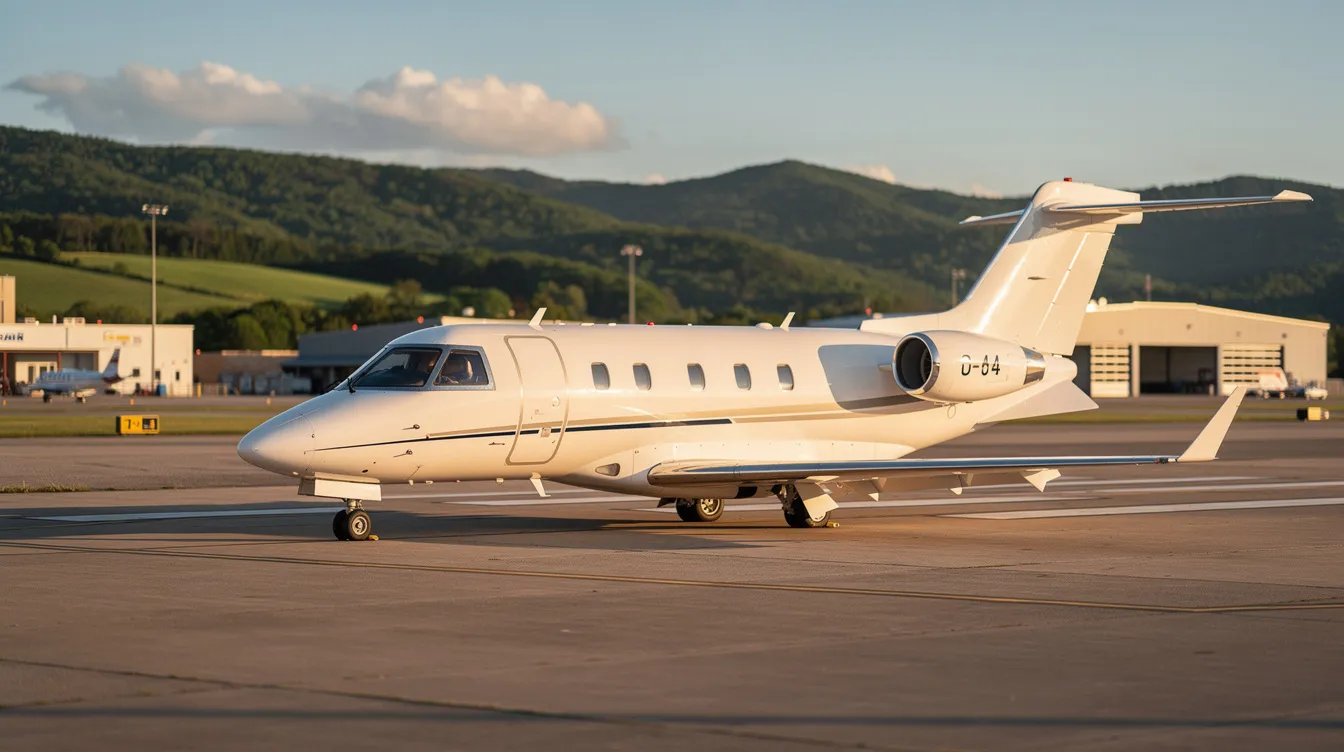
Total price is driven by the aircraft category, the distance flown, the trip profile (one-way vs. round trip), and a stack of operating costs that most first-time flyers don't anticipate. Booking private flights often involves additional charges for fuel, crew, and airport services that can shift a seemingly affordable quote significantly higher.
Here are the key cost drivers:
Flight time and distance: A 1-hour New York–Boston hop in a very light jet costs far less than a 6-hour New York–London transatlantic mission in a large cabin aircraft, even before per-hour rate differences.
Aircraft category and fuel burn: Larger, heavier jets consume more fuel per hour. A light jet burns roughly 150–200 gallons per hour; a heavy jet can exceed 350 gallons.
Crew costs: Pilot and crew salaries, duty-time regulations, and overnight expenses all factor into the quote. Longer trips or multi-day itineraries increase crew-related charges.
Maintenance and engine reserves: Operators build hourly maintenance reserves into their rates. More complex aircraft have higher direct operating costs.
Airport and landing fees: Busy primary airports charge significantly more than regional airports. De-icing in winter can add thousands.
Repositioning (ferry flights): If a jet must fly empty to reach your departure city, that cost may be passed to you.
Seasonality and peak demand: Holiday weekends, ski-season flights to Aspen, or event-driven demand (Super Bowl, Art Basel) push rates higher.
Ultra long range and large jets have higher hourly operating costs but can be "cheap per person" for groups of 8–14 compared with premium cabin commercial flight tickets plus hotels.
Jettly's instant pricing compares multiple operators so users can see which combination of aircraft and routing delivers the lowest price, and transparent quotes should break out pass-through items as direct cost instead of burying them in vague surcharges. For a deeper dive into cheap private jet charter prices, Jettly's guide covers additional strategies.
Private jet rental prices are usually quoted per billable flight hour, which includes taxi, takeoff, cruise, and landing — not just time at altitude. Average hourly charter rates vary by aircraft category and usage. Private jet rental costs range from $2,300 to $17,000 per hour across the main jet categories.
Here are typical 2026 hourly rates:
Turboprops: $2,300–$3,000 per hour
Very light jets: $2,500–$3,500 per hour (very light jets start around $2,300 per hour at the low end)
Light jets: $3,500–$5,500 per hour (light jets cost between $2,900 and $4,600 per hour on many operators)
Super light jet category: $4,500–$6,000 per hour
Midsize jets: $5,500–$8,000 per hour (midsize jets range from $4,700 to $7,500 per hour on certain routes)
Super midsize jets: $7,500–$10,000 per hour
Large jets: $9,000–$14,000 per hour (large jets cost between $8,500 and $17,000 per hour depending on model and mission)
Ultra long-range aircraft: $12,000–$18,000+ per hour
VIP airliners: $18,000–$23,000 per hour — well above the range most people mean when searching for a cheap private jet price
Jettly pulls live quotes from a global fleet rather than relying on static list prices, helping travelers see current market lows for any given route and date, similar to its broader guidance on how much it costs to rent a private jet.
Choosing the right aircraft size is the fastest way to lower costs without sacrificing safety. Choosing smaller aircraft can reduce costs for shorter trips, while going too small on a long leg can actually increase expenses due to fuel stops.
Very light jets and turboprops: Best for 1–4 passengers on routes under 1,000–1,200 nautical miles with minimal luggage. Turboprops are ideal for short regional hops and generally cost less per hour than any jet category.
Light jets: Handle 4–6 passengers comfortably on common routes like Los Angeles–Las Vegas, New York–Chicago, or London–Nice at a modest cost per flight hour.
Midsize jet and super midsize jets: Suited for 6–9 passengers on longer legs - New York–Denver, Toronto–Vancouver, Frankfurt–Dubai — where they may be cheaper overall than multiple fuel stops in a smaller, less efficient aircraft.
Large jets and ultra-long-range aircraft: Higher per hour rates, but with a passenger count of 10–14, the cost per seat on a transatlantic or transpacific route can rival last-minute business class on commercial airlines. Large cabin aircraft offer stand-up cabins and cabin space compared to smaller categories that can't match the comfort on 8+ hour flights, and Jettly's overview of the cheapest private aircraft options explains how these larger models compare with more economical categories.
Very light jets (VLJs) are the most affordable private jets available, offering entry-level jet service for short trips with 3–5 passengers.
Typical interiors seat 3–5 passengers in a compact cabin with limited baggage space. Cabin space is tight — expect no stand-up height and a small or no enclosed lavatory.
Range hovers around 1,000–1,200 nautical miles, enough for most domestic flights under 2.5 hours.
Popular models include the Eclipse 500, Cessna Citation Mustang, Embraer Phenom 100, Cirrus Vision Jet, and HondaJet HA-420.
The Eclipse 500 is the cheapest private jet to purchase, costing $1 million to $1.5 million on the pre-owned market. The Cirrus Vision Jet is priced around $2 million new. The Cessna Citation Mustang ranges from $1.5 million to $2.5 million. The Embraer Phenom 100 costs between $1.75 million and $2.5 million.
Charter ranges: many U.S. and European routes under 600 nautical miles can price in the $6,000–$12,000 total trip range on a VLJ, depending on fees and timing. For more detail on small jet economics, see Jettly's breakdown of private small jet prices and its broader guide to how much a private jet costs overall.
Trade-offs are real: tight cabin space, limited weather-routing flexibility on some single-engine models, and strict luggage limits. But for 1–3 passengers on a quick business trip, they deliver the cheapest private jet charter costs on the market.
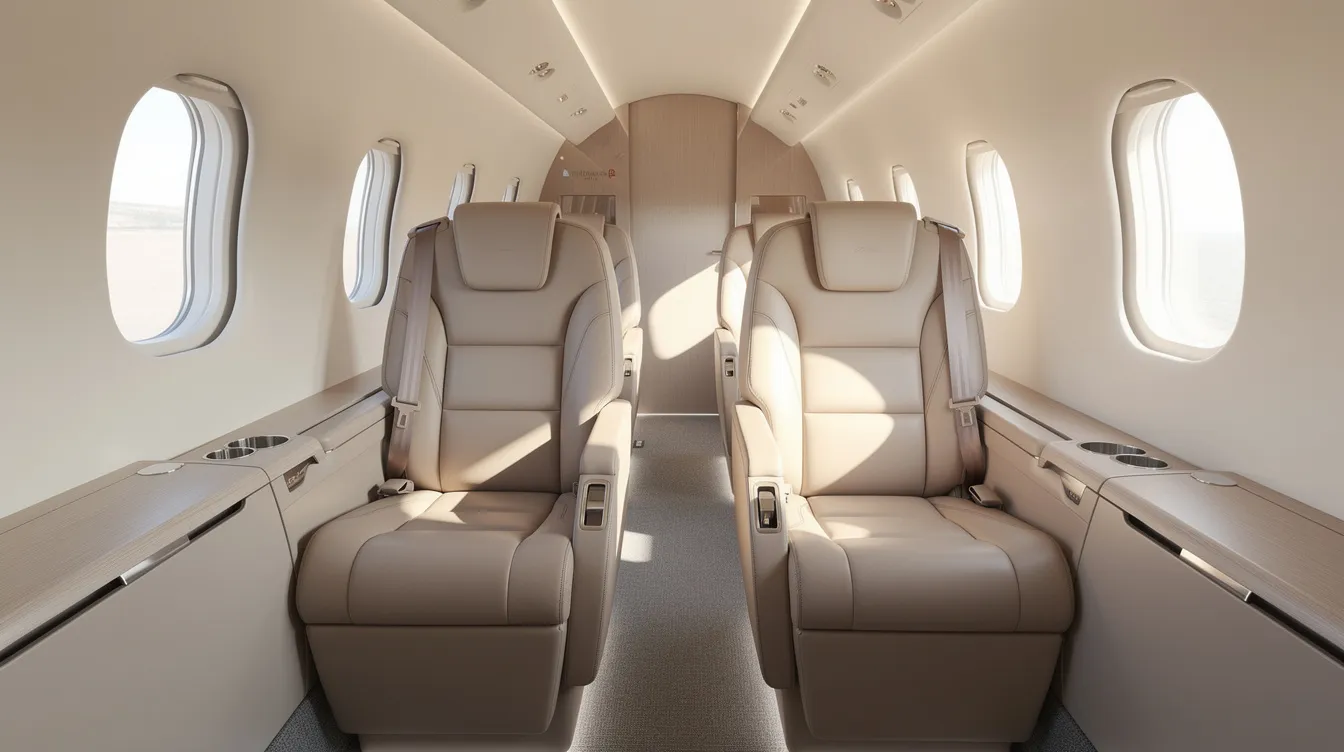
Light jets occupy the "sweet spot" for affordable private jet travel when you need to carry 4–7 passengers with reasonable luggage.
Popular models: Cessna Citation CJ3+, Learjet 45XR, Phenom 300/300E, Hawker Beechjet 400A. These business jets balance acquisition cost, fuel efficiency, and cabin comfort.
Concrete 2026 pricing: a light jet from New York to Miami typically runs $12,000–$18,000 one way. Los Angeles to San Francisco often falls in the $8,000–$14,000 range.
Better baggage capacity and cruising speed versus very light jets, while still being significantly cheaper per hour than midsize or large jets.
Jettly's platform can show multiple light jet options on the same route, letting customers compare cabin layouts, aircraft age, and price per person side by side while browsing its extensive catalog of private charter aircraft.
Midsize and super midsize jets become the affordable private jet choice on longer legs where smaller jets would require extra fuel stops — adding time, landing fees, and additional fuel costs that erode the savings of a lower hourly rate.
Well-known models include the Citation XLS+, Learjet 60, Gulfstream G150/G200, Embraer Praetor 600, and Challenger 300/350.
Concrete pricing: New York–Los Angeles on a super-midsize jet often runs $30,000–$50,000 one way in 2026. London–Marrakesh on a midsize jet might fall in the $25,000–$35,000 range.
Cabin upgrades matter here: stand up cabins, improved noise insulation, optional flight attendant, and enough cabin space for 6–8 travelers to work or rest on 4–6 hour missions.
Jettly often recommends midsize over large jets for cost-conscious groups who do not need ultra long range capabilities. The flight distance and passenger count should drive the choice — not prestige, and Jettly's tips for booking the cheapest private jet flights reinforce this strategy.
Large jets and ultra long range aircraft are not "cheap" in absolute terms. But on long-haul international flights for larger parties, they can be the most cost-effective option once you factor in time, hotel nights, and lost workdays.
Typical aircraft: Gulfstream G450/G550, Bombardier Global 5000/6000, Dassault Falcon 7X/8X, and similar large cabin jet models built for transatlantic missions and beyond.
Examples: New York–London on a large jet might run $80,000–$120,000 one way. Los Angeles–Tokyo on an ultra-long-range jet can exceed $180,000. But split between 10–13 passengers, the per-person cost compares with premium cabins on major commercial airlines - especially on last-minute bookings.
Nonstop capability avoids hotel nights and lost workdays, making these jets "cheap" when measuring total trip value rather than the flight invoice alone.
Jettly's marketplace lets users filter for ultra-long-range options only when a route actually requires that capability, preventing overspending on aircraft that exceed mission requirements.
Charter rates largely reflect each aircraft's underlying operating costs plus a margin for the operator. Understanding these costs explains why private jet pricing varies so dramatically across categories.
Fuel and oil: Often the largest single variable cost. A light jet burning 170 gallons per hour at $6/gallon costs roughly $1,020/hour in fuel alone; a heavy jet burning 350+ gallons costs over $2,100/hour. Fuel prices fluctuate regionally and seasonally.
Maintenance reserves and engine programs: Contributions to programs like Pratt & Whitney's ESP Gold or Rolls-Royce CorporateCare stabilize costs for private jet owners, and those per-hour reserves flow into charter pricing. Lower operating costs on smaller airframes keep very light jets and light jets at the bottom of the private jet rental price spectrum.
Crew salaries: Pilot and crew salaries for a two-pilot light jet crew typically run $150,000–$300,000 annually; heavy jet crews command more. These fixed costs are spread across annual flight hours.
Insurance and hangar: Hull and liability insurance plus hangar or tie-down fees are annual fixed costs that operators recover through charter revenue.
Navigation and airport fees: Landing fees, ramp charges, and overflight permits for international flights add per-trip costs that scale with aircraft weight.
For a full breakdown, Jettly's guide to private jet operating costs covers each component in detail.
Here are approximate 2026 one-way private charter prices on common routes, based on current market data:
New York–Boston in a very light jet: ~$6,000–$9,000
New York–Miami in a light jet: ~$12,000–$18,000
Los Angeles–Las Vegas in a very light jet: ~$6,500–$10,000
Los Angeles–San Francisco in a light jet: ~$8,000–$14,000
New York–Los Angeles in a super-midsize jet: ~$30,000–$50,000
London–Paris in a light jet: ~$8,000–$14,000
Toronto–Vancouver in a super-midsize jet: ~$35,000–$55,000
Dubai–Riyadh in a midsize or super-midsize jet: ~$20,000–$35,000
New York–London in a large jet: ~$80,000–$120,000
Prices vary by date, airport choice, and aircraft age. Jettly's instant pricing returns route-specific numbers within seconds using its private jet cost calculator.
Prices for private jet charters can be significantly impacted by hidden fees and operational costs. In the U.S., a 7.5% federal excise tax applies to most domestic charter flights under FAA Part 135, plus per-passenger segment fees on certain routes.
Landing fees: $100–$1,500+ depending on airport and aircraft weight. Busy hubs like Teterboro or Van Nuys charge premiums.
Ramp and handling fees: $100–$500+ per stop, higher for large jets at major airports.
Crew overnight fees range from $200 to $600 per crew member per night when a trip requires the aircraft to stay overnight.
De-icing: $1,500–$15,000 depending on aircraft size and winter severity — a high seasonal cost that many travelers don't anticipate, and one of several factors outlined in Jettly's overview of affordable private jet charter pricing.
International fees: Overflight permits, customs handling, and international handling charges apply to cross-border private flights.
These charges can turn an apparently cheap private jet price into a meaningfully higher all-in cost if not disclosed upfront. Jettly displays taxes and operator fees transparently in its quotes so travelers see the effective total rather than just a base hourly rate, and pass-through items may appear as Direct Cost in an all-in quote instead of as hidden markups.
One-way pricing is not automatically half of a round trip in private aviation. Repositioning, ferry flights, and operator minimums complicate the math in ways that differ from commercial flight ticketing.
For short same-day business trips, a round-trip quote with the aircraft waiting is often cheaper than two separate one-way bookings, because you avoid paying for the jet to fly empty back to base.
A one-way New York–Miami charter might be only 10–25% cheaper than a round trip if the jet must reposition empty after dropping you off.
True discounted one-way deals usually arise when an operator already needs to reposition the aircraft — as with empty legs or floating fleets. Booking floating-fleet aircraft can save up to 30% on one-way rentals, and Jettly's platform for crowdsourcing private jet flights and sharing empty seats helps further reduce per-person costs.
Jettly's advisors can model both one-way and round-trip scenarios in seconds to reveal which option delivers the lowest effective cost for a specific itinerary.
Empty leg flights are repositioning flights that operators sell at steep discounts rather than flying with no revenue at all. Empty leg flights can save up to 75% off standard private charter rates.
A light jet empty leg from Los Angeles to Las Vegas might appear for $4,000–$7,000 total for the entire aircraft — a fraction of the standard $6,500–$10,000 on-demand quote.
London–Geneva empty legs on midsize jets occasionally surface at 50–60% off standard rates, especially within 48 hours of departure.
Limitations are real: fixed departure time and city pair, one-way only, reduced flexibility, and the risk of schedule changes if the primary charter flight shifts plans.
Jettly's platform aggregates empty leg offers from global operators, allowing users to filter by region, date, and aircraft type for the cheapest available options, or even buy a seat on a private jet when full-aircraft charter isn't necessary.
For travelers with flexible schedules, empty legs remain the single most effective way to find a cheap private jet price — though they require patience and willingness to adapt.
Booking channels can significantly influence the cost of private travel. Jettly acts as a marketplace — not a single operator — letting users compare many private jets and prices instantly across a fleet of over 20,000 aircraft in operation worldwide.
Select your route and dates in Jettly's search tool, then choose between on-demand charter or membership pricing.
View live estimates for multiple aircraft categories side by side — from very light jets to large cabin aircraft - so you can see exactly where the value sits for your specific mission.
Filter by passenger count, aircraft category, Wi-Fi availability, pet policies, and other preferences to narrow results without losing sight of cost.
Jettly surfaces empty legs automatically when they align with a user's route window, often presenting the cheapest private jet price in the results without requiring a separate search, making it easier to get a seat on a private jet at a fraction of standard charter costs.
Pricing is transparent and digital, avoiding the back-and-forth negotiations with traditional brokers that can hide fees or delay decision-making. Learn more about the process in Jettly's guide on how to book a private jet.
Membership programs and jet cards lock in hourly rates and access guarantees, while on-demand private charter is priced trip by trip at market rates. Neither is universally cheaper — the right choice depends on how often you fly.
Membership programs can offer fixed rates and additional benefits for frequent flyers logging 25–100+ flight hours per year. Predictable pricing removes the stress of rate swings during peak seasons, especially when using structured jet card programs with guaranteed hourly rates.
Jet cards typically require prepurchasing a block of hours - often 25 hours minimum - at a locked-in per hour rate. For a detailed comparison, see Jettly's guide to jet card pricing and rates alongside its overview of jet card costs and what drives them.
On-demand is usually cheaper for occasional travelers, highly flexible dates, or those willing to chase empty legs. No upfront commitment means no risk of unused hours.
Fractional ownership sits between full ownership and chartering — offering a share of an aircraft with guaranteed availability, but with higher annual fixed costs than pure charter; Jettly's breakdown of fractional jet ownership costs details how these expenses compare to on-demand charter.
Jettly offers both membership and on-demand access, allowing cost comparisons over a year based on a traveler's expected annual flight hours, supported by tools like its jet card flight cost estimator for one-way routes.
Buying a private plane - even a "cheap" very light jet — ties up millions in capital plus hundreds of thousands in annual operating costs. For most private aviation enthusiasts, chartering a private jet is the smarter financial move.
Typical annual ownership costs include hangar ($12,000–$36,000), insurance ($15,000–$30,000), maintenance ($50,000–$200,000+), crew salaries ($80,000–$200,000+), and regulatory or avionics upgrades over time. Ownership costs exceed $1 million annually for most private jets once all line items are combined.
Chartering is cheaper than ownership for most users, particularly those flying fewer than 200–250 hours per year. Below that threshold, the fixed costs of ownership far outweigh charter expenses, though some high-usage travelers may still consider fractional jet ownership programs as an alternative.
Chartering offers access to over 50,000 aircraft types across global networks, meaning you can pick the right-sized jet for each trip rather than being locked into one airframe.
Chartering eliminates maintenance and crew management responsibilities — no scheduling engine overhauls, no managing pilot training records, no worrying about annual fixed costs during months you don't fly.
Chartering provides flexibility to choose aircraft for each trip, matching the mission to the jet rather than forcing every trip into the same aircraft. Chartering a private jet provides ultimate flexibility, privacy, and convenience without the capital commitment, whereas fractional jet ownership trades flexibility for equity and guaranteed availability.
Jettly gives travelers access to private jets without long-term commitments, sidestepping depreciation risk and the burden of fixed costs that private jet owners carry year-round.
A cheap private jet price must be weighed against total trip value — not just the ticket number. Flying privately offers time savings, flexibility, and productivity that commercial airlines cannot match on many routes.
Example: a same-day New York–Washington, DC business mission requiring three meetings in different parts of the metro area can be nearly impossible on scheduled commercial airlines but achievable via a light jet charter flight in a single business day, using regional airports closer to each meeting location.
Sharing costs among passengers reduces per-person rates significantly. Splitting a $12,000 charter among 4 executives yields roughly $3,000 per person—- comparable to last-minute business class fares on commercial airlines plus hotel nights and lost productivity.
Private jets can use smaller regional airports closer to city centers, cutting ground transportation time and making flying private more competitive against commercial flight for time-sensitive profiles.
For families or groups, the math often works out favorably: 6 first-class tickets at $2,500 each equals $15,000 — close to what a light jet charter costs for the same route, with far more flexibility and privacy, especially when you understand the broader landscape of private charter airlines and operators.
Private jet rental prices vary meaningfully by region due to aircraft density, fuel costs, and regulatory overhead.
The United States typically offers lower hourly rates — for example, large jets around $8,500–$10,000 per hour — thanks to high aircraft density and a competitive operator landscape. How many private jets are based in the U.S.? Roughly 60–65% of the global business jet fleet, which keeps pricing competitive.
Europe has strong competition on major leisure and business routes (London–Nice, Paris–Ibiza, Milan–Zurich), keeping prices relatively competitive for light jets and midsize jets. However, European rates often run 10–20% higher than equivalent U.S. categories due to higher fuel taxes and handling costs.
Middle East and Asia-Pacific markets tend to command premium pricing for similar aircraft categories, especially on longer legs or overwater routes where fewer operators compete.
Jettly's global network lets users source aircraft based not only on departure city but also surrounding regions where cheaper economical private jets may be positioned, supported by tools like its airport locator and charter platform.
Safety standards should never be compromised to chase a cheap private jet price. Cost reductions should come from smart choices — not lower operational standards. Jettly works only with licensed, safety-vetted operators (FAA Part 135, EASA equivalents).
Choose very light jets or light jets when the mission allows. A 3-passenger, 90-minute trip doesn't need a midsize jet.
Fly off-peak days. Tuesday through Thursday flights often cost less than Friday or Sunday departures.
Choosing secondary airports can lower landing and ramp fees. Flying into Oakland instead of SFO, or Teterboro instead of LaGuardia, reduces ground costs while keeping you close to your destination.
Be flexible on departure times to match empty leg flights — even a 2-hour window of flexibility can unlock significant savings, particularly if you’re comparing Jettly as a NetJets alternative for flying private for less.
Avoid unnecessary ultra-long-range or large jets when a midsize jet will complete the mission nonstop. Matching aircraft size to flight distance is the simplest cost lever.
Booking 30 to 60 days in advance offers the best pricing options, as operators can schedule more efficiently and avoid last-minute positioning costs.
Consider sharing flights when possible. Platforms increasingly allow seat-sharing on private flights, and Jettly's guide to private jet cheap seats covers how this works, whether you’re flying popular corridors or niche routes such as private jet charter in Kolkata, West Bengal.
Understanding how a private jet price is built helps you spot where savings are possible. Here are three worked examples.
Scenario 1: Very Light Jet - Los Angeles to Las Vegas
Flight time: approximately 45–60 minutes
Base hourly rate: $3,000 per hour → base flight cost ~$3,000
Federal excise tax (7.5%): ~$225
Landing and handling fees: ~$350
Fuel-related pass-throughs may also appear separately as a direct cost, depending on the operator's quoting practices
Short leg fees apply to flights under 60 minutes to cover maintenance costs; operators may add a minimum charge equivalent to 1 full hour
Approximate total: $3,800–$5,500 depending on operator and airport
On an empty leg, this same trip could drop to $2,000–$3,500
Scenario 2: Light Jet Round-Trip - New York to Miami (2 days)
Flight time: ~2.5 hours each way (5 hours total)
Base hourly rate: $4,500 per hour → base flight cost ~$22,500
Crew overnight fees: ~$800 (two pilots, one night)
Aircraft parking/ramp: ~$300
Federal excise tax: ~$1,688
Landing fees (two airports, two legs): ~$600
Approximate total: ~$25,900–$30,000
Comparison: two separate one-way charters without the wait would require repositioning, potentially costing $32,000–$38,000 total
Scenario 3: Super-Midsize - New York to Los Angeles
Flight time: ~5–5.5 hours nonstop
Base hourly rate: $9,000 per hour → base cost :~$45,000–$49,500
Taxes and fees: ~$5,000–$7,000
Approximate total: \~$50,000–$56,500, a figure that frequent flyers sometimes compare with the long-term economics of fractional private jet ownership.
Alternative: a light jet at $4,500/hour would require a fuel stop, adding ~45 minutes of ground time plus an extra landing fee and fuel uplift at a more expensive intermediate airport. The "cheaper per hour" option could end up costing $42,000–$48,000 — not dramatically less — and with a longer door-to-door time
Jettly's platform automates these calculations for every quote. Try the private jet cost calculator to see line-item estimates for your specific route.
The cheapest suitable private aircraft is usually the one that just meets the mission requirements—no more, no less. Over-specifying wastes money; under-specifying forces fuel stops or uncomfortable conditions that erode the benefits of flying privately.
Key questions to answer before booking:
How many passengers? This determines the minimum cabin size and the most affordable aircraft category.
How much luggage? Very light jets have limited cargo; light jets handle golf bags and a few suitcases; midsize and above accommodate skis, heavy bags, and more.
What is the nonstop flight distance? Match range capability to the route to avoid unnecessary fuel stops.
Does the destination airport have runway length limitations? Some smaller regional airports can't handle large jets, so using an airport locator tool to identify suitable fields near your destination is essential.
Do you need stand up cabins, an enclosed lavatory, Wi-Fi, or a galley? These amenities generally start at the midsize jet level.
Quick matching guide:
1–3 passengers, 300–700 nm routes → very light jets
4–6 passengers, 700–1,500 nm → light jets (the light jet category covers most domestic flights)
6–9 passengers, 1,500–3,000 nm → midsize or super midsize jets
10+ passengers or intercontinental → large jets or ultra long range aircraft
Jettly's aircraft search and advisor support can filter aircraft types and show the cheapest viable options that satisfy a traveler's mission profile.
A very light jet like the Eclipse 500 or Cirrus Vision Jet is typically the cheapest private jet to charter for 1–2 passengers. Expect hourly rates starting around $2,300–$3,500, with total trip costs for short routes often falling between $6,000 and $10,000.
Yes, but only in specific circumstances. Empty leg flights on very light jets for short routes (under 1 hour) occasionally surface below $5,000 for the entire aircraft. Turboprops on regional hops can also fall into this range. Flexibility on timing and airports is essential.
Absolutely. Very light jets are certified to the same FAA or EASA standards as larger business jets. They undergo regular inspections, and charter operators must hold active Part 135 (or equivalent) certificates. The aircraft category is smaller, not less safe.
Sharing costs among passengers reduces per-person rates significantly. A $10,000 charter split four ways costs $2,500 per person. Some platforms and operators offer seat-sharing or group-booking options that make private jet service accessible at rates closer to business class on a commercial flight.
Booking 30 to 60 days in advance typically offers the best pricing options for on-demand charter. However, empty leg flights 6 which offer the deepest discounts - tend to appear 1 67 days before departure. Frequent flyers who want guaranteed pricing should explore jet cards or membership programs.
Yes. The 7.5% federal excise tax applies to most U.S. domestic private flights, including empty legs. The base price is lower, so the tax amount is smaller, but it still applies.
Traditional brokers often require phone calls, back-and-forth negotiations, and opaque fee structures. Jettly's digital platform delivers instant, transparent private jet pricing across thousands of aircraft, including empty legs. Users see taxes and fees upfront, compare options in seconds, and book without hidden markups. Transparent quotes may also label pass-through charges as Direct Cost rather than burying them in opaque fees. To experience private aviation through a modern marketplace, the platform provides a fundamentally different workflow than legacy brokers.
Chartering offers access to over 50,000 aircraft types globally. Jettly alone connects travelers with more than 20,000 unique aircraft, covering everything from economical private jets to large cabin aircraft for intercontinental missions.
A cheap private jet price is not about finding a luxury product at a bargain-bin rate. It is about matching the right aircraft, route, and timing to your specific mission — and understanding the real cost structure behind every quote. The most affordable private jets are the ones that fit the trip without excess: a very light jet for a 2-person regional hop, a light jet for a 4-person same-day round trip, or an empty leg that happens to align with your schedule.
The key levers are straightforward. Use very light jets and light jets when the mission allows. Fly off-peak. Consider regional airports. Compare one-way versus round trip. Watch for empty legs. And always factor in taxes, landing fees, and crew costs before calling any quote "cheap."
Jettly's global marketplace, instant pricing, and access to over 20,000 aircraft help travelers find genuinely affordable private jet options without opaque markups or the financial burden of ownership. Whether you are a first-time flyer or a frequent traveler comparing jet cards, the platform delivers transparent, real-time pricing across every aircraft category.
Ready to experience private aviation on your terms? Explore flight options or request a quote at https://www.jettly.com.
Share this post:
Jeff Ryan Serevilla
Sep 20, 2026
|
5
min read
Discover tips and trends in the industry.
5
min read
C-21 Plane: USAF Learjet 35A Variant, Specs, Missions & Charter Alternatives
The C-21 plane, a military variant of the Learjet 35A, has been a reliable light transport aircraft for the USAF since 1984, serving various missions including passenger airlift and aeromedical evacuation. With impressive speed and range, it continues to play a vital role in military logistics, while civilians can access similar performance through private jet charters like the Learjet 35A.
Read More
5
min read
Does a Private Jet Have WiFi? Connectivity, Costs, and What to Expect with Jettly
Private jets increasingly offer WiFi, becoming essential for both business and leisure travelers. Connectivity options vary by aircraft type, age, and installed technology, impacting performance and costs. Understanding these factors helps travelers choose the right jet for their connectivity needs.
Read MoreStay updated with our latest insights and tips to elevate your journey with us.
MEMBERSHIPS AND ASSOCIATIONS



Disclaimer: Jettly operates as a charter broker, offering access to a global digital jet charter marketplace. Jettly is not a direct air carrier and does not own or operate aircraft. All advertised flights are conducted by third-party air carriers that are fully licensed and hold the appropriate Part 135 or Part 121 certifications issued by the Federal Aviation Administration (FAA) or equivalent regulatory authorities under U.S. or foreign law. Jettly complies fully with the U.S. Department of Transportation's Part 295 and Part 298 Charter Broker regulations. Jettly does not carry additional liability insurance. Passengers are covered by aircraft operator insurance. TICO: 50023770


