



Login
Get Instant Pricing On 23,000+ Aircraft

>
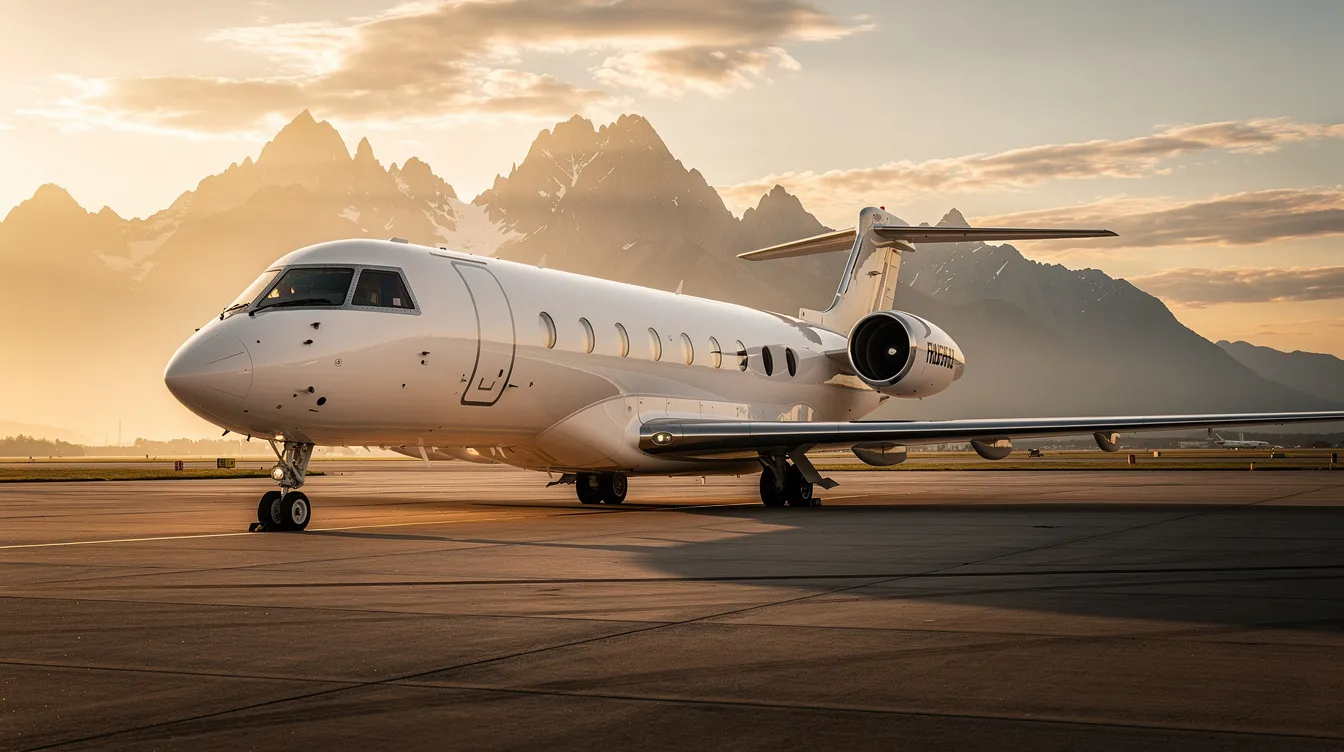
The Bombardier Challenger CL 601 (often referred to as Challenger 601) is a proven large-cabin business jet that continues to be a staple in the private charter market. This guide covers the key features, performance, cabin experience, and charter considerations for the Challenger CL 601, helping business travelers and charter customers understand why this classic jet remains a popular choice. Whether you are a corporate team, high net worth individual, or a family seeking a comfortable and versatile aircraft for transcontinental missions, this guide will help you evaluate the Challenger CL 601’s relevance and value in today’s charter landscape.
The Challenger CL 601 is a large-cabin business jet widely available for charter through Jettly.
It typically seats 8 to 12 passengers comfortably.
The cabin measures 8.2 feet wide and 6 feet 1 inch high.
Powered by two General Electric CF34 engines.
Offers a range of approximately 3,200–3,500 nautical miles, depending on the variant.
Cruises at speeds near Mach 0.74.
Features a dual-channel Sperry SPZ-600 flight control system for enhanced safety and automation.
Requires a takeoff distance of about 5,400 feet at sea level.
Burns about 3,800 pounds of fuel in the first hour of flight.
Ideal for corporate teams, high net worth individuals, families, and groups seeking a stand-up cabin and long-range capability at a competitive price.
The Bombardier Challenger 601, often written as CL 601 or simply Challenger 601, is a large-cabin, long-range business jet developed from the original Challenger 600. The Challenger 601 is classified as a heavy-cabin business jet, offering more space and amenities than midsize jets. Production ran mainly between 1983 and the early 1990s.
The 601 family includes the Challenger 601-1A (CL-600-2A12) introduced in 1983 and the improved 601-3A and 601-3R (CL-600-2B16) from 1987 onward, all part of the wider Bombardier Challenger 600 series. The aircraft is powered by two General Electric CF34 engines, delivering reliable thrust and improved fuel efficiency over the original Challenger 600's powerplants.
Key specs at a glance:
Seating: 8 to 12 passengers in typical executive layouts (up to 16–19 in dense shuttle configurations)
Cabin dimensions: approximately 28.3 ft long × 8.2 ft wide × 6.1 ft high
Range: up to roughly 3,500 nautical miles depending on variant and loading
Canadair originally produced the Challenger 600 series before Bombardier Aerospace continued production after its 1986 acquisition. Today, the aircraft remains widely used for private charter, corporate shuttle flights, and government missions due to its uncharacteristically large cabin and competitive operating economics for a legacy jet. Jettly's marketplace lists both Bombardier Challenger 601 aircraft and newer Challenger 604/605/650 options, letting users weigh cost against cabin upgrades while browsing its broad selection of private charter aircraft.
The Challenger program traces its origins to the 1970s, when Bill Lear conceived a wide-body business jet design. Canadair acquired and industrialised the concept, and the original Challenger entered service as the Challenger 600 around 1980. Early airframe and engine issues - particularly with the Lycoming ALF-502 engines - prompted the development of an improved variant.
The Challenger 601 was introduced to address those shortcomings. The company replaced the original powerplants with General Electric CF34 turbofans, delivering better thrust, fuel efficiency, and reliability. Winglets were added to reduce drag, and a supercritical wing design improved aerodynamic performance.
Key development milestones:
April 10, 1982: The Challenger 601 made its first flight.
March 1983: The aircraft received FAA certification.
1983–1987: Over 60 Challenger 601 aircraft were delivered.
1986: Bombardier acquired Canadair, bringing the Challenger under the Bombardier Challenger 600 series brand.
1987–1993: Production of the 601-3A/3R with upgraded engines and extended range.
The 601's predecessor - the Challenger 600 - had shorter range and less refined systems. Its successors, the Challenger 604, 605, and 650, brought more powerful engines, longer range, and updated avionics. The 1000th Challenger aircraft was delivered in December 2015, underscoring the family's enduring market presence. Many 601 airframes have since been upgraded with modern avionics and refurbished cabins, extending their operational life in the Challenger fleet.
The Challenger 601 line is typically broken into two generations: the early 601-1A and the later 601-3A/3R, both under the Bombardier Challenger series umbrella.
Challenger 601-1A (CL-600-2A12):
Production years roughly 1983–1987. Over 60 Challenger 601-1A aircraft were delivered during this period.
Engines: CF34-1A, producing a maximum thrust of 8,650 pounds per engine.
Range around 3,200–3,500 nm under typical charter conditions; maximum speed cruise near 459–460 ktas (Mach 0.74).
Typical configuration: 8–12 passengers, up to 19 in high-density layouts.
Challenger 601-3A (CL-600-2B16):
Introduced in 1987 with General Electric CF34-3A upgraded engines.
Improved hot-and-high performance, slightly better fuel capacity, and enhanced avionics with an EFIS glass cockpit.
The 601-3A/ER extended-range version added an extra fuel tank in the fuselage, pushing range toward the upper end of 3,500 nm.
Essentially a 601-3A with a standard additional tail tank at the aircraft's tail and optimised range capabilities, with a max takeoff weight of approximately 45,000 lb.
Particularly attractive for operators requiring reliable transcontinental sectors - New York to Los Angeles, Toronto to Vancouver, or even select transatlantic routes.
For charter customers, the 601-3A/3R is the stronger pick when range and versatile performance matter. The 601-1A can be more cost-effective for shorter missions while still offering the same cabin dimensions.
The Challenger 601 features a wide-body stand-up cabin, which enhances passenger comfort and freedom of movement during flight. With a cabin width of 8.2 feet, a height of 6 feet 1 inch, and a length of roughly 28.3 ft, it provides genuine stand-up room - comparable to many newer large-cabin private jets. The cabin volume of the Challenger 601-3R reaches 1,035 cubic feet.
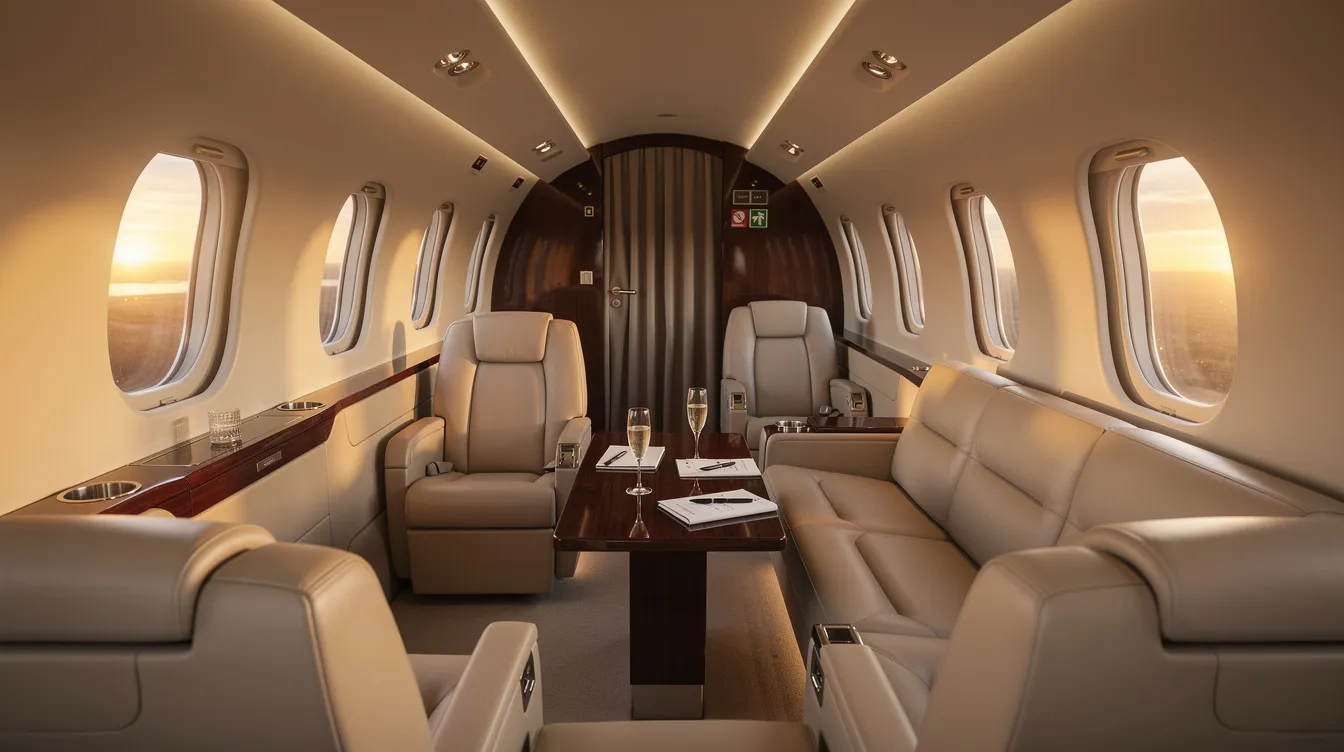
Typical seating layouts include:
Forward four-place club seating with swivelling, fully reclining chairs
Mid-cabin two- or three-place divan
Aft end two-place club or additional divan, often forming a second zone for privacy – with one fore section for work and the aft for rest
The cabin walls are finished in a variety of materials depending on refurbishment. Most chartered 601s feature foldaway tables for laptops and dining, overhead bins for storing hand luggage and other small items, plus an externally accessible baggage hold. The cabin is notably wider than what passengers find on larger commercial aircraft in economy class.
Modern amenities commonly found on chartered Challenger 601 jets today include:
Modernised LED lighting controls, Wi-Fi, and cabin management systems
Enclosed lavatory at the rear and forward galley for hot and cold catering, which can be complemented by dedicated in-flight catering for private jets
Low interior noise levels suited for productive work or rest on longer sectors
Jettly customers should review specific cabin photos, refurbishment dates, and seating plans on each listing, especially when considering a specific Challenger 601 for rent. Confirm Wi-Fi availability, galley-equipped details, and whether the layout seats five passengers in club chairs or a full twelve in a shuttle configuration.
The Challenger 601 delivers long-range, high-subsonic cruise performance with solid reliability for both domestic and international flight. Here are the numbers that matter for charter planning:
Range: around 3,180–3,500 nm for the 601 series, covering non-stop routes like New York–Los Angeles, Chicago–San José, or Toronto–Vancouver
Maximum speed: approximately 460 ktas (about 528 mph). The aircraft can cruise at a speed of Mach 0.74 for maximum fuel efficiency, or push closer to Mach 0.80 on time-sensitive sectors.
Service ceiling: around 41,000 ft, with some 3R variants certified up to 45,000 ft
Wing span: approximately 64 feet with winglets
Runway performance and fuel burn details:
Takeoff distance required: 5,400 feet at sea level under standard conditions
Landing distance: typically 2,500–3,000 ft depending on weight
Payload, temperature, and airport elevation can limit operation at shorter or "hot-and-high" airports
Fuel burn: 3,800 lb of fuel in the first hour, with lower consumption during cruise
Older large-cabin jets like the 601 tend to burn more fuel than the latest models powered by newer engines, but they remain cost-effective for groups filling 8–12 seats. The later CF34-3A/3R engines offer an improvement in fuel efficiency and climb performance over the earliest 601-1A powerplants.
Common charter missions include New York–Miami (~2.5 hours), Los Angeles–Dallas (~2.5 hours), and coast-to-coast sectors (~5 hours). Customers with frequent city-pair patterns should use a private jet charter cost estimator to compare flight times and costs versus midsize jets - the extra cabin space of the CL 601 often delivers better value per seat.
The Challenger 601 is considered a legacy large-cabin jet. Pre-owned purchase prices can fall under USD 1.5 million for older airframes, but understanding one flight cost and pricing factors is important because annual operation costs are significant.
Typical ownership cost components:
|
Category |
Approximate Cost |
|---|---|
|
Fixed annual (crew, insurance, hangar, training) |
USD 700,000–800,000/year |
|
Variable per hour (fuel, maintenance, engine reserves, handling) |
USD 4,500–5,500+ per flight hour |
|
Total annual cost at 300 hours/year |
USD 1.9–2.5 million+ |
|
Charter customers on Jettly avoid fixed overhead entirely, paying only for flight hours and selected extras like catering or ground transport, or leveraging private jet memberships to access wholesale rates and added benefits. Broad charter rate bands for the Challenger 601 fall roughly in the USD 5,000–7,000 per hour range, varying by region, operator, and repositioning needs. |
Jettly's instant pricing tools let customers enter route, date, and passenger count for live quotes, leveraging its integrated airport locator tool to match suitable departure and arrival points. The platform also displays empty leg flights where a Challenger 601 is repositioning at discounted rates.
Cost-per-seat math: On a 5-hour segment at USD 6,000/hour, the trip cost is approximately USD 30,000. For 10 passengers, that works out to about USD 3,000 per person - competitive with premium commercial business class fares on equivalent routes, with far greater flexibility and time savings and consistent with broader private jet charter cost guides. Older aircraft like the CL 601 can sometimes offer lower charter rates than newer Challenger 604/605/650 jets, though fuel burn may be slightly higher unless the cabin has been refurbished.
The Challenger 600 series, including the 601, has accumulated millions of flight hours worldwide in corporate, charter, and government service. The FAA, Transport Canada, and EASA all maintain active oversight of these airframes, and understanding how Part 135 charter companies operate helps customers appreciate the regulatory framework behind these flights.
Maintenance expectations for a legacy large-cabin jet include:
Scheduled inspections on both hourly and calendar bases (routine checks every 200 flight hours or six months, with major structural inspections on multi-year cycles)
Engine overhaul intervals for the CF34-1A/3A series on the order of 6,000 hours, requiring robust maintenance reserves
GE Aerospace offers a CF34 Maintenance Cost Per Hour program to help operators plan engine costs
Many aircraft have been modernised with glass cockpits and updated safety systems including TCAS, EGPWS, Honeywell Laser INS, and ADS-B Out - supporting automatic landings and new standards in situational awareness. By the late 2010s, the Bombardier Challenger fleet had logged millions of flights with a limited number of hull-loss accidents across all variants. Each incident typically triggered rigorous investigation and procedural or design updates.
Jettly connects customers with licensed air carriers that comply with national aviation authority regulations - FAA Part 135 in the U.S., Transport Canada, or EASA in Europe. Customers can review operator certificates and crew experience when selecting a Challenger 601 on the platform.
The Challenger 601 suits travellers who value a true stand-up cabin and long-range capability without requiring the very latest model year. It was among the first business jets to set new standards for cabin width in its class.

Practical scenarios:
Corporate roadshow: A management team of 8–10 executives visiting New York, Chicago, Dallas, and Los Angeles over two days, using the 601 as a mobile conference room
Family leisure trip: A group chartering from Toronto to the Caribbean, taking advantage of the large baggage hold for luggage and sports equipment
Sports or entertainment group: A touring crew moving between North American cities with equipment, needing both space and flexible scheduling
Government or NGO missions: Delegations flying to diplomatic meetings on medium- to long-haul routes
Compared to smaller jets, the 601 offers more freedom to move around the cabin, better suitability for longer night flights where sleep matters, and the ability to carry more passengers and baggage in a single aircraft. It handles these missions without the operating cost of the first business jets in the ultra-long-range category like the Gulfstream G650.
Jettly customers should compare Challenger 601 quotes alongside newer Challenger variants and other heavy jets, weighing total trip time, cabin condition, year of manufacture, and price, and consider whether a jet card program or on-demand pricing via a jet card flight cost estimator better fits their flying pattern.
The Challenger 601 is widely available on the charter market, and Jettly's platform makes it straightforward to search, compare, and book this aircraft type globally. Here's how the process works - learn more about how to charter a private jet and how to buy a seat on a private jet:
Enter departure and arrival airports, dates, passenger count, and service preferences on Jettly.com so your flight can be planned around your trip
The platform displays available aircraft, including any suitable Bombardier Challenger 601 options and comparable jets such as Challenger 850 rentals, other Challenger 850 charter options, or a Challenger 605 for rent
Review pricing, flight times, operator details, and aircraft photos, and decide whether to book the whole aircraft or leverage crowdsourced private jet flights and shared empty seats as part of broader strategies on how to get a seat on a private jet easily
Arrange optional extras such as catering, ground transfers, and Wi-Fi confirmation
Complete payment securely online and receive digital flight confirmation, benefiting from Jettly's role as a modern charter airline alternative platform and a flexible NetJets alternative focused on transparency and cost control.
Platform features relevant to Challenger 601 users include instant pricing that shows how the CL 601 compares to smaller midsize jets or newer Challenger 600 series variants, a jet card flight cost estimator, empty leg listings at discounted rates, and membership options that reduce per-flight costs for frequent flyers without locking into jet cards or fractional ownership.
Ready to fly on your terms? Explore Challenger 601 charter options or request a quote at https://www.jettly.com.
Most Challenger 601 charter configurations seat 8 to 12 passengers comfortably in a mixed club-seat and divan layout. The type certificate allows higher densities - up to around 16–19 seats in corporate shuttle configurations. Exact capacity depends on the specific aircraft and operator, so check the seating plan and photos on Jettly before booking.
The 601 shares a similar cabin cross-section with later Challenger 600 series jets but has older engines, avionics, and systems. The 604, 605, and 650 models offer upgraded flight decks, improved range (often 4,000+ nm), and more modern interiors. They may also command higher charter rates than a well-maintained CL 601.
Certain Challenger 601-3A/3R aircraft with extended-range fuel options and favourable winds can fly select North Atlantic routes - such as New York to Shannon or Gander to London - non-stop. Many operators still planned a fuel stop, and routes are best planned around winds, payload, and weather flexibility. Discuss specific city pairs with Jettly when requesting a quote.
Wi-Fi is not original equipment on early Challenger 601 jets, but many charter aircraft have been retrofitted with satellite or air-to-ground connectivity. Confirm availability and any usage charges for each specific listing on Jettly before finalising a booking.
For peak periods like major holidays, global events, or high-season weekends, booking several weeks in advance improves the chance of securing a preferred aircraft at a competitive rate. Jettly can also help with short-notice charters, but selection and pricing are typically more favourable when travellers plan ahead and stay flexible on departure times.
The Bombardier Challenger CL 601 remains a reliable and spacious choice for private jet charter customers seeking a large-cabin aircraft with long-range capabilities. Its comfortable stand-up cabin, versatile performance, and competitive operating costs make it well-suited for a variety of missions, from corporate roadshows to family vacations. While newer Challenger models offer updated avionics and longer range, the 601's proven track record and availability on platforms like Jettly provide significant value for travellers prioritising cabin space and cost efficiency. For those considering a private jet charter, the Challenger 601 offers a balanced blend of comfort, performance, and accessibility in the legacy heavy jet category.
Ready to experience private travel on your terms? Explore Challenger 601 charter options or request a quote at https://www.jettly.com.
Share this post:
Jay Franco Serevilla
Jul 20, 2026
|
5
min read
Discover tips and trends in the industry.

5
min read
New York to Los Angeles: Flights, Private Jet Options, and Smart Booking Strategies
Traveling from New York to Los Angeles offers a variety of options, from budget-friendly commercial flights to luxurious private jet charters. This guide provides essential information on flight durations, pricing, and booking strategies to help travelers make informed decisions. Whether you're looking for the cheapest fares or the most convenient travel experience, understanding your options is key.
Read More
5
min read
Business Class Flights: How to Fly Smarter, Save Time, and Upgrade to Private Travel
This guide explores the world of premium air travel, comparing business class, first class, and private jet options. It offers insights into comfort, service, and cost, along with actionable tips for booking smarter. Whether you're a frequent flyer or considering an upgrade, this resource helps you navigate your travel choices effectively.
Read MoreStay updated with our latest insights and tips to elevate your journey with us.
MEMBERSHIPS AND ASSOCIATIONS



Disclaimer: Jettly operates as a charter broker, offering access to a global digital jet charter marketplace. Jettly is not a direct air carrier and does not own or operate aircraft. All advertised flights are conducted by third-party air carriers that are fully licensed and hold the appropriate Part 135 or Part 121 certifications issued by the Federal Aviation Administration (FAA) or equivalent regulatory authorities under U.S. or foreign law. Jettly complies fully with the U.S. Department of Transportation's Part 295 and Part 298 Charter Broker regulations. Jettly does not carry additional liability insurance. Passengers are covered by aircraft operator insurance. TICO: 50023770


