



Login
Get Instant Pricing On 23,000+ Aircraft

>
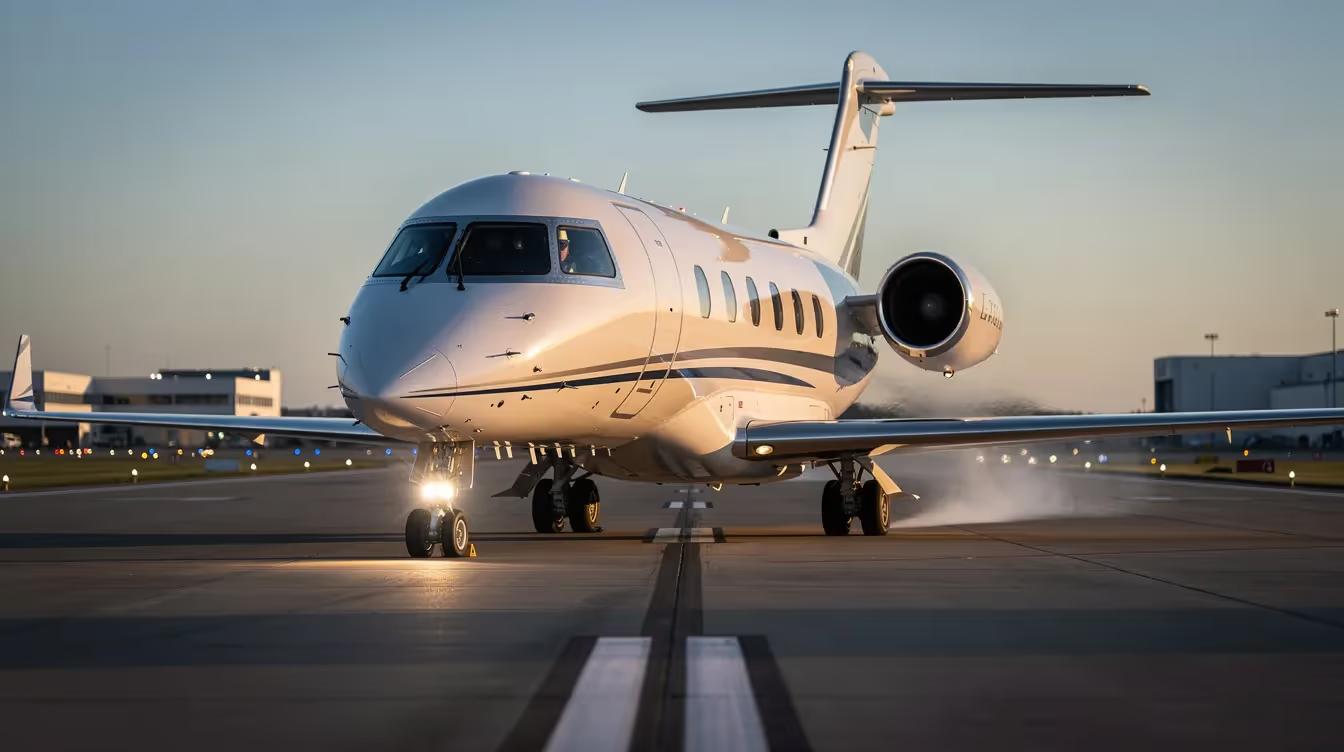
The Bombardier Challenger 350 is a leading super midsize business jet favored for its blend of performance, comfort, and operational flexibility. A key factor in the aircraft’s versatility is its takeoff distance requirement, which determines the range of airports it can safely operate from. Understanding the Challenger 350 takeoff distance is essential for travelers and charter operators to optimize route planning, ensure safety, and maximize convenience. This article explores the aircraft’s takeoff performance, runway needs, and how these influence charter use through platforms like Jettly.
The Challenger 350 takeoff distance is approximately 4,835 ft (1,474 m) at maximum takeoff weight under sea-level, standard-day conditions on a dry runway.
Balanced field length for the Challenger 350 is approximately 5,090 ft at MTOW.
At 5,000 ft elevation, expect the takeoff distance to extend to roughly 5,500 ft or more, depending on temperature and weight.
This short-field capability allows the Challenger 350 to access secondary and regional airports that larger jets cannot use, saving ground travel time.
Real-world performance depends on aircraft weight, elevation, temperature, and runway surface condition—each flight requires specific calculations.
Jettly’s charter platform helps travelers match their missions and preferred airports to the Challenger 350’s performance envelope.
The Bombardier Challenger 350 is a super midsize business jet that entered service in 2014, building on the Challenger 300 platform with improved range and cabin refinements. For private travelers selecting airports, takeoff distance determines whether a specific runway can accommodate the aircraft at the required weight, making it a critical factor in route planning.
At a maximum takeoff weight of approximately 40,600 lb, the Challenger 350 requires 4,835 ft of runway at sea level under ISA (International Standard Atmosphere) conditions on a dry surface. This figure represents the balanced field length, ensuring the aircraft can either stop safely or continue takeoff after an engine failure.
At a typical “hot and high” business airport around 5,000 ft elevation, takeoff distance increases to roughly 5,500 ft or more. Higher temperatures compound this effect further.
This performance places the Challenger 350 among the more capable super midsize jets for short and medium-length runways, allowing access to airports that heavy jets simply cannot use. Jettly’s mission planning and instant-pricing tools, including its airport locator tool, factor these performance numbers into recommended airport choices for each charter request.
Understanding the Challenger 350’s specifications helps explain why it achieves strong short-field performance while delivering the range and speed business travelers expect.
|
Specification |
Details |
|---|---|
|
Maximum takeoff weight (MTOW) |
Approximately 40,600 lb (18,416 kg) |
|
Maximum passenger capacity |
8–10 passengers in a flat floor cabin with customizable seating, including berthing seats and a three-place divan |
|
Cabin dimensions |
25 ft 2 in length, 7 ft 2 in width, 6 ft height |
|
Maximum range |
3,200 nm (NBAA IFR, 4 passengers); 3,277 nm with full seating; ferry range 3,421 nm |
|
Cruise speed |
Long range cruise Mach 0.80; top speed Mach 0.83 (approx. 470 kt) |
|
Service ceiling |
45,000 ft; climb to max altitude in ~16 minutes from sea level |
|
Engines |
Two Honeywell HTF7350 turbofans, 7,323 lbf thrust each |
|
Climb rate |
Approx. 5,000 ft per minute |
|
Takeoff distance (sea level) |
4,835 ft at MTOW on dry runway |
|
Balanced field length |
Approx. 5,090 ft at MTOW |
|
Takeoff distance (5,000 ft elevation) |
Just over 5,500 ft at MTOW |
|
Landing distance |
2,364 ft at typical weights |
|
Wing span |
69 ft with 6-ft canted winglets |
The high thrust-to-weight ratio (approximately 0.36 at MTOW) directly supports short-field takeoff performance. Rapid climb capability reduces time in high fuel-burn phases but doesn’t change the certified takeoff distance figure. The wing and winglet design enhances lift generation at the rotation speeds typical for this class, contributing to the aircraft’s ability to operate from shorter runways.
The Challenger 350’s cabin is designed with a flat floor, allowing for safe and unrestricted movement throughout the space, and features large windows that provide ample natural light. The aircraft is equipped with a modern cabin management system, enabling passengers to control lighting, entertainment, and other cabin features from their personal devices. Additionally, the Challenger 350 boasts the quietest cabin in its class, with advanced sound insulation that minimizes noise levels to enhance passenger comfort.
Published figures assume ideal, standardized conditions—sea level, 15°C, dry runway, maximum weight. Actual flights rarely match these exactly, and several factors shift performance significantly.
|
Factor |
Effect on Takeoff Distance |
|---|---|
|
Aircraft weight |
Full fuel and passengers at MTOW require 4,835 ft; reducing payload/fuel can reduce distance by 500–1,000 ft |
|
Airport elevation |
3,000–5,000 ft elevation increases takeoff distance by 20–25%; above 6,000 ft may require payload limits |
|
Temperature |
Each degree above ISA adds ~1–2% to the runway length needed |
|
Runway conditions |
Wet or contaminated runways increase distance by 10–15%; slope and surface type also affect performance |
|
Operational safety margins |
Operators add 10%+ to published figures for dispatch safety |
For example, a departure from Denver Centennial Airport (5,883 ft elevation) on a hot summer day could push takeoff requirements toward 6,000 ft, potentially requiring payload adjustments. In contrast, a light-load departure from sea-level Teterboro might use well under 4,000 ft of runway.
Takeoff distance directly affects which airports a Challenger 350 can serve—and therefore how close travelers can get to their final destination. Access to secondary and regional airports often saves significant ground transfer time compared to routing through major hubs.
|
Runway Length Range |
Typical Airports & Benefits |
|---|---|
|
5,000–6,500 ft |
Van Nuys (VNY), White Plains (HPN), London Luton (LTN); access to LA, NY suburbs, and London without major hubs |
|
4,500–5,000 ft |
Possible under favorable conditions; requires detailed performance planning |
|
3,500–4,500 ft |
Rare and only for light-load departures on cool days at sea level; limited options |
Time savings: Avoiding major hubs like JFK or LAX by using nearby secondary airports can reduce ground transfer times by 30–60 minutes each way.
Resort and regional access: Destinations like Aspen (ASE, 7,000 ft runway at 7,820 ft elevation) may be accessible with appropriate weight planning, giving direct access to mountain resorts that commercial flights cannot serve directly.
Jettly’s platform and aviation advisors help match travelers’ origin and destination preferences to airports that fit Challenger 350 performance capabilities, complementing broader insights from its guide to charter airlines and private flights. This allows passengers safe access to closer, more convenient fields while meeting all regulatory requirements.
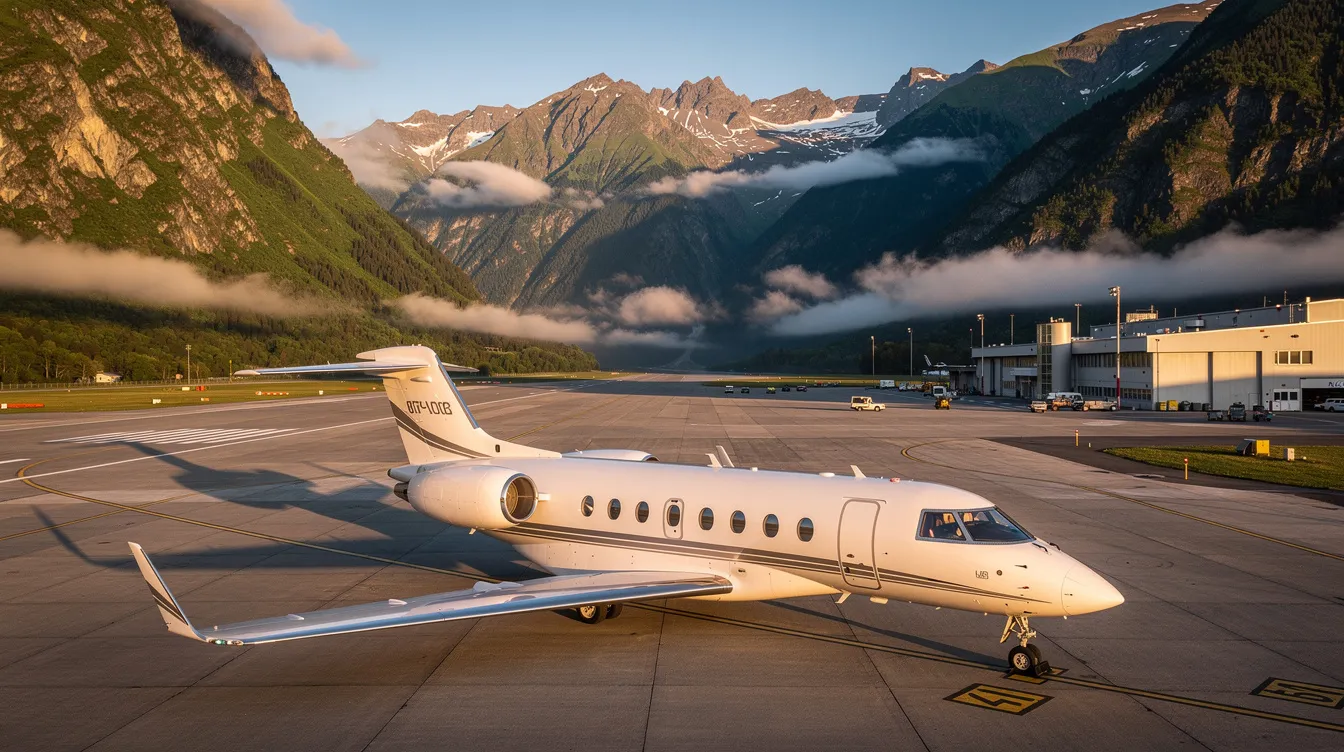
These sample missions illustrate how takeoff distance requirements play out in practice for business and leisure trips.
|
Example |
Route |
Conditions & Notes |
|---|---|---|
|
1 |
Teterboro (TEB) to the Los Angeles-area |
7,003 ft runway at sea level; MTOW operations with 4,835 ft requirement; arrival at Van Nuys (8,000 ft), no constraints |
|
2 |
Hot and high destination |
5,000+ ft elevation airport during summer (ISA +20°C); takeoff distance 5,500–6,000 ft; payload or fuel staging adjustments recommended |
|
3 |
Regional hop (Toronto–Montreal, London–Geneva) |
Short-range flights under 500 nm; light-weight departures; takeoff distance 3,500–4,000 ft possible |
For unusually short or high-elevation airports, operators may plan tech stops to refuel, departing the challenging field at lower weight and completing the mission in segments, an approach also used for longer-range Bombardier models such as the Challenger 850 for charter.
Travelers comparing the Challenger 350 to other options in the super midsize category often evaluate runway performance alongside cabin size and range.
|
Aircraft Model |
Takeoff Distance (ft) |
Cabin Features & Range Highlights |
|---|---|---|
|
Bombardier Challenger 350 |
4,835 (sea level MTOW) |
Quietest cabin in class, flat floor, 3,200 nm range |
|
Citation Longitude |
~5,200 |
Slightly longer takeoff, smaller cabin, 3,500 nm range |
|
Embraer Legacy 500 |
~5,000 |
Smaller cabin, 3,125 nm range |
|
Falcon 2000S |
~4,900 |
Wider cabin, 3,350 nm range |
|
Gulfstream G280 |
~4,900 |
Taller cabin, 3,600 nm range |
The Challenger 350 offers the quietest cabin in its segment, a full flat floor layout with Nuage seats, and a 3,200 nm range—features that some competitors with similar runway performance cannot match.
Some aircraft in this class may achieve slightly shorter takeoff distances but offer smaller cabins, shorter range, or fewer key features like a cabin management system, large windows for natural light, or a synthetic vision system in the cockpit.
For travelers chartering through Jettly, the Challenger 350 delivers a balanced combination of short-field performance, operating costs efficiency, and mid- to long-range capability that suits diverse missions.
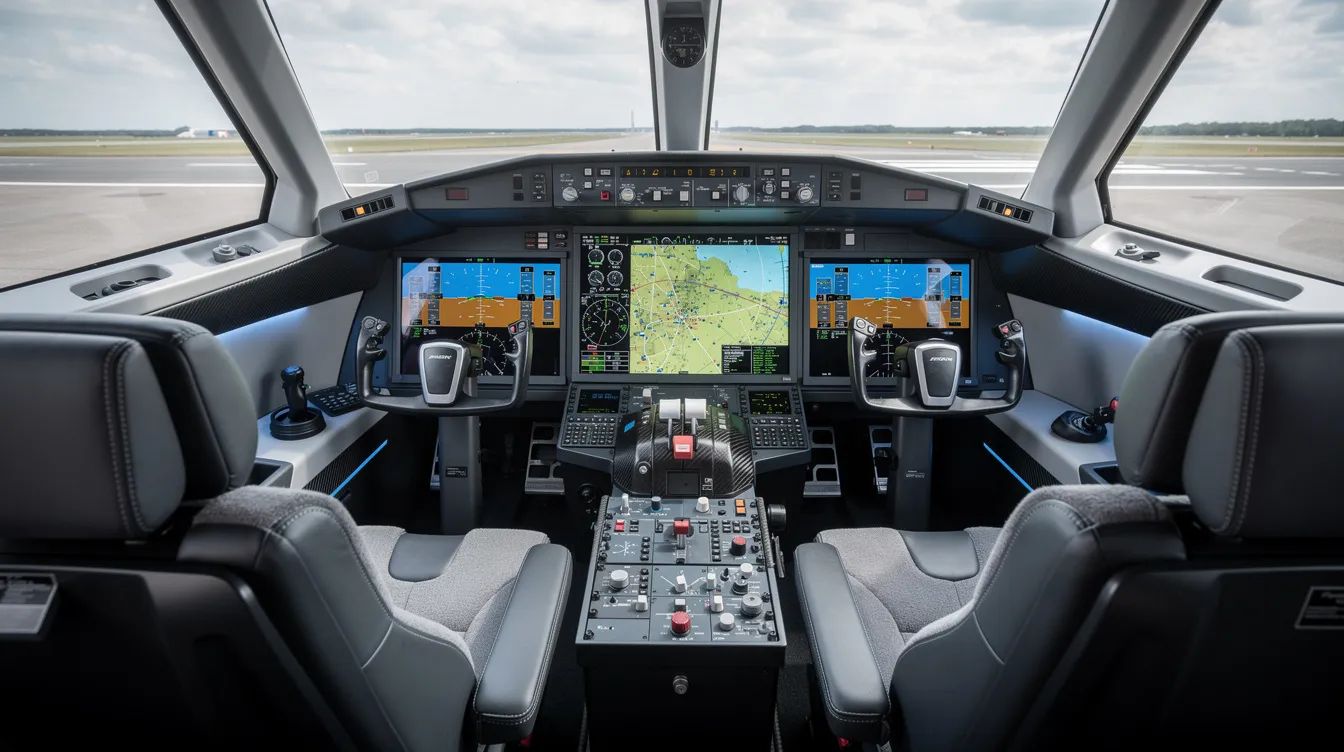
The Challenger 350 is equipped with four large displays and a head-up display in the cockpit, along with ADS-B technology to meet current and upcoming navigational requirements. The interior design includes features like a large backlit mirror, a drainable ice drawer, and an available sink, with stone flooring options and berthing capability for overnight flights. Passengers can stream music, conduct video conferences, and, with services like Jettly Eats in-flight catering, enjoy tailored dining while they experience a smooth ride, even at the 45,000 ft service ceiling.
Understanding takeoff distance and airport access helps travelers make informed charter decisions. These performance factors influence route planning, schedule reliability, and which airports can serve as convenient alternatives to congested hubs.
Jettly’s digital platform provides access to global Challenger 350 aircraft availability among a wider fleet of 20,000+ aircraft, with instant pricing and routing suggestions that account for runway requirements, while its detailed guide to affordable private jet charter helps travelers understand and manage total trip costs.
The platform and support teams factor runway length, elevation, expected temperature, and payload into aircraft and airport recommendations for each trip.
Customer types who benefit from the Challenger 350 include executives on tight schedules needing multiple-city days, families on multi-leg vacations, and travelers requiring secondary airport access near smaller cities, many of whom leverage flexible private jet memberships to optimize frequent travel.
Jettly offers transparency around pricing and aircraft options, enabling customers to compare the Challenger 350 with light, midsize, or heavy jets based on specific mission needs—including flight hour costs and fuel prices that can be explored with its private jet charter cost estimator.
Two pilots operate every Challenger 350 flight, meeting operation requirements for this aircraft class while professional crews use updated weather and performance software to verify runway suitability—one reason Jettly is positioned as a NetJets alternative for flexible private flying.
Charter operators working with Jettly evaluate each mission for the right balance of thrust, range, and baggage compartment capacity, ensuring the jet can fly the required distance with the requested passengers and luggage, while tools like Jettly’s jet card flight cost estimator help frequent flyers model budget impacts across routes.
Ready to explore Challenger 350 charter options? Learn more and get instant quotes at https://www.jettly.com.

For regional or medium-range flights with 4–6 passengers and reduced fuel, the Challenger 350 can often depart in less than the 4,835 ft MTOW figure—sometimes several hundred feet shorter depending on temperature, elevation, and runway conditions. A light-load departure might require only 3,500–4,000 ft at sea level on a cool day.
Only a detailed performance calculation by the operator can provide exact numbers for a specific airport, weight, and weather scenario. Charter platforms like Jettly work with operators who run these calculations before every flight.
Under favorable conditions—lower weight, cooler temperatures, sea-level elevation, and a dry runway—the Challenger 350 may operate safely from runways just under 5,000 ft, subject to regulatory limits and operator policies.
Each operation is evaluated individually. Some shorter runways will not be suitable depending on performance calculations, obstacle clearance requirements, and required safety margins. Professional crew assessment is essential.
Yes. Shorter or high-altitude runways can require payload restrictions, meaning fewer passengers, reduced baggage, or less fuel to keep takeoff distance within limits. This is especially common at challenging airports like Aspen or similar high-elevation destinations during summer.
Charter operators and platforms like Jettly balance payload, fuel, and alternate airport planning to maintain safety while meeting client needs. Passengers may need to pack lighter or accept a fuel stop on demanding routes.
Hot temperatures lengthen takeoff distance by reducing air density. Strong headwinds can actually shorten ground roll, while tailwinds lengthen it. Contaminated runways (snow, ice, standing water) require additional distance and may make some airports temporarily unavailable.
Professional crews use up-to-date weather data and performance software on the day of flight to verify runway suitability before every departure. This is standard practice for all charter operations.
Travelers can search routes, compare aircraft—including the Challenger 350—and request instant quotes directly through Jettly’s platform. The system accounts for cruise speed, full fuel requirements, and runway performance when suggesting aircraft and airports.
Ready to fly? Explore flights or request a quote at https://www.jettly.com for missions where Challenger 350 performance and takeoff distance are a good fit.
The Bombardier Challenger 350 offers an exceptional balance of short takeoff distance, long range cruise speed, and passenger comfort, making it a versatile choice for private jet travelers. Its ability to operate from runways as short as 4,835 feet and reach a maximum altitude of 45,000 feet with powerful Honeywell engines ensures access to a wide range of airports and efficient travel. Understanding the Challenger 350 takeoff distance and related performance factors helps travelers and charter operators optimize flight planning for safety and convenience.
Jettly’s digital private jet charter platform simplifies access to Challenger 350 flights by providing transparent pricing, instant booking, and expert guidance on aircraft capabilities and airport options. Whether for business or leisure, Jettly connects travelers with the right aircraft to meet their mission needs while maximizing time savings and comfort.
Explore private jet charter options and get a personalized quote today at https://www.jettly.com.
Share this post:
Jay Franco Serevilla
Apr 18, 2026
|
5
min read
Discover tips and trends in the industry.

5
min read
Private Jet Membership: How to Choose the Right Membership for the Way You Fly
Choosing the right private jet membership is crucial for maximizing value and flexibility in private aviation. This guide outlines the different membership structures, including jet cards, fixed-fee subscriptions, and deposit-based programs, helping travelers make informed decisions based on their flying habits. Jettly's on-demand charter service offers a compelling alternative, allowing users to avoid large upfront commitments while enjoying transparent pricing.
Read More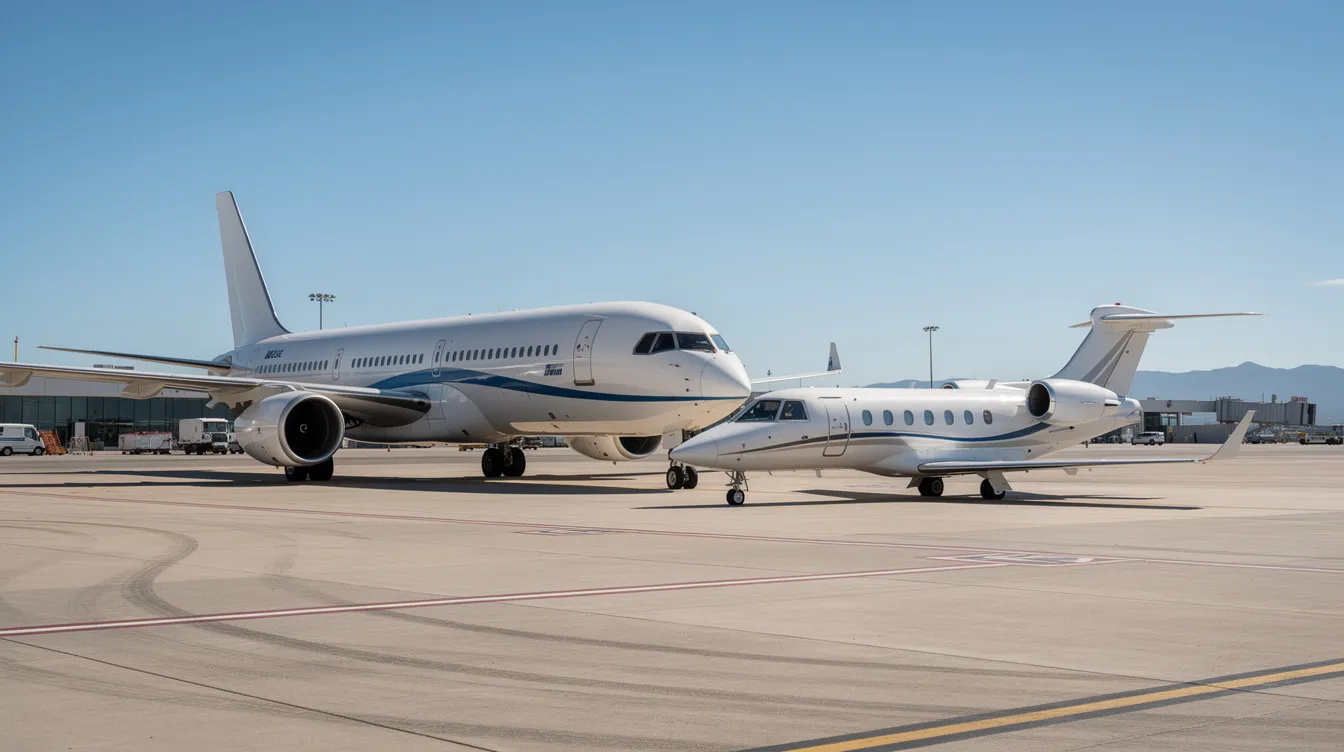
5
min read
Types of Planes in Civil Aviation: From Commercial Airliners to Private Jets
Civil aviation encompasses a diverse range of aircraft types, from commercial airliners to private jets. Understanding these categories helps travelers and aviation enthusiasts make informed decisions about their flying needs. This guide details the various aircraft types, their missions, and how to choose the right plane for specific travel requirements.
Read MoreStay updated with our latest insights and tips to elevate your journey with us.
MEMBERSHIPS AND ASSOCIATIONS



Disclaimer: Jettly operates as a charter broker, offering access to a global digital jet charter marketplace. Jettly is not a direct air carrier and does not own or operate aircraft. All advertised flights are conducted by third-party air carriers that are fully licensed and hold the appropriate Part 135 or Part 121 certifications issued by the Federal Aviation Administration (FAA) or equivalent regulatory authorities under U.S. or foreign law. Jettly complies fully with the U.S. Department of Transportation's Part 295 and Part 298 Charter Broker regulations. Jettly does not carry additional liability insurance. Passengers are covered by aircraft operator insurance. TICO: 50023770


