


Login
Get Instant Pricing On 23,000+ Aircraft

>

This guide is intended for prospective buyers, charter customers, and aviation enthusiasts seeking detailed information on the Cessna U206F’s capabilities, costs, and operational use. Here, you’ll find a comprehensive overview covering specifications, performance, operating costs, and charter use cases to help you make informed decisions about this versatile utility aircraft.
The Cessna U206F Stationair II stands out as a rugged and adaptable utility aircraft, well-suited for buyers, charter customers, and aviation enthusiasts who need reliable performance for demanding missions. Its robust construction, impressive payload, and short-field capabilities make it a preferred choice for operations where flexibility and cost-efficiency are essential.
– The U206F offers a genuine six-seat configuration and a high useful load ideal for both cargo and passenger missions.
– Large double cargo doors and a straightforward interior layout support quick reconfiguration for various operational needs.
– Reliable performance over rough terrain and short runways makes it popular among regional operators and bush pilots.
– Acquisition and operating costs are significantly lower than comparable modern utility aircraft, supporting strong resale demand.
– Extensive aftermarket upgrades and modifications enhance avionics, safety, and mission flexibility.
The Cessna U206F Stationair II is a six-seat, single-engine utility aircraft produced between 1972 and 1976, recognized for its exceptional load-carrying ability and short-field performance.
Known as the "sport-utility vehicle of the air," the U206F offers a high useful load often exceeding 1,500 pounds and a fuel capacity of 92 gallons, balancing efficiency with genuine capability for rough-field operations.
The aircraft features camber-lift wings that improve low-speed handling and stability, making it stable and forgiving in flight, though it can be nose-heavy during landings.
Cruise speed is approximately 142 knots (163 mph, 263 km/h) with a maximum speed of 151 knots (174 mph, 280 km/h), and fuel consumption ranges from 13 to 17 gallons per hour depending on power settings and flight conditions.
Acquisition costs typically range from $180,000 to $350,000, depending on airframe condition, engine time, and modifications—significantly lower than modern 206H variants that exceed $700,000.
Jettly can help travelers and operators source comparable utility aircraft, including Cessna 206 variants, through its global charter marketplace for missions requiring rugged capability.
The Cessna U206F Stationair earned its reputation as the sport-utility vehicle of general aviation. Built for work rather than show, this model prioritizes payload capacity and operational flexibility over pure speed.
The Cessna U206F Stationair II is a six-seat single-engine utility aircraft produced between 1972 and 1976. It is part of the Cessna 206 family, which includes various models such as the U206, P206, TU206, and T206H.
The “U” designation identifies the utility configuration, featuring large double cargo doors on the left side of the fuselage that open to more than 44 inches. This design supports air taxi operations, cargo hauling, and bush flying, where conventional passenger doors would limit loading options.
Production of the U206F spanned the early 1970s, bridging earlier U206E models and the later G/H variants. The basic layout remains straightforward: a high-wing design with fixed tricycle landing gear, six seats, and that distinctive wide cargo door opening.
Common mission profiles include:
Regional air taxi service to remote strips
Medevac and humanitarian transport
Skydiving operations
Float and ski operations for water or snow access
Family touring with heavy gear
The U206F is also widely used for other utility purposes such as aerial survey, skydiving, and specialized work applications beyond standard transportation.
Many U206F airframes remain in active commercial air service worldwide. Their rugged construction and broad parts availability keep these airplanes flying decades after production ended.
The Cessna 206 was introduced in 1964 and was built until 1986, with a total production of 6,581 aircraft between 1964 and 2004.
The U206F traces its lineage to the Cessna 210, from which the fixed-gear 205 and 206 models were originally developed. This family tree explains much about the Stationair’s robust design philosophy.
Cessna introduced the 205 from 1962 to 1964 as a six-place, fixed-gear derivative of the retractable 210. The following models evolved into the 206 series from 1964 onward, with passenger-focused P206 and utility-focused U206 variants. Cessna produced a total of 8,509 aircraft in the 205, 206, and 207 variants from 1962 to 2006, underscoring the series' popularity in general aviation.
The Cessna 206 family includes various models such as the U206, P206, TU206, and T206H, with the T206H being powered by a turbocharged Lycoming engine producing 310 hp.
The Super Skywagon designation applied to early models emphasized utility purposes, with progressively larger flaps, stronger landing gear, and higher-power engines culminating in the IO-520 powerplant. The U206F specifically incorporated structural refinements and systems updates over previous E variants.
Later developments included:
The stretched Cessna 207 with a seven-seat capacity
The Super Skylane derivative focused on passenger comfort
The Turbo Stationair variants with turbocharged engines
Post-1998 206H/T206H models reintroduced with modern Lycoming IO-540 engines and glass cockpits
Older U206F aircraft remain sought after for three primary reasons: lower acquisition costs versus modern 206H variants, proven field performance with decades of operational history, and extensive STC support for modifications.
The Cessna 206 is certified to CAR3 standards and later to FAR Part 23, ensuring compliance with safety regulations for general aviation aircraft.
Specifications vary by configuration and installed modifications, but typical values for a normally aspirated U206F include the following:
Engine: Continental IO-520-F, fuel-injected, naturally aspirated
Power output: 300 horsepower at 2,700 RPM
Propeller: McCauley constant-speed, two or three-blade metal
Fuel type: 100LL avgas
TBO: 1,700 hours or 12 years
Maximum takeoff weight: approximately 3,600 pounds gross weight
Typical empty weight: 2,000–2,100 pounds, depending on equipment
Useful load: commonly around 1,500+ pounds in stock configuration
Total capacity: 92 gallons
Usable fuel: approximately 87–90 gallons (329 liters)
Fuel weight: approximately 522 pounds
Wingspan: 36 feet (10.97 meters)
Overall length: 28 feet 3 inches (8.61 meters)
Height: 9 feet 4 inches (2.84 meters)
Cargo door opening: approximately 45 by 48 inches
Max cabin width: 43 inches
Cruise speed: approximately 142 knots (163 mph, 263 km/h)
Maximum speed: 151 knots (174 mph, 280 km/h)
Stall speed: 52–54 KIAS with flaps extended
Service ceiling: 14,800 feet
Rate of climb: 800–920 feet per minute
Takeoff ground roll: 900 feet
Takeoff over 50-foot obstacle: 1,780 feet
Landing ground roll: 735 feet
Fuel consumption: 13 to 17 gallons per hour, depending on power settings and flight conditions
Note that optional air conditioning and other equipment additions affect empty weight and useful load figures.
The U206F positions itself as a strong performer in demanding conditions rather than a speed machine. Hot-and-high operations and short runway requirements drove its design priorities.
Its camber-lift wings improve low-speed handling and stability, contributing to the aircraft’s reputation for stability and forgiveness. Control forces feel heavy but honest, building pilot confidence in gusty or rough conditions. The high-wing design with trailing-link gear creates a stable IFR platform that effectively absorbs rough-field impacts.
Typical cruise profiles see speeds around 142 knots true airspeed at 65–75% power between 7,000 and 9,000 feet, burning approximately 13–17 gallons per hour. This yields endurance of roughly 4.5 hours plus reserves with full fuel.
Takeoff and climb performance highlights include:
Initial climb rate of 800–1,000 FPM at sea level gross weight
40-degree flap extension capability for short-field departures
Takeoff distance as short as 800 feet over obstacles when lightly loaded
Climb rate reduces to approximately 500 FPM at 8,000 feet density altitude
Stall behavior remains benign when flown within weight and CG limits. The aircraft breaks cleanly at 55–60 knots indicated without a tendency to drop a wing if coordinated.
Landing demands proper speed control. The U206F exhibits nose-heavy tendencies with forward CG from full passenger compartment loading. Maintaining 65+ KIAS on approach with proper flap settings yields manageable touchdown characteristics.
On floats or skis, expect speeds to drop 10–15 knots and useful load reductions of 300–500 pounds. These conversions enable access to water or snow strips that are inaccessible to wheeled aircraft, as seen in Alaskan bush operations.
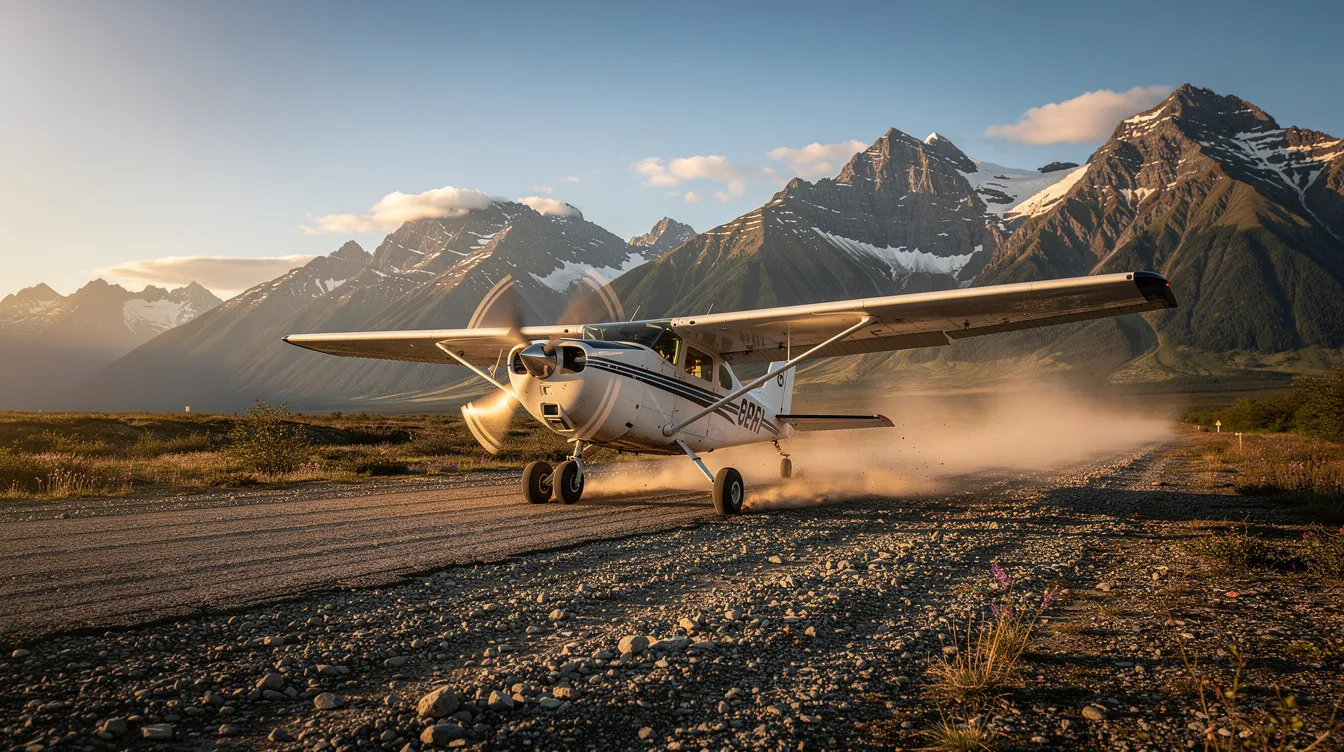
The U206F interior prioritizes function over luxury. The large cabin prioritizes payload handling and cargo flexibility over passenger comfort amenities.
The standard configuration seats a pilot and five passengers in a six-seat layout. However, many U206F aircraft have two to four rear seats removed for cargo, medevac stretchers, or skydiving operations.
The signature double cargo doors on the left side define the aircraft’s utility character:
Door opening approximately 45 by 48 inches
No door sill lip for flat-floor loading
Easy accommodation of bulky items like bikes, survey equipment, or game
Quick reconfiguration between passenger and cargo layouts
Comfort levels reflect 1970s design sensibilities. Noise levels hover around 85–90 dB in cruise, making noise-canceling headsets essential. Ventilation relies on basic fresh air scoops and defrosters. Original interiors featured durable vinyl but dated plastics.
Modern interior upgrades significantly improve the passenger experience:
Refreshed upholstery and soundproofing panels
LED interior lighting
USB power outlets
Updated panel plastics and trim
External baggage options include cargo pods holding 300+ pounds via STC, keeping the cabin clear while maintaining center-of-gravity within limits. New fuel caps and tank maintenance ensure reliable operation of the fuel system.
Original U206F avionics featured analog steam gauges with dual Narco or King radios, VOR/ILS navigation, and ADF. Most active airframes have seen significant upgrades to their instrument panels.
Common panel modernizations include:
Garmin GTN 650/750 WAAS GPS navigators
Glass cockpit displays: G500/G600 or G3X Touch
GFC 500 autopilot systems
Modern audio panels with Bluetooth
uAvionix or Garmin ADS-B transponders for compliance
Expect avionics upgrade packages to cost $50,000–$150,000, depending on scope.
Performance and utility STCs expand the aircraft’s capabilities:
STOL kits from Sierra Industries or Sportsman with slots and cuffs
Vortex generators reduce stall speed by approximately 5 knots
Long-range fuel tank modifications
Cargo pods for external payload
Float and ski conversion packages
Engine and powerplant upgrades address power and efficiency:
IO-550 conversions providing 310–325 HP for better climb and hot-high performance
The three-blade MT propeller reduces noise and vibration
Turbo-normalizers extending service ceiling to 18,000 feet
Safety modifications include four-point harnesses, LED exterior lighting, and JPI EDM-900 engine monitors tracking CHT/EGT trends. These upgrades prove especially valuable for charter operations prioritizing reliability and dispatch rates.
The U206F benefits from a simple, proven Cessna piston single design, but older airframes require diligent maintenance attention.
Key areas of concern include:
Airframe corrosion in tail surfaces, elevator skins, and door posts, particularly from moisture exposure in float operations
Fuel bladder integrity after 30+ years of service
Landing gear trunnion wear from gravel and rough-field use
Fuel selector valve issues covered by AD 78-13-03
Continental IO-520-series engines maintain a reputation for reliability when properly operated. Typical on-condition overhaul intervals range from 1,800–2,000 hours, with overhaul costs of $35,000–$45,000 for normally aspirated engines. Turbocharged engine overhauls can be significantly higher, with some reported costs nearing $100,000 due to extensive maintenance needs.
Annual inspections for a Cessna 206 typically range from $3,300 to $5,000, depending on maintenance needs and shop rates. Maintenance costs are influenced by the operational environment; frequent rough field use increases wear on landing gear, brakes, and other components.
The Cessna 206 series has been subject to several Airworthiness Directives (ADs) mandating inspections and modifications, including checks of the fuel selector and induction air box to ensure ongoing safety.
The Cessna 206 Stationair stands out among general aviation aircraft for its robust safety features and thoughtfully engineered emergency systems, making it a trusted choice for both commercial air service and personal use. Designed with utility and reliability in mind, the Cessna 206’s fixed landing gear and rugged construction allow it to operate safely from a wide range of environments, from paved runways to remote gravel strips and water when equipped with amphibious floats.
A key safety innovation is a system that disables flap operation when the rear clamshell cargo door is open, addressing concerns about passenger egress during flight.
The aircraft’s gross weight and balance are carefully managed, ensuring predictable performance even when the large cabin is fully loaded with passengers or cargo. The double cargo doors on the left side of the fuselage not only facilitate easy loading for utility missions such as aerial photography or medevac, but also provide rapid egress in emergency situations.
Inside the passenger compartment, the Cessna 206 is equipped with six seats, each fitted with seatbelts and shoulder harnesses to maximize occupant protection. The spacious cabin layout and wide doors make it easier for passengers to enter and exit quickly, an important consideration for both routine operations and emergency scenarios.
The U206F Stationair model features a comprehensive instrument panel that delivers critical flight information at a glance, supporting safe decision-making in all phases of flight. A stall warning system alerts the pilot to low-speed conditions, helping to prevent loss-of-control incidents—a leading cause of accidents in single-engine aircraft. The inclusion of new fuel caps and well-maintained fuel systems further enhances operational safety by reducing the risk of fuel leaks or contamination.
For added peace of mind, the Cessna 206 is equipped with an emergency locator transmitter (ELT) and a fire extinguisher as standard. These systems are essential for rapid response in the unlikely event of an accident or onboard emergency. Optional air conditioning is available, ensuring a comfortable environment for passengers and crew, which can be especially important during long flights or in extreme climates.
Regular maintenance and thorough pre-flight inspections are vital to maintaining the Cessna 206’s reputation for reliability. Attention to the landing gear, airframe, and engine—such as the Continental IO-520—ensures that the aircraft continues to deliver safe performance throughout its service life. Pilots are encouraged to stay current with training and to follow best practices for weight and balance, fuel management, and emergency procedures.
In summary, the Cessna 206 Stationair’s combination of rugged construction, advanced safety features, and practical emergency systems makes it a standout among utility aircraft. Whether flown for personal use, commercial air service, or specialized missions, the Stationair offers peace of mind for pilots and passengers alike, reinforcing its reputation as the sport utility vehicle of the skies and making it an attractive focal point for aviation-focused partners in Jettly’s high-ticket affiliate program.
The U206F operates as a relatively economical heavy-hauler compared with larger twins or turbine aircraft, though its costs exceed those of smaller four-seat singles, paralleling how overall private jet ownership and operating costs scale with aircraft size and complexity.
Fuel burn: 13–17 GPH at $6/gallon = approximately $78–$102, with avgas and jet fuel prices varying by region, much like private jet fuel costs and surcharges in 2024
Engine reserve: $20–$30
Maintenance reserve: $30–$40
Miscellaneous: $10–$20
Total: approximately $140–$190/hour
Hangar: $4,000–$8,000 depending on location
Insurance: $3,000–$6,000 private use; $10,000+ commercial/bush
Annual inspection: $3,300–$5,000
Avionics database subscriptions: $500–$1,500
Low-time project aircraft: $180,000
Mid-time with basic avionics: $220,000–$280,000
Turnkey with modern panel and floats: $300,000–$350,000
Aircraft listed for sale often have asking prices in the $180,000 to $350,000 range, and some listings are marked as sold quickly due to high demand, leading some buyers to explore affordable aircraft rental options and cost structures.
Value drivers for buyers include low-time engines, a corrosion-free airframe structure, modern avionics, complete maintenance documentation, and high-value modifications such as float gear. Cessna 206s are popular among air charter companies and small cargo air carriers because of their ability to carry bulky cargo and flexible passenger configurations.
Consider the operational context carefully. Part 91 personal use carries different requirements than Part 135 charter operations or shared versus full private charter structures. Commercial certification demands higher equipment standards, specific pilot qualifications, and increased insurance costs.
The U206F and similar Cessna 206 variants remain staples of regional charter and air taxi operations where runways are short and loads are heavy.
Typical charter missions include:
Short-haul hops to remote airstrips under 2,000 feet
Lodge and fishing camp transfers
Survey, mapping, and aerial photography flights
Medical and humanitarian transport to off-grid communities
Operators value the U206F for several practical reasons. Highly useful load accommodates six adults with gear. Simple fixed-gear yields approximately 95% dispatch rates compared to retractables. Quick seat swaps enable same-day passenger and cargo missions. True 1,000-foot strip capability exceeds that of larger turboprops.
Real-world examples include Yukon air taxis hauling miners to remote claims, African NGO operations delivering supplies to villages inaccessible by road, and operators using crowdsourced and shared private flights or instant-book services like Zenflight’s private jet marketplace to fill empty seats on regional routes.
For passengers, expect practical seating rather than executive comfort. The high-wing configuration provides excellent views. Cabin access through the large doors simplifies boarding with gear. Noise levels warrant quality headsets, and premium touches such as curated in‑flight catering for private jets can still be arranged on suitable missions.
Jettly’s marketplace and airport locator tools can source operators flying Cessna 206 family aircraft for missions where rugged capability matters more than cabin luxury, drawing from a broad ecosystem of charter airlines and private flight providers.
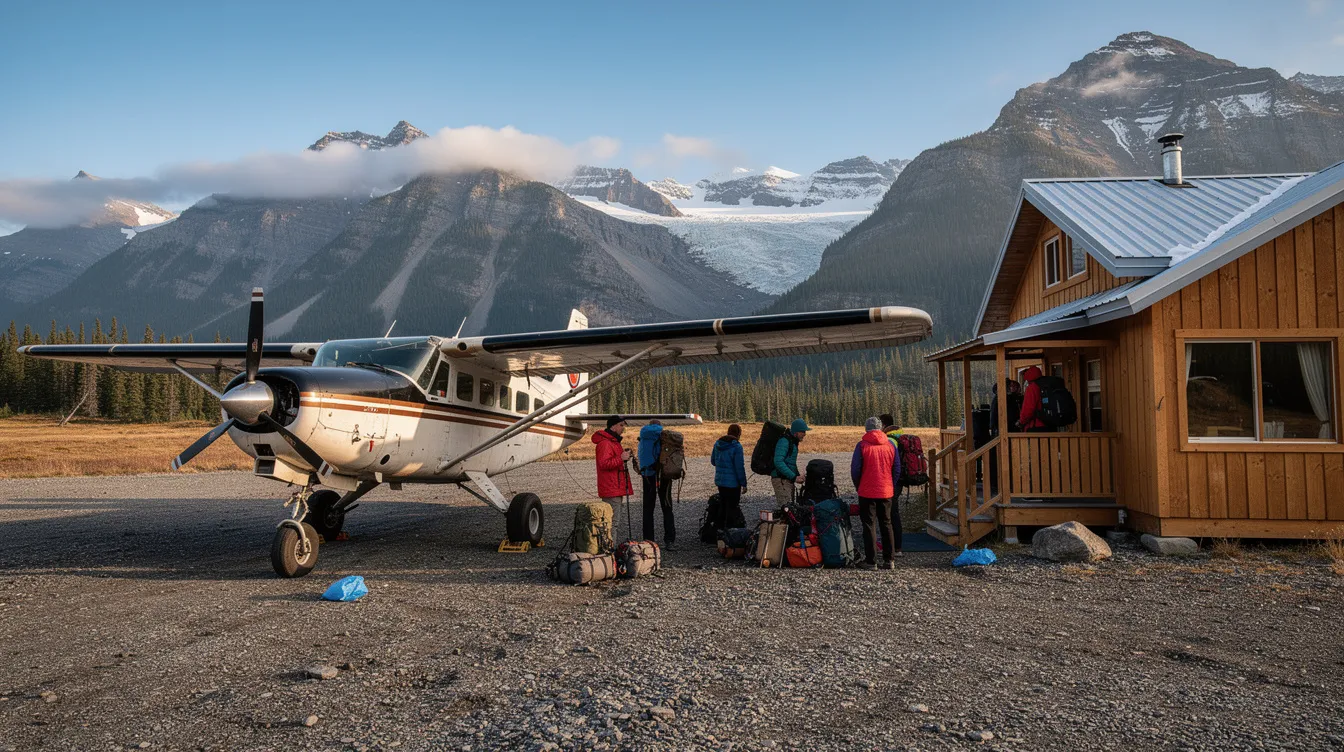
Jettly operates as a digital private charter platform that connects travelers with a broad fleet ranging from light jets to utility piston aircraft such as the Cessna 206 family.
Travelers can use Jettly to request flights requiring specific capabilities:
Rough-field or short-runway access
Float or ski operations on water or snow
Heavy baggage or equipment transport
Remote destination service unavailable through commercial air service
The platform provides instant charter cost estimates and transparent cost breakdowns that work alongside Jettly’s jet card flight cost estimator for membership-style flying, which complements broader guidance on jet card pricing, inclusions, and fees. Users can compare different private charter aircraft categories—light jet, turboprop, and utility piston—and reference a full breakdown of private jet operating costs for any given route.
Benefits extend particularly to adventure travelers, photographers, and small groups heading to remote locations. Chartering a Stationair-type aircraft to a wilderness lodge saves hours compared with ground transport or connecting through distant commercial airports, and understanding how private jet charter pricing works and per‑hour private jet rental costs across aircraft types helps travelers budget for these remote missions, whether booking directly or through operators such as Dexter Air Taxi via Jettly’s broker platform.
Safety remains central to Jettly’s approach. The platform works with regulated operators, vetted aircraft, and experienced pilots familiar with demanding operating environments, especially for members enrolled in Jettly’s private jet membership programs who may be comparing Jettly as a NetJets alternative for flexible private flying after first understanding how industry leader NetJets structures its services and ownership programs.
Learn more about charter options and available aircraft types at https://www.jettly.com.
Selecting the right aircraft depends on mission requirements. The U206F occupies a specific niche between lighter singles and larger turbine aircraft.
U206F offers roughly double the cargo volume and 200+ pounds more useful load
Operating costs approximately $140–$190/hour versus $100–$120/hour for 182
U206F handles six people or heavy cargo; 182 limits to four with lighter loads
Both share excellent parts availability and maintenance simplicity
Caravan carries 9 passengers with 950nm range; U206F carries 6 with 600–700nm range
Caravan operates at approximately $600/hour; U206F at $140–$190/hour
Caravan requires minimum 2,000-foot runways; U206F handles 1,000 feet
U206F wins on cost for short regional legs under 300nm
Pressurized light twins like the Cessna 340 cruise over 200 knots, while light jets cruise 350+ knots versus 140 knots for the U206F
Jets require 4,000+ foot paved runways; U206F handles gravel and grass
Jet operating costs exceed $2,000/hour
U206F provides access where jets simply cannot operate
On Jettly, users can compare different aircraft types for specific itineraries, balancing cost, comfort, speed, and access requirements, or lock in fixed rates through jet card-style charter programs, much as they might when reviewing top private jet charter companies and their service models. For wilderness destinations with short strips, utility pistons like the U206F often prove the only practical option.
At economy cruise settings around 65% power (approximately 110 KTAS burning 12 GPH), the U206F achieves roughly 600–700 nautical miles with 45-minute IFR reserves. This covers routes like Seattle to Ketchum, Idaho (450nm) with comfortable margins.
Real-world range decreases with heavier payloads, higher power settings, headwinds, and modifications like floats or cargo pods—expect 20% reductions in some configurations. Operators planning remote or unimproved strip missions typically use conservative legs for safety margins.
The U206F was designed specifically for such environments. Large 40-degree flaps, sturdy fixed tricycle gear with trailing-link main gear, and high-lift camber-lift wings enable operations from strips as short as 900 feet under standard conditions at lighter weights.
At higher-density altitudes or near gross weight, expect 1,500–2,500-foot requirements. Surface condition, pilot technique, and regulatory requirements all influence actual minimums. Charter operators use conservative performance planning with appropriate safety margins.
Many owners fly the U206F as a family hauler, combining six seats with substantial baggage capacity for trips to cottages, ski destinations, or remote vacation properties. The plane accommodates gear that would never fit in a four-seat single.
Comfort remains practical rather than luxurious. Modern interior refurbishments and quality headsets significantly improve the experience. Those preferring quieter, more refined cabins for longer journeys might consider chartering a turboprop or light jet through Jettly, whether for regional hops or city pairs, such as private jet charter flights to and from Houston or bespoke private jet charter services in Kolkata, West Bengal.
Insurers typically require time-in-type or formal transition training with a qualified instructor before providing full coverage. Higher-power singles like the U206F with 300-HP engines demand demonstrated competence.
Premium levels depend on pilot total time, type experience, hull value, intended use (personal versus commercial), and operating environment. Bush flying commands higher rates than paved-airport-only operations. Budget $3,000–$6,000 annually for private use, potentially $10,000+ for commercial operations. Factory courses and recurrent training improve both safety and premium negotiations.
While exact aircraft availability depends on operators in each region, Jettly can often match travelers with Cessna 206 family aircraft or similar utility types appropriate for specific missions.
Users can specify requirements—short runway access, floatplane capability, heavy baggage needs—and Jettly’s platform or support team recommends suitable aircraft options. Visit https://www.jettly.com to submit trip details and see what utility aircraft are available for your itinerary.
What makes the Cessna U206F ideal for rough-field or remote operations?
The U206F features robust fixed landing gear, high-lift wings, and powerful flaps, allowing safe operation from short, unpaved, or uneven strips where many aircraft cannot land.
How much cargo can the U206F carry alongside passengers?
In standard configuration, the U206F can handle over 1,500 pounds of useful load, allowing for six people plus baggage or bulky cargo, with easy loading through its large double cargo doors.
What are typical maintenance costs and reliability considerations for the U206F?
Annual inspections run between $3,300 and $5,000, with additional reserves for engine and maintenance; older airframes require close attention to corrosion and compliance with applicable airworthiness directives.
How does the U206F compare to other options for charter or commercial use?
Compared to smaller singles, the U206F offers more capacity and flexibility; versus turboprops or jets, it is much less expensive to operate and can access shorter runways, but trades off speed and luxury.
Can the U206F be easily upgraded with modern avionics or safety features?
Yes, many U206Fs have been retrofitted with glass cockpit displays, GPS, ADS-B, advanced autopilots, and safety enhancements such as improved harnesses and LED lighting.
Is the Cessna U206F a good fit for family travel or adventure trips?
The U206F is well-suited for families or small groups traveling with lots of gear to remote destinations, though noise levels and comfort are more basic than in modern turboprops or jets.
What factors affect the resale value of a U206F?
Resale value is influenced by engine hours, avionics upgrades, airframe condition, corrosion history, and installed modifications such as floats or cargo pods.
How can I charter a U206F or similar utility aircraft through Jettly?
Jettly’s platform allows you to specify mission requirements and will match you with operators flying U206F or equivalent aircraft suited to rugged or remote itineraries.
The Cessna U206F remains a robust and versatile utility aircraft with decades of proven service history. Its combination of payload capacity, short-field performance, and operational simplicity explains continued demand among buyers and operators alike.
Those who benefit most from the U206F include:
Private owners needing genuine six-seat capacity with heavy-load capability
Regional operators serving remote communities and unprepared strips
Adventure charter providers offering access to wilderness destinations
Organizations conducting surveys, photography, or humanitarian missions
Trade-offs exist. Older airframes require careful pre-purchase inspection and ongoing vigilance for corrosion. Cabin comfort and noise levels fall short of modern turboprops or business aircraft. Maintenance planning demands attention to aging systems and AD compliance.
For those who want U206F-type capability without ownership commitment, on-demand charter through Jettly offers a practical alternative. Access rugged utility aircraft for specific missions without the fixed costs, maintenance responsibilities, or aircraft selection limitations.
Ready to explore flight options for your next remote destination? Compare aircraft, request quotes, and discover what’s available for your itinerary at https://www.jettly.com.
Cessna U206F — 6 seats, over 1,500 lbs useful load, cruises at 142 knots, range of 600–700 nm, operates from ~1,000 ft runways, costs $140–$190 per hour. Ideal for remote, rugged, and flexible utility missions.
Cessna 182 — 4 seats, about 1,300 lbs useful load, cruises at 135 knots, range of 900 nm, needs ~1,200 ft runways, costs $100–$120 per hour. Best for personal or family touring.
Cessna Caravan — 9 seats, about 3,000 lbs useful load, cruises at 186 knots, range of 950 nm, requires ~2,000 ft runways, costs $600+ per hour. Suited for regional cargo or passenger operations.
Light Jet (Citation Mustang) — 4–5 seats, around 1,200 lbs useful load, cruises at 340+ knots, range of 1,200 nm, requires 4,000+ ft paved runways, costs $2,000+ per hour. Ideal for fast executive transport.
Share this post:
Jay Franco Serevilla
Apr 13, 2026
|
5
min read
Discover tips and trends in the industry.
5
min read
Private Plane NYC to Miami: Route Guide, Costs, and How to Book with Jettly
Flying private from NYC to Miami offers a seamless travel experience, cutting down on time and avoiding commercial airport chaos. With flight times of 2.5 to 3 hours and various aircraft options, travelers can enjoy flexibility and comfort tailored to their needs. Jettly's platform simplifies the booking process, providing instant quotes and access to over 20,000 private jets.
Read More
5
min read
Cessna 210 Operating Cost: Complete Owner's Breakdown
Understanding the operating costs of a Cessna 210 is vital for potential owners. With costs ranging from $200 to $300 per flight hour and annual expenses between $25,000 and $45,000, ownership can be a significant commitment. For those flying less frequently, chartering through platforms like Jettly may offer a more flexible and cost-effective alternative.
Read MoreStay updated with our latest insights and tips to elevate your journey with us.
MEMBERSHIPS AND ASSOCIATIONS



Disclaimer: Jettly operates as a charter broker, offering access to a global digital jet charter marketplace. Jettly is not a direct air carrier and does not own or operate aircraft. All advertised flights are conducted by third-party air carriers that are fully licensed and hold the appropriate Part 135 or Part 121 certifications issued by the Federal Aviation Administration (FAA) or equivalent regulatory authorities under U.S. or foreign law. Jettly complies fully with the U.S. Department of Transportation's Part 295 and Part 298 Charter Broker regulations. Jettly does not carry additional liability insurance. Passengers are covered by aircraft operator insurance. TICO: 50023770


