


Login
Get Instant Pricing On 23,000+ Aircraft

>
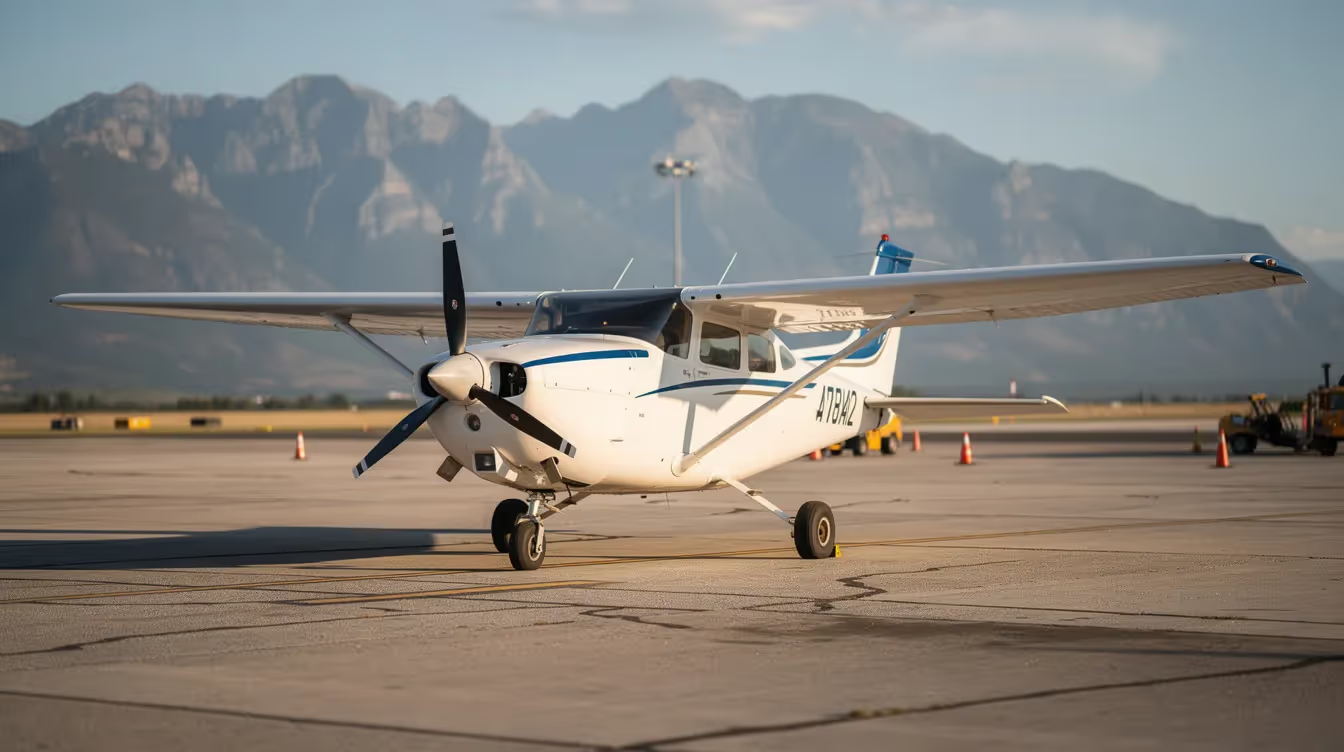
Understanding Cessna models is essential for anyone considering private aviation, whether for flight training, personal flying, or business charter. From the ubiquitous 172 Skyhawk that taught millions of student pilots to the rugged Caravan 208 hauling cargo across remote terrain, Cessna aircraft cover an unusually broad spectrum of missions. Cessna offers a wide variety of aircraft models, producing everything from small single-engine trainers to advanced transcontinental business jets.
When buying a Cessna aircraft, the process typically involves researching available models, understanding financing options, and possibly working with a broker or dealer; many prospective owners also compare these choices against the overall costs of private jet ownership and charter and review broader guides to affordable planes and budget-friendly aircraft choices.
This guide breaks down the most widely used variants with concrete specs, real-world use cases, and practical guidance for selecting the right aircraft.
Cessna models range from simple piston trainers like the 152 and 172 Skyhawk to versatile turboprop workhorses like the Caravan 208, with many variants from the 1970s through today still in active service worldwide.
Aircraft, including the 152, 172, 182, 206 Turbo Stationair HD, 310, 337 Skymaster, 340, 414, Caravan 208, and Citation family, remain heavily used for training, private ownership, cargo operations, and on-demand charter.
The most popular Cessna models differ primarily in seating capacity, engine power, payload, and intended mission, ranging from economical training to heavy-haul utility. For example, the 172 Skyhawk is prized for stability and training, the 182 Skylane offers more power and range for longer trips, and the 206 Turbo Stationair HD—often called the "SUV of the skies"—handles cargo, skydiving, and rugged transport.
The Citation family covers everything from entry-level light jets like the Citation M2 Gen3, certified for single-pilot operation with modern avionics, up to the flagship super-midsize Citation Longitude, which seats up to 12 passengers and offers a range of 3,500 nautical miles.
Cessna aircraft frequently appear in Jettly’s global fleet options for short-haul, cost-efficient missions where jets would be overkill.
Readers can explore chartering many of these models and request quotes for specific routes at https://www.jettly.com.
When pilots and travelers discuss Cessna models, they typically mean the piston singles, piston twins, turboprops, and light jets produced from the 1950s onward. Many airframes built decades ago remain active in 2026, supported by extensive parts networks and proven reliability. Cessna's aircraft models offer a wide range of versatility, with options suited for training, personal travel, business, and utility missions.
Cessna became part of Textron Aviation in March 2014, joining Beechcraft and Hawker under the Textron umbrella. Production continues for key models like the 172S Skyhawk and 208 Caravan, ensuring modern avionics and interiors for new deliveries while thousands of legacy airplanes built in earlier model years keep flying.
These aircraft serve diverse roles:
|
Model(s) |
Primary Use |
Typical Operator |
|---|---|---|
|
152, 172 |
Primary and instrument training |
Flight schools |
|
182, 206 Turbo Stationair HD, 210 |
Cross-country trips, personal use |
Private owners |
|
Caravan 208 |
Regional cargo, rugged airfield access |
Regional cargo operators |
|
310, 340 |
Executive passenger transport |
Charter operators |
|
Citation family (M2 Gen3, Longitude) |
Business travel, speed, and range |
Business travelers |
The most popular Cessna models differ primarily in seating capacity, engine power, payload, and intended mission, allowing buyers to select the right aircraft for their specific needs.
Jettly connects travelers with operators flying Cessna aircraft for point-to-point regional trips, emergency flights, and remote-area access. The platform emphasizes transparent pricing and on-demand booking without long-term commitments.
When purchasing a Cessna aircraft, buyers should consider factors such as the aircraft's mission profile, maintenance history, and resale value, drawing on frameworks for choosing the best personal plane, and how these compare with simply booking private charter aircraft across multiple categories.
The Cessna 172 line first flew in 1955 and has become the most produced aircraft in history, with over 44,000 airplanes built. Variants like the 172N from the late 1970s and the 172R/172S from the late 1990s onward modernized performance and avionics while maintaining the forgiving flight characteristics that made the original famous. The Cessna Skyhawk is powered by the latest technology in integrated cockpit avionics, specifically the Garmin G1000 NXi, which features a modern glass touchscreen display.
Typical modern 172S specifications:
Four seats
Cruise speed around 124 knots indicated airspeed (KTAS) at 75% power
Useful load approximately 800–860 lb
Range around 640 nautical miles with reserves
Lycoming IO-360-L2A engine producing 180 hp
Flight schools favor the 172 for its high-wing design, offering better visibility, simple systems, and massive parts availability. The airframe proves easy to fly for student pilots while remaining capable enough for instrument training and short regional flights. The Skyhawk is designed to be an ideal training aircraft, providing comfort and functionality for instructors and students with features like large wraparound windows and soft LED lighting.
Mission profiles include primary PPL training, IFR training, time-building, and short cross-country trips for 2–3 passengers with light baggage. Typical routes like Toronto–Ottawa or Los Angeles–Las Vegas fall well within the 172’s range. The Cessna 172 Skyhawk is one of the most recognized aircraft in aviation history, known for its reliability and ease of use, making it a favorite among student pilots and flight schools.
Jettly often lists Cessna 172 aircraft from operators offering intro flights, sightseeing, or low-cost point-to-point charters where speed matters less than price and flexibility. The spacious cabin with large rear window areas, soft LED lighting, and USB power makes extended sessions comfortable.
The classic 172N (produced roughly 1977–1980) used a carbureted O-320 engine, while later 172R/172S models feature fuel-injected IO-360 powerplant options with increased gross weight and better climb performance.
Avionics progression matters for training and safety:
Steam gauges in original production
Garmin G1000/G1000 NXi integrated glass cockpits in modern aircraft
Garmin GI 275 standby units for backup
Many 1977–1980 airframes have been retrofitted with modern panels, making even older model years competitive for IFR training.
A private pilot might use a 172R for weekend trips to regional airports within 300–400 nm. A small business could shuttle 2–3 team members to meetings at fields commercial airlines don’t serve. Chartering a 172 via Jettly proves cost-effective for solo travelers needing flexible departure times from smaller airfields, especially when using an airport locator tool to find convenient regional and remote airports.
The Cessna 152 is a common two-seat trainer designed for learning to fly. It offers a more affordable option for flight schools and individual students beginning their pilot careers. While it lacks the four-seat capacity of the 172, its simplicity and low operating costs make it an ideal primary trainer.
Cessna introduced the 182 Skylane in 1956, and it quickly became the step-up choice for pilots outgrowing the 172. The 182P (early–mid 1970s) and 182Q (late 1970s–early 1980s) remain common in used markets today.
Approximate performance specifications:
Four seats
Cruise speed around 150–155 KTAS
Useful load approximately 1,100–1,300 lb
Range around 900 nautical miles with reserves
Continental O-470 engine producing 230 hp
Pilots upgrade from a 172 to a Cessna 182 for higher cruise speed, better high-altitude performance, and more payload capacity. The aircraft handles long family trips or heavier gear that would strain a 172.
Typical missions include long-distance personal travel (Dallas–Denver, for example), small business trips with 3–4 passengers, and light cargo runs to regional hubs. Many 182s have been upgraded with modern autopilots and GPS/WAAS avionics, making them very capable IFR platforms.
Jettly customers may encounter Cessna 182 Skylanes in platform listings for shorter charters to secondary or mountain airports, balancing speed, comfort, and cost, and can reference comparisons of the cheapest private aircraft options across budgets or use a private jet charter cost estimator to understand how aircraft type and distance affect pricing.
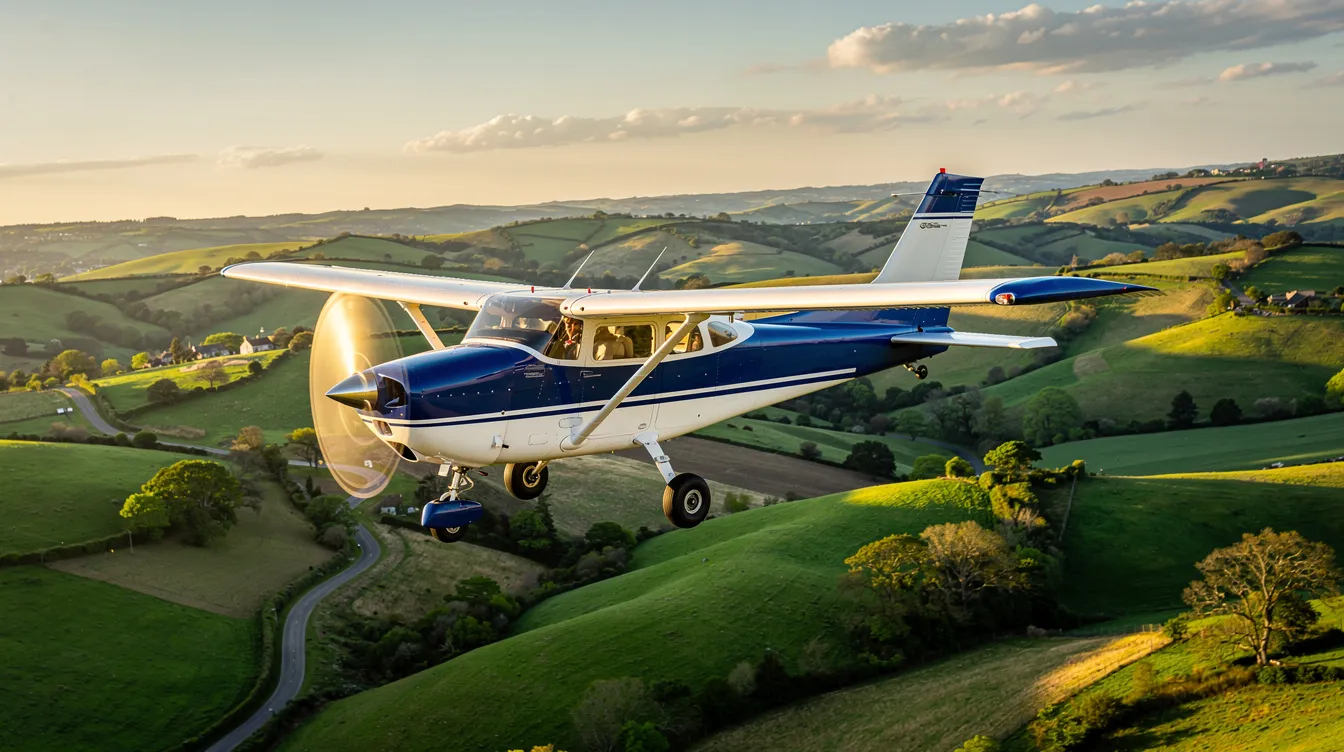
The 182P represents the classic mid-70s Skylane, while the 182Q brought refinements in the fuel system and performance. Post-1990s models (182S/T) offer factory glass panels and updated interiors with current paint schemes.
Optional equipment expands capability:
De-icing boots on later or retrofitted models
Long-range tanks for extended missions
STOL kits for short or unimproved strips
An operator might use a 182Q for charter flights to remote fishing lodges or ski areas. Passengers benefit from direct access rather than driving hours from a commercial hub—a true workhorse for regional operations.
Often called the "SUV of the skies," the Cessna 206 Turbo Stationair HD is a rugged, high-capacity utility aircraft. It is widely used for cargo transport, skydiving operations, and heavy-duty missions requiring short-field performance and reliability. Its turbocharged engine helps maintain performance at higher altitudes and in hot conditions.
The Cessna 210 Centurion debuted in 1960 as a high-performance single-engine aircraft with retractable landing gear. The retractable gear reduces drag significantly, making the 210 attractive for demanding owners needing speed and range.
General 210H-era performance:
Six seats (typically 4–5 used in comfort)
Cruise around 160–170 KTAS
Useful load over 1,500 lb
Range approaching 700–800 nautical miles
The main landing gear retracts cleanly, giving the 210 a more streamlined look and better efficiency than fixed-gear alternatives. It serves business travel where a twin-engine or jet proves unnecessary, but time savings over a 172/182 matter.
The Cessna A185F Skywagon (produced late 1960s–1980s) takes a different approach. This rugged, tailwheel, high-wing aircraft targets bush flying, float operations, and remote-area logistics. Nearly 6,200 units were built over 28 years.
Typical 185 missions include:
Landing on short gravel bars and grass strips
Float operations on remote lakes
Flying hunters, survey crews, or supplies to roadless areas
Operations in Alaska, northern Canada, and rural Australia
The straight tail and robust airframe handle abuse that would ground other single-engine models. While 210s and 185s appear less frequently in mainstream charter, Jettly’s network includes both in regions emphasizing backcountry access, often alongside other rugged singles like the Cessna 207 with its higher seating capacity.
The comparison comes down to mission requirements:
|
Factor |
Cessna 210 |
Cessna 185 |
|---|---|---|
|
Landing gear |
Retractable gear version |
Fixed tailwheel |
|
Best runways |
Paved airports |
Gravel, grass, water |
|
Cabin focus |
Travel-oriented |
Cargo-friendly utility |
|
Primary use |
Executive regional trips |
Remote survey/supply |
The 210’s cabin suits business travelers between regional centers. The 185’s utilitarian layout handles photographers, survey teams, and bulky cargo in challenging terrain. Both thrive with proper maintenance despite older airframes.
Cessna’s twin-engine family begins with the 310, introduced in 1954 as a fast, compact twin. Pressurized cabin-class twins like the 340A and 414A followed in the 1970s for pilots needing altitude capability.
Typical Cessna 310R profile:
Six seats (often 4 passengers for comfort)
Cruise around 190–200 KTAS
Maximum range approximately 1,400 nautical miles
Sleek design with distinctive wing-tip fuel tanks
The Cessna 340A adds a pressurized cabin, allowing cruise at FL200–230 above weather. Passengers enjoy smoother rides on longer legs, like Chicago–Dallas. Production ceased years ago, but refurbished examples remain popular, and many travelers specifically seek out Cessna 340 charter options with detailed specs and range information.
The Cessna 414A Chancellor (including RAM VII-style upgrades) steps toward mini-corporate aircraft territory with a spacious cabin, club seating, and performance suitable for executive flights over 800–1,000 nm, characteristics that also appeal to families evaluating the best private planes for family travel. The cowling bulge accommodating larger engines becomes a recognition feature.
Charter clients typically encounter:
Dual GPS with WAAS approaches
Integrated flight directors
Weather radar
Upgraded glass panels on many refurbished airframes
Jettly lists these twins for customers wanting twin-engine redundancy and pressurization at lower cost than small jets, especially for 4–6 passenger business groups.
Consider a four-person executive team flying 600 nm. A 340A offers a lower hourly operating cost than a light jet with slightly longer flight time. The empty weight and fuel efficiency of piston twins favor routes where speed isn’t paramount.
Many clients choose twins like the 310R or 340A for routes over water or mountainous terrain, valuing the redundancy. However, all charter aircraft meet strict regulatory standards regardless of engine count.
Use Jettly’s quoting tools to compare real prices and flight times between piston twins, turboprops, and light jets on any route, and consult both overviews of the best private jet charter companies and their services, and this guide on how private jet charter pricing works and how to reduce costs.
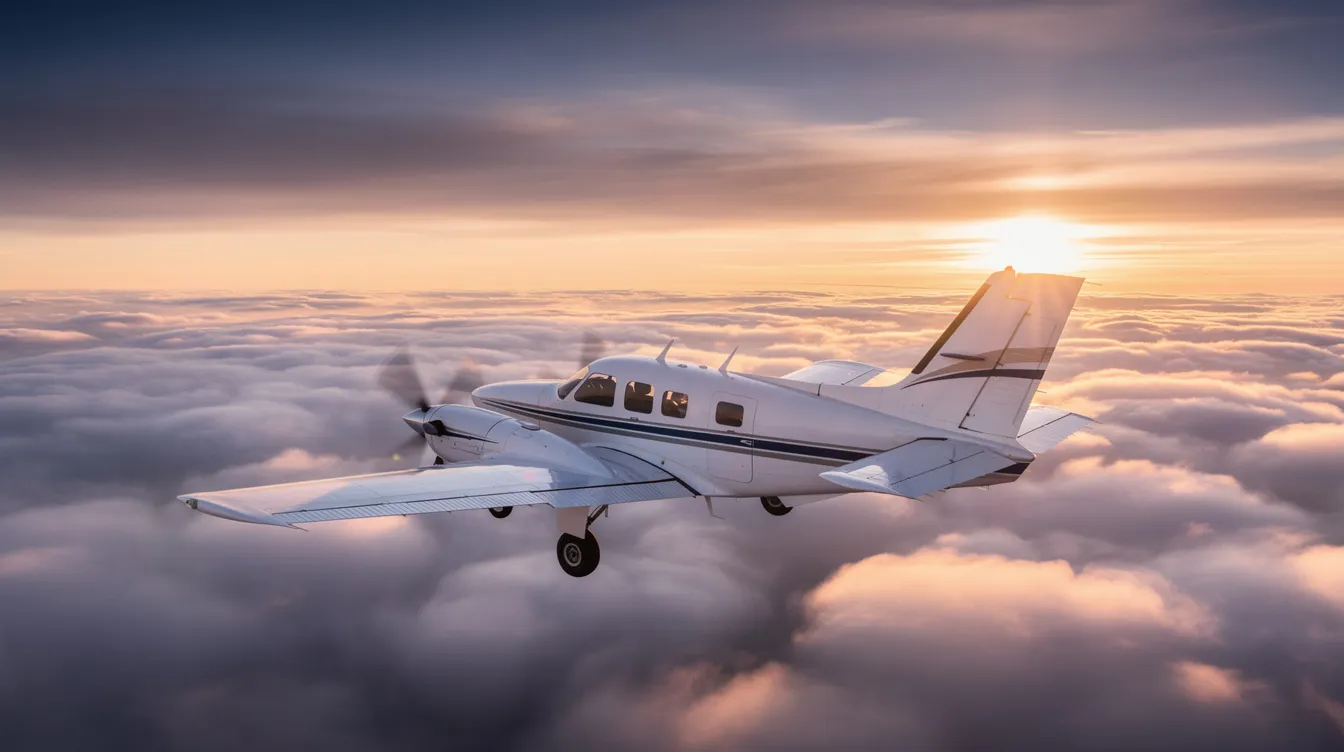
The Cessna 337 Skymaster stands out with its push-pull engine layout—one engine mounted in the nose and another in the rear fuselage. This arrangement eliminates the asymmetric thrust issues common in conventional twin-engine aircraft during an engine failure, improving safety and handling.
Cessna introduced the Caravan 208 in the mid-1980s as a single-engine turboprop built for reliability and versatility. It handles both cargo and passenger transport with equal competence.
Core performance figures:
9–14 passengers depending on configuration
Cruise around 170 KTAS
Useful load over 3,000 lb
Range around 800–1,000 nautical miles with reserves
The PT6A turboprop powerplant brings exceptional reliability in remote environments, including small strips, unpaved runways, and hot-and-high conditions. The reputation for durability makes it a favorite for demanding operations.
Flexible cabin configurations include:
Commuter seating for regional airlines
Cargo-only layouts for freight operators
Combi arrangements mixing passengers and cargo
Caravans appear frequently in Jettly’s inventory for charter flights where groups of 6–9 passengers or bulky cargo need access to destinations that scheduled airlines don’t serve. The Grand Caravan EX variant adds executive interior schemes for more refined missions, including international private jet operations with appropriate permits and customs handling, and sits alongside offerings from other top private plane manufacturers for different budgets and needs.
Operators increasingly integrate carbon offset programs and efficient routing, aligning with environmental awareness trends. The turboprop efficiency suits medium-range missions better than jets for many applications.
Practical examples include:
Shuttle flights between Caribbean islands for resort guests
Supply runs to remote mining sites in northern regions
Scenic or adventure trips to lodges accessible only via short strips
Humanitarian transport with medical supplies
The cabin offers more space than small jets for bulky equipment like surfboards, skis, or stretchers. While slower than jets, the Caravan’s takeoff and landing performance opens airports that jets cannot use.
Customers can source Caravans through Jettly for humanitarian transport, group adventure travel, or corporate logistics where flexibility and payload trump speed, and can apply tips for booking the cheapest private jet flights by choosing turboprops and secondary airports.
Cessna's Citation family spans a wide range of business jets, from entry-level light jets like the Citation M2 Gen3 to flagship super-midsize jets such as the Citation Longitude.
The Citation M2 Gen3 is certified for single-pilot operation and features modern avionics, making it accessible for owner-operators and small business travelers.
At the top end, the Citation Longitude offers seating for up to 12 passengers and a range of up to 3,500 nautical miles, enabling transcontinental flights with comfort and efficiency.
These jets serve clients needing speed, range, and cabin technology beyond piston or turboprop aircraft, often complementing Cessna’s turboprop and piston offerings for longer or more demanding missions, including buyers considering the best, cheapest single-pilot jets for budget-conscious owners, especially for travelers using jet card programs with fixed hourly rates and added benefits.
Jettly aggregates a broad fleet of aircraft, including many Cessna models, across certified operators globally. The platform enables on-demand charter booking without ownership commitments, whether travelers prefer shared charter flights versus full private charters, with optional private jet membership plans that unlock wholesale rates and added flexibility.
Most commonly available Cessna types for Jettly users:
|
Aircraft |
Best For |
|---|---|
|
152/172/182 |
Short, economical hops; training; sightseeing |
|
206/210 |
Rugged utility and high-performance personal or business travel |
|
310/340/414 |
Executive travel with pressurization |
|
Caravan 208 |
Groups, cargo, remote access |
|
Citation Jets |
Fast business travel with advanced cabin technology |
Value-focused benefits include transparent pricing before booking, the ability to compare Cessnas against jets and helicopters for any route, and choosing smaller aircraft to reduce trip cost. Jettly memberships can reduce per-flight costs for businesses frequently using Cessna-class aircraft, and a jet card flight cost estimator helps forecast one-way pricing on specific routes
Time savings versus commercial airlines prove significant: direct routing into smaller airports, reduced security delays, and departure according to the passenger’s schedule rather than airline timetables, whether booking a full aircraft or simply buying a seat on a private jet through shared options—benefits that also stand out in comprehensive guides to charter airlines and private flight options.

The Cessna 172S Skyhawk and refurbished 172N/R models remain the dominant training aircraft worldwide. The smaller Cessna 152 also serves as an affordable primary trainer. Some schools use 182s for advanced training where more performance builds skills. Many fleets now feature Garmin G1000 NXi panels to prepare student pilots for the modern avionics environments they’ll encounter in more sophisticated aircraft.
Many Cessna single-engine models and twins like the 310, 340, and 414 routinely fly cross-border routes, including U.S.–Canada, intra-EU, and Caribbean island chains. The Caravan 208 serves Pacific and Caribbean routes regularly, and travelers can tap a variety of methods for getting a seat on a private jet easily to access these routes. Feasibility depends on range, regulatory permissions, and customs facilities—factors Jettly and partner operators handle during trip planning. For longer routes beyond the typical Cessna range, the platform may recommend turboprops or jets while using Cessnas for feeder segments; travelers can review a full overview of how private jets fly internationally and navigate permits and customs.
Piston singles like the 152, 172, and 182, and piston twins like the 310 and 340, have much lower hourly operating costs than light jets but fly slower at lower altitudes. Turboprops like the Caravan sit between pistons and jets in cost and speed, offering strong value for routes under 500–700 nm. Request quotes via Jettly or use a private jet charter cost estimator to see actual route-specific pricing, comparing Cessna Citation jets against piston models for any mission.
Age alone doesn’t determine safety. Chartered aircraft must comply with strict maintenance schedules and Part 135 standards (or equivalent). Many 1970s–1980s airframes have been extensively refurbished with new interiors, upgraded avionics, and engine overhauls. The omni vision rear windows on many models remain structurally sound after decades. Jettly works exclusively with certified operators whose fleets meet regulatory and manufacturer standards, regardless of model year.
Choose a Caravan when payload, access to short or unpaved runways, or budget takes priority over maximum speed. Group adventure trips, cargo runs, and short regional hops with 6–9 passengers suit the Caravan perfectly. Light jets work better for time-sensitive business travel over 500–1,000 nm, where a high-altitude cruise delivers significant time savings. Enter your route and group size on Jettly to compare Caravan options against jets and select the best fit for your mission, applying practical tips for finding the cheapest private jet flights.
Cessna models cover an unusually wide range of missions, from the 152 and 172 Skyhawk training new pilots to the Caravan hauling supplies across wilderness terrain. Piston singles handle personal and business travel affordably, while twins add pressurization and redundancy for executive flights. The Citation family offers jets for longer, faster trips. Each model’s wings, engine, and cabin configuration serve specific needs.
Understanding the strengths of different Cessna aircraft helps travelers, pilots, and businesses select the most efficient option for each trip. The Cessna Flyer Association and similar organizations maintain extensive resources for owners, while charter platforms open access to non-owners, sometimes serving as a flexible NetJets alternative for those who don’t want fractional ownership commitments.
Many of these aircraft can be booked on-demand through Jettly, allowing real-time comparison of routes, aircraft types, and pricing, especially for members enrolled in private jet membership programs with wholesale access.
Ready to experience private travel on your terms? Explore flight options or request a quote at https://www.jettly.com. Use Jettly’s platform to crowdsource private jet flights and share empty seats, book instantly through services like Zenflight’s on-demand private jet marketplace, or plan a tailored itinerary, such as a private jet charter to or from New Delhi.
Share this post:
Jay Franco Serevilla
Apr 28, 2026
|
5
min read
Discover tips and trends in the industry.
5
min read
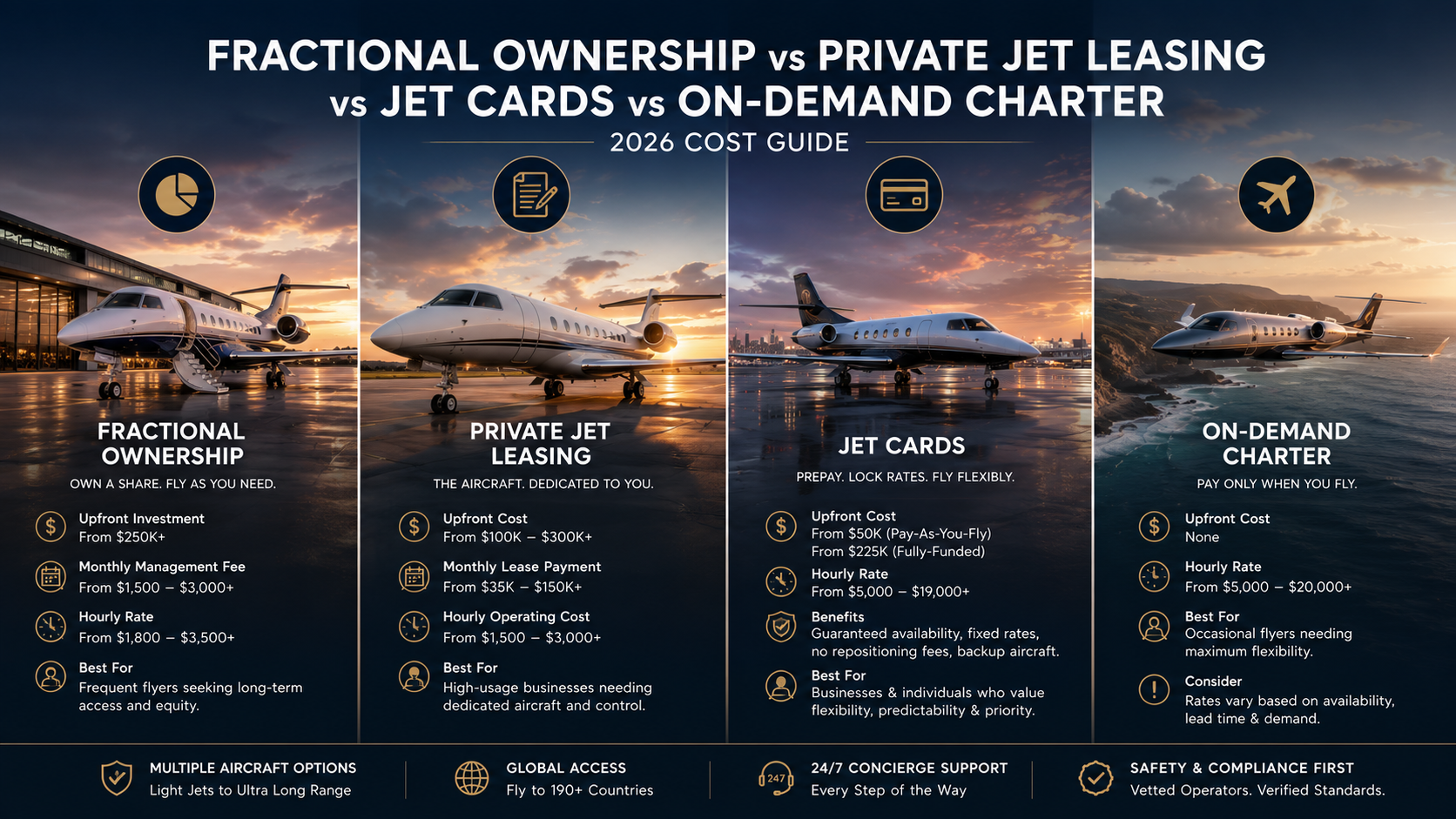
Fractional Ownership vs Private Jet Leasing vs Jet Cards vs On-Demand Charter (2026 Cost Guide)
Navigating private jet access models can be complex, with options like fractional ownership, leasing, jet cards, and on-demand charter each offering unique pricing structures. Understanding these models is crucial for making informed decisions based on your flying habits and financial commitments. This guide breaks down the costs and benefits of each option, helping you choose the best fit for your travel needs.
Read More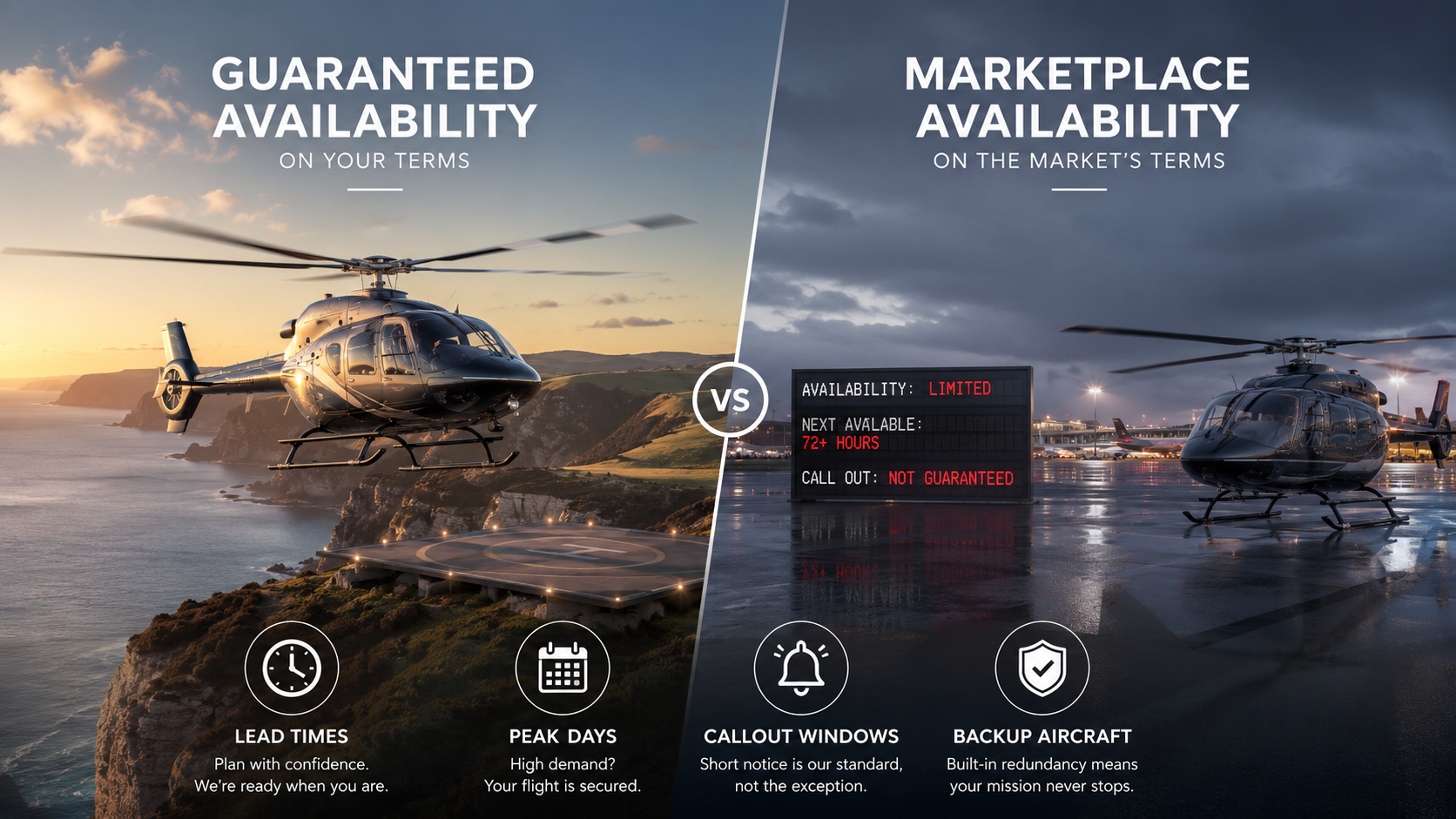
5
min read
Guaranteed Availability vs Marketplace Availability (2026): Lead Times, Peak Days, Callout Windows & Backup Aircraft
In private aviation, guaranteed availability offers a contract-backed promise for aircraft access, while marketplace availability provides real-time access to a larger fleet based on supply and demand. Understanding the differences in lead times, peak days, and backup aircraft options is crucial for making informed decisions. This guide breaks down the nuances of both models to help you choose the best fit for your flying needs.
Read MoreStay updated with our latest insights and tips to elevate your journey with us.
MEMBERSHIPS AND ASSOCIATIONS



Disclaimer: Jettly operates as a charter broker, offering access to a global digital jet charter marketplace. Jettly is not a direct air carrier and does not own or operate aircraft. All advertised flights are conducted by third-party air carriers that are fully licensed and hold the appropriate Part 135 or Part 121 certifications issued by the Federal Aviation Administration (FAA) or equivalent regulatory authorities under U.S. or foreign law. Jettly complies fully with the U.S. Department of Transportation's Part 295 and Part 298 Charter Broker regulations. Jettly does not carry additional liability insurance. Passengers are covered by aircraft operator insurance. TICO: 50023770


