


Login
Get Instant Pricing On 23,000+ Aircraft

>
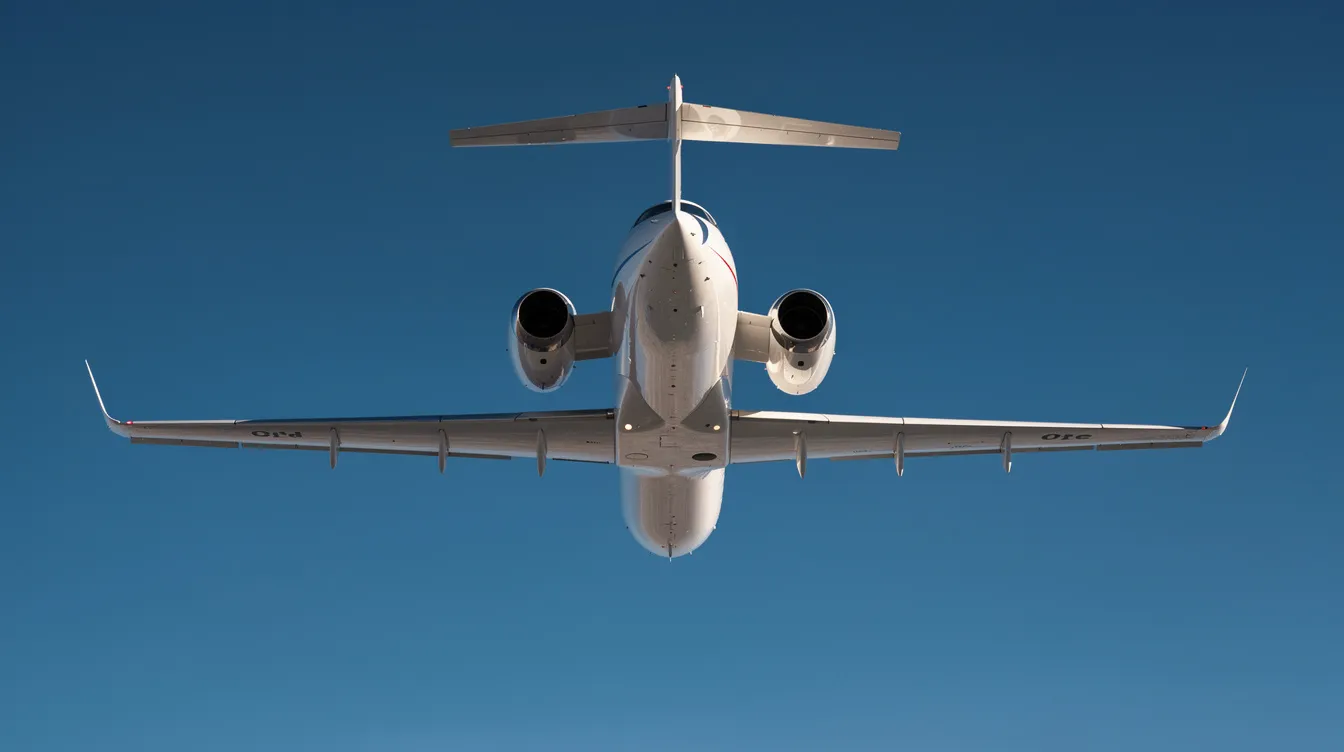
The C 21 plane is one of the United States Air Force's most enduring light transport aircraft. Based on the civilian Learjet 35A, this twin turbofan engine aircraft has been ferrying passengers, hauling priority cargo, and flying aeromedical evacuation missions since the mid-1980s. From Scott Air Force Base in Illinois to Ramstein Air Base Germany and forward deployments across the Middle East, the C 21 has quietly earned its place as a reliable workhorse in military logistics.
This guide is intended for aviation enthusiasts, military historians, and travelers interested in the C-21's capabilities and civilian alternatives.
Here's what makes it tick, where it's been, and how civilians can access similar performance through private jet charter.
The C 21 (designated C 21A) is the military version of the Learjet 35A, a light business jet adapted for Air Force missions. The C-21 is the military designation for the Learjet 35A. It is a twin-engine jet that entered USAF inventory in April 1984, built primarily for cargo and passenger airlift plus limited aeromedical evacuation.
The design shares nearly all performance characteristics with the civilian Learjet 35 / Learjet 35A, including high cruise speed, solid range, and a high service ceiling. The C-21 is the military designation for the Learjet 35A, demonstrating the broader trend of adapting civilian aircraft for military roles.
Jettly does not charter C 21 military aircraft, but the platform offers access to comparable Learjet 35A and similar private charter aircraft options for private travelers.
Key stats at a glance:
Maximum speed: ~530 mph (Mach 0.81) at 41,000 ft
Range: ~2,306 miles
Passenger capacity: up to eight passengers
Service ceiling: ~45,000 ft
Aeromedical config: one litter patient or five ambulatory patients
The Learjet 35 family traces back to the early 1970s, when the Learjet brand was building a reputation for fast, efficient business jets. The Learjet 35 completed its first flight in January 1973 and entered commercial service shortly after. By 1976, the improved Learjet 35A variant arrived with upgraded Garrett TFE731-2-2B engines, better fuel efficiency, and a fuel capacity of 931 gallons spread across wing and wingtip fuel tanks.
In the early 1980s, the United States Air Force selected the Learjet 35A airframe for its operational support airlift needs. The reasoning was straightforward: proven reliability, high speed, respectable range, and the ability to operate from shorter runways near military installations.
The USAF formally designated its variant as the C 21A. Modifications from the civilian Learjet 35 included military-grade communication equipment (high frequency, VHF, and ultra high frequency radios), tactical air navigation system integration, and configurable interiors for passenger, cargo, or medevac layouts.
Civil Learjet 35A vs. military C 21A differences:
Military avionics: HF, VHF, UHF, TACAN added to C 21
Interior: C 21 optimized for utility; civilian 35A emphasizes comfort
Medevac capability: standard on C 21, not on civilian variant
Defensive systems provisions on C 21
Over 600 Learjet 35/35A units were produced in total. The USAF received approximately 84 C 21A airframes delivered between April 1984 and October 1985. Many civilian Learjet 35A aircraft remain active in private and charter roles today.
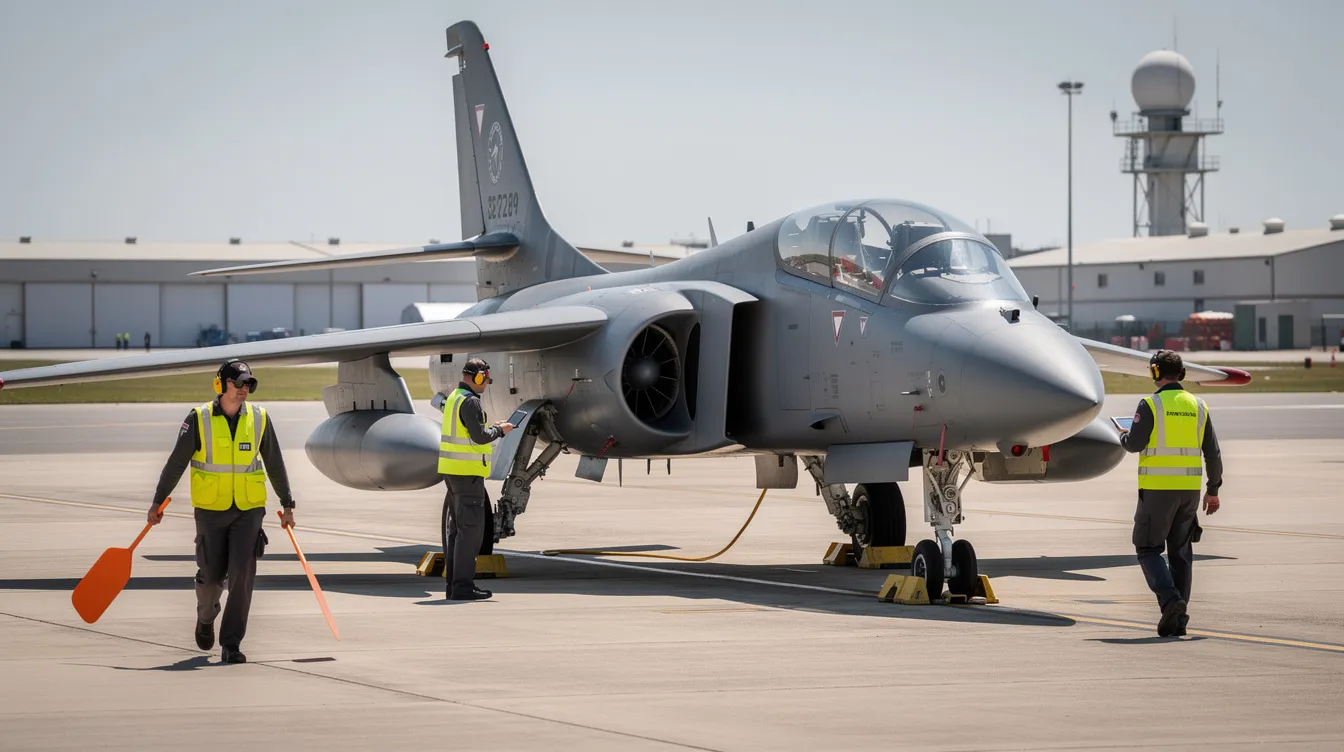
The C 21 retains the core Learjet 35A design: a low-wing monoplane with swept wings, pod mounted turbofan engines on the rear fuselage, and distinctive wingtip tank installations for additional fuel storage.
Key airframe dimensions and weights:
Length: ~48 ft 7 in (14.8 m)
Wingspan: ~39 ft 6 in (12.0 m)
Height: ~12 ft 3 in (3.7 m)
Maximum takeoff weight: 18,300 pounds
The C 21 is powered by two rear-fuselage-mounted turbofan engines - specifically, two Garrett TFE731-2-2B turbofans, each producing approximately 3,500 pounds-force of thrust. This configuration enables high subsonic cruise speeds while keeping the wing clean for aerodynamic efficiency, similar to many light jets discussed in affordable aeroplane rent cost guides.
The fuel system holds 931 gallons across wing and wingtip tanks, with some missions using ferry tanks for extended range. This fuel capacity supports flights across the continental United States, transatlantic legs to Europe, and operations into the Middle East.
Landing gear and controls:
Retractable tricycle landing gear
Hydraulically actuated flaps for short-field performance
Multiple-disc hydraulic brakes for quick stops
The cockpit seat layout accommodates two pilots. Originally equipped with analog gauges, many C 21 cockpits have since been modernized to glass cockpit displays under a fleet-wide avionics upgrade program.
Performance is one of the main reasons the C 21 remains valuable for time-sensitive missions, even after decades of service.
Its maximum speed is 530 mph at 41,000 feet - roughly Mach 0.81 - making it one of the faster aircraft in its class. The aircraft has a range of 2,306 miles depending on payload and fuel configuration, with high cruise around 451 knots true airspeed.
The service ceiling sits at approximately 45,000 feet. At that altitude, the C 21 flies above most commercial traffic and weather systems, reducing turbulence and flying time on many routes.
Takeoff and landing performance is another strength. The C 21 can use relatively short runways at ground level airfields, making it suitable for smaller installations and regional airports that other aircraft in the Air Force inventory cannot efficiently access.
These numbers translate directly to use cases: quick point-to-point transport coast-to-coast within the U.S., rapid hops between European command centers, or time-critical flights into the Middle East. The civilian Learjet 35A delivers nearly identical performance figures, minus the military mission systems, and appears frequently among top private jet charter companies serving business and government travelers.
The C 21 is categorized as an operational support airlift aircraft. It falls under Air Mobility Command (with Scott AFB as lead command hub) and supports several aircraft missions across other USAF organizations.
Passenger airlift is the primary role. The C 21 transports high-priority personnel - up to eight passengers per flight - including theater commanders, civilian leaders, and other officials. It operates on flexible schedules and accesses smaller airfields that larger transports cannot use, providing operational flexibility that larger aircraft simply don't offer.
Cargo capabilities include roughly 42 cubic feet of cargo volume, suitable for time-critical shipments such as equipment, documents, or specialized components. The C 21 can perform priority cargo movements effectively, and the cabin can mix cargo and passenger airlift configurations as needed.
Aeromedical evacuation is a critical secondary role. C 21 aircraft are capable of aeromedical evacuation, configured to carry one litter patient or five ambulatory patients with provisions for medical attendants. The aircraft can accommodate a Spectrum life support system for patients requiring intensive monitoring. C 21 crews fly aeromedical evacuation missions for injured troops, and these medical evacuations may require coordination within two hours of notification.
The cabin can be rapidly reconfigured between VIP, standard passenger, and medevac layouts.
Communications and navigation systems relevant to missions include:
HF, VHF, and ultra high frequency radios
Tactical air navigation system (TACAN)
Color weather radar
Automatic navigation system and GPS
The C 21 entered USAF inventory in April 1984, with all 84 airframes delivered by October 1985. The fleet quickly became a fixture of Air Force logistics.
Key domestic bases:
Scott Air Force Base, Illinois - primary hub under Air Mobility Command, home of the 458th Airlift Squadron
Peterson AFB, Colorado
Wright Patterson AFB, Ohio
Battle Creek Air National Guard Base (National Guard Bureau operations)
Air Education and Training Command installations at various locations
Overseas operations centered on the 76th Airlift Squadron at Ramstein Air Base in Germany. Aircraft assigned there supported U.S. forces across Europe, Africa, and the Middle East for VIP transport and light cargo missions.
C 21s flew missions during Operations Desert Shield and Desert Storm, delivering daily Air Tasking Orders to units lacking full electronic connectivity, moving theater commanders between locations, and supporting medevac requirements. The aircraft continued supporting operations through Iraqi Freedom and Enduring Freedom.
The C 21 has a durability track record proven through decades of service. However, budget decisions in 2007 and 2010 drove fleet reductions. The C 21 fleet was reduced to 19 aircraft by 2020, consolidated at fewer bases. Despite this drawdown, the remaining aircraft continue flying pilot training support, day-to-day operational missions, and aeromedical evacuation flights. The aircraft is known for being a reliable workhorse in military logistics - a reputation backed by its 100% mission capable rate in fiscal year 2022.

After years of service with mostly analog cockpits, the C 21 fleet underwent a major upgrade cycle to stay relevant in increasingly complex airspace.
The C-21's Avionics Upgrade Program cost $38 million, executed primarily at Scott AFB through the 458th Airlift Squadron. Upgrades replaced analog systems with digital displays, creating a modern glass cockpit environment. The upgrades improved navigation and communication systems across the fleet.
Main upgrade elements:
Digital glass cockpit displays replacing legacy analog gauges
Advanced flight management systems
Upgraded autopilot
GPS integration and updated TACAN
ADS-B Out / Mode-5 transponders
Color weather radar and traffic awareness
C 21 upgrades meet 2020 global airspace equipment requirements, ensuring the fleet can continue operating in congested domestic and international airspace. The C 21 features modern avionics systems to meet current airspace requirements without restriction.
The practical benefits are significant: lower pilot workload, reduced crew training time, improved dispatch reliability, and improved operational capabilities for time-sensitive and complex missions. The delta fin modification on the rear fuselage also improved low-speed stability during approach.
The result speaks for itself - the C 21 fleet's mission capable rate is 100 percent post-upgrade. While any aircraft with decades of service will accumulate incidents, the C 21's safety record remains strong relative to its flight hours and age.
The C 21 interior is based on the Learjet 35A business jet cabin, but configured for military missions rather than luxury charter. Think functional, not plush.
The typical configuration seats up to eight passengers in a compact, pressurized cabin with club-style seating (forward and aft-facing) and limited galley amenities. Each cockpit seat up front accommodates the two-pilot crew.
Cabin dimensions are modest:
Usable cabin length: just over 12 ft
Width: approximately 4–5 ft
Stand-up height: not available - passengers remain seated throughout
Differences from civilian Learjet 35A charter interiors are noticeable. Private charter versions typically feature upgraded leather seating, full galley service, entertainment systems, and Wi-Fi connectivity. The C 21 trades those amenities for mission flexibility.
For aeromedical missions, the cabin reconfigures to carry one litter patient (or ambulatory patients up to five), with accessible medical equipment and space for medical staff. The aircraft can accommodate a Spectrum life support system, trading some seating for patient care capability.
Travelers seeking a similar flight experience with civilian comforts can explore Learjet 35A charter options or comparable light jets through Jettly, customized with catering, connectivity, and ground transfer coordination.
While the C 21 is restricted to military operations, its civilian counterpart - the Learjet brand's 35A - is widely available in the private charter market.
The similarities are significant. Both share the same core airframe, engines, and flight envelope. Speed, range, altitude, and handling characteristics are nearly identical. A civilian Learjet 35A cruises at the same ~530 mph and reaches the same ~45,000 ft ceiling.
The differences come down to mission fit:
C 21: military radios, TACAN, defensive systems provisions, medevac capability, utilitarian interior
Learjet 35A charter: executive comfort, catering, Wi-Fi, flexible scheduling around client needs
Use cases diverge accordingly. The C 21 serves Air Force logistics - VIP transport for civilian leaders, priority cargo, and medevac. The Learjet 35A charter serves corporate travel, urgent business trips, family flights, and time-critical personal travel, fitting neatly within the broader landscape described in comprehensive charter airline guides.
Platforms like Jettly allow customers to access Learjet 35A or similar aircraft on-demand - replicating the time-saving benefits the C 21 provides to military users. Think day trips between city pairs, fast hops to secondary airports using tools like Jettly’s airport locator platform, or rapid travel in and out of Middle East destinations like Abu Dhabi or Jeddah.
Civilians cannot book the military C 21 aircraft. But they can achieve similar performance and flexibility through private jet charter.
Jettly's digital platform connects travelers with a global inventory of over 20,000 aircraft, including Learjet 35, Learjet 35A, and comparable light jets from other manufacturers, with pricing structured to keep private jet charter accessible for a wide range of missions.
For travelers evaluating their options, Jettly lists detailed profiles for many private charter aircraft.
Typical benefits of chartering a Learjet 35A-type aircraft:
Direct routing with fewer stops
Access to smaller airports closer to final destinations
Reduced total travel time versus commercial alternatives
Privacy and the ability to customize departure times
Refueling accomplished at convenient stops for extended legs, with overall pricing influenced by the key drivers of one flight cost
For many travelers comparing ownership, leasing, and on-demand use, understanding how much a private jet costs overall helps clarify when chartering a Learjet 35A-type aircraft makes sense.
Charter scenarios where this aircraft class fits well:
Last-minute business meeting across several states
Executive trips in and out of the Middle East
Family weekend getaways to remote destinations
Medical-related travel where timing is critical, including cases where travelers may opt to buy a single seat on a private jet rather than charter the whole aircraft
Jettly offers transparent, instant pricing with on-demand booking - no long-term ownership commitments required. Optional private jet memberships serve frequent flyers, and the platform integrates ground transportation and dedicated in-flight catering via Jettly Eats. Use the charter cost estimator to compare options quickly.
Light jets like the Learjet 35A are best for groups of 4–8 passengers on trips up to roughly 2,000 miles. For longer intercontinental legs, midsize or heavy jets are more suitable - and Jettly covers those categories too, positioning itself as a flexible NetJets alternative for private flying. Travelers comparing charter to other access models can also benefit from broader affordable aeroplane rent insights. Explore the full aircraft charter guide for help choosing the right fit.
Q1: What is the maximum passenger capacity of the C-21 plane?A1: The C-21 can carry up to eight passengers, or alternatively one litter patient or five ambulatory patients in its aeromedical evacuation configuration.
Q2: What are the main missions of the C-21 aircraft?A2: The C-21 serves primarily for passenger and cargo airlift, VIP transport, priority cargo movements, and aeromedical evacuation missions.
Q3: How does the C-21 enhance crew efficiency?A3: The C-21 is equipped with an automatic navigation system and modern avionics upgrades that reduce pilot workload and improve communication, navigation, and operational capabilities.
Q4: Can civilians charter the C-21 plane?A4: No, the C-21 is a military aircraft and not available for civilian charter. However, similar performance can be accessed through civilian Learjet 35A and comparable private jets available on platforms like Jettly.
Q5: What upgrades have been made to the C-21 fleet?A5: The C-21 underwent a $38 million Avionics Upgrade Program that replaced analog cockpit systems with digital glass cockpit displays, improved navigation, communication, autopilot systems, and met 2020 global airspace requirements.
Q6: What is the range and speed of the C-21?A6: The C-21 has a range of approximately 2,306 miles and a maximum speed of about 530 mph (Mach 0.81) at 41,000 feet.
Q7: What types of cargo can the C-21 carry?A7: The aircraft can carry roughly 42 cubic feet of cargo, suitable for priority shipments including equipment, documents, or specialized components.
Q8: Where are the main bases for C-21 operations?A8: The primary bases are Scott Air Force Base in Illinois (458th Airlift Squadron) and Ramstein Air Base in Germany (76th Airlift Squadron).
Q9: How does the C-21 compare to its civilian counterpart, the Learjet 35A?A9: Both share the same airframe, engines, and performance. The C-21 has military avionics and mission-specific configurations, while the Learjet 35A focuses on executive comfort and civilian charter use.
Q10: How does the C-21 support aeromedical evacuation missions?A10: It can transport one litter patient or five ambulatory patients, accommodate a Spectrum life support system, and carry medical crew to provide in-flight care during urgent medical transport missions.
The C 21 plane is a United States Air Force adaptation of the Learjet 35A that has served since 1984 for light passenger airlift, priority cargo, and aeromedical evacuation across the U.S., Europe, and the Middle East. Its strengths - high cruise speed, solid range for a light jet, flexible cabin configurations, and enhanced safety through the avionics upgrade program - have kept it flying for over four decades.
While the C 21 itself is not available for charter, civilian Learjet 35/35A and similar aircraft deliver comparable performance for business and leisure travelers. Jettly makes it straightforward to compare aircraft, obtain instant pricing, and arrange flights on Learjet 35A-class jets or other aircraft categories, whether via on-demand quotes or jet card flight cost estimators, and even through crowdsourced private jet flights that share empty seats.
Ready to fly on an aircraft built from the same proven design? Explore flight options or request a quote at https://www.jettly.com. Frequent travelers may compare world-class jet card programs and dive into jet card cost breakdowns, or evaluate shared charter flights versus full charters and other platforms like XO charter flights and their alternatives. Those planning regional missions can look at city-specific services such as private jet charter in Kolkata, West Bengal, and travel professionals can even partner with Jettly through its ultra high ticket affiliate program.
Share this post:
Jeff Ryan Serevilla
Sep 20, 2026
|
5
min read
Discover tips and trends in the industry.

5
min read
Falcon 100: Specs, History, and Charter Guide
The Dassault Falcon 100 is a light-to-midsize business jet known for its speed and operational efficiency, ideal for short-to-medium-range travel. Produced from 1983 to 1989, it features a compact cabin accommodating up to six passengers and advanced avionics for its time. Despite its age, the Falcon 100 remains popular in the charter market, offering flexibility and access to smaller airports.
Read More
5
min read
Embraer Legacy 650: Longer-Range Business Jet for Global Charters
The Embraer Legacy 650 is a large-cabin business jet designed for long-range travel, accommodating up to 13 passengers with a range of 3,900 nautical miles. Ideal for transatlantic flights and corporate travel, it features a spacious three-zone cabin and advanced avionics for safety and efficiency. With its impressive baggage capacity and comfort, the Legacy 650 is a top choice for those seeking flexible private jet charters.
Read MoreStay updated with our latest insights and tips to elevate your journey with us.
MEMBERSHIPS AND ASSOCIATIONS



Disclaimer: Jettly operates as a charter broker, offering access to a global digital jet charter marketplace. Jettly is not a direct air carrier and does not own or operate aircraft. All advertised flights are conducted by third-party air carriers that are fully licensed and hold the appropriate Part 135 or Part 121 certifications issued by the Federal Aviation Administration (FAA) or equivalent regulatory authorities under U.S. or foreign law. Jettly complies fully with the U.S. Department of Transportation's Part 295 and Part 298 Charter Broker regulations. Jettly does not carry additional liability insurance. Passengers are covered by aircraft operator insurance. TICO: 50023770


