


Login
Get Instant Pricing On 23,000+ Aircraft

>
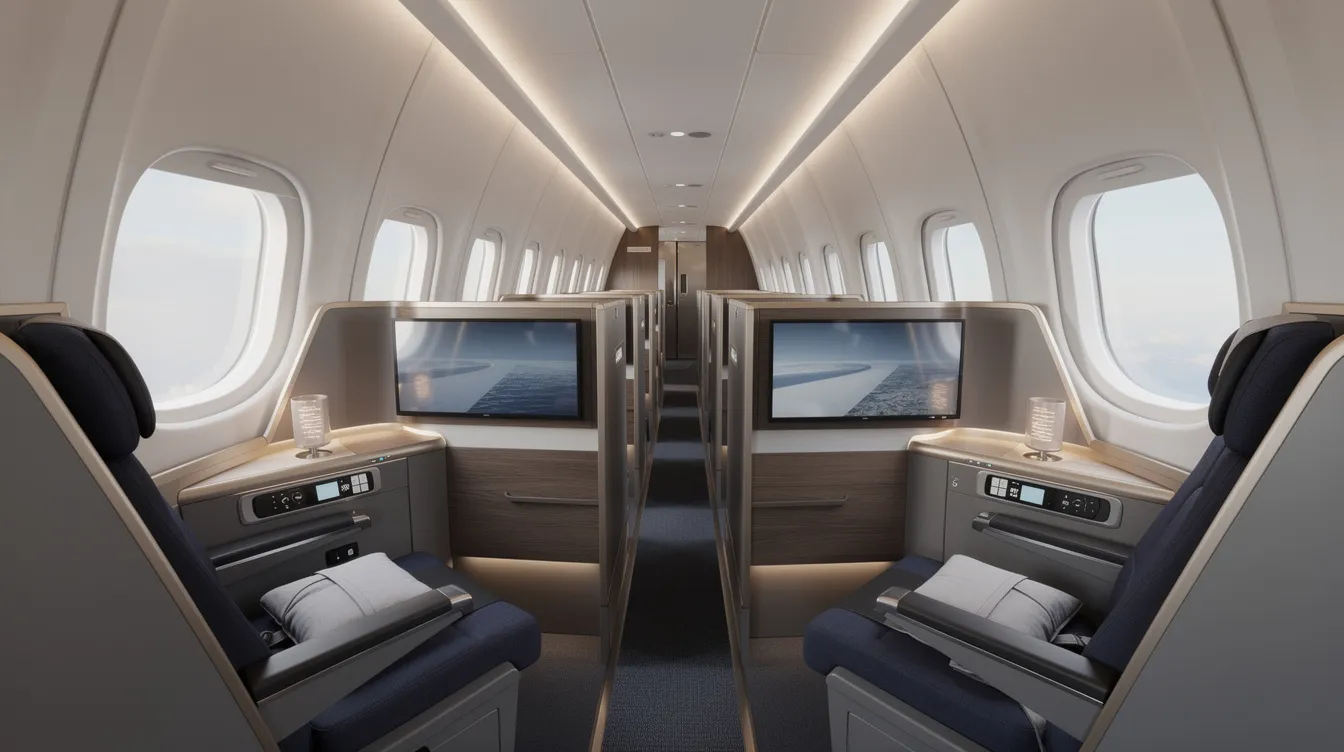
Business class travel remains the gold standard for most commercial flyers who want comfort, productivity, and rest on long flights. However, as travel needs evolve, a growing number of frequent travelers are weighing premium commercial cabins against private jet charter—especially when schedules get tight or routes get complicated. This guide is designed for frequent business travelers, executives, and premium cabin flyers who are considering whether to stick with business class or explore private jet charter for their next trip. Comparing these options is increasingly relevant as travelers seek greater flexibility, privacy, and efficiency in their journeys. Here's how the two stack up in 2026.
Business class travel includes lie-flat seats, gourmet dining, airport lounge access, and priority services that set it far apart from economy class and most domestic first class products.
Many airlines now offer business class as their top cabin, with first class limited to a handful of flagship routes on carriers like Singapore Airlines and Emirates.
Frequent business class travelers increasingly compare premium cabins to private jet charter for flexibility, privacy, and door-to-door time savings - particularly on multi-city itineraries and long-haul international routes.
Jettly's private jet marketplace serves executives and families who outgrow commercial schedules, offering instant pricing across 20,000+ aircraft globally.
The sections below break down cost, comfort, and convenience between business and first class vs. private jet charter to help travelers decide trip by trip.
Business class is the premium cabin tier between economy class and first class on most international routes. It's designed for travelers who need rest, workspace, and a higher level of service during flights that often stretch beyond eight hours.
What "business class" means can vary sharply. On long-haul flights between continents, it typically includes fully lie-flat beds, multi-course meals, and lounge access. On domestic routes, the experience may be closer to a recliner seat with upgraded snacks. The gap between these products is significant enough that travelers should evaluate each route individually.
Many airlines offer business class as their de facto top cabin. Carriers like Delta, United Airlines, and Lufthansa have removed first class from most of their fleets, reserving it only for a few flagship routes, so the experience once tied to a first class ticket is often folded into their premium business product. As a result, the business class cabin on these airlines has absorbed features that once belonged exclusively to first class. The typical inclusions - more legroom, lie-flat seats, gourmet dining, lounge access, extra baggage, and flexible tickets - now overlap with some benefits of private aviation, which makes the comparison worth exploring.
Airlines have invested heavily in their premium cabin products over the past decade. The gap between business and first class has narrowed so much that many business class passengers now enjoy amenities that would have been first-class-only a few years ago.
Lie-flat beds. On long-haul flights, business class typically includes lie-flat seats that convert into beds measuring roughly 78–82 inches long and 20–22 inches wide. These lie-flat beds matter most on overnight sectors - think transatlantic flights like New York–London or long flights like Los Angeles–Tokyo - where arriving rested is the difference between a productive day and a wasted one. Business class seats generally feature direct aisle access in newer herringbone or reverse-herringbone configurations.
Airport lounge access. Business class includes access to airport lounges worldwide, offering quiet workspaces, showers, food, and Wi-Fi. For business class travelers with layovers, lounge access can turn dead time into productive hours.
Gourmet dining. Passengers enjoy gourmet meals crafted by renowned chefs, often with multi-course menus that change by route and season. On-demand dining may be available in business class, allowing passengers to choose when to eat rather than following a fixed service schedule. Complimentary alcoholic beverages and curated drink lists are standard, and business class passengers often receive welcome drinks upon boarding.
Entertainment and connectivity. Business class provides enhanced in-flight entertainment options - large HD screens, noise-cancelling headphones, and onboard Wi-Fi on most international routes.
Priority services. Priority boarding is a standard amenity in business class, alongside priority check-in, fast-track security where available, and priority baggage handling at arrival. Business class passengers also enjoy a higher baggage allowance compared to economy class.
Space and privacy. More personal space and quieter cabins are clear benefits of flying business class. Privacy features are more common in business class seating configurations than in economy, with many newer cabins adding doors or high partitions. Business class passengers typically experience a higher cabin crew-to-passenger ratio, which translates into more attentive service.
Business class offers a significantly more comfortable travel experience than economy class - and in many cases, it rivals what airlines used to reserve for first class passengers.
Understanding the difference between economy class, business class, and first class helps travelers avoid overpaying for features they won't use - or underpaying and arriving exhausted.
|
Feature |
Economy Class |
Business Class |
First Class |
|---|---|---|---|
|
Seat pitch/bed |
30–32 in pitch, limited recline |
Lie-flat beds, 60+ in pitch |
Private suites on select airlines |
|
Width |
17–18 in |
20–22 in (wider seats) |
22–30+ in |
|
Dining |
Standard tray meals |
Gourmet meals, on-demand options |
Meals curated by Michelin-starred chefs |
|
Lounge |
No |
Yes |
Exclusive lounges, sometimes chauffeur services |
|
Price vs economy |
Baseline |
2–3× on many routes |
4–8× economy |
Business class pricing varies significantly by airline and route. Discounted business class tickets - through consolidators, sales, or business class deals - can save up to 60% off published class fares, bringing round-trip fares on popular routes like New York–London down to the $1,800–$2,900 range. First class fares and discounted fares for international first class are harder to find, and availability through miles or upgrades can be very limited in peak seasons.
On airlines where first class is limited to a few flagship routes, business class is effectively the top cabin. Delta and United Airlines operate this way on nearly all international routes. Other airlines like Singapore Airlines and Emirates still offer distinct international first class with luxurious suites and separate cabins on select long-haul sectors, which further shapes how companies weigh jet rentals vs first-class tickets for corporate travel.
Business class pricing varies significantly by airline and route. Discounted business class tickets - through consolidators, sales, or business class deals - can save up to 60% off published class fares, bringing round-trip fares on popular routes like New York–London down to the $1,800–$2,900 range. First class fares and discounted fares for international first class are harder to find, and availability through miles or upgrades can be very limited in peak seasons.
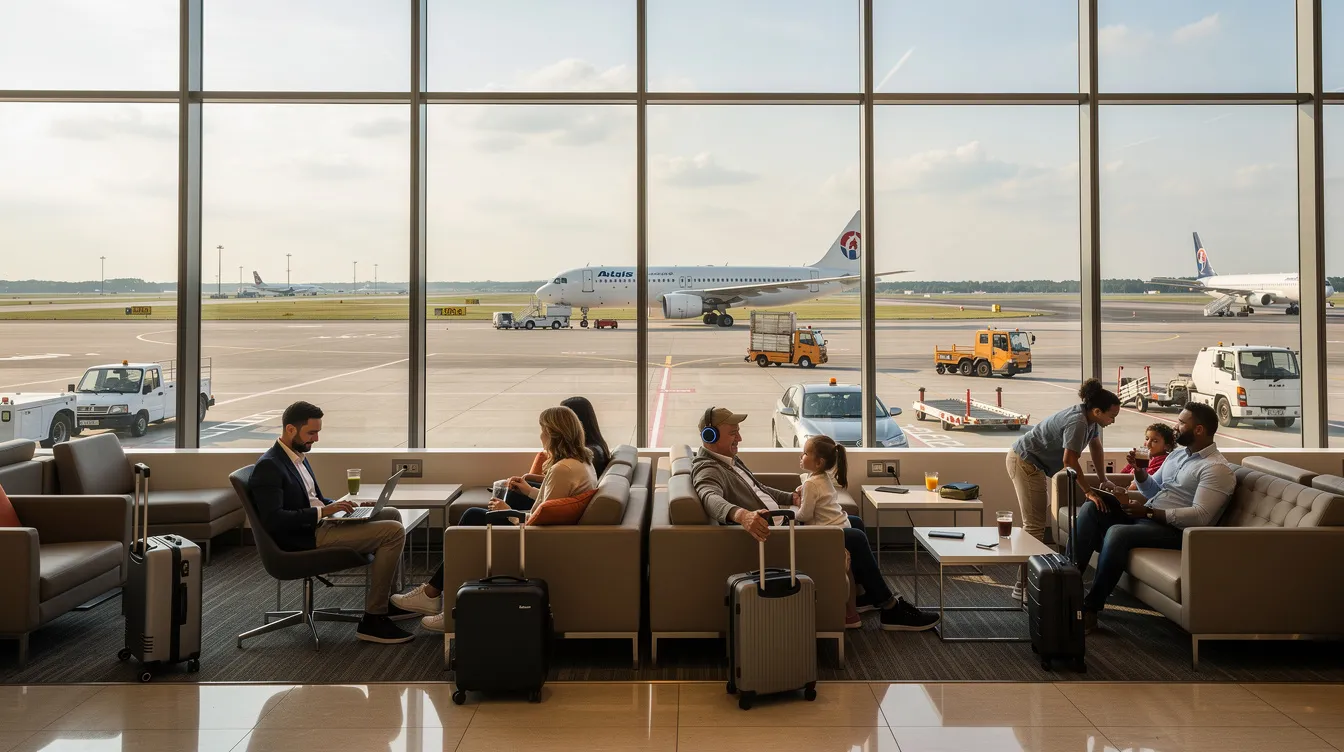
The label "business class" covers a wide spectrum depending on route length and region.
On U.S. domestic routes, the premium cabin is usually branded as first class, but it typically features recliner seats rather than true lie-flat beds. Some airlines offer business class on select domestic routes only - usually premium transcontinental services like New York–Los Angeles or New York–San Francisco, where airlines offer lie-flat business class seats and elevated meals comparable to shorter international flights.
Short-haul flights within Europe often brand a "business" cabin that is really an economy class seat with a blocked middle seat and upgraded catering. This is a far cry from the flagship business class experience on widebody aircraft flying international routes to South America, Asia, or across the Atlantic.
Regional and domestic routes in Australia, Canada, and parts of Asia may provide hybrid products - spacious seating and gourmet dining somewhere between domestic first class and full international business class. Business class often allows for greater flexibility in ticket changes and cancellations on these routes, which adds value for travelers with unpredictable schedules and encourages some to explore the broader private and charter airline landscape when commercial options fall short.
Route type matters. On a domestic flight under three hours, the premium cabin may not justify its price. On a 14-hour overnight sector, the difference between a business class ticket and an economy seat is the difference between arriving functional and arriving depleted. And for travelers who need something commercial aviation simply doesn't cover - like a same-day round trip to a city without direct service - private charter starts to enter the conversation.
Many frequent business class travelers eventually compare premium cabins with private jet charter, not because business class disappoints, but because their schedules outgrow what commercial aviation can offer.
The pain points are familiar: fixed departure times, crowded airports, tight connections on hub-and-spoke networks, and flight disruptions that cascade through a day's plans. Even with priority boarding and lounge access, a business class experience still means arriving two to three hours early, waiting in security lines, and adapting to someone else's timetable.
Private jets allow control over departure time, route, and airport. Travelers can select aircraft suited to their group size and use smaller airports closer to meetings or home. Jettly's platform often serves executives and high-net-worth individuals who usually fly business class but turn to private charter when schedules are tight, routes are awkward, or privacy is non-negotiable.
On complex multi-city itineraries or underserved domestic routes, private charter can cut total door-to-door travel time by hours compared with even the best long-haul business class options strung together with regional connections, especially when leveraging Jettly's access to private charter aircraft across a wide range of sizes and ranges.
Setting price aside for a moment, the comfort and privacy comparison between flying business class and chartering a private jet reveals meaningful differences.
Business cabins, even on the best airlines with private suites and doors, still share a cabin with dozens of other class passengers. Conversations carry, cabin lights follow a group schedule, and the environment is controlled by the airline, not the traveler.
Private jet cabins are reserved exclusively for one group. Confidential conversations happen freely. Teams hold onboard meetings. Families travel without worrying about disturbing other passengers. The environment - lighting, temperature, music - adapts to the group, not the other way around.
While business class seats convert into lie-flat beds, passengers may still be surrounded by strangers and ambient cabin noise. Private jets offer quieter, more controlled environments, and passengers can generally expect a cabin configured to their preferences.
Catering is another distinction. International business class offers gourmet dining within fixed menu cycles. Private jets booked through Jettly can arrange custom menus, dietary requests, and specific brands with advance notice via services like Jettly Eats in-flight catering - a level of personalization that even the most generous premium economy offers or business class offers cannot match.
Business class travel delivers strong comfort for solo passengers on long-haul flights. Private aircraft shine for teams or families needing privacy and a tailored environment.
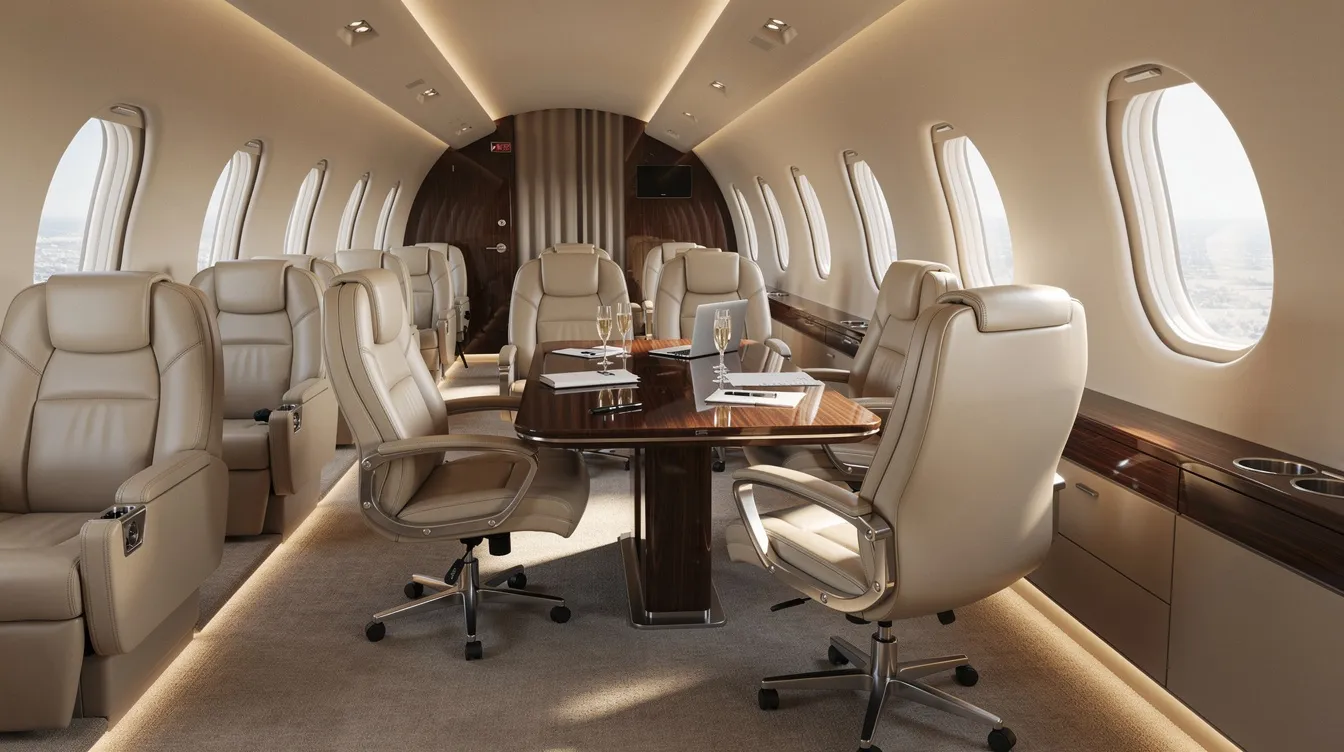
For many executives, time savings matter more than incremental seat comfort.
Business and first class still require early arrival, security lines, boarding queues, and possible missed connections. A round trip with a layover can easily consume an entire day even when flight time totals only five or six hours.
Private jets use smaller airports and fixed-base operators (FBOs), typically allowing arrival 20–30 minutes before departure and faster turnarounds after landing. No security theater, no gate changes, no baggage carousels, whether you’re flying between major hubs or leveraging private jet charter services in regional markets like Kolkata.
Consider a concrete example: a team needs to visit three cities on domestic routes in a single day. Commercial business class schedules would require overnight stays in at least one city. A same-day private jet charter can complete all three stops and return the same evening.
Jettly's digital platform shows available aircraft and instant pricing globally, helping travelers quickly see if a private itinerary outperforms a multi-segment business class route in total travel time, especially when paired with a private jet charter cost estimator to understand how route, aircraft size, and flight time affect pricing. Last-minute changes are easier with charter, whereas business class tickets may incur change fees or have limited seat availability on alternative flights - a frustration familiar to anyone who has tried rebooking a next flight during peak season on many routes.
Business class fares already represent a substantial investment. On key international routes, published round-trip business class pricing runs $2,500–$5,000 for U.S.–Europe and $4,000–$8,500+ for U.S.–Asia. Consolidator and sale class fares bring these down, but often with restrictions on changes and refunds.
Private jet charter works differently. Costs are driven by aircraft type, flight time, and repositioning. Hourly rates range from roughly $4,000–$6,500 for light jets to $9,000–$18,000+ for heavy jets. A one-way domestic charter on a light jet might run $10,000–$15,000 total. For broader context on acquisition, ownership, and operating expenses beyond on-demand charter, see Jettly's guide on how much a private jet costs alongside its guide to private jet charter costs.
The math shifts with group size. For a team of four to eight people traveling together on certain domestic routes or shorter international flights, private charter booked through Jettly may approach or undercut the combined cost of individual business class tickets. Depending on budget and privacy needs, travelers can also compare shared charter flights vs. full charters. Jettly's instant pricing tools and empty leg flights can help price-sensitive travelers compare premium commercial fares with on-demand charter in real time.
For solo travelers on busy international routes, business class is usually more economical than a whole-aircraft charter. But comfort, privacy, and scheduling trade-offs still matter - and sometimes they're worth the premium.
Jettly is designed to feel as simple as booking a commercial flight, targeting travelers already comfortable with business and first class. The platform aggregates over 20,000 unique aircraft globally, giving business class travelers access to light jets, midsize jets, heavy jets, turboprops, and helicopters - each suited to different routes, group sizes, and other features.
The digital booking flow is straightforward: enter a route and dates, see instant pricing on available aircraft, filter by aircraft type or cabin size, then confirm the charter online. For a deeper walkthrough, see how to book a private jet.
Jettly offers both membership and on-demand models, emphasizing transparent pricing rather than complex jet cards or fractional ownership. For travelers curious about subscription options, private jet memberships from Jettly outline how different tiers work, while the platform's jet card pricing guide breaks down the differences.
Safety and regulation are built in. All flights are operated by licensed, audited operators following regional aviation authority standards (FAA Part 135 or equivalent). For travelers used to the oversight of major airlines, this matters, and it’s one of the key criteria highlighted in Jettly’s overview of the best private jet charter companies.
Learn more about Jettly's charter options at https://www.jettly.com.
No single option is best for every trip. The right choice depends on route, group size, budget, and schedule.
Choose business class travel for solo or couple travelers on long-haul international routes with good nonstop options and strong lounge access. It's the sweet spot of comfort and cost on popular routes served by many airlines.
Choose first class for special occasions or routes where airlines offer distinctive private suites, separate cabins, or unique perks and services that materially exceed the business class experience - like certain Emirates or Singapore Airlines long-haul sectors.
Choose private jet charter for multi-city trips, tight same-day schedules, underserved domestic routes, or groups traveling together who value privacy and time savings. Jettly's platform helps travelers choose the right jet for each mission.
A note on environmental impact: business class emits three times more CO2 than economy class per passenger because business class seats occupy more space, increasing emissions per passenger. Aviation contributes about 2% of global carbon emissions overall, and short-haul flights generate more emissions per mile due to fuel-intensive takeoff phases. Flying business class results in higher emissions due to additional amenities and reduced seating density. Private jets carry even higher per-passenger footprints. Efficient routing, modern aircraft, and optional carbon offsetting can help mitigate impact for both travel classes.
More business class travelers are adopting a "mix and match" strategy: flying commercial premium cabins when they fit, and chartering privately when they don't.
Real-world patterns show how business class travelers transition to private charter for specific trips - not necessarily as a permanent switch, but as a complement.
Corporate roadshow. A leadership team needs to visit three cities in two days on domestic routes. A private jet replaces multiple business class segments and hotel nights, getting the team home the same evening. The combined cost of six business class tickets, hotels, and ground transport can approach the charter price, especially when you factor in tools like Jettly’s jet card flight cost estimator to benchmark different private options.
International connection. A client arrives in business class on a transatlantic flight into a major hub, then uses a short private charter to reach a regional city not served by direct commercial flights - saving half a day of layovers and connections. In these cases, access to a broad pool of private charter aircraft makes it easier to match the right cabin size and range to the final leg.
Family travel. Parents who usually fly business class choose a light jet to coordinate pets, sports equipment, and irregular luggage on a specific route. No checked baggage limits, no connecting flights, no stress, and the option to choose from the best private planes for families to ensure comfort and safety for children.
Emergency or short-notice trips. Time-critical site visits or medical travel where scheduled business class or first class may not operate at the required times. Jettly's 24/7 digital access handles these scenarios quickly, mirroring the round-the-clock support that business and first class travelers generally expect from major airlines, and leveraging many of the strategies outlined in its guide on how to get a seat on a private jet easily.
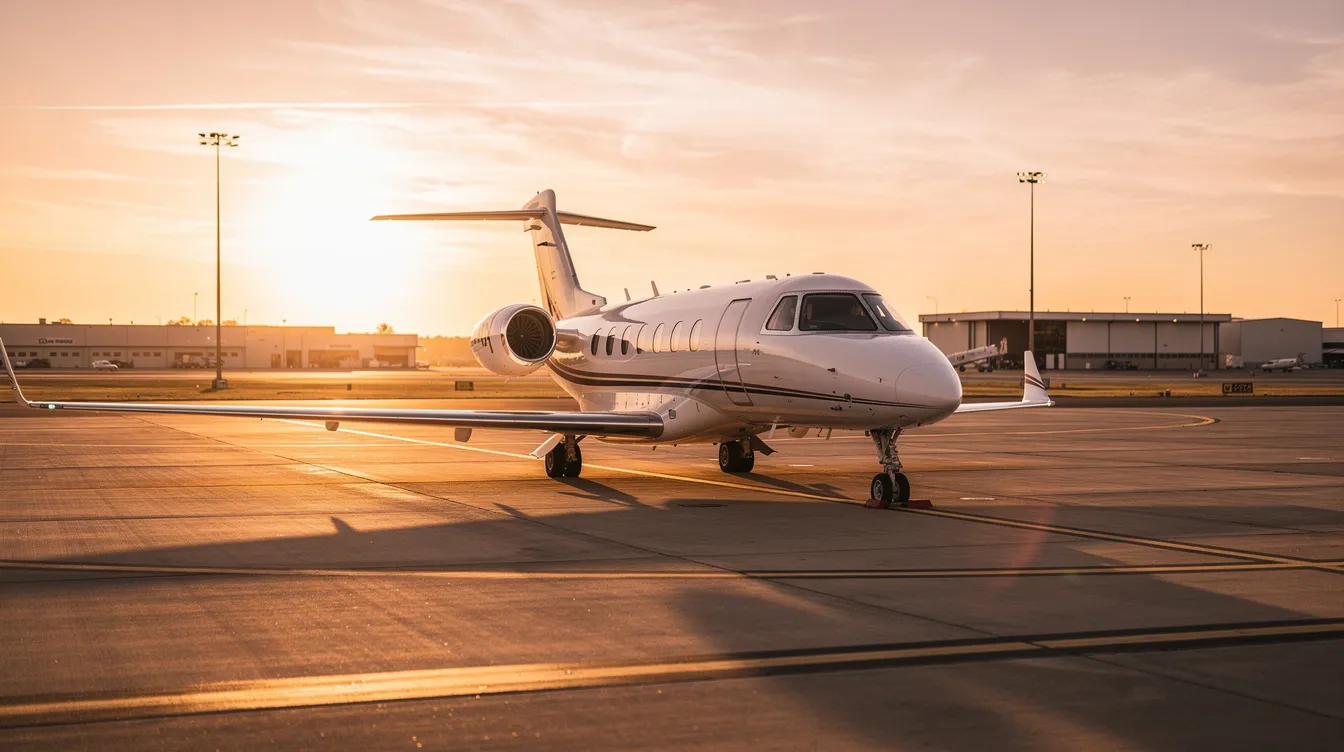
Business class is usually most valuable on overnight long-haul flights where lie-flat seats, lounge access, and upgraded dining significantly improve rest and productivity. On short domestic routes under about three hours, the cost jump from economy class to business class or first class is often harder to justify unless flexibility and priority services matter more than budget. Premium economy offers a middle ground on many routes, with more legroom and better meals than the main cabin at a smaller price jump.
Airlines offer first and business class based on demand from corporate contracts, high-yield travelers, and route length. Some international routes feature only business class as the top cabin, while a few flagship long-haul sectors still maintain separate first-class cabins with amenity kits and gourmet dining that set them apart. Domestic routes with shorter stage lengths typically offer only a single premium cabin, even if it is branded as first class.
Private jet charters generally do not earn commercial airline miles in the same way as a business class ticket. Some travelers adopt a hybrid approach - using business class on major international flights to maintain status, then chartering privately on regional or time-sensitive legs or even buying a single seat on a private jet when a shared option makes sense. It's worth tracking the value of elite benefits like upgrades, lounge access, and fee waivers against the time savings of private travel for each trip.
Jettly provides instant pricing based on aircraft type, route, and date, allowing direct comparison with published business class and first class fares. For groups of four or more on shorter domestic or regional flights, the per-person cost of a private charter can sometimes be similar to, or not far above, business class tickets, particularly when using flight-sharing options that crowdsource private jet flights and share empty seats. Visit https://www.jettly.com to run a quick search and compare options for a specific itinerary.
Onboard catering on private jets can often be customized beyond standard business class menus - specific cuisines, dietary needs, or preferred brands - but options depend on aircraft size and departure airport. While there is no traditional airport lounge access for private jets, travelers usually relax in private FBO terminals with spacious seating, refreshments, and workspaces before boarding. Frequent business class travelers who value quiet, privacy, and tailored service often find private terminals more convenient than even the best airline lounges.
Ready to compare private charter with your next business class ticket? Explore flight options or request a quote at https://www.jettly.com, dive into Jettly’s world-class corporate jet card programs, learn how it stacks up as a NetJets alternative for flying private, see how leading private plane manufacturers serve different budgets and missions, and browse insights on industry leaders like NetJets or the luxury celebrity private jets that shape expectations.
Business class travel remains a strong choice for many flyers seeking comfort, productivity, and premium amenities on long-haul and select domestic routes. It offers lie-flat seats, gourmet dining, lounge access, and priority services that significantly enhance the travel experience compared to economy class. However, for travelers with complex itineraries, tight schedules, or privacy needs, private jet charter through platforms like Jettly provides unparalleled flexibility, time savings, and personalized service.
Choosing between business class and private jet travel depends on factors such as route, group size, budget, and timing. Business class is often the most cost-effective premium option for solo travelers on popular international routes, while private jets excel for multi-city trips, underserved airports, and groups seeking privacy and convenience.
As travel demands evolve, many frequent flyers adopt a hybrid approach, mixing premium commercial cabins with private charters to optimize comfort, efficiency, and cost. Explore your options with Jettly’s digital platform to find the best fit for your next journey.
Ready to experience private travel on your terms? Explore flight options or request a quote at https://www.jettly.com.
Share this post:
Jay Franco Serevilla
Sep 21, 2026
|
5
min read
Discover tips and trends in the industry.
5
min read
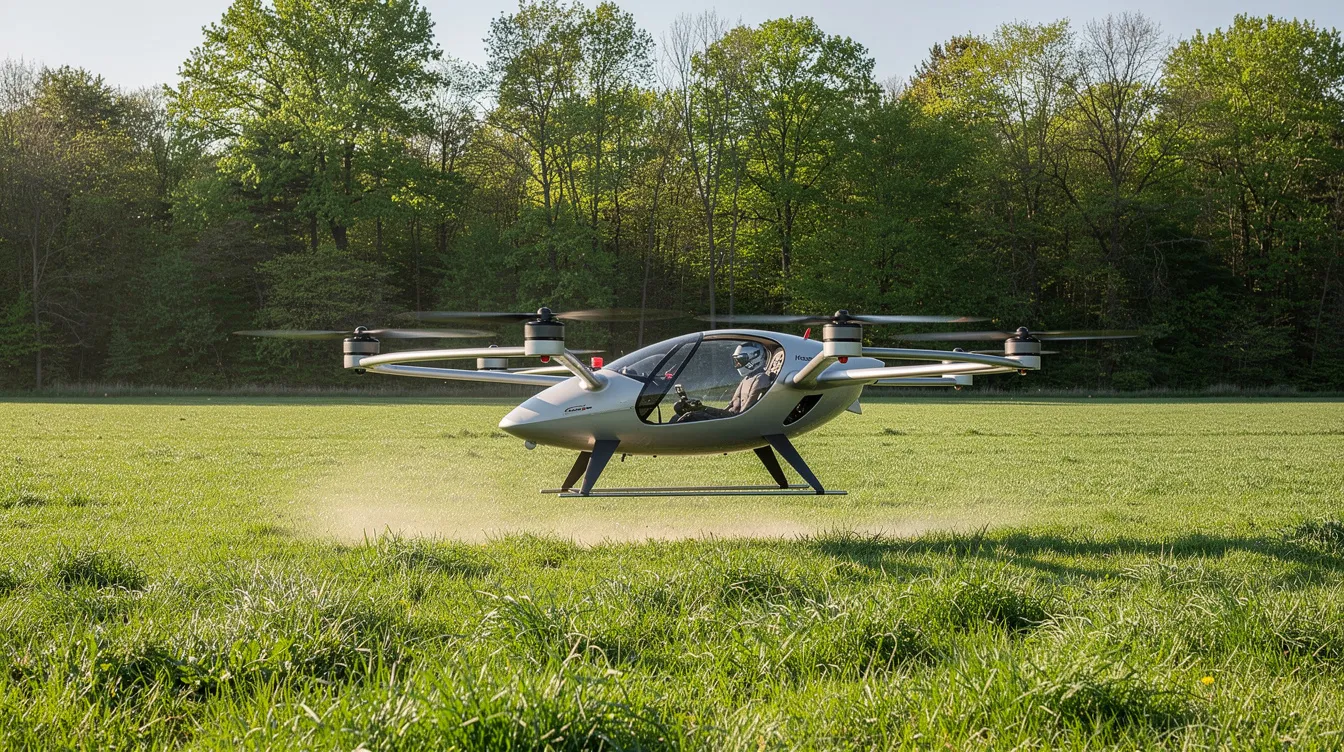
VTOL Personal Aircraft: How eVTOLs Will Connect to Private Jet Travel
VTOL personal aircraft, or eVTOLs, are revolutionizing air mobility by providing vertical takeoff and landing capabilities without the need for runways. These electric aircraft bridge the gap between ground transportation and private jet travel, offering a new category of personal aviation for short hops. As technology matures, eVTOLs are expected to integrate seamlessly with private jet operations, enhancing travel efficiency.
Read More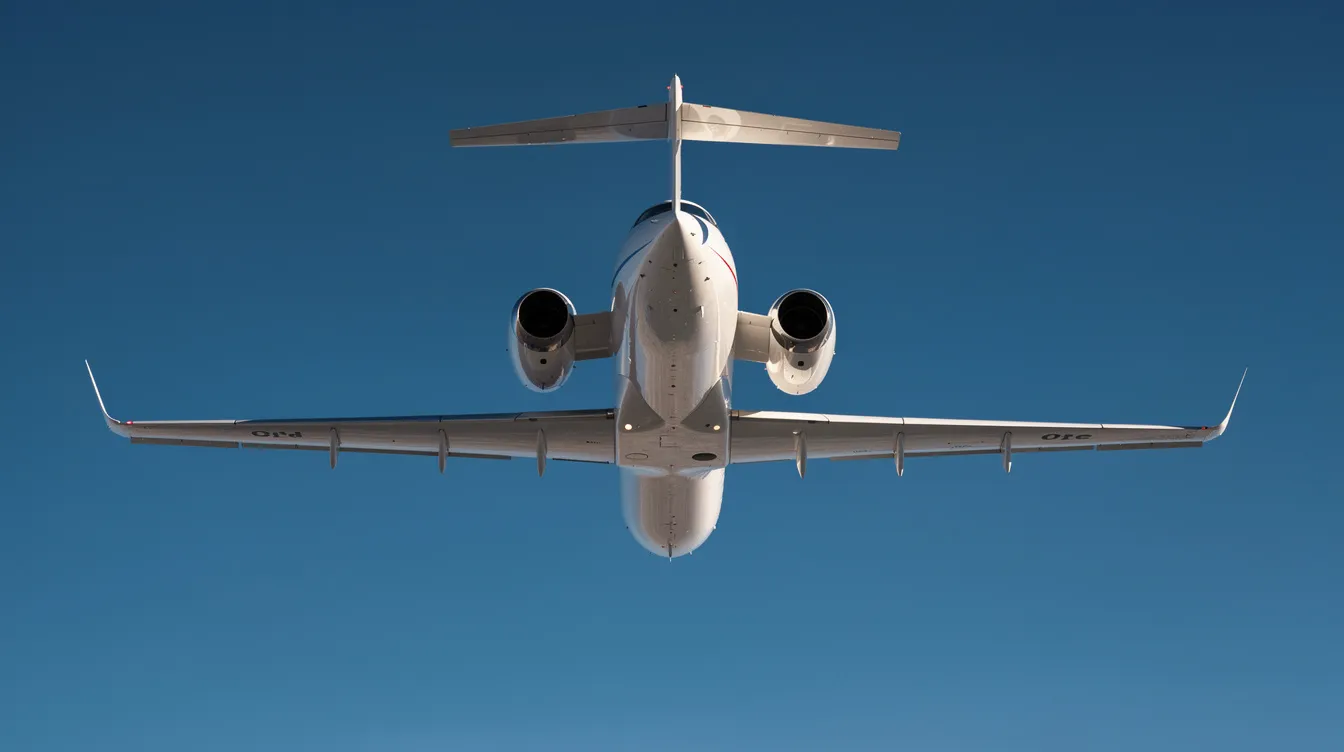
5
min read
C-21 Plane: USAF Learjet 35A Variant, Specs, Missions & Charter Alternatives
The C-21 plane, a military variant of the Learjet 35A, has been a reliable light transport aircraft for the USAF since 1984, serving various missions including passenger airlift and aeromedical evacuation. With impressive speed and range, it continues to play a vital role in military logistics, while civilians can access similar performance through private jet charters like the Learjet 35A.
Read MoreStay updated with our latest insights and tips to elevate your journey with us.
MEMBERSHIPS AND ASSOCIATIONS



Disclaimer: Jettly operates as a charter broker, offering access to a global digital jet charter marketplace. Jettly is not a direct air carrier and does not own or operate aircraft. All advertised flights are conducted by third-party air carriers that are fully licensed and hold the appropriate Part 135 or Part 121 certifications issued by the Federal Aviation Administration (FAA) or equivalent regulatory authorities under U.S. or foreign law. Jettly complies fully with the U.S. Department of Transportation's Part 295 and Part 298 Charter Broker regulations. Jettly does not carry additional liability insurance. Passengers are covered by aircraft operator insurance. TICO: 50023770


