


Login
Get Instant Pricing On 23,000+ Aircraft

>
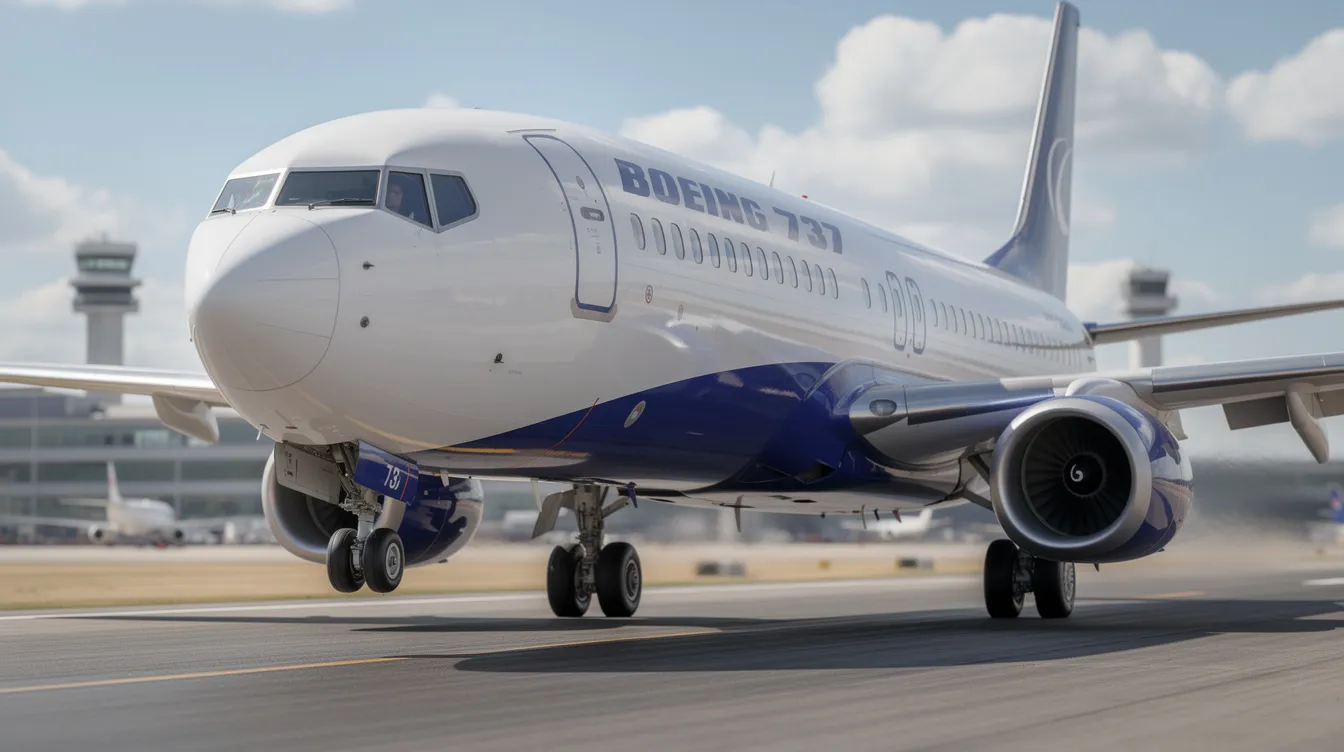
The Boeing 737 is the world's best-selling jetliner family. From its inaugural flight in 1967 to the latest 737 MAX generation, Boeing's 737 has shaped how hundreds of millions of people travel each year. But the aircraft's recent history has been anything but smooth. Here is what travelers need to know about this iconic plane, its safety record, and the alternatives available in 2026.
The Boeing 737 has been in continuous production since the 1960s and has evolved through four major generations: Original, Classic, Next Generation, and 737 MAX. Boeing has delivered over 10,000 units of the 737 series, making it one of the most successful commercial aircraft families in aviation history.
The 737 MAX crisis, including two fatal crashes (Lion Air Flight 610 and Ethiopian Airlines Flight 302, killing 346 people combined) and the 2024 Alaska Airlines Flight 1282 door-plug incident, reshaped global aviation safety and regulation. The Federal Aviation Administration grounded 171 Boeing 737-9 MAX aircraft in January 2024 after the door-plug blowout.
The 737 MAX now operates under tighter oversight, redesigned MCAS software, and enhanced pilot training. Major operators like Southwest Airlines and Alaska Airlines have returned the aircraft to service. Boeing paid over $2.5 billion in damages related to the MAX issues.
The Boeing 737 family, including Boeing Business Jet and BBJ MAX variants, intersects with private aviation and charter options. Digital platforms like Jettly give travelers access to over 20,000 private charter aircraft, allowing them to choose aircraft types that match their comfort level and travel needs.
The Boeing 737 is a twin-engine narrow-body aircraft that has been in continuous production since the mid-1960s. What started as a modest short-haul airliner has become the backbone of commercial aviation worldwide. By mid-2026, Boeing's 737 total orders stand at approximately 17,336, with around 12,486 delivered. The plane serves routes ranging from 30-minute hops to sectors stretching roughly 3,850 nautical miles on the Boeing 737-800, a popular high-capacity variant.
The 737 family breaks into four main generations: the Original (-100/-200), Classic (-300/-400/-500), Next Generation (-600/-700/-800/-900), and the Boeing 737 MAX (-7/-8/-9/-10). Each generation brought new engines, updated avionics, and longer range. The MAX is the fourth generation and the main focus for modern safety and regulatory discussions.
Airlines like Southwest Airlines, United Airlines, Ryanair, American Airlines, and Alaska Airlines built their networks around the 737. These fleets touch millions of passengers daily across domestic and international routes. The Boeing 737 can operate routes for low-cost carriers and major airlines alike, and its different fuselage length options allow variants to accommodate different passenger capacities.
While the 737 is a commercial workhorse, derivatives like the Boeing Business Jet (BBJ) and BBJ MAX bring the same airframe into the private and VIP travel space. These variants intersect with charter platforms like Jettly, which can source large-cabin aircraft for group travel alongside its core fleet of business jets and turboprops.

Boeing began 737 development on May 11, 1964, positioning the new aircraft below the 727 and 707 in its product line. The growing demand for smaller, efficient aircraft on short sectors drove the decision. Airlines wanted big-jet comfort on routes that couldn't justify a three-engine 727.
Early design work explored an aft-engine T-tail concept before Boeing settled on under-wing pylons. The company also adopted a wider six-abreast seating fuselage, giving the 737 more shoulder room than some five-abreast competitors. Boeing's board approved the 737 program in February 1965, aiming to deliver "big-jet comfort" on short-haul routes.
Lufthansa became the launch customer on February 19, 1965, ordering the shorter 737-100. United Airlines then drove the stretched 737-200, shaping capacity and range targets for the family. The first 737-100 was rolled out on January 17, 1967. The Boeing 737 took its first flight in April 1967, and the FAA granted certification in December of that year. Lufthansa introduced the aircraft into service at the end of 1967.
The Boeing 737-100 was the first variant introduced in 1968. Only 30 units of the 737-100 were produced, as airlines preferred the larger -200. The first production 737 entered airline service in February 1968. The 737-200 variant was launched in 1965 and entered service in 1968. The 737-200 entered service with United Airlines on April 28, 1968. Early sales were modest, but they set the foundation for what would become the best-selling commercial airliner as deregulation and new engine options arrived.
The Boeing 737 family is grouped into four generations, each defined by changes in engines, wing design, avionics, and range.
Original (-100/-200): The "Jurassic" generation featured a low-to-the-ground design, simple systems, and JT8D engines. It built Boeing's single-aisle market presence. The 737-200 Advanced increased payload and range by 15% over the base model, extending the type's usefulness into the 1970s and beyond.
Classic (-300/-400/-500): Introduced in the 1980s, the 737 Classic series includes the 737-300, -400, and -500 models. These aircraft swapped in CFM56 engines for better fuel efficiency and added more capacity. Most Classics have since retired from major airline fleets.
Next Generation (-600/-700/-800/-900): The 737 Next Generation includes the -600, -700, -800, and -900 variants. Key upgrades included a redesigned wing with higher fuel capacity, CFM56-7 engines, an updated glass cockpit, and the Boeing Sky Interior. The 737 Next Generation series is 7% more fuel-efficient than earlier models, and the 737-800 has a range of 3,850 nautical miles. Strong orders continued into the 2010s.
Boeing 737 MAX (-7/-8/-9/-10): The fourth generation, designed to compete with the Airbus A320neo through fuel-efficient engines (LEAP-1B), advanced winglets, and cabin updates. The 737 MAX series includes the MAX 7, MAX 8, MAX 9, and MAX 10.
Cross-generation commonality - similar cockpit layouts, handling philosophy, and type ratings - was central to Boeing's strategy to keep pilot training costs low. This factor was later scrutinized during the 737 MAX investigations.
Despite many revisions, Boeing's 737 retains a recognizable silhouette driven by its original low-slung airframe and 707-derived fuselage cross-section.
Airframe basics:
Narrow-body fuselage with six abreast seating in a 3-3 layout
Low ground clearance enables operations at airports with limited ground equipment
Main landing gear retracting into fuselage pods
Multiple fuselage lengths to increase capacity across variants
Passenger cabin evolution:
Early simple interiors on the original models
Adoption of 757/767-style interiors on the Classic series
Boeing Sky Interior on NG and MAX with sculpted sidewalls, larger overhead bins, and LED mood lighting
Cockpit philosophy:
Hydro-mechanical controls with manual reversion on early models
Incremental move to glass cockpits on NG
Large LCD displays on the 737 MAX are inspired by the 787, but with familiar switch layouts to ease the transition for pilots
Engine evolution:
JT8D low-bypass engines on the original
CFM56 turbofans on Classic and NG with flattened nacelles
Larger CFM LEAP-1B engines on MAX require forward-and-up relocation on the wing
Wingtip and aerodynamic improvements:
Introduction of blended winglets and split-scimitar winglets on NG
Advanced Technology Winglet (split-tip) on 737 MAX to cut drag and fuel consumption
Boeing's 737 also has a well-established maintenance infrastructure and spare parts availability, which keep operating costs manageable across all generations.
|
Generation |
Variants |
Engines |
Passenger Capacity |
Range (nautical miles) |
Key Features |
|---|---|---|---|---|---|
|
Original |
-100, -200 |
Pratt & Whitney JT8D |
85-130 |
~2,500 |
Low ground clearance, six-abreast seating |
|
Classic |
-300, -400, -500 |
CFM56-3 |
126-188 |
~2,900 |
Improved fuel efficiency, larger engines |
|
Next Generation |
-600, -700, -800, -900 |
CFM56-7 |
108-220 |
Up to 3,850 |
Redesigned wing, glass cockpit, Sky Interior |
|
737 MAX |
MAX 7, 8, 9, 10 |
CFM LEAP-1B |
138-230 |
3,215 - 3,825 |
Advanced winglets, MCAS system, fuel savings |
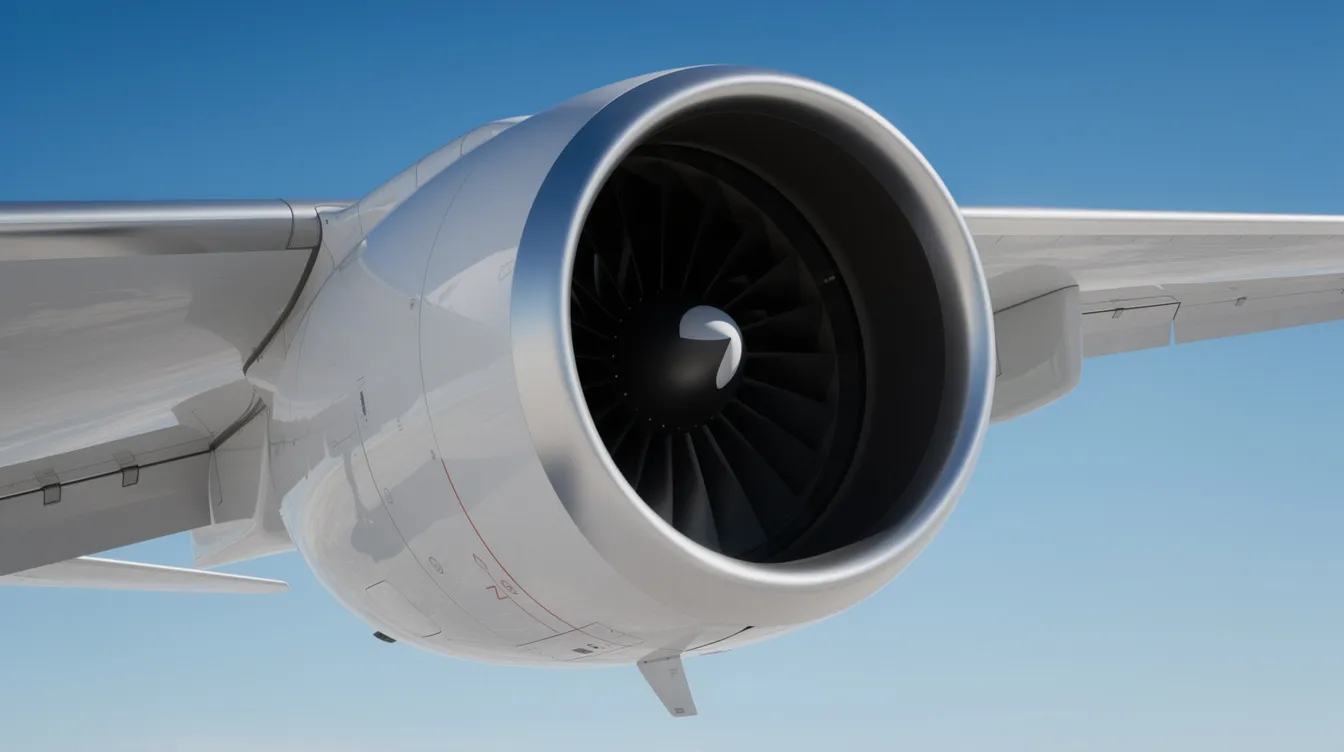
The 737 MAX series was launched in 2011 and entered service in 2017, directly responding to the Airbus A320neo. Boeing announced the program with a clear goal: deliver a 10–20% fuel-burn improvement over the 737 NG while preserving cockpit commonality.
Design aims:
LEAP-1B engines with a higher bypass ratio
Aerodynamic tweaks, including a re-contoured tail cone, nacelle changes, and split-tip winglets
Updated avionics while preserving 737 cockpit commonality
Key improvements in the Boeing 737 MAX include new wing designs for better aerodynamics. The 737 MAX offers up to 14% fuel savings compared to its NG predecessor, with some operators like flydubai reporting even higher fuel efficiency gains.
Timeline:
Boeing announced the MAX family with early commitments from airlines like Southwest Airlines and Lion Air
The first flight of the 737 MAX 8 took place on January 29, 2016
FAA certification followed in early March 2017, using a supplemental type certificate approach
The first delivery went to Malindo Air (operating for Batik Air Malaysia) in May 2017
Early operational goals:
High dispatch reliability
Quick ramp-up of deliveries
Positioning MAX 8 as the workhorse model with MAX 7, MAX 9, and later MAX 10 and MAX 200 covering different capacity niches.
Major early customers included Southwest Airlines as a key North American launch operator, alongside flydubai, Lion Air, and others. Thousands of firm orders accumulated before the grounding.
Boeing's flight-test campaign used dedicated test aircraft for performance, systems, noise, and reliability trials before the first delivery. The company sought to certify the 737 MAX as a derivative of the 737 NG using the existing supplemental type certificate framework, rather than treating it as a completely new aircraft type.
The larger, repositioned LEAP-1B engines introduced a handling challenge. Their forward-and-up placement on the wing affected pitch behavior at high angles of attack, creating a tendency for the nose to pitch up more than pilots would expect.
To address this, Boeing introduced the Maneuvering Characteristics Augmentation System (MCAS):
Its purpose was to automatically apply nose-down stabilizer trim in certain high-AoA conditions
Its role was preserving common handling characteristics so that pilots could transition from NG to MAX with minimal simulator training.
At entry into service, MCAS relied on a single angle-of-attack (AoA) sensor and could command repeated trim inputs. Pilots were only partially briefed on its behavior. The flight manuals and training material did not fully address scenarios involving erroneous AoA inputs.
Regulators initially accepted the design and documentation based on Boeing's existing track record and the derivative-type certification process. This set the stage for the controversy that followed.
The Boeing 737 MAX was grounded worldwide in March 2019 after two crashes that together killed 346 people. These two fatal crashes permanently changed how regulators, manufacturers, and the flying public think about flight safety.
Lion Air Flight 610 (October 29, 2018):
Departed Jakarta, Indonesia
A faulty angle-of-attack sensor fed bad data, triggering MCAS
Repeated nose-down trim commands conflicted with crew inputs
The plane crashed shortly after takeoff, killing all 189 on board
Ethiopian Airlines Flight 302 (March 10, 2019):
Departed Addis Ababa, Ethiopia
A similar pattern of MCAS activation from erroneous sensor data
Extremely short timeline from takeoff to crash
All 157 passengers and crew died
Initial responses varied by regulator. Some authorities grounded their aircraft sooner than others. The FAA ultimately joined a worldwide grounding in March 2019.
Early investigative findings highlighted:
MCAS activation based on single-sensor input
Limited pilot training on MCAS behavior
Broader concerns with Boeing's internal safety culture and the extent of delegated certification authority
The crashes resulted in 346 fatalities due to design flaws in the MCAS system. Public confidence dropped sharply. Travelers actively tried to avoid the "737 MAX" label when booking flights, and airlines adjusted fleet plans in response.
The recertification process spanned roughly 20 months, from the March 2019 grounding to the FAA's approval for return to service in November 2020.
Major technical changes:
MCAS was redesigned to use input from both angle-of-attack sensors
Limits placed on the magnitude and frequency of MCAS trim commands
Improved system logic to prevent repeated nose-down trimming on erroneous data
Non-software measures:
Revised flight manuals and training material
Enhanced simulator training focusing on runaway stabilizer and MCAS-related scenarios
Mandatory airframe inspections and modifications before each aircraft is returned to service
Regulatory and political dimension:
The FAA took a more hands-on approach to testing rather than relying only on delegated authority
Coordination with EASA, Transport Canada, ANAC (Brazil), and other global regulators, some of whom imposed additional conditions
Early operators to resume service included Gol Linhas Aéreas in Brazil and American Airlines in the United States in late 2020. Progressive re-entry of the MAX fleet continued around the world through 2021 and beyond.
Some online booking engines and airlines allowed travelers to filter out 737 MAX flights, indicating lingering public concern even after regulators cleared the new aircraft. Pilot training requirements became significantly more rigorous than what existed before the two crashes led Boeing to overhaul its approach to documentation and crew preparation.
The global grounding not only halted MAX operations but also severely disrupted Boeing's 737 production line and supplier ecosystem.
Production rate changes:
Reduction from around 52 aircraft per month to roughly 42 per month in April 2019
Continued build-up of undelivered inventory stored at Boeing facilities and satellite sites in Washington and elsewhere
Decision to suspend 737 MAX production altogether in January 2020 to conserve cash and focus on delivering parked aircraft once regulators allowed
Boeing absorbed high costs for storage, financing, and supplier contracts during the suspension. Major ratings-agency downgrades reflected rising costs, compensation to airlines, and strained suppliers like CFM International.
The restart:
Phased resumption of 737 MAX production around May 2020 at a low rate
Gradual ramp-up as deliveries restarted in late 2020
Boeing's stated targets included reaching about 31 aircraft per month in 2021 and further increases in subsequent years
By mid-2026, the production rate will sit at 42 aircraft per month, with an approved goal to stabilize at 47 aircraft per month. Boeing also opened a fourth production line - the "North Line" - in Everett, Washington, in July 2026, supporting production expansion beyond current capacity.
The FAA's review of expansion plans is now far more involved than in past decades, with regulators scrutinizing every step of the ramp-up.
On January 5, 2024, Alaska Airlines Flight 1282, a Boeing 737 MAX 9, suffered an explosive decompression when a mid-cabin door-plug panel detached while climbing through approximately 14,830 feet after departure from Portland, Oregon.
Key facts:
Aircraft type: MAX 9 (registration N704AL)
The plane carried 171 passengers and 6 crew members
Injuries were minor: 1 flight attendant and 7 passengers sustained non-life-threatening injuries
The plane landed safely back at Portland
Immediate regulatory response:
The FAA grounded 171 Boeing 737-9 MAX aircraft in January 2024 through an emergency airworthiness directive
Mandatory inspections of door plug installations across affected fleets
Inspectors found loose or missing bolts on some aircraft
The NTSB investigation determined that four key bolts were missing in the 737 MAX door-plug incident - they had never been reinstalled after factory work. This was a significant quality control lapse, not a flight control system design flaw like MCAS.
The FAA froze Boeing's planned increase in 737 MAX production until the company could demonstrate sustained quality improvements. This impacted delivery timelines for carriers, including Alaska Airlines and United Airlines.
While unrelated to MCAS, the incident reinforced traveler scrutiny of the "MAX" label and pushed Boeing toward broader reforms in factory processes and safety culture. Boeing paid over $2.5 billion in damages related to the MAX issues across the grounding and subsequent incidents.

Beyond the mainline MAX 8 and MAX 9, Boeing planned smaller MAX 7 and stretched MAX 10 variants to complete the single-aisle market lineup, including direct competition with the Airbus A321neo.
Post-crisis legislation changed the certification landscape:
Tighter scrutiny of safety-critical systems
New requirements for flight-crew alerting and redundancy
Specific technical and regulatory issues:
Exemptions sought regarding modern crew-alerting systems (EICAS)
Additional requirements, such as a third angle-of-attack sensor and improved stick-shaker controls, were mandated by U.S. law.
Boeing withdrew some exemption requests after the Alaska Airlines Flight 1282 incident while completing redesigns for systems like engine anti-ice.
Impact on key customers:
Southwest Airlines is counting on the MAX 7 to replace older 737s on shorter routes
United Airlines is banking on the MAX 10 for high-density routes and later publicly signaling frustration and exploring alternatives.
Certification for both variants is expected in 2026, with the first delivery projected for 2027. These delays affected fleet planning, capacity growth, and competitive dynamics on busy domestic routes where single-aisle fuel efficiency is critical.
Before the grounding, the 737 MAX program accumulated more than 5,000 firm orders from roughly 70–80 customers worldwide. Southwest Airlines, Lion Air, and flydubai ranked among the largest early customers. The 737 became the highest-selling commercial aircraft by 2019.
Deliveries began in 2017, paused during the 2019–2020 grounding and production suspension, then resumed in late 2020.
Key operator groups:
Low-cost carriers: Southwest Airlines, Ryanair
Major U.S. airlines: American Airlines, United Airlines, Alaska Airlines
International carriers in Europe (including Lufthansa group companies), Asia, and Latin America
Airlines used the MAX's improved range and fuel efficiency to open longer "thin" routes and improve economics on dense trunk routes. By the mid-2020s, hundreds of max aircraft were flying daily, carrying millions of passengers each month. Some travelers still specifically check whether a flight operates on a "737 MAX" or another type.
The Boeing 737 can operate routes for low-cost carriers and major airlines, making it central to the global aerospace market's short- and medium-haul segments.
The Boeing 737 family has accumulated billions of passenger journeys. But with that ubiquity comes exposure: the Boeing 737 family has 529 aviation accidents as of 2023 across all generations.
Broad trends:
Safety rates improved steadily from Original to Classic to NG
The hull loss rate for the 737 MAX is 1.48 per million departures, elevated by the two MCAS-related crashes in a relatively young fleet
Overall accident rates for the NG remain among the lowest of any commercial airliner
Key non-MAX safety episodes:
1990s rudder-PCU issues leading to loss-of-control accidents and subsequent FAA-mandated fixes
Weather-related and runway-overrun accidents that drove procedural and design improvements
Systemic lessons from the MAX crashes:
Importance of system transparency to pilots
The dangers of single-sensor dependence in safety-critical functions
Limits of self-certification and the need for independent oversight
The Alaska Airlines incident redirected attention from MCAS to factory and supplier oversight, demonstrating that manufacturing quality matters as much as flight control design.
Modern 737 NG and 737 MAX aircraft operate under stricter oversight, extensive modifications, and intense public scrutiny. The safety environment is statistically strong but reputationally sensitive, and private jet safety frameworks offer a useful comparison point for travelers evaluating their options.
For most passengers, the Boeing 737 MAX experience is defined by seat layout, airline service, and cabin design rather than the technical systems that dominate industry discussions.
Common MAX cabin features:
Boeing Sky Interior with LED lighting
Larger overhead bins
Typically quieter cabins due to LEAP-1B engines and aerodynamic tweaks reducing noise
Seating and comfort:
Typical 3-3 economy layout
Range of seat pitch and width depending on airline configuration
Two-class cabins on some carriers with premium economy or domestic first class
Traveler perception post-grounding:
Initial reluctance and heightened scrutiny of "737 MAX" in booking engines
Airlines communicated safety upgrades and regulator approvals
Gradual normalization as the aircraft operated millions of uneventful flight hours
Travelers concerned about MAX aircraft can check flight details for aircraft type when booking, contact airlines for aircraft information, or choose alternative aircraft types when flexibility allows.
In private and charter contexts, many clients opt for smaller business jets or turboprops rather than narrow-body airliners, further separating their experience from Boeing 737 MAX operations and reflecting broader trends outlined in comprehensive guides to private and charter airlines.
The Boeing Business Jet (BBJ) adapts the 737 airframe for corporate, government, and VIP transport. It delivers a large-cabin private jet experience derived from a proven commercial model.
Original BBJ family:
BBJ1 is based on the 737-700 with strengthened wings and additional fuel tanks
BBJ2 is based on the 737-800, offering more cabin space
BBJ3 is based on the 737-900ER with even more interior volume and long-range capability
BBJ MAX line:
BBJ MAX 7, MAX 8, and MAX 9
LEAP-1B engines and advanced winglets for improved range and fuel burn
Typical ranges around or above 6,000–7,000 nautical miles, depending on configuration, enabling nonstop links between intercontinental city pairs
Typical interiors:
Highly customized layouts with private suites, conference areas, lounges, and dedicated crew rest
Enhanced cabin pressurization and noise reduction compared to standard airline 737 cabins
BBJs occasionally appear on the charter market for heads of state, sports teams, or large corporate groups. Digital charter platforms like Jettly can help clients compare BBJ-type options alongside smaller jets when they need a large-cabin airliner for private use.

Boeing's 737 airframe underpins not only airline and BBJ operations but also a variety of military aircraft and governmental platforms. The 737 has been adapted for military use, including the P-8 maritime patrol aircraft.
P-8 Poseidon:
Based on the 737-800ERX
Roles in maritime patrol, anti-submarine warfare, and surface-ship tracking
Operators include the U.S. Navy and partner nations
737 AEW&C (E-7 Wedgetail):
737-700-based airborne early warning and control platform
Distinctive dorsal "top-hat" radar
Operators including Australia, Turkey, South Korea, and additional air forces
Other derivatives:
C-40 Clipper for U.S. Navy and U.S. Air Force transport roles
Historical T-43 "Gator" navigator training aircraft
Specialized surveillance variants for countries such as Indonesia
These military applications leverage the 737's widespread support network, making global maintenance and crew training more efficient compared with bespoke military airframes. The aircraft can also carry cargo in several configurations. This versatility speaks to the core 737 design's adaptability across commercial, government, and defense roles for decades.
Fuel efficiency and emissions are central to modern fleet decisions. The 737 MAX improves on previous generations in several measurable ways.
How the MAX improves on predecessors:
LEAP-1B engines with a higher bypass ratio and advanced materials
Split-tip winglets reducing vortex drag
Aerodynamic optimization of the tail cone and nacelles
The result is up to roughly 15–20% lower fuel burn per seat versus older 737 NG or Classic aircraft on comparable routes. Live operator data confirms some airlines saw approximately 15% better fuel efficiency than NG models, exceeding initial projections.
Noise performance:
Reduced noise footprint around airports
Benefits for communities near busy hubs and for airlines operating under stricter noise regulations
Airlines and charter operators increasingly pair aircraft like the 737 MAX with operational measures:
Continuous-descent approaches
Optimized flight planning
Growing use of sustainable aviation fuel (SAF) where available, including tests on MAX airframes in Boeing's ecoDemonstrator programs
In contrast, smaller private jets used for charter may have higher per-passenger fuel consumption on comparable routes. Right-sizing the aircraft to the mission is a key lever in managing emissions per passenger, which is one reason the aircraft class selection matters when planning any trip.
Most Boeing 737 aircraft, including the 737 MAX, operate as commercial airliners on fixed schedules. Private jet charters typically use smaller business jets or turboprops rather than large single-aisle airliners.
Core differences between flying on a 737 and chartering privately:
|
Factor |
Commercial 737 |
Private Charter |
|---|---|---|
|
Schedule |
Fixed airline timetables |
On-demand departures |
|
Airports |
Large hubs |
Smaller regional or executive airports |
|
Cabin |
Hundreds of passengers |
A handful in a bespoke interior |
|
Check-in |
Hours before departure |
Minutes before departure |
|
Routing |
Hub-and-spoke connections |
Direct point-to-point |
Large-group charter missions—sports teams, music tours, or corporate roadshows—sometimes do use airliner-sized aircraft, including 737s or BBJs, such as Boeing 737-800 private charter options, which can be sourced via commercial airline charter platforms.
Jettly's marketplace focuses on matching specific trip requirements with suitable aircraft, supported by tools like its airport locator and charter booking platform:
Light jets and turboprops for short hops, with tools like a private jet charter cost estimator helping travelers understand pricing
Midsize and heavy jets for transcontinental or intercontinental travel
Occasional access to airliner-class aircraft when a customer needs Boeing 737-scale seating in a private configuration, including crowdsourced and shared-seat charter options
Charter clients can request detailed information about aircraft type, operator certifications, and maintenance standards, drawing on insights similar to those in guides to the best private jet charter companies. Travelers who prefer to avoid particular aircraft families can express those preferences when planning a charter itinerary.
Boeing's 737 holds a central role in airline networks around the world. The 737 MAX safety crisis changed how travelers, regulators, and operators approach transparency and accountability. And travelers now have more tools than ever to make informed choices about how they fly.
For airline passengers:
Check the "aircraft type" field on airline booking pages and mobile apps
Look for designations like "737 MAX 8," "737-8 MAX," or "73M"
Consider flexible fares if you prefer or want to avoid certain models
For private travelers and corporate flight planners:
Weigh the trade-offs between commercial airline service on a Boeing 737 and chartering a dedicated business jet
Evaluate total trip time, privacy, schedule control, and costs with the help of a jet card flight cost estimator
Explore how to book a private jet for seamless planning, including understanding how private jet charter pricing works
How Jettly supports informed decisions:
Instant pricing and aircraft comparisons across thousands of operators through flexible private jet membership programs
Visibility into aircraft category (light, midsize, heavy jet, turboprop, helicopter)
The ability to tailor trips around operator certifications and aircraft preferences by using Jettly as a flexible NetJets alternative
As regulators, manufacturers, and operators learn from events like Lion Air 610, Ethiopian 302, and Alaska Airlines Flight 1282, travelers gain more tools and options. Whether flying on a Boeing 737 with an airline or on a privately chartered aircraft, the key is aligning each journey with your risk tolerance, comfort expectations, and time constraints.
Ready to experience private travel on your terms? Explore flight options, consider enhanced services like dedicated in-flight catering for private jets, or request a quote at https://www.jettly.com.
After the 2019 grounding, regulators required extensive software changes, wiring checks, and new training programs before any 737 MAX could resume service. Since returning to operations in late 2020, the MAX has flown millions of passenger segments under heightened oversight from the FAA and international regulators.
No aviation system is risk-free. But the current safety framework for the 737 MAX is significantly more stringent than it was prior to the Lion Air and Ethiopian accidents. Regulators continue to monitor Boeing's production quality, especially after the Alaska Airlines Flight 1282 door-plug incident in January 2024. Travelers with concerns should review regulator summaries and consider their own comfort level when choosing flights or aircraft types.
Practical steps to identify your aircraft:
Check the "aircraft type" field on airline booking pages and mobile apps
Look for designations like "737 MAX 8," "737-8 MAX," or the IATA code "73M"
Use third-party flight-tracking apps that list aircraft variants by registration number
Some airlines highlight fleet details proactively, while others may substitute equipment closer to departure. Aircraft type is sometimes subject to change. Travelers who strongly prefer or want to avoid the MAX should book flexible fares and monitor flight details as departure approaches.
Most private charters use smaller jets or turboprops. But some missions—large corporate groups, sports teams, or government delegations—do charter airliner-sized aircraft, including Boeing 737s, typically in VIP or high-density configurations.
737 MAX aircraft are less common in ad-hoc charter than earlier 737 or BBJ models, but they may be available through certain operators in specific regions. Jettly's platform allows clients to specify preferences about aircraft type and cabin layout, and, where available, to compare 737-class options against other large-cabin jets for long-range group travel.
Commercial 737 flights focus on seat-mile efficiency and low fares, with fixed schedules and busy hub airports. Private jets prioritize flexibility, time savings, and privacy, often using smaller airports closer to your true origin and destination.
Key contrasts include:
Security and check-in time: minutes versus hours
Ability to customize departure times and in-flight services
Direct routing to secondary airports that may not support 737-size aircraft
Travelers deciding between the two should weigh total trip time, group size, budget, and the value they place on privacy and control. Visit Jettly's website for route examples and pricing, including dedicated options such as private jet charter services in Kolkata, West Bengal.
Consult dedicated private aviation resources, operator safety ratings, and digital charter platforms for transparent pricing and aircraft comparisons, including region-specific services like private jet charter in Atlanta, Georgia, and structured jet card programs for frequent private flyers. Jettly's global inventory, instant pricing engine, membership options, and high-ticket affiliate partnership program can complement or replace certain commercial 737 itineraries—especially on business or family trips where time and flexibility matter most.
Request sample quotes for common routes like New York–Miami, Los Angeles–Las Vegas, or Toronto–Vancouver to see how private jet options compare with commercial Boeing 737 flights in both cost and total travel time, using on-demand platforms such as Dexter Air Taxi’s private jet booking service or instant-book charter marketplaces like Zenflight.
The Boeing 737 has played a pivotal role in shaping modern air travel, evolving through decades of innovation, challenges, and improvements. Despite the setbacks faced by the 737 MAX, ongoing regulatory scrutiny and design enhancements have restored confidence in the aircraft’s safety and efficiency.
For travelers who prioritize flexibility, convenience, and personalized service, platforms like Jettly provide seamless access to private jet charters, including options that complement or substitute traditional 737 airline flights. By leveraging Jettly’s extensive global network and transparent booking system, passengers can tailor their journeys to fit their schedules and preferences. To explore private charter options and discover how to elevate your travel experience, visit https://jettly.com/ and learn more about Jettly’s charter options and how private jet charter pricing works..
Share this post:
Jay Franco Serevilla
Jul 17, 2026
|
5
min read
Discover tips and trends in the industry.

5
min read
Travel in Private Jet: A Complete Guide to Flying Private with Jettly
Flying private with Jettly transforms travel by eliminating crowded airports and long waits, allowing passengers to check in just 15-30 minutes before departure. This comprehensive guide covers everything from choosing the right aircraft to understanding pricing and packing for your journey, making private jet travel accessible and convenient for both business and leisure trips.
Read More
5
min read
How to Fly in a Private Jet with Jettly: Costs, Booking, and What to Expect
Flying in a private jet with Jettly offers a seamless and efficient travel experience, providing access to thousands of aircraft worldwide. This guide covers everything from costs and booking processes to what travelers can expect on the day of their flight, making private air travel more accessible than ever. With features like instant pricing and flexible scheduling, Jettly caters to both first-time flyers and seasoned travelers.
Read MoreStay updated with our latest insights and tips to elevate your journey with us.
MEMBERSHIPS AND ASSOCIATIONS



Disclaimer: Jettly operates as a charter broker, offering access to a global digital jet charter marketplace. Jettly is not a direct air carrier and does not own or operate aircraft. All advertised flights are conducted by third-party air carriers that are fully licensed and hold the appropriate Part 135 or Part 121 certifications issued by the Federal Aviation Administration (FAA) or equivalent regulatory authorities under U.S. or foreign law. Jettly complies fully with the U.S. Department of Transportation's Part 295 and Part 298 Charter Broker regulations. Jettly does not carry additional liability insurance. Passengers are covered by aircraft operator insurance. TICO: 50023770


