



Login
Get Instant Pricing On 23,000+ Aircraft

>
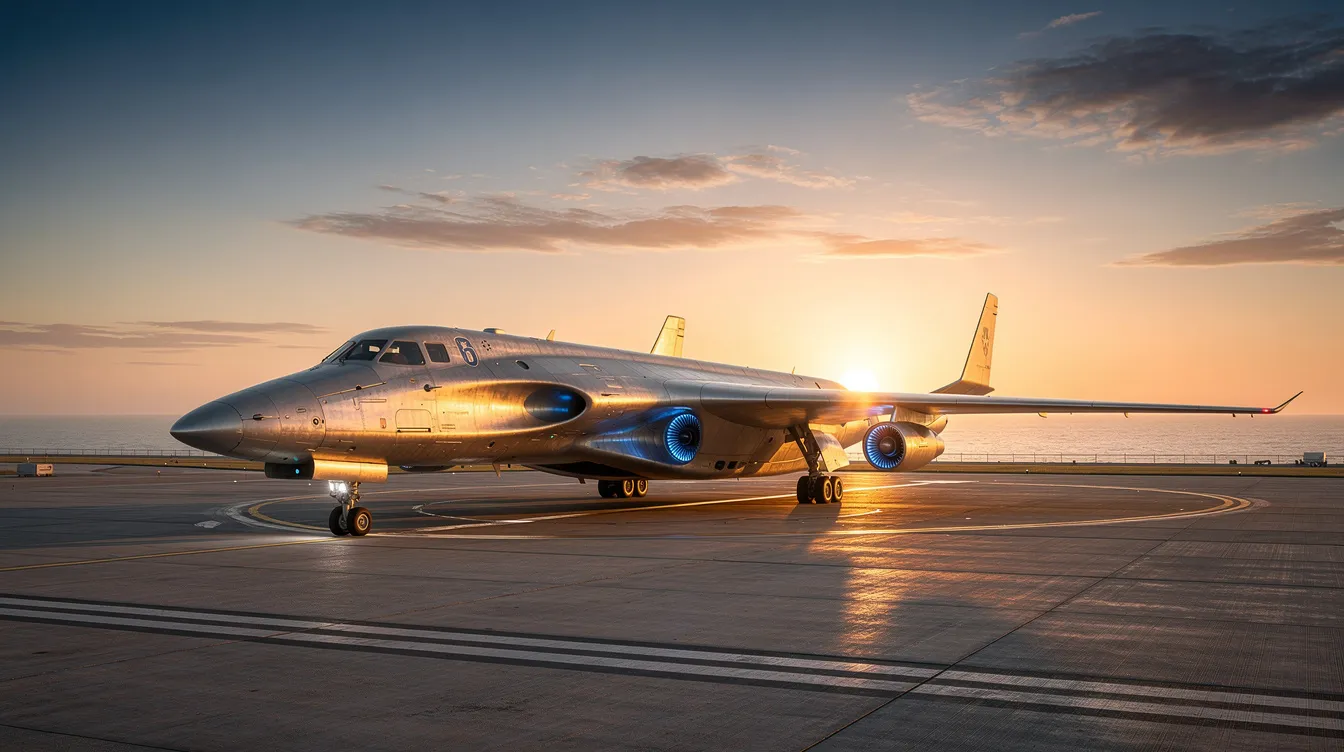
The Boeing space freighter is one of the most ambitious spacecraft concepts in history - a 1970s proposal for a giant, fully reusable cargo spaceplane that could have reshaped how humanity builds and works in space. It was never built, but the ideas behind it remain remarkably relevant today. This article explores the design, the history, and the lasting implications of Boeing's mega-freighter concept, from its role in space exploration to what it signals for the future of commercial and private travel.
The Boeing Space Freighter was a conceptual heavy-lift launch vehicle proposed in the 1970s by the Boeing Company. It was designed as a fully reusable two-stage spacecraft intended to carry approximately 420 tons of cargo to low Earth orbit - far exceeding the Space Shuttle's maximum capacity of 30 tons and even next-generation vehicles like SpaceX's Starship, which can carry about 140 tons to orbit.
The concept used a two-stage, fully reusable system with both stages returning to Earth for aircraft-style servicing, a philosophy that links directly to today's reusable launch systems and the broader push for routine access to space.
While the freighter remained on paper, related programs like the Space Shuttle and the X-37B demonstrated key elements of the reusable spaceplane concept over subsequent decades.
The design targeted construction of solar power satellites and large orbital infrastructure, positioning the freighter as a logistics backbone for space exploration at scale.
Looking ahead, the vision behind large space freighters connects to commercial and private markets. Platforms like Jettly are already simplifying high-end air travel through flexible private jet memberships and could one day link seamlessly to spaceport-based travel.
The Boeing Space Freighter was a proposal from Boeing's aerospace division during the late 1970s for a giant space freighter designed to support large-scale orbital construction and deep-space logistics. The core idea was straightforward: build a massive, reusable spaceplane system capable of hauling roughly 420 metric tons of payload to low Earth orbit in a single flight, dwarfing every launch vehicle that existed at the time.
The Boeing Space Freighter is a conceptual heavy-lift launch vehicle, proposed as a fully reusable two-stage spacecraft with a 420-ton cargo capacity. The first-stage booster utilized liquid oxygen and methane propulsion, while the second-stage spaceplane used liquid oxygen and hydrogen engines. The massive internal cargo bay was designed to transport bulky equipment. It was proposed as a heavy logistical support vehicle for deep space exploration, but was never built due to the technological limitations of the 1970s.
It measured 80.6 meters long and 18.5 meters wide, underscoring the vehicle's overall size. The freighter's internal payload space rivals the mass of the International Space Station itself. The massive internal cargo bay was designed to transport bulky equipment, station modules, and industrial hardware that no other vehicle could accommodate.
Critically, the vehicle was never built due to the technological limitations of the 1970s. It remained a study and engineering concept - no prototype was constructed or flown. Cost, political constraints, and immature materials science kept it firmly in the world of trade studies. Still, the design's ambition set a benchmark that the industry continues to contemplate decades later.
After Apollo, NASA and major contractors like Boeing turned their attention to long-term infrastructure for space. The late 1960s and 1970s were defined by big thinking: space stations, orbital factories, and vehicles large enough to make those visions practical. The oil crisis of the early 1970s added urgency, as cheap oil led NASA and the Department of Energy to contemplate solar power satellites as a potential solution to Earth's energy problems.
NASA's Space Shuttle program was approved in 1972, with its first launch completed in 1981. The Shuttle shaped how the industry thought about reusable spaceplanes and cargo logistics, but its payload - around 30 tons - was modest compared to what solar power satellite proponents believed was necessary.
Boeing, along with other aerospace firms, produced advanced studies for heavy-lift and space freighter concepts under DOE/NASA Solar Power Satellite programs spanning roughly 1977 to 1980. Budgets, Cold War security priorities, and technological limits led policymakers to choose the smaller Shuttle instead of mega-freighter designs. The freighter concept was shelved, but its data and analysis carried forward, much as today’s charter airlines and private operators landscape continues to evolve from earlier generations of aviation infrastructure.
The Boeing Space Freighter was envisioned as a two-stage, fully reusable spaceplane stack optimized for extremely heavy cargo. The Space Freighter's design was proposed in the 1970s and included a towering vehicle with a height estimated at 150 to 160 meters when fully stacked.
The second stage - the spaceplane itself - was a large winged vehicle designed for orbital insertion and return. The second-stage spaceplane used liquid oxygen and hydrogen engines, similar in concept to the Shuttle's main engines but scaled for far greater thrust. The freighter's design includes a fully reusable first stage, a booster stage with a wingspan estimated at roughly 80 meters. The first-stage booster utilized liquid oxygen and methane propulsion, offering a balance between performance and cost.
The vehicle was envisioned for vertical launches from offshore platforms or large ground-based complexes, with each serving as a potential Launch Site. Both stages would return to Earth, land horizontally on runways, undergo inspection and refurbishment, and fly again. This airline-style turnaround was central to the concept's economic argument.
It was proposed as a heavy logistical support vehicle for deep space exploration, with the scale to deliver entire station modules, propellant reserves, and industrial hardware in a single mission.

To put the Boeing Space Freighter's capacity in context, consider these numbers side by side:
|
Vehicle |
Payload to LEO |
Reusability |
Primary Role |
|---|---|---|---|
|
Boeing Space Freighter (concept) |
~420 metric tons |
Fully reusable, both stages |
Pure cargo, bulk transport |
|
Saturn V |
~100 metric tons |
Expendable |
Apollo lunar missions |
|
Space Shuttle |
~30 metric tons |
Partially reusable |
Mixed crew and cargo |
|
SpaceX Starship |
~140 metric tons (design target) |
Fully reusable (in development) |
Crew and cargo |
The Boeing Space Freighter has a cargo capacity of 420 tons in payload weight - about 4 times the Saturn V rocket, which could carry 100 tons to orbit, and 14 times the Space Shuttle, which had a cargo capacity of 30 tons. SpaceX's Starship, on the other hand, will carry about 140 tons, still well below the freighter's ambition.
The mission focus differed sharply. The Space Shuttle carried crew and cargo on flexible mission profiles. The Boeing freighter was a pure cargo workhorse, designed to lower the cost per kilogram to orbit via scale and reusability - the same way large cargo aircraft reduce freight cost on Earth.
The Boeing design philosophy anticipated what today's reusable launch providers are incrementally trying to achieve. Both stages were intended to land on runways, receive inspection and refurbishment in hangars, and return to flight at a high cadence. The goal was to move away from expendable rockets and toward a logistics model closer to cargo airlines, with predictable schedules and per-flight operating costs.
The technical barriers of the 1970s were significant:
Limited materials for high-temperature reusable thermal protection at scale
Engine life and maintenance challenges across repeated duty cycles
Insufficient digital control systems for precise guidance, landing automation, and safety
These obstacles meant the concept stayed on paper. But the blueprint was clear: a fully reusable system operating with medium turnaround times and aircraft-style ground operations. This vision is now being pursued - in smaller increments - by companies building reusable vehicles today.
The freighter was conceived as the logistics backbone for ambitious space exploration scenarios. Planners imagined a world where such a vehicle could:
Rapidly build large space stations and orbital shipyards
Deliver bulk propellant, life-support consumables, and spare parts
Launch massive interplanetary transfer stages or assembled spacecraft
Transport components for building solar power satellites in geosynchronous orbit
Such capacity would have enabled modular assembly of Mars vehicles in orbit, deployment of satellites at unprecedented scale, and support for lunar base logistics. The production of space infrastructure - from habitats to power systems - depends on dependable, high-volume cargo delivery.
Today's broader space exploration ecosystem echoes these ideas. Any future space freighter, whether from Boeing or another company, would likely serve constellations, orbital habitats, and cislunar infrastructure. Dependable cargo systems are the less glamorous but essential counterpart to crewed missions, much like freight aircraft quietly support global trade on Earth.
Although the giant space freighter was never built, Boeing has remained a major player in crew and cargo transport to space. The Boeing Company carried significant responsibilities in the Space Shuttle program, contributing work on the orbiter and associated systems. Earlier freighter studies informed Shuttle cargo and reusability thinking.
Key Boeing space projects that carry forward the spaceplane and cargo legacy include:
X-37B Orbital Test Vehicle: a small, reusable, uncrewed spaceplane operating since 2010, demonstrating long-duration missions and runway landings; Length: over 29 feet (8.8 meters)
CST-100 Starliner: Boeing's crew capsule developed under NASA's Commercial Crew Program for transport to the ISS
Operational data from Shuttle and X-37B missions has informed understanding of re-entry environments, thermal protection, and turnaround logistics - core challenges for any future space freighter. As of the mid-2020s, no program matches the scale of the original concept, but industry trends increasingly align with its principles: reusability, higher cadence, and lower cost per launch.
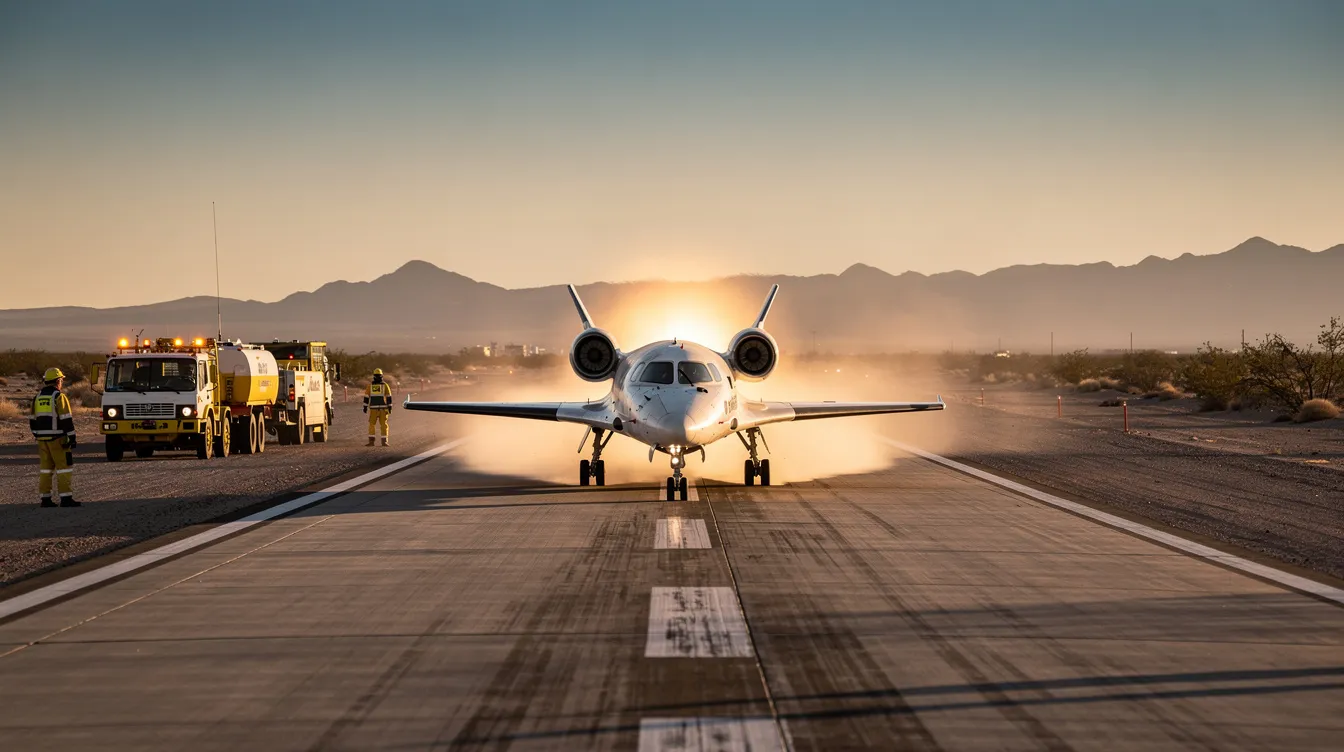
The prospect of a space freighter is emerging again as governments and private companies plan larger stations, lunar infrastructure, and deep-space missions. The concept could revolutionize space travel starting in the mid-21st century, driven by growing satellite constellations, demand for in-orbit servicing and manufacturing, and advances in materials, propulsion, and autonomous flight control.
Future space freighters might integrate with terrestrial transportation. Spaceports located near major hubs - some already under construction around the world - could see passengers and cargo transferring seamlessly from private jets using an airport locator tool and charter platform to orbital vehicles in a multimodal travel chain.
Jettly already connects travelers with over 20,000 private charter aircraft worldwide via a digital marketplace. The same on-demand model could, in the long term, extend to high-altitude or suborbital point-to-point travel and, eventually, spaceport transfers. While Boeing's original space freighter remains conceptual, the underlying vision - routine, flexible access to near-Earth space - parallels how platforms like Jettly are simplifying access to private aviation today.
As orbital and cislunar infrastructure grows over the coming years, there will be parallel demand for rapid executive travel to launch and landing sites, time-critical cargo delivery to support missions, and seamless coordination between ground, air, and orbital segments.
Jettly's on-demand charter model is well suited to this environment. It offers instant digital pricing and booking for private jets to secondary airports close to future spaceports, with tools like a private jet charter cost estimator and access to light jets, midsize jets, helicopters, and large-cabin aircraft.
Real-world scenarios grounded in today's capabilities include:
Executives flying on short notice via Jettly from New York to Florida's Space Coast for a satellite launch, using private jet charter to Orlando or opportunistic empty leg flights with major discounts
Engineering teams using private charters to reach remote test sites or tracking facilities faster than commercial schedules allow, transported directly to facilities near the Kennedy Space Center or similar locations
Private aviation will remain a critical link in the chain even as space freighters eventually take over heavy lifting beyond the atmosphere. Platforms like Jettly serve as a practical bridge between Earth-bound travel and future orbital operations.
You can also leverage partners like Dexter Air Taxi and Zenflight for on-demand operations. Explore flight options or request a quote at https://www.jettly.com.
No. The Boeing Space Freighter never progressed beyond the conceptual and study phase. No prototype or test article was constructed, and it did not fly.
However, design work and trade studies from these programs contributed to the broader knowledge base that later informed programs like the Space Shuttle and other reusable vehicle concepts. You can find video and image resources on YouTube and press archives that share reconstructions and comment on the original Boeing studies.
The Space Shuttle was a smaller, partially reusable spaceplane carrying around 30 tons to low Earth orbit, focused on mixed crew and cargo missions. The Boeing Space Freighter was envisioned as a much larger, fully reusable cargo system optimized for bulk freight of up to about 420 tons, with no primary emphasis on crew.
Modern heavy-lift rockets may approach or exceed Shuttle payloads, but few current designs match the freighter's combination of scale and full reusability as originally proposed. Manhattan-scale investment would likely be required to develop such a system.
Advances in propulsion, materials, automation, and reusable rocket operations have moved the industry closer to making such systems technically feasible. However, economic and market factors matter just as much: development of a true space freighter would require sustained demand for bulk orbital cargo and major long-term investment. A step-by-step evolution - starting with smaller reusable vehicles and incremental capacity increases - is more likely than a single leap to a 420-ton class vehicle. Claims of near-term readiness should be weighed carefully against the general pace of aerospace development.
Both domains deal with high-value, time-sensitive transportation and benefit from digital platforms that simplify booking, routing, and capacity planning. As spaceports and orbital operations grow, private aviation will be essential for transporting people and critical equipment to and from launch sites.
Jettly's model - instant access to a global aircraft inventory and transparent pricing - offers a template for how future travelers might coordinate end-to-end journeys that include both private jets and orbital vehicles. For travelers starting out, a detailed guide on how to buy a seat on a private jet can help frame today’s options. Learn more about how to charter a private jet through Jettly's platform.
Jettly is open and ready for practical, present-day use cases, with free sign-up for business trips, family vacations, event travel, medical or emergency flights, and access to remote locations poorly served by commercial airlines.
The platform provides instant pricing and booking for a wide range of aircraft categories - from light jets and turboprops to large-cabin jets - across thousands of global airports, along with guidance on affordable private jet charter pricing. Sign up or explore available aircraft and routes to get started today.
The Boeing Space Freighter remains a visionary concept that highlights the potential of fully reusable, heavy-lift spaceplanes to transform space logistics and exploration. Although never built due to technological and economic constraints of the 1970s, its ambitious design and massive 420-ton cargo capacity set a benchmark that continues to inspire modern aerospace innovation. Advances in propulsion, materials, and automation could eventually make such a vehicle feasible, supporting large-scale orbital infrastructure, deep-space missions, and commercial space markets.
As private aviation platforms like Jettly simplify high-end travel on Earth today, they also offer a glimpse into how seamless, flexible transport could evolve to include spaceport transfers and orbital journeys in the future. The Boeing Space Freighter’s legacy lies not only in its scale but in its forward-looking vision of routine, cost-effective access to space — a goal that remains central to the next era of exploration and premium travel.
Ready to experience private travel on your terms? Explore flight options or request a quote at https://www.jettly.com.
Share this post:
Jay Franco Serevilla
Oct 13, 2026
|
5
min read
Discover tips and trends in the industry.
5
min read
Southwest Boeing 737: Cabin Layout, Passenger Experience, And Private Jet Alternatives
The Southwest Boeing 737-700 is a popular narrowbody aircraft featuring a single-cabin layout with 143 economy seats. This guide provides insights into seat types, layout, and how it compares to private jet charters, helping travelers make informed choices for comfort and convenience. Discover the best and worst seats, onboard amenities, and fare types to enhance your flying experience.
Read More
5
min read
How Much Is Fuel for a Small Plane in 2026? (Pilot & Charter Perspective)
In 2026, fuel costs for small planes vary significantly based on aircraft type and fuel type, with 100LL avgas averaging $6.80 to $7.54 per gallon and Jet A ranging from $7.00 to $9.20. This guide provides insights for private pilots and charter customers on managing fuel expenses effectively. Understanding fuel consumption rates and regional price variations is crucial for budgeting and optimizing flight choices.
Read MoreStay updated with our latest insights and tips to elevate your journey with us.
MEMBERSHIPS AND ASSOCIATIONS



Disclaimer: Jettly operates as a charter broker, offering access to a global digital jet charter marketplace. Jettly is not a direct air carrier and does not own or operate aircraft. All advertised flights are conducted by third-party air carriers that are fully licensed and hold the appropriate Part 135 or Part 121 certifications issued by the Federal Aviation Administration (FAA) or equivalent regulatory authorities under U.S. or foreign law. Jettly complies fully with the U.S. Department of Transportation's Part 295 and Part 298 Charter Broker regulations. Jettly does not carry additional liability insurance. Passengers are covered by aircraft operator insurance. TICO: 50023770


