


Login
Get Instant Pricing On 23,000+ Aircraft

>
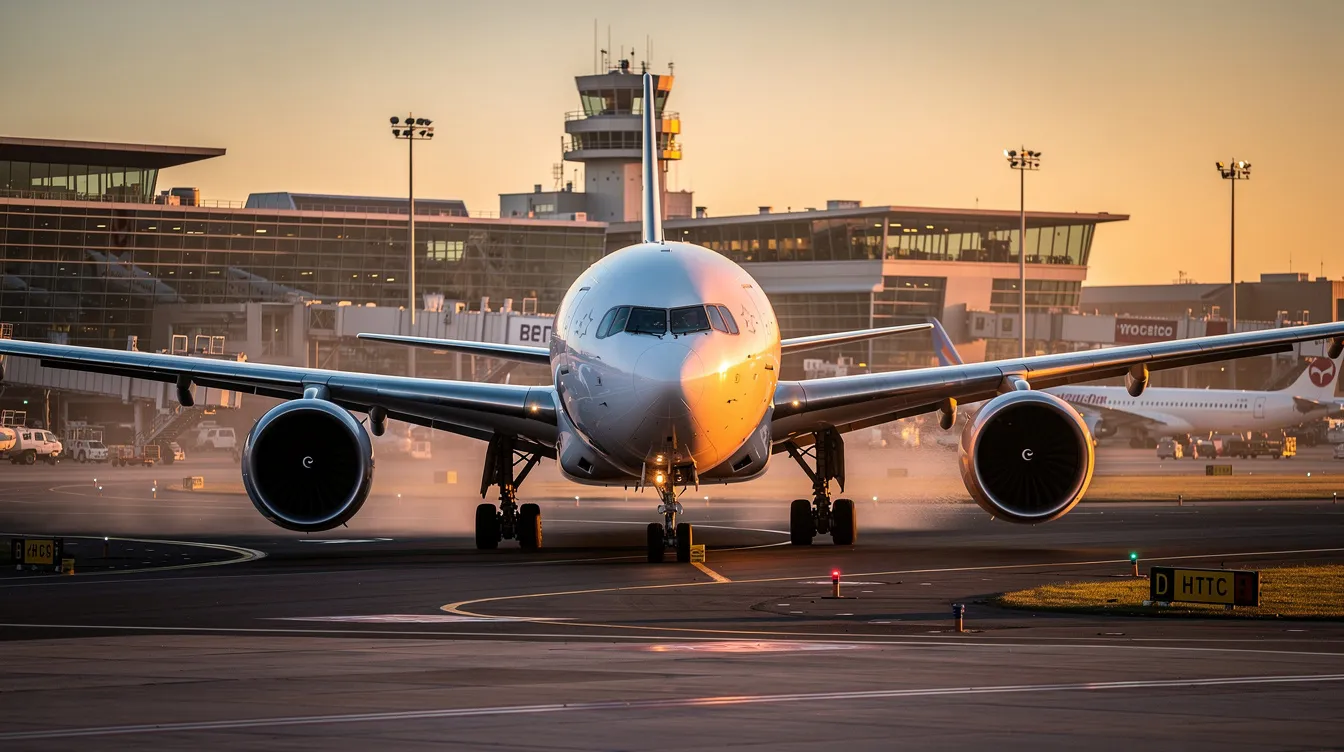
The Boeing 773 is one of the most recognized aircraft codes in commercial aviation. Behind that three-digit shorthand sits the Boeing 777-300ER, a long-range widebody twin-engine airliner that has reshaped how airlines operate high-capacity routes across continents. From Dubai to New York, London to Singapore, and Toronto to Hong Kong, the 777-300ER carries hundreds of passengers on some of the longest non-stop flights in the world. This guide is intended for aviation enthusiasts, charter clients, and anyone interested in the Boeing 777-300ER’s capabilities and role in modern air travel. This guide breaks down everything worth knowing about the airplane: its history, technical specs, cabin experience, safety record, and why it matters for both scheduled airlines and large-group charter travel.
"Boeing 773" is airline and industry shorthand for the Boeing 777-300 family. In most modern fleets, it refers to the extended-range Boeing 777-300ER (also coded 77W in IATA systems).
The Boeing 777-300ER combines large passenger capacity (typically 365 to 396 seats in a standard layout) with a long range of up to 7,370 nautical miles (about 13,650 km), making it ideal for global trunk routes.
The aircraft is roughly 20% more fuel efficient than the older Boeing 747-400, delivering lower operating costs per seat on long-haul flights.
Core aircraft features include a twin-engine layout powered by GE90-115B engines, raked wingtips for improved aerodynamic efficiency, a quiet wide-body cabin, and flexible seating configurations from all-economy to full VIP.
Jettly can arrange private charter and corporate shuttle flights using Boeing 777 aircraft through its global marketplace, giving large groups on-demand access to one of aviation's most capable long-haul platforms.
If you have ever checked a boarding pass or looked up a flight on a booking site, you may have seen the code "773" listed under aircraft type. This three-digit shorthand is used across reservation systems, fleet-monitoring tools, and scheduling platforms to identify the Boeing 777-300 family.
The Boeing 777-300ER is a long-range widebody twin-engine airliner.
773 refers broadly to the Boeing 777-300 airframe. In practice, nearly all 773-coded aircraft flying today are the 777-300ER (Extended Range), since original non-ER 777-300s are far fewer in number and mostly operated by a handful of carriers.
The 77W code specifically denotes the 777-300ER in IATA and ICAO classification systems.
Many passengers see "777," "777-300," and "777-300ER" used interchangeably. The key distinction is that the ER variant adds greater range, more powerful engines, and structural reinforcements over the base 777-300.
Major operators of the 777-300ER include Emirates (with over 100 in its fleet), Qatar Airways, Air France, Cathay Pacific, Air Canada, Turkish Airlines, and EVA Air, underscoring the aircraft's global presence.
The Boeing 777 program traces back to the late 1980s, when Boeing identified a gap in its product line between the midsize 767 and the jumbo 747. Major assembly of the first 777 began on January 4, 1993, marking a significant milestone in the program's development. The first 777 made its first flight on June 12, 1994, initiating an extensive flight test campaign.
The 777 was certified by the FAA on April 19, 1995, clearing the path for commercial service. Boeing delivered the first 777 to United Airlines on May 15, 1995, launching the type on revenue flights.
The 777-200ER first flew on October 7, 1996, extending range capability for transoceanic routes. The 777-300 made its first flight on October 16, 1997, introducing a stretched fuselage for higher capacity.
The main 777 variants include the 777-200, 777-200ER, 777-200LR, 777-300, 777-300ER, 777F (freighter), and the upcoming 777X line (777-8 and 777-9).
By the late 2010s, the Boeing 777 had surpassed 2,000 cumulative orders, making it the best-selling wide-body airplane in aviation history. Over its service history, the Boeing 777 family has accumulated millions of flight hours, reflecting its widespread use and reliability.
The 777 family effectively bridges the gap between older four-engine aircraft like the 747 and A340 and newer twins like the 787 and A350. It brought twin-engine economics to routes that previously required four engines, changing long-haul airline economics permanently.
The original 777-300 was launched in the mid-1990s as a stretched version of the 777-200. Boeing designed it to replace aging, high-capacity four-engine jets on dense routes with a more efficient twin-engine alternative. The 777-300 made its first flight on October 16, 1997, powered initially by options including Rolls-Royce Trent 892 engines.
The real breakthrough came with the evolution to the 777-300ER. Boeing launched this variant to combine the -300's longer fuselage with significantly enhanced range and performance.
The 777-300ER first flew on February 24, 2003, featuring more powerful GE90-115B engines, reinforced structure, larger fuel tanks, and raked wingtips.
FAA and EASA certification followed in March 2004, after an intensive flight test program.
Air France took delivery of the first 777-300ER on April 29, 2004, and its launch, certification, and early airline order activity underscored the variant's strong commercial traction before it entered long-haul service shortly after.
The 777-300ER is designed to handle long-haul routes effectively, competing directly with the Airbus A340-600 and later the A350 series.
Development centered on delivering both range and payload in a twin-engine package. Airlines could now fly non-stop on routes that previously required either a fuel stop or a less efficient four-engine aircraft, all while carrying a full passenger load.
The Boeing 777-300ER stands out for a combination of size, range, and operational flexibility. Here are the main aircraft features that define the type:
Twin-engine, wide-body layout: Two GE90-115B engines power a fuselage wide enough for nine or ten seats across in economy, depending on airline configuration. The GE90-115B engine produces a maximum thrust of 115,300 lbf, making it the world's most powerful jet engine used in civil aviation.
High maximum takeoff weight: MTOW of approximately 351,530 kg (775,000 pounds) allows the aircraft to carry full passenger loads plus belly cargo on ultra-long flights.
Long range: With a maximum range of 7,370 nautical miles, the 777-300ER covers nearly any city pair on Earth non-stop.
Advanced aerodynamics: Supercritical wing design and raked wingtips reduce drag, improving cruise efficiency at high altitudes. The aircraft features a wingspan of 199 feet and 11 inches.
Flexible cabin zoning: The aircraft offers a flexible interior for various cabin configurations, from three-class layouts with first, business, and economy to high-density all-economy or bespoke VIP arrangements.
Quiet, insulated cabin: Improved insulation and engine design reduce interior noise levels, benefiting overnight and ultra-long-haul services.
These features make the 777-300ER equally attractive to scheduled airlines operating daily flagship routes and to charter operators moving large groups across continents.
The 777-300ER is one of the largest twin-engine commercial aircraft in regular service. Here are the key numbers:
|
Specification |
Value |
|---|---|
|
Length |
approximately 73.9 m (242 ft 4 in) |
|
Wingspan |
approximately 60.9 m (199 ft 11 in) |
|
Tail height |
approximately 18.5 m (60 ft 9 in) |
|
Typical three-class seating |
365 to 396 passengers |
|
Two-class arrangement |
392 passengers |
|
Maximum certified passenger capacity |
550 in a high-density, single-class layout |
|
Maximum takeoff weight |
775,000 pounds (351,530 kg) |
|
Cruise speed |
Mach 0.84 (about 560 mph / 905 km/h) |
|
Fuel burn |
approximately 17,300 lb of fuel per hour at cruise |
|
Cargo volume |
approximately 201.6 cubic meters (7,120 cubic feet) |
For comparison, the smaller 777-200ER carries fewer passengers in a shorter fuselage, while the legacy 747-400 needs four engines to achieve similar capacity. The 777-300ER does the job with two, cutting fuel and maintenance costs significantly.
|
Specification |
Boeing 777-300ER |
Boeing 747-400 |
|---|---|---|
|
Engines |
2 (GE90-115B) |
4 (various) |
|
Typical seats (3-class) |
365–396 |
366–416 |
|
Range |
7,370 nmi |
~7,260 nmi |
|
Fuel efficiency vs. baseline |
~20% better |
Baseline |
|
Length |
73.9 m |
70.7 m |
The Boeing 777-300ER has a maximum range of 7,370 nautical miles, enough to connect virtually any major city pair non-stop.
Example routes the 777-300ER regularly flies:
New York to Hong Kong
London to Singapore
Dubai to Los Angeles
Toronto to Hong Kong
Doha to São Paulo
The aircraft has benefits of fuel efficiency over older four-engine aircraft. The Boeing 777 is 20% more fuel efficient than the 747-400, a figure that translates directly into lower cost per seat on high-demand routes. The 777-300ER burns 17,300 pounds of fuel per hour at cruising altitude, a number that, spread across 350+ passengers, delivers strong per-seat economics.
The Boeing 777-300ER facilitates direct polar and oceanic routing through ETOPS certification, and tools like Jettly's airport locator platform help planners match these capabilities to suitable departure and arrival airports worldwide. This means twin-engine operations are approved over vast stretches of ocean and remote terrain, opening routes that would otherwise require routing through alternate airports.
Operators use the 777-300ER to balance payload, range, and cargo capacity. On a fully loaded flight, the aircraft may carry slightly less cargo to preserve range, while on shorter sectors it can maximize belly freight revenue, much as passenger operators increasingly explore crowdsourced and shared private flights to optimize seat utilization. This flexibility is one reason the type dominates high-demand trunk routes for both scheduled and commercial airline charter operations.
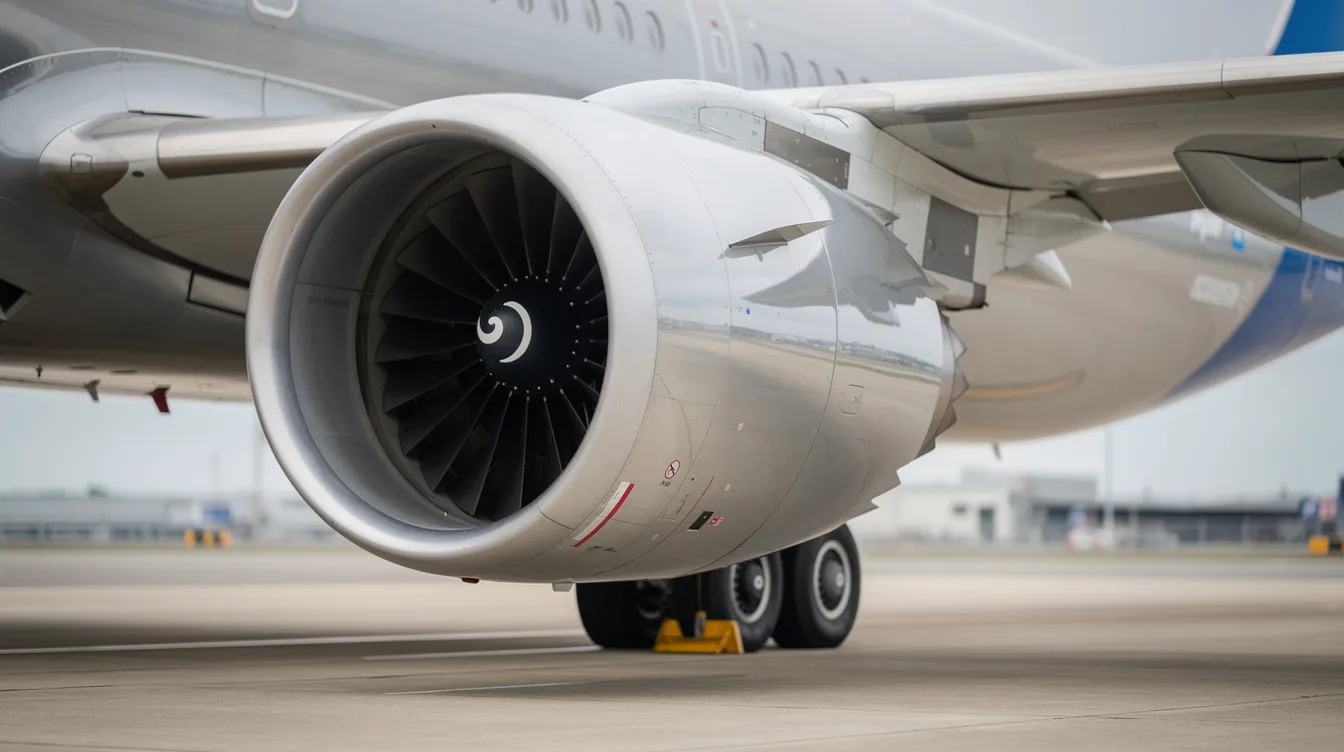
The Boeing 777-300ER is powered by the GE90-115B engine, the world's most powerful jet engine in civil aviation at the time of its certification. Each engine produces up to 115,300 pounds of thrust, with a fan diameter of roughly 128 inches, and the GE90-115B was attached to one of the world's largest commercial jet engines by fan size and power at entry into service.
High bypass ratio and composite fan blades deliver lower fuel consumption per pound of thrust compared with previous-generation powerplants.
Digital engine controls optimize performance across all phases of flight, from takeoff to cruise to descent.
The GE90-115B is the exclusive engine for the 777-300ER and 777-200 LR, simplifying fleet management for operators.
Over its service history, the Boeing 777 family has accumulated millions of flight hours on GE90 engines, with dispatch reliability reported above 99 percent.
Boeing's improvements increased the 777-300ER's fuel efficiency by 2% through incremental aerodynamic and engine refinements after initial service entry. Combined with the raked wingtips, supercritical wing profile, and optimized high-lift devices, these gains add up to measurable savings on every flight.
The Boeing 777-300ER features raked wingtips for improved aerodynamic efficiency. Unlike traditional vertical winglets, raked tips reduce induced drag during cruise, contributing to better fuel burn at high altitudes and on long sectors.
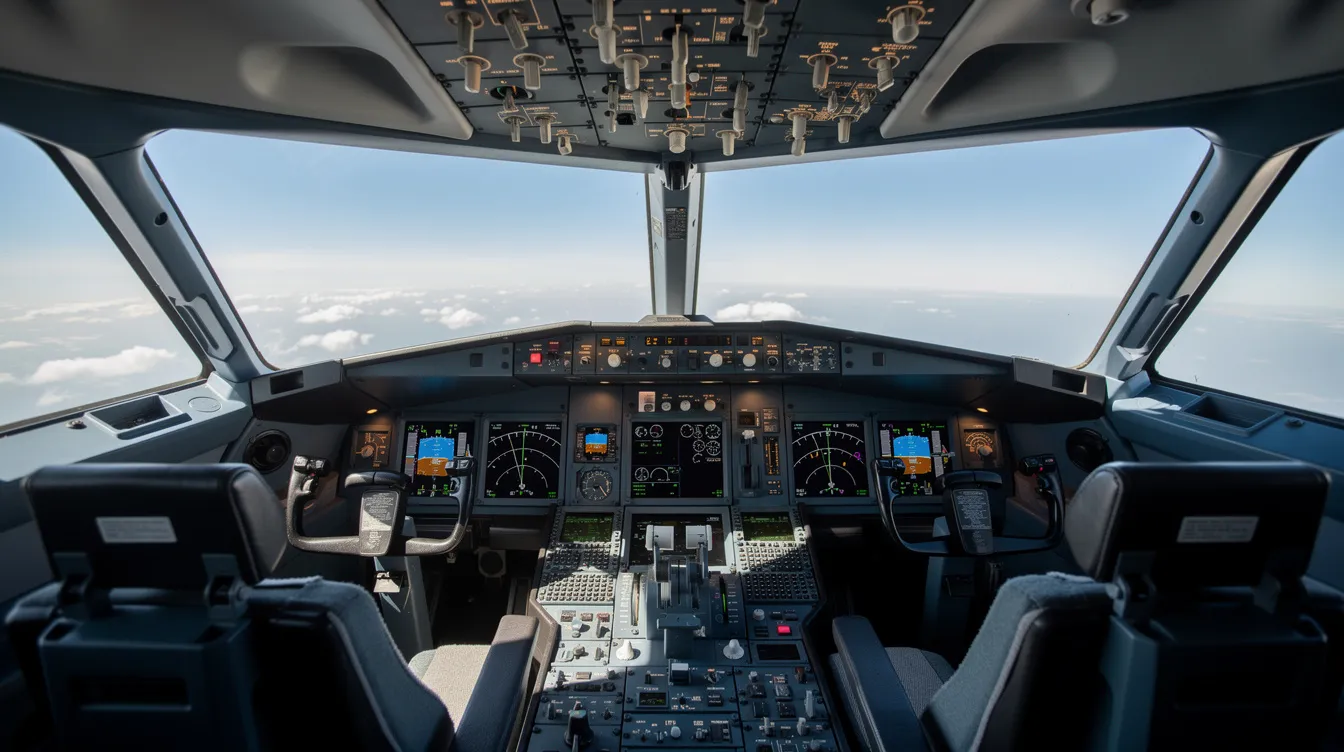
The 777's flight deck was groundbreaking when it debuted and remains capable today.
A two-crew glass cockpit with six large LCD displays provides comprehensive flight information in an easy-to-read format, reducing pilot workload on long flights.
Digital fly-by-wire controls replaced traditional mechanical linkages, offering precise handling and built-in flight envelope protections. The 777 was Boeing's first commercial airplane to use fly-by-wire.
Fiber-optic avionics networks connect multiple redundant flight control computers, enabling fast data transfer and system monitoring.
Triple-redundant hydraulic systems provide backup power to flight controls, landing gear, and brakes. A ram air turbine offers emergency electrical power if all other sources fail.
Cockpit commonality across the 777 family means pilots qualified on one variant can transition to another with minimal additional training, benefiting both airlines and charter operators managing mixed fleets.
Modern navigation systems enable precision approaches and efficient routing, including performance-based navigation that can shave miles off standard flight paths, while regulatory frameworks such as those governing Part 135 charter companies ensure these operations meet strict safety and compliance standards.
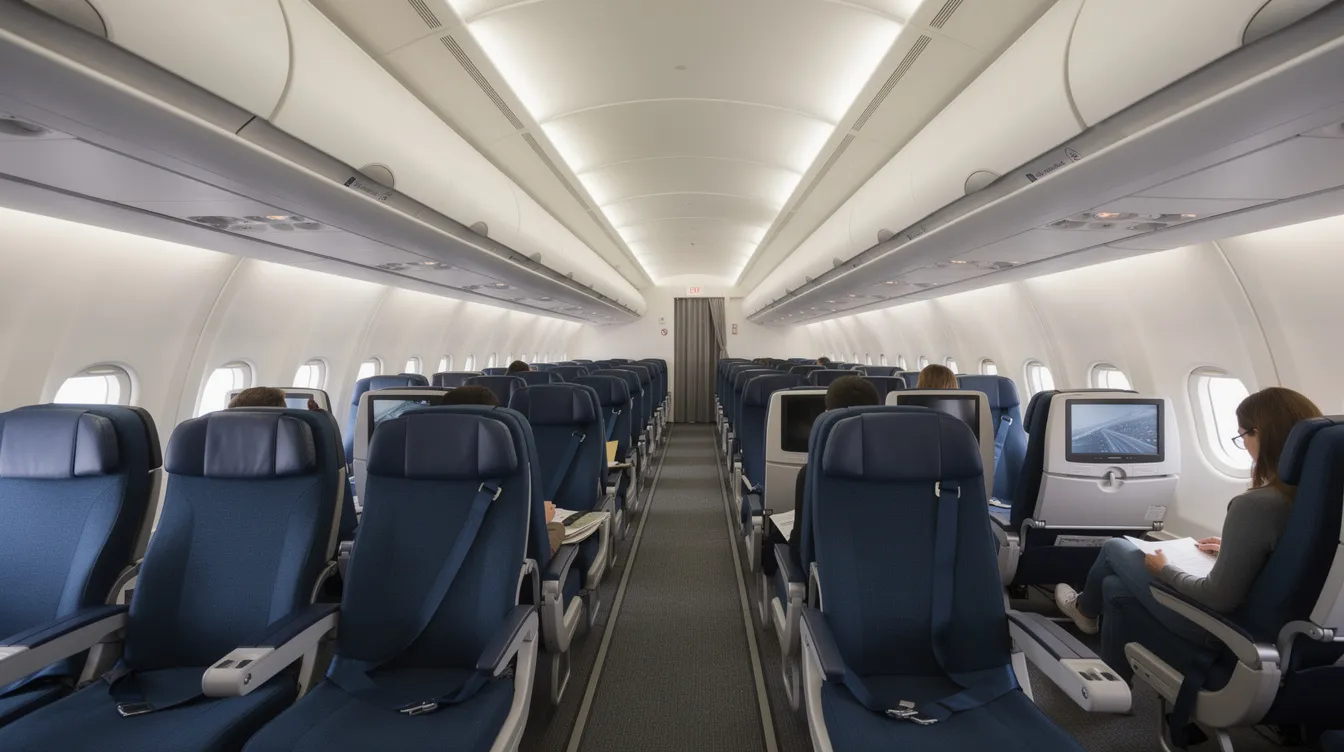
The 777-300ER's wide fuselage is one of its strongest selling points for passengers. At roughly 5.87 meters (19 ft 3 in) in interior width, it offers more room per seat than many competing wide bodies.
Economy class: typically configured 3-4-3 (10-abreast) or 3-3-3 (9-abreast) depending on airline preference. The 777-300ER is particularly effective in high-density seating configurations for carriers focused on volume.
Premium economy: usually 2-4-2, with wider seats and increased pitch.
Business class: ranges from 2-3-2 to 2-2-2, with many airlines now offering 1-2-1 reverse herringbone or staggered layouts with direct aisle access.
First class: suites with closing doors, lie-flat beds, and personal storage have become standard on premium carriers.
On long-haul layouts, lavatory space is also distributed through the cabin for passenger convenience.
It features the largest windows of any commercial airliner, measuring 15 by 10 inches, allowing more natural light into the cabin. Boeing Signature Interior styling on refurbished aircraft adds adjustable LED lighting and sculpted ceiling panels.
Noise reduction is notable. Improved engine nacelle design and cabin insulation make the 777-300ER quieter than older wide bodies, a real benefit on overnight flights between, say, London and Singapore or New York and Dubai.
For charter clients, the interior can be reconfigured to suit specific needs. A standard layout can be modified with privacy zones, conference seating, or premium-only sections to fit corporate events or VIP travel requirements, especially for frequent flyers using structured solutions like jet card programs.
Environmental credentials matter increasingly for airlines, charter operators, and their customers.
The Boeing 777 is 20% more fuel efficient than the 747-400, translating directly into lower CO₂ emissions per seat on comparable routes.
The GE90-115B's hydrocarbon emissions were reported at 60% below projected 2008 ICAO standards at the time of entry into service.
The aircraft meets ICAO Chapter 4 noise standards, with raked wingtips and optimized nacelle design reducing the noise footprint during takeoff and landing.
Reduced noise profiles are especially important at noise-sensitive hubs and for night operations, where strict limits can restrict older, louder aircraft.
For corporate sustainability programs, charter clients can combine aircraft choice with carbon offsetting or efficiency-focused route planning. Choosing a 777-300ER over an older four-engine type for a large group movement is itself a step toward lower per-passenger emissions.
The Boeing 773 has an operational role in global trunk routes for dozens of carriers. As of early 2026, approximately 747 Boeing 777-300ERs were active worldwide across 43 operators.
Top operators by fleet size:
|
Airline |
Approximate 777-300ER Fleet |
|---|---|
|
Emirates |
~118 |
|
Qatar Airways |
~57 |
|
Air France |
~43 |
|
Saudia |
~37 |
|
Turkish Airlines |
~34 |
|
EVA Air |
~32 |
|
Air China |
~28 |
All Nippon Airways (ANA) and Japan Airlines also operate the type on transpacific routes, as does Nippon Airways' partner network across Asia. Singapore Airlines deploys the 777-300ER on key long-haul services alongside its A350 fleet.
Common 777-300ER routes include:
Dubai–New York (Emirates)
London–Tokyo (British Airways)
Doha–Los Angeles (Qatar Airways)
Paris–Los Angeles (Air France)
Toronto–Hong Kong (Cathay Pacific)
Airlines typically deploy the 777-300ER on high-demand routes where filling 350+ seats is realistic, and at slot-constrained airports where maximizing passengers per movement matters. Some operators in the Middle East and Asia use high-density two-class configurations on busy regional or leisure routes, pushing seat counts above 400.
Boeing launched the 777X program in November 2013, designing it as a direct evolution of the 777-300ER with next-generation technology.
The 777-9, the stretched variant, completed its first flight in January 2020. Deliveries have been delayed multiple times due to regulatory and market factors, with Boeing currently targeting first deliveries in 2027.
The 777-8 is a slightly smaller variant, and freighter versions are also planned.
Key technological links to the 777-300ER include a similar fuselage cross-section, but the 777X adds composite folding wingtips, an all-new carbon-fiber wing, and GE9X engines (themselves derived from the GE90 family).
Cabin features on the 777X draw from the Boeing 787 Dreamliner, including larger windows, higher cabin pressure altitude, and improved humidity control.
Until the 777X fully enters service, the 777-300ER remains the backbone of many long-haul fleets worldwide. Airlines are extending leases, refurbishing cabins, and retaining their 773s rather than retiring them early.
While the dedicated 777F freighter is based mainly on the 777-200LR platform, the 777-300ER airframe has emerged as a strong candidate for passenger-to-freighter conversions.
Israel Aerospace Industries (IAI) obtained a supplemental type certificate for the 777-300ERSF conversion program. The first converted aircraft entered cargo service around October 2025.
Industry estimates suggest demand for up to 175 777-300ER freighter conversions by 2030, driven by e-commerce and express cargo growth.
Conversion involves removing seats, installing a main deck cargo door, strengthening the floor for freight loads, and updating systems.
The 777-300ER's long fuselage offers excellent volumetric capacity, making it ideal for lightweight but bulky e-commerce shipments where volume matters more than maximum payload weight.
This "second life" as a freighter extends the economic lifespan of the aircraft well beyond its years in passenger service, while some operators use narrow-body types like the Boeing 737-800 for charter on shorter, high-frequency routes.
A small number of Boeing 777 variants serve in government and VIP roles, far from the standard airline cabin most passengers experience.
Several governments operate 777-300ERs as head-of-state transport, fitted with secure communications, private suites, and conference rooms.
Corporate charter operators occasionally configure 777-300ERs with reduced seat counts, replacing standard economy sections with lounge areas, private offices, and premium sleeping quarters, which can pair well with private jet membership programs for organizations that fly often.
Sports organizations charter the type to move entire teams, coaching staff, and support personnel on long-haul trips in a single aircraft, avoiding the complexity of splitting groups across multiple flights; for shorter hops, workhorse narrow-bodies like the Boeing 737-800 are also popular charter choices.
These VIP layouts swap overall capacity for generous personal space, turning the 777-300ER into a flying office or hotel for intercontinental journeys.
For more on how wide-body aircraft can be configured for private use, Jettly's Boeing 767 Private Jet guide covers a similar concept in a slightly smaller airframe, and its profile of the Boeing 767-300ER charter aircraft highlights another long-range option for large groups.
A wide-body aircraft like the Boeing 777-300ER makes sense for charter in specific scenarios: large corporate events, incentive travel programs, peak-season group vacations, religious pilgrimages, or sports team movements where hundreds of people need to fly the same route on the same day.
Jettly's digital marketplace can source 777-300ER charter options worldwide through certified operators, comparing configurations and pricing on a single platform in the context of its broader private charter aircraft network.
Clients get on-demand access without long-term ownership or maintenance commitments-important when a 777-300ER charter is a one-time or seasonal need.
Transparent pricing means no hidden costs. Jettly presents operator quotes clearly so clients can compare and decide based on route, dates, and cabin setup, and tools like its private jet charter cost estimator help frame budgets before requesting detailed quotes.
Service details matter for charter clients: customized seating plans, in-flight catering, corporate branding on headrests or boarding materials, and integrated ground transportation at departure and arrival airports.
For groups smaller than 300, Jettly also offers access to heavy jets and group charter options that may better fit the passenger count and budget, and its overview of affordable private jet charter costs explains how pricing scales with aircraft size and distance.
Here are real-world scenarios where chartering a Boeing 773-class aircraft makes practical and financial sense:
Multinational product launches: Flying 350+ employees, partners, and media from multiple cities to a single launch event, consolidating travel into one departure.
Annual general meetings: Moving shareholders and board members to remote meeting locations that lack frequent commercial service.
Global sports tournaments: Teams in the World Cup, Olympics, or professional leagues regularly charter wide bodies in July and during major tournament windows to transport players, coaches, and equipment.
Film production crews: Large crews and equipment traveling between distant production locations (e.g., Los Angeles to London or California to Australia) benefit from a single chartered flight.
Concert tours: Artists and production teams on multi-city global tours charter 777-300ERs to move dozens of people plus staging equipment on tight schedules.
On a per-seat basis, moving 350 passengers on one 777-300ER is often cheaper than chartering multiple smaller jets. While a light or midsize jet works for small teams, the 777-300ER's costs spread across hundreds of seats can deliver strong per-passenger economics on long-distance routes like New York to Dubai or Los Angeles to Tokyo.
Jettly can coordinate extras such as tailored in-flight menus through its Jettly Eats in-flight catering service, privacy zones for C-suite executives, staggered boarding by passenger group, and dedicated ground handling at each airport. Learn more about how to book a private jet through Jettly's platform.

The Boeing 777 family has earned a strong safety reputation over three decades of commercial service.
The 777 fleet has a dispatch reliability above 99 percent, a figure maintained as fleets have matured. Early years of GE90-powered operations showed near-zero in-flight shutdowns.
The initial certification campaign involved an 11-month test program after the first flight in 1994, with simultaneous FAA and JAA type certification in April 1995 and ETOPS approvals following.
As of mid-2025, the entire Boeing 777 family had been involved in 31 accidents and incidents, with eight hull losses and 542 fatalities including ground casualties. These events are rare relative to the total number of flight hours and cycles accumulated.
The 777-300ER specifically has an excellent safety record given its relative youth (average fleet age around 12.6 years as of early 2026).
All 777-300ER operations, including charter flights arranged through Jettly, must use operators and crews certified under strict national and international regulations, similar to the high standards followed by the charter airlines profiled in Jettly's guide. Maintenance programs, crew training, and operational oversight are governed by aviation authorities in each member state and monitored continuously.
Choosing the right aircraft depends on route length, passenger count, and budget. Here is how the 777-300ER compares with key alternatives:
|
Feature |
777-300ER |
787-10 |
A350-1000 |
747-400 |
|---|---|---|---|---|
|
Engines |
2 × GE90-115B |
2 × GEnx/Trent 1000 |
2 × Trent XWB |
4 × various |
|
Typical seats (3-class) |
365–396 |
300–330 |
350–370 |
366–416 |
|
Range (nmi) |
7,370 |
6,430 |
8,700 |
~7,260 |
|
Fuel efficiency (relative) |
Good |
Better |
Better |
Baseline |
|
Cabin width |
5.87 m |
5.49 m |
5.61 m |
6.10 m (upper deck narrower) |
Versus the 787-10: The 787 is newer and more fuel efficient per seat, but carries fewer passengers and has less range. The 777-300ER wins on capacity-heavy routes.
Versus the A350-1000: The A350 offers a newer composite airframe and lower fuel burn, but similar capacity. Airlines increasingly view them as complementary rather than direct replacements.
Versus the 747-400: The 777-300ER delivers comparable capacity with two engines instead of four, cutting fuel and maintenance costs dramatically.
Versus the Airbus A330-300: The A330 is smaller and shorter-ranged, better suited to medium-haul routes or thinner markets.
For charter clients, Jettly can help match the right aircraft category to the specific mission. A private jet for 50 passengers requires a completely different aircraft than moving 350 people from California to Europe, and travelers can also explore buying a single seat on a private jet when they don't need an entire aircraft.
The Boeing 777-300ER is expected to remain in airline and charter service well into the 2030s, even as the 777X and newer aircraft enter fleets. Several factors support its longevity:
Proven reliability: Three decades of operational data give airlines and charter operators confidence in the type's dependability.
Paid-off capital costs: Many 777-300ERs have been fully depreciated or are on favorable lease terms, making them economically attractive to keep flying.
Cabin retrofits: Airlines are investing in new seats, updated in-flight entertainment, Wi-Fi connectivity, and refreshed cabin interiors to keep older 777-300ERs competitive with newer types.
Freighter conversions: As aircraft age out of frontline passenger service, conversion to cargo configuration gives them a second career spanning another decade or more.
Growing long-haul demand: Emerging markets in Asia, Africa, and the Middle East continue to drive demand for high-capacity long-haul aircraft.
The final 777-300ER was likely delivered from Boeing's production line in late 2024. Going forward, supply comes from the secondary market, leasing, and conversions. This makes the existing fleet more valuable, not less.
"773" is a generic code used in airline reservation and fleet systems for the Boeing 777-300 family. The more specific code "77W" denotes the 777-300ER (Extended Range) variant. In everyday usage, most travelers and booking tools use "773" to refer to the 777-300ER, because it is the dominant 777-300 variant in service today. The non-ER 777-300 is now relatively rare in active fleets, so for practical purposes the terms overlap.
Comfort depends on the airline or charter operator's cabin configuration. Key factors include seat pitch (distance between rows), seat width, and whether the airline uses 9-abreast or 10-abreast seating in economy. The 777-300ER's wide fuselage allows spacious premium cabins with lie-flat beds and modern in-flight entertainment systems. Airlines that have recently refurbished their 777-300ER interiors typically offer a noticeably better experience than those flying older configurations. The aircraft's noise levels are also lower than many older wide bodies, which helps on flights lasting 10 hours or more.
Yes. Jettly's marketplace can arrange large aircraft charters, including Boeing 777 models, through certified operators in its global network, and its overview of the best private jet charter companies explains how it compares with other leading providers. Availability depends on route, dates, operator fleet, and regulatory approvals. Customers can request a quote or speak with charter specialists for tailored options, positioning Jettly as a flexible NetJets alternative for those who prefer on-demand access over fractional ownership. For more on how this process works, Jettly's aircraft charter guide walks through the key steps.
The total charter cost for a 777-300ER is significantly higher than for a light or midsize jet in absolute terms-fuel, crew, handling, landing fees, and gates access all scale up with aircraft size. However, the cost per seat can be substantially lower when moving hundreds of passengers on a single flight. For a group of 10 or 20, a super midsize or large-cabin business jet is usually far more practical. The 777-300ER is best suited for large-scale movements of 200 to 400+ people, where per-page (per-person) economics favor consolidation into one departure, while smaller groups might instead use tactics for easily securing a seat on a private jet.
The Boeing 777 family has a strong safety record relative to its total flight hours and cycles. Regulatory certification includes rigorous structural, systems, and performance testing. Ongoing oversight from national aviation authorities ensures that maintenance programs, crew qualifications, and operational standards remain current throughout the aircraft's service life. Charter flights arranged through Jettly use licensed operators that comply with all applicable national and international safety requirements, providing an additional layer of accountability.
The Boeing 777-300ER has earned its place as one of the most capable long-haul aircraft ever built. Its combination of range, capacity, fuel efficiency, and proven safety makes it a standard for airlines operating the world's busiest intercontinental routes.
For charter customers, the 773 offers something no smaller aircraft can match: the ability to move 300 to 400 people on a single flight across distances that span oceans and continents. Whether the mission is a corporate shuttle, a sports team movement, or a large-scale event transfer, the 777-300ER delivers the scale and the success record to make it work.
Among Boeing 777 variants, the Boeing 777-300ER has become the benchmark for modern high-capacity long-haul operations. Its manufacturer, Boeing, built it to fill a specific role, and it has done so for over two decades with remarkable consistency.
Ready to explore charter options for your next large-group trip? Request a quote or browse aircraft details at https://www.jettly.com, whether you're planning long-haul movements or city-pair trips such as private jet charter in Kolkata, West Bengal, or private jet charter in New Delhi.
Share this post:
Jay Franco Serevilla
Aug 9, 2026
|
5
min read
Discover tips and trends in the industry.
5
min read
Salary of a Commercial Pilot in 2026: Complete Guide to Airline and Commercial Pilot Pay
In 2026, the salary of commercial pilots continues to rise due to strong demand and expanding aviation opportunities. Airline pilots earn a median annual wage of $226,600, while commercial pilots in non-airline roles earn around $122,670. This guide explores pay structures, career paths, and the factors influencing pilot salaries, highlighting the lucrative potential of a pilot career.
Read More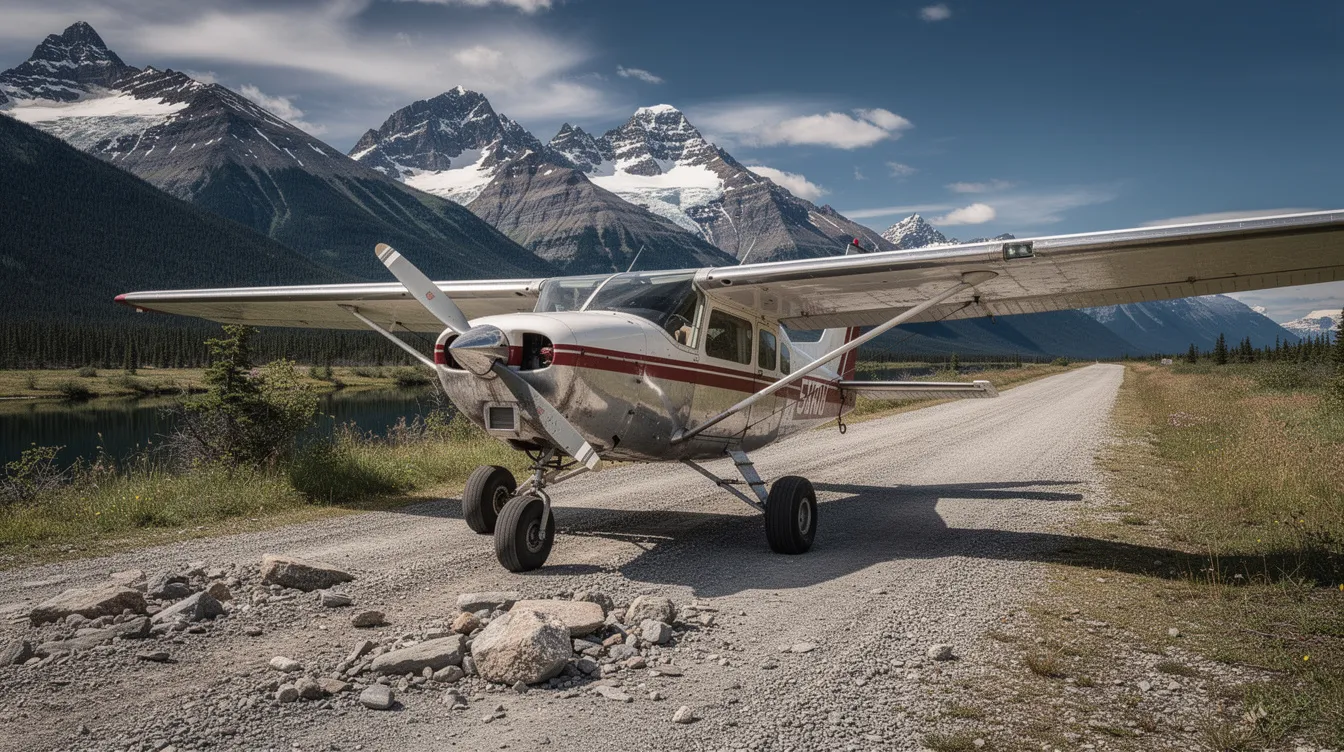
5
min read
Cessna 185 Takeoff Distance: Performance, Variables, and Real-World Planning
The Cessna 185 Skywagon is a versatile aircraft known for its impressive takeoff capabilities, requiring approximately 1,000 to 1,430 feet to clear a 50-foot obstacle under ideal conditions. Factors such as weight, density altitude, and runway surface can significantly affect these distances, making careful planning essential for safe operations. Understanding these variables is crucial for pilots and charter clients navigating remote airstrips.
Read MoreStay updated with our latest insights and tips to elevate your journey with us.
MEMBERSHIPS AND ASSOCIATIONS



Disclaimer: Jettly operates as a charter broker, offering access to a global digital jet charter marketplace. Jettly is not a direct air carrier and does not own or operate aircraft. All advertised flights are conducted by third-party air carriers that are fully licensed and hold the appropriate Part 135 or Part 121 certifications issued by the Federal Aviation Administration (FAA) or equivalent regulatory authorities under U.S. or foreign law. Jettly complies fully with the U.S. Department of Transportation's Part 295 and Part 298 Charter Broker regulations. Jettly does not carry additional liability insurance. Passengers are covered by aircraft operator insurance. TICO: 50023770


