


Login
Get Instant Pricing On 23,000+ Aircraft

>
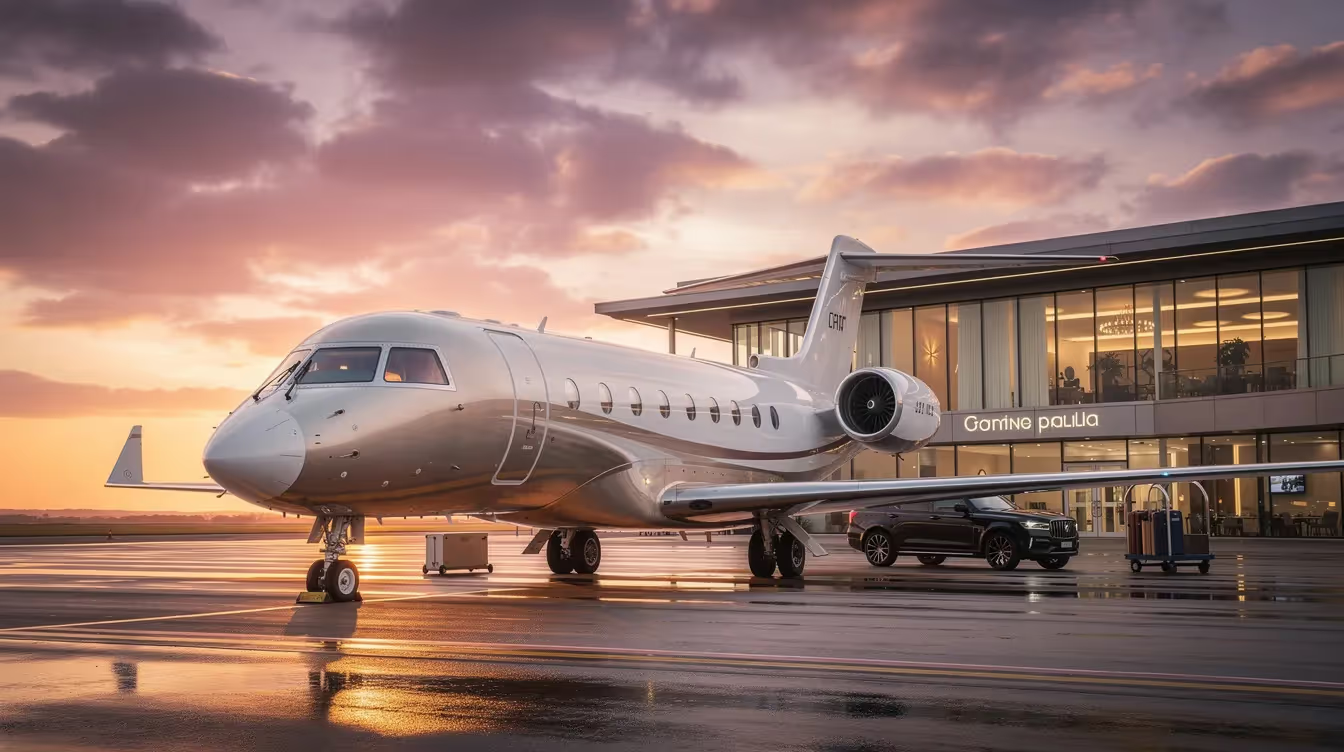
A Boeing 767 private jet is a wide-body jetliner built for trips where a normal large-cabin jet is not enough. As a converted commercial airliner, it offers large groups the cabin space, range, cargo capacity, and privacy needed for serious long-haul movement, while also delivering impressive efficiency in fuel consumption and operational costs compared to other aircraft in its class.
This guide is for executives, travel planners, and organizations considering large-group private jet travel. Whether you are coordinating a corporate roadshow, a sports team’s international tournament, a government delegation, or a touring music group, the Boeing 767 private jet stands out as a relevant solution. Its unique combination of wide-body space, long-range capability, and customizable VIP interiors makes it ideal for those who need to move large groups efficiently, comfortably, and privately—far beyond what smaller business jets or commercial airlines can offer. The Boeing 767 private jet is especially suited for missions where keeping everyone together, ensuring privacy, and accommodating significant cargo or equipment are top priorities.
The Boeing 767 private jet is a wide-body option for 25 to over 100 passengers, with many VIP layouts carrying about 40–100+ passengers.
Jettly can arrange Boeing 767 private jet charters worldwide through its on-demand marketplace, without ownership, fractional programs, or long-term jet cards.
VIP completions can include multiple living spaces, lounges, a conference room, a dining room, private bedrooms, bathrooms, and full galleys.
The advanced cockpit of the Boeing 767 private jet features a modern glass cockpit design with digital screens and automation systems, enhancing operational efficiency and safety.
The 767 200ER is a key extended range model, with planning ranges around 5,200 nm and maximum capability often cited up to about 6,600 nautical miles.
This guide covers variants, cabin features, cruise speed, pricing, ownership comparisons, and how to book through Jettly.
The Boeing 767 is a twin-engine wide-body Boeing airliner developed for medium and long-haul routes. Its introduction began with the first prototype being rolled out on August 4, 1981, and it took its maiden flight on September 26, 1981.
The company's strategic decision to launch the 767 program significantly expanded Boeing's product lineup and strengthened its position in the wide-body market. The first delivery of the Boeing 767 occurred on August 19, 1982, to United Airlines, marking the aircraft’s entry into commercial service. Over the following decade, especially throughout the 1980s and 1990s, the Boeing 767 gained popularity and achieved a strong sales performance, making a lasting impact on the airline industry. In airline form, the Boeing 767 typically features a twin-aisle cabin with a standard seating configuration of 2-3-2 in economy class, accommodating around 216 passengers.
In private aviation, a Boeing 767 private jet usually means a converted wide-body commercial airliner often used for executive travel. Instead of a standard 200+ seat airline layout, the aircraft is configured as a VIP bizliner, corporate shuttle, or all-business group aircraft. The design and placement of the passenger and cockpit windows enhance cabin ambiance and provide excellent operational visibility, contributing to the overall comfort and functionality of the aircraft.
Typical missions include:
sports teams traveling with staff, coaches, medical teams, and equipment
music tours with artists, crew, instruments, and production cargo
government delegations needing privacy and secure movement
corporate incentive trips and investor roadshows
large family groups flying across the world together
Jettly’s marketplace includes access to Boeing 767 VIP and all-business configurations, along with a wide selection of private charter aircraft for trips that do not require wide-body capacity. Learn more about Jettly’s charter options at https://www.jettly.com.
Several Boeing 767 models appear in VIP, government, and group charter services. The most common are the 767-200, 767-200ER, and 767-300 family, with some operators using aircraft based on airline or government platforms.
|
Variant |
Best use |
Typical VIP capacity |
Key point |
|---|---|---|---|
|
Boeing 767-200 |
Premium group charter |
40–90 seats |
The original model |
|
Boeing 767-200ER |
Long-range VIP missions |
30–90+ seats |
Popular extended range model |
|
Boeing 767-300 / 767-300ER |
Large groups and more cabin zones |
80–100+ seats |
Longer fuselage and more room (stretched version) |
|
Boeing 767-400ER |
Airline and special-use missions |
Varies |
Largest 767 variant |
The Boeing 767-200 was the original model and entered service in 1982. In airline use, it carried around 200 passengers, but VIP aircraft are often configured for 40–90 seats, lounges, offices, bedroom suites, and social areas.
The Boeing 767-200ER was the first extended-range model and added fuel and structural changes to support longer sectors. The Boeing 767-200ER has a maximum range of approximately 7,580 miles, or 6,600 nautical miles, allowing for long-haul flights. In practical charter planning, many missions are planned closer to 5,000–5,200 nm, depending on passengers, fuel reserves, baggage, weather, and routing.
The 767-300 and 767-300ER models, introduced in the mid-1980s, are stretched versions of the original 767, featuring a longer fuselage to increase capacity and range. These variants accounted for approximately two-thirds of all 767s sold, reflecting their popularity among airlines. These aircraft work well when the mission needs more seat capacity, more lounges, or a larger rear cabin zone.
The Boeing 767-300ER variant has a maximum takeoff weight, or MTOW, of 412,000 pounds, equal to 187,000 kg, and is powered by either Pratt & Whitney PW4000, General Electric CF6, or Rolls-Royce RB211 engines. The 767-400ER, the largest model in the 767 series, entered service with Continental Airlines on September 14, 2000, following its maiden flight on October 9, 1999.
As of 2011, the 1,000th Boeing 767 was rolled out, marking it as the second wide-body airliner to reach this milestone after the Boeing 747. That long production history matters because proven airliner reliability ensures that parts and maintenance support for the Boeing 767 are widely available globally.
Military and government models derived from the 767-200ER also show the platform’s reliability for long-range special missions. The aircraft operates with a 180-minute ETOPS certification, allowing for direct routes over remote areas, including oceanic and remote-region sectors.
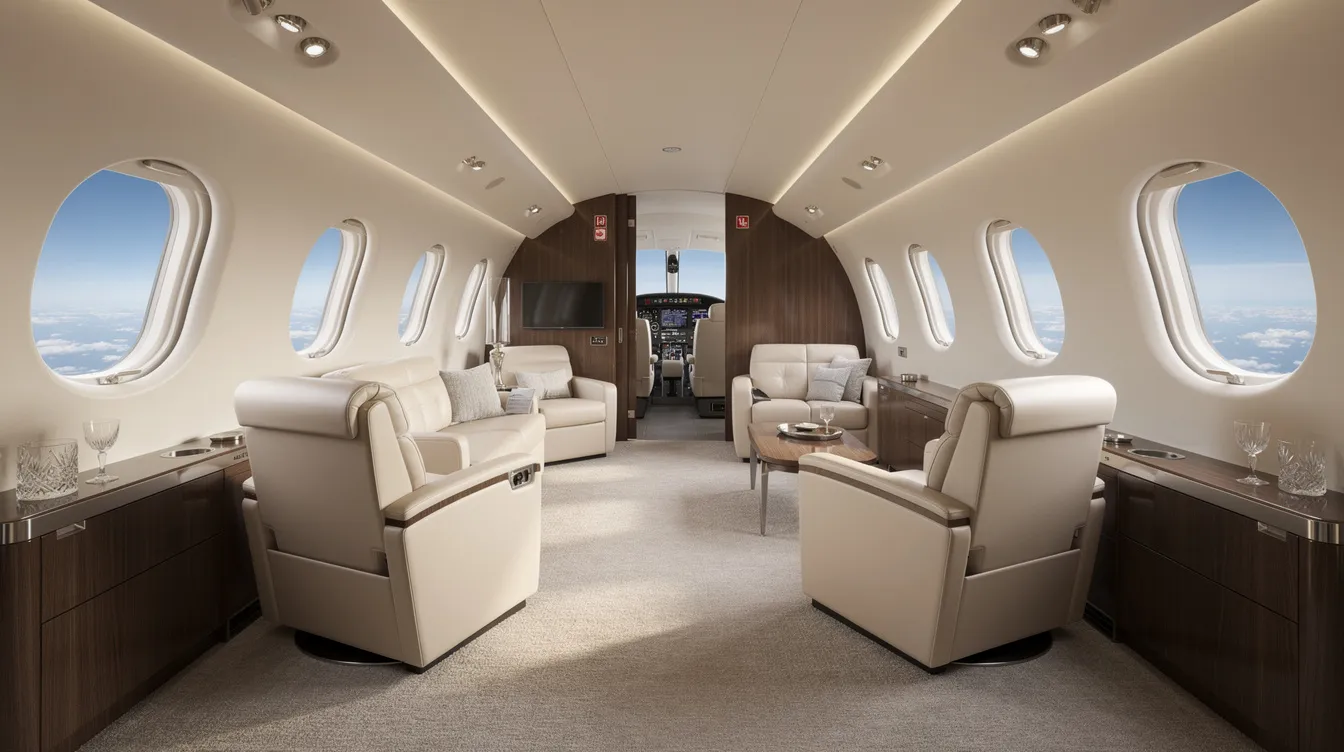
A Boeing 767 private jet typically offers over 2,000 square feet of cabin space and can include multi-room luxury configurations. The wide body fuselage gives the cabin about 15.5–16 feet of width, enabling layouts that feel closer to a flying office suite than a conventional business jet. Among the many luxuries available on a Boeing 767 private jet are upscale amenities and lavish features that enhance comfort and sophistication for discerning travelers.
The Boeing 767 can be customized with various luxury amenities, including multiple living spaces, private bedrooms, and full galleys, tailored to the owner’s specifications. Customization options for the Boeing 767 include the installation of high-end entertainment systems, lounges, and conference areas, making it suitable for business and leisure travel, especially when paired with dedicated in-flight catering for private jets.
A VIP interior may include:
An entrance lobby for streamlined boarding
A main lounge with sofas and club seating
A conference room with a meeting table
A dining room for formal meal service
Private offices with satellite connectivity
One or more bedroom suites
Ensuite bathrooms and showers on select aircraft
Full-service galleys for premium catering
Crew rest areas for long flights
Rear storage areas and expanded baggage zones
The interior of a customized Boeing 767 can feature unique designs and layouts, such as a 45-passenger business configuration or a more spacious arrangement for larger groups. One example is a 45-seat touring-style layout with a forward lounge, private bedroom, meeting area, and entertainment room for a recording artist and management team.
Another common charter layout is less residential and more practical: 70–90 lie-flat seats, several bathrooms, full galleys, and room for staff, security, and luggage. That style is well-suited to sports teams, corporate shuttles, and groups that need comfort without a full custom residence in the sky.
vip completions on 767 aircraft can also include walk-up bars, large screens, LED lighting, and private connectivity. Unlike smaller planes, a 767 has enough cabin volume to separate rest, work, dining, and service zones without forcing every passenger into one shared space.
The Boeing 767 is also recognized for its cargo capacity, capable of accommodating extensive baggage and oversized equipment such as vehicles. This is one reason touring groups and sports organizations often consider the aircraft when gear movement is as important as passenger comfort.
The Boeing 767 combines long-range performance with wide-body comfort. It features twin-engine power, typically with Pratt & Whitney PW4000 or General Electric CF6 turbofans, producing up to 63,500 pounds of thrust.
Its typical cruise speed is around Mach 0.80, or about 530–540 mph and 850–870 km/h. That speed is comparable to many long-range business jets and commercial airlines, although some newer ultra-long-range business jets cruise faster.
Useful range depends on the model and payload, just as it does when comparing the best cross-country planes for long-distance travel:
|
Aircraft |
Practical range guidance |
Typical use |
|---|---|---|
|
767-200 |
Around 3,900 nm, about 4,474 miles |
Transcontinental and shorter international routes |
|
767 200ER |
Up to about 5,200 nm in many planning profiles |
Transatlantic and selected intercontinental flights |
|
767-200ER maximum |
Up to 6,600 nautical miles in favorable conditions |
Long-range special missions |
|
767-300ER |
Long-haul group movement |
More passengers and more cabin zones |
The Boeing 767 has a range capable of flying up to 6,600 nautical miles nonstop, enabling connections like New York to Dubai. Actual flight planning still depends on winds, temperature, runway performance, fuel reserves, air traffic routing, and the aircraft’s registered operating limits.
Sample Boeing 767 private jet routes can include, for example, pairing a wide-body sector with a regional hop on a versatile Cessna 207 for shorter connections:
New York to London
Miami to Lisbon
Dubai to London
Los Angeles to Honolulu, potentially complemented by shorter feeder legs on a Cessna 340 light twin for regional access
Toronto to Reykjavik
New York to Dubai, depending on configuration and payload
Runway requirements mean that Boeing 767 private jets usually use major international airports. Still, private aviation benefits remain significant: the aircraft can use dedicated FBOs found via an airport locator tool, coordinated ground handling, private security screening, and fast boarding for large groups.
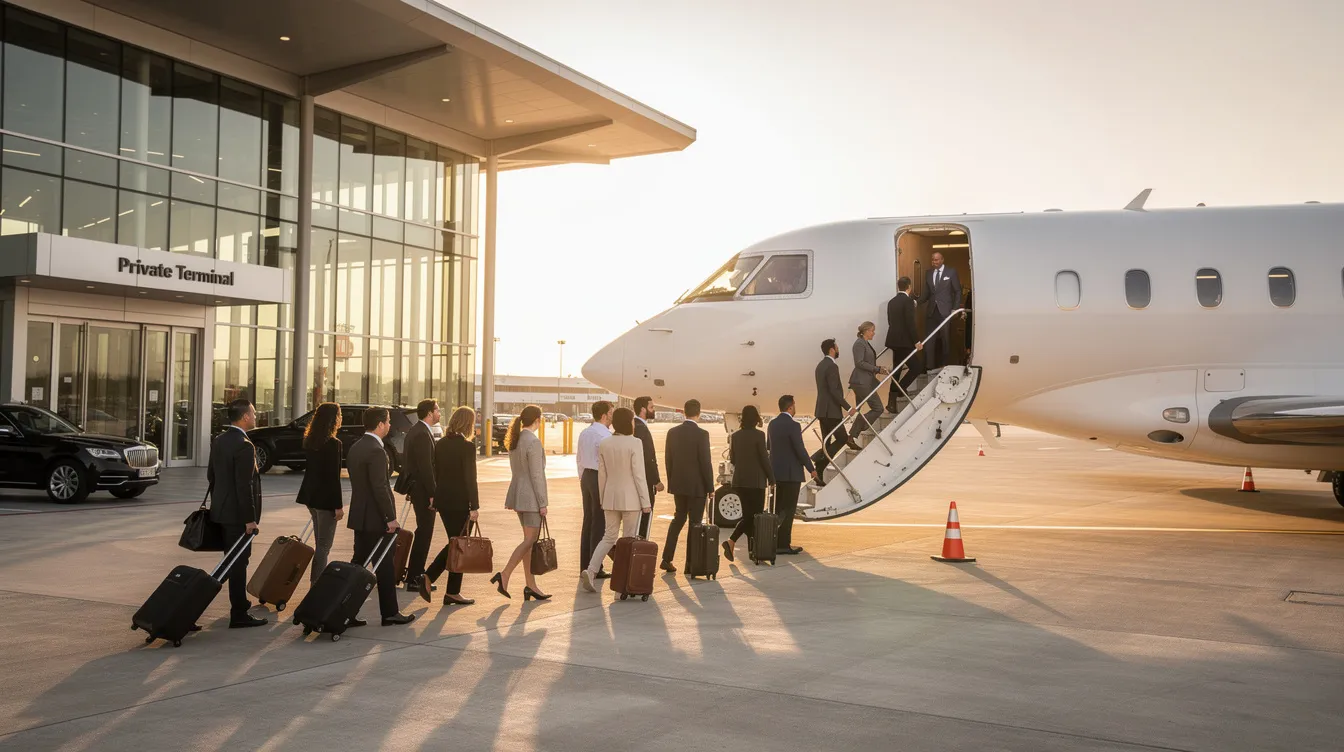
Boeing 767 private jets bypass commercial terminal queues, allowing for streamlined boarding and travel for large groups. That can save time before takeoff, especially when passengers are moving through multiple time zones on a demanding schedule.
For aircraft history and specifications, Boeing’s public overview and aviation references, such as Boeing’s 767 information, are useful starting points.
A Boeing 767 private jet serves a specific niche in private aviation. It is not chosen because it is small, fast to park, or economical for short hops. It is chosen when a client needs a full flying headquarters.
Common customer profiles include:
professional sports teams with players, coaches, medical staff, and equipment
Fortune 500 companies are moving executives, guests, and support teams
government delegations requiring privacy and control
touring artists, crew, and production teams
large family or multi-family leisure groups
The value comes from keeping the group together. A corporate team can hold a presentation in the conference room, move into the dining room for meal service, then rest before landing in Europe or crossing the Atlantic. The cabin can support work, rest, and service at the same time.
For example, Jettly may arrange a Boeing 767 charter for a sports final in Europe. Instead of coordinating dozens of commercial tickets, separate baggage handling, and freight movement, the team can fly on one aircraft with equipment, staff, and tailored catering.
Another example is a world tour leg across the Atlantic. A touring group can carry performers, management, wardrobe, instruments, and production staff together, or in some cases offset costs by using platforms that crowdsource private jet flights and share empty seats or apply smart booking strategies for the cheapest private jet flights. This reduces missed connections, luggage delays, and the risk of splitting key personnel across multiple flights.
A 767 can also complement smaller business jets in complex travel programs. Executives may fly ahead on a Gulfstream or Bombardier aircraft, while the main group follows on the 767. For travelers just looking to understand how to get a seat on a private jet or explore buying a single seat through shared and semi-private options, group trips like this highlight how flexible modern private aviation has become. Jettly’s network can help compare both options by schedule, capacity, airport access, and total cost.
Large wide-body business jets sit at the top end of private jet pricing. But for big groups, a Boeing 767 private jet can be cost-effective on a per-seat basis when compared with several smaller aircraft or many premium commercial tickets.
Chartering a private Boeing 767 typically costs between $18,000 and $25,000 per hour. The average hourly rental rate for chartering a Boeing 767-200ER is approximately $27,250. Travelers can use a private jet charter cost estimator to understand how factors like distance, aircraft size, and operating costs shape quotes, or dive deeper into how much it costs to rent a private jet across different categories. In many markets, total Boeing 767 private jet quotes fall in the broader range of about $20,000–$35,000+ per flight hour once positioning, crew, permits, catering, handling, and aircraft configuration are included.
Ownership is a different calculation. The average purchase price of a new Boeing 767-200ER is around $217 million, while a pre-owned model can cost about $9 million. Travelers interested in outright aircraft ownership at lower price points can also explore budget-friendly aircraft choices for affordable planes. Those exploring program-based access instead of ownership can model hourly rates with a jet card flight cost estimator, review comprehensive guides to jet card costs and pricing structures, and compare the best jet card programs available today. A buyer must then account for inspection, completion, refurbishment, maintenance, crew, insurance, hangar space, training, and downtime risk.
|
Option |
Best for |
Main trade-off |
|---|---|---|
|
Charter through Jettly |
One-off or frequent trips without ownership |
Availability depends on route and date |
|
Ownership |
Constant demand and full control |
High capital, crew, maintenance, and completion costs |
|
Fractional programs |
Smaller business jets |
Rarely practical for a wide-body 767 |
|
Multiple smaller jets |
Split schedules or smaller groups |
More coordination and less shared cabin space |
Deep commercial parts pools from airline usage lead to lower component costs compared to rare corporate jet parts. That is an advantage for operators, but it does not remove the high fixed costs of ownership, which are outlined in in-depth guides to private jet costs and ownership economics and broader explanations of what drives the cost of a single private jet flight.
Jettly’s on-demand model helps travelers avoid fleet risk and refurbishment costs, while its platform also supports comparisons between shared charter flights and full private charters. The platform can source a Boeing 767 private jet when the mission justifies it, offer flexible private jet memberships, and then suggest smaller private jets, regional aircraft, turboprops, or helicopters when those are more efficient, positioning itself as a flexible NetJets alternative with on-demand access for travelers, comparing against NetJets jet card costs and program structures.
A Boeing 767 private jet makes sense when:
The group is large enough to use the capacity
The route is medium to long haul
The mission needs multiple cabin zones
Cargogo and baggage requirements are significant
The schedule is too complex for commercial airlines
For a small executive trip, a Global 7500, Gulfstream G700, super-midsize jet, or even a turboprop may be more efficient, especially when chosen with insight from guides to the best private plane manufacturers for different budgets. Travelers comparing on-demand platforms may also weigh Jettly against XO charter flights, their costs, and alternatives. For a large group moving across continents, the 767 becomes far more compelling.
Jettly is a digital private aviation marketplace with access to more than 20,000 aircraft worldwide. The platform covers everything from light jets and helicopters to heavy jets, Airbus corporate aircraft, and Boeing 767 wide bodies, making it a practical case study when learning how renting a plane works from start to finish.
The booking flow is straightforward:
Enter the route, dates, passenger count, and luggage requirements.
Compare available aircraft types, including 767 options where suitable.
Review instant or rapid pricing where available.
Confirm the charter online or with an aviation advisor.
Coordinate catering, ground transport, seating preferences, and flight details.
Jettly focuses on transparent pricing and flexible access, complementing broader guides to affordable airplane rental costs and options. Travelers do not need a traditional jet card or long-term commitment to request a Boeing 767 private jet, though some frequent flyers may benefit from structured jet card programs or a deeper understanding of how jet cards work, their costs, and benefits. This is useful for a company’s roadshow, tournament schedule, tour calendar, or large family itinerary where demand changes by season, and it also creates opportunities for partners to earn through Jettly’s high-ticket affiliate program when referring new charter clients.
Jettly works with regulated operators that meet applicable safety standards. For a 767, that can include reviewing operator approvals, crew qualifications, maintenance status, ETOPS capability, insurance, and the aircraft completion standard, similar to how it vets partners such as Dexter Air Taxi private jet operators, dedicated providers like Bajaj Aviation’s private jet operations in India, and instant-book marketplaces like Zenflight’s global private jet platform.
On suitable Boeing 767 aircraft, Jettly can help coordinate:
in-flight catering
branded headrests or cabin touches
custom seating plans
VIP ground handling
cargo and baggage planning
onward car service
multi-leg international permits
Ready to compare a Boeing 767 private jet with other large business jets, including specific aircraft like a Boeing 767-300ER for rent? Explore options or request a tailored quote at https://www.jettly.com.
The Boeing 767 is a powerful wide-body solution, but it is not the only option. The best aircraft depends on passenger count, route, cabin expectations, airport access, and budget; ultra-long-range wide-bodies like the Boeing 777-200 LR can be better suited for the very longest missions.
|
Aircraft type |
Typical passenger fit |
Best for |
|---|---|---|
|
Boeing Business Jet |
15–30 passengers |
Residential comfort with fewer people |
|
Airbus corporate jet |
15–50 passengers |
Long-range VIP layouts |
|
Gulfstream G700 / Global 7500 |
10–19 passengers |
Faster executive travel and smaller airports |
|
Multiple heavy jets |
20–40+ passengers split across aircraft |
Different departure cities or schedules |
|
Boeing 767 private jet |
40–100+ passengers |
Large groups, cargo, and long-haul shared travel |
BBJ-style aircraft may offer a similar range with fewer passengers and a more private residential cabin. Narrow-body airliners such as the Boeing 737-800 can be attractive for shorter- to medium-haul sectors with high seat counts, especially when configured as efficient high-capacity charter aircraft for regional missions. Large-cabin business jets are often faster and can access more airports, but they cannot match the 767’s capacity or cargo capability.
Some clients prefer several smaller private jets over one 767. That can work when leaders depart from different cities, when arrival times vary, or when the group does not need shared meeting space, and it mirrors the broader mix of operators described in comprehensive guides to charter airlines and detailed resources on how much private jet rentals cost per hour.
Jettly’s advisors can model both approaches. The right answer may be one 767, two heavy jets, a mix of business jets and helicopters, or a charter aircraft paired with commercial repositioning, much like the options compared in guides to the best private jet charter companies.
Airline 767s often seat over 200 passengers, but VIP and business jet configurations usually carry 40 to 100+ passengers. Some highly customized layouts carry closer to 25–45 passengers when more space is used for bedrooms, lounges, offices, and galleys.
Yes. Most Boeing 767-200 and 767-200ER VIP aircraft can handle typical transatlantic routes such as New York–London or Miami–Lisbon non-stop. Some configurations are capable of longer sectors up to about 5,000–5,200 nm in planning use, and the 767-200ER is often cited with maximum range capability up to 6,600 nautical miles, subject to payload and conditions, supporting demanding routes such as those frequently flown by private jet charter clients in Kolkata, West Bengal, or New Delhi-focused private jet charter travelers, as well as those booking private jet charter in Bangalore, Karnataka or Chennai, Tamil Nadu.
A Boeing 767 private jet usually cruises around Mach 0.80, or roughly 530–540 mph. That is broadly similar to many large-cabin business jets, although some newer long-range jets fly faster at high-speed cruise.
A Boeing 767 can operate shorter sectors, but it is usually not the most efficient choice for short flights. Its size, operating cost, runway needs, and handling requirements make it better suited to medium- and long-haul flights where its cabin, amenities, and group capacity are fully used.
The main factors are group size, cargo, shared meeting needs, route length, airport access, and per-seat budget. Travelers evaluating budgets can review a broader guide to private jet charter costs. Jettly can compare a Boeing 767 private jet against several smaller business jets so travelers can choose the best mix of cost, convenience, and schedule control, whether that’s for a global tour or focused markets like private jet charter in Houston, Texas, or private jet charter in Mumbai, Maharashtra, alongside destinations such as private jet charter in Atlanta, Georgia.
A Boeing 767 private jet combines wide-body space, strong range, multiple living areas, and high passenger capacity for demanding missions. It is especially useful for sports organizations, touring groups, government delegations, and corporate teams that need to move together across long distances.
For large groups, a 767 charter can be more efficient than coordinating commercial tickets or several smaller private jets. The best fit depends on route, passenger count, cabin needs, cargo, and budget.
If the mission calls for flexibility, privacy, time savings, and a serious long-range cabin, the Boeing 767 private jet is one of the most capable options in private aviation. Explore private jets, including Boeing 767 options, or request a tailored quote at https://www.jettly.com.
Share this post:
Jay Franco Serevilla
May 16, 2026
|
5
min read
Discover tips and trends in the industry.
5
min read
Trinity Jet Charter: Dallas-Based Private Aviation with Managed Fleet Solutions
Trinity Jet is a leading Dallas-based private aviation operator, offering managed fleet solutions and a diverse range of charter aircraft. This guide explores Trinity Jet's operations, fleet, and how it compares to digital marketplaces like Jettly, which connects travelers to a broader network of charter options. With a focus on safety and efficiency, Trinity Jet provides tailored services for both business and leisure travel.
Read More
5
min read
Rai Jets: Private Jet Charter, Runway Access, and Jettly Alternatives
RAI Jets offers personalized private jet charter services in the Midwest, focusing on hands-on customer care and a limited fleet. In contrast, Jettly provides a global digital marketplace with access to over 20,000 aircraft, catering to diverse travel needs. This article compares the two options, highlighting the advantages of runway access and the unique benefits of each service.
Read MoreStay updated with our latest insights and tips to elevate your journey with us.
MEMBERSHIPS AND ASSOCIATIONS



Disclaimer: Jettly operates as a charter broker, offering access to a global digital jet charter marketplace. Jettly is not a direct air carrier and does not own or operate aircraft. All advertised flights are conducted by third-party air carriers that are fully licensed and hold the appropriate Part 135 or Part 121 certifications issued by the Federal Aviation Administration (FAA) or equivalent regulatory authorities under U.S. or foreign law. Jettly complies fully with the U.S. Department of Transportation's Part 295 and Part 298 Charter Broker regulations. Jettly does not carry additional liability insurance. Passengers are covered by aircraft operator insurance. TICO: 50023770


