



Login
Get Instant Pricing On 23,000+ Aircraft

>
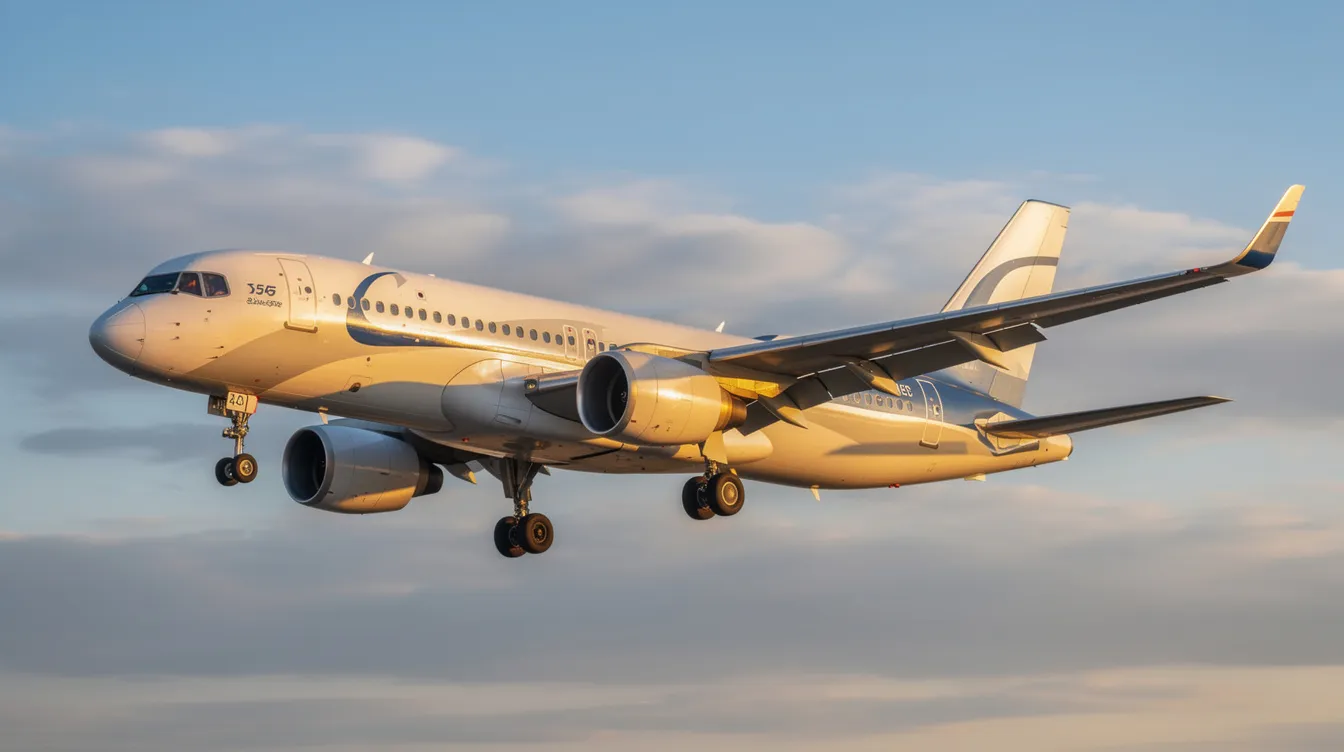
The Boeing 757 is one of the most versatile narrow-body airliners ever produced. Designed as a fuel-efficient replacement for the Boeing 727, it first flew in 1982 and went on to serve airlines, cargo carriers, governments, and private operators across six continents. Even though production ended over two decades ago, the aircraft still holds a distinct place in global aviation - and in the charter market, where VIP-configured examples serve sports teams, corporate groups, and large-scale travel events.
This guide covers the 757's history, design, performance specifications, variants, operators, and its role in modern private charter. It also explains how platforms like Jettly can help travelers access this aircraft type for high-capacity group flights.
The Boeing 757 is a twin-engine, narrow-body jetliner developed by Boeing to replace the tri-jet 727 on short-to-medium-haul routes. Its first flight took place on 19 February 1982, and the Boeing 757-200 entered service with Eastern Air Lines on 1 January 1983. More than four decades later, it remains an important part of commercial, cargo, and charter fleets worldwide.
The Boeing 757-200 is the most widely operated variant. It can carry up to 239 passengers in a single-class layout and fly intercontinental routes spanning roughly 3,900 nautical miles—enough to connect the U.S. East Coast with Western Europe nonstop. Its combination of range, runway performance, and capacity places it in a category that few other narrow-body jets can match.
Airlines such as Delta Air Lines, United Airlines, and Shanghai Airlines (historically) have kept the type in high demand. Major cargo carriers, including UPS Airlines and FedEx Express, continue to operate large fleets of 757 freighters. Despite production ending in 2004, the aircraft's versatility has extended its service life well into the 2020s.
For private operators and charter platforms like Jettly, the 757 fills a unique niche. VIP-configured examples with 50–100 seats serve sports teams, concert tours, corporate shuttles, and diplomatic delegations—making it possible to move large groups on a single aircraft with a single schedule.
The Boeing 757 is a narrow-body, twin-engine jet airliner developed to replace the Boeing 727 on short- and medium-haul routes. Boeing launched the program in 1978, and the aircraft reached several milestones quickly: first flight on 19 February 1982, FAA certification in December 1982, and entry into commercial service with Eastern Air Lines on 1 January 1983.
The 757's typical mission profile covers high-capacity operations from short to medium-length runways, with enough flexibility to fly intercontinental routes such as the U.S. East Coast to Western Europe. Its combination of power, range, and payload made it popular for "thin" long routes—city pairs like New York–Reykjavík or Newark–Dublin—where wide-body aircraft would carry too many empty seats.
The aircraft is powered by two high-bypass turbofan engines, giving it strong climb performance and the ability to operate from challenging airfields. That versatility extends to the charter world: some Boeing 757-200 aircraft are configured with VIP interiors and can be booked through platforms like Jettly for large group travel using its broad inventory of private charter aircraft.
The 757 was designed alongside the Boeing 767, and the two aircraft share a common flight deck design as well as a common auxiliary power unit, improving system commonality and backup electrical and hydraulic power coverage. This means pilots certified on one type can more easily qualify on the other, reducing training and operating costs for airlines running mixed fleets.
The aircraft features a low-wing layout with a supercritical wing that helps reduce drag at cruise speeds. For the 1980s, its use of advanced alloys and composites was forward-thinking. Engine options include the Rolls-Royce RB211-535 series and the Pratt & Whitney PW2000 series, both high-bypass turbofans delivering strong thrust.
Key performance specifications for the Boeing 757-200 include:
Cruising speed of Mach 0.8 (approximately 470–500 knots true airspeed)
Maximum range of 3,900 nautical miles in a typical two-class passenger layout
Maximum takeoff weight of 255,000 pounds (approximately 115,666 kg)
Capacity of 200 to 239 passengers, depending on seat configuration
The Boeing 757 features a two-pilot glass cockpit design—a significant step forward from the three-crew flight deck of the 727 it replaced. Its short-field capabilities are enhanced by its powerful engines, which provide a high thrust-to-weight ratio ideal for operations from hot and high conditions at airports like Denver and Mexico City, as well as from short runways.
Compared to the Boeing 707 and 727, the 757 delivers around 40–42% better fuel burn per seat on comparable medium-haul routes. Later aerodynamic improvements, including blended winglets approved by the FAA in 2005, provide an approximate 5% fuel burn reduction and around 200 nautical miles of extra range.
The 757 emerged from a 1970s environment shaped by rising fuel prices, stricter noise regulations, and airline demand for more economical aircraft. Boeing initially considered a stretched 727 but ultimately developed an all-new twin-engine design, internally code-named the 7N7.
The program launched in 1978 alongside the wider-body 767, with Eastern Air Lines and British Airways serving as the 757's launch customer airlines. Boeing's strategy centered on offering a narrow-body option with common cockpit systems and crew type ratings, allowing airlines to operate both types with reduced training overhead.
The first 757 prototype rolled out on January 13, 1982, from Boeing's Renton, Washington, factory—a facility with a long heritage of building the 707, 727, and 737. The maiden flight followed on 19 February 1982 with Rolls-Royce RB211-535C engines installed.
Early flight-test data showed about 3% better fuel efficiency than Boeing had predicted, translating into roughly 200 nautical miles of greater range. These results strengthened the aircraft's market appeal considerably.
The FAA granted type certification in December 1982, followed by UK CAA certification in January 1983. Production peaked at 100 aircraft annually in the early 1990s as airlines placed orders to replace aging tri-jets and capitalize on improved fuel efficiency.
Eastern Air Lines was the first carrier to place the type into commercial service, operating the first commercial Boeing 757 flight on 1 January 1983. British Airways followed shortly afterward, beginning service on 9 February 1983 on routes including London to Belfast.
Initial sales in the early 1980s were slower than expected. Economic uncertainty and airline consolidation dampened demand, but orders picked up after a key purchase from Northwest Airlines in 1983 by a major U.S. carrier. The type's fuel efficiency advantage over tri-jets became increasingly clear as operators gained experience.
A pivotal moment came in 1985 when UPS Airlines became the launch customer for the 757-200PF, a purpose-built production freighter. The 757-200PF freighter version entered service in 1987, broadening the aircraft's role well beyond passenger service.
The 757-200 was certified for ETOPS operations in 1986 for Rolls-Royce-powered variants, initially at 120 minutes. This approval opened transatlantic routes—city pairs such as U.S. East Coast to the UK and Northern Europe that previously required wide-body or tri-engine jets.
Large operators like Delta Air Lines and United Airlines made the 757 central to their domestic and transatlantic networks through the 1990s and 2000s. For airlines needing to serve medium-demand routes with better fuel efficiency than wide-body jets, it proved difficult to replace.
The Boeing 757 family includes the baseline 757-200, the stretched 757-300, and several cargo and special-mission derivatives.
757-200: The backbone variant. It typically seats 178–200 passengers in two-class layouts, with a maximum capacity of 239 passengers in a single-class configuration. Its range approaches 4,000 nautical miles, and it has served as the platform for both passenger and freighter operations worldwide.
757-100 (canceled): Boeing initially planned a shortened variant targeting around 150 seats to match the 727-200 capacity. It was canceled in March 1979 because the oversized wing and landing gear—designed for the larger -200—created weight and efficiency penalties that undermined the business case.
757-300: Launched in 1996 after Condor placed the first order, this variant features a fuselage stretch of 23.4 feet (7.13 m). The 757-300 variant has a stretched fuselage seating up to 295 passengers in high-density configurations, with typical layouts accommodating 220–280. It entered service in March 1999.
Only 55 757-300s were sold. Factors included changing airline fleet strategies and the emerging appeal of newer narrow-body aircraft like the 737NG and Airbus A321, which offered competitive capacity with lower operating costs.
Specialized subtypes include:
757-200PF: Production freighter built for UPS Airlines
757-200SF and 757-200PCF: Passenger-to-freighter conversion variants
VIP and government configurations: Custom cabins with meeting rooms, private suites, and secure communications
Boeing built 1,050 757s, with 1,049 delivered between 1981 and 2004. As of the mid-2020s, roughly 525 remain active worldwide, with others in storage or undergoing conversion.
Delta Air Lines stands as one of the largest and longest-standing 757 operators. The carrier's fleet includes approximately 98 757-200s and 16 757-300s—a total of 114 aircraft used on dense domestic routes and selected transatlantic services from hubs like Atlanta.
United Airlines operates around 61 757-200s, deploying them on U.S. domestic trunk routes and "long and thin" international flights to secondary destinations in Europe.
Shanghai Airlines and other Chinese carriers historically operated the Boeing 757-200 on routes within China and to nearby international destinations. The aircraft's performance in hot and high conditions and its strong runway capability made it well-suited for operations into China's inland and high-altitude airports.
Major cargo operators maintain large 757 fleets:
|
Operator |
Approximate Fleet |
Primary Role |
|---|---|---|
|
FedEx Express |
~92 aircraft |
Express freight |
|
UPS Airlines |
~75 aircraft |
Hub-and-spoke cargo |
|
DHL (various subsidiaries) |
~30+ aircraft |
Regional express |
Government and corporate operators round out the picture. The Mexican Air Force adopted the type in 1987, and several governments continue to use VIP-configured 757s for official transport.
The standard Boeing 757-200 cabin layout features a single aisle with six-abreast economy seating. Seat width in economy typically ranges between 17 and 18 inches, and the 757-200 has a standard seat pitch of 19.5 to 21 inches, depending on the airline and cabin class.
Over the decades, interiors have evolved significantly. Early 1980s designs featured smaller overhead bins and conventional lighting. Later updates—especially by carriers like Delta—introduced larger pivot bins, LED lighting, and updated sidewall panels.
On longer routes, major airlines have equipped some 757s with flat-bed seats in premium cabins. Delta's transcontinental and transatlantic 757-200 configurations, for example, include Delta One lie-flat seats forward, plus in-seat power outlets for passengers, Wi-Fi, USB charging, and personal video systems.
The Boeing 757-200 features four lavatories in most configurations, distributed fore and aft. Multiple exit doors—typically eight main exits plus over-wing exits on high-density layouts—provide efficient loading and emergency egress.
Private and charter-configured 757-200 aircraft can look radically different. VIP layouts might feature:
50–70 all-business seats with enhanced legroom
40–80 VIP seats with lounge areas and meeting spaces
Bespoke catering galleys and custom amenities
Crew rest areas and brandable interiors
These configurations make the 757 a practical choice for group private jet charter when passenger counts exceed what heavy business jets can accommodate, complementing broader guidance on how many passengers different private jets can carry.
The Boeing 757-200 has a maximum range of 3,900 nautical miles in a standard two-class passenger configuration. With winglets and a lighter load, the aircraft can achieve slightly greater range—roughly 4,100 nautical miles.
These characteristics allow the 757 to fly intercontinental routes, particularly North America to Europe transatlantic services. Real-world examples include Boston–London, New York–Shannon, and Newark–Dublin. Domestically, it handles long sectors like New York–Los Angeles and transcontinental hubs-to-coast routes with ease.
ETOPS certification was critical in unlocking these capabilities. Once approved for 120- and later 180-minute overwater operations, the 757 allowed airlines to open "long and thin" city pairs without deploying large wide-body aircraft. Carriers like Delta, United, and Icelandair have all used the 757 on intercontinental services through hubs such as Atlanta, Newark, and Keflavík.
In Asia, the aircraft has served routes from Chinese coastal cities to inland hubs and high-altitude destinations, where its powerful engines deliver a clear advantage.
For charter clients, these range capabilities open practical use cases: sports teams flying between continents for tournaments, music tours moving crews and equipment, or corporate roadshows covering multiple international financial centers on a single itinerary, often compared with other narrow-body options such as the Boeing 737-800 specifications and charter profile.
The Boeing 757 has become a mainstay of the medium-haul cargo market. Its volume, range, and performance from constrained airports give it a clear advantage over both smaller narrow-body freighters and larger wide-bodies that need more runway.
The purpose-built 757-200PF, a special freighter variant introduced for UPS Airlines in the mid-1980s, carries a payload of around 39,780 kg (87,700 lb) with main-deck container compatibility. It accommodates standard airline pallets and containers, making loading and ground handling straightforward.
Many retired Boeing 757s have been converted into freighters for cargo operations through passenger-to-freighter programs like the 757-200SF and 757-200PCF. These conversion programs launched around 2001, with DHL receiving the first Boeing-managed conversion. Typical modifications include:
Installation of a large main-deck cargo door
Reinforced floor structure
Smoke detection and fire suppression systems
Removal of windows and passenger seating
The strong availability of used 757-200s from retiring passenger fleets has supported a steady pipeline for conversion well into the 2020s. Major operators like FedEx Express and UPS rely on converted 757s for overnight express and e-commerce delivery networks.
In rare cases, cargo-configured 757s can be adapted for high-density charter operations—such as rapid humanitarian relief flights—when equipped with appropriate interiors and regulatory approvals and operated by properly certified Part 135 charter companies.
The Boeing 757-200 appeals to governments and militaries because it combines long range, strong runway performance, and relatively economical operations compared with wide-body VIP aircraft.
Government adoption began early. The Mexican Air Force took delivery of its first 757 in 1987, and several other nations have since used the type for official transport. In the United States, the C-32A—based on the 757-200—serves as a government transport aircraft for senior officials.
Governments and large corporations have converted 757s into VIP aircraft with bespoke interiors. These may include meeting rooms, private suites, secure communications systems, and custom galleys—all while retaining the aircraft's strong performance envelope.
Typical mission sets include:
Diplomatic visits between continents
Delegation and troop transport
Emergency evacuation or humanitarian flights
Multi-city official tours
A subset of these VIP 757s becomes available for occasional charter through brokers and digital platforms like Jettly. A multinational company, for example, might charter a VIP 757 for a week-long multi-city investor roadshow across Europe and North America—keeping the entire team together on one aircraft with one schedule—or explore crowdsourced and shared private flights to optimize seat utilization and reduce per-passenger costs.
As of late 2023, the Boeing 757 has been involved in approximately 47 reportable aviation occurrences, including around 10 hull-loss accidents and several hijackings. In the context of millions of flight hours accumulated since 1983, these statistics are comparable to those of other mainline jetliners of its era and reflect robust design and regulatory oversight.
One distinctive safety consideration is wake turbulence. The 757 generates vortices significantly stronger than expected for its weight category. Several serious general aviation accidents in the 1990s—including fatalities near Billings, Montana, and John Wayne Airport, California—were attributed to 757 wake encounters.
In response, the FAA introduced special separation standards for aircraft following a 757. Small trailing aircraft must now maintain 4 to 5 nautical miles of separation, depending on the flight phase, effectively treating the 757 in a category between "Large" and "Heavy."
Operational procedures, pilots' training protocols, and air traffic control rules have evolved to account for these factors. Wake-related incidents have declined as awareness and separation practices have improved.
For charter clients flying smaller private aircraft near busy hubs where 757s operate, adherence to ATC separation and established best practices effectively mitigates wake risks.
Boeing ended 757 production in 2004 after orders declined. The last 757 was delivered on November 28, 2005, to Shanghai Airlines—the 1,050th airframe produced.
Boeing evaluated re-engined or stretched concepts, including a 757-200X with additional fuel tanks and updated systems. No compelling business case emerged, partly because the 737NG and Airbus A321 families were absorbing much of the demand.
Newer aircraft have gradually taken over many roles the 757 once filled:
Airbus A321neo LR/XLR: Long-range narrow-body with modern engines
Boeing 737 MAX 9/10: Updated single-aisle for medium-haul
Airbus A321neo: Competing directly on transatlantic routes
Despite this, an ongoing "middle of the market" discussion highlights a perceived gap: the 200–260-seat, 4,000–5,000 nm segment where the 757 once dominated. Boeing studied a New Midmarket Airplane (NMA) to address this gap, but no formal launch followed. Industry analysts believe future designs will need to replicate the 757's blend of range, field performance, and capacity.
Many airlines and charter operators continue to value the 757's capabilities. Refurbishments, avionics upgrades, winglet retrofits, and cabin modernizations prolong its operational life—ensuring the type remains relevant well into the late 2020s.
Some Boeing 757-200 aircraft now serve the high-end charter market, configured with reduced seat counts, enhanced legroom, and VIP or all-business layouts suitable for 50–100 passengers.
Typical charter use cases include:
Sports teams travel for professional football, basketball, and soccer clubs
Concert and film production tours with crew and equipment
Corporate roadshows and incentive trips
Large family events or wedding groups
The onboard experience in a chartered 757 differs sharply from commercial service. Passengers may enjoy dedicated check-in, access to private terminals (FBOs) when available, custom catering via services like Jettly Eats in-flight catering, branding options, and bespoke scheduling tailored to the group's itinerary.
Digital platforms like Jettly aggregate access to 757s and comparable high-capacity aircraft worldwide. The platform offers instant pricing tools such as a private jet charter cost estimator, transparent quotes, and the ability to compare layout options across operators—making it straightforward to evaluate whether a commercial airline charter or a smaller aircraft better fits a group's needs.
Most Jettly customers choose smaller jets—light, midsize, or heavy—for typical business or family trips. But the platform's broader inventory can accommodate larger aircraft such as VIP-configured 757s on request.
When planning a charter for over 40–50 travelers or for intercontinental group missions, consulting Jettly for 757-class options versus multiple smaller jets can reveal meaningful savings in cost, convenience, and scheduling complexity, especially when paired with a detailed guide to affordable private jet charter costs.
Aircraft selection in private charter depends on several factors: passenger count, route length, luggage volume, budget, and desired onboard experience, all of which are central themes in broader guides to the charter airline and private aviation landscape. Here's a simplified framework:
|
Aircraft Category |
Typical Passengers |
Best For |
|---|---|---|
|
Light / midsize jets |
4–8 |
Regional flights, quick hops |
|
Large-cabin / heavy jets |
10–16 |
Cross-country, medium international |
|
Boeing 757-class airliners |
40–100+ |
Large groups, tours, special missions |
A 757 makes sense when large groups need to travel together—tour logistics with significant equipment, corporate events where everyone benefits from being on the same aircraft, or sports teams moving between cities on tight schedules.
The total hourly rate of a 757 is substantially higher than that of a heavy business jet. However, per-seat cost can be competitive or even lower when fully occupied. Chartering one 757 for 80 passengers often costs less per person than booking four separate heavy jets.
Operational constraints matter too. The 757 typically requires larger airports and longer runways than business jets, which can access more remote general aviation fields closer to final destinations. For some itineraries, a mix of aircraft types may be the most practical solution.
Jettly's platform allows clients to model different scenarios—multiple smaller jets versus one 757-class aircraft—and request tailored recommendations based on real-time availability and pricing, using tools such as its jet card flight cost estimator.
This section answers common questions prospective charter clients may have about using a Boeing 757-200 or similar aircraft for private travel. These go beyond what was covered in the main article, focusing on practical considerations for booking and operations.
Although most Boeing 757s were delivered between the 1980s and early 2000s, commercial maintenance standards keep airworthy examples fully compliant with current regulations. Every 757 in active service undergoes scheduled heavy checks (C-checks and D-checks), component overhauls, and compliance with all applicable airworthiness directives.
Charter flights accessed through Jettly are operated by licensed air carriers that must meet strict maintenance, crew training, and safety requirements set by authorities such as the FAA, EASA, or Transport Canada. These standards apply regardless of aircraft age and reinforce Jettly's positioning as a flexible alternative to programs like NetJets.
Clients can request details about a specific aircraft's year of manufacture, maintenance status, interior refurbishment history, and engine overhaul records when evaluating a 757 charter option, similar to the due diligence recommended when comparing the best private jet charter companies. This transparency helps ensure confidence in the aircraft's condition before booking.
Standard airline Boeing 757-200 layouts seat roughly 178–239 passengers. Charter and VIP configurations, however, typically range from about 50 to 100 seats—with significantly more space per passenger, wider seat spacing, and premium amenities.
For sports teams or corporate groups needing both passenger and equipment capacity, customized layouts may retain more seating (80–120 seats) while still improving comfort over standard airline cabins. Some configurations dedicate a forward section to cargo or equipment storage.
Clients can provide Jettly with their group size and baggage requirements so the platform can source a specific 757 configuration that matches both capacity and comfort expectations, whether departing from major hubs or specialized markets like private jet charter in Kolkata, West Bengal, using Jettly's global private charter aircraft network. Learn more about how to charter a plane with step-by-step guidance.
While the Boeing 757 can efficiently operate from short runways and high-altitude airports—one of its key design strengths—it usually cannot access the smallest general aviation fields available to light and midsize business jets.
Runway length, pavement strength, and airport infrastructure (gates, ground handling, fuel availability) often limit where a 757 can operate. Passengers typically use larger regional or international airports rather than small private airfields.
Jettly can help clients evaluate trade-offs between using a Boeing 757 to a major hub and chartering smaller jets to secondary airports closer to their final destination by leveraging tools like its airport locator for private jet charters.
The Boeing 757-200 in passenger configuration generally offers a range of around 3,900–4,100 nautical miles, depending on payload, fuel reserves, and whether the aircraft has winglets installed. Winglet-equipped aircraft typically gain an extra 150–200 nautical miles of range.
This range covers many transatlantic routes—U.S. East Coast to Western Europe—as well as long domestic legs like Los Angeles to New York. Ultra-long-haul sectors (such as U.S. to Southeast Asia) would require a fuel stop at an intermediate airport.
Clients planning complex itineraries can ask Jettly to model individual flight legs, potential tech stops, and alternate airports to confirm that a 757 meets their mission profile efficiently, including options from key hubs such as dedicated private jet charter services in Atlanta, Georgia.
The hourly rate for a Boeing 757 is substantially higher than that of a light, midsize, or even most large-cabin business jets. Fuel burn, crew size, handling fees, and maintenance costs all contribute to the higher operating expenses.
However, when spread across 50–100 passengers, the per-seat cost can become competitive with—or lower than—the per-traveler cost of booking multiple smaller jets. In some cases, it also compares favorably to commercial premium cabin fares for the same group size.
Clients should request a detailed, itemized quote through Jettly to compare total and per-seat costs of a 757 charter against alternative aircraft options for their specific group size and route or explore structured solutions through its jet card programs. This side-by-side analysis typically makes the most cost-effective option clear.

The Boeing 757's journey spans from its 1970s design origins through its 1982 first flight and multi-decade service with major airlines, cargo operators, and governments. Its core strengths remain compelling: long range for a narrow body, strong performance from challenging airports, and versatility across passenger, cargo, and VIP missions. Few aircraft can match its ability to fly intercontinental routes efficiently while still operating from constrained airfields.
While newer designs are gradually taking over its roles, the 757 fills a unique niche in global fleets. It continues to be upgraded, converted, and chartered—a testament to how well Boeing's original design anticipated the needs of operators across multiple decades.
For travelers considering a large-group charter, the 757 represents scale, efficiency, and flexibility that smaller aircraft simply cannot replicate. Jettly's digital marketplace gives travelers access to a wide range of aircraft—from light jets to large VIP airliners like the Boeing 757—with transparent pricing and on-demand booking, especially attractive for members using Jettly's private jet memberships.
Ready to explore large-group charter options or compare aircraft types for your next trip? Request a quote at https://www.jettly.com.
Share this post:
Jay Franco Serevilla
Jul 17, 2026
|
5
min read
Discover tips and trends in the industry.
5
min read
New York to Los Angeles: Flights, Private Jet Options, and Smart Booking Strategies
Traveling from New York to Los Angeles offers a variety of options, from budget-friendly commercial flights to luxurious private jet charters. This guide provides essential information on flight durations, pricing, and booking strategies to help travelers make informed decisions. Whether you're looking for the cheapest fares or the most convenient travel experience, understanding your options is key.
Read More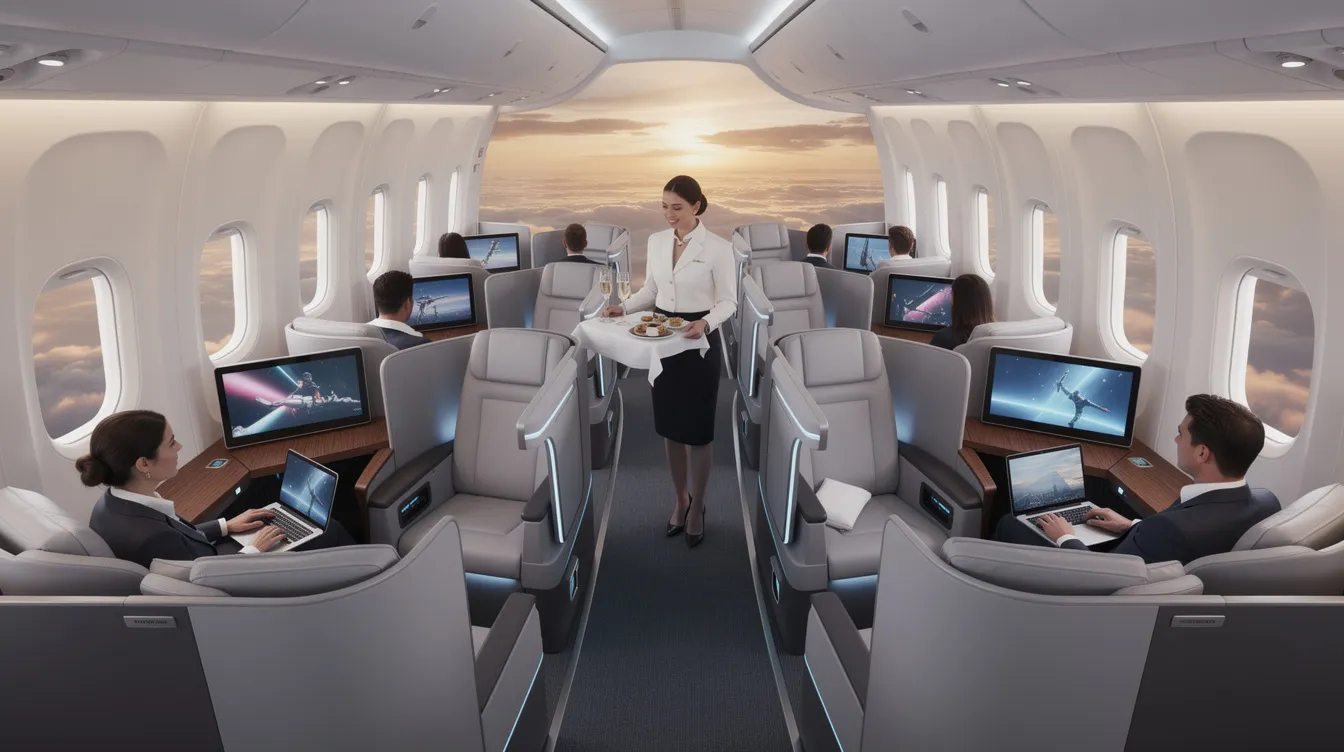
5
min read
Business Class Flights: How to Fly Smarter, Save Time, and Upgrade to Private Travel
This guide explores the world of premium air travel, comparing business class, first class, and private jet options. It offers insights into comfort, service, and cost, along with actionable tips for booking smarter. Whether you're a frequent flyer or considering an upgrade, this resource helps you navigate your travel choices effectively.
Read MoreStay updated with our latest insights and tips to elevate your journey with us.
MEMBERSHIPS AND ASSOCIATIONS



Disclaimer: Jettly operates as a charter broker, offering access to a global digital jet charter marketplace. Jettly is not a direct air carrier and does not own or operate aircraft. All advertised flights are conducted by third-party air carriers that are fully licensed and hold the appropriate Part 135 or Part 121 certifications issued by the Federal Aviation Administration (FAA) or equivalent regulatory authorities under U.S. or foreign law. Jettly complies fully with the U.S. Department of Transportation's Part 295 and Part 298 Charter Broker regulations. Jettly does not carry additional liability insurance. Passengers are covered by aircraft operator insurance. TICO: 50023770


