



Login
Get Instant Pricing On 23,000+ Aircraft

>
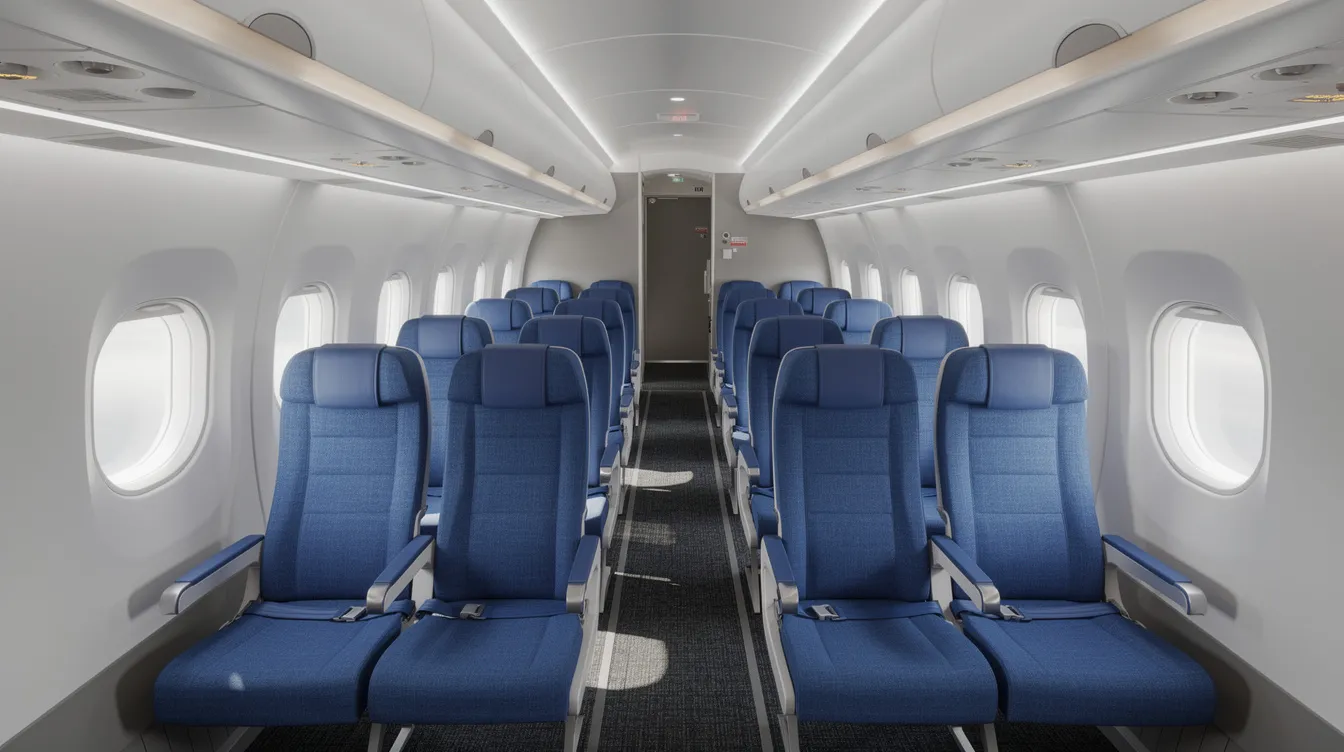
If you fly Southwest Airlines or any carrier operating the Boeing 737-700, the seat you pick can make or break your trip. A boeing 737 700 seat map typically shows 137 to 143 economy seats arranged in a single-aisle, 3-3 layout. Knowing the zones, dimensions, and quirks of this cabin helps you find the best position every time—or decide whether a private charter is the better move.
Most airlines using the Boeing 737-700, including Southwest Airlines, fly an all-economy 3-3 layout with seat pitch around 31 inches and seat width ranging from 16.1 to 17.1 inches.
The best seats are usually in the extra legroom rows (1–6 and exit row 15), while the last row near lavatories and the galley tends to be the least comfortable.
The Boeing 737-700 is a single-aisle, narrow-body aircraft featuring two over-wing emergency exit rows typically located around the midpoint of the cabin, plus a rear entry door.
Southwest aircraft typically offer WiFi and streaming entertainment including live TV and movies to personal devices, with USB-C ports available at every seat for charging.
Amenities, recline, and cabin noise vary dramatically by row—checking a detailed seat map before you select a seat saves frustration.
Some airlines configure the front of the cabin with a 2-2 layout for business class, but most operate the standard 3-3 economy configuration seating 120 to 149 passengers.
Lavatories are usually located at the front and rear of the cabin, with the 737-700 having two lavatories compared to three on the larger 737-800.
For travelers who want flexible layouts, more space, and tailored comfort without a fixed seat map, Jettly's private jet charter provides a fundamentally different experience.
The Boeing 737-700 is part of the Next Generation 737 family, entering service in the late 1990s and widely used on short- to medium-haul flights of roughly two to four hours. In its dense all-economy configuration, the aircraft seats either 137 passengers (after recent retrofits) or 143 economy class seats in older layouts.
Southwest Airlines is one of the largest operators of this aircraft, flying all-economy cabins with no business or first-class cabin. Other airlines like WestJet and United may use mixed configurations, sometimes featuring a 2-2 business class layout at the front, but this article focuses on the high-density economy layout common to Southwest aircraft.
The cabin breaks into three rough zones on a 137-seat plane:
|
Zone |
Rows |
Notes |
|---|---|---|
|
Forward cabin |
1–6 |
Extra legroom, fastest deplaning |
|
Mid-cabin |
7–15 |
Preferred seats plus exit row |
|
Aft cabin |
16–23 |
Standard seats, near rear galley |
The image depicts the interior of a single-aisle commercial airplane cabin, specifically a Boeing 737, featuring blue cloth seats arranged in a three-by-three layout. The cabin showcases standard seats with a focus on comfort, including options for extra legroom and tray tables for passengers.
Seat pitch is the distance from a point on one seat to the same point on the seat in front—it roughly indicates legroom. Seat width is the distance between armrests. On a Boeing 737 in a dense layout, these numbers determine how comfortable a two-to-four-hour flight actually feels.
Typical dimensions for a Southwest 737-700:
|
Metric |
Standard Seats |
Extra Legroom Seats |
|---|---|---|
|
Seat pitch |
31 inches (79 cm) |
35 inches (89 cm) |
|
Seat width |
16.1 to 17.1 inches |
16.1 to 17.1 inches |
While every seat looks identical, that extra five inches of pitch in the extra legroom rows makes a real difference for taller passengers or anyone working on a laptop. Compare that to a typical private jet booked through Jettly, where seats are wider, legroom is generous, and cabin loads are small—creating a quieter, less crowded environment by default, especially when you can choose from a wide range of private charter aircraft.
The seat hardware is largely the same throughout the Southwest Airlines 737-700, but the cabin is divided into three fare-linked zones: extra legroom, preferred, and standard.
Rows 1–6 offer around 35 inches of pitch. The first row gives excellent legroom and gets you off the plane first, but the tray table is built into the armrest (reducing usable seat width slightly), and there is no under-seat storage during taxi, takeoff, and landing due to bulkhead restrictions.
Rows 2–4 are often the sweet spot—full extra legroom with fewer compromises, good for laptop use and quick deplaning. Rows 5–6 still deliver extra legroom seats but sit slightly farther from the front exit.
Exit row 15 deserves special attention. All six seats qualify as extra legroom, but seats 15A and 15F have no seat directly in front, giving effectively unlimited knee space. Row 15 has the best legroom of any row on the aircraft. Be aware that passengers must meet safety criteria to sit here.
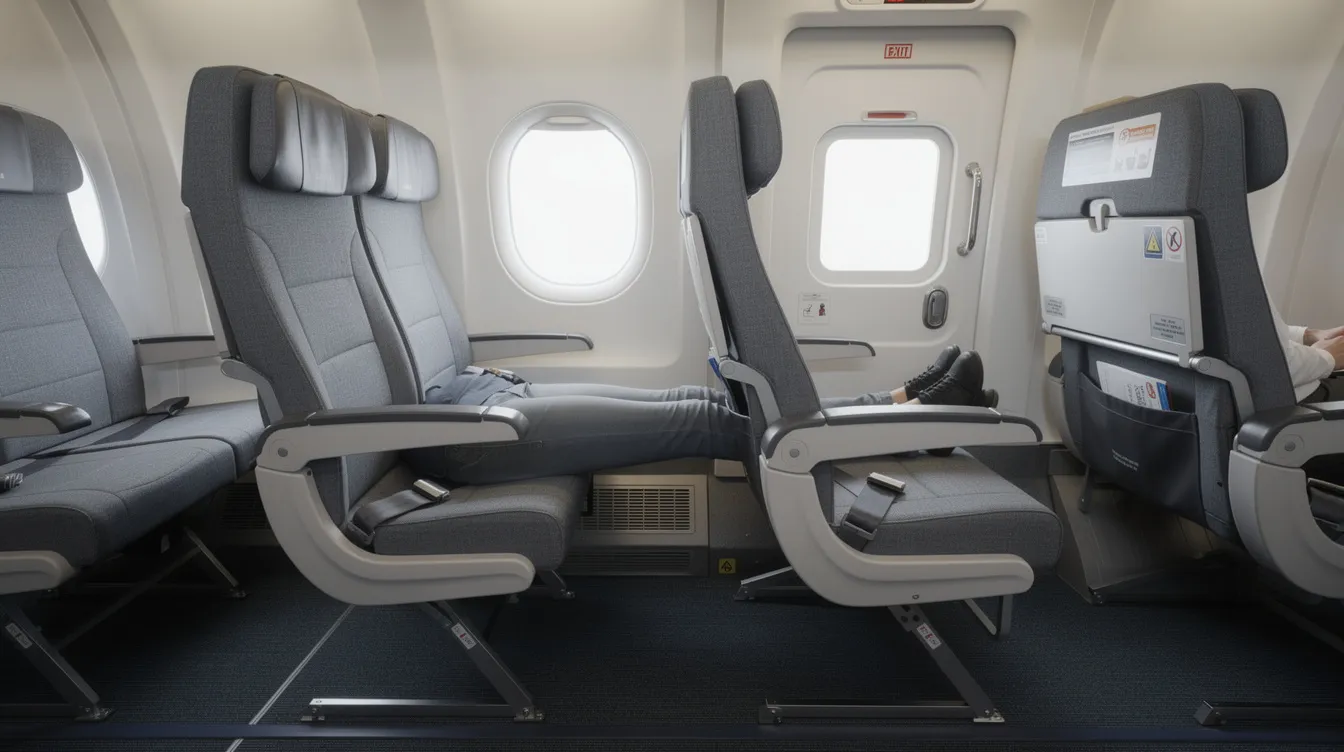
Preferred seats on Southwest's Boeing 737-700 have standard 31-inch pitch but sit closer to the front, allowing faster boarding and better overhead bin access. Rows 7–9 are generally quieter than the aft cabin and close to the forward galley.
Row 14 is a trade-off: same pitch, but row 14 has limited or no recline due to FAA regulations because the exit row sits directly behind it. Window seat 14A may also be missing or misaligned because of the emergency exit door structure. These preferred seats work well on short flights where convenience matters more than pure legroom.
Standard seats in rows 16–23 carry the same 31-inch pitch and seat width as the rest of the economy cabin but sit toward the back, meaning later boarding and deplaning. Over-wing rows 16–17 ride smoother in turbulence—a good pick for nervous flyers, and a window seat there also gives you a better view.
The last row (rows 22–23) is the least desirable. Proximity to the rear galley and lavatories means more noise, foot traffic, and sometimes odors. On the 737-700, that congestion can stand out more because it typically has two lavatories, while the 737-800 often has three. Recline may be limited by the wall behind, and seats in the last row have limited overhead storage since forward bins fill first. Those are common comfort issues, so check the airline seat rating if passenger reviews are available. Also confirm your window: seat 8F is missing a window on many Southwest aircraft due to fuselage structure.
The best seats depend on what you value, but certain positions consistently earn a higher comfort rating:
Best seats:
15A and 15F - maximum legroom, no seat in front; especially appealing if you like a better window view
Rows 2–4 - extra legroom plus fast deplaning
Row 1 - first off the plane, with bulkhead trade-offs
Seats to avoid:
Row 14 - limited recline, possible missing window
Rows 22–23 - noise, galley traffic, reduced recline
Middle seats (B and E) in any row - less shoulder room
Seat 8F - missing window on many aircraft
These seats are commonly avoided because of recline, power, window, or galley-related issues.
On a private jet charter, this entire exercise disappears, whether you opt for shared charter flights or a full private charter depending on your budget and privacy needs. Travelers choose an aircraft type and cabin layout designed around their group's legroom expectations and privacy needs, and understanding affordable aircraft rental options and costs helps you decide when that upgrade makes sense.
Southwest's Boeing 737-700 fleet offers WiFi and streaming entertainment including live TV and movies to a personal device—movies and content stream to your phone or laptop rather than through seatback screens. USB-C ports are available at every seat for charging on newer configurations, though many older 737-700 cabins still lack power outlets entirely. Check before you fly and bring a battery bank if needed.
Modern digital seat maps also show features like lavatories, galley locations, exit doors, and markers for restricted-recline rows or missing windows. Wifi speed varies by route and satellite coverage—basic messaging tiers work reliably, while full streaming can drop over remote or overwater areas.
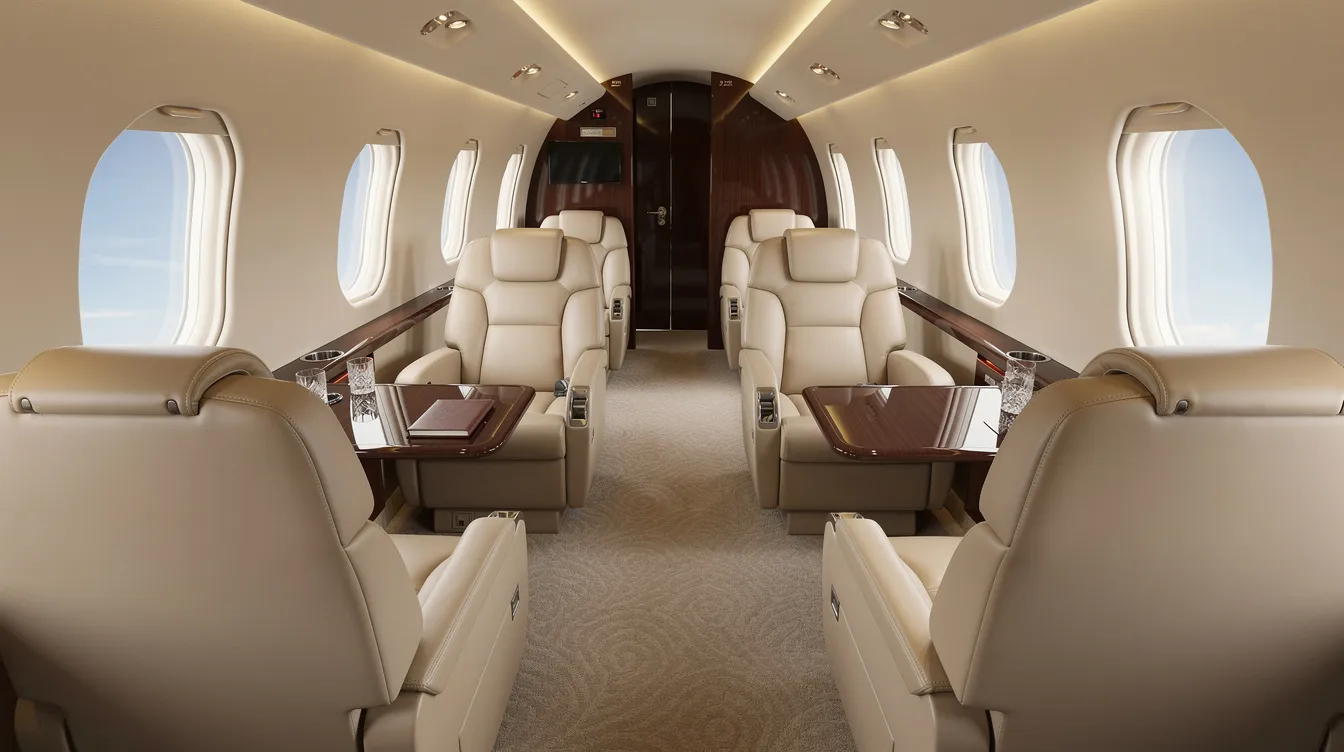
Private jets accessed through Jettly offer guaranteed power outlets, flexible seating arrangements (club seats, divans), tailored onboard catering including food and drink via services like Jettly Eats in-flight catering, and the ability to select aircraft size and cabin style rather than being locked into a fixed airlines Boeing 737 layout. Learn more about private jet charter costs to see how pricing compares.
A boeing 737 700 seat map is fixed—set rows, set pitch, boarding groups. A private jet charter through Jettly flips that model. The entire aircraft is reserved for your party, and the platform provides access to over 20,000 aircraft worldwide, from light jets to heavy cabin options, similar to the variety highlighted in broader guides to charter airlines and private flight options and to choosing between shared and full charter flights.
Time savings add up fast. Private terminals (FBOs) mean shorter security lines, flexible departure times, and direct ground transport access. On a commercial flight vs. private flight, the door-to-door difference can be significant, especially when you factor in time saved by departing from smaller facilities you can identify with tools like Jettly's airport locator and booking platform, or by using flight-sharing options that help crowdsource private jet flights and share empty seats.
Jettly offers on-demand charter with transparent, upfront pricing and private jet memberships with optional tiers—no long-term fractional ownership commitments, unlike some providers such as NetJets, the fractional ownership industry leader that require larger upfront commitments. Consider a practical example: Dallas to Denver, roughly 2.5 hours on a Southwest 737-700. Add 1–2 hours of check-in, security, and boarding by group, plus deplaning from row 23. The same route via private jet might require 20–30 minutes at the FBO, with the full cabin available for work or rest at max comfort. Explore how to book a private jet to see how the process works, then compare it with additional strategies for getting a seat on a private jet easily if you value flexibility and last-minute options.
Most high-density Boeing 737-700 aircraft, like those in the Southwest fleet, carry 137 to 143 economy seats in a 3-3 layout. Airlines with a small first-class cabin at the front may seat fewer—some configurations go as low as 112 passengers depending on the carrier. You can find side-by-side comparisons with larger Boeing models in this Boeing 767 seating capacity guide or this Boeing 737-800 seating plan, and a more detailed overview of the Boeing 737-800’s specs and range if you regularly fly on that larger variant.
Standard economy seats have a seat pitch of about 31 inches and a seat width ranging from 16.1 to 17.1 inches. Extra legroom rows at the front and exit row offer about 35 inches of pitch. The wingspan and fuselage design of the 737-700 keep the cabin at six-abreast seating on both sides of the aisle, which limits how wide any individual seat can be.
Many older 737-700 cabins do not provide individual power outlets or USB ports at every seat. Newer retrofits may include USB-C ports. Passengers should confirm their aircraft configuration before boarding and bring a battery bank for longer flights. On private jets accessible through Jettly, in-seat power is standard across virtually all aircraft, and platforms that aggregate private charter airlines and operators make it easier to compare these amenities before you book.
Exit row 15—especially seats 15A and 15F—and forward rows 2–4 offer the most legroom on a Southwest 737-700. Exit rows come with safety restrictions, and passengers must keep bags in the overhead bin during takeoff and landing. A companion pass or early boarding position can help you sign up for these seats before they fill.
Check the specific seat map for your flight before you select a seat. Avoid the back rows near lavatories and galleys, skip limited-recline rows in front of exit rows, and choose a window or aisle over the middle for more personal space. If you find yourself consistently frustrated by fixed commercial layouts, a private jet charter through Jettly removes the need to compete for individual seats altogether, especially if you’re looking for a flexible alternative to NetJets-style ownership. Email Jettly's team or request a quote directly on the platform to get started.
Understanding the boeing 737 700 seat map—seat pitch, seat width, extra legroom zones, and onboard amenities—gives travelers on airlines like Southwest Airlines a real advantage when picking the right seat and knowing which rows to avoid. Small details like a missing window at 8F or limited recline at row 14 can turn a good flight into an uncomfortable one.
When fixed commercial seat maps, upright seating, and boarding gate crowds no longer meet your comfort or speed requirements, private jet charter offers a different surface entirely. Jettly provides flexible cabin layouts, generous legroom, and transparent pricing across thousands of aircraft worldwide, supported by tools like a jet card flight cost estimator for predictable pricing on frequently flown routes.
Ready to experience private travel on your terms? Consider locking in consistent rates and perks through Jettly’s jet card programs, or explore flight options and request a quote at https://www.jettly.com.
Share this post:
Jay Franco Serevilla
Aug 9, 2026
|
5
min read
Discover tips and trends in the industry.
5
min read
New York to Los Angeles: Flights, Private Jet Options, and Smart Booking Strategies
Traveling from New York to Los Angeles offers a variety of options, from budget-friendly commercial flights to luxurious private jet charters. This guide provides essential information on flight durations, pricing, and booking strategies to help travelers make informed decisions. Whether you're looking for the cheapest fares or the most convenient travel experience, understanding your options is key.
Read More
5
min read
Business Class Flights: How to Fly Smarter, Save Time, and Upgrade to Private Travel
This guide explores the world of premium air travel, comparing business class, first class, and private jet options. It offers insights into comfort, service, and cost, along with actionable tips for booking smarter. Whether you're a frequent flyer or considering an upgrade, this resource helps you navigate your travel choices effectively.
Read MoreStay updated with our latest insights and tips to elevate your journey with us.
MEMBERSHIPS AND ASSOCIATIONS



Disclaimer: Jettly operates as a charter broker, offering access to a global digital jet charter marketplace. Jettly is not a direct air carrier and does not own or operate aircraft. All advertised flights are conducted by third-party air carriers that are fully licensed and hold the appropriate Part 135 or Part 121 certifications issued by the Federal Aviation Administration (FAA) or equivalent regulatory authorities under U.S. or foreign law. Jettly complies fully with the U.S. Department of Transportation's Part 295 and Part 298 Charter Broker regulations. Jettly does not carry additional liability insurance. Passengers are covered by aircraft operator insurance. TICO: 50023770


