


Login
Get Instant Pricing On 23,000+ Aircraft

>
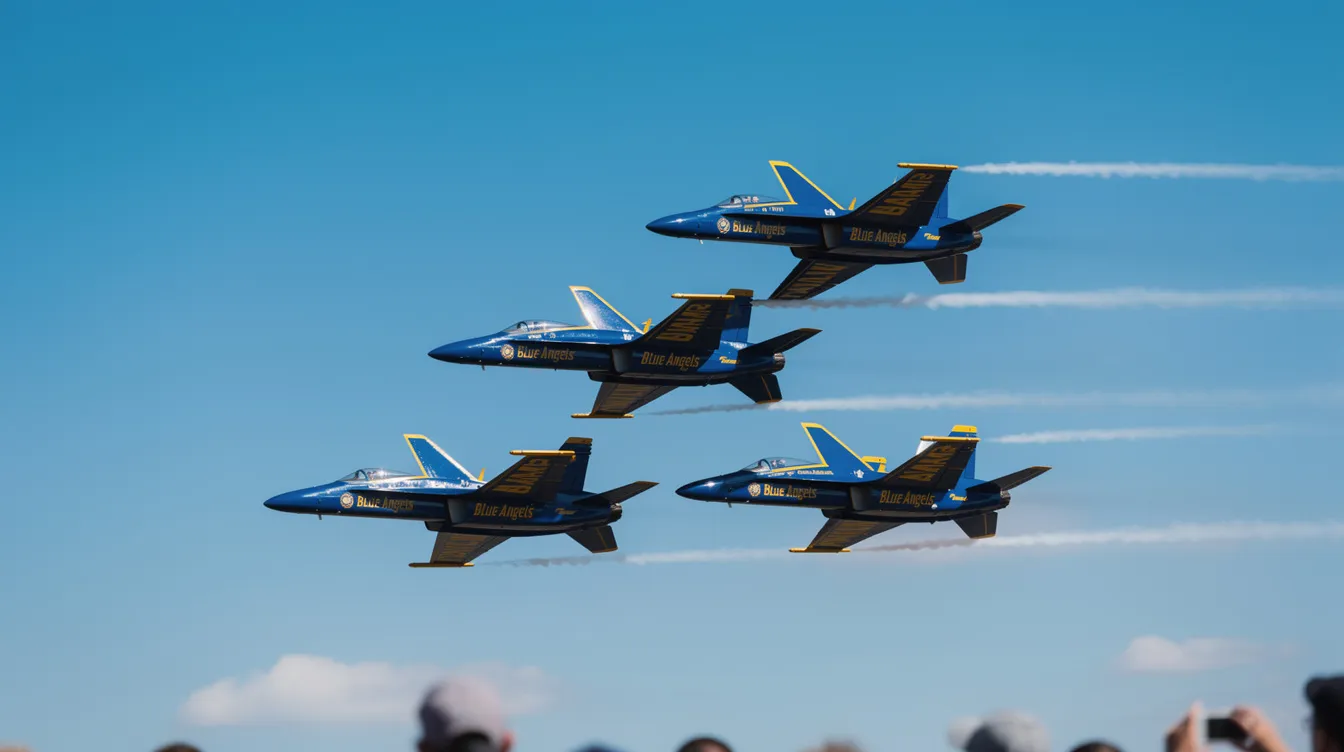
The Navy Blue Angels are the United States Navy Flight Demonstration Squadron, formed in 1946 to showcase naval aviation skill and support recruiting. More than a flight team, they are one of the oldest military flight demonstration teams in the world. A flight demonstration team is a military unit that performs aerobatic flying displays to showcase pilot skill and aircraft capabilities. The Blue Angels fly the F/A-18 Super Hornet (a twin-engine, carrier-capable multirole fighter jet used by the U.S. Navy) and a C-130J Super Hercules (a military transport aircraft that supports the Blue Angels and performs its own demonstrations) in tightly choreographed manoeuvres that put precision, teamwork, and the best of naval aviation on public display.
For aviation enthusiasts, military supporters, prospective naval aviators, air show fans, and private jet travellers curious about the connection between military flight excellence and civilian charter aviation, the Blue Angels offer a clear view of how elite flying standards are built and sustained. Since 1946, they have inspired millions and shaped how the public sees military flying, and that legacy remains relevant whether you want to understand their history and mission, aircraft, team structure and training, safety standards, community outreach, media presence, or how that same culture of performance connects to modern private flight through Jettly.
The Navy Blue Angels are the United States Navy Flight Demonstration Squadron, formed on April 24, 1946, to showcase naval aviation skill and support Navy and Marine Corps recruiting efforts. They are one of the oldest military flight demonstration teams in the world.
The team flies F/A-18 Super Hornets (a twin-engine, carrier-capable multirole fighter jet used by the U.S. Navy) and a C-130J Super Hercules (a military transport aircraft that supports the Blue Angels and performs its own demonstrations), performing close-formation manoeuvres with wingtips separated by as little as 18 inches, in front of millions of spectators each season.
The core culture of the squadron centres on a simple phrase: once a Blue Angel, always a Blue Angel. Service on the team is a lifelong identity for both officers and enlisted members.
Jettly is a modern, tech-driven private jet charter platform that connects travellers with on-demand flights globally, offering a civilian parallel to the discipline and precision that define military aviation.
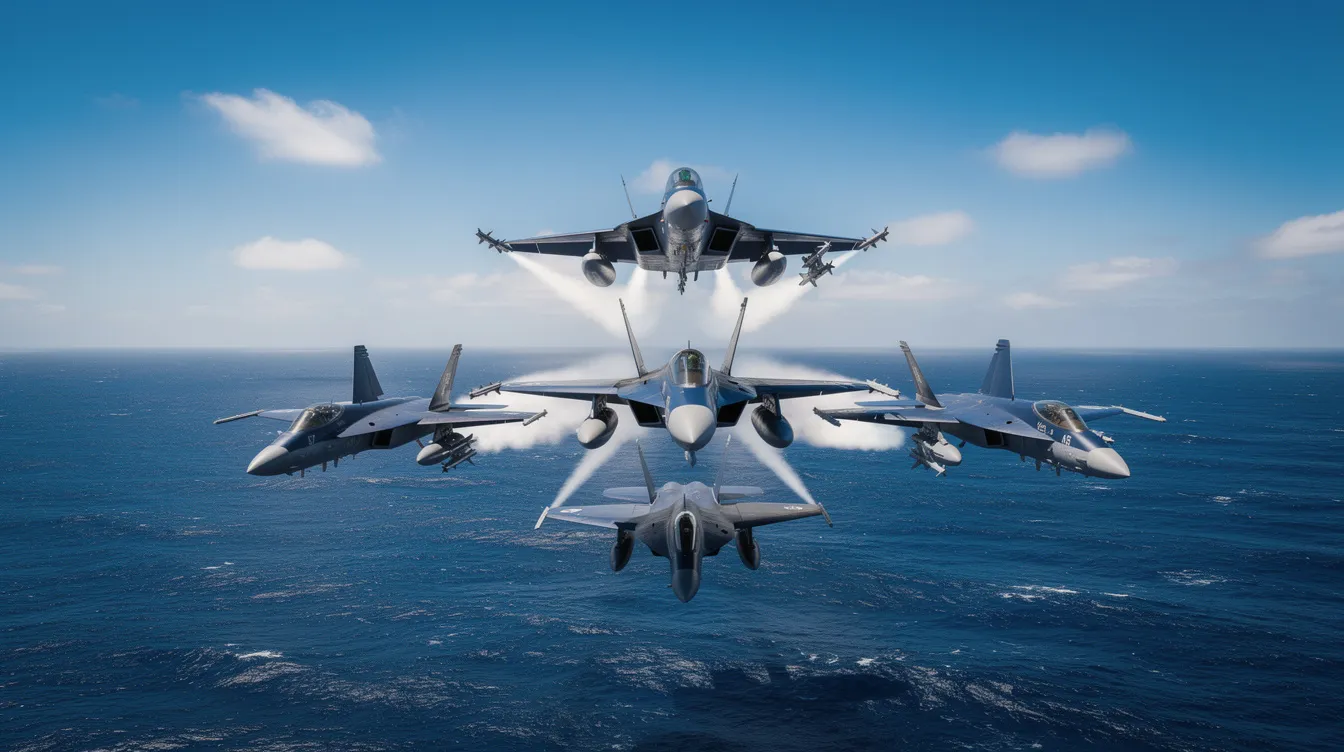
In the summer of 1946, only months after the end of World War II, the United States Navy stood up a small demonstration team to preserve public interest in naval aviation. The team was originally named the Navy Flight Exhibition Team, established under the direction of Chief of Naval Operations Admiral Chester W. Nimitz on April 24, 1946.
The Blue Angels first performed with F6F-5 Hellcats on May 10, 1946, and their first official public flight demonstration took place on June 15, 1946, at Craig Field in Jacksonville, Florida.
The team was renamed during an air show in July 1946 in Omaha, Nebraska, when Lt. Maurice "Wick" Wickendoll spotted an advertisement for the Blue Angel Supper Club in New York.
Their mission has always been concrete: to showcase the skills of Navy and Marine Corps aviators, demonstrate the capabilities of front-line naval aviation, and serve as ambassadors of goodwill at domestic and international air shows. That mission also aims to enhance Navy and Marine Corps recruiting efforts, connecting civilians with the culture and pride of military service.
The phrase once a Blue Angel, always a Blue Angel reflects the tight-knit bond among current and former team members. From post-WWII rebuilding through Cold War visibility, the jet age, and post-9/11 recruiting, the core hope has stayed constant: inspiring the next generation of service members and leaders.
The aircraft flown by the Blue Angels mirror the evolution of U.S. naval aviation. Over their history, the Blue Angels have flown ten different demonstration aircraft, each one a standard fleet jet rather than a purpose-built stunt plane. That detail matters: every airframe reinforces the direct connection between air show performance and front-line combat capability.
1946: F6F Hellcats (first aircraft flown by the Blue Angels)
1946 (August): Grumman F8F-1 Bearcat
Early 1950s: Grumman F9F-2 Panther
1950s: F9F-5 Panther
1950s: F9F-8 Cougar (swept-wing)
Late 1950s–1960s: Grumman F11F-1 Tiger (first supersonic jet flown by the squadron)
1969–1986: McDonnell Douglas F-4J Phantom II (enabled manoeuvres like the "Dirty Loop" with gear extended)
1986–2020: F/A-18A/B/C/D Hornet (longest-serving Blue Angel platform, spanning more than three decades)
2021–present: F/A-18 Super Hornet (the current demonstration aircraft, featuring upgraded avionics, larger fuel capacity, and modern flight controls)
Support Aircraft: C-130J Super Hercules (a military transport aircraft that supports the Blue Angels and performs its own demonstrations), known as Fat Albert (the nickname for the Blue Angels' C-130 support aircraft), replaced the retired Fat Albert in 2019.
The modern Blue Angels squadron includes about 17 officers and more than 130 enlisted Sailors and Marines, totalling over 150 active-duty personnel. Each member serves a critical role, whether in the skies or on the ground.
The Blue Angels commanding officer, known as "Boss," flies as Blue Angel #1 and serves as flight leader. This officer is typically a Navy commander with extensive tactical jet flight hours, prior squadron command, and selection overseen by the Chief of Naval Air Training (CNATRA).
Other officer specialities include the Marine C-130 pilot who serves as aircraft commander for Fat Albert, plus a Flight Surgeon, Maintenance Officer, Supply Officer, Public Affairs Officer, and Administrative Officer.
Pilots of jets #2–#7 must be carrier-qualified naval aviator professionals with at least 1,250 tactical jet hours.
Candidates apply through their chain of command with recommendations.
Selection requires unanimous votes from current team members.
The evaluation process runs from March through early July.
The events coordinator (#8) is a naval flight officer or aviator with specific fleet experience after a first sea tour.
Enlisted professionals keep the flight line running. Crew chiefs, avionics technicians, engine and airframe specialists, life-support technicians, and logistics experts all contribute. Their excellence is as critical as that of the pilots, and each department within the squadron reflects the same standard of duty and precision.
The Blue Angels' annual rhythm starts with winter training at Naval Air Facility El Centro, California. The Blue Angels train at NAF El Centro from January to March, where pilots fly approximately 120 training sorties over about two months, and practice sessions begin there with two flights per day. Pilots gradually reduce formation spacing and lower altitudes as trust and muscle memory build.
Once the season begins, operations shift to Naval Air Station Pensacola in Florida. Practices at NAS Pensacola occur on Tuesday and Wednesday mornings, with the team travelling to show sites on Thursdays, performing orientation flights on Fridays, and delivering full flight demonstrations on Saturdays and Sundays. The 2026 practice schedule includes 31 practice days.
Safety practices are physical and procedural. Pilots fly without G-suits to avoid uncommanded control-stick movement, relying instead on a specific muscle-tensing technique to counter G-forces. Standard cockpit setup places the right hand on the stick and left on the throttle, with gloves, customised seat cushions, and harnesses fitted precisely. On the Super Hornets, a 40-pound spring tension is installed on the control stick to provide a "false feel" for stability at high Gs.
Pilots in the Blue Angels must undergo rigorous training, including mental rehearsal, before each flight. They engage in detailed debriefings after each performance to ensure accuracy, with every pilot owning errors publicly. The Blue Angels utilise different types of shows based on weather conditions—flat, low, or high profiles—to manage risk while delivering the best possible performance.
The Blue Angels embrace their role as ambassadors for naval aviation, connecting the public to the Navy and Marine Corps beyond the spectacle of air shows. The Blue Angels serve as ambassadors of goodwill and as a gateway for many young people who have never met a Sailor, Marine, or naval aviator.
Community outreach efforts include visits to schools and hospitals during the show season. They visit hospitals and schools in air show cities, and the team interacts with students to discuss military service benefits.
These community functions often introduce children to military careers for the first time, reinforcing the recruiting and public diplomacy aspects of the mission. The Blue Angels aim to inspire future leaders through their performances.
The scale of their reach is remarkable. The Blue Angels have flown for over 500 million spectators worldwide since 1946, making them one of the most visible symbols of American military excellence.
Both the Blue Angels and civilian aviation professionals like those coordinated through Jettly rely on disciplined aviators, strict safety standards, and precise scheduling. The difference lies in the audience: one serves the nation through public inspiration, the other serves travellers seeking private, on-demand convenience.
A typical Blue Angels air show sequence starts long before the jets take off. Preflight checks, the iconic "walk-down" to the aircraft, engine start, and taxi out in precise formation all build anticipation along the flight line. For spectators, the magic begins the moment the first engine roars.
Narrated demonstrations feature manoeuvres like the Diamond 360, Opposing Knife-Edge Pass, Vertical Break, and High Alpha Pass. Demonstrations highlight individual and formation flying capabilities.
A typical practice lasts approximately 45 minutes, and jet noise levels are intense enough that hearing protection is strongly recommended.
At NAS Pensacola, practices generally start around 10:30 a.m. on select days between late March and late October. The Museum Flight Line viewing area offers open bleacher seating (about 500 seats), chair rentals, and optional premium seating such as Admiral's Club areas. Museum admission for Blue Angels practices is free, making it one of the most accessible aviation experiences in the country.
Blue Angels conduct autograph sessions after select practices. Selected Wednesday practices feature sessions at the National Naval Aviation Museum, where visitors can meet pilots and enlisted personnel, ask questions, and sign posters or programs—all at no cost.
Before planning a Blue Angels visit, always check the official schedule for exact dates and any security or weather-related changes. Parking near the museum fills up quickly on popular practice days.
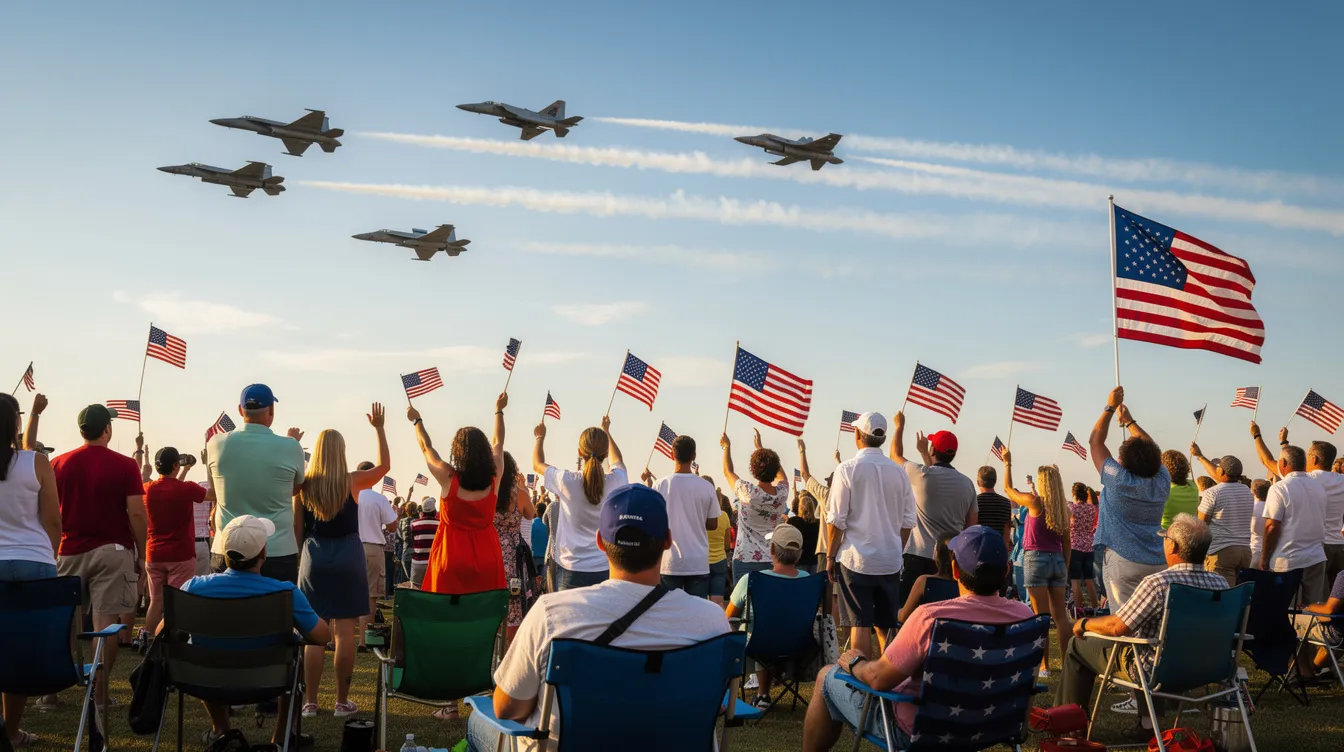
High-performance flight demonstrations carry inherent risk, and the Blue Angels have paid a real cost for their excellence since 1946. Twenty Blue Angels pilots and one crew member have died while serving with the team. Several additional former Blue Angels were later killed in combat or aviation accidents after their demonstration tours.
The first fatality occurred on September 29, 1946, when Slot Pilot Lt. j.g. Ross "Robby" Robinson was killed performing a Cuban-Eight in his F8F Bearcat after a wing-tip separated. In 1952, Lt. Bud Wood died when two Panthers collided during a demonstration in Corpus Christi, Texas. On April 21, 2007, Lt. Commander Kevin Davis was killed during an air show in Beaufort, South Carolina, while flying the #6 F/A-18.
Each accident triggers an exhaustive Navy investigation. These reviews have led to changes in standard operating procedures, modifications to training regimens, equipment updates, and stricter environmental minimums—an ongoing culture of continuous improvement.
The risk profile of civilian private aviation is fundamentally different. Charter platforms like Jettly and other top private jet charter companies focus on conservative operating practices, strict regulatory compliance (such as FAA Part 135 standards), and weather-based go/no-go decisions tailored to passenger safety rather than show performance.
The phrase once a Blue Angel, Always a Blue Angel is more than a motto. It describes a lifelong identity shared by alumni across generations—a secret handshake of shared experience that never fades.
Many officer pilots serve about two years with the Blue Angels before rotating back to the fleet. Enlisted personnel may serve three to four years before rotating back to the fleet. Many alumni return to carrier squadrons, test units, or staff roles after their tour, bringing the culture of precision and teamwork back to the rest of the Navy and Marine Corps.
The alumni network stays active. Periodic reunions at NAS Pensacola mark milestone anniversaries, such as the 75th anniversary in 2021 and upcoming 80th-year celebrations in the mid-2020s. Informal mentoring connects current team members with former Blue Angels now working in the airline industry, naval leadership, or civilian aviation careers. The Blue Angels Association helps preserve these bonds.
Transitioning out of the team means adjusting from a high-visibility, high-tempo demonstration schedule to more typical operational or civilian life. But the identity endures. Whether a former pilot commanded a carrier air wing or moved to Georgia for a civilian role, the pride and professionalism of the squadron stay with them.
The Blue Angels have become a visual symbol of U.S. naval aviation, appearing regularly at national events, in documentaries, and across popular media. For many Americans, watching the team is their first time seeing military jets up close.
The 2024 IMAX documentary "The Blue Angels" brought the team's world to the big screen. Produced with involvement from former commanding officer Greg Wooldridge and supported by Navy leadership, the film was filmed primarily during the 2022 show season to capture first-year pilots adjusting to the demo. Specialised camera rigs and high-speed footage—up to 1,000 frames per second—captured close-formation flying and cockpit perspectives that feel cool and visceral.
Pop-culture intersections have amplified the team's reach. Actor Glen Powell took a VIP ride with the team, tying into his connection to naval aviation roles in films. Producer J.J. Abrams compared real-life Blue Angels flying to computer-generated effects in blockbuster movies, noting that reality often outpaces what CGI can create.
These portrayals shape how the public understands military flying. For many viewers, the documentary or a filmed show is their closest experience of naval aviation—and it often sparks interest in both military and civilian flying careers.
Watching the Blue Angels from the flight line is physically demanding. Florida heat, direct sun, and intense jet noise mean preparation matters for both safety and enjoyment.
Hydrate before and during the event with cool, nonalcoholic drinks—and avoid extremely cold beverages that can cause cramps.
Wear light-colored, breathable clothing, closed-toe shoes, and a wide-brimmed hat or cap.
Apply broad-spectrum sunscreen at least 30 minutes before showtime and reapply as directed, especially in Florida's humid climate.
Adults 18 and older typically need a REAL ID–compliant driver's license or other valid U.S. government-issued ID to access NAS Pensacola.
Non-U.S. citizens may face additional requirements, often needing an escort and advance vetting.
Common restrictions include no weapons, drones, large backpacks, or coolers (except medical and infant-care bags), and all vehicles and bags are subject to search.
Arrive early. Parking at the National Naval Aviation Museum fills up quickly on popular practice days, sometimes leading to temporary access closures.
|
Blue Angels |
Private Charter Platforms (e.g., Jettly) |
|---|---|
|
Fly a narrow set of tactical jets (F/A-18 Super Hornet) and a C-130J Super Hercules |
Coordinate thousands of aircraft types globally, from light jets and turboprops to large-cabin and ultra-long-range jets |
|
Blue Angels |
Private Charter Platforms (e.g., Jettly) |
|---|---|
|
Follow a fixed-season calendar built around air shows |
Users design bespoke itineraries, often booked within hours or days of departure |
|
Blue Angels |
Private Charter Platforms (e.g., Jettly) |
|---|---|
|
Demonstration profiles push the aerodynamic envelope |
Private charter flights favor conservative profiles, larger safety margins, and contingency alternates |
On Jettly's platform, customers search routes, use an airport locator tool, compare aircraft options and pricing, and request flights online. Operators must meet regulatory oversight and safety standards, including FAA Part 135 in the U.S. and equivalent rules internationally.
Many passengers who watch the Blue Angels at air shows later turn to private aviation for practical travel needs—valuing time savings, direct routing, and privacy over aerobatic power, and some start by learning how to buy a seat on a private jet instead of chartering an entire aircraft.
While the Blue Angels celebrate the capabilities of naval aviation in the skies, platforms like Jettly make everyday flying more efficient and flexible for civilian travellers on the ground.
Jettly operates a digital private jet charter marketplace with access to more than 20,000 private charter aircraft worldwide. The platform offers instant price estimates and transparent cost breakdowns for common routes such as New York–Miami, Los Angeles–Las Vegas, and Toronto–Vancouver. Options range from light jets and turboprops for short hops to heavy and ultra-long-range jets for intercontinental trips.
Typical use cases include:
Executives travelling to multiple cities in one day without airline schedules
Families combining an air show weekend in Pensacola with a broader vacation itinerary
Time-sensitive or last-minute trips where commercial connections are impractical, especially for travellers using private jet membership programs to streamline frequent flying
Jettly emphasises regulated operators, safety auditing, and efficient routing. Travellers can also explore empty-leg flights for savings, or use Jettly’s crowdsourced private jet seat sharing to offset costs, and choose between membership and on-demand access depending on their travel frequency.
Ready to experience private travel on your terms? Use Jettly’s private jet charter cost estimator to get instant pricing, then explore flight options or request a quote at https://www.jettly.com.
Below are practical questions not fully covered in the main sections, spanning Blue Angels career paths, access, and private charter logistics.
All Blue Angels are active-duty Sailors or Marines.
Pilots must first complete standard naval air training.
Accumulate well above 1,250 tactical jet hours.
Apply for a competitive selection process that includes interviews, recommendation letters, and fleet-performance records.
Selection requires unanimous votes from current team members.
Enlisted crew members come from aviation maintenance and support ratings, usually with several years of fleet experience and a commanding officer's endorsement.
There is no public ride program.
On rare occasions, select media representatives, key community leaders, or other approved individuals may fly in the back seat of a two-seat F/A-18 as part of outreach efforts.
Subject to strict medical screening and Navy Department approval.
The Blue Angels represent the U.S. Navy and Marine Corps and fly F/A-18 Super Hornets from a naval aviation background.
The U.S. Air Force Thunderbirds fly F-16 Fighting Falcons and showcase Air Force missions.
Both perform at many of the same air shows but follow distinct traditions, formations, and service cultures.
Jettly enables on-demand charter: travellers pay only for individual flights without long-term contracts, capital commitments, or fixed-hour jet cards.
This contrasts with ownership or fractional programs, which involve high upfront costs, ongoing management fees, and less flexibility in changing aircraft size from trip to trip.
Structured jet card programs can bridge the gap for some frequent flyers.
Check the official show schedule first.
Choose airports near the venue that accept private traffic, such as Pensacola International or nearby regional fields.
Plan arrival and departure times around expected crowd and traffic peaks.
Give your charter provider any base-access or timing constraints well in advance so ground transportation and flight times can be coordinated smoothly.
Whether the draw is naval aviation heritage or practical private travel, both worlds depend on rigorous training, maintenance, and a strong safety culture—especially for travellers researching how much it costs to rent a private jet for air show trips or business itineraries.
The Blue Angels embody the pinnacle of naval aviation precision, teamwork, and dedication. Their rich history, rigorous training, and community outreach continue to inspire millions worldwide. For those captivated by the spirit of elite flying, platforms like Jettly offer a civilian gateway to experience the convenience, flexibility, and professionalism of private aviation. Whether attending a Blue Angels air show or booking a private flight, travellers can appreciate the shared values of safety, efficiency, and excellence that define both military demonstration teams and modern private jet charter services.
Ready to experience private travel on your terms? Explore flight options or request a quote at https://www.jettly.com.
Share this post:
Jay Franco Serevilla
Aug 2, 2026
|
5
min read
Discover tips and trends in the industry.
5
min read
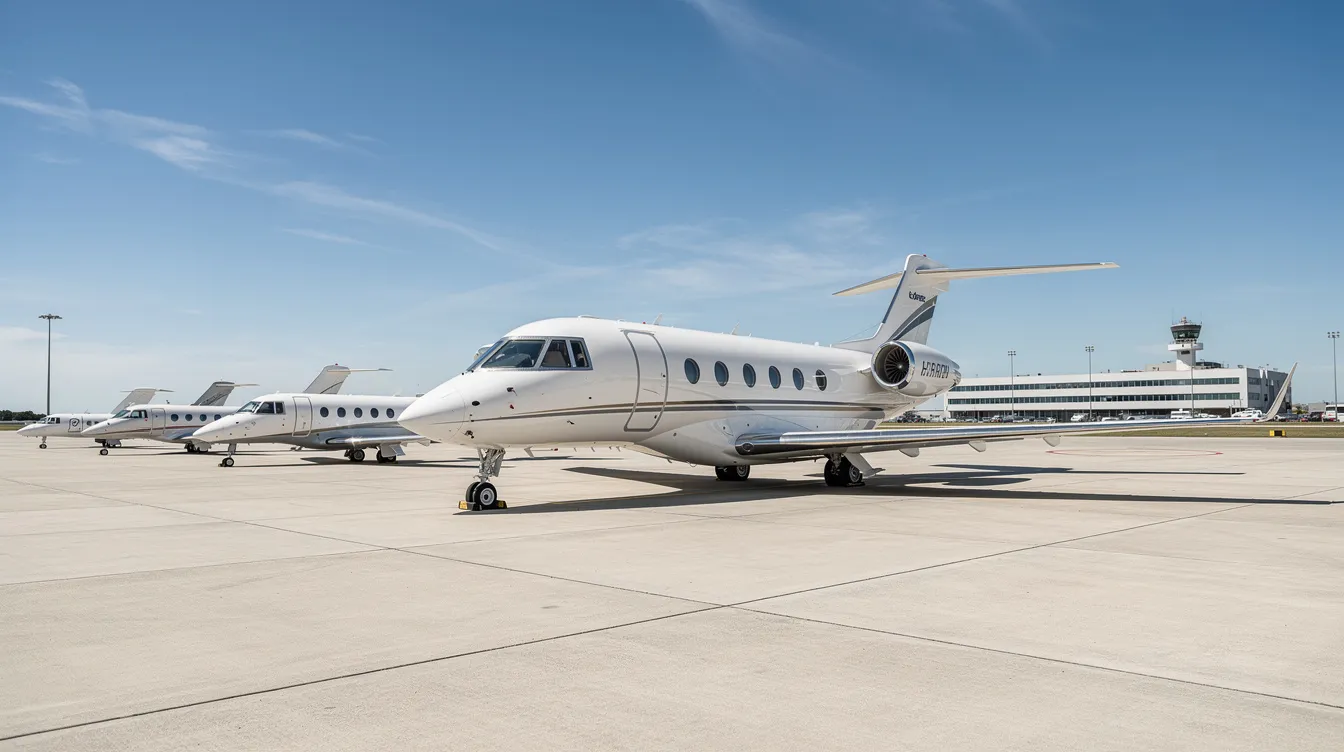
Jet Market Outlook: Private Jet Demand, Regional Growth, and Charter Opportunities
The private jet market is experiencing significant growth, projected to rise from USD 25.5 billion in 2024 to USD 38.25 billion by 2033. Key drivers include increasing demand from high-net-worth individuals, technological advancements, and a shift towards charter services over ownership. Jettly offers a flexible platform for travelers to access a vast network of private jets, catering to the evolving needs of business and leisure travelers.
Read More
5
min read
Jet It Cost: What Private Jet Travel Really Costs in 2026
In 2026, private jet rental costs range from $2,000 to $24,000 per flight hour, influenced by aircraft type and route. This guide provides insights into hourly rates, hidden fees, and cost-saving strategies, helping travelers choose the best access model for their needs. Jettly's digital marketplace offers instant pricing and transparency for private jet bookings.
Read MoreStay updated with our latest insights and tips to elevate your journey with us.
MEMBERSHIPS AND ASSOCIATIONS



Disclaimer: Jettly operates as a charter broker, offering access to a global digital jet charter marketplace. Jettly is not a direct air carrier and does not own or operate aircraft. All advertised flights are conducted by third-party air carriers that are fully licensed and hold the appropriate Part 135 or Part 121 certifications issued by the Federal Aviation Administration (FAA) or equivalent regulatory authorities under U.S. or foreign law. Jettly complies fully with the U.S. Department of Transportation's Part 295 and Part 298 Charter Broker regulations. Jettly does not carry additional liability insurance. Passengers are covered by aircraft operator insurance. TICO: 50023770


