


Login
Get Instant Pricing On 23,000+ Aircraft

>

Choosing the best starter plane is one of the most consequential decisions in a pilot's early career. It shapes flying habits, confidence, and long-term costs in ways that last well beyond those first few dozen hours in the logbook. This guide walks through the most practical aircraft options, real ownership costs, and the smart alternative of mixing rental flying with private jet charter for missions that exceed what a simple piston single can handle.
The best starter plane depends on your primary mission, budget, experience level, and passenger needs. Most first-time buyers begin with simple, fixed gear piston aircraft like the Cessna 172 Skyhawk — the most popular training aircraft in the world, with over 44,000 units built since 1956.
High wing trainers (Cessna 150/152, Cessna 172) and low wing options (Piper Cherokee and its PA-28 siblings) dominate real-world first aircraft choices due to forgiving flight characteristics, stable handling, and strong training ecosystems.
The Cessna 150/152 series is ideal for budget-conscious beginners, known for its forgiving flight characteristics and simple, affordable two-seat design.
Experience level significantly influences aircraft choice for beginners, with stable and predictable handling critical to building confidence.
The number of passengers required narrows aircraft options considerably, making four-seat trainers like the Cessna 172 or Piper PA-28 family popular choices for those flying with others.
Ownership is not the only way to start an aviation journey. Many new pilots combine renting a first plane with private jet charter through platforms like Jettly for longer business or family trips.
Fixed gear, simple avionics, and widespread parts and maintenance support matter more than speed or aesthetics for a first airplane.
This article covers concrete aircraft examples — Cessna 172, PA-28, Diamond DA40, Cirrus SR20, and Cessna Stationair — plus a realistic cost and decision framework for first-time buyers.
The first plane a pilot flies regularly does more than build hours. It creates muscle memory, shapes decision-making patterns, and establishes habits around preflight planning, fuel management, and weather assessment. A well-chosen beginner aircraft builds these habits gradually. A poorly chosen one can overwhelm a novice pilot with systems, speed, and complexity before fundamentals are solid.
Forgiving trainers help new pilots master stick-and-rudder skills because the aircraft does not punish small errors harshly. By contrast, complex aircraft like turbocharged retractables can saturate a beginner's attention with gear, prop, manifold pressure, and cowl flap management — all while moving faster through the air.
The safety data reinforces this. According to AOPA's Nall Report, nearly 48% of fatal general aviation accidents involve pilots with fewer than 100 hours in that specific aircraft type. Predictable stall behavior is crucial for safe learning landings, and stable aircraft like the Cessna 172 help build pilot confidence precisely because they respond predictably under stress.
Many aspiring pilots later transition from piston singles to turboprops or jets. But a well-chosen first airplane — or a mix of rental aircraft plus charter — often delivers better value early on.
Consider a new private pilot who flies 60 hours per year locally but needs a handful of fast trips annually for work. Mixing a basic starter plane with on-demand charter through Jettly solves both needs without forcing a piston single into missions it was never designed for, much like the broader options outlined in guides on how renting a plane works.
Mission first, airplane second. This is the core rule for a first aircraft purchase, and skipping it leads to buyer's remorse and higher costs. Before browsing listings, pilots seeking their right aircraft should write down exactly how they plan to fly, since mission definition is one of the key factors in choosing a starter plane.
Typical beginner missions include:
Local pattern work and weekend flights
Short cross country trips under 300–500 nm
Light business hops with one or two passengers
Family trips with two to four people plus bags
Different missions map to specific aircraft. A Cessna 150/152 suits solo flying and primary training, especially for budget-conscious beginners. A Cessna 172 Skyhawk handles training plus light family travel with stable and predictable handling. A Cessna Stationair serves serious hauling. A Diamond DA40 excels at efficient cross country flying with modern avionics and excellent visibility. A Cirrus SR20 appeals to tech-forward owners wanting advanced avionics and integrated safety systems from day one.
Geography matters too. Short grass strips demand different performance than paved 5,000-foot runways. High-density-altitude mountain airports punish underpowered aircraft. Your mission influences the choice of your first aircraft significantly — and so does the terrain you fly from.
When the defined mission regularly exceeds 400–600 nm or demands same-day out-and-back business travel, private jet charter may be more rational than stretching a small piston single beyond its comfort zone, especially given the availability of private charter aircraft across a wide range of sizes and performance profiles.
Many experienced instructors advise renting for at least 40–80 hours before committing to a first aircraft purchase. Many pilots rent for 40–80 hours before buying because that period clarifies what missions actually get flown versus what was imagined during ground school.
Here is how renting and owning compare for first time buyers:
Upfront cost: Renting offers low upfront costs and no maintenance risk. Ownership requires a down payment, insurance, and immediate fixed expenses.
Scheduling flexibility: Rental aircraft may not be available on short notice. Owned aircraft sit ready in the hangar.
Maintenance responsibility: Renters walk away from squawks. Owners manage every repair.
Model variety: Renting allows access to multiple aircraft types, helping refine flying preferences before buying. Ownership locks you into one platform unless you sell.
Life interruptions: Renters stop paying when they stop flying. Owners keep paying hangar, insurance, and annual fees regardless.
In 2025–2026, typical hourly rental ranges for a Cessna 172 run about $130–$190 per hour wet across North America, with regional variation. Two-seat trainers like the Cessna 152 often rent for $100–$130 per hour.
If a pilot expects to fly under 50–75 hours per year, renting plus occasional Jettly charters for bigger trips often costs less than sole ownership once hangar, insurance, and maintenance are included. Ownership costs can exceed $10,000 annually for low-time pilots even in the simplest aircraft, so understanding what drives a single flight’s cost is key to choosing the most economical mix of renting, charter, and ownership.
Three paths for a typical new private pilot:
Rent only: Lowest risk, maximum flexibility, but limited aircraft availability and no equity.
Buy a used Cessna 150/152 or 172: Build equity, fly on your schedule, but accept fixed costs year-round.
Rent locally, charter for distance: Fly rental aircraft for local flights and time building, then book charter for longer or urgent travel. This hybrid approach often yields the best cost-to-utility ratio for pilots who fly fewer than 100 hours annually.
The best starter plane is not a specific model. It is any single engine aircraft with predictable handling, simple systems, and broad training support. A good first aircraft should prioritize stability and predictable handling above speed or range.
Core characteristics of great airplanes for beginners:
Forgiving stall behavior: Gentle buffet, predictable nose drop, and easy recovery. No abrupt wing drops or snap tendencies.
Stable handling: Positive pitch and roll stability that lets a pilot relax without the aircraft wandering.
Reasonable crosswind capability: Enough rudder authority and low enough approach speed to handle moderate winds safely.
Benign ground handling: No tricky ground loops, manageable nosewheel steering, and good ground visibility.
Fixed gear is strongly preferred for any first airplane. It eliminates gear-up landing risk, reduces failure modes, lowers annual insurance, and simplifies the landing checklist so new pilots can focus on airspeed, glidepath, and wind correction. Single-engine trainers are ideal for learner pilots precisely because they keep systems simple.
The ideal cockpit for a beginner features a clear analog or simple glass panel with uncluttered layout and standard switch placement that mirrors common training fleets. Training aircraft should have predictable handling and low operating costs — not the latest touchscreen suite.
Support ecosystem factors also matter. Availability of experienced instructors familiar with the type, parts supply, local mechanic expertise, and active owner communities all reduce cost and downtime. This is why aircraft like the Cessna 172 Skyhawk and Piper Cherokee consistently top the list of popular trainers.
Flight schools globally rely on proven training aircraft for instruction, and the choice of flight school significantly affects pilot training success. Training with a well-maintained aircraft impacts flight training more than the specific model.
The Cessna 150 and 152 are the classic trainer aircraft that have trained generations of pilots. Over 30,000 units were built across both models, and the Cessna 150/152 series is known for forgiving flight characteristics that make them an excellent platform for primary training, especially when compared with other contenders highlighted in broader guides to choosing the best personal plane.
Key specs for the Cessna 152:
|
Spec |
Value |
|---|---|
|
Seats |
Two seats |
|
Cruise speed |
~95–107 KTAS |
|
Fuel burn |
~6–6.5 GPH |
|
Useful load |
~550–600 lbs |
|
Purchase price (2025–2026) |
~US$25,000–$60,000 |
|
The Cessna 152 is a simple and affordable two-seat trainer. Slow pattern speeds, responsive rudder use, and a limited panel force focus on attitude flying and precise airspeed control — exactly the skills that matter most in primary and instrument training. |
Limitations are real, though. Cabins are cramped for larger pilots. Useful load restricts you to two people with minimal baggage. Performance drops noticeably at high density altitude. And aging airframes need thorough pre-buy inspections including logbook reviews, corrosion checks, and engine compression tests.
The ideal owner profile for a 150/152: cost effective students, solo flyers, and pilots whose primary mission is short local flights and time building. Those wanting to carry adult children or friends regularly will outgrow a 150/152 quickly and may instead prioritize access to more destination options using tools like an airport locator for private flights.
The Cessna 172 Skyhawk is the most popular training aircraft in the world and is often considered the best airplane for a first aircraft purchase. Over 44,000 Cessna 172s have been built since 1956 — more than any other aircraft in history.
For beginners, the Cessna 172 delivers a combination that is hard to beat. Its high wing design improves downward visibility during turns and approach. Stable handling makes it forgiving in turbulence. The Cessna 172 has a proven safety record across decades of flight training and personal flying. And the four-seat aircraft cabin feels noticeably roomier than a 150/152.
|
Spec |
Value |
|---|---|
|
Cruise speed |
~120–125 KTAS |
|
Fuel burn |
~8–10 GPH |
|
Range |
~600–800 nm (model dependent) |
|
Used price range |
~US$80,000–$400,000+ |
The high wing layout provides excellent visibility during ground operations and in the pattern. Its seating position gives novice pilots a natural sight picture for approaches.
A Cessna 172 is a popular choice for new pilots because it handles both training and family use. Two adults, two children, and bags fit on moderate-range trips when carefully managed within weight-and-balance limits. That versatility makes it a first plane many owners keep for years.
The training ecosystem around the 172 is unmatched. Nearly every flight school offers the Cessna 172, which means more experienced instructors know its quirks, parts are abundant, and resale value stays strong. The choice of flight school significantly affects pilot training success, and schools built around the 172 benefit from decades of standardized syllabi. A Cessna 172 is a popular choice for new pilots for all these reasons.
The Piper PA-28 family — Cherokee, Warrior, Archer — stands as the primary low wing alternative for pilots seeking a best starter plane. The Piper PA-28 family has produced over 32,000 aircraft since 1960, creating an equally deep support network to the Cessna line.
The cabin of a PA-28 has a car-like feel. The seating position sits lower, and many students find the airliner-style sight picture more intuitive for landing approaches. Low-wing aircraft provide a sportier feel and easier fuel tank inspection during preflight. The low wing design also means climbing in feels natural — step on the wing, slide into the seat.
|
Spec (Piper Archer) |
Value |
|---|---|
|
Seats |
Four |
|
Cruise speed |
~110–120 KTAS |
|
Fuel burn |
~8–10 GPH |
|
Used price range |
~US$90,000–$250,000 |
Trade-offs exist. The single door on the right side can feel awkward initially. Downward visibility differs from a Cessna 172 — the wing blocks the view below on the same side as turns. Fueling and inspection patterns take beginners a few flights to internalize.
The PA-28 suits pilots training at Piper-heavy flight schools, those who prefer the low wing handling and cabin feel, and many owners planning to continue flying PA-28 derivatives for years. It is a good trainer with a large community, plentiful parts, and mechanics who know the type inside out. The Piper PA-28 family has produced over 32,000 aircraft since 1960, ensuring that support will remain strong for decades.
Some novice pilots prefer modern composite aircraft with glass cockpits over traditional metal trainers. The Diamond DA40 and Cirrus SR20 represent a different philosophy: start with current technology from day one.
The Diamond DA40 features modern avionics and composite construction. Its large bubble canopy provides excellent visibility — among the best in any four-seat aircraft. The DA40 NG variant runs a Jet-A diesel engine burning roughly 5.1 GPH, making it cost effective where avgas is scarce or expensive. Cruise speed reaches approximately 140–154 KTAS with Garmin G1000 NXi avionics standard. Used prices for the DA40 NG typically fall between US$375,000 and US$675,000.
The Cirrus SR20 includes an integrated parachute system for safety — the Cirrus Airframe Parachute System (CAPS) — that has saved numerous lives. Side-stick controls, cruise speeds around 150 KTAS, and advanced avionics make it appealing for pilots seeking early exposure to modern avionics similar to those found in business jets produced by leading private plane manufacturers.
Pros for beginners include easier IFR and instrument training transition and comfortable cabins suited to regional cross country travel.
Cautions are equally important. Higher approach speeds demand sharper precision. More complex systems increase cognitive load. Annual insurance for low time pilots in these aircraft runs significantly higher than in legacy trainers — sometimes exceeding $10,000 for high-value airframes. And there is a real risk of over-reliance on automation before fundamentals are fully ingrained. Training with a well-maintained aircraft impacts flight training more than the specific model, but flying experience in simpler machines first builds a stronger foundation.
The Cessna Stationair (206 family) sometimes tempts first time buyers who want to haul people and gear from the start. It is a powerful, six-seat, high-payload single engine aircraft built for serious work.
Key capabilities:
Useful load: ~1,300–1,400 lbs
Range: over 700 nm
Handles rougher and shorter strips
Common in backcountry, cargo, and bush operations
However, the Stationair is usually not ideal as a first airplane. Higher power and faster speeds, more complex weight-and-balance management, steeper maintenance costs, and more demanding insurance requirements for low time pilots all argue against it as a beginner aircraft.
A staged approach works better: build flying experience in a simpler fixed gear trainer like a Cessna 172 or PA-28 first, gain transition training experience, then step up to a Stationair-class aircraft once skills and mission clarity support the upgrade.
For occasional heavy-load or remote trips, chartering a larger turboprop or light jet through Jettly provides the capability without the year-round ownership burden. Many owners find this hybrid approach delivers great airplanes for daily flying and charter capacity for the missions that demand more, similar to strategies used when comparing the best private jet charter companies for specific mission profiles.
Many first time buyers fixate on whether high wing or low wing is "better." In reality, the more critical distinction for a first airplane is fixed gear vs retractable gear. That difference matters far more for safety, cost, and complexity.
High wing benefits:
Better downward visibility in turns
Easier preflight fuel checks (gravity drain)
Shade on the ramp
Excellent ground visibility during taxi
Low wing benefits:
More airliner-like sight picture on approach
Sometimes better roll response feel
Step-in cabin access (Piper PA-28, Diamond DA40)
Sportier handling characteristics
Fixed gear is recommended for any best starter plane short list. Fewer systems to manage in busy patterns, zero risk of gear-up landings, and lower insurance and maintenance costs compared to retractable gear models make it the clear winner for new pilots. Flight schools globally rely on proven training aircraft — and nearly all of them use fixed gear.
Wing placement is largely personal preference and mission-driven. High wings are often favored for backcountry observation. Low wings suit some training environments. Both can be excellent beginner aircraft when combined with fixed gear, stable handling, and a solid support network.
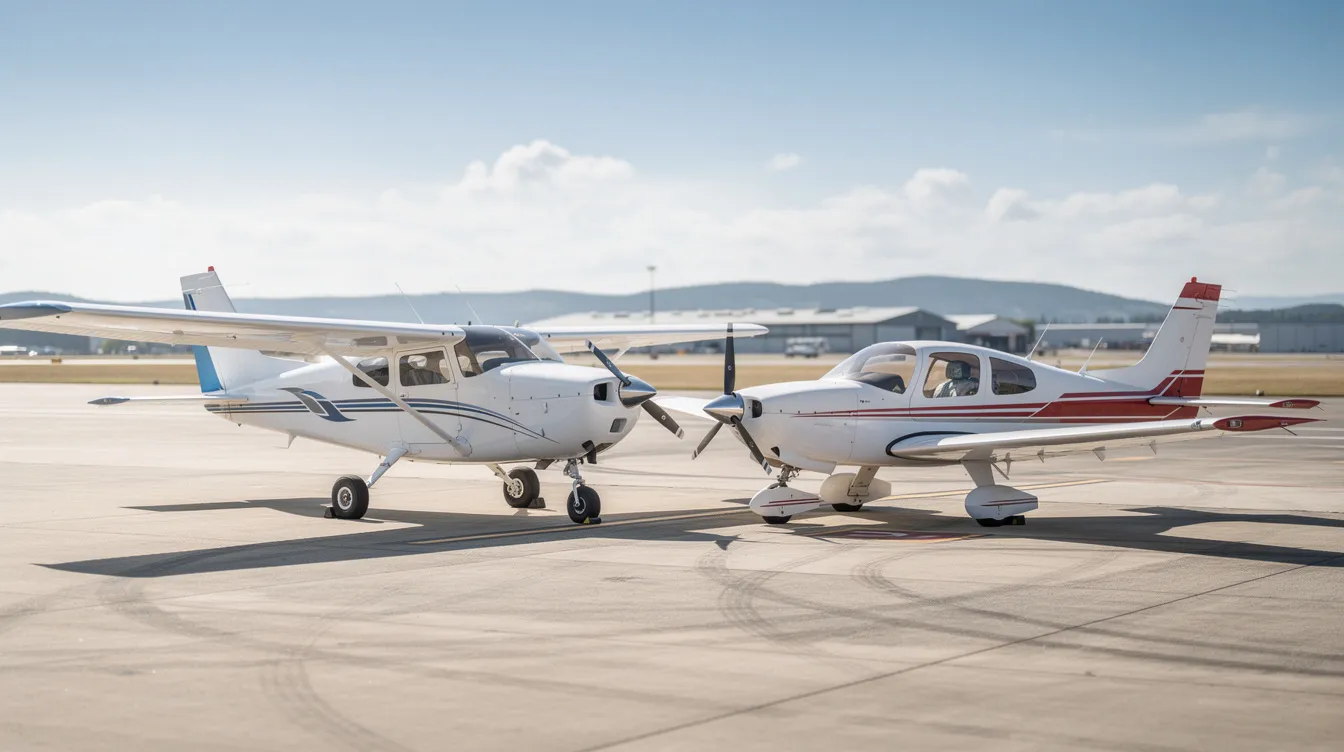
The purchase price is only the entry fee. Many first-time owners underestimate ongoing ownership costs, which dominate total spending over time.
Typical annual costs for a simple fixed gear single (Cessna 172, Piper Archer) at approximately 100 flight hours per year in North America:
|
Cost Category |
Annual Range |
|---|---|
|
Fuel |
US$4,000–$15,000 |
|
Routine maintenance and inspections |
US$2,000–$6,000 |
|
Hangar or tie down |
US$1,800–$12,000 |
|
Annual insurance (Cessna 172) |
US$2,000–$4,000 |
|
Annual insurance (low-time pilots, high-value aircraft) |
Can exceed $10,000 |
Fuel costs for aircraft can vary widely depending on airframe and flying habits. Routine maintenance and inspections typically cost $2,000 to $6,000 per year. Hangar or tie down fees can range from $1,800 to $12,000 annually depending on airport location.
Cessna 172 insurance costs range from $2,000 to $4,000 annually for straightforward policies, but annual insurance for low-time pilots can exceed $10,000 in higher-value or high-performance aircraft.
Long-term reserves matter too. Engine overhauls can cost US$18,000–$28,000. Prop overhauls, corrosion repairs, and avionics upgrades add up. Setting aside a per-hour reserve — many owners target $15–$25 per hour flown — prevents nasty surprises.
According to Flying Magazine's analysis, total fixed plus variable costs for a mid-value piston single at 100 hours per year often reach US$15,000–$35,000 annually, excluding loan payments. Compare that to renting plus on-demand charter via Jettly for the handful of missions where speed, range, or cabin size exceed a starter plane's capabilities.
Part of what makes aircraft like the Cessna 172 and Piper PA-28 strong best starter plane candidates is the ecosystem around them — not just the hardware.
Widespread use in flight schools means more instructors who know the type intimately. Standardized syllabi exist for these aircraft. Decades of operating experience create a deep pool of knowledge about quirks, maintenance patterns, and operating best practices. The Cessna 150/152 series is ideal for beginner pilots partly because nearly every CFI has time in one.
Abundant parts and shops that know the type well reduce downtime and cost for first-time owners. Compare that to buying a rare or niche aircraft where a simple magneto replacement becomes a multi-week parts search.
This mirrors how the charter world works. Jettly screens operators and aircraft, leveraging established safety frameworks and commonly flown models rather than obscure one-offs, much like structured jet card programs for corporate flyers do. The parallel is clear: proven platforms reduce risk whether you are buying a first aircraft or booking a charter flight.
For new pilots, choosing an aircraft and training environment with strong support is often safer and more confidence-building than chasing unusual models. Build confidence in great airplanes first, then explore exotic types later.
For some flyers, the best starter plane is actually no owned plane at all. Access to aircraft via charter or membership platforms can make more sense than ownership — especially for pilots whose travel needs outpace what a piston single can deliver.
Jettly's digital marketplace offers on-demand private jet charter with access to over 20,000 aircraft worldwide, instant pricing, and the ability to select aircraft size and type per trip. There is no commitment to a single airframe or the fixed costs that come with it, and frequent flyers may benefit from structured private jet memberships that unlock additional pricing and access advantages.
Scenarios where charter beats owning a first airplane:
Long distances that demand same-day returns for business travel
International trips where personal aircraft operation is impractical, especially on private jets flying internationally
Flights with 6–10 passengers exceeding any four seat aircraft's capacity
Time-sensitive travel where cruise speed and direct routings matter more than flying personally
Compare the operational burdens: aircraft maintenance management, hangar logistics, pilot currency tracking, and weather decision-making versus simply booking via a platform. Some first-time buyers are genuinely better served by training in rental aircraft while chartering complex missions.
A hybrid approach often works best. Rent or co-own a simple fixed gear trainer like a Cessna 172 or PA-28 for personal flying and pattern work, and use Jettly to cover longer or more demanding itineraries that would stretch a starter plane beyond its efficient envelope, much like the diverse options outlined in an ultimate list of charter airlines.
Many first time buyers use financing or partnerships to make a first aircraft purchase more affordable. The structure chosen affects both risk and flexibility.
Typical piston aircraft loan terms in 2025–2026:
Down payment: 15–25%
Interest rates: Mid-single digits to low-double digits, depending on credit and aircraft age
Amortization: 10–15 year periods
Sole ownership offers full control but full cost burden. Co-ownership or flying clubs share fixed costs — hangar, insurance, annual inspections — but require clear written agreements addressing maintenance standards, scheduling, upgrades, and exit options.
High-net-worth individuals sometimes form LLCs for liability management and tax planning. They should also compare the capital tied up in a first airplane with the flexibility of spending that capital on on-demand charter instead, using detailed breakdowns of how much a private jet really costs to guide that decision.
A short checklist for any financed first aircraft purchase:
Pre-buy inspection by an independent mechanic (not the seller's shop)
Title search to confirm clear ownership
Insurance quote secured before closing
Conservative cash reserve for the first year of unexpected maintenance
Review of aircraft condition including logbooks, AD compliance, and corrosion history
The best starter plane is the one that matches your primary mission, budget, skill level, and support ecosystem — not the most famous model or the fastest option on the ramp.
Summary of main categories:
Cessna 150/152: Lowest-cost training and time building for solo pilots
Cessna 172 Skyhawk: The global benchmark beginner aircraft for training and family use
Piper PA-28 (Cherokee/Archer): The low wing legend for pilots seeking that handling style
Diamond DA40 NG: Modern composite aircraft with modern avionics and fuel efficiency
Cirrus SR20: Tech-forward with integrated safety systems for pilots seeking early exposure to glass cockpits
Cessna Stationair: Heavy-haul missions after experience builds
Core principles remain constant: start with fixed gear, prioritize stability and simplicity, rent longer than ego suggests, and let actual flying habits — not daydreams — guide the aircraft purchase decision.
On-demand private jet charter can complement a starter plane by covering missions that exceed a piston single's range, speed, or passenger capacity. This is especially true for business travelers who need to cover long distances without the limitations of a small piston single.
Ready to experience private travel on your terms while you refine your first airplane plans? Explore flight options or request a quote at https://www.jettly.com, and review how affordable private jet charter pricing is structured so you can compare it honestly with ownership costs.
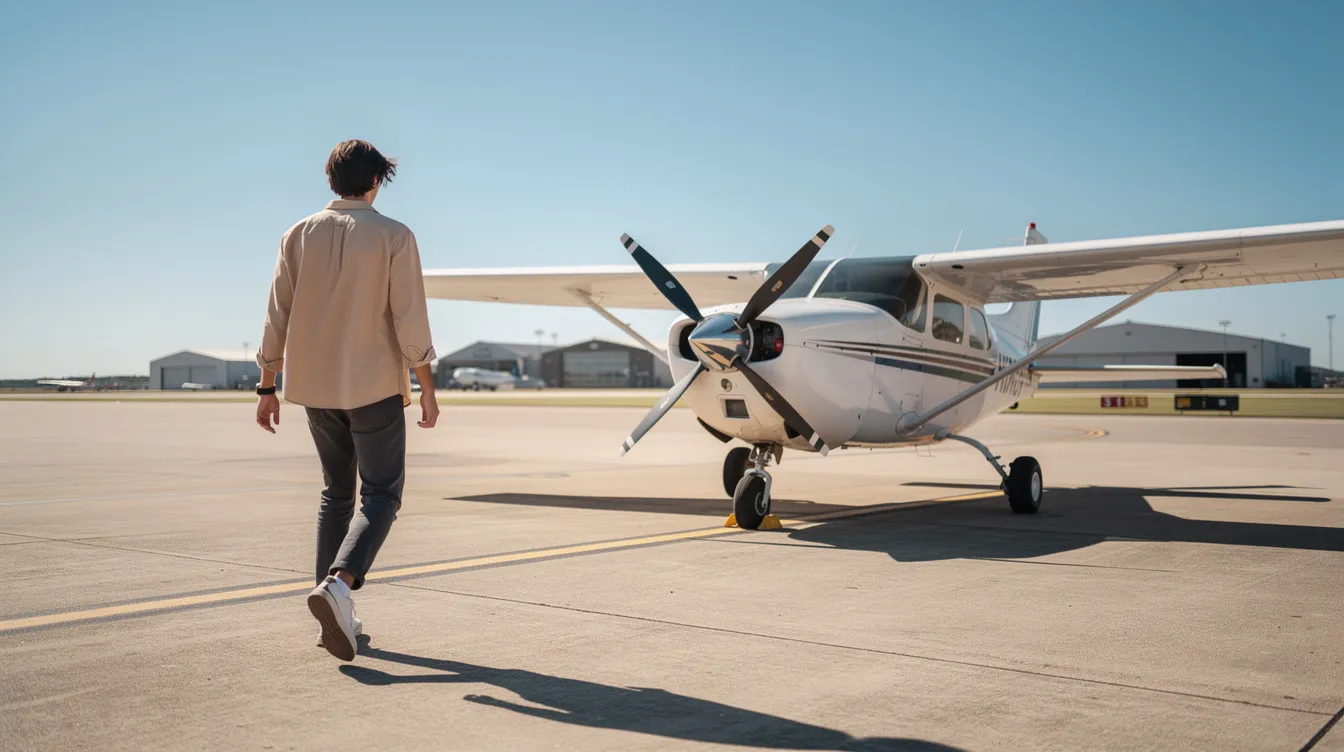
Below are common questions not fully covered in the main sections, focusing on practical next steps for new pilots and travelers.
The Cessna 172 Skyhawk is the most popular training aircraft for good reason — stability, fixed gear, excellent visibility, and the strongest support ecosystem in general aviation. But it is not always the best fit. Budget-constrained pilots may find a Cessna 150/152 more practical. Those who prefer low wing handling might gravitate toward the Piper Cherokee. And some pilots whose primary mission is fast business travel — not personal flying — may be better served by renting locally and chartering through Jettly rather than owning at all. The best airplane for you is the one aligned with your actual mission, not just the most popular trainers list.
Many pilots wait until they have 40–80 hours and at least a private pilot certificate before making a first aircraft purchase. This period of renting clarifies which missions actually get flown, what handling characteristics feel natural, and whether ownership pencils out financially. Buying before basic skills and preferences are clear often leads to regret — and an expensive resale within the first year. Flight schools and experienced instructors generally recommend logging enough time in at least two or three different aircraft types before committing.
Technically, regulations do not prevent it — but practical barriers are significant. Jet aircraft require type ratings, which involve substantial training and cost. Insurance companies demand hundreds or thousands of hours of pilot-in-command time before writing affordable policies for jet-qualified pilots. Most pilots seeking jet travel without the years of piston experience are better served chartering jets through platforms like Jettly while training in simpler aircraft. This approach delivers the speed and comfort of jet travel immediately, while flight training progresses at a safe, sustainable pace.
Ownership rarely makes financial sense at very low annual hours. If flying fewer than 50–75 hours per year, renting or joining a flying club typically costs less than sole ownership once hangar, insurance, and maintenance are included. For occasional special trips — family vacations, quick business hops — private charter provides access without fixed ownership costs, and some travelers simply buy a seat on a private jet rather than chartering the whole aircraft. Many owners who fly infrequently end up spending more per hour than they would renting, and their aircraft condition can deteriorate from sitting idle.
Efficient beginner aircraft like the Diamond DA40 NG (burning roughly 5.1 GPH of Jet-A) and light two-seat trainers (6 GPH of avgas) represent the lower end of aviation fuel consumption. Thoughtful trip planning — combining errands into single flights, flying at efficient altitudes and power settings — also reduces per-trip emissions. Some charter operators use newer, more fuel-efficient jets and offer carbon offset options. Platforms like Jettly can help coordinate access to these operators for travelers who want to minimize their environmental footprint while still flying privately, while also making it easier to get a seat on a private jet without committing to full ownership.
Choosing the best starter plane is a foundational step that shapes a pilot’s skills, confidence, and long-term flying costs. The ideal first aircraft balances stability, simplicity, and support ecosystem strength, matching your mission, budget, and experience level. Popular trainers like the Cessna 172 Skyhawk and Piper PA-28 offer forgiving handling and widespread maintenance and instruction resources, making them reliable choices for most beginners. Budget-conscious pilots may prefer the two-seat Cessna 150/152, while tech-forward learners might find modern glass-cockpit aircraft like the Diamond DA40 or Cirrus SR20 appealing.
Ownership is not the only path. Many new pilots benefit from renting first to refine their preferences and complementing their flying with private jet charter through platforms like Jettly for longer or more complex trips. This hybrid approach maximizes flexibility, reduces fixed costs, and provides access to a broad range of aircraft tailored to each mission.
Ultimately, the best starter plane is the one that fits your real flying needs today, supports your learning journey safely, and integrates smoothly with your broader travel plans. Ready to experience private travel on your terms? Explore flight options or request a quote at https://www.jettly.com.
Share this post:
Jay Franco Serevilla
Jul 29, 2026
|
5
min read
Discover tips and trends in the industry.
5
min read
Travel Insurance Airfare: How Flight Insurance Works for Private and Commercial Air Travel
Travel insurance for airfare is crucial for protecting your investment in non-refundable tickets against cancellations and delays. Whether you're flying commercially or chartering a private jet, understanding the nuances of flight insurance can save you from significant financial loss. This guide covers what flight insurance entails, its benefits, and when it's worth purchasing.
Read More
5
min read
Vonlane vs. Private Jet Charter: How Luxury Motorcoach Travel Compares to Jettly
This article compares Vonlane, a luxury motorcoach service in Texas, with Jettly, a private jet charter platform. While Vonlane offers a comfortable and convenient ground travel experience, Jettly provides flexibility and privacy for air travel. Discover which option suits your travel needs best.
Read MoreStay updated with our latest insights and tips to elevate your journey with us.
MEMBERSHIPS AND ASSOCIATIONS



Disclaimer: Jettly operates as a charter broker, offering access to a global digital jet charter marketplace. Jettly is not a direct air carrier and does not own or operate aircraft. All advertised flights are conducted by third-party air carriers that are fully licensed and hold the appropriate Part 135 or Part 121 certifications issued by the Federal Aviation Administration (FAA) or equivalent regulatory authorities under U.S. or foreign law. Jettly complies fully with the U.S. Department of Transportation's Part 295 and Part 298 Charter Broker regulations. Jettly does not carry additional liability insurance. Passengers are covered by aircraft operator insurance. TICO: 50023770


