


Login
Get Instant Pricing On 23,000+ Aircraft

>
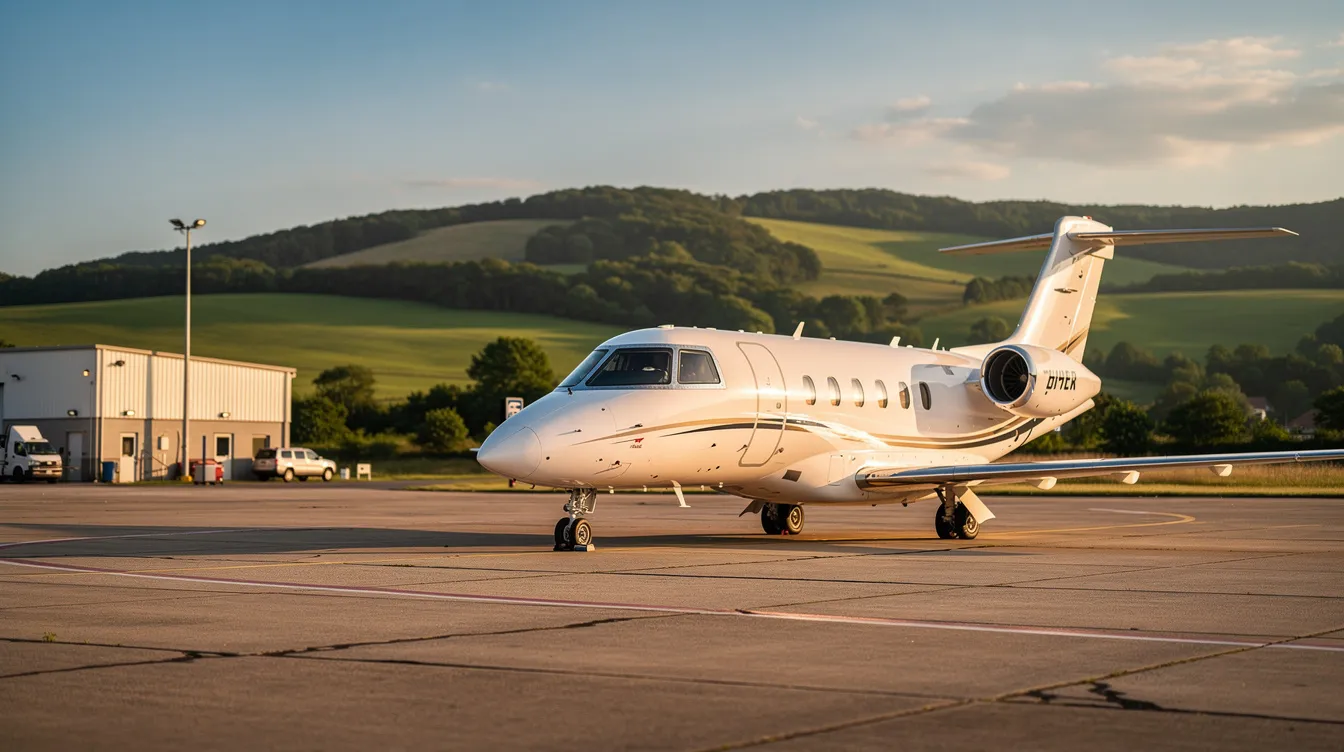
Choosing the best small jet aircraft comes down to matching the right plane to the right mission. Whether it's a two-hour executive hop or a family trip to a resort town, small jets offer a compelling middle ground between commercial airlines and larger private jets. This guide breaks down the top light jet models and very light jets available for charter in 2026, with real specs, real trade-offs, and practical advice for booking through a digital platform like Jettly.
The best small private jets for charter in 2026 include the Cirrus Vision Jet, Embraer Phenom 100EV, HondaJet Elite II, Cessna Citation M2, Cessna Citation Mustang, Pilatus PC-24, and the Phenom 300E/Learjet 75 Liberty at the upper end.
Light jets and very light jets save 4–6 hours per round trip compared to commercial airlines and can access over 5,000 airports not served by commercial flights.
Small jets typically seat 4–8 passengers and are grouped into very light jets and light jets, balancing fuel efficiency, range, cabin comfort, and charter cost for trips of 300–1,500 nautical miles.
Jettly is a digital charter marketplace offering access to over 20,000 unique aircraft, with instant pricing and on-demand booking-no ownership or long-term contracts required.
Small private jets sit in a sweet spot. They cost less per hour than midsize jets or heavy iron, but they still skip crowded terminals, fixed airline schedules, and hours of ground time. For private aviation, that trade-off matters.
A small private jet can operate from runways as short as 3,000 feet, opening up thousands of regional and secondary airports that travelers can quickly identify using Jettly's airport locator tool that commercial aircraft and larger jets cannot efficiently use. That means a four- to six-hour door-to-door commercial trip-think New York to Chicago, or London to Berlin-often becomes a 1.5- to 2.5-hour direct flight with minimal ground time. Small jets provide rapid, flexible scheduling through efficient boarding and are preferred for regional business travel.
Passenger capacity on these aircraft ranges from four passengers to seven or eight, depending on the model. Maximum range typically falls between 800 and 1,600 nautical miles-enough for most regional missions. Light jets can reduce travel time significantly compared to commercial flights, and charter pricing is often lower per hour than many travelers expect. Through Jettly, customers can compare these trade-offs in real time, filtering by aircraft type, route, and budget without long-term contracts.
Small private aircraft include several categories-high-performance pistons, turboprops, VLJs, and light jets-but this guide focuses on jet aircraft certified for single-pilot or two-pilot operations, typically under 20,000 lb maximum take-off weight.
Very light jets have a maximum take-off weight under 12,500 pounds, usually carry three to five passengers in comfort, and cruise at 300–400 KTAS with ranges around 1,100–1,300 nm. Very light jets focus on efficiency and low operating costs. Very light jets can access smaller airports that even some light jet models cannot reach. Examples: Cirrus Vision Jet, Embraer Phenom 100EV.
Light jets are slightly larger, seating five to seven passengers, and cruise at 400–450 KTAS with ranges of 1,500–2,000+ nm. They offer more cabin space, often include a fully enclosed lavatory, and carry more baggage. Examples: HondaJet Elite II, Cessna Citation M2, Cessna Citation Mustang.
For reference, turboprops cruise at 260–330 KTAS with ranges of 1,700–1,800 nm, while high-performance piston singles cruise at 150–210 KTAS with 900–1,100 nm range-useful context when evaluating the fastest VLJ options. Operating costs for small jets are generally lower than midsize jets across the board.
Jettly's platform groups aircraft into these categories-VLJ, light jet, midsize, and more-so users can quickly shortlist the right class for their mission, similar to the broader private aviation landscape described in this guide to charter airlines and private flights.
This is the core of the guide: a curated list of specific light jet models and VLJs widely available through charter fleets and Jettly's network in 2026. The selection balances fuel efficiency, speed, cabin comfort, and real-world charter availability rather than focusing only on purchase price or raw performance. Each profile below is oriented toward charter customers-what trips the aircraft handles well, and where it falls short.
The Cirrus Vision Jet is a single-engine turbofan VLJ-the first civilian certified single aircraft in its class. The Cirrus Vision Jet has a range of about 1,200 nautical miles and a maximum cruise speed of roughly 300–317 KTAS, depending on the G2+ or G3 variant. Built by Cirrus Aircraft as part of the broader Textron Aviation competitive landscape, this Vision Jet was designed primarily for owner-pilots but is available on select charter routes.
The cabin seats up to six passengers (five adults plus two children in some configurations) in a non-stand-up layout with panoramic windows. It's best for short regional missions of 300–800 nm carrying two to four passengers-think Dallas to Santa Fe or Frankfurt to Nice.
What sets it apart is safety technology. The Cirrus Vision Jet includes a Cirrus Airframe Parachute System (CAPS) that can safely land the entire aircraft under a parachute in an emergency. The Cirrus Vision Jet also has a Safe Return autoland feature for emergencies, powered by Garmin's Autoland system. These advanced safety features make it unique among jet aircraft in this size class.
Its takeoff distance is roughly 3,192 feet over a 50-foot obstacle, and fuel capacity supports practical missions well under 1,000 nm with full passengers.
The Embraer Phenom 100EV is the upgraded version of the original Phenom 100, powered by PW617F1-E jet engines with a max cruise speed around 406 KTAS and a maximum range of approximately 1,178 nautical miles with four passengers. The Embraer Phenom 100EV is celebrated for its spacious cabin and reliability.
The Phenom 100EV features a four-seat club layout expandable to up to six passengers, with an enclosed lavatory at the rear and roughly 70 cubic feet of baggage space. Its Prodigy Touch flight deck (Garmin G3000-based) delivers advanced avionics with synthetic vision and autothrottle. The runway overrun awareness and alerting system (ROAAS) is a standout safety feature, and the aircraft is certified for single pilot operation, though charter operators typically fly with two crew.
Takeoff distance comes in at about 3,190 feet at sea level-excellent for shorter runways and high-elevation fields. Typical missions include New York to Chicago, London to Madrid, or Toronto to Halifax with three to four passengers.
Jettly users often see the Phenom 100EV priced competitively against larger light jets while still delivering a true business travel experience. Its purchase price of around $4.75 million new keeps fleet availability strong.
The HondaJet Elite II, FAA-certified in November 2022, is the third-generation flagship of the HondaJet line. Its signature over-the-wing engine mount design frees up cabin space, reduces exterior noise, and improves aerodynamic efficiency-a genuinely different approach from conventional small jets.
The numbers are strong. The HondaJet Elite II has a maximum range of 1,547 nautical miles with four passengers, a max cruise of approximately 422 KTAS, and a service ceiling of 43,000 feet. Takeoff distance stays under 3,700 feet at sea level. Garmin's Autoland system is available in the HondaJet Elite II, adding another layer of advanced technology.
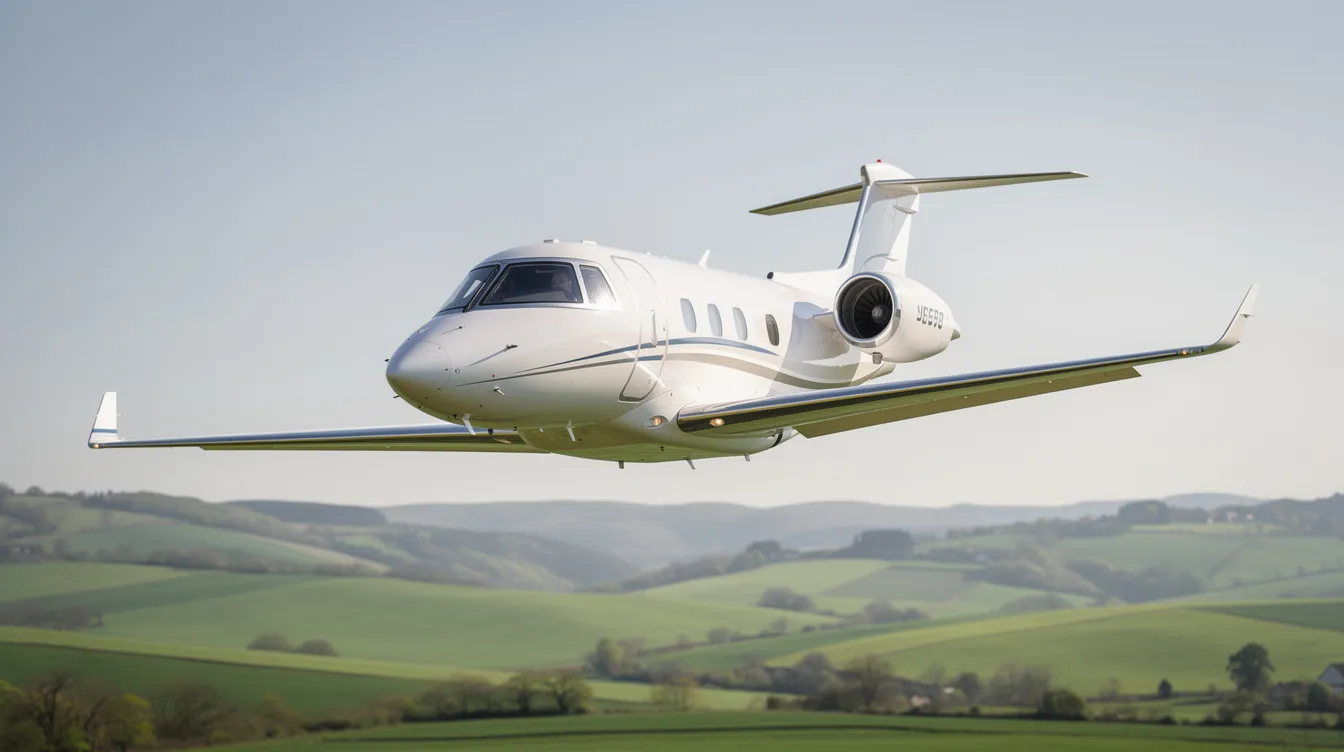
The cabin is the largest among VLJs at roughly 290 cubic feet. It features a fully enclosed lavatory with skylights, plush seating in leather swivel chairs, and a speakerless Bongiovi audio system. The result is noticeably quieter than many older light jets-a meaningful difference on a two-hour business trip.
The HondaJet Elite II's combination of fuel efficiency, speed, cabin comfort, and shorter runway access makes it a standout among the best small private jets. Its passenger capacity of four to six in typical configuration handles most executive and family missions in the 800–1,200 nm range. Many modern charter fleets now include the HondaJet Elite II, and Jettly's marketplace regularly features it.
The Cessna Citation M2, including the Gen2 update from Textron Aviation, is a light jet built on the CJ1 lineage. Powered by two Williams FJ44-1AP-21 engines, it delivers a maximum cruise speed of roughly 404 KTAS. The Cessna Citation M2 Gen2 has a range of approximately 1,550 nautical miles.
The Citation M2 seats up to seven occupants, including the pilot, but optimal comfort runs to four or five passengers with a full-size enclosed lavatory and carry-on baggage. The Garmin G3000 flight deck, synthetic vision, and optional autothrottle support productivity-focused business travel. Power outlets and connectivity in newer models keep frequent flyers working en route.
Common missions include Los Angeles to Denver, London to Prague, or New York to Miami-often enabling same-day out-and-back trips that would require overnight stays via commercial airlines. The aircraft can fly occasionally for leisure or frequently for corporate needs with equal ease.
On Jettly, the Cessna Citation M2 is often recommended when passengers need more seats or range than a Phenom 100EV or HondaJet but want light jet economics rather than midsize jet costs.
The Cessna Citation Mustang was an early VLJ success story, produced from 2006 to 2017 with a four-passenger club cabin and roughly 1,150–1,200 nm maximum range at approximately 340-knot max cruise. Though production ended, many Mustangs remain active in charter fleets worldwide in 2026, making it one of the most accessible entry-level private jet options.
The interior is compact but comfortable for two to four passengers on 300–800 nm legs. A small lavatory, G1000-based cockpit, and low operating costs make it a practical solution for small businesses moving teams of two to three people. The Cessna Citation Mustang holds its own on short intra-European or intra-U.S. hops where budget matters more than cabin space.
For personal use or budget-conscious business travel, Jettly's inventory frequently surfaces Citation Mustang options as an entry-price jet alternative when the mission profile allows a smaller, older jet aircraft.
The Pilatus PC-24 earns its "Super Versatile Jet" label. Launched in the mid-2010s, it combines light jet speed-around 440 KTAS-with genuine short takeoff and landing capability, including operations from grass, dirt, or gravel strips. The Pilatus PC-24 can land on short runways, enhancing access to airports that most jet aircraft of similar size simply cannot reach.
The Pilatus PC-24 typically carries six to eight passengers over a maximum range of roughly 2,000 nautical miles. Its cabin volume approaches that of a small midsize jet, with a spacious cabin, stand-up headroom, and a large cargo door that swallows bulky luggage-skis, golf bags, even medical equipment.
Charter use cases lean toward remote or secondary airports: mountain ski destinations, island strips, mining sites, or corporate retreats with limited infrastructure. It fills the gap when clients are choosing between a turboprop and a light jet but need jet-level speed plus rough-field performance.
On Jettly, the PC-24 is often recommended for missions where reaching the final destination directly matters more than minimizing hourly rate, and it sits alongside a broader inventory of private charter aircraft that cover everything from VLJs to long-range jets.
Some travelers shopping for small jets ultimately need a step up. The Learjet 75 Liberty and Embraer Phenom 300E both offer ranges exceeding 2,000 nautical miles and seating for six to eight passengers. The Embraer Phenom 300E has a top speed of Mach 0.8 and is one of the fastest and longest-range light jets in production. The Embraer Phenom 300E features a runway overrun awareness system, extending the Embraer safety pedigree into this class.
These larger aircraft are faster and roomier than VLJs, with advanced avionics and cabin amenities approaching midsize jets. However, they come at higher charter rates and fuel burns than smaller models like the HondaJet Elite II or Citation M2.
While not the smallest in physical size, they are still considered among the best small private jets for executive teams needing transcontinental reach without full midsize or super-midsize costs. For reference, even more specialized models like the SyberJet SJ30 push range to 2,500 nautical miles, though charter availability is limited. Jettly's platform lets users compare these larger light jets side by side with VLJs to decide whether extra seats and speed justify higher trip costs.
Fuel efficiency and operating costs shape what charter customers actually pay, even though the fuel bill isn't itemized on every invoice. More fuel-efficient aircraft lower both direct trip costs and environmental footprint-increasingly relevant for corporate ESG policies.
Small jets typically burn 50–70 gallons of fuel per hour. VLJs like the Cirrus Vision Jet and Embraer Phenom 100EV sit at the low end of that range, while larger light jets (Phenom 300E, Learjet 75 Liberty) can exceed 150–200 gallons per hour. That difference adds up. On a 900 nm mission, a HondaJet Elite II delivers comparable comfort to a midsize jet at a fraction of the fuel cost, making small jets ideal for efficiency on short to mid-range trips.
Jettly's marketplace can be filtered to favor more fuel-efficient aircraft on specific routes, and many operators offer carbon offset or sustainable aviation fuel options. Travelers who fly more frequently can leverage private jet memberships to lock in value while still choosing efficient aircraft. Small jets offer efficiency for short to mid-range trips that simply don't require burning midsize-jet fuel loads.
The table below summarizes key performance metrics for the top small jets discussed:
|
Aircraft Model |
Max Range (nm) |
Max Cruise Speed (KTAS) |
Passenger Capacity |
Takeoff Distance (ft) |
Typical Fuel Burn (gallons/hr) |
Notable Features |
|---|---|---|---|---|---|---|
|
Cirrus Vision Jet |
~1,200 |
300–317 |
5–6 |
3,192 |
50–60 |
CAPS parachute, Safe Return autoland |
|
Embraer Phenom 100EV |
~1,178 |
406 |
4–6 |
3,190 |
60–65 |
Runway overrun awareness, Garmin G3000 |
|
HondaJet Elite II |
1,547 |
422 |
4–6 |
3,700 |
70–80 |
Over-wing engines, Autoland option |
|
Cessna Citation M2 Gen2 |
1,550 |
404 |
Up to 7 |
3,210 |
70–75 |
Garmin G3000, enclosed lavatory |
|
Cessna Citation Mustang |
~1,200 |
340 |
4 |
~3,300 |
55–60 |
Entry-level VLJ, G1000 avionics |
|
Pilatus PC-24 |
~2,000 |
440 |
6–8 |
~2,930 |
80–90 |
Short-field, rough runway capable |
|
Learjet 75 Liberty |
2,080 |
~450 |
6–8 |
~3,500 |
150–200 |
High speed, long range |
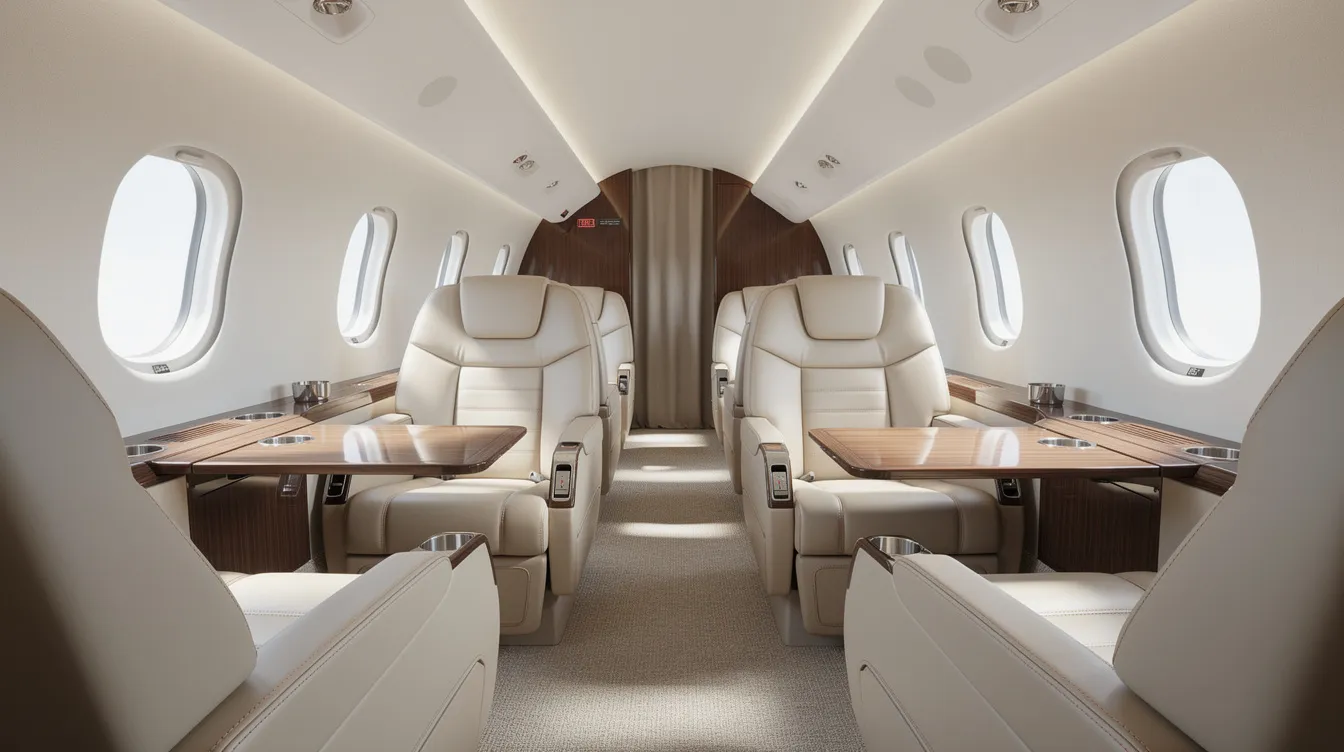
Modern small jets now offer genuine business-class comfort, even if they lack the stand-up headroom found in larger private jets. Small jets prioritize cabin comfort and modern avionics across the category.
Cabin differences matter. The Vision Jet's panoramic windows and family-friendly layout work for weekend getaways. The HondaJet Elite II's quiet cabin with skylit lavatory and stylish plush seating suits executive boards. The Phenom 100EV and Citation M2's club seating with enclosed lavatories and optional connectivity support productive work.
Onboard technology for business travel includes Wi-Fi (where installed), USB and 110V outlets, cabin management systems, and LED lighting. While galleys in small jets are limited, catering can be pre-arranged through charter brokers like Jettly, including special dietary needs and premium beverages.
Jettly passengers can specify cabin expectations-Wi-Fi required, pet-friendly, enclosed lavatory-during the quoting process so the platform matches them with suitable small jets, and they can enhance the onboard experience further with dedicated in-flight catering for private jets. A single passenger seat or the whole cabin can be tailored to the traveler's needs.
Safety is a critical concern in small jet design, and modern light jets and VLJs address it head-on. Many small jets have advanced safety features for secure operation, including autothrottle, synthetic vision, TCAS traffic-collision systems, and runway awareness. Modern jets often include envelope protection to prevent loss-of-control scenarios.
Many light jets and VLJs-including the Cirrus Vision Jet, Phenom 100EV, HondaJet Elite II, and Citation M2-are certified for single-pilot operation but are usually flown with two pilots in charter, adding redundancy. Single-pilot operation is a feature of many small jets, but professional charter operators choose dual crew for safety margins.
Key safety markers to look for: operators audited by ARGUS, Wyvern, or IS-BAO; newer airframes with advanced avionics; and safety features like autothrottle, autoland, TCAS, and the runway overrun awareness and alerting system found on Embraer models.
Jettly works only with licensed operators and lets customers request safety information on operators and aircraft before booking. Partner operators, such as those featured in profiles like Dexter Air Taxi, underline this focus on regulated, professional service. Professional maintenance and pilot training matter more than aircraft size alone-small jets achieve strong safety records under proper oversight.
Owning a small private jet-whether a Cirrus Vision Jet, Phenom 100EV, or HondaJet Elite II-means millions upfront plus approximately $500,000 or more annually in fixed costs for crew, maintenance, insurance, and hangar, as detailed in guides on how much a private jet costs. Ownership suits those flying 200+ hours annually. For most travelers, that math doesn't work.
Charter is more economical below 100 flight hours per year. On-demand charter via Jettly means paying per trip, choosing different small jets each time, and avoiding the responsibilities of ownership entirely. Renting allows access to various aircraft without ownership costs. Jet card programs are ideal for 50–150 flight hours annually, bridging the gap for moderate-frequency flyers. Digital private jet charter platforms offer instant pricing and booking, removing friction from the process, and can be evaluated against the best private jet charter companies to ensure safety, fleet quality, and service standards align with your needs.
Consider a company with quarterly regional board meetings. Instead of tying up capital in a depreciating asset, it can charter a HondaJet Elite II or Phenom 100EV through Jettly as needed, using it as a flexible NetJets alternative. Each trip gets the right aircraft for the mission-no compromise, no long-term cost burden.
Jettly's digital platform lets travelers compare pricing for multiple small jet types on a specific route instantly, browsing a wide range of private charter aircraft and making the economic trade-offs between aircraft like the Citation Mustang and Citation M2 clear in practice.

Start with four factors: mission distance and number of passengers, airport options at both ends, budget, and cabin expectations. These matter more than brand loyalty.
A simple matching framework:
1–3 passengers under 800 nm: VLJs like the Cirrus Vision Jet or Citation Mustang deliver cost efficiency and access to smaller airports.
3–5 passengers up to 1,500 nm: Phenom 100EV, HondaJet Elite II, or Citation M2 balance comfort, speed, and range.
Larger groups or remote strips: Pilatus PC-24 or Phenom 300E for passenger capacity, baggage, and field performance.
Don't overlook non-obvious variables: runway length at origin and destination, need for an enclosed lavatory on longer legs, baggage volume for golf bags or skis, and whether in-flight Wi-Fi is essential. For those who fly occasionally, a more practical solution is comparing options trip by trip rather than committing to a single aircraft type, especially when you understand affordable aeroplane rental costs and options across charter, clubs, and other access models.
Jettly simplifies this by presenting curated options for each trip request-aircraft photos, specs, operator details, and instant pricing-so users don't need deep technical knowledge. Try different itineraries and aircraft types within minutes using Jettly's cost estimator.
These FAQs address common questions not fully covered above, especially around pricing, booking speed, route limitations, and comfort for specific traveler needs, complementing broader industry overviews such as guides all about NetJets and other major providers.
Older VLJs like the Cessna Citation Mustang or early Phenom 100 variants tend to offer the lowest hourly charter rates for one to three passengers. Actual pricing varies by route, date, and availability. Jettly's instant quotes show side-by-side costs for multiple aircraft, sometimes including turboprops as even cheaper alternatives, and can be interpreted alongside broader guidance on how much a private jet costs to operate or charter. While the Cirrus Vision Jet can also be affordable, its charter fleet availability is more limited and region-specific compared with Mustangs and small Citations, since it is designed primarily for owner-pilots, so using services that offer affordable private jet charter can help surface the most cost-effective options on your route.
Most small jets and VLJs do not have nonstop U.S. coast-to-coast range. Instead, they handle legs of roughly 1,000–1,500 nautical miles, often requiring one fuel stop for transcontinental trips. For nonstop coast-to-coast, travelers usually move up to midsize or super-midsize jets. Many Jettly users accept a brief stop to keep costs down with a light jet-for example, Los Angeles to New York in a Phenom 100EV typically plans with a single stop in the Midwest, fitting into wider strategies on how to get a seat on a private jet easily without paying for a larger nonstop aircraft.
For many routes, Jettly can secure a small jet such as a Citation M2, Phenom 100EV, or HondaJet Elite II within 12–24 hours' notice, sometimes faster depending on aircraft positioning, which pairs well with tactics for buying a seat on a private jet through shared flights and empty legs. Compare that to last-minute airline bookings, which may be sold out or priced at a premium-and still involve check-in, security lines, and fixed schedules. Urgent medical, legal, or corporate trips often justify same-day departures that Jettly coordinates through its operator network-no crowded terminals involved.
Most VLJs and light jets do not have full stand-up cabins, but they offer ergonomic, reclining seats, good legroom, and quiet cabins designed for flights of one to three hours. Models like the HondaJet Elite II and Phenom 100EV feel more spacious than older compact jets due to clever cabin design. Taller travelers who value space can use Jettly filters to consider slightly larger aircraft like the Phenom 300E or Pilatus PC-24, which offer more headroom and aisle space.
While larger private jets have a higher footprint per passenger than commercial aviation, choosing fuel-efficient small jets-Vision Jet, HondaJet Elite II, Phenom 100EV-reduces fuel burn compared with larger private jets for similar missions. Many operators in Jettly's network support carbon offset programs and, in some regions, sustainable aviation fuel options. Users can request fuel-efficient aircraft and carbon-offset options at the quote stage, aligning travel with corporate sustainability goals while still leveraging vetted operators like Zenflight through Jettly's network.
There is no single best small jet aircraft. The right choice depends on route length, passenger count, airport access, and budget. Standouts like the Cirrus Vision Jet, Embraer Phenom 100EV, HondaJet Elite II, Citation M2, Cessna Citation Mustang, and Pilatus PC-24 cover most missions that charter customers face in 2026.
Light jets and very light jets outperform commercial airlines for many regional business and family trips by saving time, offering privacy, and accessing thousands of smaller airports that commercial flights and larger aircraft cannot serve efficiently. For five passengers heading to a mountain resort or an executive team flying between regional offices, small jets deliver where it counts.
Jettly makes these aircraft accessible without ownership through its global digital charter marketplace, offering instant pricing, a wide inventory of 20,000+ aircraft, and transparent operator information.
Ready to experience private travel on your terms? Explore flight options or request a quote at https://www.jettly.com.
Share this post:
Jay Franco Serevilla
Jul 29, 2026
|
5
min read
Discover tips and trends in the industry.

5
min read
US Commercial Airline Fatalities by Year: Trends, Data, and Safety Progress
U.S. commercial airline fatalities have significantly decreased over the decades, showcasing a remarkable improvement in aviation safety. With many recent years recording zero fatalities, travelers can feel confident in the safety of commercial flights. This article analyzes trends, key accidents, and the role of regulatory changes in shaping the current landscape of airline safety.
Read More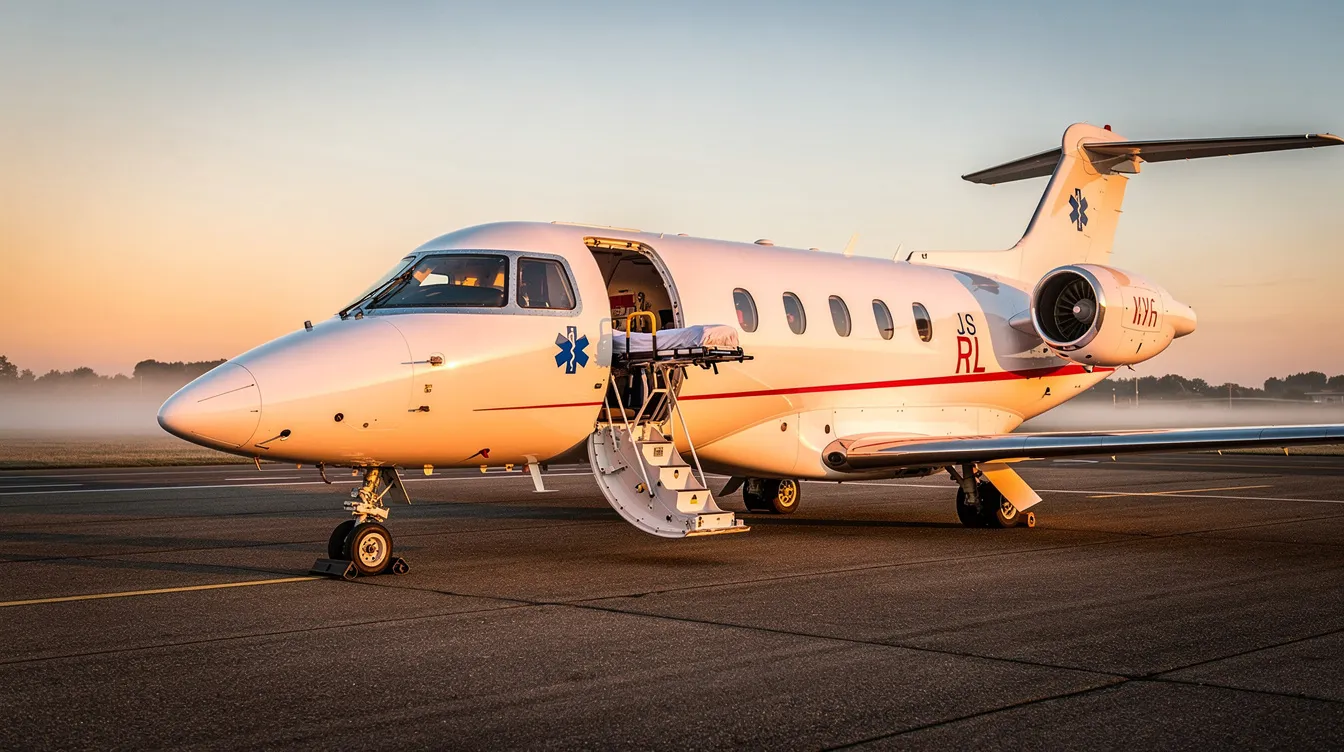
5
min read
International Medical Flight Cost: What to Expect and How to Control It
International medical flight costs can range from $20,000 to over $200,000, influenced by factors like distance, aircraft type, and medical care level. Understanding these costs and exploring options like private jet charters can help families make informed decisions during emergencies. Platforms like Jettly offer tools for comparing aircraft and pricing to optimize transport solutions.
Read MoreStay updated with our latest insights and tips to elevate your journey with us.
MEMBERSHIPS AND ASSOCIATIONS



Disclaimer: Jettly operates as a charter broker, offering access to a global digital jet charter marketplace. Jettly is not a direct air carrier and does not own or operate aircraft. All advertised flights are conducted by third-party air carriers that are fully licensed and hold the appropriate Part 135 or Part 121 certifications issued by the Federal Aviation Administration (FAA) or equivalent regulatory authorities under U.S. or foreign law. Jettly complies fully with the U.S. Department of Transportation's Part 295 and Part 298 Charter Broker regulations. Jettly does not carry additional liability insurance. Passengers are covered by aircraft operator insurance. TICO: 50023770


