


Login
Get Instant Pricing On 23,000+ Aircraft

>
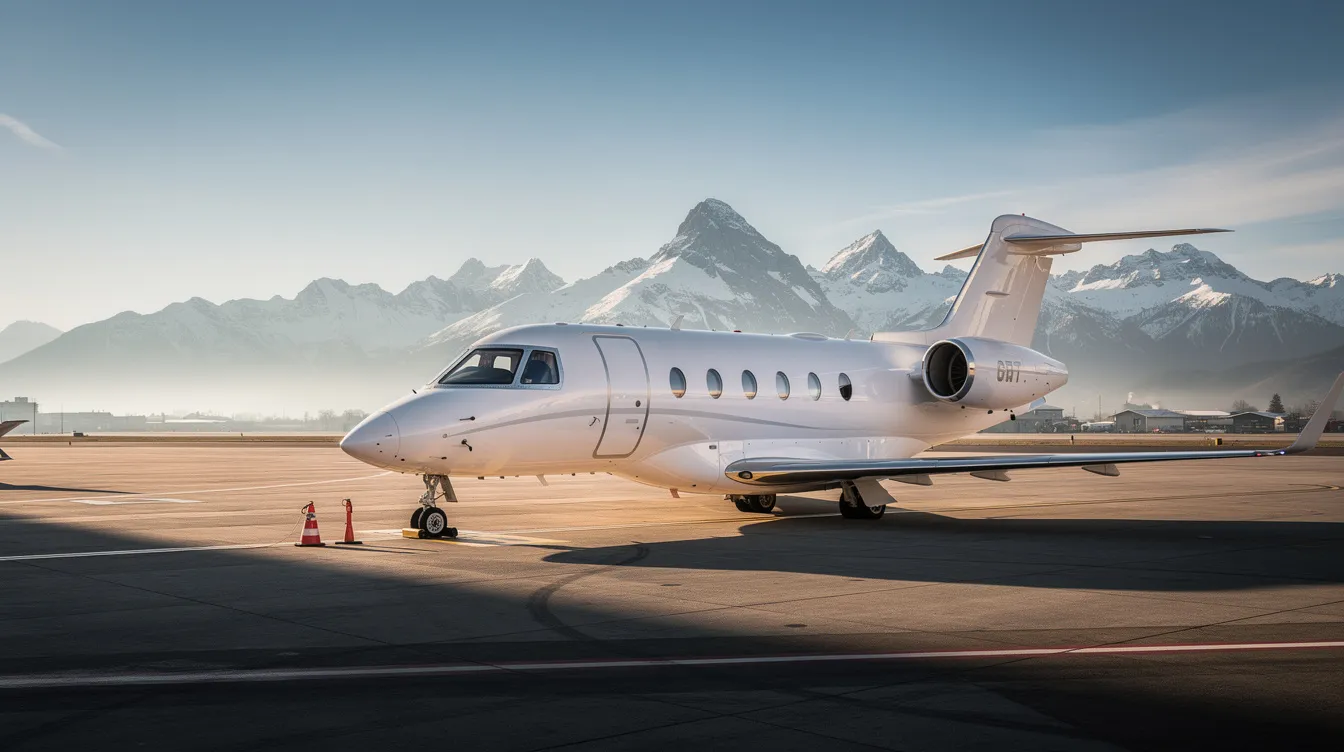
Choosing the best private airplanes in 2026 means matching the aircraft to the mission: the top options range from personal piston and turboprop planes to large-cabin and ultra-long-range jets, with standouts like the Cirrus SR22T, Embraer Phenom 300E, Bombardier Global 7500, and Gulfstream G700. Whether the goal is a two-hour regional hop, a coast-to-coast business trip, or an intercontinental family journey, the right choice comes down to trip distance, passenger count, cabin expectations, and budget.
For frequent flyers, corporate executives, and high-net-worth travelers who want the flexibility and comfort of private aviation without the commitment of ownership, knowing how these aircraft compare can lead to a better charter decision and a more efficient use of money. This guide breaks down the major private airplane categories, compares key models and specs, explains what makes one aircraft a better fit than another, and looks at charter versus ownership, safety, sustainability, and how to book the right aircraft through Jettly’s digital on-demand charter platform with transparent pricing and broad global access.
The best private jets in 2026 span personal aircraft, light jets, super midsize jets, and large cabin jets-each suited to different trip lengths, passenger counts, and budgets.
"Best" depends entirely on mission: a turboprop excels at short regional routes and challenging airports, while ultra-long-range jets handle nonstop intercontinental flights.
Typical maximum range runs from roughly 400 nautical miles for piston singles up to 8,000+ nautical miles for flagship large-cabin jets, with cruising speed varying from 160 knots to above Mach 0.90.
Chartering through Jettly avoids multi-million-dollar ownership costs while providing access to 20,000+ aircraft worldwide, with instant pricing and transparent booking.
This guide concludes with FAQs and a call to explore Jettly's charter options at jettly.com.
Private airplane models vary widely depending on mission requirements and passenger counts. A Cirrus SR22T serving a weekend getaway is a different tool than a Bombardier Global 7500 crossing oceans. Defining "best" requires grounding the conversation in how the aircraft actually performs for real travelers-not just what looks impressive on a spec sheet. The best private jets often balance speed, range, cabin comfort, and technology.
Key evaluation criteria include:
Maximum range - practical nonstop distance with realistic payloads and fuel reserves, not best-case manufacturer figures.
Cruising speed - long-range cruise matters more than headline top speed, since sustained max speed burns fuel fast.
Runway performance - shorter takeoff and landing distances open access to thousands of additional airports.
Reliability and dispatch rate - mature models with strong OEM maintenance networks keep schedules intact.
Cabin comfort - standing height, seat layout, noise levels, lavatories, Wi-Fi, and sleeping quarters.
Baggage capacity - volumetric and weight limits, especially with specialty gear like skis or golf clubs.
Operating cost per flight hour - fuel, crew, maintenance, airport fees, and repositioning.
A personal aircraft-typically owner-flown, simpler, and often piston- or turboprop-powered-differs sharply from the jets dominating charter fleets and business aviation. For charter passengers, door-to-door time savings, flexible departures, and the ability to use smaller airports often matter more than a few extra knots.
The sections below group aircraft by category and mission profile, featuring models you can actually request through Jettly's marketplace.
Private jets are categorized by size and capability. Understanding where each type fits helps narrow the field before comparing individual models. Here is a breakdown by category, with guidance on choosing the right aircraft for a given trip.
Very Light Jets (VLJ): Entry-level jets are often referred to as Very Light Jets (VLJ). These jets typically seat 4–6 passengers, are designed for short trips, and offer a cost-effective entry point into jet travel. VLJs are ideal for short regional flights and can operate from smaller airports.
Light Jets: Light jets typically seat 4–8 passengers for short trips. They offer higher speed and range than VLJs, making them suitable for regional and short-haul missions. Light jets are popular for business and leisure travel under three hours.
Midsize Jets: Midsize jets allow for coast-to-coast flights with more comfort. They generally seat 8–12 passengers, provide stand-up cabin height, and offer greater range and amenities than light jets. Midsize jets are a strong choice for longer domestic or short international routes.
Large Jets: Large jets are designed for transcontinental and intercontinental travel. With seating for 12–19+ passengers, these jets feature multiple cabin zones, enhanced comfort, and amenities such as conference rooms and sleeping quarters. Large jets are ideal for long-haul business or family trips.
Ultra Long Range Jets: Ultra long range jets can connect distant cities nonstop. These aircraft offer the highest range (5,500–8,000+ nautical miles), fastest cruising speeds, and the most luxurious cabins, making them the flagship segment for global travel.
Piston personal aircraft - 2–4 seats, cruising speed around 160–190 knots, maximum range roughly 400–1,000 nautical miles. Examples: Cirrus SR22T, Cessna 182 Skylane, Diamond DA50 RG.
Single-engine turboprops - 4–9 seats, ~250–310 knots, range up to ~1,800 nm. Example: Pilatus PC-12 NGX.
Very Light Jets (VLJs) and light jets - entry-level jets are often referred to as Very Light Jets. Light jets typically seat 4–8 passengers for short trips, cruise at Mach 0.70–0.80, and cover 1,300–2,000 nm. Examples: Embraer Phenom 300E, HondaJet Elite II, Cessna Citation M2 Gen2.
Midsize and super midsize jets - 8–12 seats, Mach 0.80–0.85, range 2,500–4,000 nm. Midsize jets allow for coast-to-coast flights with more comfort. Examples: Bombardier Challenger 350/3500, Cessna Citation Longitude.
Large cabin and ultra-long-range jets - 12–19+ seats in multiple zones, Mach 0.85–0.93, range 5,500–8,000+ nm. Large jets are designed for transcontinental and intercontinental travel. Examples: Gulfstream G700, Bombardier Global 7500, Dassault Falcon 8X.
Jettly's search filters allow users to choose category, range, and cabin size to match individual trip needs, surfacing the right aircraft and nearby airports with its airport locator tools for any route.
In 2026, "personal aircraft" covers owner-flown piston singles, small turboprops appearing in niche charter fleets, and high-performance training platforms. These light aircraft are the entry point to private aviation for pilots and small groups alike. Some also appear as charter options for short regional routes or access to remote strips, complementing broader guidance on choosing the best personal plane for ownership or frequent use.
Standout piston singles include:
Cirrus SR22T - ~180 knots cruise, ~1,000 nm range, 4 seats. A benchmark in personal aviation thanks to the Cirrus Airframe Parachute System (CAPS), which deploys a full-aircraft parachute in emergencies. Cirrus Aircraft has made this a standard across its SR-series and even its light sport aircraft–derived models. Retractable gear variants in this segment add efficient performance.
Cessna 182 Skylane - ~145 knots cruise, ~900 nm range, 4 seats. A proven workhorse for family travel and backcountry flying.
Diamond DA50 RG - ~180 knots cruise, ~750 nm range, 5 seats with retractable gear and modern avionics.
Piper M350 - ~213 knots cruise, ~1,143 nm range, 6 seats in a pressurized cabin. Ideal for higher-altitude weather conditions.
Cessna T206 Turbo Stationair HD - ~160 knots, ~700 nm range, 6 seats with strong payload for utility and backcountry use.
For the turboprop segment, the Pilatus PC-12 NGX stands out: a single Pratt & Whitney PT6E-67XP engine delivers ~290 knots cruise and approximately 1,803 nm range with four passengers. Its takeoff distance of roughly 2,485 ft grants access to challenging airports that jets cannot reach. The cabin seats up to nine but is typically configured for six, with a private lavatory included.
Jettly users may encounter these smaller aircraft for short hops, remote destinations, or cost-sensitive private trips where jet speed is unnecessary.
Light jets dominate charter flights for missions under three hours. They hit the intersection of speed, cost, and convenience that makes them among the most popular private jets in business and leisure travel, echoing broader trends highlighted in Jettly's guide to the best private airplanes in 2025.
Typical light jet specs include 6–8 passenger capacity, cruising speed around 400–465 knots, and maximum range roughly 1,300–2,000 nautical miles. These jets handle regional routes-think New York to Miami, LA to Vegas, or London City Airport to Geneva-without the higher operating costs of larger aircraft.
The Embraer Phenom 300 is the best-selling light jet-a title it has held through 2025 and into 2026. The Phenom 300E offers a maximum range of approximately 1,970 nautical miles, cruises at Mach 0.80, and carries up to eight passengers. Its quiet cabin, strong baggage capacity for the class, and single-pilot certification make it a fixture in charter fleets. Average charter price for London–Paris on a Phenom 300 is around £7,600, giving a sense of light jet economics.
Other strong contenders:
Cessna Citation M2 Gen2 - entry-level jet with modern avionics and good runway performance for smaller airports.
HondaJet Elite II - distinctive over-the-wing engine mount creates a spacious cabin interior and exceptional fuel efficiency for the segment.
Pilatus PC-24 - the "Super Versatile Jet" handles unpaved runways and short fields, bridging turboprop flexibility with jet speed.
When comparing light jets on Jettly, travelers can weigh budget, baggage needs, and whether short runway performance or a whisper-quiet cabin matters most for their itinerary, while also considering detailed guidance on how many passengers different private jets can carry.
Midsize and super midsize jets serve as the workhorses of business aviation. They handle coast-to-coast U.S. flights, transatlantic legs with a single stop, and longer nonstop routes across Europe and the Middle East.
Typical performance for this category reflects design choices by leading private plane manufacturers like Gulfstream, Bombardier, and Dassault:
Range: approximately 2,500–4,000 nautical miles
Cruising speed: Mach 0.80–0.84
Passenger capacity: 8–12 seats with stand-up cabin height
The Cessna Citation Longitude offers a 72-inch cabin height, 77-inch width, and roughly 3,500 nm range at Mach 0.80 cruise. Its service ceiling of 45,000 ft keeps it above weather, and the flat-floor cabin seats up to 12. It is a strong fit for nonstop New York–Los Angeles trips (~2,450 nm) where a light jet might need a fuel stop.
The Bombardier Challenger 350/3500 is another charter staple, featuring a wide cabin, range capabilities near 3,400 nm, and advanced features that frequent flyers expect- including cutting-edge technology in the cockpit and cabin features like high-speed Wi-Fi.
Compared to large cabin jets, midsize jet costs per hour are significantly lower, making them attractive for 4–6 hour missions, and tools like Jettly's jet card flight cost estimator help forecast pricing on these routes. A Jettly customer should consider upgrading from a light jet to a midsize when the route exceeds ~1,800 nm, when extra baggage or a larger group is involved, or when a spacious cabin with a dedicated crew suite and stand-up height matters for long-haul productivity.
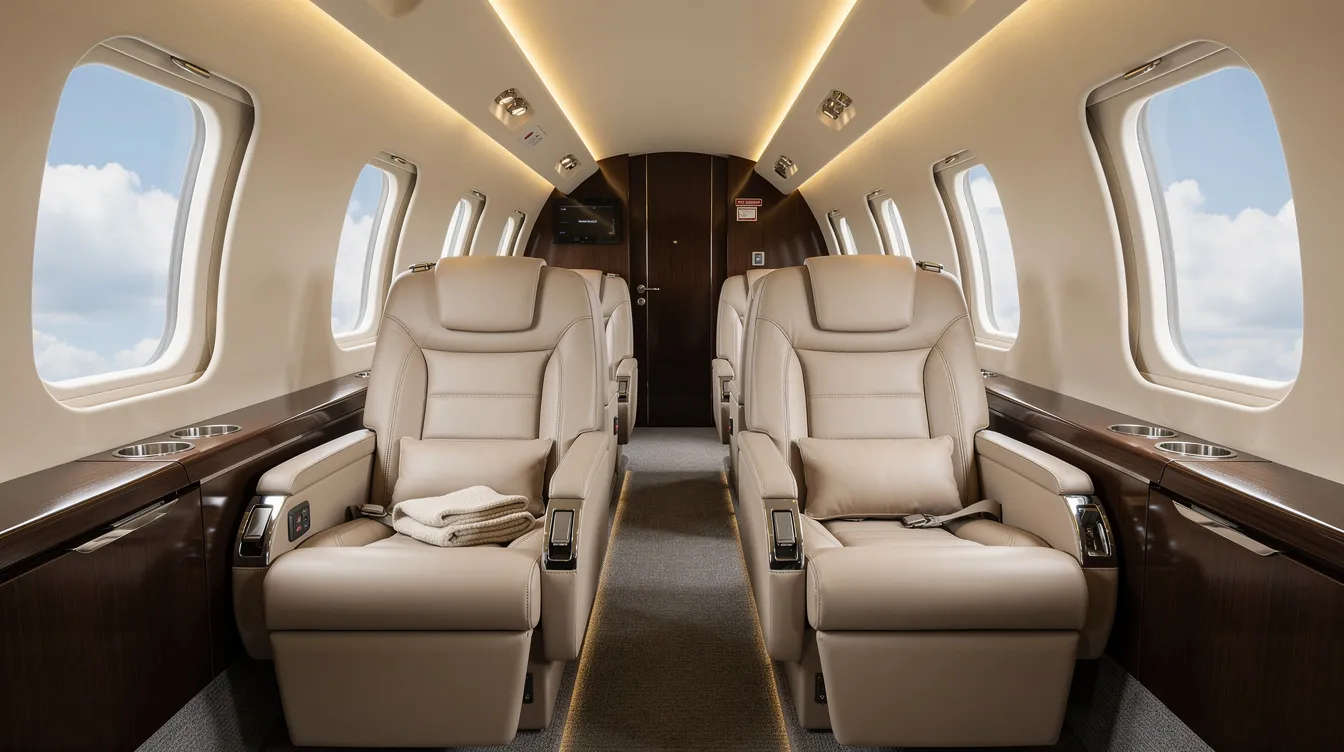
Large cabin jets and ultra long range aircraft represent the flagship segment of private aviation. These are the jets that connect distant continents nonstop, carrying large groups in multiple cabin zones with luxurious amenities. Ultra long range jets can fly internationally across oceans and connect distant cities nonstop-New York to Tokyo, Los Angeles to Singapore-without compromise.
Typical performance at this level: maximum range from about 5,500 to 8,000+ nautical miles, cruising speed near Mach 0.85–0.93, and passenger capacity often 12–19 in a four-zone cabin layout with conference room, dining area, sleeping quarters, and master suite.
Leading models:
Bombardier Global 7500 - the Global 7500 has a range of 7,700 nautical miles and features the widest cabin in its class at roughly 8 ft wide and over 54 ft long. Four distinct zones, a remarkably low cabin altitude of around 5,680 ft at FL510, and a flight-accessible baggage hold of ~195 ft� make it a benchmark for intercontinental capability.
Bombardier Global 8000 - pushes speed to approximately Mach 0.94 with ~8,000 nm range, making it the fastest ultra-long-range aircraft in production.
Gulfstream G700 - the Gulfstream G700 features a top speed of Mach 0.935 and a maximum range of 7,500 nautical miles. Its cabin offers up to five living areas with advanced wing design optimizing both speed and fuel efficiency.
Gulfstream G800 - extends range beyond the G700, targeting the same intercontinental missions.
Gulfstream G650ER - the G650ER has a range of around 7,500 nautical miles and remains a charter favorite for its proven record and exceptional range.
Dassault Falcon 8X - the Dassault Falcon 8X has a range of approximately 6,450 nautical miles and is known for exceptional fuel efficiency, with three engines providing added safety margins on overwater routes. Its advanced avionics and quiet cabin environment suit demanding schedules.
At the very top tier, converted airliner "bizliners" offer even more space. The Boeing Business Jet 787 has a range of approximately 9,945 nautical miles with fully custom interiors, while the Airbus ACJ319neo brings widebody-style room to private aviation. These aircraft represent unparalleled luxury in terms of square footage and personalized service.
Jettly can source these large-cabin private jets worldwide for complex routes-nonstop flights between major financial centers or multi-leg international roadshows.
The best private jets in theory are not always the most chartered. Popularity on charter depends on availability, operating cost, mission fit, and how well a given aircraft type serves the routes flown most often.
Common charter favorites by category, all available through Jettly's global private charter aircraft network:
Phenom 300E (light) - strong reliability, efficient economics, and high fleet numbers make it the default for short business trips.
Challenger 350 (super-midsize) - spacious cabin and continental range drive consistent demand.
Gulfstream G550/G650 (heavy/long range) - proven workhorses for transatlantic and transpacific legs.
Bombardier Global Express XRS - the Global Express XRS remains a staple in heavy charter for its blend of range and cabin size.
Pilatus PC-12 NGX (turboprop) - fills a niche for short hops, rural access, and cost-sensitive segments.
Charter market data shows light and super midsize jets carrying the majority of movements on regional routes like New York–Miami, Los Angeles–Las Vegas, and London–Geneva. Private jets typically cruise at speeds ranging from 575 to 600 mph on these routes, getting passengers there in a fraction of the commercial travel time, a pattern reflected across the broader charter airline landscape.
Jettly's platform surfaces these popular private jets prominently when they are the best match for a user's route, passenger count, and budget.
Even among the best private jets, choosing the right aircraft comes down to a handful of critical specifications. Here is what to focus on when comparing options through a private jets comparison.
Maximum range (practical vs. brochure) - published range specifications for jets can differ from real-world performance. Flying with full seats and bags reduces achievable nonstop distance compared to manufacturer figures. Private jets can cover long distances with significant ranges that vary by model, but always confirm range with actual payload.
Cruising speed and flight time - a light jet at Mach 0.78 covers 1,500 nm in roughly 3.5 hours; a large cabin jet at Mach 0.85 cuts that to about 3 hours. The time difference matters less on short hops but compounds on extended flights.
Runway performance - aircraft that can operate from 3,000 ft runways open up hundreds of additional airports, including challenging airports near ski resorts and island destinations.
Passenger count and baggage - cabin comfort in private jets includes features like low altitude pressure and spacious designs. Confirm whether standing height exceeds 6 ft, whether a fully enclosed lavatory is available, and whether the baggage hold fits your gear.
Noise levels - large cabin jets with advanced insulation deliver remarkably quiet interiors, while some light jets can feel louder on longer legs.
As a practical example: on a 1,500 nm route, a Phenom 300E gets a group of six there with good cabin comfort and modest cost, while a Global 7500 provides a full suite of cabin zones and a conference room-at roughly three to four times the hourly rate. The perfect aircraft depends on the mission, not the price tag.
Many of the best private airplanes listed above are available via full ownership, fractional programs, and on-demand charter. Owning a private jet incurs high upfront and ongoing costs-but ownership is not required to fly any of these aircraft, especially with structured options like jet card programs offering fixed hourly rates.
Full ownership basics:
Acquisition costs range from a few million dollars for piston and turboprop models to $70M+ for ultra-long-range jets.
Fixed annual expenses-crew salaries, hangar fees, insurance, scheduled maintenance, and inspections-add millions per year regardless of how often the aircraft flies.
Ownership typically makes sense for those flying over 400–500 hours yearly, where cost per hour drops below charter rates.
Charter as an alternative:
Chartering is ideal for those flying less than 200 hours annually. It eliminates hangar fees and maintenance scheduling entirely, especially when paired with flexible private jet membership plans.
Pay-per-trip pricing lets travelers choose different aircraft types per mission.
Jettly structures transparent on-demand charter with instant pricing estimates and membership options, giving flexibility without capital outlay.
A hybrid approach combines ownership with chartering for flexibility-an owner might fly their midsize jet domestically but charter a Global 7500 for an intercontinental trip. For most travelers, comparing charter to fractional ownership confirms that on-demand charter through platforms like Jettly is the most practical first step into private aviation before considering ownership, particularly when evaluating Jettly as a cost-effective alternative to NetJets-style programs.
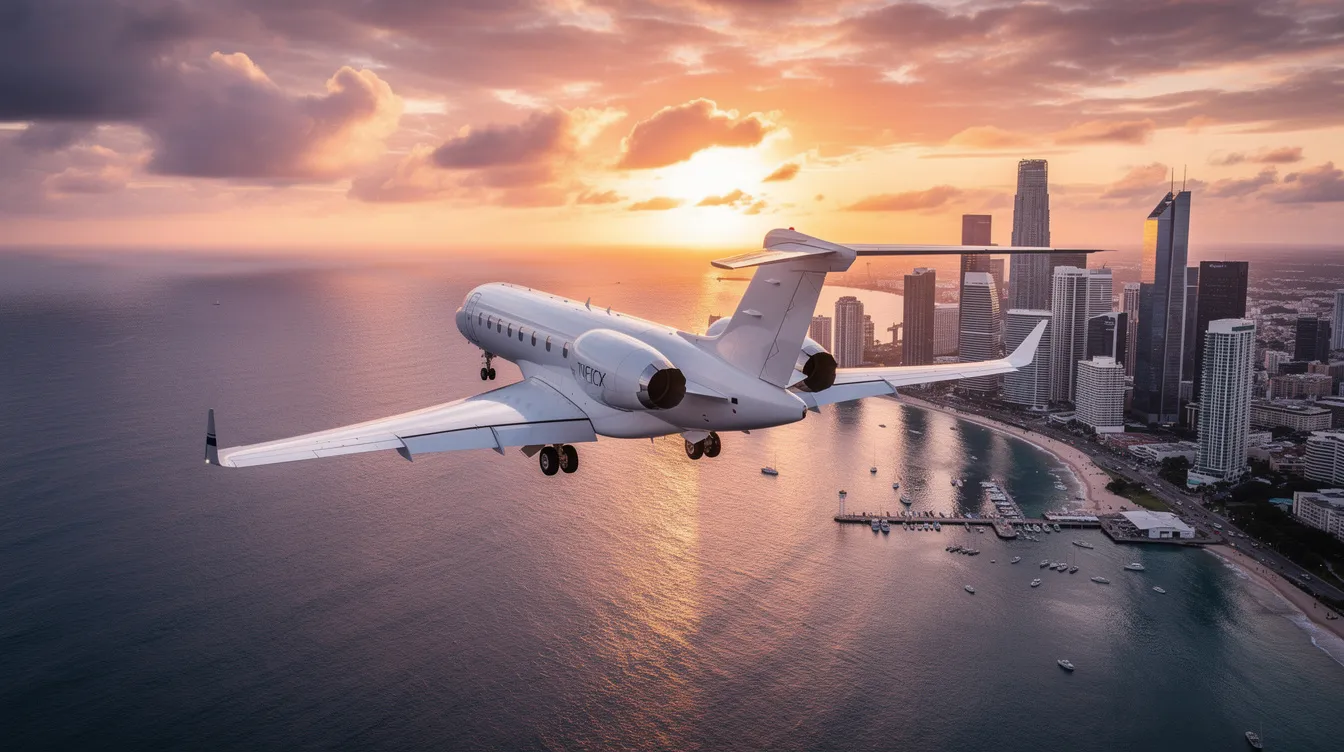
Safety and technology advances underpin the performance of today's best private jets and personal aircraft. Luxury private jets offer exceptional cabin comfort and advanced flight safety systems that continue to improve each year.
Modern avionics - glass cockpits, synthetic vision, and advanced autopilot capabilities are now standard across general aviation. Models like the Cirrus Vision Jet include autoland systems, while large cabin jets feature head-up displays and enhanced vision for low-visibility approaches.
Regulatory frameworks - charter operators typically fly under Part 135 in the U.S. and EASA standards in Europe. Many also carry third-party safety audits from organizations like ARGUS and Wyvern, providing additional assurance.
Sustainable Aviation Fuel (SAF) - SAF is increasingly adopted in private aviation, particularly among operators of large cabin and ultra-long-range aircraft. New engine designs and aerodynamic improvements-such as the advanced wing design on the Gulfstream G700-reduce fuel burn per nautical mile, complementing other strategies for booking more affordable private jet flights.
Carbon offset programs - many charter operators now include carbon offset options in their quotes, reflecting growing awareness of environmental impact, alongside innovations like crowdsourcing and sharing empty seats on private jets.
Jettly can help customers select aircraft and operators aligned with their safety expectations and environmental priorities through its platform filters and operator profiles.
Selecting the right aircraft starts with a few straightforward questions about the trip itself.
Trip distance - under 500 nm, a turboprop or light jet works well. Between 500–2,000 nm, light jets or midsize jets are optimal. Beyond 3,000 nm, look at super midsize or large cabin jets for nonstop capability, especially if you plan to book just a seat on a private jet rather than the whole aircraft.
Passenger count - groups of 4 or fewer fit comfortably in personal aircraft or light jets. Groups of 8+ benefit from midsize or larger cabins, and different ways to get a seat on a private jet can help match group size to aircraft type.
Baggage and gear - skis, golf clubs, or large luggage may require an aircraft type with oversized baggage holds.
Preferred airports - need London City Airport or Aspen? Short-field performance narrows the options.
Onboard amenities - Wi-Fi, a galley, a lie-flat bed, or a conference room may drive the decision toward larger aircraft.
Concrete examples: a New York–Miami trip (~1,000 nm) in a Phenom 300E takes about 2.5 hours and serves most groups well. A London–Dubai flight (~3,200 nm) calls for a Gulfstream G700 or similar ultra-long-range aircraft to arrive nonstop with full cabin comfort. In both cases, Jettly displays matching aircraft options with instant pricing, so travelers can compare and book a private jet in minutes, similar to how leading private jet charter companies are evaluated on fleet, safety, and service.
Ready to experience private travel on your terms? Explore flight options or request a quote at jettly.com.
Learn more about choosing the right private airplane category, compare light jets, or explore large cabin private jets to find the perfect fit for your next trip.
|
Aircraft Model |
Category |
Passenger Capacity |
Maximum Range (nm) |
Cruising Speed (knots) |
Typical Charter Price (per hour) |
|---|---|---|---|---|---|
|
Cirrus SR22T |
Personal Aircraft |
4 |
1,000 |
180 |
$800 - $1,200 |
|
Pilatus PC-12 NGX |
Single-engine Turboprop |
6 (typical) |
1,800 |
290 |
$2,000 - $4,000 |
|
Embraer Phenom 300E |
Light Jet |
6-8 |
1,970 |
420 |
$3,500 - $5,500 |
|
Cessna Citation Longitude |
Midsize Jet |
8-12 |
3,500 |
460 |
$5,500 - $12,000 |
|
Bombardier Challenger 350 |
Super Midsize Jet |
9 |
3,400 |
460 |
$6,000 - $12,000 |
|
Gulfstream G700 |
Ultra Long Range Jet |
12-19 |
7,500 |
488 (Mach 0.935) |
$15,000 - $25,000 |
|
Bombardier Global 7500 |
Ultra Long Range Jet |
15-19 |
7,700 |
488 (Mach 0.925) |
$20,000 - $30,000 |
These FAQs address common questions about using the best private jets, charter pricing, and logistics not fully covered above.
Real-world nonstop ranges vary by category. Light jets typically cover 1,500–2,000 nautical miles, midsize jets reach 2,500–3,500 nm, and ultra-long-range jets like the Bombardier Global 7500 (7,700 nm) or Gulfstream G800 (approximately 8,000 nm) handle true intercontinental distances. Headwinds, full passenger loads, and baggage reduce published figures by 5–15%. Jettly's trip planning uses conservative reserves, so displayed nonstop options reflect operational reality rather than optimistic brochure numbers.
Charter pricing varies based on aircraft type and market conditions. Key factors include flight time, repositioning needs, airport fees, crew overnights, and seasonal demand. Light jets typically charter for $3,500 to $5,500 per flight hour, midsize jets usually cost between $5,500 and $12,000 per hour, and heavy jets often range from $10,000 to $25,000 per hour. Jettly provides instant pricing estimates online, breaking down expected costs before booking so travelers can compare aircraft types transparently.
Many charter operators permit pets in the cabin on private jets, subject to local regulations, aircraft size, and operator policies. There is no cargo hold separation-pets sit with their owners. Travelers should disclose pet details (size, crate requirements, health documents) during the Jettly booking process so the platform can match them with suitable aircraft and operators.
Even light jets offer more privacy and flexible seating than airline business class. Large cabin jets provide lie-flat beds, multiple living zones, and quieter cabins than any commercial cabin. Private aviation also replaces long check-in lines, boarding queues, and layovers with quick FBO access-often arriving at the aircraft minutes before departure. The overall journey is typically less tiring, even before accounting for cabin altitude advantages and personalized service onboard.
Whether planning regional missions such as private jet charter in Kolkata, West Bengal or longer trips to hubs like New Delhi in India, timing your booking affects aircraft choice and pricing.
For the best selection of popular private jets, booking several days to two weeks in advance is recommended. However, Jettly can often arrange urgent charter flights within hours when aircraft are available. Travelers should check real-time availability and pricing on the platform as soon as travel dates firm up, especially during peak seasons, major sporting events, and holidays when demand spikes. Exploring empty leg flights can also uncover last-minute deals on the requested jet category, and for larger groups, a Boeing 737-800 charter may be the most efficient option.
Choosing the best private airplane in 2026 means aligning your travel needs with the right aircraft category—whether a personal piston plane for short hops, a light jet for regional business, or an ultra-long-range jet for global nonstop flights. Each type offers a unique combination of range, speed, comfort, and cost that suits different missions and passenger counts.
Jettly’s digital charter platform simplifies access to the world’s best private jets by providing instant pricing, transparent booking, and a vast global network of over 20,000 aircraft. This means travelers can enjoy the flexibility and convenience of private aviation without the financial and operational burdens of ownership.
From the efficient and popular Embraer Phenom 300E to the flagship Bombardier Global 7500 and Gulfstream G700, Jettly offers options to match any itinerary or preference. With a focus on safety, advanced technology, and growing sustainability efforts, private aviation in 2026 is more accessible and responsible than ever.
Ready to experience private travel on your terms? Explore flight options or request a quote at https://www.jettly.com.
Learn more about choosing the right private airplane category, compare light jets, or explore large cabin private jets to find the perfect fit for your next trip.
Share this post:
Jay Franco Serevilla
Aug 19, 2026
|
5
min read
Discover tips and trends in the industry.

5
min read
Nearest Private Airport: How to Find the Best Option for Your Next Private Jet Flight
Finding the nearest private airport can significantly reduce travel time for private jet travelers. Jettly's platform simplifies the process by identifying suitable airports based on various factors, including runway length and customs availability. This guide provides insights into choosing the best airport for your private flight needs.
Read More
5
min read
Jets Flying: From Fighter Jet Flights to Private Jet Experiences
Jet flying offers a thrilling contrast between adrenaline-pumping fighter jet flights and the luxurious comfort of private jet charters. This guide explores both experiences, helping aviation enthusiasts and business travelers choose the right option for their needs. Jettly stands out as a premier platform for private jet charters, providing instant pricing and access to a global fleet.
Read MoreStay updated with our latest insights and tips to elevate your journey with us.
MEMBERSHIPS AND ASSOCIATIONS



Disclaimer: Jettly operates as a charter broker, offering access to a global digital jet charter marketplace. Jettly is not a direct air carrier and does not own or operate aircraft. All advertised flights are conducted by third-party air carriers that are fully licensed and hold the appropriate Part 135 or Part 121 certifications issued by the Federal Aviation Administration (FAA) or equivalent regulatory authorities under U.S. or foreign law. Jettly complies fully with the U.S. Department of Transportation's Part 295 and Part 298 Charter Broker regulations. Jettly does not carry additional liability insurance. Passengers are covered by aircraft operator insurance. TICO: 50023770


