


Login
Get Instant Pricing On 23,000+ Aircraft

>
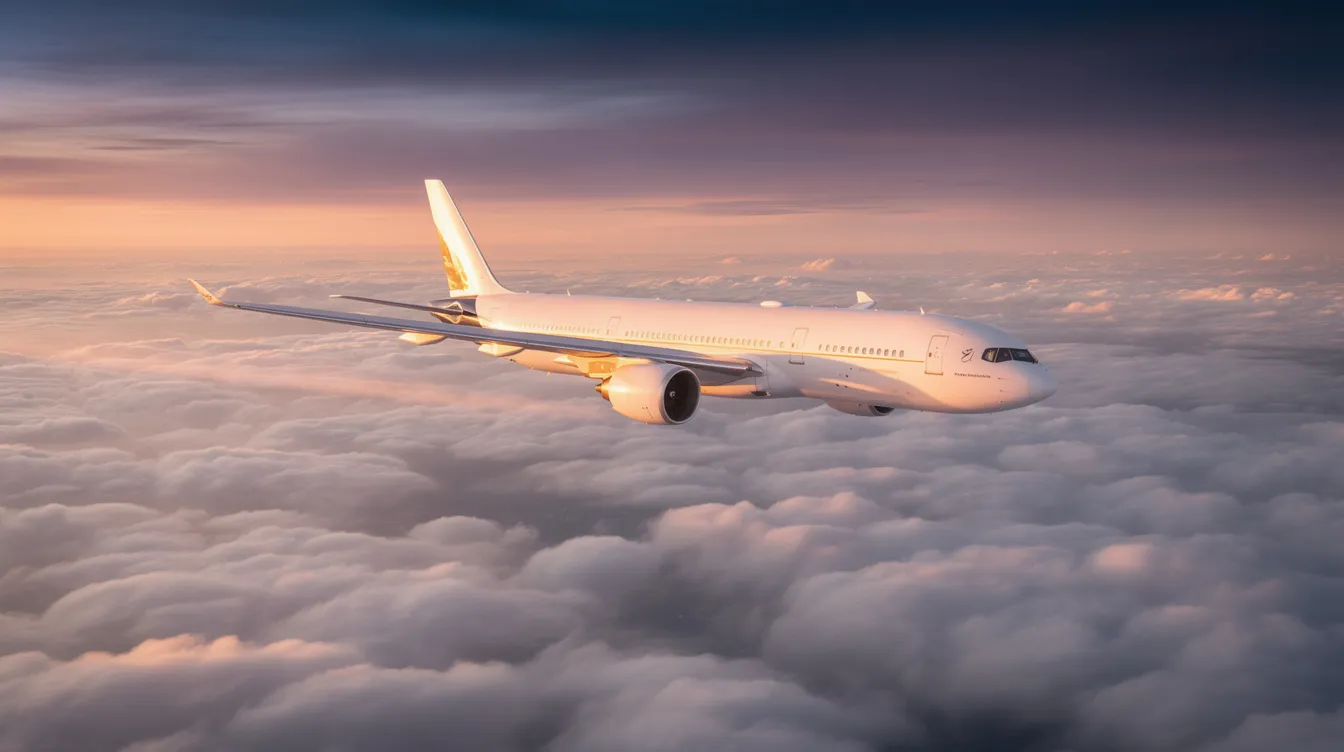
Defining the best plane is a deeply personal exercise. For aviation enthusiasts, it might be the engineering marvel of an Airbus A350 gliding quietly across the Atlantic. For a frequent flyer, it could be the Boeing 787 Dreamliner that finally made a 14-hour flight feel survivable. For a time-pressed executive, the best plane might be a midsize jet waiting at a private terminal, ready to depart in minutes. And for those who love aviation history, the Airbus A380 and Boeing 747 still stir something that no spreadsheet can capture.
This guide breaks down the best planes across commercial aviation and private jets, using real comfort data, efficiency metrics, and practical use cases to help every type of traveler make smarter choices.
The best commercial aircraft for long-haul and long-distance comfort are the Airbus A350, Boeing 787 Dreamliner, and Airbus A380. For shorter routes, the Airbus A220, Airbus A320 family, and Embraer E-Jets deliver strong passenger comfort in smaller packages.
In private aviation, midsize and large cabin jets like the Challenger 650, Gulfstream G650, and Bombardier Global 7500 balance range, comfort, and operating cost for business and family trips.
Jettly helps travelers pick the best plane for each trip by matching mission profile (route, passengers, budget, timing) to an on-demand fleet of over 20,000 unique aircraft for on-demand private jet rentals.
"Best" is always context-specific. History fans may love the Boeing 747, the first wide-body passenger aircraft, which revolutionized long-haul travel. Value-seekers may prefer efficient narrow-bodies like the Airbus A320 family, which pioneered fly-by-wire technology in commercial aviation and has delivered over 10,176 units. A time-poor executive may consider a light or midsize jet the best plane they have ever flown.
This article rates best planes across commercial aircraft and private jets, focusing on real-world comfort, efficiency, and use cases rather than raw specs alone.
The main evaluation criteria include:
Passenger comfort: seat width, cabin noise, cabin air quality, and cabin pressure altitude. Modern planes pressurize cabins to the equivalent of around 6,000 feet, use LED ambient lighting to regulate circadian rhythms, maintain higher humidity to prevent dehydration, and cycle cabin air with HEPA filters every few minutes. Frequent flyers value aircraft with quieter cabins, better air quality, and lower cabin altitude, such as the Airbus A350, which features the quietest cabin in its class.
Range and fuel efficiency: especially for long-haul flights crossing oceans or continents. The Boeing 777, designed entirely by computer, is recognized for its long-range capabilities and fuel efficiency, accommodating up to 440 passengers comfortably. The Airbus A330 offers a range of about 6,350 nautical miles, while the Airbus A321XLR is the longest-range narrow-body plane.
Operational reliability: dispatch rates, fleet maturity, and safety record. Aircraft longevity impacts reliability and operational value, with models like the Boeing 747 still in production since 1968 and the Boeing 777 having delivered 1,677 units since 1993.
Versatility: suitability for short vs long distance missions.
Cabin experience: premium vs economy cabins, and how airline configuration shapes the trip. Choosing an aircraft model does not guarantee comfort as airline seating configurations can significantly impact passenger experience. For example, the Airbus A220 has the widest economy seats in the industry, while the Boeing 787 offers larger windows than most commercial aircraft. The Airbus A380, the largest passenger aircraft in service, provides a spacious and quiet cabin with onboard amenities like showers and bars.
Airline configuration matters enormously. Singapore Airlines and American Airlines can fly the same Airbus A350, but their seat layouts, pitch, and service philosophy create meaningfully different experiences. The aircraft model is only part of the story.
For private aviation, best planes are evaluated by time savings (airport access, boarding time), flexibility (short runway capability), cabin layout (club seating, lie-flat divans), and cost per mission when chartered through a platform like Jettly using tools such as its airport locator tool.
The sections below move from commercial aviation favorites to private jet standouts, then to practical advice on choosing the best plane for any specific trip.
Wide-body aircraft dominate long-distance routes for good reason. They carry more passengers, offer wider cabins, and generally deliver a smoother ride than narrow-bodies. In 2026, the Airbus A350 and Boeing 787 are widely regarded as the best planes for passenger comfort on flights over seven or eight hours.
A key factor is cabin pressure. Modern planes pressurize the cabin to the equivalent of around 6,000 feet above sea level, compared to roughly 8,000 feet on older airplanes. That difference may sound small, but it means more oxygen reaching your blood, fewer headaches, and less fatigue on a long flight. Higher humidity in modern jets helps prevent dehydration during flights, keeping skin and airways more comfortable. Newer jets also cycle cabin air with HEPA filters every few minutes, keeping the air noticeably fresher than on older fleets.
Cabin width and seat configuration directly affect shoulder room. A 3-3-3 layout on the A350 typically yields economy seats around 18 inches wide. A cramped 3-4-3 layout on some Boeing 777 operators squeezes that down by over an inch. LED ambient lighting in modern aircraft helps to regulate circadian rhythms, easing the transition across time zones and helping reduce jet lag.
Cabin noise also matters. Older commercial airliner types like the early Boeing 747-400 and Airbus A340 had noticeably louder interiors. The A350 and 787, built with composite materials, are significantly quieter-often 5 to 9 dB lower-making it far easier to sleep without earplugs or noise-canceling headphones.
From a pure comfort perspective, most aviation enthusiasts and frequent flyer travelers should prioritize booking an A350-900/1000, 787-9/10, or A380 when possible, especially in premium cabins, for trips over seven to eight hours.
The Airbus A350 entered service in 2015 with the -900 variant, followed by the A350-1000 in 2018. Designed to replace older widebodies like the A330 and A340, it quickly became a favorite aircraft among both airlines and passengers on long-haul routes.
The Airbus A350 features a spacious cabin with mood lighting, a cabin width of 5.61 meters, high ceilings of about 2.40 meters, and larger windows than previous-generation widebodies. Economy class typically uses a 3-3-3 layout with seat widths around 18 inches, while business class configurations often feature 1-2-1 layouts providing direct aisle access from every seat. The Airbus A350 is known for its quiet operation and spacious cabin, and noise levels are among the lowest of any commercial aircraft-it is incredibly quiet, even during takeoff.
Several airlines showcase the A350 at its best. Qatar Airways uses it for its acclaimed Qsuite business class product. Singapore Airlines deploys A350S on long-haul routes with strong premium economy and business class offerings. Cathay Pacific and other Asian carriers have also configured their A350 fleets to maximize the aircraft's natural strengths: wide seats, low noise, and a comfortable flying experience across all cabins.
Compared to the Boeing 787, the A350 offers a slightly wider cabin, allowing wider seats at the same density. Studies from cabin metric researchers have found marginally better humidity and lower noise levels as well. For aviation enthusiasts, the A350's curved winglets, carbon-fiber wings, and tail camera providing live external views have become beloved features that make the flight itself part of the fun.
For travelers booking long-distance flights via airlines like Singapore Airlines or Qatar Airways, the A350-900/1000 is often the best plane available today in terms of overall comfort versus efficiency.
The Boeing 787 family-787-8, 787-9, and 787-10-entered service from 2011 onward. The Dreamliner's real contribution to air travel was enabling "long thin" routes: city pairs like Qantas Perth–London and United's San Francisco–Singapore, served nonstop without stopovers, thanks to exceptional fuel efficiency.
Cabin comfort strengths mirror many of the A350's advantages: composite fuselage construction allows a lower cabin altitude, and relative humidity sits around 15–22%, well above older jets. The Boeing 787 has windows 40% larger than standard aircraft, and those windows are electronically dimmable-no plastic shades to wrestle with. Dynamic LED lighting further enhances the quiet cabin environment.
The key difference versus the A350 is fuselage width. Many airlines adopt a 3-3-3 economy layout on the 787, but the slightly narrower cabin means seat widths can drop to about 17 to 17.5 inches in nine-abreast configurations. Business class, however, is often excellent, with 1-2-1 suites rivaling the best in the world.
Passenger experience varies significantly by airline. ANA, Qatar Airways, British Airways, and American Airlines all operate 787s, but interior layouts and seat pitch differ enough that a good 787 can feel like one of the best planes a traveler has flown-or a forgettable one if the airline packs in too many rows.
On operational efficiency, the 787 burns substantially less fuel per seat than other aircraft it replaced, such as the 777-200ER and 767-300ER. This allowed airlines to profitably serve secondary city pairs directly, a win for time-pressed business travelers who previously had to connect.
When choosing flights on commercial airlines-or weighing commercial against private through Jettly and considering how much a private jet costs-look for the 787-9 or 787-10 on overnight long-haul sectors if an A350 is not available, and prioritize airlines that maintain nine-abreast seating with reasonable seat pitch.
The Boeing 747, the first wide-body passenger aircraft, made its first flight in 1969, entered service in 1970, and earned the nickname "Queen of the Skies." The Boeing 747 has delivered 1,527 units since 1968. The Airbus A380 is the largest passenger plane in the world, a double-deck engineering marvel that entered service in 2007 with Singapore Airlines as the first airline to operate it. Production ended in 2021, but the aircraft remains a symbol of what is possible when size and ambition combine.
Passengers love the Airbus A380 for its ultra-quiet cabin, stable ride (courtesy of sheer mass), and the space that two full decks provide. The Airbus A380 is known for its spaciousness and luxury experience due to its two full decks. Emirates famously offers onboard bars on the upper deck and showers in first class. Etihad created multi-room suites. These experiences remain unmatched by any other commercial aircraft.
The 747's upper deck had its own mystique during the jumbo jet's passenger heyday-an intimate cabin that airlines like Lufthansa, British Airways, and Korean Air used for cozy premium spaces. Air Force One, based on the 747 platform, reinforced the aircraft's iconic status from 1990 onward.
Why did many airlines retire these giants? Four engines burn far more fuel than the twin-engine A350 and 787. COVID-19 accelerated retirements by gutting demand for very large aircraft on hub-to-hub routes. Yet the A380 still flies: Emirates and nine other airlines operate it across 106 route pairs as of spring 2026, covering Dubai to London, Sydney, New York, and Singapore. Lufthansa continues 747-8i passenger service on routes like Frankfurt–New York.
While the A380 and 747 may not be the most fuel-efficient, for many travelers they remain the best planes emotionally and experientially-especially for those who value space, a quiet cabin, and aviation history.

Narrow-body airplanes handle most of the world's flights. They cover domestic routes, medium-haul routes across Europe and Asia, and increasingly, transatlantic segments. For day-to-day flying, the narrow-body you board matters.
The standouts in this segment are:
Airbus A220: Features a 2-3 seating configuration in economy, meaning no middle seats on one side of the aisle. The Airbus A220 has the widest economy seats in the industry-often around 18.5 inches-plus large windows and a remarkably quiet cabin for a single-aisle plane.
Airbus A320 family: The Airbus A320 family has delivered over 10,176 units since 1986, making it one of the most successful commercial aircraft programs in history. Its wider cabin compared to the Boeing 737 allows many airlines to fit 18-inch economy seats in a 3-3 layout. The A320 also pioneered fly-by-wire technology in commercial aviation, setting a standard that many modern aircraft follow.
Embraer E-Jets: The Embraer E175 features a 2-2 seating layout in economy, eliminating middle seats entirely. These aircraft are popular on regional routes where passenger comfort metrics like personal space matter as much as speed.
From a traveler's point of view, the Airbus A320neo family versus Boeing 737 MAX comparison comes down to small but real differences. The A320's fuselage is slightly wider, typically yielding about one extra inch of seat width. Noise levels are comparable on newer variants, though the A320neo with its Airspace cabin tends to feel slightly more spacious.
Airlines deploying these aircraft will include JetBlue (A321 with Mint on U.S. transcon routes), Delta and American Airlines (A321neo plans), and European carriers using the A220 on key business routes. The Cessna 172, the most successful civil aircraft with over 45,000 built, is a staple in general aviation but not commercial airlines.
A simple rule of thumb: for flights of one to five hours, if given the choice, many passengers consider the A220 or E190/E195-E2 the best planes for comfort, followed closely by well-configured A320neo family aircraft.
The same aircraft model can feel very different depending on the airline. Choosing an aircraft model does not guarantee comfort, as airline seating configurations can significantly impact the passenger experience. A densely packed A350 can feel worse than a well-configured 787.
Singapore Airlines sets a benchmark. It deploys the Airbus A350 and A380 on long-haul routes with generous seat dimensions across economy, premium economy, and business class, consistently earning top Skytrax rankings through the 2010s and 2020s.
Qatar Airways stands out for its Qsuite product on A350s and 777s-a business class configuration with closing doors and the option to create a shared suite. Other top-rated carriers like ANA, Cathay Pacific, and Korean Air configure their A350s and 787s with attention to wider seats, better pitch, and refined service.
Major U.S. carriers-American Airlines, Delta Air Lines, and United-have made significant improvements since the mid-2010s with updated 777, 787, and A321 interiors. More direct aisle access in business class and better economy products are now common, though they still lag leading Asian and Middle Eastern airlines in certain metrics, prompting some travelers to compare the best private jet charter companies as alternatives for premium travel.
The Boeing 777 has delivered 1,677 units since 1993 and can accommodate up to 440 passengers. But whether that capacity translates to comfort depends entirely on how an airline configures the cabin. Check specific seat maps and review sites for a given flight number. Row choice-bulkhead, exit row, window seat, or upper deck on an A380-can change the experience as much as the aircraft itself.
|
Airline |
Flagship Aircraft |
Route Example |
Notable Feature |
|---|---|---|---|
|
Singapore Airlines |
A350-900, A380 |
Singapore–London |
Wide seats, premium economy |
|
Qatar Airways |
A350-900/1000 |
Doha–New York |
Qsuite business class |
|
Emirates |
A380 |
Dubai–Sydney |
Onboard bars, first class showers |
|
British Airways |
787-9, A350 |
London–Toronto |
Club Suite business class |
|
Delta Air Lines |
A350-900 |
Atlanta–Tokyo |
Updated premium economy |
In private aviation, the best plane is the one that fits a specific mission. Distance, number of passengers, airport pairs, luggage, and schedule constraints all matter more than brand prestige.
The main private jet categories:
Turboprops (e.g., Pilatus PC-12, King Air 350): Ideal for short hops under two to three hours, access to smaller airports and short runways, lower cost per hour. Think of them as the practical workhorses-not flashy, but effective.
Light jets (e.g., Cessna Citation CJ3+, Embraer Phenom 300E): The Phenom 300E offers about 2,010 nautical miles of range with four to five passengers, a service ceiling of 45,000 feet, and a cabin width of roughly 5.1 feet. Great for small group travel.
Midsize/super-midsize jets (e.g., Citation Latitude, Challenger 3500): Stand-up cabins, generous baggage space, and range around 2,000–3,500 nautical miles make these the sweet spot for trips like New York–Dallas, Toronto–Vancouver, or London–Marrakech. Learn more about midsize jet pricing.
Large and ultra-long-range jets (e.g., Gulfstream G650ER, Bombardier Global 7500): Separate zones for meetings, dining, and sleeping, lie-flat divans, and range exceeding 7,000 nautical miles. These are the best planes for overnight transatlantic and transpacific charters. See which jets fly the longest distances.
Turboprops and light jets are often the best planes for short hops between smaller airports because of lower cost, short-runway capability, and quick boarding via FBOs. Large cabin jets, by contrast, are like a sports car in reverse: the bigger and heavier they get, the more comfortable and capable they become over long distance missions, especially when you can choose from a broad private charter aircraft fleet.
Private aviation provides greater flexibility and cost transparency compared to traditional ownership options-especially when booked through a platform that matches travelers to the right aircraft. Jettly's role is to present a filtered set of suitable aircraft for each request, helping clients quickly choose the best plane for their trip without needing to memorize every model name in the market or every private plane manufacturer.

Jettly operates as a digital private jet charter marketplace, connecting travelers to over 20,000 unique aircraft worldwide with instant pricing and on-demand booking.
The typical process is straightforward. A customer inputs a route (say, Los Angeles to Las Vegas), travel dates, passenger count, and luggage requirements. The platform then suggests appropriate aircraft-from turboprops to large jets-sorted by price and flight time. No guessing, no back-and-forth phone calls.
Jettly balances factors like airport access (using closer secondary airports to save ground time), runway length requirements, flight range, and budget to surface the most suitable aircraft. The goal is matching mission to machine, not upselling the biggest plane on the ramp.
For regular flyers, private jet memberships can lower per-flight costs. Occasional travelers can pay per trip with transparent, upfront pricing. Empty leg flights and crowdsourced private jet flights that share empty seats offer potential cost savings on private jet charters when booking an aircraft returning to its base-browse available empty leg flights for current deals.
For some routes dominated by congested hubs and limited commercial schedules, a small private jet or turboprop through Jettly can be the best plane simply because it saves several hours door-to-door, especially when paired with tailored services like Jettly Eats in-flight catering.
Ready to see what's available for your next trip? Explore charter options and get an instant quote at Jettly.com.
Commercial aircraft like the Airbus A350 and Boeing 787 excel at moving large numbers of passengers efficiently over long distances. Private jets prioritize flexibility, privacy, and time savings. Neither is universally "better"-it depends on the trip.
Key factors compared:
|
Factor |
Commercial (Business Class) |
Private Jet Charter |
|---|---|---|
|
Total travel time |
Add 2–4 hours for check-in, security, boarding |
15–30 minutes at FBO |
|
Schedule flexibility |
Fixed airline timetables |
Depart when ready |
|
Airport access |
Major hubs only |
Thousands of smaller airports |
|
Onboard privacy |
Shared cabin |
Fully private cabin |
|
Cost per seat (example: NYC–Chicago) |
~$800–$2,500 business class |
~$1,500–$3,000 per seat on light jet with 4 passengers |
|
Customization |
Limited |
Full control over catering, timing, route |
For solo leisure travelers, the best plane is often a comfortable flying experience on a commercial widebody in premium economy or business class. But for groups of three to eight on time-sensitive business trips-or family vacations with complex luggage-a light or midsize jet via Jettly's charter options paired with a private jet charter cost estimator may offer more overall value
Think in terms of mission profile and priorities: time, comfort, privacy, and budget. That framework, rather than brand loyalty alone, reveals which plane is genuinely best for any given journey.
Today's best planes build on a century of innovation. A handful of airplanes reshaped what travelers expected from the sky.
Douglas DC-3 (1930s–40s): Made passenger air travel commercially viable. Its reliable range and economics turned flying from an adventure into a legitimate mode of transport.
Boeing 707 (late 1950s): Ushered in the jet age, slashing transatlantic crossing times and making jet travel mainstream. Before the 707, crossing the Atlantic meant hours of propeller drone. After it, the world felt smaller.
Boeing 747 (1970): The first wide body jumbo jet, it expanded long-haul capacity and symbolized global travel for decades. It also served as Air Force One from 1990 onward. The Boeing 747 has delivered 1,527 units as of 2021, a testament to its longevity and reliability.
Concorde (1976–2003): The ultimate speed-focused best plane, flying at around Mach 2.0 and cutting New York–London to about 3.5 hours. High operating cost and a limited market ultimately grounded it, but Concorde proved that speed could be a product in itself.
Each generation redefined what "best" meant-speed, range, capacity, comfort, or sustainability. The A350 and 787 carry that torch today, prioritizing efficiency and passenger experience, much as modern guides to choosing the best personal plane weigh multiple factors for private owners. The next generation will likely add environmental impact to the list.
Aviation enthusiasts and frequent flyers compare aircraft using specific technical and comfort metrics, not just marketing names. Here is what matters.
Comfort metrics:
Seat pitch (legroom): typically 31–34 inches in economy, 38–42 in premium economy
Seat width: 17–18.5 inches in economy depending on aircraft and airline
Cabin width: determines how many seats fit per row without cramping
Noise levels in dB: the A350 is certified at roughly 22 EPNdB quieter than older types
Cabin altitude and humidity
Window size and modern IFE systems
Performance metrics:
Maximum range and typical cruise speed (Mach numbers)
Fuel burn per seat, which drives fuel efficiency and ticket pricing
Takeoff and landing performance-critical for regional and private aircraft accessing shorter runways
Dispatch reliability
Frequent flyers value aircraft with quieter cabins, better air quality, and lower cabin altitude because these factors directly affect how they feel on arrival. The Boeing 777 is known for its long-range and fuel efficiency, but comfort depends heavily on airline layout. Operational performance, including maximum flight range, feeds directly into which routes an aircraft can serve nonstop.
On sustainability, newer engines like the Rolls-Royce Trent XWB and Pratt & Whitney GTF, combined with composite airframes, reduce CO₂ per seat-kilometer meaningfully. Some private operators encourage carbon offsetting and efficient aircraft selection-platforms like Jettly report offsetting over 2,000 tons of CO₂ annually. For a broader industry view, you can explore the ultimate list of charter airlines. You can also learn more about how high planes fly and why altitude matters for ride quality.
The definition of the best plane will keep evolving with new technology, economic pressures, and environmental regulations through the late 2020s and 2030s.
In commercial aviation, the Airbus A321XLR is expanding "long thin" routes with single-aisle efficiency, allowing airlines to offer near-widebody comfort on medium haul routes that previously required larger aircraft. Boeing 777X variants promise improved passenger appeal on high-density long-haul sectors. Meanwhile, ongoing cabin retrofits on A350s and 787s are bringing older deliveries up to the latest interior standards.
In private aviation, ultra-long-range jets like the Gulfstream G800 and Global 8000 are making cross-continent nonstop private travel more feasible with high luxury. Digital booking platforms like Jettly are growing inventory and improving instantaneous quoting through tools such as its jet card flight cost estimator, while sustainable aviation fuel (SAF) adoption and carbon-offset programs gain momentum across the industry.
Emerging technologies point further ahead. Electric and hybrid-electric regional aircraft concepts are in development. Advanced air mobility (eVTOL) for short urban hops could reshape what travelers consider the best way to fly between cities.
In the coming decade, the best planes will likely be those that balance comfort, flexibility, and environmental impact-supported by tech-driven services that make booking and flying simpler for pilots, operators, and passengers alike.
Choosing the best plane starts with a simple checklist. Before comparing aircraft models, answer these questions:
How far am I flying? Long distance flights favor A350, 787, or large-cabin private jets. Short hops favor A220, E-Jets, or light jets.
How many people? Solo or couples do well on commercial. Groups of three to eight often find private jets more efficient.
How much luggage? Ski equipment or bulky gear can be a challenge on commercial but fits easily in a midsize jet's baggage hold.
How flexible is my schedule? Fixed plans suit airline timetables. Shifting plans or multi-city itineraries favor charter.
How important are privacy and onboard productivity? If you need to hold a meeting in the air, commercial business class has limits.
What is my realistic budget per person? Compare charter costs against commercial business class fares for your route.
For solo long-haul trips, a premium economy or business class seat on an A350 or 787 is hard to beat. For a group of four executives doing a day-return trip from New York to Chicago, a light jet through Jettly or a structured jet card program might save three hours each way-and cost roughly the same as four business class tickets once you factor in ground time.
Aircraft longevity often indicates reliability and operational value-but at the end of the day, the best plane is the one that gets you where you need to be, comfortably, on time, and within budget.

These FAQs address common questions not fully covered in the main sections, especially around practical booking decisions and lesser-known details about finding the best plane for specific situations.
Aircraft with lower cabin altitude and higher humidity are generally considered best for minimizing jet lag. The Airbus A350 and Boeing 787 both maintain cabin pressure equivalent to about 6,000 feet and humidity levels of 15–22%, compared to older jets that pressurized to 8,000 feet with humidity as low as 2–7%. These differences reduce dehydration, headaches, and the deep fatigue that hits after crossing multiple time zones.
Cabin configuration also plays a major role. A lie-flat seat in business class allows actual sleep, which has a bigger effect on how rested passengers feel on arrival than any cabin pressure improvement alone. Pairing an A350 or 787 with a lie-flat seat and good hydration habits is the most effective combination to reduce jet lag.
For frequent long-distance travelers, choosing flights based on aircraft type can noticeably improve comfort. Opting for an A350, 787, or A380 over older models on similar routes means lower cabin noise, better cabin air, larger windows, and less post-flight fatigue. The difference is most pronounced on flights over six hours.
For casual travelers, aircraft type is a "nice to have" factor. Airline service quality, departure timing, and pricing may matter more. But even for occasional flyers, avoiding very dense cabin layouts-such as 10-abreast on a 777 or tight 3-4-3 on some 787 operators-can meaningfully improve the trip.
For trips under about three hours, light jets like the Embraer Phenom 300E or Cessna Citation CJ3+ are often the best planes. They offer good value, comfortable seating for four to six passengers, and can access smaller airports closer to vacation destinations, making them ideal candidates among the best private planes for families.
For longer trips, midsize or super-midsize jets like the Citation Latitude or Bombardier Challenger 3500 provide more space, better baggage capacity (important for families with kids and gear), and sometimes longer nonstop range. Jettly can filter aircraft for families based on route, luggage requirements, and budget to surface the most practical option.
Booking 7–14 days in advance typically provides a strong selection of aircraft and competitive pricing, especially for popular routes and weekend departures. This lead time allows operators to plan efficiently and pass along better rates, and aligns with many of the strategies outlined in guides on how to get a seat on a private jet easily.
Last-minute charters are often possible-sometimes within a few hours-but aircraft choice may be narrower and pricing higher, unless an empty leg perfectly matches the route. You can also explore last-minute private jet charter options and other ways Jettly offers affordable private jet charter. Using Jettly's platform to check real-time availability as early as you know your travel dates gives you the most options.
While in-flight comfort may be comparable on best planes like the A350 or 787 in business class, private jets save significant time on the ground. Faster check-in, no long security lines, and use of closer airports add up quickly, whether you fly with an industry leader like NetJets or an on-demand charter platform.
Consider a one-and-a-half-hour flight from New York to Washington, D.C. A commercial itinerary might require arriving at JFK 90 minutes early, a 30-minute taxi after landing, and ground transport from a major hub-totaling four to five hours door-to-door. A private jet departing from Teterboro with 15 minutes of boarding, landing at a closer field, can cut total travel time to under two hours. This time efficiency is one of the main reasons executives use platforms like Jettly, even when commercial business class is available, often viewing it as a NetJets alternative for flying private at lower cost.
The best planes depend on personal priorities. The Airbus A350 and Boeing 787 lead for long haul comfort. The Airbus A380 and Boeing 747 deliver iconic experiences. The Airbus A220 and Embraer E-Jets bring genuine comfort to regional flying. And modern business jets offer tailored private travel that no commercial airline can match.
Whether a traveler values passenger comfort, nostalgia, speed, privacy, schedule control, or sustainability, the answer changes. Aviation enthusiasts may choose differently from time-pressed executives or families focused on the best private planes for family travel. That is exactly as it should be.
Private charters via Jettly give travelers the ability to define their own best plane on a trip-by-trip basis, rather than being limited to whatever aircraft a commercial airline happens to fly on a route, whether they need a one-off flight or recurring service in markets like private jet charter in Kolkata, West Bengal. It is private aviation made practical.
Ready to experience private travel on your terms? Explore aircraft options or request an instant quote at Jettly.com.
Share this post:
Jay Franco Serevilla
Jul 29, 2026
|
5
min read
Discover tips and trends in the industry.
5
min read
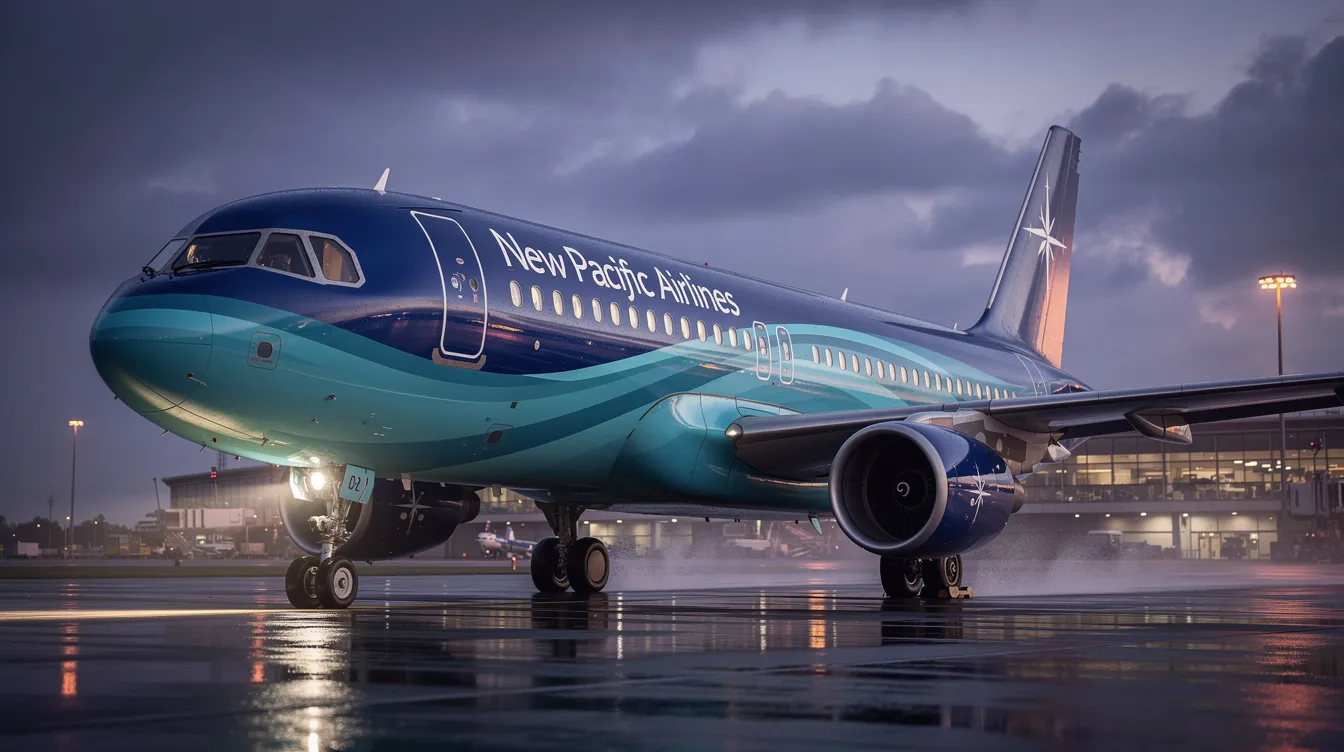
New Pacific Airlines: What Happened to the Former Northern Pacific Airways?
New Pacific Airlines, previously known as Northern Pacific Airways, launched in July 2023 but failed to establish sustainable transpacific routes, leading to its closure in November 2025. The airline faced significant operational and financial challenges, ultimately filing for Chapter 11 bankruptcy. This article explores the airline's rise and fall, highlighting the difficulties of launching long-haul services and the growing interest in private charter alternatives like Jettly.
Read More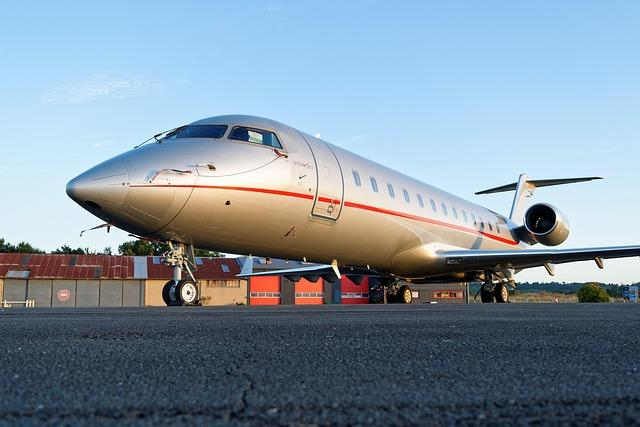
5
min read
Marsh Harbor Flights: Private Charters, Routes, and How to Find the Best Options
Planning flights to Marsh Harbor offers various options, including commercial airlines and private charters. This guide details routes, pricing, and tips for finding the best travel solutions to the Abacos. Whether you prefer the convenience of direct flights or the flexibility of private jets, there are numerous ways to reach this beautiful destination.
Read MoreStay updated with our latest insights and tips to elevate your journey with us.
MEMBERSHIPS AND ASSOCIATIONS



Disclaimer: Jettly operates as a charter broker, offering access to a global digital jet charter marketplace. Jettly is not a direct air carrier and does not own or operate aircraft. All advertised flights are conducted by third-party air carriers that are fully licensed and hold the appropriate Part 135 or Part 121 certifications issued by the Federal Aviation Administration (FAA) or equivalent regulatory authorities under U.S. or foreign law. Jettly complies fully with the U.S. Department of Transportation's Part 295 and Part 298 Charter Broker regulations. Jettly does not carry additional liability insurance. Passengers are covered by aircraft operator insurance. TICO: 50023770


