


Login
Get Instant Pricing On 23,000+ Aircraft

>
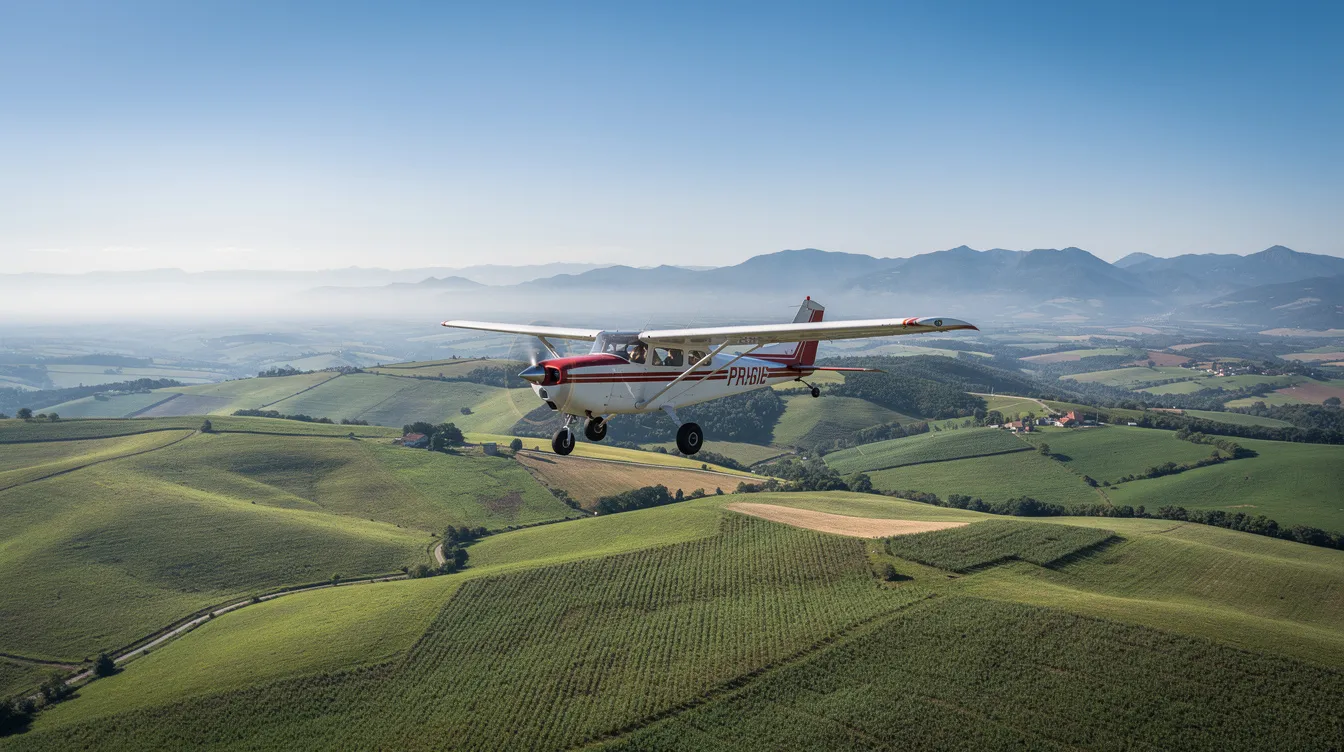
Choosing the best cross country plane comes down to one question: what does your mission actually look like? A pilot hauling family and gear into a remote mountain strip has different needs than a business traveler racing between major metros. The best cross-country airplane depends on mission requirements, and getting that match right saves money, time, and stress.
The best cross country plane depends on your mission—family transport, backcountry adventure, or fast business hops.
Top contenders include the Cirrus SR22 (183 knots cruise), Cessna Turbo Stationair HD (161 knots, high payload), and Mooney Acclaim Ultra (242 knots top speed).
Pilots must balance cruise speed (140–240 knots), range (600–1,200+ nm), useful load, field capability, and ownership costs.
"Flying SUV" types like the Cessna 206 and Piper Cherokee Six excel at carrying people and cargo over long distances.
High-performance singles like the Acclaim Ultra, SR22T, and Mooney Ovation Ultra offer speed and advanced avionics.
Aircraft choice depends on priorities: speed, payload, or operating cost—there is no one-size-fits-all.
On-demand private jet charter (e.g., Jettly) offers cross country performance without aircraft ownership.
Cross country flying typically means trips of 300 to 1,000+ nautical miles, where speed, comfort, and reliability matter far more than extreme short-takeoff performance. A capable cross country plane needs at least 140–150 knots cruise, 600+ nm range with reserves, an IFR-capable cockpit, and enough useful load for two to four adults plus bags and full fuel.
Cruise speed affects travel time, with typical cross country speeds ranging from 140 to over 200 knots, but buyers should weigh it alongside climb rate when comparing how quickly an aircraft reaches an efficient enroute profile on cross country legs. Standard cruise speeds for various aircraft categories vary significantly, and that variation directly impacts trip planning. Fuel efficiency should be compared by gallons per hour and total trip cost, with fuel economy also considered as part of the real trip-cost comparison, not just raw speed. For example, a piston single cruising at 150 knots may burn 12–13 gallons per hour (GPH), while pushing to 180+ knots with turbocharging often raises fuel burn to 15–18 GPH. Over a 600 nm leg, that difference significantly impacts trip costs.
Useful load considers fuel weight against passenger and baggage capacity. Many aircraft owners discover that "full fuel" and "full seats" rarely coexist. A plane advertising 1,100 lb useful load may only carry 600–700 lb of people and bags once the tanks are topped off. Popularity of aircraft affects maintenance support and resale value, which are important ownership considerations.
Advanced avionics and autopilot now define serious cross country platforms, even for aircraft used in flight schools or light IFR missions, because they reduce pilot workload and improve safety margins on multi-hour legs. Modern buyers favor aircraft with integrated glass cockpits and advanced safety features like terrain awareness and traffic alerts, enhancing safety margins.
There is no universal best aircraft for cross country flights. The right choice depends on how often and how far someone flies, from what types of airfields, and with how many family members or colleagues on board.
Mission Types:
Family Trips (600–800 nm):
A Dallas-to-Santa Fe run of roughly 650 nm favors comfort, baggage space, and a reliable 150–170 knot cruise. A fixed-gear airplane like the Cessna Skylane or Cirrus SR22 handles this profile well, keeping cabin space generous and fuel stops minimal. Cabin comfort features ensure reduced fatigue during long flights, which matters when kids or non-pilot passengers are aboard.
Business Travel (700–1,000+ nm):
A New York–Chicago leg (about 720 nm) or Los Angeles–Denver trip (roughly 1,020 nm) demands minimizing total door-to-door time. Here, high performance aircraft like the Cirrus SR22T (cruising at about 213 knots), the Mooney Acclaim Ultra (top speed of 242 knots), or the Piper M350 (approximately 213 knots cruise) shine. Cruising speeds around 140 to 180 knots are typical for many cross-country planes, but these models push well past that range.
Adventure and Backcountry:
Flying into Baja Mexico dirt strips or Wyoming wilderness airfields shifts priorities toward short runways, strong landing gear, and useful load. The Cessna Turbo Stationair HD, cruising at approximately 161 knots with a massive payload capacity, Cessna 206, or Quest Kodiak are built for this work.
For travelers who only need a few long trips per year, on-demand private jet charter offers flexibility without long-term aircraft ownership commitments. Chartering allows for customized itineraries and minimal downtime, matching the aircraft to the mission rather than the other way around.
The term flying SUV describes six-seat, high-utility singles that trade some speed for payload, cabin space, and rough-field capability. These are the planes that haul families, dogs, camping gear, and coolers across the country without complaint.
The Cessna 206/207 family and the modern Cessna Turbo Stationair HD anchor this category. A product of Textron Aviation, the Stationair HD is built around a spacious six-seat cabin with a high-wing design, big cargo doors, and excellent prop clearance for grass and dirt strips. The Cessna Turbo Stationair HD cruises at 161 knots with a useful load of approximately 1,441 lb. Even with full fuel, it still carries over 900 lb of payload. Takeoff ground roll sits around 1,060 ft, making it comfortable at short runways and remote airfields. The 206 and Stationair line earns its "SUV of the skies" reputation by accessing mountain towns, lake cabins, and Southwest US strips that faster retractable-gear singles cannot safely reach.
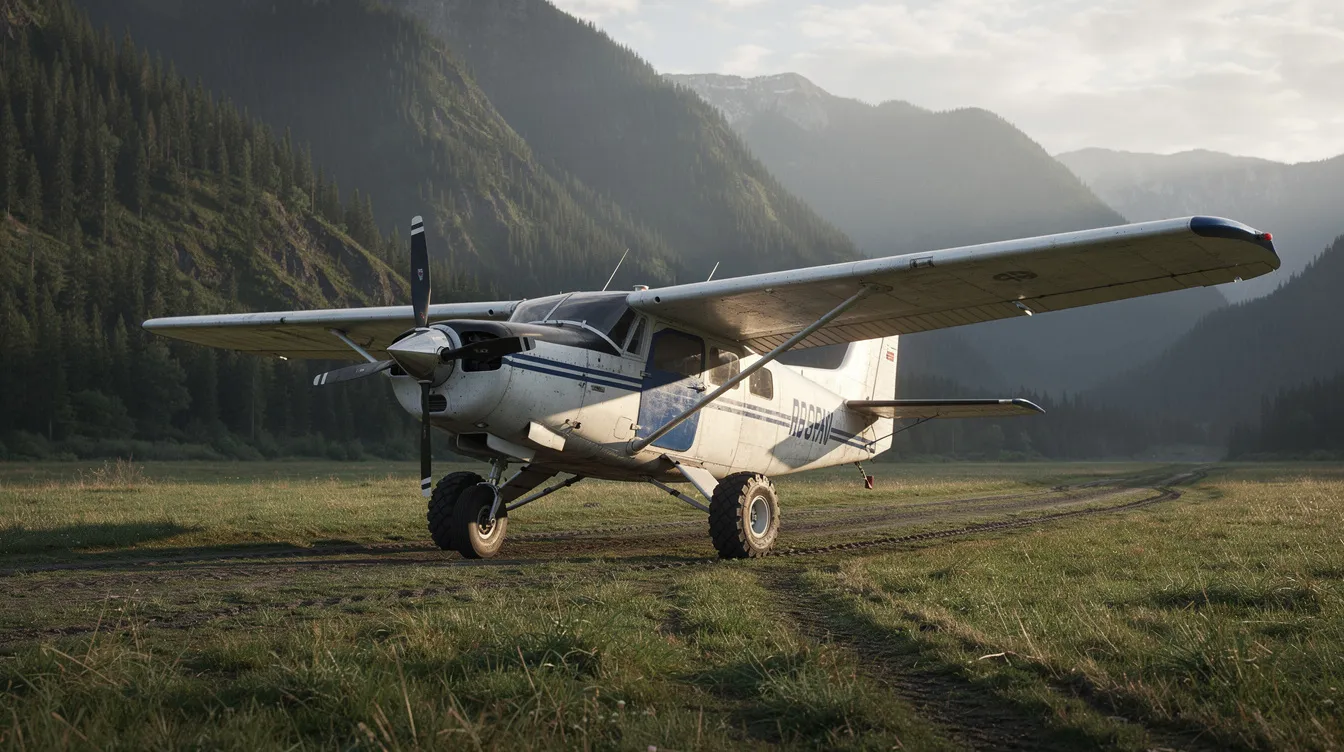
The Piper Cherokee Six is another classic flying SUV from Piper Aircraft. With a six-seat cabin and club seating on many models, it emphasizes load and comfort over speed. Cruise speed typically falls in the 135–140 knot range, but useful load often reaches 1,700–1,800 lb, with roughly 900–1,000 lb remaining after full fuel. Fixed gear and a sturdy airframe make it appropriate for modest turf and gravel strips.
Choose these utility types when 140–160 knots is acceptable but payload and short-field performance are critical. If you are carrying four adults, luggage, and outdoor gear on cross country travel, speed matters less than fuel stops and payload capacity.
This category represents the "sports sedans" of general aviation and personal aircraft: 180–240 knot cruise, modern avionics, and seating for four, built for fast cross country flying and personal transport.
The Cirrus SR22 from Cirrus Aircraft has become the defining personal use cross country plane of the past two decades. The Cirrus SR22 has a cruising speed of 183 knots, range of roughly 800–1,050 nm depending on payload, and the Cirrus Airframe Parachute System (CAPS) as standard equipment. That airframe parachute, combined with Perspective-level glass avionics, synthetic vision, and a 2- or 3-axis autopilot, makes it attractive for both training and serious IFR cross country missions. The SR22T turbocharged variant pushes higher: the Cirrus SR22T has a cruising speed of about 213 knots at altitude, with a service ceiling near 25,000 ft and fuel burn around 18–19 GPH at high cruise. Both versions seat four or five and offer cabin layouts optimized for long-distance travel.
The Mooney Acclaim Ultra is the speed king among single engine piston aircraft. The Mooney Acclaim Ultra reaches a top speed of 242 knots, powered by a turbocharged Continental TSIO-550 and retractable gear. Fuel efficiency for the speed is excellent, though the cabin is tighter than the SR22's and the landing technique is more demanding. This is an airplane for aviation enthusiast pilots who prioritize covering ground quickly. Many pilots who fly business city-pairs of 400–800 nm consider it the best aircraft in its class for sheer speed.
The Mooney Ovation Ultra holds the title of fastest normally aspirated single at roughly 197 knots cruise. It suits pilots wanting speed without turbo complexity, equipped with modern Garmin G1000 NXi-style avionics and known icing options. It is a fuel efficient alternative for missions that stay below 15,000 ft.
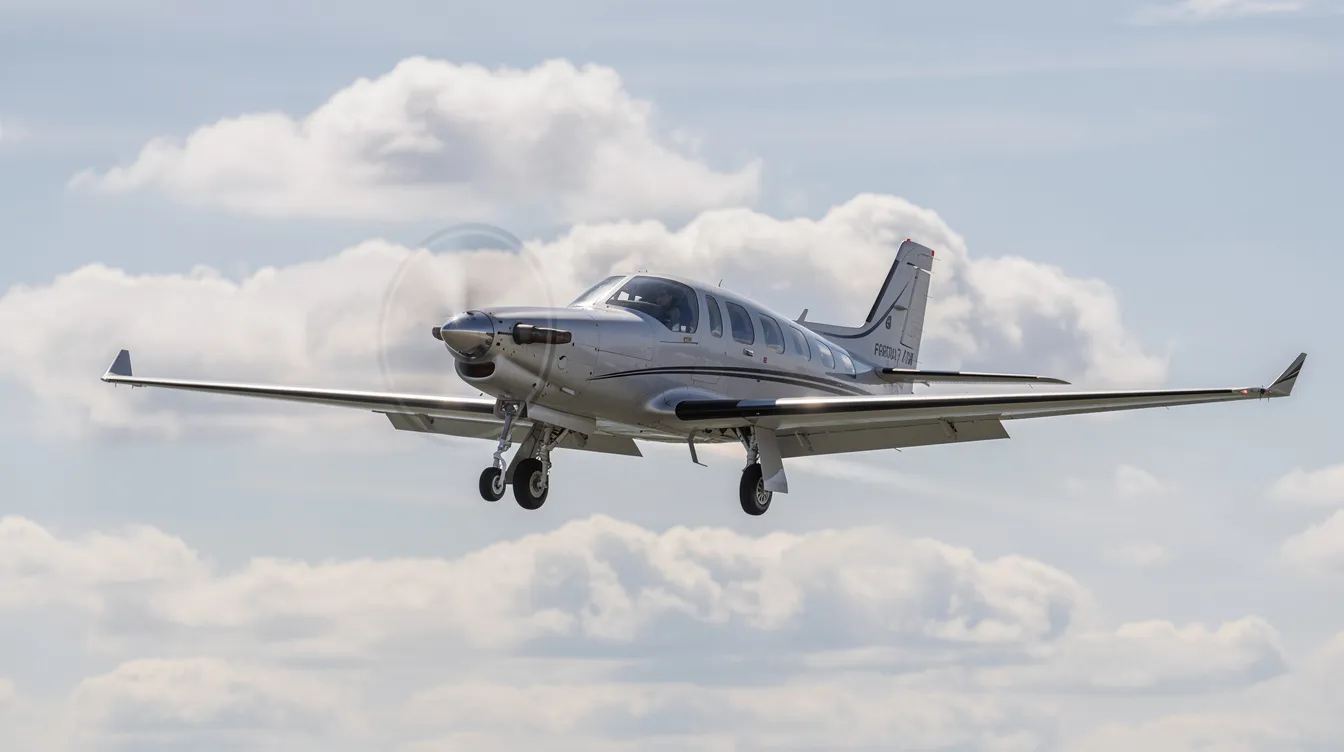
Other comparable high performance singles include the Cessna TTx and the Piper M350. The Piper M350 has a pressurized cabin and cruises at approximately 213 knots, making it one of the few single engine planes offering pressurized comfort for longer legs. All these platforms combine powerful engines, advanced avionics, and 600–1,200 nm range for serious cross country flying.
Leading four-seat cross-country aircraft deliver similar mission capabilities but vary by speed, comfort, cost, and technology. These planes are practical, family-friendly cross country machines often used in flight schools and by private pilots transitioning from both training and rental fleets to longer trips.
The Cessna Skylane (182) remains one of the most popular first airplane choices for owners stepping into cross country flying. Cruise sits around 145 knots (the Turbo Skylane T182T is somewhat faster), and its high-wing, fixed-gear design offers good visibility and forgiving handling. Useful load comfortably supports 3–4 occupants plus luggage on 400–700 nm legs. Fixed-gear planes often have lower maintenance costs, which matters for aircraft owners watching annual budgets.
The Cirrus SR20 cruises in the 150–155 knot range, making it a meaningful step up from basic trainers for cross country. Glass avionics, the CAPS parachute, and a comfortable cabin attract owner-pilots upgrading for flight training and personal transport. It lacks the SR22's top end but delivers a vast range of capability for 200–600 nm legs at predictable operating costs.
The Diamond DA40 has a cruise speed of 154 knots and a reputation for exceptional safety and benign handling. Composite construction, excellent visibility, and modern avionics make it suitable for both IFR training and moderate cross country missions. The newer Diamond DA50 RG entered the U.S. market in 2024, cruising at approximately 170 knots and adding retractable gear and a blade prop to the Diamond lineup, giving pilots a new aircraft option that bridges the gap between four-seat workhorses and high performance singles.
These planes shine for most pilots flying 200–600 nm legs who value predictable costs, reliability, and enough speed to make weekend trips or regional business flights efficient. Popularity of aircraft in this category directly affects maintenance support and resale value, which is worth considering before buying.
Combining bush performance with genuine cross country speed is one of aviation's hardest compromises. Most true bush planes cruise slower than 120 knots, and most fast singles cannot safely handle dirt or gravel.
The Cessna 185, a tailwheel classic, offers strong short-field performance and good prop clearance for unimproved surfaces. But the cabin feels tight for four adults over repeated 600-mile trips, and cruise speed (110–130 knots) makes longer legs tedious. The Cessna 206 and Turbo Stationair HD offer better cabin comfort while still handling rough strips, with around 150–161 knot cruise.
The Quest Kodiak (now Daher Kodiak) is the modern turboprop answer. Designed for backcountry and humanitarian missions, it cruises roughly 174 knots with a useful load of approximately 3,530 lb and range near 1,005 nm with reserves. Takeoff ground roll stays under 1,000 ft in many configurations. But acquisition and operating costs sit at turboprop levels, making it more realistic for commercial operators than most private pilots.
Retractable-gear high performance singles like some Mooneys and Comanches are less ideal for rough dirt or gravel strips. Lower prop clearance and complex landing gear exposed to debris create risk. Small airplanes with fixed gear and high wings handle these environments far better.
When evaluating bush-capable cross country planes, consider runway length, surface quality, density altitude, and payload carefully. What works on a well-kept grass strip in the Southeast may fail on a rocky backcountry strip at 7,000 ft in Wyoming.
Advanced avionics define the modern cross country plane, especially for IFR and night operations. Modern buyers favor aircraft with integrated glass cockpits and advanced safety features, and the market has responded.
Glass cockpits like Garmin G1000/G3000 and Cirrus Perspective feature integrated GPS, synthetic vision, and traffic and weather overlays. These systems give pilots real-time situational awareness that steam gauges simply cannot match. Two-axis or three-axis autopilots reduce pilot workload on multi-hour legs, particularly in IMC. Safety systems like terrain awareness and traffic alerts improve safety margins on every flight.
The Cirrus SR22 and SR22T illustrate what avionics integration looks like in practice. Their avionics suites, real-time weather datalink, and the CAPS airframe parachute make them attractive for family cross country trips. SR-series aircraft are among the most common platforms for serious IFR missions in North America.
Additional safety technologies include envelope protection (ESP) and coupled approaches in some high-performance singles. Ice protection options, including known-ice TKS systems on aircraft like the Mooney Acclaim Ultra, Ovation Ultra, and Piper M350, are relevant for winter cross-country flying in regions with frequent icing.
Pilots stepping into high-performance, advanced-avionics aircraft should commit to recurrent training and, when applicable, transition flight training offered by manufacturers or specialized flight schools. The technology only works when the pilot understands its limitations.
Aircraft ownership combines purchase price with ongoing fixed and variable costs, while chartering shifts those obligations to an operator. New aircraft can cost from $300,000 to over $1 million for high-performance piston singles, with models like the SR22T or M350 often reaching $400,000–$1.4M new by 2026. Used airframes cost less upfront but often need avionics upgrades and carry variable maintenance risk.
Main Cost Categories for Aircraft Ownership:
Purchase Price: Initial cost of the aircraft (new or used)
Maintenance: Annual inspections, engine overhauls, and unexpected repairs
Insurance: Premiums based on pilot experience and aircraft type
Hangar or Tie-Down Fees: Storage costs at your home airport
Navigation Database Subscriptions: Updates for avionics and GPS systems
Fuel: Varies by aircraft; 12–13 GPH for efficient singles at 150 knots, 15–20 GPH for faster/turbocharged aircraft
Upgrades: Avionics, interiors, or performance modifications
Depreciation: Loss of value over time
Fixed-gear planes often have lower maintenance costs, which can reduce annual expenses. Many aircraft owners underestimate these fixed costs until they experience them firsthand.
Chartering eliminates maintenance and storage responsibilities for travelers. Instead of carrying year-round fixed costs, you pay per trip. Private jet charters offer on-demand access to over 20,000 private charter aircraft, and travelers can access different aircraft categories—turboprops, light jets, midsize and heavy jets—matched to each mission rather than owning a single compromise airplane.
Jettly's digital platform provides on-demand access to a global fleet with instant private jet charter cost estimates for domestic cross-country and international routes. Booking is transparent and tech-driven, without committing to jet cards or fractional aircraft ownership programs. Long-distance flights often shift ownership economics toward turbine aircraft, providing higher speeds and comfort, but charter lets travelers access those capabilities without the capital commitment.
As a rule of thumb, ownership tends to make sense when someone flies personal missions very frequently (200–300+ hours per year). For occasional but important cross-country trips where convenience and flexibility matter most, charter through a platform like Jettly is often the smarter financial move.
Reframing "best cross country plane" from an owner's perspective to a traveler's perspective changes the equation. What matters is time saved, schedule control, and comfort—not who holds the title to the aircraft.
Charter aircraft categories suitable for cross country trips include turboprops like the Pilatus PC-12 and King Air (250–300+ knot cruise, access to short runways and regional airports), light jets like the Citation CJ-series and Phenom 100/300 (fast regional travel for 2–6 passengers on 800–1,500 nm legs), and midsize jets for coast-to-coast US missions with more cabin space and higher cruise speeds. These are traveling machines built for the mission.
Through Jettly's marketplace, travelers search routes like New York–Miami or Toronto–Vancouver and receive instant pricing across multiple aircraft types. Users compare time, cost, and cabin layouts before confirming a booking digitally. Private jet membership options and on-demand flights are available with transparent pricing.
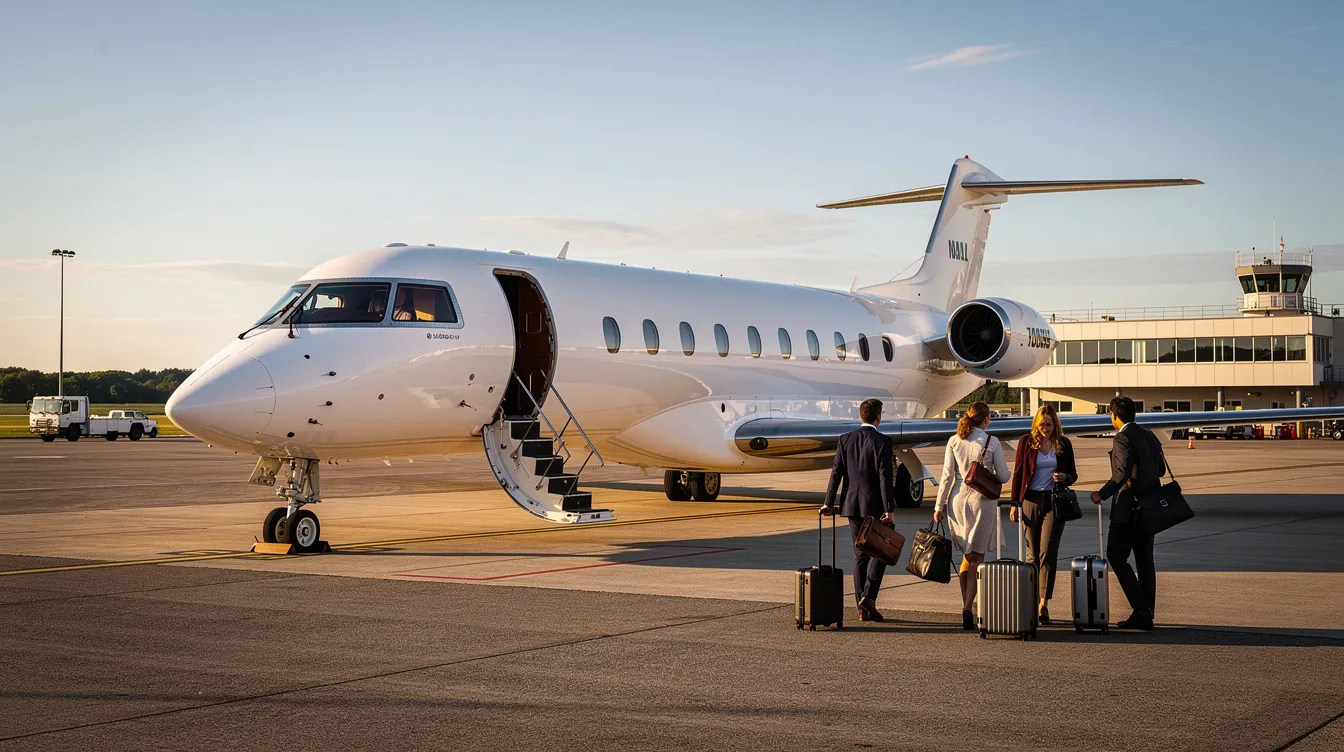
Private jets provide direct access to smaller airports for convenience, cutting total travel time. Security and boarding times shrink to minutes instead of hours. Custom departure times and same-day out-and-back capabilities matter for business cross-country trips where flying on your own schedule is non-negotiable. Private jet charters offer a luxury travel experience without ownership costs, and airport locator tools for regional and major fields make it easier to plan efficient routings. The ability to fly less fuel-intensive legs on a turboprop or stretch to a heavy jet for a coast-to-coast run gives travelers flexibility that no single personal aircraft can match.
Prospective owners and serious renters should build cross-country skills and experience before choosing a "forever" airplane or committing to a specific mission profile.
Local flight schools can offer transition training into complex and high-performance singles like the Cirrus SR22, Cessna Skylane, or Piper Comanche. They also provide structured IFR instruction focused on real cross-country routes, including mountain and weather decision-making. This kind of experience is invaluable before committing hundreds of thousands of dollars to a personal aircraft or comparing it with structured fractional solutions from major providers like NetJets and similar programs.
Before buying, log time in different types. Fly fixed-gear high-wings (Cessna 172/182), low-wing four-seaters (Piper PA-28), and, where possible, demo flights in faster aircraft like the SR22T or Mooney models. Pay attention to ergonomics, cabin space, avionics complexity, and how fatigue feels after 3–4 hours. What feels great for 90 minutes may become uncomfortable on a 500 nm leg.
Consult independent maintenance shops and type clubs for Bonanza, Comanche, Mooney, or Cirrus to understand real-world support, parts availability, and typical annual maintenance findings. The aviation consumer community is generous with operational data if you ask.
Even travelers leaning toward charter benefit from professional advice. Understanding which aircraft categories best match your typical passenger count and distance makes your search and selections more precise, whether you are an owner or booking through Jettly or exploring how to buy a seat on a private jet.
Below are common questions that extend beyond what the main article covers, focusing on training, regulations, and practical trip planning for cross-country flying.
A Private Pilot License (PPL) is the baseline, but an Instrument Rating (IR) is strongly recommended for regular 300–1,000 nm cross country flights, especially in variable weather. Most pilots benefit from at least 50+ hours of cross-country PIC time and structured IFR cross-country training before stepping into high-performance or complex aircraft like SR22s or Mooney Ultras.
Charter customers flying via Jettly do not need any licenses. They travel with professional crews while still enjoying high-performance aircraft capabilities, similar to those outlined in broader guides on finding the best cross-country plane for your travel.
Combine planned cruise speed (for example, 150 or 200 knots) with time for climb, descent, taxi, and potential fuel stops. Add 15–30 minutes per leg for taxi and run-up, plus 30–60 minutes if a fuel stop is required on longer routes. A 600 nm trip at 175 knots is roughly 3.5 hours block-to-block, plus ground time.
Private charter patterns often reduce total door-to-door time through direct routing, minimal ground delays, and access to smaller airports closer to your destination, and a variety of options exist for getting a seat on a private jet easily without full aircraft ownership.
Used ownership offers lower acquisition cost and the ability to customize avionics and interiors over time. The trade-off is variable maintenance and downtime risk. Charter through a platform like Jettly often provides access to late-model aircraft with current avionics and maintenance standards, without capital tied up in an airframe, fitting neatly into the broader landscape described in guides to charter airlines and private flight options. Travelers can review affordable private jet charter cost breakdowns to compare real numbers. Those flying only a few long trips per year often find charter more cost-effective once hangar, insurance, and maintenance are fully considered.
Some types come closest to this compromise—the Cessna 206 and Turbo Stationair HD, certain Maule configurations, and the Kodiak—but they usually trade speed for prop clearance, gear strength, and STOL performance. True backcountry strips and 200+ knot cruise rarely coexist in a single airframe without turboprop costs and more pilot training. Some pilots choose a slower, rugged airplane for bush access and book occasional charter on faster aircraft when schedule or distance demands it, sometimes using crowdsourced and shared-seat private flights to keep costs manageable.
Aircraft with turbocharging, de-icing or known-ice systems, and robust IFR avionics handle year-round cross country use better in regions with frequent icing or convective weather. In mild climates, a normally aspirated, non-ice-equipped aircraft like the Cessna Skylane or Diamond DA40 can be perfectly adequate with conservative planning around forecasts. Private charters can swap aircraft types or adjust departure times more flexibly around weather, a key advantage for business-critical cross-country missions.
The best cross country plane might be a rugged flying SUV like the Cessna Turbo Stationair HD, a high-performance single like the Cirrus SR22 or Mooney Acclaim Ultra, or a chartered turboprop or jet accessed through Jettly. It depends on mission, budget, and appetite for aircraft ownership.
Pilots and travelers should weigh cruise speed, range, load, runway types, avionics, and annual costs against how often they really fly long legs each year. For many, the best cross-country plane is one they can access on-demand rather than own outright—a new aircraft sitting in a hangar 300 days a year is an expensive way to restart production on a trip that charter handles in hours.
Ready to experience private travel on your own schedule? Explore flight options, structured jet card programs for frequent flyers, or request a quote at Jettly.
Share this post:
Jay Franco Serevilla
Jul 29, 2026
|
5
min read
Discover tips and trends in the industry.

5
min read
Cirrus Vision Jet Cruise Speed Knots: Performance, Safety, and Charter Use
The Cirrus Vision Jet boasts a maximum cruise speed of 311 knots, making it a competitive choice for regional travel. This guide explores its performance, safety features, and how charter users can leverage its capabilities through platforms like Jettly. Understanding cruise speed is essential for effective trip planning and maximizing the jet experience.
Read More
5
min read
Pilot Training Price in 2026: What It Really Costs to Become a Pilot
In 2026, pilot training costs in the U.S. range from $4,500 for a basic sport pilot certificate to over $130,000 for comprehensive career-track programs. Understanding these costs is crucial for aspiring pilots and career changers to budget effectively and avoid unexpected expenses. This guide breaks down the various training milestones and associated costs, helping you plan your aviation journey with confidence.
Read MoreStay updated with our latest insights and tips to elevate your journey with us.
MEMBERSHIPS AND ASSOCIATIONS



Disclaimer: Jettly operates as a charter broker, offering access to a global digital jet charter marketplace. Jettly is not a direct air carrier and does not own or operate aircraft. All advertised flights are conducted by third-party air carriers that are fully licensed and hold the appropriate Part 135 or Part 121 certifications issued by the Federal Aviation Administration (FAA) or equivalent regulatory authorities under U.S. or foreign law. Jettly complies fully with the U.S. Department of Transportation's Part 295 and Part 298 Charter Broker regulations. Jettly does not carry additional liability insurance. Passengers are covered by aircraft operator insurance. TICO: 50023770


