


Login
Get Instant Pricing On 23,000+ Aircraft

>
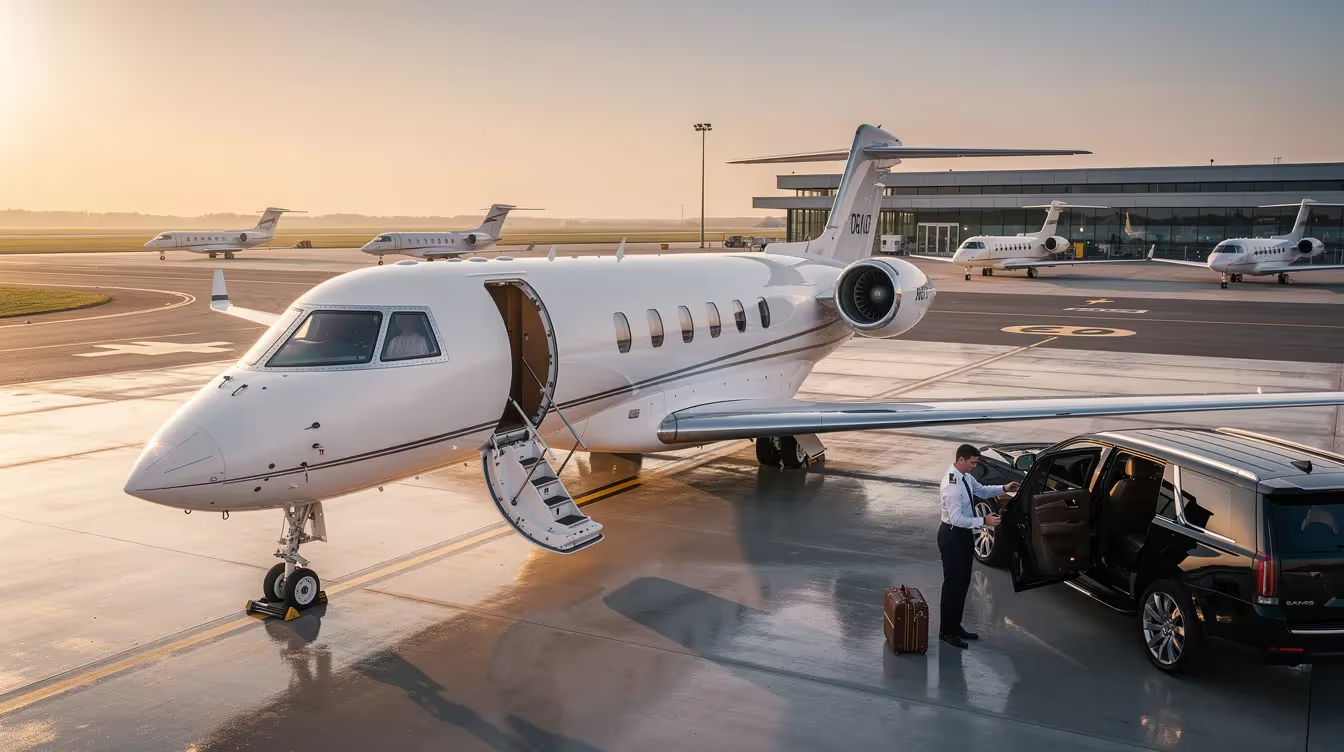
Choosing private jet travel benefits over a standard airline itinerary is rarely about image alone. For many travelers, the decision comes down to time, flexibility, privacy, and control. A private charter can reduce airport friction, open access to far more airports, and turn travel hours into working hours or uninterrupted personal time. Private jet cabins are equipped with quiet workspaces and high-speed internet, enabling seamless video conferencing. Jettly positions that value around transparent booking, broad aircraft access, and flexible solutions for travelers who want private aviation without the full burden of ownership. Private jet means having the flexibility to set your own schedule and enjoy a tailored travel experience.
Commercial aviation still serves an important role, especially for routine routes and budget-sensitive trips. However, compared to business class on commercial airlines, private jets offer superior comfort and privacy. When you fly privately, you benefit from unmatched convenience and exclusivity, avoiding the constraints of commercial flights. The privacy private jets provide ensures an exclusive, secure environment for confidential conversations and personal space. But once itineraries become more complex, privacy needs increase, or schedules tighten, the practical case for private flying becomes much stronger. That is why private aviation is often used by executives, founders, families with demanding schedules, and travelers heading to destinations that are poorly served by airline networks. Private jets also offer bespoke luxury, allowing customization of in-flight experiences, including tailored catering and cabin configurations.
Flying private is more than just a luxury—it’s a transformative way to travel that delivers unparalleled convenience, flexibility, and comfort. Whether you’re considering private jet ownership or simply chartering a private aircraft, private aviation allows you to take control of your travel experience. Unlike commercial flights, flying private means you set your own schedule, bypassing the rigid timetables and unpredictable delays of commercial airlines.
One of the most significant advantages of private jet travel is the quiet and private environment it provides. This makes it ideal for confidential business meetings, personal conversations, or simply unwinding in peace. Passengers enjoy access to smaller airports, which not only brings them closer to their final destination but also helps them avoid long security lines and crowded terminals. Personalized amenities, from gourmet meals to tailored entertainment, further enhance the journey, ensuring every aspect of your flight is designed around your needs. For both business and leisure travelers, private aviation offers a level of comfort, privacy, and efficiency that commercial flights simply can’t match.
The strongest private jet travel benefits usually show up before takeoff even begins. Airline travel often requires early airport arrival, security queues, fixed schedules, and exposure to delays caused by crowded hub operations. TSA says travelers should allow enough time for parking, check-in, boarding passes, and security screening, and under normal travel conditions many passengers plan around arriving roughly two hours before domestic departures and three hours before international ones.
Private aviation changes that equation. Many private passengers can arrive much closer to departure time because the process is generally handled through private terminals or fixed-base operators rather than crowded commercial airports, and tools like an airport locator for private jet charter make it easier to identify convenient departure and arrival points that avoid long lines, security delays, and crowded waiting areas. That does not eliminate aviation rules or operational checks, but it often cuts out the most time-consuming parts of the standard airport experience. Passengers can arrive just 15-30 minutes before departure, bypassing long check-in and security lines at commercial airports.
For travelers evaluating whether private aviation is worth considering, the common profiles are easy to recognize:
Executives and teams moving between multiple cities often gain the most value because a direct charter can replace layovers, overnight stays, and wasted ground time. Business aviation groups consistently point to employee time savings and en route productivity as major reasons companies choose private flying.
Public figures, deal teams, legal advisors, and companies working on confidential matters often prefer a controlled cabin environment. Private jets offer an exclusive and secure environment, making them ideal for high-profile individuals and their business associates. NBAA notes that privacy in business aviation is important for both personal security and industrial security.
Many private jets offer spacious and comfortable cabins, making them an excellent choice for families going to ski regions, islands, remote resorts, or multi-stop vacations, including international routes that would otherwise require multiple connections. Private aviation reduces the number of connections and gets travelers closer to the final destination, and understanding how private jets fly internationally helps travelers plan those complex trips. Access to a much larger airport network is a major reason.
Private flying is ideal for families, providing a spacious environment that allows for more movement, especially beneficial for children.
Additionally, private jets can access remote destinations that are often unreachable by commercial airlines, offering increased flexibility and convenience for travelers.

Time is often the clearest advantage. Private aviation is built around direct access, faster airport flow, and flexible scheduling. Unlike flying commercially, which often involves long security lines, crowded terminals, and uncomfortable seating, private jets provide a stress-free environment. Commercial airlines operate on fixed routes and banked schedules designed around mass demand. Private charters operate around the traveler’s schedule, aircraft availability, and airport operating conditions, and platforms showcasing a broad range of private charter aircraft options make matching the right jet to the mission much easier.
A traveler flying commercial might leave home early, drive to a major airport, park, clear security, wait at the gate, board, connect through a hub, wait again, and then arrange a long ground transfer on arrival. A private traveler may drive to a closer airport, board through a private terminal, fly direct, and land nearer to the final destination. In many cases, that is where the real time savings happen. Private jets often fly faster, climb higher, and use smaller, less congested airports, saving hours per trip by eliminating layovers and long airport waits.
Same-day return trips are another important benefit. A trip that would require an overnight stay on commercial airlines can sometimes be completed in one day on a private itinerary, especially when multiple meetings are involved. For a company, that can reduce hotel costs, improve executive availability, and shrink downtime across the whole team.
Commercial travelers often lose hours to connections. Private charters can frequently turn a multi-leg airline day into a nonstop itinerary, particularly on regional or secondary routes. The value is not only speed. It is also predictability and less exposure to missed connections.
Private aviation also helps when schedules change. Travelers may need a later departure after a meeting runs long or an earlier departure to avoid losing a day. Commercial tickets can sometimes accommodate that, but not always without penalties, availability constraints, or long waits. A charter model is built for more flexible timing.
One of the most practical private jet travel benefits is access. Unlike a commercial airliner, a private jet charter offers greater flexibility and can utilize a much wider range of airports, including smaller and remote locations. The FAA reports more than 5,000 public airports in the United States, while commercial airline service operates through a much smaller subset of those airports. FAA airport planning materials also note roughly 5,000 public-use and approximately 14,400 private-use facilities in the U.S. system. That much wider airfield network gives private aviation a major routing advantage.
This matters because the closest airport is not always a major commercial hub. Travelers going to a resort area, manufacturing plant, private estate, secondary city, or remote business site often care more about final ground travel time than airborne time. A private aircraft can often land significantly closer to the destination and reduce the total travel day.
Additionally, private jets allow you to travel with pets in the cabin, unlike commercial flights where pets are often confined to cargo holds.
Examples of routes where this matters include, and many travelers compare the best private jet charter companies when deciding how to fly these and other popular city pairs:
This is a classic business and leisure route where private aviation appeals to travelers who want direct scheduling, fast terminal access, and the ability to select an aircraft size that matches the group. Most private jets offer a high level of comfort, customization, and luxury amenities, allowing travelers to tailor their experience to individual preferences.
Jettly highlights this route as one where light, midsize, and heavy jet options can suit different budgets and passenger counts. Private jets also offer onboard amenities that go beyond the standard comforts of commercial aviation, including plush seating and advanced entertainment systems, and some providers coordinate specialized in-flight catering for private jets so meals match passenger preferences and schedules.
A longer domestic route where private travel can appeal to executives, production teams, and families who want a controlled cabin and efficient airport flow. Luxurious interiors set private jets apart, providing a premium experience that surpasses commercial flights. Aircraft selection becomes more important here because range, passenger count, and onboard needs affect the best fit. Jettly’s aircraft guidance emphasizes choosing the right class first, then the right model. Private jet charter travel also offers a bespoke travel experience, with possibilities for personalized amenities like catering and entertainment.
A short, high-frequency route where the reduced terminal time and direct access can be as valuable as the flight itself. For short sectors, the airport experience often defines whether the trip feels efficient. Private lounges at private airports offer exclusive, quiet, and comfortable waiting areas, allowing travelers to relax in a stress-free environment before their flight.
Additionally, private jets allow you to pre-select meals that suit your taste and dietary requirements, ensuring a personalized dining experience, and some travelers even choose more affordable access models such as buying a single seat on a private jet instead of chartering the whole aircraft.
Private cabins create a controlled environment that commercial airlines cannot fully match. This is especially important for travelers discussing legal strategy, mergers, client matters, family security, or sensitive financial information. Private jets also allow passengers to conduct meetings or work on confidential projects in a secure setting, ensuring business activities remain uninterrupted and private at high altitudes. NBAA specifically frames privacy in business aviation as critical to both personal and corporate security.
Private jets offer a dedicated space for conducting meetings or handling confidential projects, enabling uninterrupted business activities during flights.
Comfort also goes beyond seat width. The cabin can be aligned to the purpose of the trip. Some travelers want a productive workspace with Wi-Fi and room for in-flight meetings. Others want quiet rest before a major event or after a long workday. The cabin of a private jet serves as a secure, mobile boardroom or peaceful sanctuary, enhancing productivity. Jettly’s aircraft pages show that cabin size, range, and configuration vary widely between light jets, midsize aircraft, and heavy jets, which is why matching the aircraft to the mission matters.
In a commercial cabin, conversations are public by default. On a private charter, the cabin can function more like a secure mobile office, providing an ideal setting for confidential business discussions. Business aviation sources regularly cite en route planning, meetings, and confidential discussion as core productivity benefits. The private environment and in-flight Wi-Fi also enable business travelers to hold video conferences, presentations, and sensitive discussions seamlessly during their flight.
Private jet travel enhances productivity by allowing business discussions and work to continue in the air.
For long or demanding trips, privacy can also improve recovery. A quieter environment, fewer interruptions, and more personal space can make arrival more productive. Advanced onboard entertainment systems further enhance comfort, allowing passengers to relax and unwind during the flight. That matters for executives heading into negotiations, speakers heading to events, or families traveling with children.
Private jets also offer a personalized travel experience tailored to individual preferences, ensuring optimal comfort and rest.
Private aviation typically involves direct baggage handling and fewer transfer points. That alone lowers the chance of baggage misrouting compared with commercial itineraries that include check-in counters, multiple handlers, and connecting flights. While no travel mode removes all baggage risk, avoiding standard airline transfer chains is a practical advantage.
It also reduces another form of friction: uncertainty. Commercial travelers often deal with gate changes, boarding groups, carry-on space limits, and connection stress. Private charter simplifies many of those moving parts, which is one reason it is attractive for short-notice or high-stakes trips.
When it comes to reliability and flexibility, private jet travel stands out as the preferred choice for discerning travelers. Private jet operators are committed to maintaining scheduled flights that prioritize your time, ensuring punctual departures and arrivals with very few exceptions. Unlike commercial flights, which are often subject to delays and cancellations, private aviation offers a dependable solution that keeps your itinerary on track.
A major benefit of private jets is their ability to access smaller airports, often located much closer to your final destination. This reduces the need for lengthy ground transportation and streamlines your entire journey. Passengers can avoid the stress of crowded airports, long security lines, and the risk of lost luggage, enjoying a truly stress-free experience from start to finish. For business travelers, the private cabin environment is perfect for conducting meetings, preparing presentations, or simply focusing on work while in transit. Private jets offer a level of reliability and efficiency that makes every trip smoother and more productive.
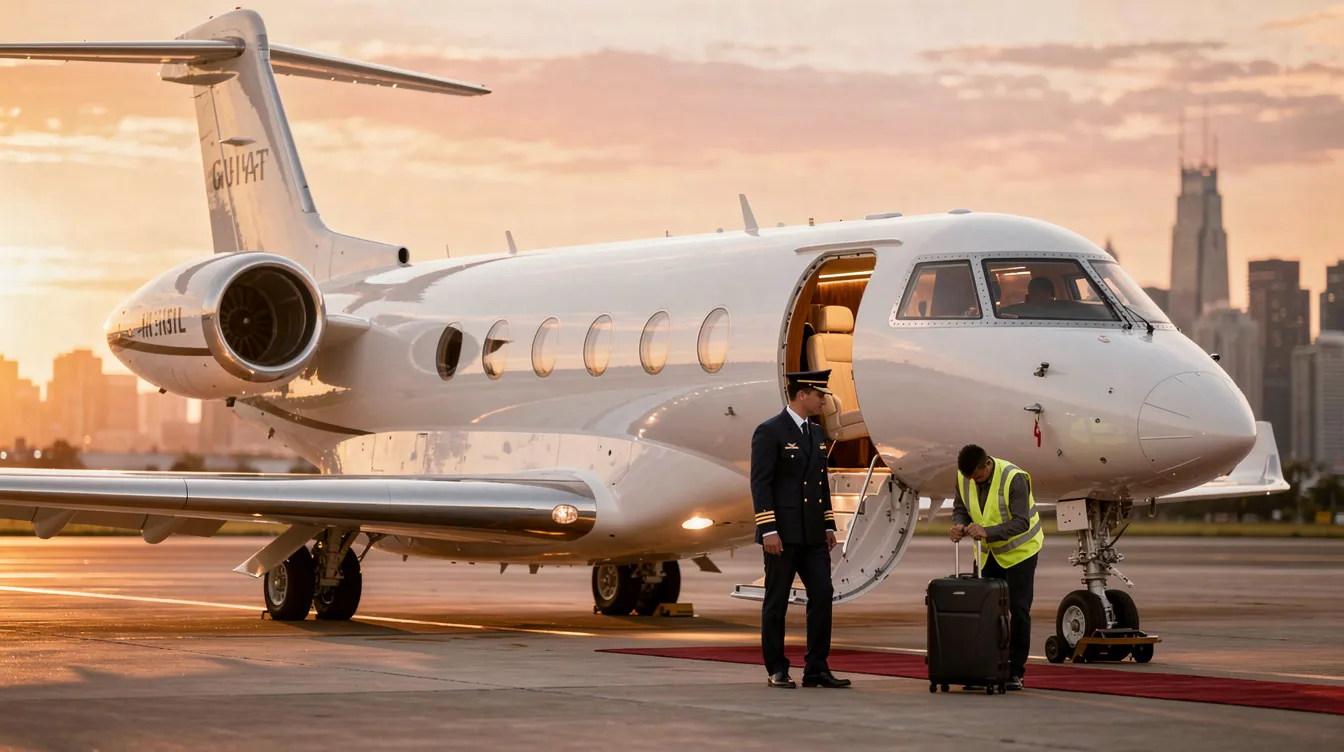
Not every traveler who wants the benefits of private aviation needs to buy an aircraft. In fact, many do not. While having your own aircraft offers unmatched independence, convenience, and freedom from scheduling conflicts, Jettly’s model centers on access without owning or operating aircraft directly, giving travelers a way to book charters on demand and also explore private jet memberships or jet-card style options depending on usage.
This is usually the cleanest fit for occasional or variable flyers. Travelers book when needed, select the right aircraft for that specific trip, and avoid long-term commitments, acquisition costs, and maintenance obligations, while providers like Jettly focus on affordable private jet charter pricing.
Jet cards generally involve pre-purchasing flight hours or funds in exchange for simplified booking and more predictable pricing. Jettly’s Jet Card Program for corporate and personal travel notes that memberships and jet-card options can provide discounted hourly rates and added benefits without requiring ownership, and readers new to the concept can start with a primer on what a jet card is and how it works.
Fractional ownership gives a traveler or company a share in an aircraft and access to a defined number of annual hours, but it comes with acquisition cost, recurring fees, and a longer-term ownership structure, and prospective buyers should understand the detailed breakdown of fractional jet ownership costs. Travelers weighing this model can benefit from a detailed look at the pros, cons, and costs of fractional jet ownership as well as a broader perspective on fractional private jet ownership: the good, the bad, the ugly. Jettly offers information on fractional ownership as part of its broader private aviation marketplace, but that route generally suits much heavier users than simple charter demand.
Ownership can make sense for very frequent flyers, but the economics are serious, and many travelers start by using a private jet charter cost estimator to understand how pay-per-trip pricing compares with ownership, leasing, or other structures explained in guides to private jet lease cost. Aircraft purchase prices vary widely by size, age, and range. The initial purchase represents a significant upfront investment, with the purchase price being a primary factor in the total cost of ownership. Before considering ownership, it is essential to assess your financial situation to ensure it aligns with your overall investment goals and tax strategies. Owning a private jet requires a significant upfront capital expenditure, often ranging from $3 million for a very light jet to over $70 million for a large, long-range aircraft. Beyond acquisition, owners face crew costs, with crew salaries and maintenance costs being major ongoing expenses, as well as hangar fees, insurance, regulatory compliance, and fuel. Industry guidance commonly treats annual operating cost as a meaningful ongoing burden, with annual operating expenses easily reaching 5-10% of the aircraft's value. Direct costs of owning a private jet include the purchase price, maintenance, fuel, and staffing, while indirect costs might include insurance, hangar rental, and depreciation. Regulatory compliance is critical, with aviation authorities setting stringent safety standards, maintenance requirements, and crew training protocols to ensure reliable and secure flights. Resale value is never guaranteed because aircraft values are affected by market cycles, maintenance status, and fleet trends. Private jets depreciate over time, similar to cars, which can lead to financial losses if you decide to sell. Private jet ownership is often justified for individuals with a net worth of over $50 million, ensuring they can handle acquisition and operating expenses. Industry professionals often suggest that private jet ownership becomes cost-effective only if you fly 150-200 hours or more per year. Private aviation prioritizes safety and reliability, with operators following stringent safety standards set by aviation authorities.
This is where non-ownership models often become more attractive. A traveler who flies irregularly may get most of the same functional benefits through charter or a membership option, without tying up capital in an asset that depreciates and requires management.
Ownership becomes easier to justify when annual flight hours are very high, routes are repetitive, schedule control is critical, and the value of guaranteed access outweighs the fixed costs, which is why many heavy users look at industry leaders like NetJets and its fractional ownership model. Travelers at that level often compare the best fractional jet ownership companies and programs alongside full ownership, charter, and cards. When considering private jet ownership, it's important to weigh both the advantages and disadvantages, such as financial costs, convenience, luxury, and environmental impact, to make an informed decision. Private jets also provide a secure, confidential space for conducting sensitive business discussions or enjoying personal time away. Some business users may also evaluate tax treatment based on how the aircraft is used, though that depends on jurisdiction and specific business circumstances.
For occasional or moderately frequent travelers, charter is often the more efficient financial decision. It avoids capital commitment while still delivering the core private jet travel benefits of privacy, schedule control, and access to a broad airport network, and services like Jettly position themselves as a flexible NetJets alternative for flying private.
Business aviation is most compelling when speed creates measurable value. A direct charter can let a team visit two or three cities in one day, return home that evening, and use in-flight time for meetings or preparation. That kind of schedule is often unrealistic on commercial networks, especially when an urgent business meeting arises and flexibility is crucial.
The productivity gain is not theoretical. Industry business aviation sources repeatedly describe the aircraft cabin as a working environment rather than dead travel time. When senior employees spend less time in terminals and more time either working or resting, the trip can produce better results.
Additionally, private travel minimizes public exposure and offers higher hygiene standards, with superior air quality from medical-grade HEPA filters.
That helps explain why private aviation is often chosen for:
Direct routing and short-notice departures help teams see more clients in less time.
Smaller airport access matters when the destination is nowhere near a major airline hub.
Confidential discussion can happen in transit rather than waiting until arrival.
Traveling on commercial flights often means dealing with a host of inconveniences that can disrupt your plans and add unnecessary stress. Crowded airports, long security lines, and unpredictable delays are common frustrations for passengers. Lost luggage and restrictive baggage policies can further complicate your journey, while limited legroom and minimal personalized service make for an uncomfortable experience.
Commercial airlines operate on fixed schedules, leaving little room for flexibility if your plans change. In contrast, private jet travel offers a tailored experience, allowing you to customize your flight schedule, catering, and in-flight entertainment to suit your preferences. With private aviation, you can bypass the hassles of commercial flights and enjoy a more comfortable, efficient, and productive journey, complete with personalized service and attention to detail.
Private aviation is not perfect. Weather still affects all aircraft operations. Airport curfews, air traffic flow restrictions, and maintenance issues can still change plans. In ownership models, crew availability and aircraft downtime also have to be managed. Even in charter, aircraft positioning and availability affect pricing and timing. One of the major benefits of private aviation is the use of private terminals and enhanced security, which significantly improve convenience, privacy, and the overall travel experience compared to commercial airports.
Environmental scrutiny is another real factor. Aviation emissions are under increasing pressure globally. The U.S. Department of Energy notes that sustainable aviation fuel can reduce air pollution from air transportation, and NBAA identifies SAF as a major tool in business aviation’s push toward net-zero carbon emissions by 2050. That does not remove aviation’s environmental footprint, but it shows where operational efficiency and carbon-reduction efforts are moving.
Travelers and companies that want the convenience of private flying increasingly weigh both the operational value and the environmental profile of each trip. Private aviation allows you to bypass crowded terminals and security lines, reducing exposure to potential security risks and unwanted attention. That is likely to remain part of the decision process going forward.
The long-term advantages of private jet travel extend far beyond the immediate comfort and convenience. By choosing private aviation, travelers benefit from significant time savings, avoiding the long lines, security checks, and crowded terminals that define commercial air travel. Private jets provide a quiet and private environment, making them ideal for confidential business meetings, personal conversations, or simply relaxing in peace.
Over time, the ability to fly on your own schedule and access a wider range of airports translates into greater flexibility and efficiency, whether for business meetings or family vacations. Private jets provide personalized service and amenities that enhance every aspect of the journey, contributing to a higher quality of life and improved business productivity. As the aviation industry continues to innovate, the long term advantages of private jet travel—such as unmatched convenience, enhanced privacy, and significant time savings—make it an increasingly attractive option for those who value efficiency, comfort, and a truly personalized travel experience.
The answer depends less on status and more on usage. A company or individual flying often enough to justify the fixed costs may value ownership for control and immediate availability. However, it's crucial to assess your financial situation to determine if private jet ownership aligns with your long-term financial health and investment goals. But many travelers do not need to own an aircraft to get the core advantages they care about. Charter, jet cards, and flexible membership models can cover the same mission profile with less financial exposure.
For most buyers comparing options, the key decision points are:
How many hours will be flown each year
How often schedules change
Whether privacy is a must-have or just a preference
Whether routes regularly involve smaller or remote airports
How much capital the traveler wants tied up in aviation access rather than business or other assets
Additionally, traveling on a private jet ensures private space for you and your companions, making it ideal for confidential business meetings and personal trips.
The most important private jet travel benefits are practical, not abstract. A private flight offers a premium, customizable mode of travel that emphasizes privacy, comfort, and productivity. Private aviation can save time, improve schedule control, create a more private environment, and open access to airports that commercial airlines do not regularly serve. For business travelers, that often means higher productivity. For leisure travelers, it can mean a smoother trip with fewer compromises. For many users, charter, membership, or jet-card access provides those benefits without the heavy costs and responsibilities of ownership.
Jettly fits into that decision by offering broad aircraft access, on-demand charter flexibility, and membership pathways for travelers who want private aviation to feel more transparent and easier to book. Learn more about Jettly’s charter options at https://www.jettly.com. Ready to experience private travel on your terms? Explore flight options or request a quote at https://www.jettly.com.
Additionally, private jets allow you to control who boards your aircraft, creating a safe and exclusive environment for you, your family, and your business associates.
If you want, I can also turn this into a version with a meta title, meta description, and suggested internal links for Jettly’s blog CMS.
Share this post:
Jay Franco Serevilla
Mar 10, 2026
|
5
min read
Discover tips and trends in the industry.
5
min read
Jet Market Outlook: Private Jet Demand, Regional Growth, and Charter Opportunities
The private jet market is experiencing significant growth, projected to rise from USD 25.5 billion in 2024 to USD 38.25 billion by 2033. Key drivers include increasing demand from high-net-worth individuals, technological advancements, and a shift towards charter services over ownership. Jettly offers a flexible platform for travelers to access a vast network of private jets, catering to the evolving needs of business and leisure travelers.
Read More
5
min read
Jet It Cost: What Private Jet Travel Really Costs in 2026
In 2026, private jet rental costs range from $2,000 to $24,000 per flight hour, influenced by aircraft type and route. This guide provides insights into hourly rates, hidden fees, and cost-saving strategies, helping travelers choose the best access model for their needs. Jettly's digital marketplace offers instant pricing and transparency for private jet bookings.
Read MoreStay updated with our latest insights and tips to elevate your journey with us.
MEMBERSHIPS AND ASSOCIATIONS



Disclaimer: Jettly operates as a charter broker, offering access to a global digital jet charter marketplace. Jettly is not a direct air carrier and does not own or operate aircraft. All advertised flights are conducted by third-party air carriers that are fully licensed and hold the appropriate Part 135 or Part 121 certifications issued by the Federal Aviation Administration (FAA) or equivalent regulatory authorities under U.S. or foreign law. Jettly complies fully with the U.S. Department of Transportation's Part 295 and Part 298 Charter Broker regulations. Jettly does not carry additional liability insurance. Passengers are covered by aircraft operator insurance. TICO: 50023770


