



Login
Get Instant Pricing On 23,000+ Aircraft

>
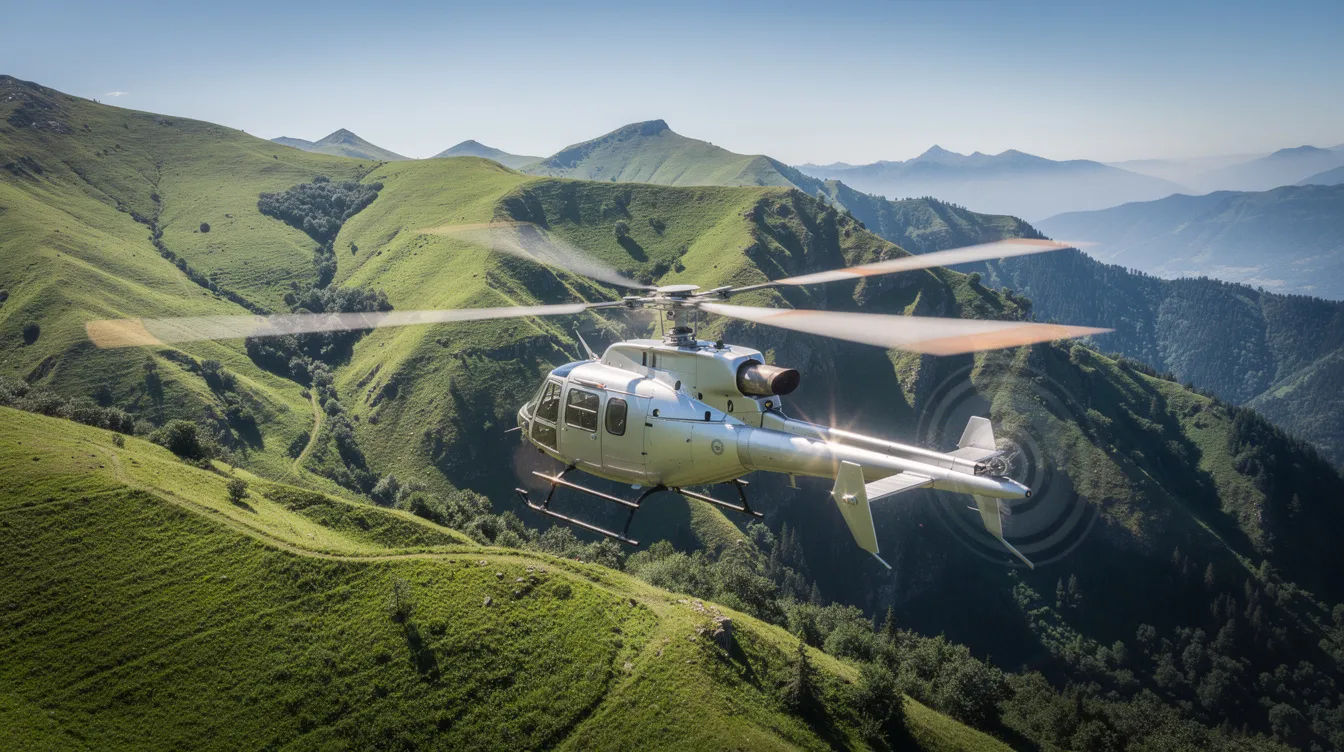
The Bell 206B JetRanger is one of the most recognized light turbine helicopters ever built. Introduced in the 1960s by Bell Helicopter, this single-engine helicopter has logged tens of millions of flight hours across civilian, military, and governmental roles worldwide. For charter travelers looking to cover short distances quickly - whether that means hopping between city helipads, touring a coastline, or reaching a remote lodge - the Bell 206B helicopter remains a practical, cost-effective choice. Here is what you need to know about its specifications, history, use cases, and how to charter one through Jettly.
The Bell 206B JetRanger is a light utility helicopter widely used for charter, training, utility work, and sightseeing since the late 1960s, with over 8,400 units produced by 2010.
It seats up to four occupants (pilot plus three passengers), cruises at around 110 mph, and offers relatively low operating costs compared with larger helicopters.
Multiple Bell 206 variants exist - including the Bell 206A, 206B, LongRanger, Gemini ST, and TwinRanger - but the Bell 206B remains one of the most produced and trusted models in the world.
Jettly's digital charter platform sources Bell 206 series helicopters for short-range transfers, aerial tours, and point-to-point hops where a jet or turboprop would be inefficient, alongside a broad portfolio of private charter aircraft for longer-range and higher-capacity missions.
Readers can compare Bell 206B charter options and pricing with other aircraft categories through Jettly's on-demand marketplace.
The Bell 206 family is a series of light utility helicopters developed by Bell Helicopter in the 1960s. The Bell 206A JetRanger was the first civilian model, and the Bell 206B JetRanger that followed became the refined version that cemented the JetRanger name as a global standard in compact turbine rotorcraft.
The Bell 206B is considered a benchmark in the light turbine helicopter industry. It is designed around a single turboshaft engine, a two-bladed main rotor, skid landing gear, and a cabin that can carry up to four occupants. The helicopter can transport up to three passengers alongside the pilot, depending on configuration and weight limits.
In Jettly's broader charter context, the Bell 206B serves as a cost-effective option when travelers need helicopter access to remote locations, helipads, or congested city centers where fixed-wing aircraft simply cannot land. For a deeper look at the full model line, see Jettly's Bell 206 overview page.
Bell designed the original YOH-4A as its entry to the U.S. Army's Light Observation Helicopter competition in the early 1960s. The first prototype earned the unflattering nickname "ugly duckling" for its boxy, unattractive fuselage - and it lost the Army contract. Bell then completely redesigned the airframe into a sleeker civilian model.
The result was the Bell 206A JetRanger, launched in 1967 with improved aesthetics and stronger market appeal for corporate and utility operators. The evolution continued with the Bell 206B JetRanger II, introduced in 1971, which featured the more powerful Allison 250-C20 engine and better hot-and-high performance.
Later Bell 206B-3 models refined the development further with upgraded C20B/C20J engines and improved tail rotor handling. Production continued until the last Bell 206B was delivered in December 2010. By that point, over 8,400 Jet Rangers had been produced. Licensed manufacture by Agusta in Italy expanded the Jet Ranger's presence across Europe, supporting government, police, and offshore operators in the region. The military version - the OH-58 Kiowa - demonstrated the robustness of the baseline design across varied conditions.
The Bell 206B-3 JetRanger III is the version most commonly encountered in modern charter and utility operations. Here are the key figures that matter for operators and passengers alike.
|
Specification |
Bell 206B / 206B-3 |
|---|---|
|
Engine |
Single Rolls-Royce 250-C20J turboshaft (~420 shp) |
|
Cruising speed (cruise TAS) |
100–110 knots (~110 mph / 205 km/h) |
|
Maximum speed |
Approximately 120–122 knots (~140 mph) |
|
Published maximum range |
Up to 374 nautical miles |
|
Effective charter range |
~250–300 nautical miles with reserves |
|
Maximum gross weight |
3,200 lbs (206B); 3,350 lbs max internal payload (206B-3) |
|
External sling-load capacity |
Up to 900 lbs |
|
Fuel consumption |
~90 liters per hour (~25 gallons/hr) |
|
Fuel capacity |
~91 gallons usable |
|
Main rotor diameter |
33 ft 4 in (10.16 m) |
|
Fuselage length |
~31 ft 2 in |
|
Seating |
Pilot + up to 3 passengers |
The aircraft has a two-blade semi-rigid rotor system, which keeps parts count low and simplifies maintenance. The engine model - the Rolls-Royce 250-C20J - provides a good power-to-weight ratio, though high-density altitude can impair the helicopter's capabilities by reducing available lift and climb performance. For detailed Bell 206B specs and charter rates, Jettly's aircraft page offers a quick reference.
The Bell 206B's cabin is compact but practical. Large windows and low vibration levels make it well suited to sightseeing, aerial photography, and short corporate hops. Its design is known for reliability and operational safety - qualities that have kept the model in service for decades.
Key structural features include the two-bladed semi-rigid main rotor for simplicity, a vertical fin for directional stability, skid gear for operations on unprepared surfaces, and robust construction across a three-section fuselage (forward cabin, engine compartment, tailboom) that simplifies field maintenance.
Interior options range from standard rear bench seating to club-style layouts. Operators often add leather seats, enhanced soundproofing, and noise-attenuating headsets for charter passengers. Common optional equipment for mission-specific roles includes cargo hooks and sling load kits, high skid gear, external baskets, observation windows, bleed-air heaters, and wire-strike protection systems.
On the resale market, interior refurbishments and new paint can add five-figure USD value increases - a good indicator that a well-maintained Bell 206B can present well for charter customers expecting a polished experience.
Multiple variants share the core Jet Ranger design but differ in engine power, cabin length, and mission focus.
Bell 206A JetRanger: The original civilian version, powered by the lower-output Allison 250-C18 (~317 shp). Many airframes were later upgraded to Bell 206B-equivalent standards via service kits.
Bell 206B (JetRanger II / III): The most common versions, featuring uprated engines and improved, reliable performance. These form the backbone of many training, police, and charter fleets globally.
Bell 206L LongRanger (L-1, L-3, L-4): Stretched-cabin models seating up to six or seven passengers with higher gross weights. Charter rates are higher than the 206B. For a newer light helicopter comparison, see Jettly's Bell 505 Jet Ranger X overview.
Gemini ST / TwinRanger: Tridair's Gemini ST conversions and Bell's limited-production 206LT TwinRanger added twin-engine redundancy for operators needing extra safety margins without stepping up to much larger airframes. These are rare and carry higher maintenance costs.
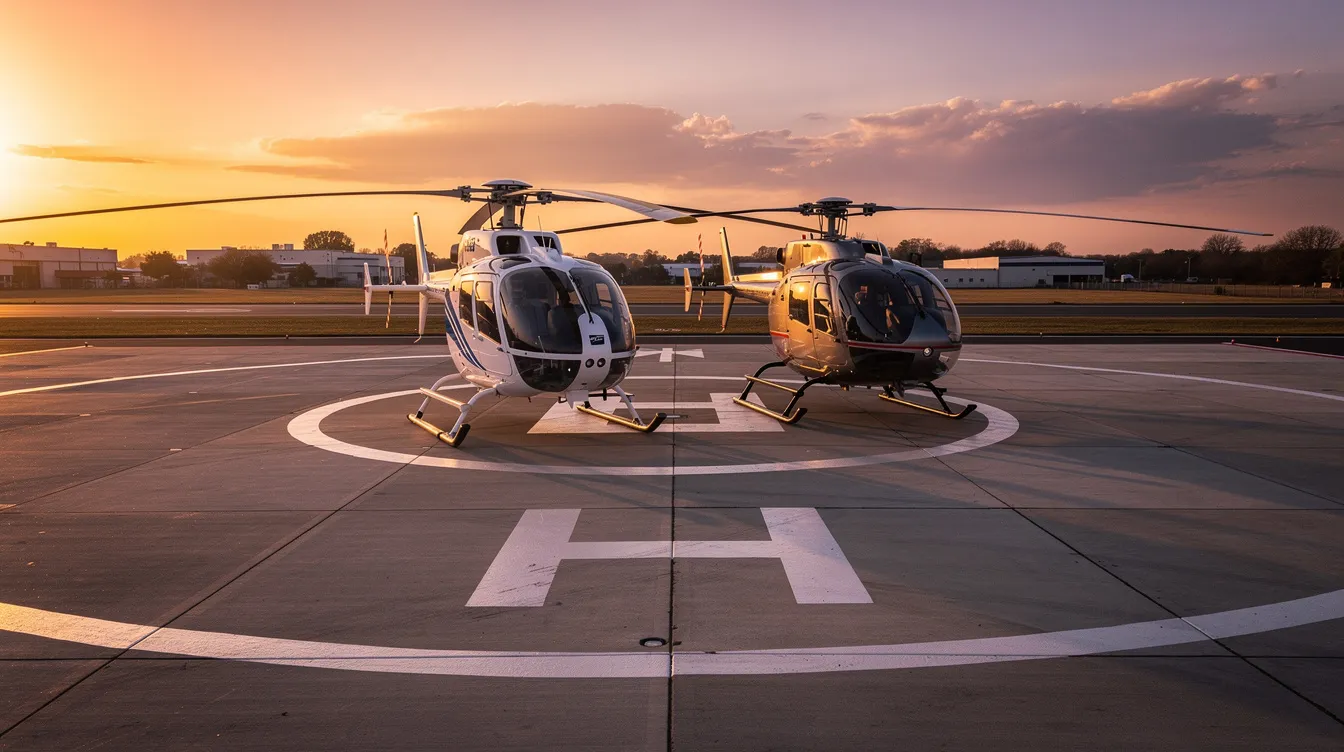
The Bell 206B JetRanger's versatility and adaptability explain why operators around the world continue to fly it for both commercial and governmental missions.
Passenger transport: Executive transfers between city centers and nearby airports, hotel or resort shuttles, and family trips to islands, ski lodges, or remote destinations.
Corporate transport and aerial photography: Film crews, news agencies, and survey teams rely on the 206B's stable handling and large windows for aerial work, photography, and resource exploration.
Public safety: The helicopter is utilized in law enforcement missions, border surveillance, search-and-rescue support, and emergency medical services - particularly in regions where larger twin-engine helicopters are not economically viable.
Utility work: Power-line inspection, pipeline patrol, wildlife monitoring, and sightseeing tours. It also serves in aerial firefighting operations with external bucket attachments.
Training: The Bell 206B is suitable for flight training due to its stable handling characteristics, and many flight schools have standardized on the model.
Many of these missions can be arranged as ad-hoc charters through Jettly's marketplace, especially short bespoke routes where fixed-wing aircraft cannot land directly at the final destination, which can be identified quickly via tools such as Jettly's airport locator. Learn more about how helicopter charters work and review a comprehensive overview of helicopter rental costs.
Total cost of operating a Bell 206B includes acquisition, fuel, maintenance, insurance, crew, and hangarage, much like the broader considerations involved in affordable aeroplane rent and charter options. Maintenance for the Bell 206B includes adherence to strict operational safety standards - scheduled inspections based on flight hours and calendar time, plus component overhauls for the engine and transmission, mirroring many of the same factors outlined in private jet operating cost breakdowns.
Pre-owned Bell 206B and 206B-3 aircraft typically fall in the range of $250,000 to $800,000 USD, with price driven by year of manufacture, component times, avionics, and optional equipment, similar to many of the affordable plane options discussed for budget-conscious buyers. The helicopter has a strong resale value due to high production numbers and exceptional parts availability, similar to how savvy buyers approach affordable planes and budget-friendly aircraft choices in the fixed-wing market.
On the variable side, fuel consumption of roughly 90 liters per hour is a primary cost driver, just as fuel and distance significantly shape affordable private jet charter pricing. Charter hourly rates for the Bell 206B are often significantly lower than those of large twin-engine helicopters, making them attractive for shorter missions or sightseeing flights. For travelers comparing options, a dedicated guide to helicopter rental costs and pricing factors can further clarify how these hourly rates are formed. For broader context on helicopter flight costs, Jettly's pricing guide breaks down what travelers can expect.
Jettly's platform helps customers interpret these economics by showing transparent per-hour rates, estimated total trip costs, and comparisons with other aircraft categories such as light jets and turboprops, complementing broader resources that explain how much it costs to rent a private jet for different routes and cabin sizes.
The Bell 206B is a practical choice on Jettly for travelers needing short-range point-to-point access - especially where road travel is slow, commercial flights are inconvenient, or there is no runway at the destination, and it can complement Jettly's suite of private jet memberships for customers who also fly frequently on fixed-wing aircraft.
Users can search Jettly's global inventory by entering departure and arrival points, dates, and passenger count, then filter by aircraft type, often starting with tools like Jettly's airport locator and charter platform to identify suitable departure and arrival fields. Jettly's value over traditional brokers includes transparent upfront pricing, on-demand booking without long-term commitments, and the ability to compare helicopters like the Jet Ranger with small jets or turboprops for the same route, or even pair trips with world-class corporate jet card programs for predictable fixed-wing pricing.
Common charter scenarios include business executives traveling between downtown helipads, families booking coastal or mountain sightseeing flights, and film crews needing aerial platforms for private, short-term projects, some of which can be optimized further through crowdsourced private jet and seat-sharing flights when fixed-wing options make sense.
Ready to explore Bell 206B JetRanger charter options, compare alternatives, or get an instant quote? Visit https://www.jettly.com to plan your next trip, or consider joining Jettly's ULTRA high-ticket affiliate program if you regularly refer clients for private aviation services.

Below are answers to common questions about the Bell 206B that go beyond what the main sections cover.
The Bell 206B has accumulated millions of fleet flight hours with a strong safety record when operated under proper maintenance and regulatory oversight. Reputable charter operators must meet Federal Aviation Administration standards (or equivalent national aviation authority requirements), including commercial air operator certificates, crew training, and maintenance programs designed for turbine helicopters. Jettly works with vetted operators who comply with these requirements, helping reduce pilot workload risk and ensuring operational standards are met.
Under typical charter conditions, a Bell 206B offers an effective range of roughly 250–300 nautical miles, depending on payload, weather, and fuel reserves. Published maximum range reaches up to 374 nautical miles under ideal conditions, but real-world distance with reserves is lower. For longer itineraries, Jettly may suggest an intermediate fuel stop or propose an alternative aircraft type - such as a light jet or turboprop - for better efficiency, with pricing influenced by the same factors outlined in guides to one-flight private jet cost fundamentals. For more on helicopter range, Jettly's guide covers the key variables.
The rear baggage compartment and cabin area accommodate soft bags, but total allowable baggage depends on passenger weight and fuel requirements. Weight is typically a bigger constraint than physical space. Travelers should share approximate luggage dimensions and weights during the quote process so the operator can confirm feasibility or recommend a larger helicopter if needed.
Weather conditions can affect the performance of the Bell 206B, and adverse weather conditions may ground flights entirely. Night and instrument flight rules (IFR) operations depend on the specific aircraft's equipment and the operator's approvals - some Bell 206B helicopters are configured for these scenarios, while others are limited to day visual conditions. Jettly surfaces these limitations during trip planning by matching the requested schedule and route with appropriately equipped aircraft and qualified crews.
Jets or turboprops become more efficient for longer distances, higher passenger counts, or when speed and cabin space are priorities. The Bell 206B excels at short, direct access to city centers or remote sites without runways, while fixed-wing STOL options like the Cessna 207 for rugged, short-field routes can complement helicopter service in certain regions.
For routes over 300 nautical miles or groups larger than three passengers, a fixed-wing option often delivers lower cost per mile and faster door-to-door times, especially when you understand affordable aeroplane rental costs and options in the broader charter market. Use Jettly's charter cost estimator to view multiple aircraft options side by side for a given route, weighing total travel time, cost, and convenience before making a purchase decision.
The Bell 206B JetRanger remains a reliable and versatile light helicopter, well-suited for a wide range of missions including passenger transportation, aerial photography, and emergency services. Its efficient design, moderate operating costs, and proven performance make it a practical choice for short-range flights where flexibility and access to remote locations are essential.
Through Jettly's digital charter platform, travelers can easily book Bell 206B helicopters for tailored trips, benefiting from transparent pricing and instant availability. Whether for business or leisure, the Bell 206B offers a smart, convenient transportation solution that complements Jettly’s broader private aviation offerings.
Ready to experience private travel on your terms? Explore flight options or request a quote at https://www.jettly.com.
Share this post:
Jay Franco Serevilla
Oct 29, 2026
|
5
min read
Discover tips and trends in the industry.
5
min read
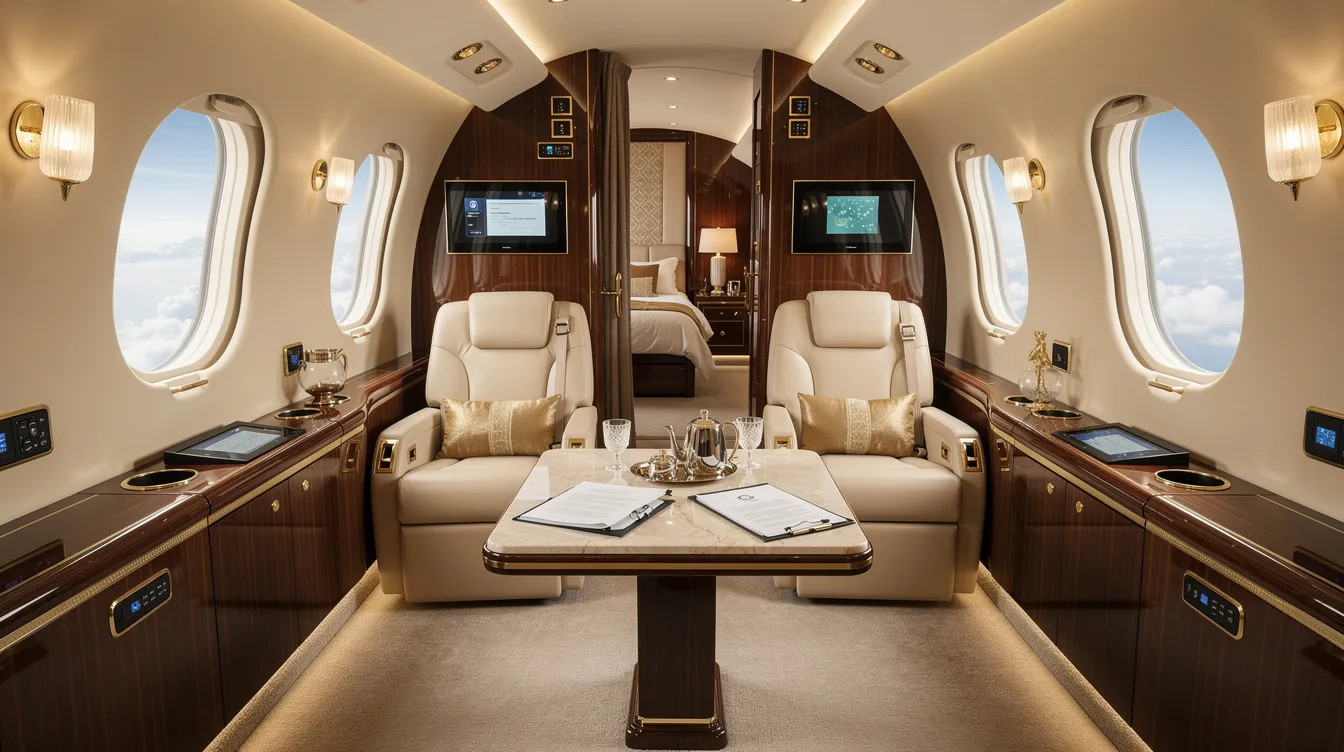
Inside a Saudi Prince Private Plane: Flying Palaces, Costs, and How to Charter Similar Jets
Explore the opulent world of Saudi prince private planes, where luxury meets aviation. Discover the extravagant features of jets like Prince Alwaleed's Boeing 747-400 and learn how to charter similar aircraft through platforms like Jettly for a lavish experience without the hefty price tag of ownership.
Read More
5
min read
Signature BWI at Baltimore Washington Int'l Airport: Private Jet Access with Jettly
Signature Aviation BWI serves as the primary fixed-base operator for private jets at Baltimore Washington International Airport, offering 24/7 services and extensive amenities. Jettly enhances the private aviation experience by providing seamless access to thousands of aircraft and personalized coordination for travelers. Whether for business or leisure, this partnership ensures efficient and comfortable private jet travel.
Read MoreStay updated with our latest insights and tips to elevate your journey with us.
MEMBERSHIPS AND ASSOCIATIONS



Disclaimer: Jettly operates as a charter broker, offering access to a global digital jet charter marketplace. Jettly is not a direct air carrier and does not own or operate aircraft. All advertised flights are conducted by third-party air carriers that are fully licensed and hold the appropriate Part 135 or Part 121 certifications issued by the Federal Aviation Administration (FAA) or equivalent regulatory authorities under U.S. or foreign law. Jettly complies fully with the U.S. Department of Transportation's Part 295 and Part 298 Charter Broker regulations. Jettly does not carry additional liability insurance. Passengers are covered by aircraft operator insurance. TICO: 50023770


