


Login
Get Instant Pricing On 23,000+ Aircraft

>
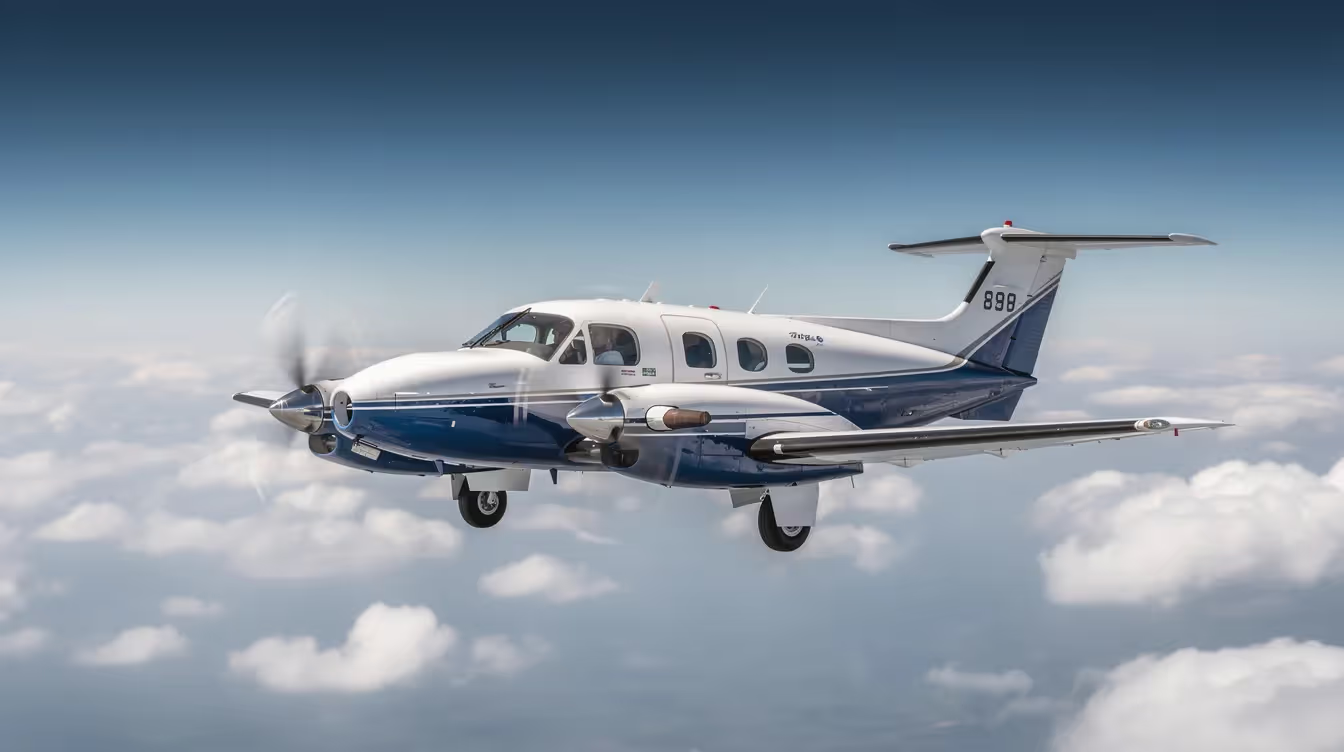
The Beechcraft Baron 58 has earned its reputation as one of the fastest piston twins in general aviation. For travelers considering a private charter, understanding the Baron 58 cruise speed helps set realistic expectations for trip duration, cost, and overall efficiency. When planning a trip, it’s important to note that a fully equipped aircraft has standard fuel tanks, which affect payload capacity and performance—meaning there is a trade-off among carrying maximum fuel, passengers, and baggage. The aircraft's equipment and fuel setup directly influence operational considerations and weight calculations. This guide breaks down the performance numbers, explains what affects cruise speed, and shows how platforms like Jettly use the Baron 58 for efficient regional travel.
A typical Baron 58 cruises around 180–190 KTAS at mid altitudes, while the Baron G58 and turbocharged 58TC variants can exceed 200 KTAS when operating at higher flight levels. These numbers make the Baron 58 one of the fastest normally aspirated piston twins available for charter.
Economy vs high-speed cruise: Economy cruise settings yield roughly 165–175 KTAS with fuel burn around 30–32 gallons per hour (gph), while high-speed cruise pushes 190–202 KTAS with fuel consumption reaching 34–36 gph total.
Real owner data: Real owners of the Beechcraft Baron report fuel burn rates ranging from 27.1 to 32 gallons per hour, depending on flight conditions and power settings used.
Performance variables: Aircraft weight, cruise altitude, temperature, and engine condition significantly affect achievable cruise speed. Operating near the maximum gross weight of 5,500 lbs requires a higher angle of attack to maintain altitude, increasing induced drag and lowering cruise speed.
Trip planning impact: On a route like San Francisco to Los Angeles (roughly 337 nm), even a 15-knot difference in cruise speed can save 10–15 minutes of flight time, directly influencing cost calculations when using a private jet charter cost estimator.
Charter efficiency: Jettly includes the Baron 58 and Baron G58 in its network as fast, cost-effective piston twin options for short regional missions under 500 nautical miles.
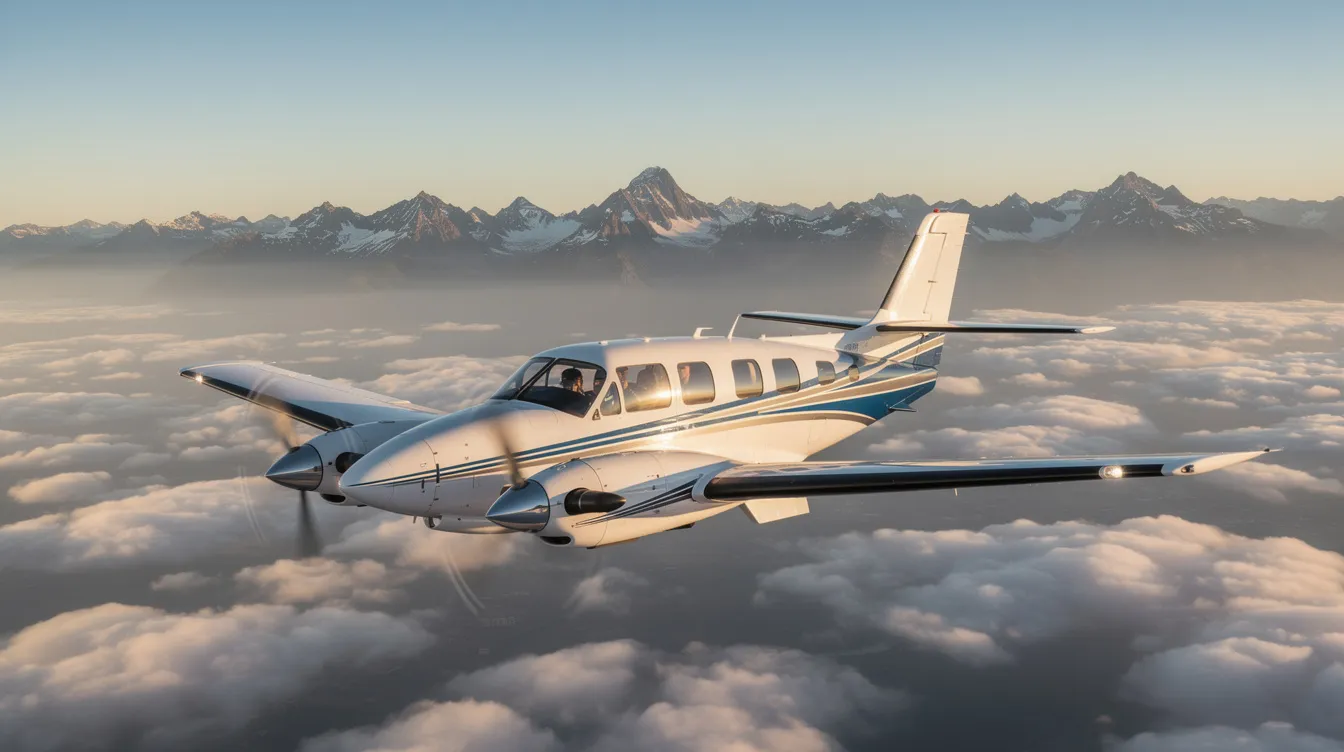
The Baron 58 is a long-range, twin-engine piston aircraft that typically cruises around 180 KTAS at mid-altitudes. The Baron 58 series includes several subvariants, each with differences in engine configurations and features, such as turbocharging or pressurization. Some variants, particularly those with turbocharged engines, exceed 200 KTAS under optimal conditions. Textron Aviation continues producing the modern Baron G58, making it the current production version of this respected line.
Indicated vs true airspeed: Cruise discussions use true airspeed (KTAS) rather than indicated airspeed (KIAS) because KTAS accounts for altitude and temperature, providing the actual speed through the air that determines groundspeed and trip time.
Book numbers for normally aspirated 58 Baron: At 8,000–10,000 ft with 65–75% power, expect approximately 180 KTAS and 30–34 gph total fuel burn. The Beechcraft Baron 58 can achieve a cruise speed of 200 knots at 7,000 feet under standard conditions.
Turbocharged variants: The turbocharged Baron 58TC and pressurized Baron 58P can cruise at speeds of 200 knots at 8,000 feet and 220 knots at 20,000 feet. Specialized turbocharged variants can achieve higher cruise speeds between 220 and 260 knots at higher flight levels.
Economy vs. high-speed cruise: Pilots choose between economy cruise (slower, lower fuel burn, extended range) and high-speed cruise (faster arrival, higher fuel burn) based on the mission profile. Operating rich of peak maximizes speed performance at the expense of higher fuel burn.
Cruise speed varies with altitude, power settings, and aircraft weight. A fully equipped aircraft at maximum takeoff weight performs differently from an airplane partially fueled with two lightweight passengers aboard. Understanding these variations helps charter clients set realistic expectations. Pilots can substitute people pounds for fuel pounds to optimize the aircraft's weight capacity—adjusting the number of passengers and the weight of baggage allows for more or less fuel, directly impacting fuel requirements and overall aircraft performance.
Standard 58 Baron at 8,000 ft: At 65% power, expect roughly 175–180 KTAS. Climbing to 10,000 ft at 75% power typically yields 185–190 KTAS.
Baron G58 performance: The Baron G58, powered by two IO-550-C engines, has a maximum cruise speed of 202 knots at 75% power. At 10,000–12,000 ft, fuel flow runs approximately 34–36 gph total.
Business flight profile: Pilots like Jim Hill–style owner-operators often climb to cruise altitude where engines remain efficient (10,000–12,000 ft for normally aspirated models), cruise at higher power for the initial leg, then throttle back for longer segments.
Adverse conditions: Hot days and high-density altitude airports near San Francisco’s Bay Area reduce achievable cruise speed. Non-standard temperatures, such as high-density altitudes in the summer, reduce engine performance and decrease the aircraft’s rate of climb and cruise efficiency, key considerations when evaluating the best cross-country plane for your journey.
Weight considerations: A lighter aircraft requires less thrust to maintain cruising speeds and altitudes, while heavier loads reduce both maximum speed and climb rates.
|
Variant |
Engine Type |
Horsepower |
Typical Cruise Speed (KTAS) |
Cruise Altitude (ft) |
Notes |
|---|---|---|---|---|---|
|
Baron 58 |
Continental IO-520/IO-550 |
300 HP |
180–190 |
8,000–12,000 |
Normally aspirated, standard fuel burn |
|
Baron 58TC |
Turbocharged Continental TSIO-520 |
310 HP |
200–220 |
8,000–20,000 |
Turbocharged, higher altitude capability |
|
Baron 58P |
Pressurized Continental TSIO-520-L |
375 HP |
220 |
20,000 |
Pressurized cabin, turbocharged engines |
|
Baron G58 |
Continental IO-550-C |
300 HP |
Up to 202 |
10,000–12,000 |
Modern glass cockpit, Garmin 1000 NXi |
The turbocharged Baron 58TC and pressurized 58P represent higher-altitude, higher-speed variants of the Beechcraft Baron family. Both were introduced in 1976 and share similar engine configurations, though the 58P adds a pressurized cabin for passenger comfort at altitude.
58TC cruise speeds: Typical cruise speeds reach 205–210 KTAS at 11,500–14,500 ft, climbing to 220–230 KTAS at higher cruise altitudes with 62–75% power settings.
Engine specifications: The Baron 58TC, introduced in 1976, is a turbocharged variant featuring two Continental TSIO-520 engines, each rated at 310 HP. The Baron 58P, also introduced in 1976, is the only variant with a pressurized cabin, powered by two Continental TSIO-520-L engines, each with 375 HP.
Fuel flow and engine management: Expect 32–35 gph at high cruise with careful attention to cylinder head temperature (CHT) targets (300–350°F) and exhaust gas temperature (EGT) management. Cruising at higher altitudes generally results in higher True Airspeed for the amount of fuel burned.
Regional trip advantages: These higher cruise speeds meaningfully shorten regional trips such as San Francisco–Boise or San Francisco–Salt Lake City compared to a normally aspirated 58 Baron.
Operating cost consideration: While 58TC and 58P deliver superior cruise performance, they come with higher operating and maintenance costs, which factor into charter pricing.

Book cruise speeds represent idealized conditions. Real-world Baron performance depends on several operational variables that pilots and charter planners must account for.
|
Factor |
Impact on Cruise Speed |
|---|---|
|
Aircraft weight |
Heavier aircraft result in slower cruise speed and reduced climb rates |
|
Altitude |
Higher altitude generally improves true airspeed until performance limits |
|
Temperature |
Higher temperatures reduce engine power and decrease cruise speed |
|
Power setting |
Increasing power boosts speed but increases fuel burn |
|
Airframe condition |
A clean airframe enhances speed; drag-inducing modifications slow it down |
Aircraft weight and balance: Payload, fuel capacity, and baggage capacity directly affect performance. Nose baggage and aft fuselage storage add useful load but reduce climb rates when heavy.
Altitude and temperature: Higher temperatures, lower atmospheric pressure, and high humidity decrease air density, which can reduce engine horsepower and limit top cruise speeds.
Power setting and mixture: Pilots balance fuel pounds burned against speed gained. Six-cylinder engines respond to leaning techniques that optimize efficiency.
Propeller condition: Three-blade constant speed props (standard on Baron G58) versus older two-blade configurations can slightly alter cruise speed and fuel burn.
Atmospheric conditions: Headwinds versus tailwinds dramatically affect groundspeed. A 30-knot tailwind turns 190 KTAS into 220 knots groundspeed, while headwinds do the opposite—an important factor when assessing affordable planes and budget-friendly aircraft choices for typical mission profiles.
Airframe modifications: Adding vortex generators improves low-speed handling and short-field control but introduces parasitic drag. The Baron uses internal Fowler flap mechanisms that keep the underwing completely clean when retracted, which can affect cruise efficiency if the landing gear doors fail. The Baron 58's tail control surfaces—including the horizontal stabilizer, elevator, and rudder—are crucial for stability and control, and are derived from proven aircraft designs to ensure reliable aerodynamic performance.
Conservative planning: Pilots and charter clients should plan using figures 5–10 knots below peak cruise to build realistic schedules and fuel reserves.
Numerical examples help travelers understand how Baron 58 cruise speed translates into actual trip times. These calculations account for climb, cruise, and descent phases.
San Francisco to Los Angeles: Using approximately 185–190 KTAS cruise from a GA airport like KSQL to Van Nuys (KVNY), expect roughly an hour and 45 minutes to 2 hours block time, including climb and descent, when compared to jet and turboprop options available in Jettly’s private charter aircraft network.
Longer regional trip: San Francisco to Portland (approximately 530 nm) demonstrates how cruise speed impacts mission duration. At 185 KTAS, plan for roughly 3 hours en route compared to perhaps 2 hours in a light jet cruising at 400+ KTAS.
Climb and descent impact: These segments reduce the average cruise speed by 5–10 knots compared to peak cruise. Planners often use lower estimates to reach cruise altitude more conservatively.
Jettly integration: Jettly’s platform factors in typical Baron 58 cruise performance to provide instant pricing and flight time estimates for on-demand charter quotes, giving travelers accurate expectations before booking.
The Baron 58 holds a speed advantage over many light twins while offering lower operating costs than turboprops. This positioning makes it attractive for specific mission profiles.
|
Aircraft |
Typical Cruise Speed |
Cruise Altitude |
|---|---|---|
|
Baron 58 |
180–190 KTAS |
8,000–12,000 ft |
|
Baron G58 |
190–202 KTAS |
10,000–12,000 ft |
|
Baron 58TC/58P |
200–230 KTAS |
15,000–25,000 ft |
|
Piper Seneca |
165–175 KTAS |
8,000–10,000 ft |
|
King Air C90 |
230–260 KTAS |
FL200–FL270 |
Versus Piper Seneca: Standard models of the Baron 58 significantly outperform older Piper Seneca models, which cruise at true airspeeds of 165–175 knots. The Beechcraft Baron 58 is generally 5 to 8 knots faster than a comparable normally aspirated Cessna 310R at standard cruising altitudes.
Versus small turboprops: While turboprops may cruise faster and higher, the Baron 58 often offers lower hourly operating costs, translating into more affordable short-hop charter rates compared with pressurized singles like the Piper Matrix.
Cabin comparison: While the Baron 58 dominates most normally aspirated competitors in speed, it features a narrower fuselage than competitors like the Piper Seneca. In the light-twin piston aircraft class, the Beechcraft Baron 58 is traditionally considered a “pilot’s airplane,” favoring raw speed and crisp handling over outright cabin volume.
Mission-based selection: Some Jettly customers choose a Baron 58 over jets or larger aircraft for missions under 400–500 nautical miles, where the Baron’s speed advantage over basic piston twins delivers value without jet-level costs, particularly when comparing among the best private jet charter companies.
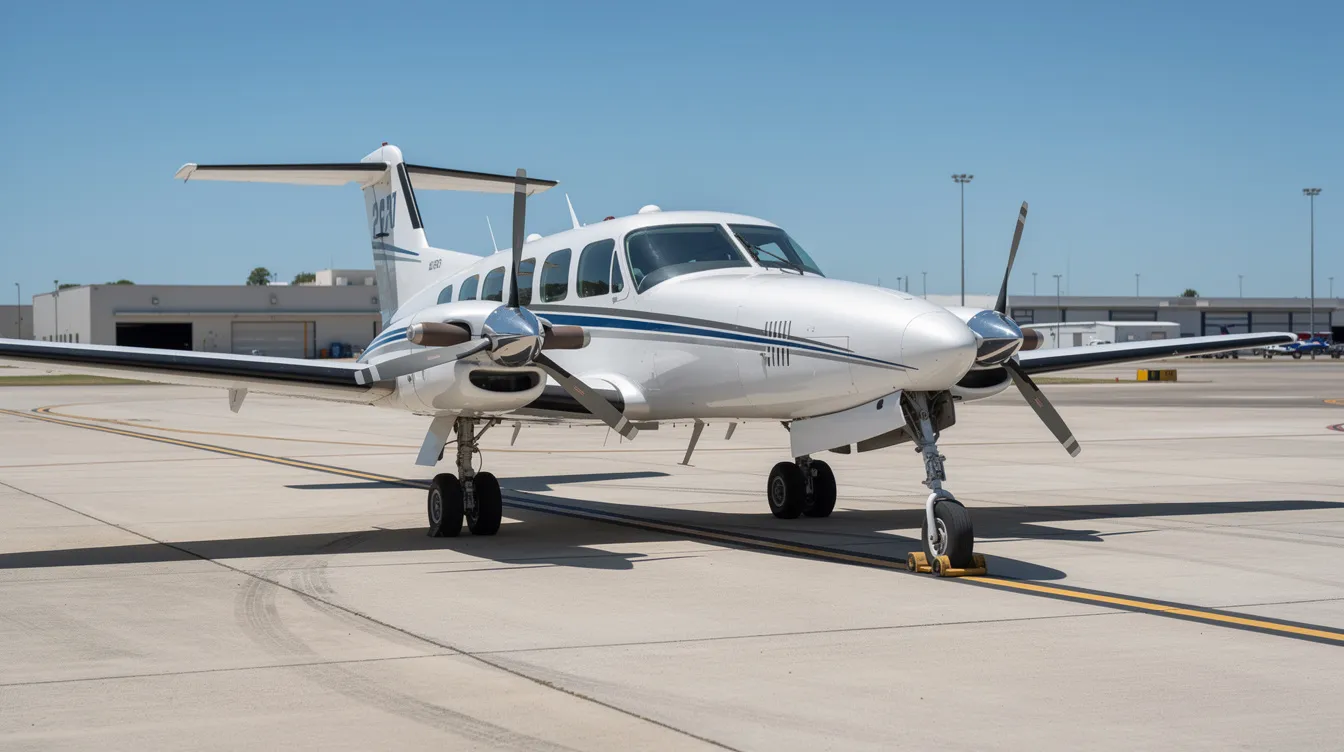
Jettly includes the Baron 58, Baron G58, and similar piston twins within its network for efficient regional charter and air taxi missions. These aircraft serve markets where speed matters but jet costs may not be justified.
Ideal mission profiles: Cruise speed around 180–200 KTAS makes the Baron 58 perfect for short business hops, medical visits, or family trips between smaller airports lacking major airline service.
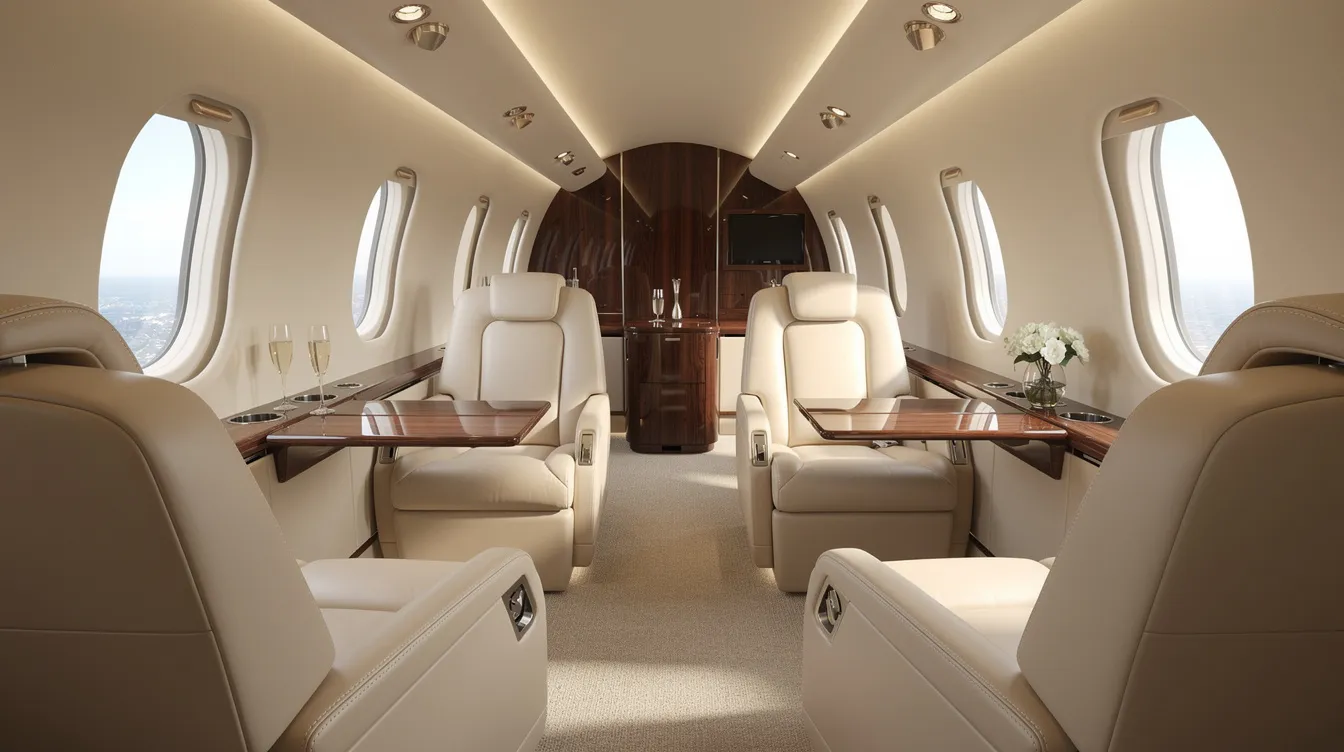
Passenger comfort: The Beechcraft Baron 58 features a spacious cabin that accommodates four passengers in club seating, enabling comfortable face-to-face interaction. Early models offered optional third-row seats, but practical issues, such as limited access and weight distribution, often led to their removal or redesign. The improved passenger cabin includes aft-facing center seats and rear seats for up to six total. The cabin is soundproofed and air-conditioned, enhancing comfort during flights. Modern versions include leather seats, powered headset jacks, dual USB ports, and climate-controlled individual air vents. Many travelers have experienced smooth, enjoyable flights in the Baron 58, often noting the fortunate combination of comfort and performance.
Platform comparison: Through Jettly’s digital marketplace, travelers can compare Baron 58-class options against light jets and turboprops side by side, based on estimated flight time and price.
Empty leg opportunities: Baron 58's cruise speed allows quick repositioning for same-day bookings at reduced rates, creating empty-leg value for flexible travelers who use Jettly’s tools to crowdsource private jet flights and share empty seats.
Explore options: Readers can explore Baron 58 and other Beechcraft Baron options via Jettly’s instant pricing and booking tools or choose from flexible tiers within Jettly’s private jet memberships.
Cruise speed must be considered alongside fuel burn and cost when evaluating the Baron 58 for charter. Faster isn’t always more efficient when factoring in total mission expenses.
Fuel burn by cruise setting: Economy cruise runs approximately 30–32 gph, while high-speed cruise in a Baron G58 reaches 34–36 gph. Flight conditions and one-pilot versus two-crew operations affect these numbers.
Cost per nautical mile: Increasing cruise speed saves time but burns more fuel. For short missions where fuel cost is small relative to fixed costs (crew, landing fees, handling), a faster cruise often makes economic sense.
Annual ownership costs: The average yearly operating cost of the Beechcraft Baron 58 is approximately $38,079, including fuel burn, insurance, annual inspections, and maintenance. This positions the Baron as a higher-end piston twin but still significantly cheaper than jets, explored in more depth in Jettly’s guide on offering affordable private jet charter.
Resale value: The Beechcraft Baron 58 has significant resale value, with the average price of a pre-owned model around $295,000, indicating a long-term investment rather than a quick resale opportunity, especially for owners comparing it with other options in a guide to the best plane for a family of four.
Charter transparency: Jettly’s transparent pricing reflects these operating realities, allowing customers to see the value of Baron 58 cruise efficiency on shorter routes without hidden fees.
The Baron 58 evolved from the earlier Baron 55 and Beechcraft Bonanza line, with each generation refining cruise performance while improving safety and comfort. Early models featured two front seats, and cabin width, along with passenger size, played a significant role in determining comfort and seating layout.
First Baron 58: Introduced in 1969 as an evolution of the Baron 55, the Beechcraft Baron 58 featured a longer fuselage and more powerful engines. This first model established the Baron performance benchmark that continues to this day.
Turbocharged and pressurized variants: The 58TC and 58P arrived in 1976 to address demand for higher-altitude performance and over-weather capability. These subvariants opened new mission profiles for business travel air operations.
Modern Baron G58: Introduced in 2005, the modern Baron G58 features a glass cockpit with Garmin 1000 NXi avionics and is the only Baron model still in production today. The glass panel displays replaced the traditional instrument panel while maintaining the handling philosophy that makes it a great IFR platform.
Consistent evolution: Each generation preserved the hallmark Baron cruise speed advantage while improving avionics, safety, and passenger comfort through beautifully furnished, lavishly appointed cabin options, paralleling innovations from leading private plane manufacturers for every budget and need.
2026 relevance: The Baron 58 remains a benchmark piston twin for pilots and charter clients prioritizing speed and quality. Verified key takeaways from decades of service confirm its position among light twins.
These common questions address topics beyond the main article sections, helping travelers make informed charter decisions.
Many Baron 58 pilots choose 60–65% power at mid altitudes (6,000–8,000 ft), often leaned to a fuel-efficient mixture, yielding roughly 165–175 KTAS with reduced fuel burn around the low-30 gph range. Exact settings depend on engine monitors, temperature limits (CHT), and whether the aircraft uses IO-520 or IO-550 engines. Experienced pilots find few objections to these conservative settings on longer flights where endurance matters more than arrival time.
With standard fuel and typical reserves, a Baron 58 can commonly cover 700–900 nautical miles at economy cruise, depending on loading, winds, and variant (58, 58P, 58TC, or G58), similar to many aircraft profiled in our ultimate list of charter airlines. Charter operators and platforms like Jettly often plan more conservatively to ensure time and fuel margins for weather or rerouting. If you limit fuel for additional payload, the range decreases accordingly.
While the Baron 58 has solid single-engine performance above blue line speed, it usually cannot maintain full cruise speed on one engine. Depending on weight and density altitude, expect only a modest climb or possibly a slight descent rate with one engine inoperative. Single-engine operation is treated as an emergency procedure, not a normal cruise mode. The second engine provides redundancy, not sustained performance.
The Baron G58, with modern IO-550 engines and refined aerodynamics, offers a modest gain in cruise speed—often a few knots—over older 58s in good condition. The first flight of a new airplane off the production line today delivers essentially the same performance as a well-maintained older model. The Baron G58's greatest advantage is its upgraded Garmin G1000 NXi avionics and improved situational awareness, rather than dramatic speed increases. Features like elbow room, baggage space, and reasonable luggage capacity remain similar across generations.
Consider distance, passenger count, budget, and airport options. For routes under 400–500 nm with 2–4 passengers, a Beechcraft Baron 58 often proves more cost-effective while still delivering consistently good rides. Longer routes or tight schedules favor a light jet booked through Jettly’s private charter aircraft platform. With double doors for easy boarding and comfortable seating for six-foot-two passengers, the Baron handles most short-body regional missions well, while frequent flyers may also consider Jettly’s Jet Cards and corporate jet card programs for predictable access and pricing. Jettly’s platform lets users compare estimated flight times, prices, and aircraft types side by side, making it straightforward to choose between a Baron 58 and a jet.
Ready to experience private travel on your terms? Explore Baron 58 charter options or request a quote at https://www.jettly.com, compare compliant operators explained in our guide to Part 135 charter companies, or plan trips to key hubs like private jet charter in Bangalore, Karnataka, and private jet charter in Kolkata, West Bengal. For larger or faster missions, Jettly can also arrange specific aircraft ranging from a Challenger 601 private jet for rent N212AR or a Learjet 60 private jet for rent XAONE up to wide-body options like a Boeing 767-300ER private jet for rent ZSNEX or high-capacity narrow-bodies such as the Boeing 737-800 specs, range, and charter rates.
The Beechcraft Baron 58 remains a standout choice among light twin-engine aircraft, offering a compelling balance of cruise speed, efficiency, and passenger comfort. Its typical cruise speed around 180–200 KTAS, combined with flexible cabin configurations and reliable performance, makes it ideal for regional private charters. Variants like the turbocharged 58TC and modern G58 provide additional speed and avionics enhancements, catering to diverse mission needs.
For travelers seeking a cost-effective and time-saving alternative to commercial flights or larger jets on short to medium routes, the Baron 58’s blend of speed and operational economy is hard to beat. Platforms like Jettly leverage this aircraft’s strengths by providing instant pricing, transparent booking, and access to a broad network of compliant operators.
Ready to experience private travel on your terms? Explore Baron 58 charter options or request a personalized quote at https://www.jettly.com, and discover how this versatile aircraft can elevate your next trip.
Share this post:
Jay Franco Serevilla
May 15, 2026
|
5
min read
Discover tips and trends in the industry.
5
min read
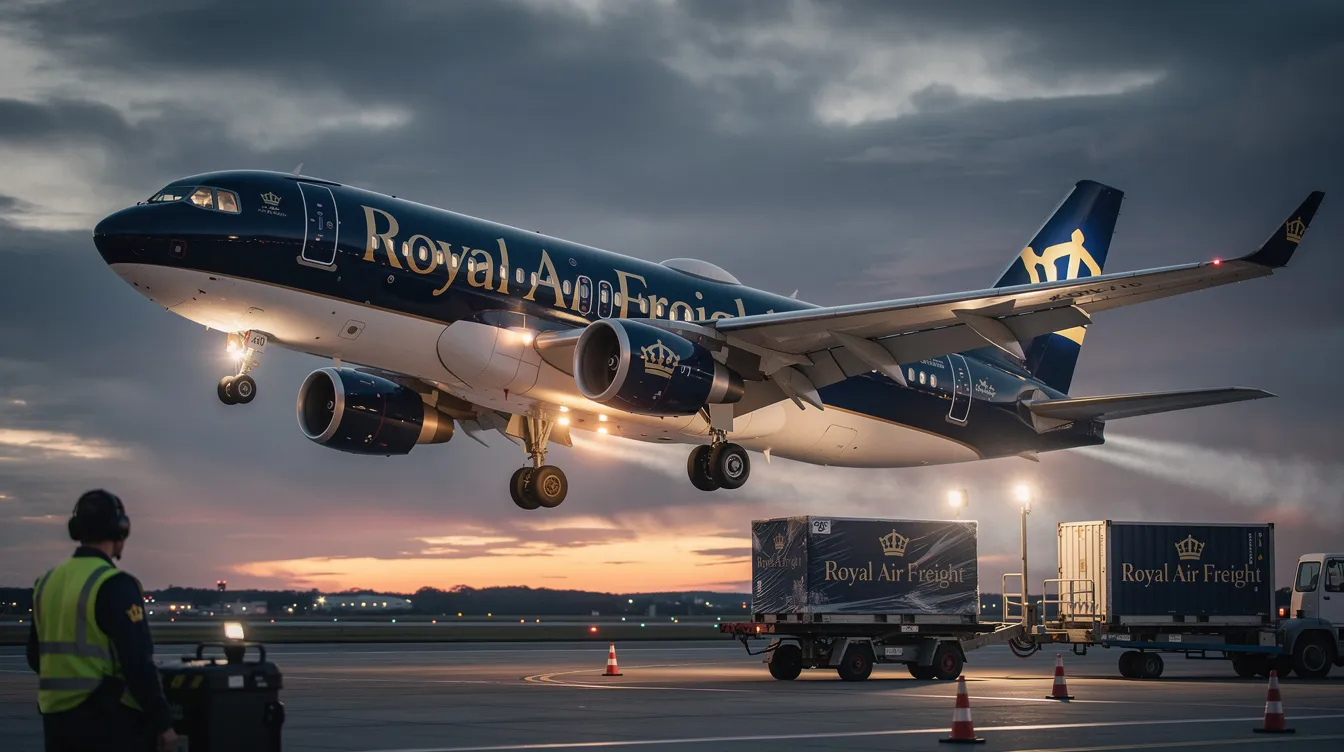
Royal Air Freight Inc: Chartering Alternatives with Jettly
Royal Air Freight Inc. has been a trusted name in charter and air freight services since 1961, specializing in expedited cargo and passenger flights across North America. Jettly, a digital charter broker, offers a broader marketplace for comparing private jet and cargo flight options, providing travelers with greater flexibility and instant pricing.
Read More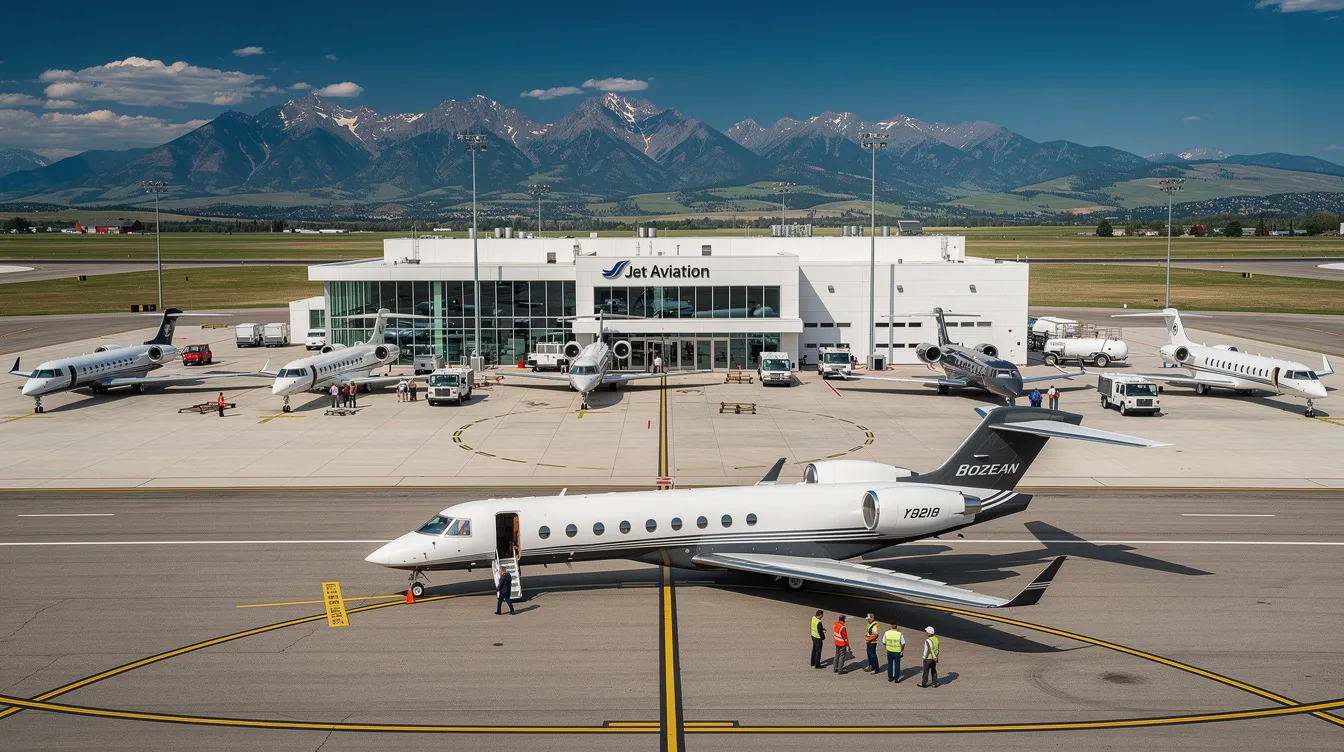
5
min read
Jet Aviation Bozeman: Private Jet Access to Big Sky Country with Jettly
Jet Aviation Bozeman provides private jet access to the stunning landscapes of Big Sky Country, located at Bozeman Yellowstone International Airport. With a full-service FBO and Jettly's digital charter marketplace, travelers can easily book flights and enjoy seamless ground transportation to popular destinations like Big Sky Resort and Yellowstone National Park.
Read MoreStay updated with our latest insights and tips to elevate your journey with us.
MEMBERSHIPS AND ASSOCIATIONS



Disclaimer: Jettly operates as a charter broker, offering access to a global digital jet charter marketplace. Jettly is not a direct air carrier and does not own or operate aircraft. All advertised flights are conducted by third-party air carriers that are fully licensed and hold the appropriate Part 135 or Part 121 certifications issued by the Federal Aviation Administration (FAA) or equivalent regulatory authorities under U.S. or foreign law. Jettly complies fully with the U.S. Department of Transportation's Part 295 and Part 298 Charter Broker regulations. Jettly does not carry additional liability insurance. Passengers are covered by aircraft operator insurance. TICO: 50023770


