


Login
Get Instant Pricing On 23,000+ Aircraft

>
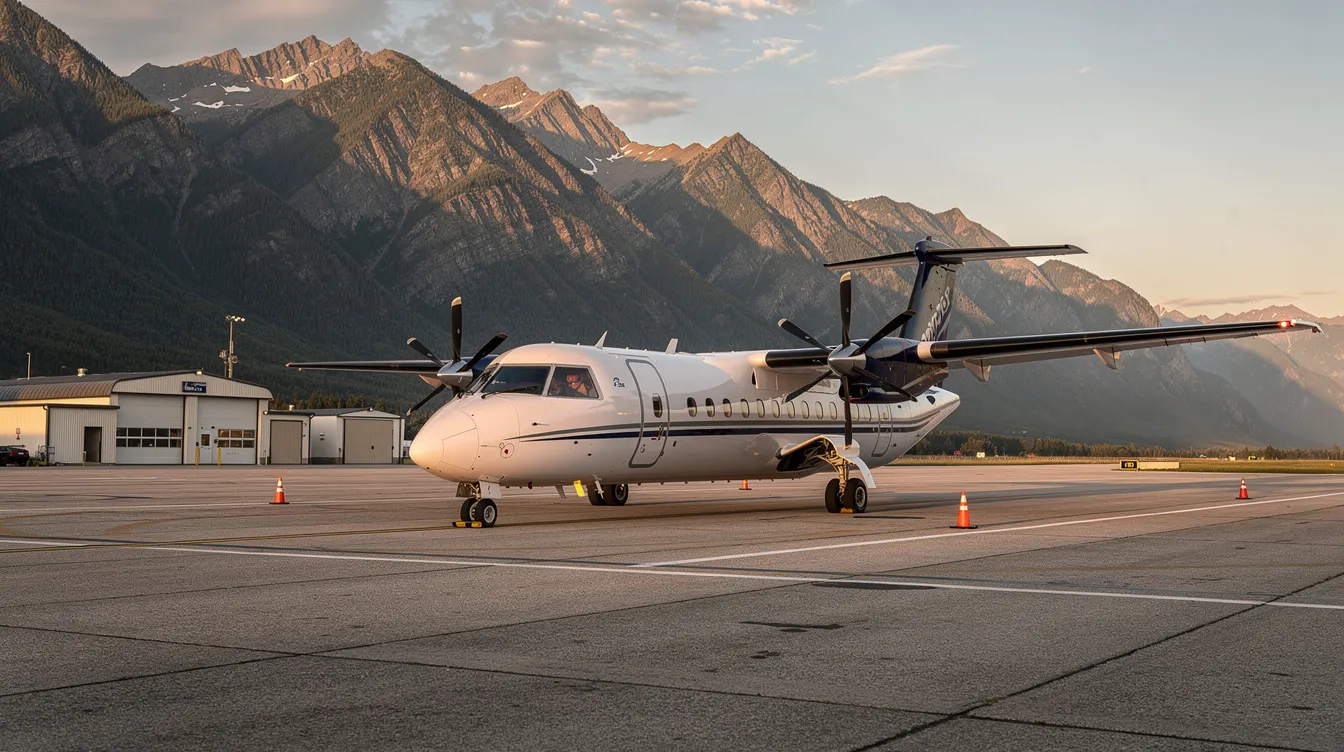
The B190 plane refers to the Beechcraft 1900 family, a 19-seat twin-engine turboprop regional airliner with 695 total aircraft built between 1982 and 2002.
The Beechcraft 1900D introduced a taller passenger cabin with stand-up headroom of 1.8 meters, making it far more comfortable for short regional flights than earlier variants.
Core performance data includes a cruise speed of around 280 knots, a normal range of up to 1,279 nautical miles, and strong short-field performance from smaller airports.
This aircraft type fits group charters, corporate transport, and commuter operations, and Jettly can arrange flights on demand through its global marketplace.
Travelers can compare the B190 plane with other turboprops and regional aircraft on Jettly, browse a wide range of private charter aircraft, and then book with transparent pricing at jettly.com.
The B190 plane is the common shorthand for the Beechcraft 1900 family - a pressurized, twin-engine turboprop built for short-haul and regional flights. A total of 695 Beechcraft 1900 aircraft were built between 1982 and 2002 across all variants. The definitive version is the Beechcraft 1900D, which features a stand-up cabin and can carry up to 19 passengers.
The main variants include the original Beechcraft 1900, the improved 1900C with better payload and cargo capability, and the Beechcraft 1900D with its taller passenger cabin and aerodynamic refinements. This aircraft type was designed specifically for short-haul commuter and regional routes, connecting smaller cities and remote communities to major hubs.
The airplane is widely used by regional airlines to connect small airports to major hubs, and many airframes remain in active service worldwide in both scheduled airlines and charter operations.
The Beechcraft 1900's history traces back to the King Air and Super King Air line. Beechcraft undertook the development of a stretched, pressurized airframe in the late 1970s and early 1980s to meet growing demand for reliable commuter aircraft. The first prototype flew in September 1982, and the Beechcraft 1900 entered service shortly after receiving FAA certification in late 1983.
The design purpose was clear: a robust 19-seat regional airliner that could meet U.S. commuter airline rules while operating from short, challenging runways. The airplane was designed to operate in all weather conditions from short runways, powered by two Pratt & Whitney PT6A turboprop engines developed in Canada.
Production ran through 2002, with Raytheon and later Hawker Beechcraft overseeing the final years. The aircraft evolved from the original Beechcraft 1900 to the 1900C - a version called the "wet wing" variant that added greater fuel capacity and a larger cargo door - and then to the Beechcraft 1900D. Beechcraft undertook a substantial redesign for the new version, adding winglets, a modified tail, more powerful engines (PT6A-67D), and the signature stand-up cabin. The aircraft is also employed by military and government organizations for transport roles, and many airframes have since been converted to freighters and special-mission platforms.
The key difference between the original Beechcraft 1900 and the Beechcraft 1900D comes down to cabin height and passenger comfort.
The original Beechcraft 1900 cabin had a low ceiling of roughly 4 feet 8 inches, meaning most adults needed to stoop or keep bending forward while moving through the aisle. It was built for short commuter hops where cost and utility mattered more than comfort.
The 1900D changed this completely. The cabin height of the Beechcraft 1900D is 1.8 meters (about 5 feet 11 inches), letting most passengers walk upright along the flat-floor aisle. A large cargo door and rugged structure allow the 1900 to accommodate cargo operations, while it features a flexible interior suitable for passenger, freight, or mixed-use configurations. Corporate versions of the 1900 are configured for executive transport with luxury seating, typically reducing capacity to 12–15 seats for added legroom.
|
Feature |
Beechcraft 1900 / 1900C |
Beechcraft 1900D |
|---|---|---|
|
Max seats |
19 |
19 |
|
Cabin height |
~4 ft 8 in (1.42 m) |
~5 ft 11 in (1.80 m) |
|
Typical layout |
19-seat commuter |
19-seat or reduced 12–15-seat charter |
|
Aisle comfort |
Stooping required |
Walk upright |
|
Configuration |
Passenger or cargo |
Passenger, cargo, combi, or corporate |
The B190 plane is a capable regional turboprop optimized for efficiency and short-field performance rather than pure speed. The aircraft is valued for its short takeoff and landing capabilities, requiring less runway than most regional jets, yet still offering higher capacity than smaller utility types like the Cessna 207.
The Beechcraft 1900D has a maximum takeoff weight of 17,000 pounds and is powered by two Pratt & Whitney PT6A engines producing approximately 1,279 shaft horsepower each. The aircraft cruises at 280 knots, has a normal range of 1,279 nautical miles, and reaches a service ceiling of 25,000 feet, allowing for operations above inclement weather.
The aircraft can operate efficiently in high temperatures and at high altitudes, and the B190 can be operated by a single pilot in cargo or corporate contexts. The cabin length measures roughly 25 feet 2 inches, with a cabin width of about 4 feet 6 inches, placing it above smaller cabin-class twins such as the Cessna 340 in terms of passenger volume. The aircraft can operate from shorter runways, with takeoff distances around 3,800 ft and landing distances near 2,800–3,100 ft.
|
Specification |
Beechcraft 1900D |
|---|---|
|
Engines |
2× Pratt & Whitney Canada PT6A-67D |
|
Cruise speed |
~280 KTAS |
|
Range |
1,279 nm |
|
Max takeoff weight |
17,000 lb |
|
Service ceiling |
25,000 ft |
|
Passengers |
Up to 19 |
|
Cabin height |
5 ft 11 in (1.80 m) |
|
Empty weight |
~10,434 lb |
The B190 plane's 19-seat configuration makes it ideal for group charter travel where smaller jets would otherwise require multiple aircraft, and it can be paired with dedicated in-flight catering for private jets to enhance the onboard experience. The airplane's flexible interior supports several layouts.
Common configurations include:
19-seat commuter layout - maximum capacity for crew shuttles or team transport
Reduced-seat corporate shuttle - 12–15 seats with more legroom for business travelers
Combi layout - passenger seating plus dedicated cargo space via the rear baggage or cargo door, useful for loading equipment alongside personnel
Real-world use cases include corporate transport between regional business hubs, crew changes at remote project sites (mining, oil, and gas), sports team travel, and government or NGO missions to communities without large airports, where tools like Jettly's airport locator help identify the closest suitable airfields.
Example itinerary: A 19-passenger group charters a Beechcraft 1900D from Calgary to a remote mining airstrip 500 nm north. The aircraft's short-field performance means it can land at remote strips that regional jets cannot access, cutting hours of ground travel. Through Jettly, the group gets instant pricing, selects the aircraft type, and confirms the booking digitally.

Annual operating cost for the Beechcraft 1900 is approximately $1,293,521, covering fuel, maintenance, crew, and insurance for busy operations, reflecting the broader picture of private jet operating costs across different aircraft categories. The aircraft is known for its exceptional operating economy on short-haul routes compared to jets.
For charter customers using a marketplace like Jettly, these costs are reflected in hourly charter rates - typically $2,000–$2,500 per hour for a 1900D. Travelers comparing these figures with private jet rental costs for other aircraft types can quickly see where turboprops deliver the best value. To understand how turboprop charter rates compare across aircraft, Jettly's platform lets users browse and search options side by side.
Six Beechcraft 1900 listings are currently available for sale on the used market, but for most travelers, chartering on demand through Jettly eliminates the drag of ownership costs entirely, especially when you understand how much a private jet really costs to own and operate and how Jettly's high-ticket affiliate program can reward those who refer new charter clients.
|
Aircraft Type |
Seats |
Hourly Charter Rate |
Best For |
|---|---|---|---|
|
Beechcraft 1900D |
Up to 19 |
$2,000–$2,500/hr |
Group charters, crew shuttles, regional hops |
|
King Air 350 |
6–9 |
$1,500–$2,800/hr |
Smaller groups, executive travel |
|
Light jet (e.g., Citation CJ) |
6–9 |
$4,000–$6,500/hr |
Speed priority, longer range |
Use Jettly's cost calculator or specialized jet card flight cost estimator to get a price estimate for your specific route and group size.
Despite production ending in December 2002, the Beechcraft 1900 and 1900D remain active across the world in regional airlines, cargo operations, and private charters. Operators keep them airborne because the platform is proven, parts are available, and the aircraft delivers where larger planes cannot, making it a natural fit for specialized operators like Dexter Air Taxi that focus on flexible regional service.
Jettly's global marketplace can source Beechcraft 1900 and 1900D aircraft from certified operators for ad hoc charters, recurring corporate shuttles, or one-off group flights. The platform offers transparent, instant pricing - no hidden fees, no long-term contracts- and can be paired with flexible private jet memberships for frequent travelers, or with instant-book operators like ZENFLIGHT for maximum convenience. Pilots and operators listed on Jettly operate under recognized aviation authorities such as the FAA and EASA, and the Beechcraft 1900 series has a long, well-understood operational history that supports safe, reliable service.
Travelers can browse available aircraft, compare the B190 plane against other elements in Jettly's inventory, and contact operators directly, drawing on Jettly's broad catalog of private charter aircraft worldwide. Learn more about Jettly's charter options and explore available aircraft types at jettly.com.
The Beechcraft 1900D was built with a taller passenger cabin so most adults can walk upright - a feature that makes a real difference on 1–3 hour flights. Seating is typically in a 1+1 or 1+2 configuration with aisle access for every passenger. Climate control and noise levels are comparable to other turboprops of its era, and some charter operators offer reduced-seat layouts or upgraded interiors for additional comfort. It is a popular regional airliner for exactly this reason.
A full 19-passenger load usually allows standard carry-on plus one checked bag per person, subject to weight limits. The Beechcraft 1900 and 1900D feature external or rear baggage holds, and combi configurations can trade seats for additional cargo space. Jettly clients should share luggage details - number of bags, approximate weights, and any special equipment - during the quoting process so the platform can match the right aircraft and layout.
The Beechcraft 1900D's range of around 1,279 nm and short-field performance make it ideal for regional sectors of 200–800 nm. Examples include intercity routes within North America, island hops, or flights to remote airfields that cannot accept larger regional jets, as well as dense regional corridors such as private jet charter in Kolkata and West Bengal. Charter customers often use the B190 for daily corporate shuttles, shift crew rotations, and group travel to events within the same region.
B190 charters through Jettly let groups depart on their own schedule, fly directly to secondary or remote airports, and keep everyone on a single aircraft. Commercial travel often requires connections, long check-in lines, and ground transfers from distant hub airports. While the per-seat rate can be higher than economy airline fares, the time savings and group coordination benefits frequently justify the price for corporate, project, and event travel, especially when you factor in strategies for affordable private jet charter that can reduce overall trip costs.
Travelers can enter their route, dates, and passenger count on Jettly's platform to see instant pricing and available aircraft - including turboprops like the Beechcraft 1900D where offered by operators. Users can compare aircraft types side by side, review estimated flight times and costs, and confirm a booking digitally without needing long-term contracts or jet cards, and in some cases even share empty seats on private flights to reduce per-passenger costs. Ready to fly your group? Explore flight options or request a quote at jettly.com.
The B190 plane, encompassing the Beechcraft 1900 and 1900D, remains a reliable and versatile choice for regional group charters and corporate transport. Its combination of short-field performance, efficient turboprop engines, and a spacious stand-up cabin in the 1900D variant offers a practical balance of comfort and operational flexibility. With a proven track record in connecting smaller airports and serving diverse missions, the B190 is well-suited for travelers seeking efficient, cost-effective regional flights.
Jettly’s platform enhances access to this aircraft type through transparent pricing, instant digital booking, and a wide network of certified operators. Whether for business shuttles, crew rotations, or group leisure travel, the Beechcraft 1900 series offers a compelling option that simplifies regional private aviation.
Learn more about Jettly’s charter options and discover how turboprop charters compare. Also, explore insights on private jet operating costs and group private jet charters to better plan your trip.
Share this post:
Jay Franco Serevilla
Sep 21, 2026
|
5
min read
Discover tips and trends in the industry.

5
min read
Bell 407 Jet Ranger: Charter Guide, Specs, and Modern Variants
The Bell 407 Jet Ranger is a versatile single-engine helicopter known for its comfort, performance, and modern features. Ideal for private travelers and executives, it offers a spacious cabin for up to six passengers and excels in various missions, from city transfers to sightseeing tours. This guide provides insights into its specifications, variants, and real-world applications, helping you determine if the Bell 407 is the right choice for your next charter flight.
Read More
5
min read
Boarding Private Jet: Step‑by‑Step Guide to Your First Private Flight with Jettly
Boarding a private jet for the first time can be a seamless experience with Jettly. This step-by-step guide outlines the simplified boarding process, from arriving at the FBO to taking off, highlighting the efficiency and personalized service that private aviation offers compared to commercial flights.
Read MoreStay updated with our latest insights and tips to elevate your journey with us.
MEMBERSHIPS AND ASSOCIATIONS



Disclaimer: Jettly operates as a charter broker, offering access to a global digital jet charter marketplace. Jettly is not a direct air carrier and does not own or operate aircraft. All advertised flights are conducted by third-party air carriers that are fully licensed and hold the appropriate Part 135 or Part 121 certifications issued by the Federal Aviation Administration (FAA) or equivalent regulatory authorities under U.S. or foreign law. Jettly complies fully with the U.S. Department of Transportation's Part 295 and Part 298 Charter Broker regulations. Jettly does not carry additional liability insurance. Passengers are covered by aircraft operator insurance. TICO: 50023770


