



Login
Get Instant Pricing On 23,000+ Aircraft

>
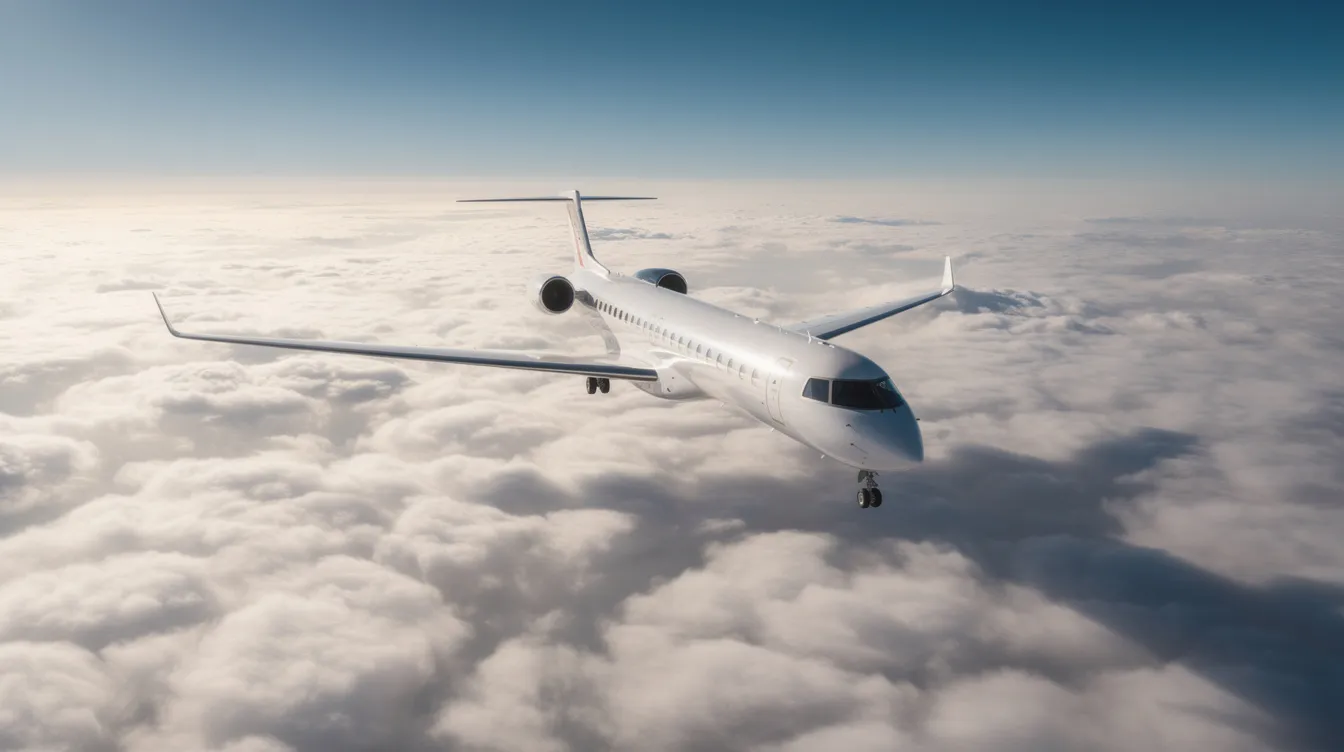
Airplanes shape how people, cargo, and ideas move across the world. From two-seat trainers to intercontinental business jets, these machines rely on the same core physics — and understanding how they work makes it easier to choose the right flight for any trip. This guide is designed for travelers, aviation enthusiasts, and anyone interested in how airplanes work and how to choose the right aircraft for their needs. Whether you’re planning your next journey, fascinated by aviation technology, or considering private jet travel, understanding airplanes empowers you to make informed decisions and appreciate the marvels of modern flight.
An airplane is a powered flight machine with fixed wings and one or more aircraft engines. Both commercial airplanes and private jets connect cities worldwide in hours, covering distances that would take days by ground transport.
Modern aircraft are carefully designed and certified machines, balancing lift, weight, thrust, and drag to fly safely at altitudes up to 40,000–45,000 feet for most airliners and business jets.
Private jet charter platforms like Jettly give on-demand access to thousands of aircraft designed for specific missions, offering time savings, flexible scheduling, and use of smaller airports closer to passengers.
Aviation faces environmental and regulatory pressures, driving innovation in fuel-efficient engines, sustainable aviation fuels, and electric or hybrid aircraft concepts.
Later sections of this article cover airplane history, design, aerodynamics, safety, and how travelers can choose between commercial and private options for real-world trips.
An airplane is a powered fixed-wing aircraft designed to generate lift with wings and move through the air using one or more engines. The term "airplane" is standard in the United States and Canada, while "airplane" is preferred in the UK and Commonwealth countries. Both refer to the same category of powered flight vehicles — distinct from helicopters, gliders, and other aircraft types.
Airplanes rely on a coordinated system of structural components to function effectively. The fuselage is the main body of the aircraft that houses the cockpit and passengers. Wings extend from either side to produce lift. The empennage, or tail section, includes the vertical and horizontal stabilizers that keep the plane stable. Landing gear supports the aircraft during taxiing, takeoff, and landing, and retracts during cruise to reduce drag. The cockpit up front contains the controls pilots use to fly the airplane.
The range of airplane sizes is enormous. At one end sit small two-seat trainers like the Cessna 152. At the other, long-haul widebodies like the Boeing 787 carry hundreds of passengers across oceans. Ultra-long-range business jets like the Bombardier Global 7500 connect intercontinental city pairs nonstop with fewer than 20 passengers aboard.
Airplanes fly by generating forces that overcome gravity and drag. Four forces act on an airplane in flight: lift, weight, thrust, and drag. In steady level flight, lift equals weight and thrust equals drag. Change any one of these and the airplane climbs, descends, speeds up, or slows down.
Airplanes generate lift through pressure differences on wings. The wing shape, called an airfoil, is crucial for lift - its curved upper surface causes air to flow faster above the wing than below, creating lower pressure on top and higher pressure underneath. Pilots adjust the angle of attack, the wing's tilt relative to oncoming air, to increase or decrease lift. Flaps on commercial airplanes extend during takeoff and landing to generate enough lift at lower speeds.
Weight is the downward force of gravity pulling the aircraft toward the Earth. Passengers, baggage, and fuel must be distributed within certified limits. A typical light jet with a maximum takeoff weight around 12,000 lbs, for instance, can become unstable if loaded too far forward or aft of its center of gravity.
Thrust comes from aircraft engines - piston, turboprop, or turbofan - pushing the airplane forward. Drag is the rearward retarding force caused by air resistance against the airplane. As speed increases, drag rises, which directly affects fuel burn and engine demand.
Consider a typical flight: during the takeoff roll, the engine produces high thrust while flaps and the propeller or jet engine drive the plane forward. Once airborne, the pilots retract the landing gear and flaps, reducing drag. In cruise at altitude, the autopilot trims thrust to match drag. During descent, thrust drops as the airplane begins descent, with pilots reducing thrust and reconfiguring the aircraft for approach while flaps extend again, and control surfaces on airplanes - including ailerons, elevators, and rudders - steer the aircraft to a safe landing. The rudder manages yaw, the elevator controls pitch, and ailerons handle roll, all as separate systems working together.
Aircraft are often classified by size, range, engine type, and mission. Airplanes are grouped into commercial, regional, and general aviation categories, plus military aviation, cargo, and specialized roles. Each category involves distinct design features and trade-offs.
General aviation includes small, single- or twin-engine aircraft for personal and recreational use. A Cessna 172, for example, is a lightweight trainer ideal for learning to fly but limited in speed and range. Sport aircraft serve recreational pilots who want aerobatic capability or simple cross-country flying, and there is growing interest in the most affordable private aircraft across categories for owners who prioritize budget.
Turboprops like the Beechcraft King Air 350 bridge the gap between small pistons and jets. They are efficient at lower altitudes and capable of using shorter or unpaved runways, making them common in charter operations to remote destinations.
Narrow-body jets typically seat under 200 passengers for short-to-medium-haul flights - think the Boeing 737 or Airbus A320 families. Wide-body jets accommodate more than 200 passengers for long-haul travel, such as the Boeing 777 or Airbus A350. Regional jets connect midsize cities or serve feeder routes with 50 to 100 passengers.
Business jets are high-performance aircraft optimized for speed and comfort for corporate transport. Light jets like the Embraer Phenom 300 handle trips up to about 1,500 nautical miles, while large-cabin jets like the Gulfstream G650 cross continents nonstop. Aircraft buyers looking at private jets weigh speed vs cost, cabin size vs runway requirements, and range vs payload, and many rely on overviews of the best private jet charter companies and leading operators to understand service models before committing.
Cargo aircraft are designed exclusively for transporting goods and heavy freight. Cargo freighters are dedicated transport planes used to move heavy freight globally, often converted from retired passenger airframes.
Specialized aircraft fall outside the "airplane" label in some cases. Helicopters use rotor systems rather than fixed wings for lift. Seaplanes can take off and land on water, suitable for remote areas without runways. Agricultural aircraft are built for low-altitude flying to assist in farming tasks. Gliders are engine-less aircraft that rely on rising air currents to fly, mimicking a bird's wing in shape to maximize aerodynamic forces. Military platforms include fighters, bombers, surveillance planes, and even missiles launched from aircraft.
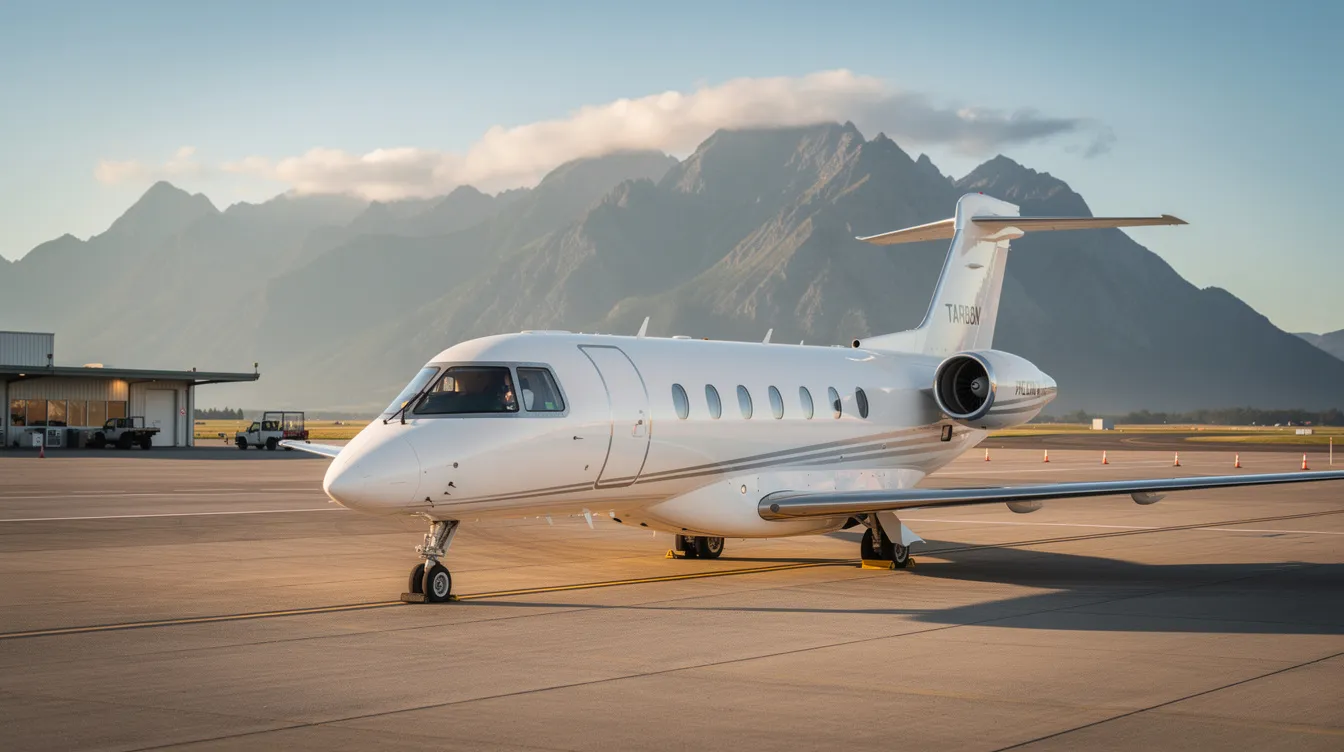
Modern aircraft designed by manufacturers like Airbus, Boeing, Gulfstream, and Dassault typically take 7–10 years to go from concept to certified airplane. The design process for airplanes can last up to four years for the initial conceptual and engineering phases alone, before prototype construction even begins.
Engineers start with the mission profile: how many passengers, what range, what cruise speed, and what runway length. Digital modeling and computational fluid dynamics allow teams to simulate air entering the engine intakes, airflow over the wing design, and aerodynamics of the fuselage long before metal is cut. Wind tunnel testing follows to validate those simulations.
Airplanes are primarily made from aluminum and composite materials. Early aircraft used wood and fabric. By the mid-twentieth century, aluminum alloys dominated. Today, the Boeing 787 uses roughly 50% composite materials by structural weight, while the Airbus A350 reaches about 53%. These composites improve strength-to-weight ratio, reduce corrosion, and lower fuel burn, though they introduce challenges in damage detection and repair.
Most airplanes are constructed by multiple companies worldwide. Wings may be built in one country, fuselage sections in another, with final assembly at a dedicated line - Toulouse for Airbus, Seattle or Charleston for Boeing, Montreal for Bombardier. Aircraft parts must meet stringent safety regulations and standards, and the Federal Aviation Administration authorizes aircraft production in the U.S.
Private and business jets follow similar development processes, with added customization. Cabin layouts, connectivity, in-flight entertainment, and even exterior liveries are tailored for corporate or family use, giving each airplane a distinct interior suited to its mission.
Aircraft engines convert fuel energy into thrust, enabling powered flight. The engine type strongly shapes an airplane's performance, operating cost, and the airports it can access. For a deeper look, see Inside Aircraft Engines: Piston, Turboprop, and Jet Engine Basics.
Piston engines paired with a propeller power most training and personal aircraft. Lycoming engines, for instance, are commonly found in the Cessna 172 and Cirrus SR22. They run on aviation gasoline (avgas), operate at lower altitudes, and offer simplicity at modest speeds.
Turbine engines drive both turboprops and jets. A turboprop like the Pratt & Whitney Canada PT6 spins a propeller via a turbine core, delivering efficiency for regional flights at speeds around 250–350 knots. These engines are common on aircraft developed for short-field and remote-access operations.
A jet engine - specifically a high-bypass turbofan - works differently. Air entering the front fan is split: most bypasses the core for thrust and noise reduction, while the rest flows through the compressor, combustor, and turbine. Widely used families include the CFM56 on older 737s and the LEAP engines on newer commercial airplanes like the A320neo and 737 MAX. Rolls-Royce Trent engines power many wide-body long-haul aircraft.
Emerging propulsion technologies include geared turbofans that optimize fan speed independently from the core, hybrid-electric concepts under development for regional routes, and early electric aircraft prototypes aimed at short hops. None yet replace kerosene-burning turbofans at scale, but development is accelerating.
Commercial airlines typically fly at cruising altitudes of 30,000 to 40,000 feet, with most commercial airliners settling around 35,000–38,000 feet in practice. Many business jets cruise between 41,000 and 45,000 feet, and some ultra-long-range models are certified above 51,000 feet.
Concrete examples help illustrate the range. Boeing 737 and Airbus A320 families cruise around Mach 0.78–0.80, roughly 830–870 km/h. A Gulfstream G650 reaches about Mach 0.90 in cruise, while the Citation X was capable of Mach 0.935 - among the fastest civilian jets ever built. Regional turboprops like the ATR 72 operate around 25,000 feet at considerably slower speeds.
Air density decreases with altitude, affecting lift and drag. Flying at high altitudes means thinner air, which reduces drag and can improve fuel efficiency. But it also requires pressurized cabins and careful performance planning, since the margin between stall speed and maximum Mach number narrows at extreme altitudes.
Historical extremes include the Concorde, which cruised at around 60,000 feet and Mach 2, and reconnaissance platforms like the SR-71 and U-2 operating at 70,000–85,000 feet. These remain special cases rather than typical operations.
Several factors influence chosen cruise levels: air traffic control separation rules, weather patterns including jet streams, aircraft certification limits, and passenger comfort. Pilots and dispatchers weigh all of these when planning each flight.
Most modern jets use Jet A or Jet A-1 fuel, while many small piston airplanes burn avgas. Fuel type affects engine design, range, and cost - and fuel itself accounts for roughly 15–17% of a typical charter flight's total operating cost, which is why many travelers consult guides on affordable private jet charter pricing and cost drivers before booking.
Fuel load planning follows strict rules. Regulators like the FAA and EASA require enough fuel for the planned trip plus reserves for diversions, holding, and contingencies. A transatlantic flight, for instance, carries fuel for an alternate airport plus 30–45 minutes of additional holding time.
Aircraft range depends on fuel capacity, engine efficiency, cruise speed, and payload weight. A New York–London route (~3,450 nautical miles) is routine for wide-body airliners and ultra-long-range business jets. A New York–Miami hop (~1,090 nm) fits comfortably within a midsize private jet's capability, and some travelers even reduce costs further by using shared and crowdsourced private jet flights that sell individual seats on charter legs.
Environmental impact is measurable. Commercial aviation averaged about 90 grams of CO₂ per passenger-kilometer in 2019. Private aviation contributes disproportionately per passenger due to fewer seats filled per flight. Other impacts include contrails, nitrogen oxide emissions, and noise near airports.
Mitigation efforts are advancing. More efficient aircraft designed since the 2000s - featuring winglets, high aspect ratio wing design, and composite materials - cut fuel burn significantly. Sustainable aviation fuel trials continue to expand, and carbon offset programs give operators and travelers a way to address their footprint. Modern flight-planning software optimizes routes and climb profiles to trim unnecessary fuel burn.
Private aviation operators and brokers can support environmental goals through efficient fleet matching, reduced repositioning flights, and optional offsetting for charter customers.
Commercial air travel and private jet charter represent two distinct ways of using airplanes. The differences come down to time, flexibility, privacy, and cost structure. For a detailed breakdown, see Commercial Airplanes vs Private Jets.
Commercial airlines operate scheduled routes on hub-and-spoke networks. Cabin layouts are standardized. Passengers navigate check-in counters, security lines, and boarding queues - a process that typically requires arriving 1.5–3 hours before departure.
Private jet travel flips that model. Flights depart on demand from smaller airports and FBOs (fixed base operators), with arrival often just 20–30 minutes before wheels-up. Passengers choose departure times, cabin configuration, catering, and even ground transportation.
Consider a same-day New York–Chicago round trip. Commercially, the traveler spends roughly 3 hours at airports each way, plus flight time. On a light or midsize jet, airport dwell time drops to under an hour total, and direct routing avoids hub connections - a meaningful difference for a CEO with meetings in both cities.
Cost structures differ fundamentally. Airlines sell seats individually. Charter is priced per aircraft per hour - a light jet might run around $4,500 per flight hour, and broader analyses of how much a private jet really costs help travelers compare charter with ownership or fractional models. Divide that among four to six passengers on a route like Los Angeles–Las Vegas, and the per-person math gets closer to premium commercial fares than many assume, especially when travelers apply cost-saving strategies for booking cheaper private jet flights.
Platforms such as Jettly simplify the comparison. Travelers enter a route and date, receive instant pricing, and compare aircraft categories - all without phone calls or back-and-forth negotiation, which makes it easier to get a seat on a private jet using modern tools rather than traditional brokers.
Jettly operates as a digital private jet charter marketplace, connecting travelers with a global inventory of over 20,000 aircraft without requiring ownership or long-term jet card commitments, positioning itself as a flexible alternative to traditional providers like NetJets. The platform handles the complexity so travelers focus on where and when to fly, fitting into a broader ecosystem of charter airlines and private aviation providers that give customers multiple ways to access private flights.
The customer journey is straightforward. A traveler enters the route (say, Toronto–Vancouver), selects a date and passenger count, and receives instant pricing across multiple aircraft categories. They can compare a turboprop against a light jet against a midsize jet, reviewing photos, seating plans, and performance data before confirming online. For a step-by-step walkthrough, see How Private Jet Charter Works.
Pricing depends on several factors: aircraft type, flight time, repositioning legs, airport and handling fees, and optional services like in-flight catering or ground transportation integration. Jettly offers both membership and pure on-demand access, with transparent pricing and reduced or no commissions, so frequent travelers can stabilize costs without losing flexibility, and can even use a jet card flight cost estimator to preview pricing on common routes.
Safety underpins every booking. Jettly works with certified operators following FAA, Transport Canada, or EASA regulations. Aircraft maintenance and pilot qualifications are verified, and third-party safety auditing applies where relevant. Travelers can learn more about operator certification standards.
Real-world use cases show the platform's range. A CEO books multi-city meetings across three states in a single day - impossible on commercial schedules. A family flies directly into a small regional airport near a ski resort, skipping the two-hour drive from the nearest major hub. A business traveler arranges a private jet charter to a regional hub such as Kolkata in West Bengal with tailored ground services. An urgent medical relocation requires a specific aircraft equipped for patient transport. In each case, the platform matches traveler needs to the right aircraft.

The "best" airplane for a trip depends on distance, passenger count, luggage (skis, golf bags, medical equipment), runway length at both ends, and budget. For a side-by-side guide, visit Private Jets Comparison, or dive deeper into choosing the best personal plane for ownership if you're considering buying instead of chartering.
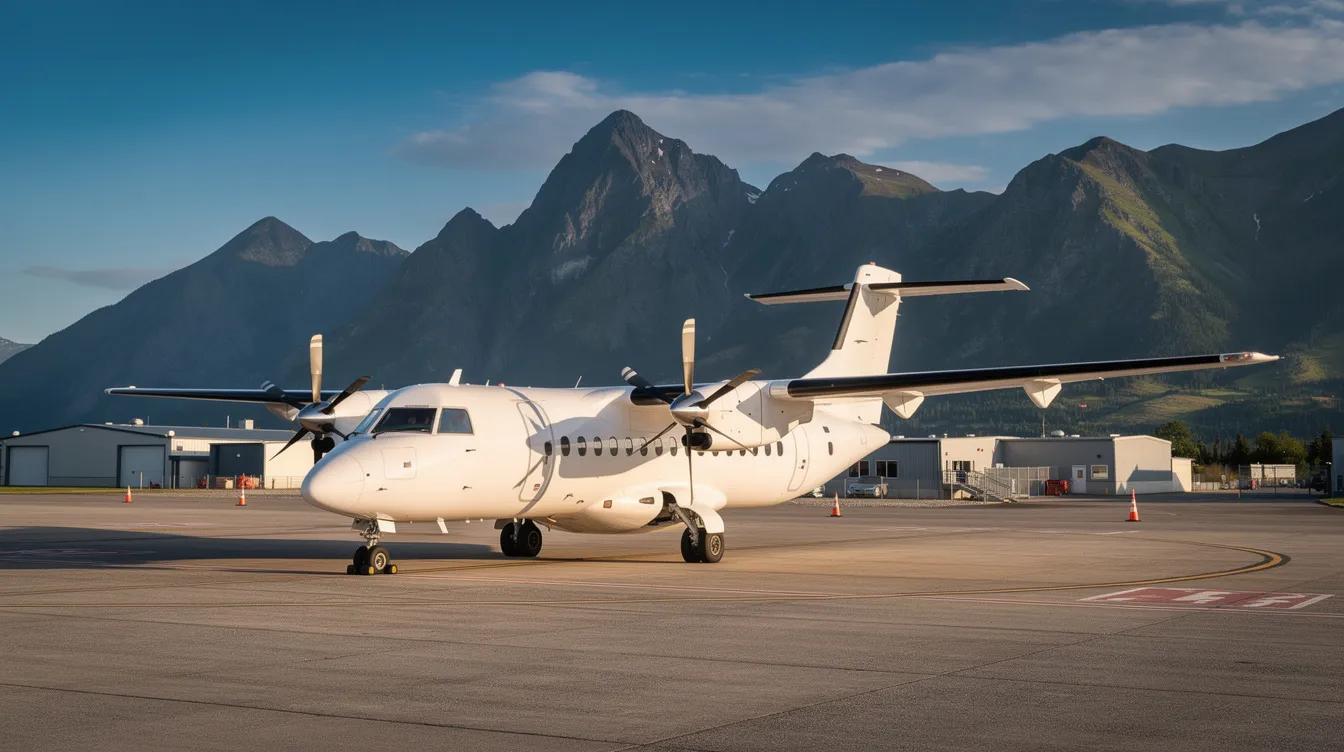
Turboprops like the Pilatus PC-12 or King Air 250 are optimal for short hops under 500 nautical miles, especially when destinations have shorter runways. They are lightweight, fuel-efficient, and can reach airports that jets cannot.
Light jets such as the Citation CJ3+ fit trips in the 500–1,200 nm range - a New York–Boston or Dallas–Denver leg, for instance - with speed advantages over turboprops and modest cabin space for four to six passengers.
Midsize or super-midsize jets handle longer routes with more comfort. London–Nice, Los Angeles–Cabo, or similar 1,500–2,500 nm missions justify the higher hourly cost. Large-cabin jets like the Gulfstream G650 or Bombardier Global 7500 make sense for true long-range flights - Toronto–London or Los Angeles–Hawaii - where nonstop capability and cabin space for rest or work become essential.
Airport access also matters. Using Teterboro (TEB) instead of JFK for New York saves significant ground time. Smaller airports often have fewer slot constraints and faster turnaround. Digital platforms like Jettly, with tools such as its airport locator for global private jet charter, allow side-by-side comparison of aircraft designed for different missions, helping travelers match the airplane to the trip rather than the other way around.
Air travel is 10 times safer than bus or rail travel when measured per passenger-kilometer. Modern commercial and professionally operated private flights maintain an exceptional safety record thanks to decades of regulatory development and technological improvement.
Regulators like the FAA, EASA, and Transport Canada set the rules. They certify aircraft, license pilots, and oversee operators. In the United States, commercial airlines operate under Part 121 regulations, while charter operators fall under Part 135. Both require recurrent training, simulator checks, regular medical evaluations, and detailed operations oversight. For more on charter-specific regulations, see What Is FAR Part 135?
Aircraft maintenance follows structured cycles. Airlines use A, B, C, and D check categories at increasing intervals and depth. Business jets follow equivalent manufacturer-mandated schedules based on flight hours and cycles, with engine overhauls as a major cost factor.
Safety improvements since the 1990s have been substantial. Enhanced ground proximity warning systems, traffic collision avoidance (TCAS), synthetic vision displays, and modern avionics all reduce risk. Flight instruments and avionics help pilots navigate and communicate during flights with precision that earlier generations could not match. Data-driven safety management systems now allow operators to identify risks before incidents occur.
Airliners are 8.3 times safer than smaller private planes on a statistical basis. Air travel is more dangerous than car travel per journey but far safer per distance traveled. For charter arranged through platforms like Jettly, travelers can ask about operator safety ratings and maintenance status, reinforcing informed choice.
The Wright brothers achieved the First Powered Flight in 1903 at Kitty Hawk, North Carolina. That initial flight covered about 120 feet in roughly 12 seconds. Their focus on control - using wing warping to manage roll - set the foundation for all fixed-wing aircraft that followed. Three years later, Alberto Santos-Dumont flew 220 meters in 1906, claiming the first unassisted flight in Europe.
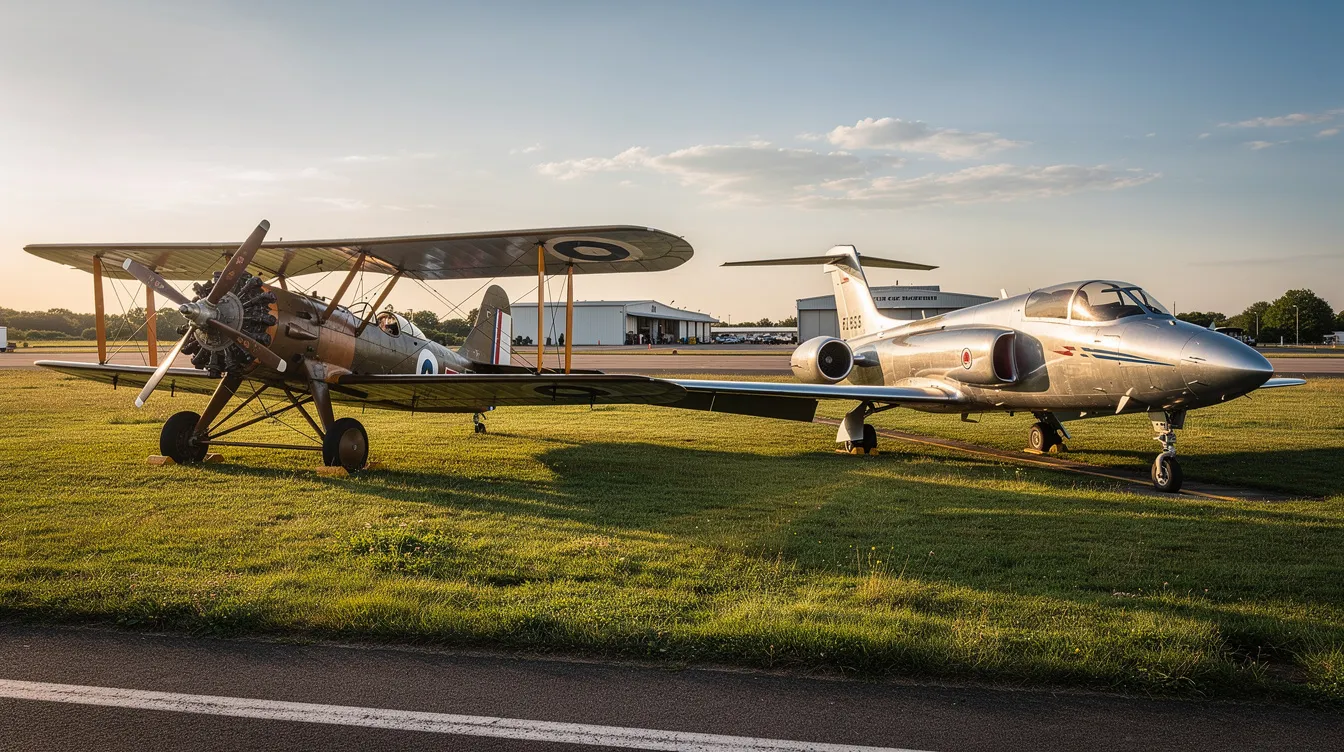
Before powered aircraft became practical, earlier pioneers advanced human flight through glider experiments. World War I accelerated airplane development rapidly. Biplanes built from wood and fabric became essential for reconnaissance and combat, pushing engineers to improve speed, climb rate, and durability. In the interwar years, dedicated airliners like the Douglas DC-3 proved the commercial viability of air travel, carrying passengers reliably on metal airframes.
The jet age began when the first practical jet aircraft, the Heinkel He 178, was tested in 1939. The de Havilland Comet was the first jet airliner introduced in 1952, launching commercial jet operations. Then came the widebody era: the Boeing 747 was the world's largest passenger aircraft from 1970 to 2005, transforming long-haul travel into a mass-market proposition.
Business aviation developed in parallel. The Learjet in the 1960s introduced corporate jets to the world. Growth through the 1980s and 2000s brought ultra-long-range models capable of connecting city pairs like New York–Hong Kong nonstop, and major players such as NetJets with its large fractional ownership fleet helped popularize private aviation among corporations and high-net-worth individuals.
Looking ahead, electric vertical takeoff and landing (eVTOL) aircraft are reaching initial regulatory approvals. Hybrid-electric regional aircraft are under development. Sustainable aviation fuel production is scaling. And digital charter platforms like Jettly, combined with more efficient aircraft and new propulsion technologies, are reshaping how individuals and companies access the benefits of human flight for decades to come.
Below are answers to common questions not fully addressed in the sections above, focused on practical traveler concerns.
For commercial airlines, passengers typically arrive 1.5–3 hours before departure depending on route and airport, due to check-in, security screening, and boarding queues.
Private charter is different. Arrival at a private terminal or FBO can be as little as 20–30 minutes before departure. Security and boarding are streamlined for a small group. Platforms like Jettly show exact meeting details and recommended arrival times during the booking process, and ground transportation can be timed to the actual wheels-up schedule.
Safety depends on the operator, aircraft maintenance, and crew training - not on the label "private jet." Professionally run charter operators must meet stringent regulatory standards under Part 135 or equivalent rules.
Charter flights arranged through Jettly use licensed operators with certified aircraft and pilots, subject to the same oversight authorities that regulate airlines. Travelers can ask about operator certificates, safety ratings, and audit programs for additional assurance.
Yes. Many private jets and turboprops are aircraft designed to operate from shorter runways and smaller regional airports, including airfields without scheduled airline service.
For instance, travelers can use Teterboro instead of JFK for New York, or fly directly into a regional airport near a ski resort or island destination. Jettly's routing tools surface nearby airports that reduce ground travel time and make point-to-point trips more efficient.
A light jet might cost a few thousand dollars per flight hour, while a midsize or large-cabin jet runs significantly higher - check current pricing for specific routes. On busy routes or at short notice, total charter cost divided among four to eight passengers can approach business-class fare levels.
Jettly provides instant pricing so travelers can quickly compare per-person charter cost with current business-class fares on the same route and date.
Start by choosing efficient aircraft types suited to the mission - turboprops for short hops or newer-generation jets with lower fuel burn per mile. Consolidating trips and making use of empty leg flights where practical also helps.
Select operators that support carbon offset and sustainable aviation fuel programs. Digital charter platforms can assist by matching travelers with the most efficient aircraft for their route and minimizing unnecessary repositioning flights through smart scheduling.
Ready to experience private travel on your terms? Explore flight options or request a quote at https://www.jettly.com.
Airplanes have revolutionized global travel, connecting cities and people with unprecedented speed and convenience. From the earliest powered flights by the Wright brothers to today’s advanced private jets and commercial airliners, the evolution of airplanes reflects continuous innovation in design, materials, and propulsion. Modern airplanes balance the forces of lift, weight, thrust, and drag to safely and efficiently carry passengers and cargo across vast distances at high altitudes.
Private jet charter platforms like Jettly make this technology accessible with transparent pricing, instant booking, and a wide range of aircraft tailored to diverse travel needs. Whether for business or leisure, private aviation offers flexibility, time savings, and access to airports that commercial flights cannot reach. As aviation advances toward greener technologies and more efficient operations, airplanes will remain essential to how the world moves.
Ready to experience private travel on your terms? Explore flight options or request a quote at https://www.jettly.com.
Share this post:
Jay Franco Serevilla
Oct 13, 2026
|
5
min read
Discover tips and trends in the industry.
5
min read
Blackhawk King Air 200: Performance Upgrade Guide for Private Charter Travelers
The Blackhawk King Air 200 offers private charter travelers enhanced performance with jet-like speeds and improved efficiency. Upgraded engines and aerodynamic modifications allow for faster trips and access to smaller airports, making it a versatile choice for various travel needs. With comfortable cabin configurations and noise-reduction features, it ensures a smooth travel experience.
Read More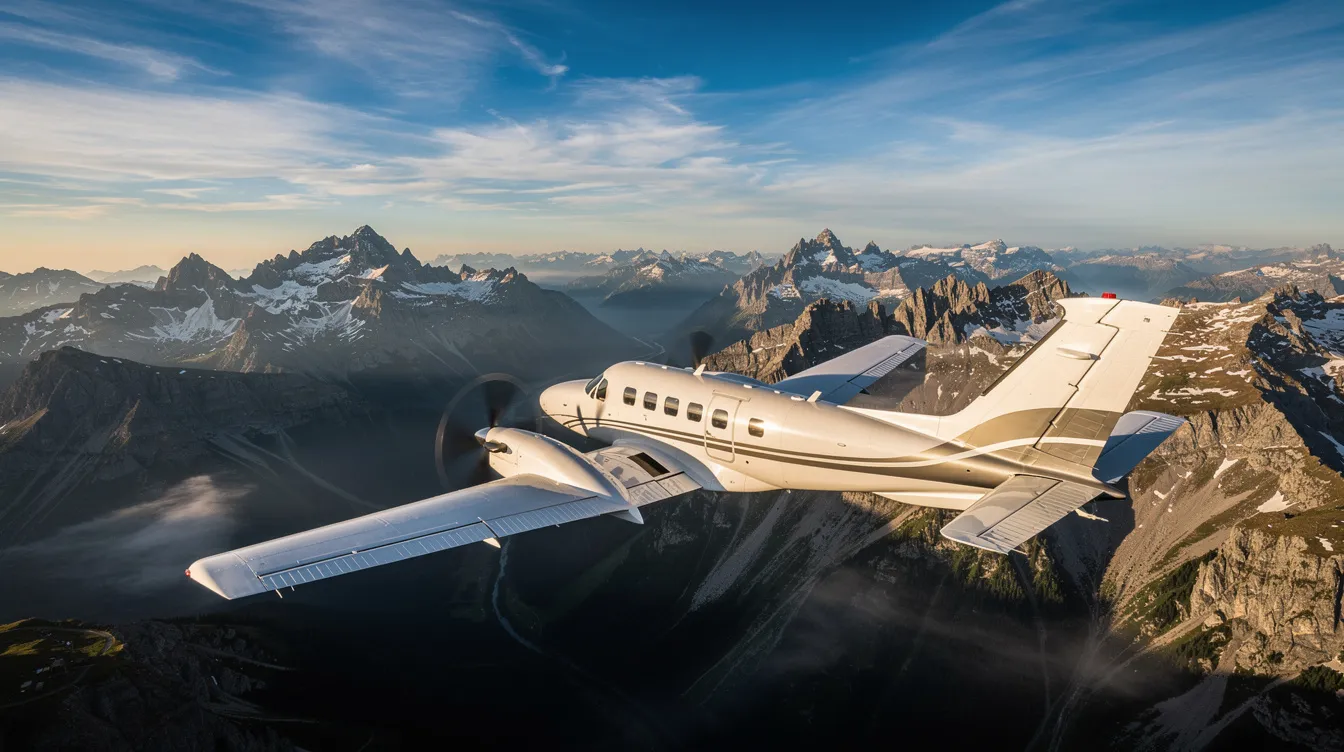
5
min read
Pilatus PC-12 Price: Purchase, Charter Costs, and Value Compared to Light Jets
The Pilatus PC-12 is a versatile single-engine turboprop known for its competitive pricing and strong resale value. With purchase prices ranging from $1.8 million to over $8 million, it offers cost-effective charter options compared to light jets. This guide provides insights into the PC-12's pricing, operating costs, and how it compares to other aircraft for regional missions.
Read MoreStay updated with our latest insights and tips to elevate your journey with us.
MEMBERSHIPS AND ASSOCIATIONS



Disclaimer: Jettly operates as a charter broker, offering access to a global digital jet charter marketplace. Jettly is not a direct air carrier and does not own or operate aircraft. All advertised flights are conducted by third-party air carriers that are fully licensed and hold the appropriate Part 135 or Part 121 certifications issued by the Federal Aviation Administration (FAA) or equivalent regulatory authorities under U.S. or foreign law. Jettly complies fully with the U.S. Department of Transportation's Part 295 and Part 298 Charter Broker regulations. Jettly does not carry additional liability insurance. Passengers are covered by aircraft operator insurance. TICO: 50023770


