


Login
Get Instant Pricing On 23,000+ Aircraft

>
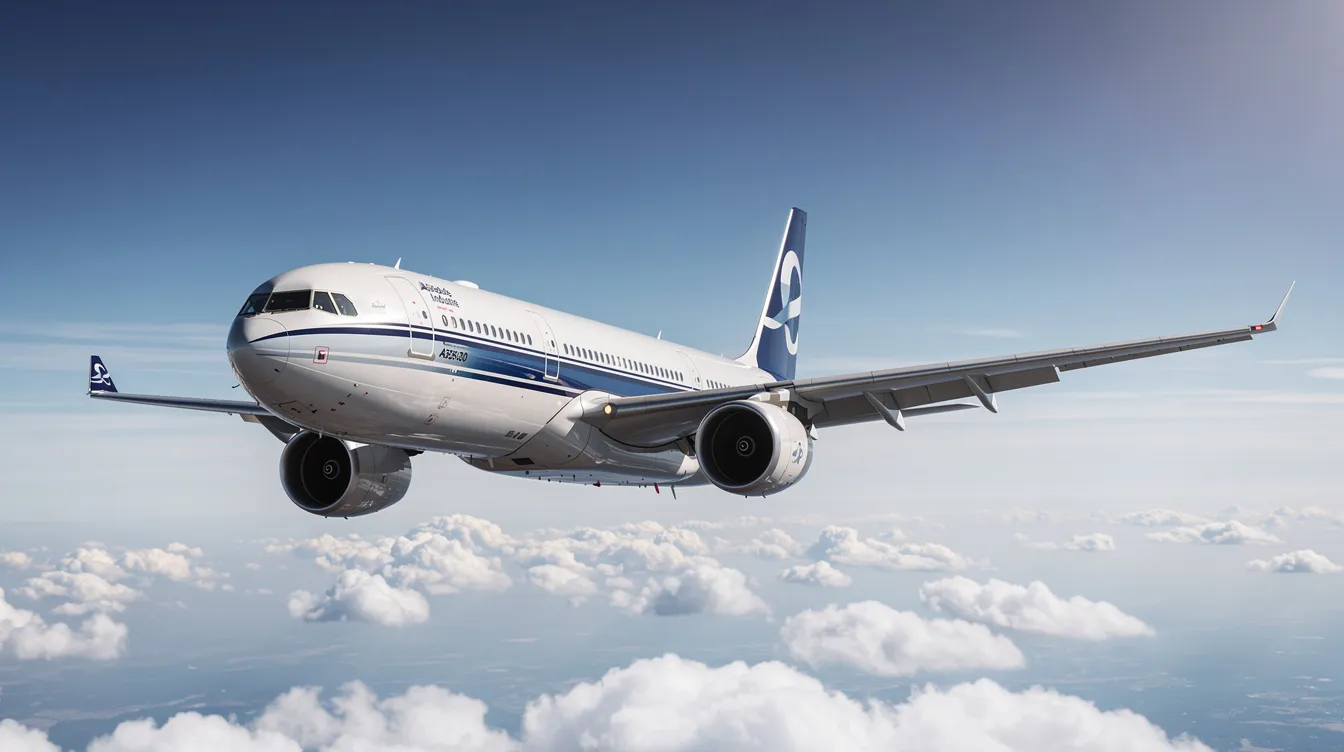
The Airbus A330-300 is a twin-engine wide-body airliner developed by Airbus, and it remains one of the most widely operated long-haul aircraft in the world. Often listed under its full designation as the Airbus Industrie A330-300, it typically seats about 250 to 300 passengers and offers roughly 9,000 to 11,750 km of range, making it a proven choice for medium- to long-haul routes connecting major city pairs across continents.
The A330-300 entered service in 1994 and is known for reliable, fuel-efficient performance on routes spanning Europe to North America, Europe to Africa, and dense intra-Asia sectors. The aircraft has also been used for transatlantic and transpacific flights, giving airlines, charter operators, and large-group planners a flexible tool for network and trip planning.
Compared to the shorter A330-200 and the newer A330neo models, the A330-300 offers more seats per flight and lower per-seat costs on high-demand routes. Production of the original variant ended around 2020, but the fleet remains large and active globally.
For a platform like Jettly, the A330-300 matters because corporate executives, frequent flyers, sports teams, music tour operators, and private charter clients sometimes need wide-body capacity that goes well beyond a standard private charter aircraft. Understanding the types of planes available helps match the right aircraft to the mission.
This article covers seat map layouts, technical specifications, operating history, performance data, airlines flying the type, upgrades, charter use cases, and what passengers can expect on board.
The Airbus A330-300 is a twin-engine, wide-body airliner typically seating 250–300 passengers in a three-class layout, with a range of roughly 9,000–11,750 km depending on configuration and takeoff weight.
Common Airbus A330 300 seat map layouts include Business, Premium Economy, and Economy classes arranged in a 2-4-2 cabin, though comfort and amenities vary widely by airline.
While the A330-300 is primarily a commercial aircraft, it is also chartered for sports teams, corporate groups, music tours, and VIP configurations through brokers like Jettly.
The aircraft features advanced fly-by-wire technology, Rolls-Royce Trent 700 engines, and a dispatch reliability rate exceeding 99%, making it one of the most dependable wide-body types in service.
This article covers technical data, cabin layout, operating airlines, and how to access A330-class aircraft or equivalents through Jettly's private jet charter platform at jettly.com.
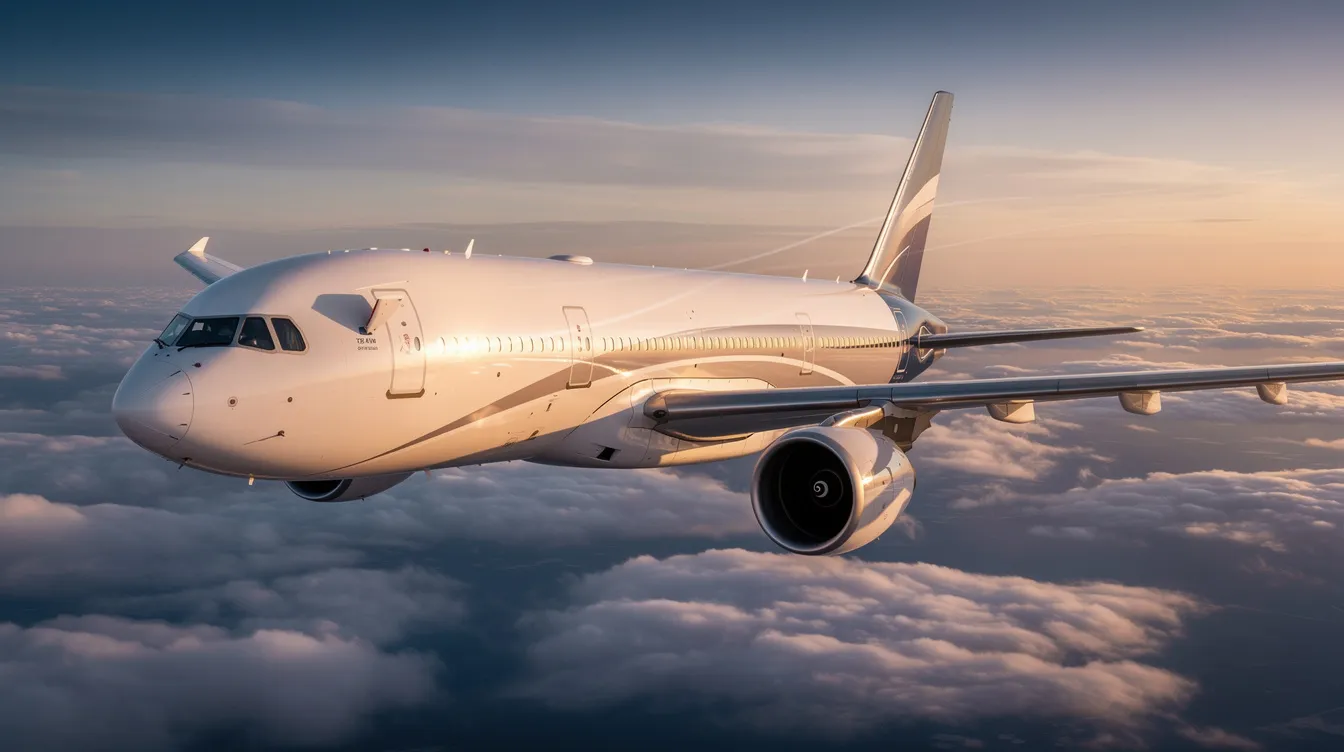
The Airbus A330 family evolved from the earlier A300, integrating modern fly-by-wire systems, new wings with improved aerodynamics, and a wide-body fuselage optimized for passenger comfort and fuel efficiency.
During the 1980s, Airbus set out to create a twin-engine long-haul aircraft that would complement the four-engine A340. Both types shared the same airframe and cockpit commonality with the A320 family, which simplified pilot training and reduced operating costs for airlines running mixed fleets.
Key milestones in the development timeline include:
1987 - Program launch by Airbus in France
November 1992 - The maiden flight of the A330-300, marking its first flight from Toulouse
October 1993 - EASA and FAA certification
January 1994 - Entry into commercial service with Air Inter, the launch customer (later absorbed by Air France)
Airbus targeted lower fuel burn compared to older tri-jets and four-engine types. The aircraft was powered by high-bypass turbofan engines, with options from Rolls-Royce, General Electric, and Pratt & Whitney. Progressive improvements over the production life included:
Higher maximum takeoff weight options
Increased range
Cabin refinements
Avionics improvements
This development path eventually led to the A330neo (A330-800 and A330-900) with new engines and aerodynamic tweaks, while keeping the core wire-controlled fly-by-wire design philosophy intact.
The Airbus A330-300 has a length of 63.66 m (208 ft 10 in), making it one of the longer twin-aisle aircraft in service. Its wingspan measures 60.30 m (197 ft 10 in), and the tail height sits at about 16.79 m (55 ft 1 in). The fuselage width of roughly 5.64 m supports a spacious twin-aisle cabin.
|
Specification |
Value |
|---|---|
|
Cruise speed |
Mach 0.82 (~875 km/h) |
|
Maximum operating speed |
~912 km/h (Mach 0.86) |
|
Range |
9,000–11,750 km (varies by config) |
|
Service ceiling/altitude |
~12,500 m / 41,000 ft |
|
Fuel capacity |
~139,090 litres |
|
Maximum takeoff weight |
233,000 kg (some variants up to ~242,000 kg) |
The maximum cruising speed is 875 km/h, and the aircraft has a range of 9,000 km in standard configurations, extending to roughly 11,750 km with higher takeoff weight variants and optimized fuel loads.
The aircraft is powered by 2 Rolls-Royce Trent 700 engines on most operators, with alternatives including the GE CF6-80E1 and Pratt & Whitney PW4168A. Thrust output ranges from about 68,000 to 72,000 lbf per engine, depending on the subvariant. The aircraft provides a spacious underfloor cargo capacity of approximately 33 LD3 containers, supporting both passenger and cargo operations. For detailed specs and charter rates, Jettly maintains a dedicated airframe profile.
For travelers and charter clients, these numbers translate to non-stop capability on most intercontinental routes, high passenger loads, and competitive fuel efficiency relative to similar wide-body aircraft.
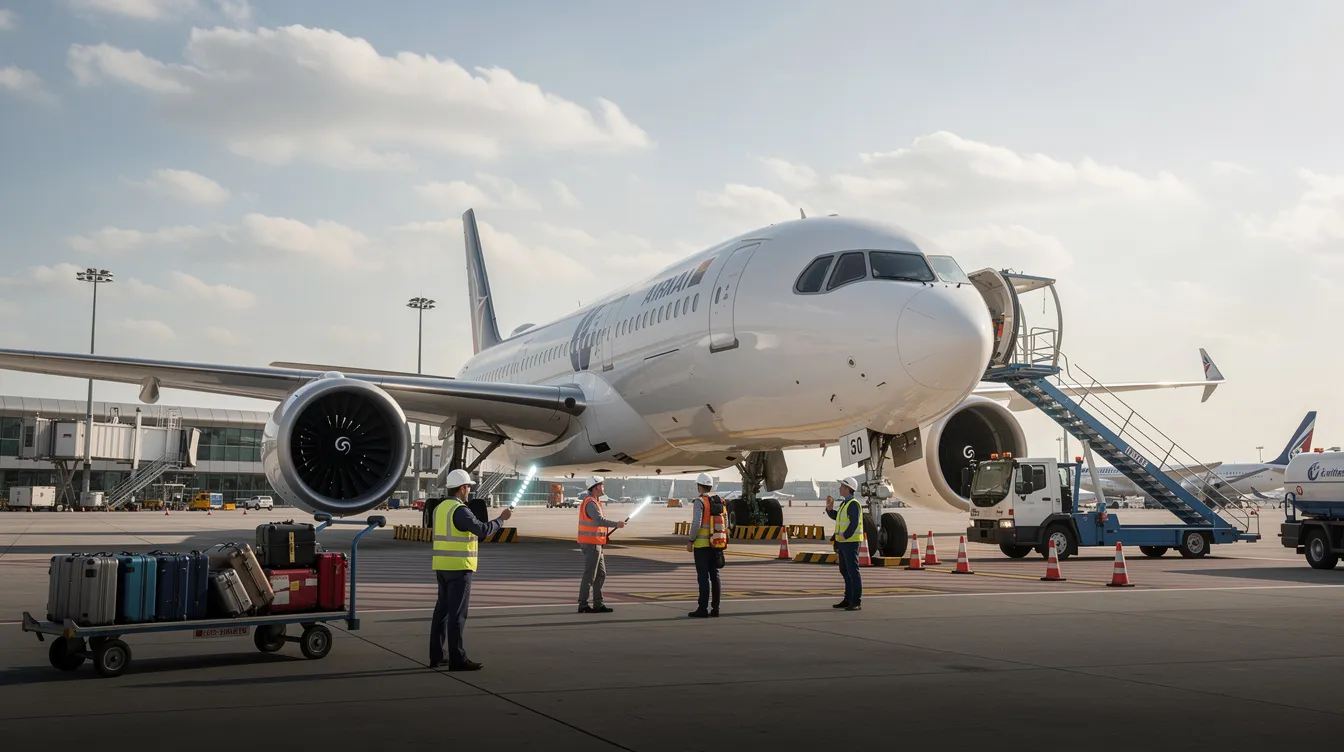
The seat map of the Airbus A330-300 varies significantly by airline, but most follow common patterns rooted in the aircraft's 5.26 m-wide cabin. Understanding the Airbus A330-300 seat map helps travelers and group organizers choose the best positions before boarding.
The typical twin-aisle, 2-4-2 seating layout in Economy Class on the Airbus A330 is often praised for giving every passenger either a window, aisle, or middle seat with no more than one seat away from the aisle. This compares favorably to the tighter 3-3-3 or 3-4-3 configurations found on some other wide-body types.
Typical seating capacity is 250 to 290 passengers in a three-class layout. The A330-300 can accommodate up to 440 passengers in high-density configurations used for short-haul leisure routes.
|
Airline |
Business |
Premium Economy |
Economy |
Total |
|---|---|---|---|---|
|
KLM |
42 |
28 |
~185 |
~255 |
|
Sample carrier |
30 |
21 |
244 |
295 |
|
AirAsia X |
30 |
- |
255 |
285 |
KLM's A330-300 offers 42 Business and 28 Premium Economy seats. One common configuration features 30 Business, 21 Premium Economy, and 244 Economy seats for a total of 295 seats. Delta's A330-300 seating includes a mix of classes tailored to North American demand.
Choose seats ahead of the wings for lower noise levels
Avoid the row nearest lavatories and galleys if you value quiet
Window seats suit overnight flights; aisle seats work better on daytime legs
Seat map diagrams show galleys, lavatories, doors, and emergency exits
For Jettly's charter customers, cabin layouts are often customized. But understanding the standard seat map helps when chartering high-capacity aircraft for groups and using a private jet charter cost estimator to budget the trip accurately.
Many travelers and travel planners download a seat map of the A330-300 before flying to plan seating assignments and understand the cabin layout.
Common sources for up-to-date maps include:
Airline fleet or aircraft information pages
Seat-review platforms and aviation enthusiast sites
Charter operator documentation (once an aircraft is confirmed)
When reviewing a downloadable map, look for:
Class boundaries
Emergency exit rows
Bassinet positions
Blocked seats
Notes on limited recline or missing windows
Note that external website sources may follow different privacy, cookie, and accessibility policies than the airline itself. Always check the same privacy and accessibility policies of any external website before downloading PDFs or high-resolution images.
For corporate groups, incentive trips, or sports teams, travel managers can combine seat maps with passenger lists to assign seating, often pairing this with an airport locator tool to confirm which airports can accommodate an A330-class aircraft. This ensures VIPs and executives sit in preferred zones while keeping team members together.
When visiting an Airbus aircraft page or an external site, verify the map matches the specific MSN (manufacturer serial number) or sub-configuration of the aircraft assigned to your flight, since airlines may operate multiple A330-300 layouts within the same fleet.
For chartered aircraft booked through a broker like Jettly, the operating carrier can usually provide a current seat plan or customized layout once the configuration is confirmed. Readers who want to combine scheduled A330 travel with private legs can explore charter options at jettly.com.
Many A330-300 operators offer lie-flat or angled-flat seats with direct aisle access in newer 1-2-1 layouts. Features typically include large IFE screens, power outlets, premium dining, and dedicated cabin space. Brussels Airlines plans to enhance A330-300 cabin interiors, reflecting a broader industry trend toward improved premium products and the growing role of specialized charter airlines in private aviation.
Where available, Premium Economy provides increased pitch (often around 38 inches), wider seats in a 2-3-2 arrangement, enhanced meals, and priority boarding. It serves as a practical middle ground between Business and Economy for travelers who want more space without the full Business Class price.
The A330-300 has a comfortable cabin layout often featuring 2-4-2 seating, with seat pitch typically between 31 and 32 inches. Overhead bins are sized for standard carry-on luggage, and most seats include individual IFE screens. The 2-4-2 arrangement is popular with couples and families for its flexibility.
The aircraft has been equipped with high-efficiency particulate air filters, supporting cabin air quality on long sectors. Noise levels are lower than older four-engine types, with the quietest experience in forward Business and Premium cabins. Rear Economy may pick up more engine and airflow noise.
Many airlines have updated A330-300 cabins to include modern amenities such as Wi-Fi connectivity, USB and power outlets, LED mood lighting, and refreshed IFE libraries.
For commercial airline charter customers, the experience can be further customized with tailored catering, branding, and ground handling coordinated through platforms like Jettly.

Lower fuel burn per seat than many older wide-body competitors, combined with competitive maintenance costs and a mature support infrastructure, keeps operating economics favorable. The aircraft is known for high reliability with a dispatch rate exceeding 99%, a figure that reflects decades of operational refinement.
The A330-300 is considered versatile for various route types:
Short-haul high-density sectors (intra-Asia, including routes to Seoul, Shanghai, and Japan)
Medium-haul transcontinental services across Europe and the west coast of North America
Long-haul flights up to roughly 6,350 nautical miles covering the distance between major hubs
It can handle high-density regional routes effectively while also serving as a long-haul workhorse. Airlines can "right-size" capacity versus larger types like the A350 or Boeing 777, deploying the A330-300 where 250–300 passengers per rotation match demand.
For very large groups, the A330-300 can offer a cost-effective per-seat charter solution compared with multiple smaller aircraft, especially on popular leisure or pilgrimage routes, particularly when planners understand the costs of private jet charter and how wide-body economics compare with smaller jets. Analysts have noted the A330 family's strong residual values and long service life across multiple operators, which supports competitive charter pricing even for older airframes.
Modernized flight management systems, upgraded cockpit displays, improved navigation and communication radios, and software updates that optimize fuel burn and routing have been rolled out across many fleets, all operating under tightly regulated frameworks such as Part 135 charter company standards for non-scheduled services. These system improvements extend the aircraft's useful life and reduce pilot workload.
Weight-saving materials, corrosion-resistant components, and revised maintenance schedules reduce downtime and operating costs. Structural improvements to the wings and fuselage allow operators to maintain safe, reliable service well beyond original delivery timelines.
Common retrofit programs include:
Installation of full lie-flat Business Class seats
Refreshed Premium Economy cabins with enhanced pitch
New Economy seats with updated IFE and power outlets
Modernized washrooms and improved cabin lighting
Brussels Airlines, among others, plans to enhance A330-300 cabin interiors as part of fleet renewal strategies.
Satellite-based Wi-Fi, streaming-capable entertainment, and GSM-compatible services allow passengers to work or relax even on 10-hour flights. These connectivity features are increasingly standard across A330-300 fleets.
Airbus Services and third-party MRO providers support retrofitting older airframes. For charter customers, a broker platform like Jettly can filter options based on cabin standard, connectivity, and refurbishment date when arranging group private jet charter travel, or suggest recurring-travel solutions through its private jet memberships.
Dozens of airlines across Europe, Asia, the Middle East, and the Americas operate or have operated the A330-300, making it one of the most recognizable long-haul types in the world. As of mid-2026, approximately 713 A330-300s remain in revenue service.
Europe: Air France, Turkish Airlines, TAP Portugal, and carriers with routes to Rome, Greece, and beyond
Asia: Cathay Pacific (the largest A330-300 operator), Malaysia Airlines, Air China, and carriers connecting Seoul, Shanghai, and Japan
Americas: Delta Air Lines operates a significant A330-300 fleet on transatlantic routes
Middle East: Several carriers use the type for medium-haul intercontinental services
Major operators of the A330-300 include Delta and Turkish Airlines, both of which rely on the type for high-demand long-haul routes. The A330-300 is operated by major airlines for high-demand long-haul routes where demand is strong but does not justify ultra-large aircraft.
A number of A330-300s have transitioned from mainline passenger service to charter airlines, ACMI providers, or cargo conversion programs. The type is used for both passenger and cargo operations, extending its working life. In the charter context, many high-capacity A330 flights are operated by specialized charter carriers or scheduled airlines using spare capacity for ad-hoc or seasonal contracts.
A marketplace like Jettly can, in some cases, source A330-class capacity through its operator network for group charters, subject to aircraft availability, route permissions, and regulatory approvals, and advise whether shared charter flights or full charters make more sense for a given movement.
Although the A330-300 is not a traditional "private jet," it plays an important role in large-group charter. It bridges the gap between commercial scheduled service and bespoke private aviation for organizations that need to move 200+ people at once.
Common charter use cases include:
Corporate roadshows across multiple continents
Music and entertainment tours (visiting cities in sequence on a custom schedule)
Sports team charter flights to tournaments and match venues in August, September, or July
Religious pilgrimage flights
Government or NGO missions
Charter operators can reserve whole sections for specific groups, brand the cabin with logos, adjust catering and service style, or install fewer, more spacious seats in VIP configurations, often supported by bespoke in-flight dining through services like Jettly Eats in-flight catering. The feature set depends on the operator and regulatory constraints.
Chartering an A330-300 through a platform like Jettly offers direct routing between city pairs not served by regular airlines, full control over departure times, and the ability to coordinate ground transport and catering. Pricing is transparent before committing.
For executives or families who don't need 250+ seats, Jettly's primary inventory of light, midsize, and heavy jets covers the smaller end of the capacity spectrum, with structured access via its jet card programs. The platform handles both ends through its global inventory.
Operational considerations for large-aircraft charter include:
Airport runway length requirements
Slot availability
Crew rest regulations
Importance of working with experienced operators certified under FAR Part 135 or equivalent regulations
Some missions can also benefit from crowdsourced private jet flights and shared empty seats to improve economics. Security and safety standards are non-negotiable.
Readers planning large group movements can explore options or request tailored quotes through jettly.com.

The A330-200 is shorter with slightly greater range and is often used on thinner, longer routes, while narrow-body types such as the Boeing 737-800 cover shorter, high-frequency sectors. The A330-300 offers more seats and is optimized for higher-demand sectors where capacity matters more than maximum distance.
The A330-900 (neo) brings improved fuel efficiency (Airbus claims roughly 25% lower fuel and CO₂ per seat), new Trent 7000 engines, and modern "Airspace" cabin features. The basic cross-section and 2-4-2 Economy layout remain similar.
|
Feature |
A330-300 |
Boeing 787-9 |
Boeing 777-200ER |
|---|---|---|---|
|
Typical seats |
250–290 |
250–290 |
300–370 |
|
Range |
~11,750 km max |
~14,140 km |
~13,080 km |
|
Cabin width |
~5.26 m |
~5.49 m |
~5.87 m |
|
Engine count |
2 |
2 |
2 |
The 787 offers composite construction and better cabin altitude and humidity, while the Boeing 767 and 777 families provide alternative capacity and range combinations, and smaller options like the Cessna 340 light twin serve regional business trips.
For large conference groups or fan movements, an A330-sized charter makes sense. For C-suite travel or client visits across regional cities, multiple smaller private jets booked through Jettly offer greater flexibility and access to smaller airports.
The A330-300 occupies a sweet spot in commercial and charter aviation for mid- to high-volume long-haul travel where reliability, range, and interest in cost-per-seat efficiency must be balanced.
Fuel burn and emissions are central topics in modern aviation. The A330-300 was designed to be more efficient than previous generations but predates the latest technologies now available on newer types.
Twin-engine wide-bodies like the A330-300 represent a meaningful shift away from older, less efficient tri-jets and four-engine aircraft. On many routes, the A330-300 delivers significant fuel savings per seat compared to the types it replaced in the 1990s.
Airlines reduce the environmental footprint of A330-300 operations through:
Weight-saving cabin refits
Optimized flight planning and routing
Participation in carbon-offsetting programs
Use of sustainable aviation fuels (SAF) where available
The production of SAF-compatible aircraft means many modern A330S can fly with approved SAF blends, contributing to lifecycle emissions reductions.
Gradual replacement with A330neo, A350, and 787 models will slowly reduce the A330-300's share of long-haul flying. But the type is expected to remain in service well into the 2030s for many carriers, especially in markets where capital cost is constrained, and route profiles are well suited to its performance.
For charter customers, some operators and brokers—including platforms like Jettly—increasingly consider aircraft efficiency, routing optimization, and optional offset programs as part of trip planning, positioning themselves as a flexible NetJets alternative without long-term ownership commitments. The A330-300's mature technology, proven safety record, and retrofit potential will keep it relevant while the industry transitions toward lower-emission solutions.
Below are common questions that cover topics not fully addressed in the main sections, focused on the A330-300 and its role in charter travel; readers interested in promoting these services can also explore Jettly's ULTRA high ticket affiliate program.
The A330 family has a strong safety record backed by decades of operational experience and compliance with global certification standards from EASA and the FAA. The introduction of fly-by-wire controls, redundant systems, and continuous avionics upgrades has reinforced safety over time. When arranging charters, safety also depends on the specific operator's maintenance standards, crew training, and regulatory oversight—all of which reputable platforms like Jettly verify before linking customers with operators.
To interpret a seat map and choose the best seat:
Identify cabin class boundaries on the map.
Look for icons marking emergency exits, lavatories, and galleys.
Check any notes on limited recline, missing windows, or bassinet positions.
Pair the airline's own seat map with seat-review sites to identify quieter rows, bulkhead or exit-row seats, and to avoid high-traffic areas near galleys if you want to sleep.
A good flight experience often comes down to smart seat selection that improves comfort once you're on board.
Jettly's day-to-day charters usually involve smaller business jets, but the platform can sometimes source wide-body aircraft like the A330-300 via its operator network for large-group or special-event charters. Availability depends on route, dates, operator schedules, and link to regulatory approvals. Clients should contact Jettly or request a quote at jettly.com for tailored options.
Scheduled A330 flights offer more seats and lower per-seat cost but come with fixed routes and times.
Private jets offer flexible schedules, access to smaller airports, privacy, and customized service for smaller groups.
Some clients combine both approaches: flying long-haul on an Airbus A330-300 in November or any peak travel month, then using a private jet booked through Jettly for regional connections or time-sensitive legs.
A typical A330-300 has a range of roughly 9,000–11,750 km depending on configuration, weight, and weather. This allows non-stop flights on many popular transcontinental and intercontinental routes, including high-traffic gateways where travelers might also consider private jet charter in Atlanta, Georgia for onward connections. For charter planning, operators calculate detailed performance based on payload, route, and airport conditions to confirm whether a sector can be flown non-stop or requires a technical fuel stop, whether the mission involves private jet charter in Kolkata, West Bengal, or another regional hub.
The Airbus A330 remains a cornerstone of global long-haul travel. Its 2-4-2 cabin, reliable performance powered by Rolls-Royce Trent 700 engines, and flexible range and capacity combination continue to serve airlines and charter operators on every continent.
Key strengths include its varied seat map and cabin layouts, continuous system and cabin upgrades, and presence in the fleet of many major carriers. Travelers who understand the Airbus Industrie A330-300 seat map and configuration can make better seat choices and more informed trip plans.
While most private travelers charter smaller aircraft, there are scenarios where an A330-300 or similar wide-body is the most efficient solution for large groups. Jettly's marketplace can help source the right aircraft through its operator network—whether that means a light jet for four passengers or a wide-body for 250.
Ready to explore private or group charter? You can run a quick estimate with Jettly's private jet charter cost estimator, use the jet card flight cost estimator for card-based flying, or request a quote and browse flight options at jettly.com.
Share this post:
Jay Franco Serevilla
Aug 2, 2026
|
5
min read
Discover tips and trends in the industry.
5
min read
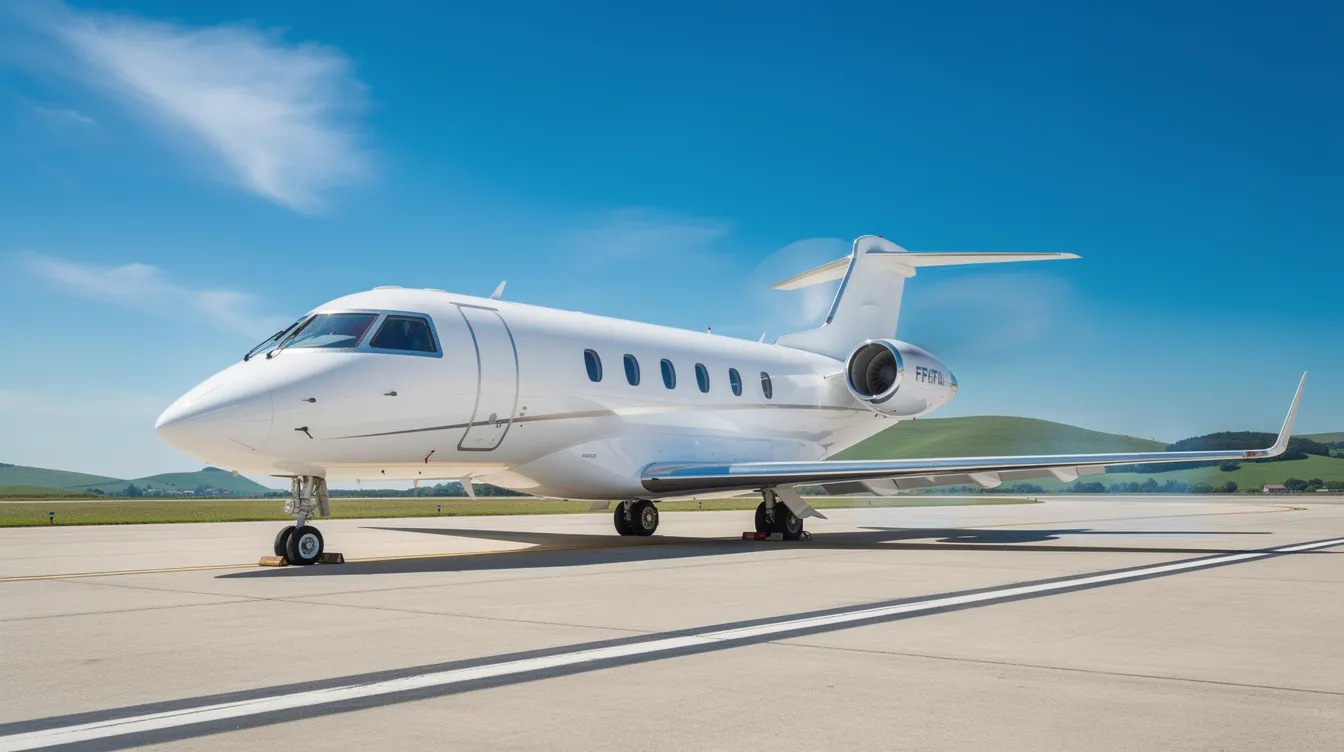
Private Plane India: How to Fly Private with Jettly
Flying private in India has become increasingly accessible for both business and leisure travelers. This guide provides insights on chartering private planes, including costs, benefits, and popular routes, making it easier to decide if private aviation suits your travel needs. With Jettly's platform, travelers can enjoy flexibility, luxury, and time savings while exploring over 20,000 aircraft options worldwide.
Read More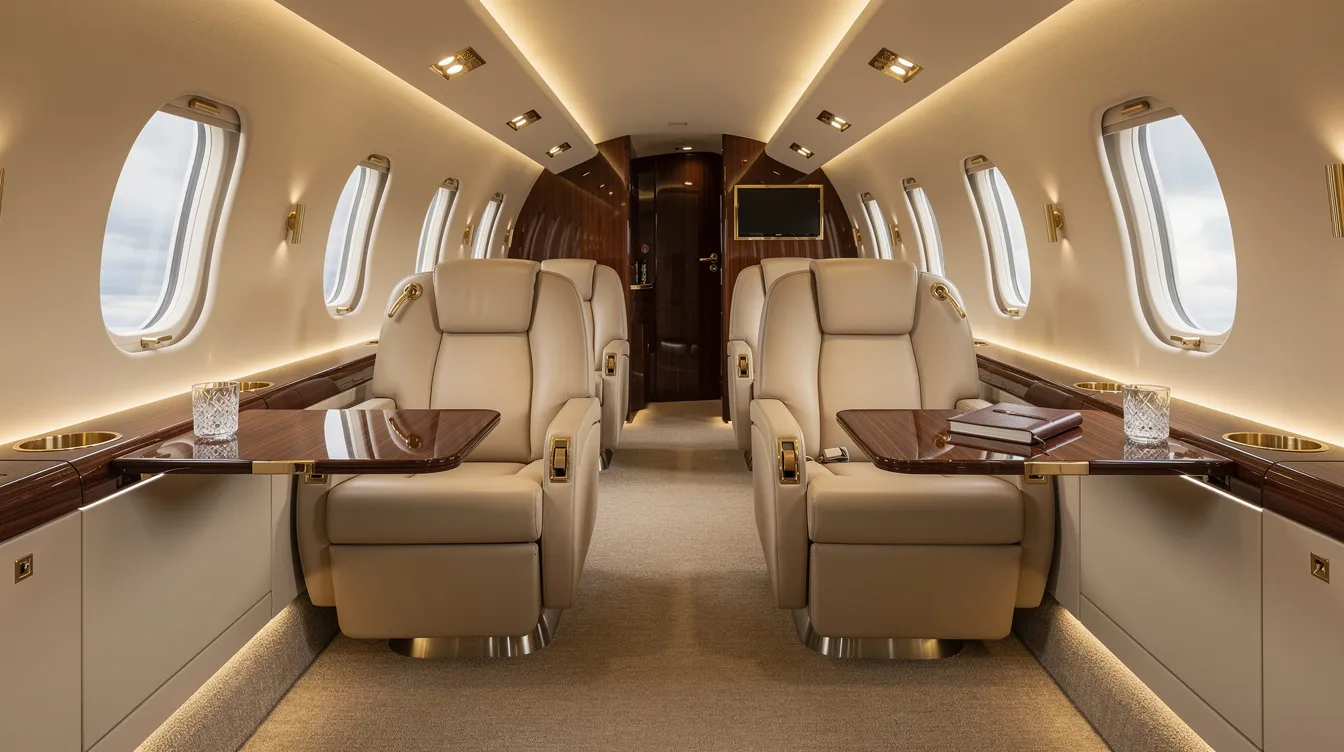
5
min read
Private Jet Customization: How Jettly Personalizes Every Flight
Private jet customization has transformed travel in 2026, allowing passengers to tailor each flight without owning an aircraft. Jettly connects travelers to over 20,000 aircraft, enabling personalized choices in cabin layouts, services, and amenities for every trip. This flexibility enhances the flying experience, making luxury travel accessible and efficient.
Read MoreStay updated with our latest insights and tips to elevate your journey with us.
MEMBERSHIPS AND ASSOCIATIONS



Disclaimer: Jettly operates as a charter broker, offering access to a global digital jet charter marketplace. Jettly is not a direct air carrier and does not own or operate aircraft. All advertised flights are conducted by third-party air carriers that are fully licensed and hold the appropriate Part 135 or Part 121 certifications issued by the Federal Aviation Administration (FAA) or equivalent regulatory authorities under U.S. or foreign law. Jettly complies fully with the U.S. Department of Transportation's Part 295 and Part 298 Charter Broker regulations. Jettly does not carry additional liability insurance. Passengers are covered by aircraft operator insurance. TICO: 50023770


