



Login
Get Instant Pricing On 23,000+ Aircraft

>
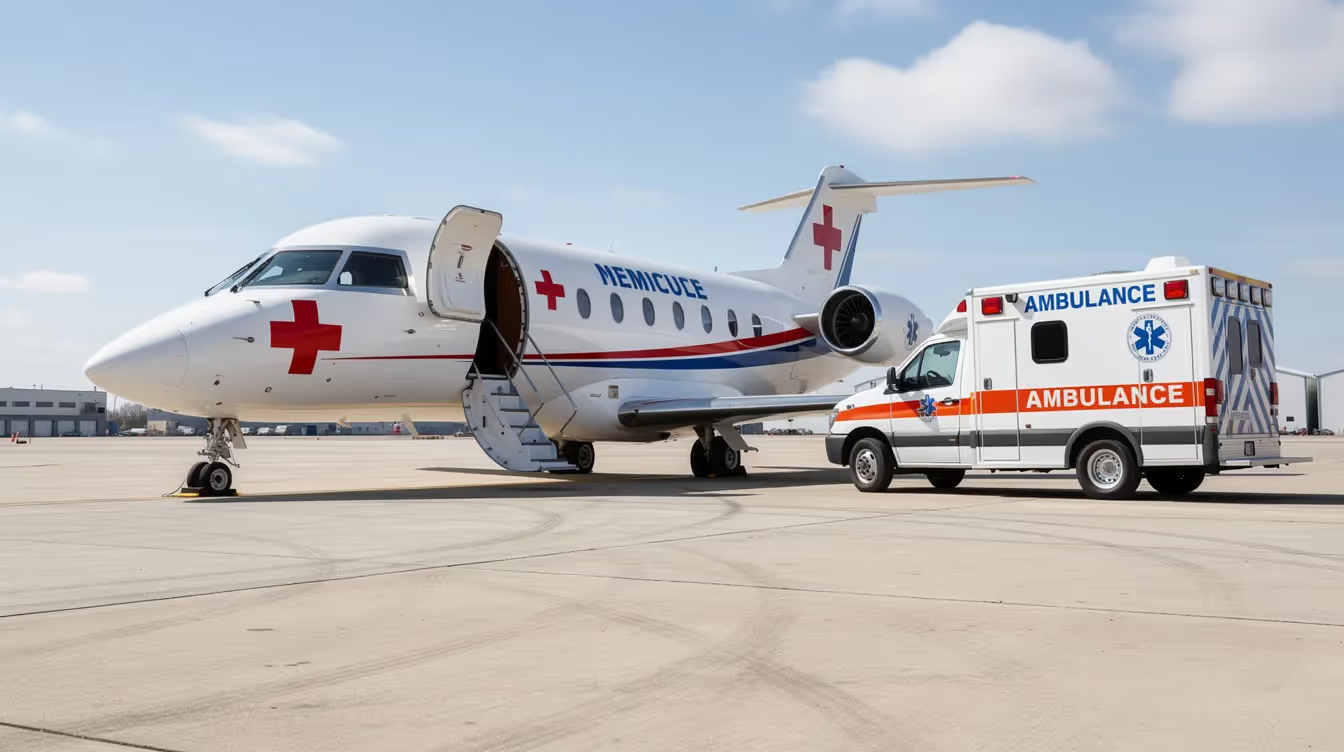
Air ambulance charter services provide critical, medically equipped air transportation for patients who require specialized care during flight. As a specialized air charter solution for urgent and long-distance medical evacuations, these services emphasize flexibility, speed, and the ability to reach remote areas quickly. Air charter services are tailored with advanced medical equipment and trained staff to handle critical cases, ensuring that even the most complex medical needs are met in transit. These dedicated flights offer a faster, safer alternative to ground or commercial travel when time is of the essence, and medical attention must continue uninterrupted. Whether for emergency evacuations, interfacility transfers, or international medical repatriation, air ambulance charters combine expert medical care with the convenience and flexibility of private aviation.
Jettly is a private jet charter platform offering on-demand access to private flights globally. It connects patients, families, and healthcare providers with a network of licensed operators and aircraft configured for medical transport through partners such as DEXTER AIR TAXI. The platform simplifies private aviation by providing transparent pricing, instant booking, and access to a wide range of private charter aircraft worldwide. This tech-driven approach ensures patients receive expert care when every moment matters—offering peace of mind for families knowing their loved one is attended to throughout the journey.
An air ambulance charter is a privately arranged, medically equipped aircraft designed to transport patients who require in-flight monitoring, life support, or intensive care unit capabilities beyond what commercial flights allow.
Jettly operates as a digital charter marketplace—not a medical provider—connecting patients, families, and hospitals with licensed operators offering ICU-capable jets, turboprops, and helicopters for urgent and non-urgent medical flights, with the same attention to safety and planning as their private charter services.
Common use cases include interfacility transfers within the U.S. and Canada, international medical repatriation from destinations like Mexico or the Caribbean, and time-critical access to specialist care.
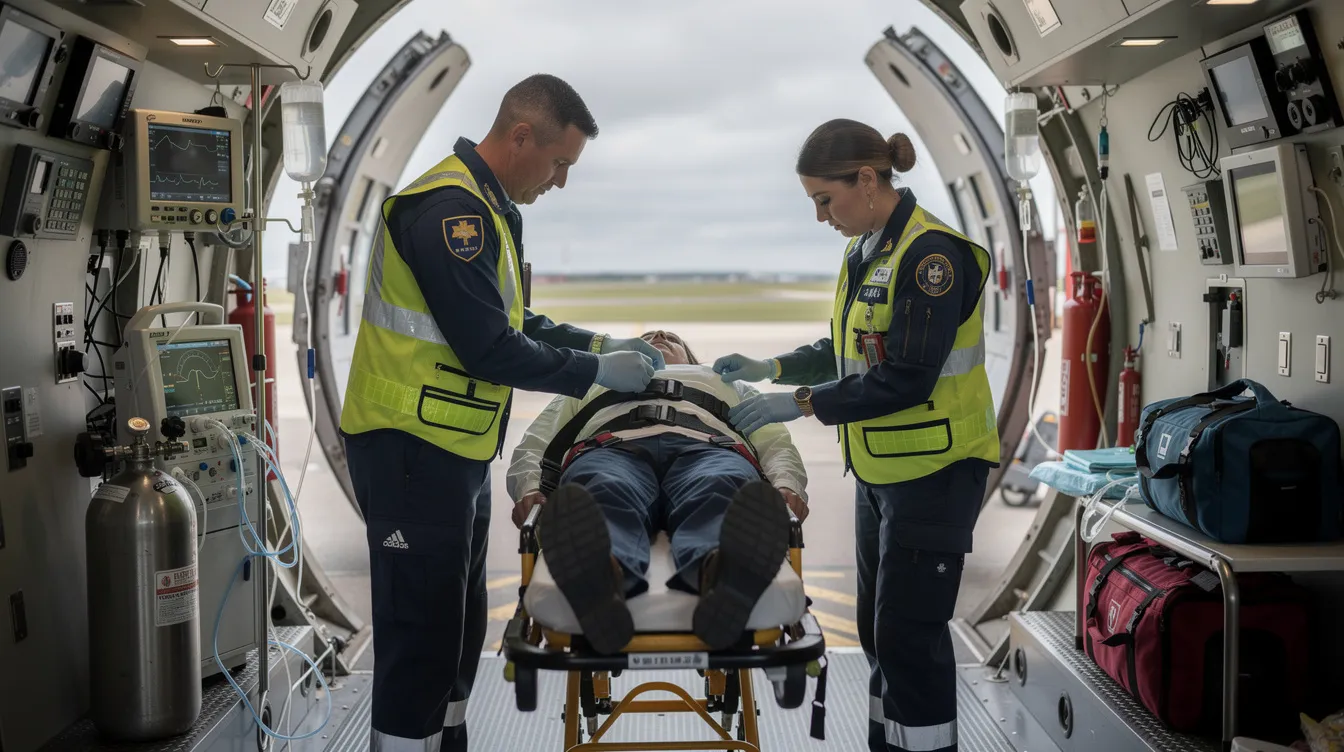
Flight crews typically include critical care nurses, flight paramedics, and physicians with advanced life support equipment tailored to the patient’s medical condition.
Ready to explore medical-capable charter options? Request instant pricing at jettly.com and consult your physician for clinical decisions.
An air ambulance charter is a privately arranged medical flight using aircraft specifically configured and staffed to transport patients who need in-flight monitoring or higher-acuity care than standard travel permits. These missions bridge urgent medical care with aviation, combining the safety standards of commercial flights with intensive care unit (ICU) capabilities, while leveraging Jettly’s role as a NetJets alternative for flexible private flying when patients or families also consider non-medical segments. Air ambulance services utilize a variety of aircraft, including light, mid-size, and heavy jets, all of which can be equipped with full ICU capabilities for patient transport.
Chartered ambulance aircraft include:
Fixed-wing jets and turboprops (light, mid-size, and heavy) for medium and long distances, with capacity for multiple passengers, such as medical staff and family members
Helicopters for short-haul, point-to-point access near hospitals and remote locations
Some medical charter planes are specially adapted to allow patients to lie flat or fly at a designated air pressure level, enhancing comfort during transport, and non-emergency missions may even incorporate tailored amenities such as in-flight catering for private jets when clinically appropriate.
Licensed air operators provide the aircraft, pilots, and medical staff. Jettly functions as a digital broker, matching patients, families, and clinics with suitable operators from a global network of over 20,000 aircraft, including instant-book providers like Zenflight’s private jet marketplace.
Unlike standard private jet charter driven by comfort or convenience, air ambulance charter configurations are determined entirely by medical requirements—from stretcher systems and cargo doors to ventilator mounts and clinical staffing. This specialized service is tailored to meet the unique needs of medical transport.
The decision to use air medical transport should be made by medical professionals—typically physicians or hospital case managers—based on the patient's condition and unique medical situation, as each case may require specialized care and equipment.
Time-sensitive transfers for stroke or cardiac patients between hospitals (e.g., regional ER to a major center in Houston or Toronto)
Trauma patients who cannot tolerate long ground transport
Patients needing specialist surgery located hundreds of miles away
Transporting stable patients home after surgery
Moving cancer patients closer to family support
Flying geriatric patients to long-term care facilities
Providing comfort care for patients who require supportive treatment and symptom management during transport
|
Option |
Best For |
|---|---|
|
Ground ambulance |
Short urban transfers under 100 miles |
|
Commercial airline + medical escort |
Stable patients who can sit upright |
|
Telemedicine |
Non-urgent specialist reviews |
Private jet medical flights provide the fastest travel option for patients who are too sick or weak to endure commercial flights, ensuring timely access to necessary medical care, particularly on international private jet routes and cross-border missions.
Key signals for air ambulance charter: interstate or cross-border distance, need for continuous monitoring, and inability to sit upright safely during transport.
Jettly’s marketplace provides direct access to aircraft globally, many configurable for medical transport, subject to operator capabilities and regulatory approvals, and tools such as its airport locator tool help identify suitable departure and arrival airports for each mission, complementing broader guidance on affordable aircraft rental options and cost factors.
Light and mid-size jets (Learjet 45, Cessna Citation XLS):
Common for North American missions like New York–Chicago
Fitted with ICU-level equipment and stretcher systems
Accommodate one patient, medical team, and one or two family members as passengers
Mid-size jets offer increased cabin space and range, making them suitable for longer flights or when additional passengers, such as transplant teams, need to be transported
Turboprops (Beechcraft King Air 350, Pilatus PC-12):
Efficient for regional operations in northern Canada, Caribbean islands, and rural U.S. states, including medically supported flights to major hubs that also host private jet charter services in Atlanta, Georgia
Access more airports with shorter runways
Economical for missions under 2–3 hours
Can carry a patient, medical staff, and several passengers, including family or transplant teams, when required
Heavy jets (Challenger 604, Gulfstream G450):
Suited for long-haul repatriations like Miami–São Paulo or Dubai–London, where understanding underlying private jet operating costs and resource planning helps families and insurers budget appropriately
Spacious cabin accommodates additional medical staff and equipment
Superior pressurization for patients with respiratory concerns
Can transport multiple passengers, including medical staff, family members, and transplant teams for organ transplant procedures
Helicopters (Airbus H145, Bell 429):
Short-range transfers from accident sites to trauma centers
Bridge patients from remote locations to nearby airports for fixed-wing connection
Jettly’s team helps match aircraft type to specific medical and logistical requirements for each mission, including those involving transplant teams and specialized passenger needs.
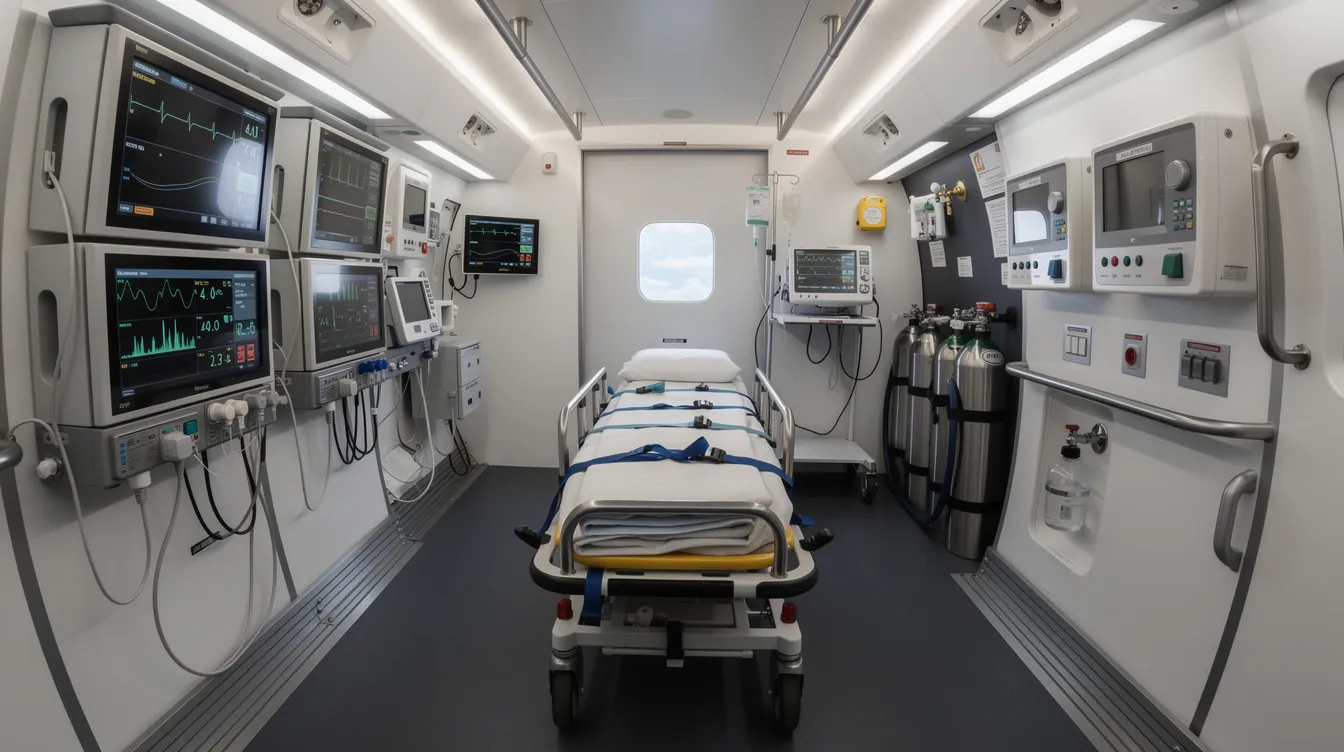
Dedicated air ambulance aircraft function as flying intensive care units, with equipment and personnel tailored to the patient’s diagnosis and stability level. These specially adapted medical charter planes can allow patients to lie flat or fly at a designated air pressure level, enhancing comfort during transport and supporting comfort care for those needing pain or anxiety relief.
Advanced cardiac monitors for continuous ECG and hemodynamic monitoring
Mechanical ventilators for respiratory support
Automated external defibrillators and advanced life support pharmacology
Infusion pumps for precise medication administration
Portable suction units and supplemental oxygen systems
Secure medication storage
Stretcher loading via cargo doors or modified ramps
Flat patient positioning to reduce hemodynamic stress and provide comfort care
Secure mounts for monitors and IV stands during turbulence
|
Role |
Typical Inclusion |
|---|---|
|
Critical care nurses |
Baseline for most missions |
|
Flight paramedic |
Advanced airway and emergency care procedures |
|
Respiratory therapist |
Ventilator management |
|
Physician |
Complex or high-acuity cases |
Pediatric, neonatal, and cardiac specialists join when managing conditions like post-stroke monitoring, spinal injuries, or ventilated patients. Emergency care specialists, such as doctors, nurses, paramedics, and respiratory therapists, are on board to ensure advanced emergency care and comfort care throughout the flight. Jettly coordinates with operators and hospitals to match capabilities to the medical plan.
Air ambulance services support both domestic transfers and international flights where patients must cross borders for appropriate care or to return home, fitting into the larger picture of how much private jet travel can cost when comparing charter, membership, and ownership options, and even broader considerations around affordable aircraft choices for different ownership budgets. In all cases, safety, logistics, and regulatory compliance matter greatly to ensure consistent care and successful medical repatriation.
ICU-to-ICU transfers between U.S. states (Phoenix to Los Angeles)
Canadian interprovincial flights (Calgary to Toronto)
Regional hospital to urban medical center transfers
Tourists injured in Mexico or the Dominican Republic returning to U.S. hospitals
Expatriates flying from Europe or the Middle East back to North America, sometimes connecting through major gateways that also support private jet charter to Chennai in Tamil Nadu
Patients traveling from Caribbean islands to Miami for specialist treatment or onward connection via private jet charter services in Houston, Texas
Border formalities: passports, visas, customs, overflight permits
Time zone differences and language barriers
Hospital infrastructure variations
Providers should be accredited by recognized bodies such as the Commission on Accreditation of Medical Transport Systems (CAMTS), EURAMI, or NAAMTA to ensure high safety standards. Operators and Jettly’s support team ensure regulatory compliance and smooth handovers. Early coordination with receiving hospitals reduces delays on arrival and ensures bed availability at the final destination.
The booking process emphasizes 24/7 digital access and early involvement of the patient’s medical team. Providers should verify their 24/7 communications availability and ability to arrange bedside-to-bedside service, including all ground transport.
Families, hospitals, or insurers reach Jettly via website or phone with basic details: current location, destination facility, diagnosis, and preferred timeframe.
Jettly and operators request medical summaries, fit-to-fly clearances, and equipment lists to determine aircraft type, staffing, and routing.
The platform presents several aircraft choices with estimated costs and flight times. Domestic U.S. flights often start in the low tens of thousands of USD; long-haul international missions run significantly higher, and tools like Jettly’s private jet charter cost estimator can help families understand baseline aircraft and routing costs before clinical add-ons, similar to guides on buying a single seat on a private jet efficiently.
Once a solution is chosen, Jettly coordinates ground transportation at origin and destination, confirms bed availability, and provides a clear itinerary.
Real-time updates, dedicated contact points for families, and post-flight communication with the receiving clinical team ensure continuity of care. The support team is available to answer questions from families and caregivers throughout the process.
After agreeing to the terms of service for an air ambulance, clients must complete the booking by signing the required documents and arranging payment before the flight.
Air ambulance charter costs vary based on distance, aircraft type, urgency, and medical staffing requirements, similar to other affordable private jet charter pricing structures, where travelers can manage expenses through careful planning and flexibility.
|
Mission Type |
Estimated Cost (USD) |
|---|---|
|
Short domestic (within one state) |
$15,000–$35,000 |
|
Cross-country U.S. |
$50,000–$100,000 |
|
Transatlantic repatriation |
$80,000–$200,000+ |
Aircraft hourly rate ($3,000–$8,000+ per flight hour)
Positioning and return legs
Medical crew fees ($500–$2,000+ per crew member)
Ground ambulances at both ends
Airport fees and special equipment
Many air ambulance providers have insurance specialists who assist patients in navigating their coverage options and handling the authorization process for medically necessary flights, saving valuable time. Air ambulance services typically work with a wide range of health insurance companies to secure coverage, but patients should verify their specific policy details to understand their benefits. Insurance coverage often depends on the patient's unique medical situation, so pre-authorization and documentation are usually required. Speak with insurers early, keep detailed medical records and physician letters, and request itemized quotes for insurance submission. Quotes should include all fees to ensure transparency and avoid hidden costs.
Jettly provides transparent, upfront pricing and documentation suitable for insurance providers, and families planning repeated or longer-term travel may also benefit from using a jet card flight cost estimator to compare structured hourly programs with on-demand medical charters alongside broader analyses of private jet card pricing, fees, and value.
Safety combines aviation regulation with strict medical protocols. All flights operate under national civil aviation authorities:
FAA (United States)
Transport Canada (Canada)
EASA (Europe)
Pilots are trained for medical missions, including diversions, night operations, and coordination with hospitals.
CAMTS (Commission on Accreditation of Medical Transport Systems)
EURAMI (European Aero Medical Institute)
Weather evaluation along flight routes
Runway performance calculations
Weight and balance with medical equipment
Patient stability checks with the sending physician
Infection control procedures, secure medication storage, and in-flight documentation maintain continuity between sending and receiving hospitals. Jettly can share operator certifications and safety records during quoting.
Air ambulance charter is a comprehensive service that provides tailored solutions for critical care transport, fitting within a broader continuum of medical transportation options often discussed alongside broader charter airlines and private flight options, and independent reviews of the best jet card programs for frequent private fliers.
|
Transport Type |
Best For |
Limitations |
|---|---|---|
|
Ground ambulance |
Short urban transfers under 100 miles |
Impractical for long distances |
|
Commercial + medical escort |
Stable patients who can sit |
Security lines, limited intervention |
|
Standard private jet |
Comfortable travel with basic support |
Lacks ICU capabilities |
|
Dedicated air ambulance |
Critical care, continuous monitoring |
Higher cost |
Real-world example: A stable cardiac patient transferring 400 miles might use a commercial flight with an escort if timing is flexible. A ventilated ICU patient traveling 1,500 miles requires a dedicated air ambulance service with full critical care staffing
Medical necessity drives air ambulance flights, but operational efficiency matters for non-emergency missions with flexible scheduling, where options like crowdsourcing private jet flights and sharing empty seats can sometimes reduce repositioning costs without compromising care, much like other strategies for getting a private jet seat easily and affordably.
Right-sizing aircraft (turboprop instead of heavy jet for regional missions)
Matching missions with suitably located aircraft to reduce repositioning
Some operators offer carbon offset programs
Jettly’s marketplace model improves fleet efficiency by identifying regionally positioned aircraft rather than dispatching distant heavy jets requiring long ferry flights, an approach consistent with best practices highlighted in reviews of the best private jet charter companies and its own Jet Card program for structured private flying.
Timely care and patient outcomes remain the primary priority—efficiency measures apply only where they don’t compromise safety or clinical quality, even when considering the broader implications of ongoing private jet operating expenses.
These questions address common practical concerns not fully covered above. Specific missions should always be discussed with the treating medical team and the chosen operator, especially when comparing Jettly’s offerings with major providers such as NetJets and its private aviation model.
Timing depends on aircraft location, crew availability, and clinical readiness. Domestic missions can sometimes launch within 6–12 hours when documentation is ready. International missions may take longer due to permits and bed coordination. Contact Jettly early—even before final medical decisions—so preliminary planning can begin in parallel.
In many cases, one or two companions can travel on board. Final numbers depend on aircraft size, equipment layout, and clinical team assessment. Smaller jets may limit seating to one relative; larger aircraft may accommodate additional family members. Discuss preferences at the quoting stage so Jettly can recommend suitable configurations.
Operators typically require recent medical reports, diagnosis, vital signs, medication lists, and a physician’s fit-to-fly statement outlining requirements like ventilator support or isolation precautions. Logistical details include pickup and destination addresses, passport information for international flights, and any special equipment traveling with the patient. Jettly provides a checklist to gather this efficiently.
Medical needs and safety take priority. Non-essential items and animals are often restricted, especially on higher-acuity missions. Small amounts of personal luggage are usually acceptable, but large baggage or pets require prior approval. Prioritize documents, medication supplies, and essential personal items.
Air ambulance charters frequently serve non-emergency but medically necessary trips—transporting stable patients to rehabilitation centers, long-term care facilities, or home after surgery. Aircraft and staffing may be adjusted for lower acuity, offering flexibility on scheduling and cost, and some patients pair medical segments with standard private jet charter services in Atlanta, Chennai, Houston, Hyderabad, Kolkata, Mumbai, or New Delhi for non-clinical travel legs. Discuss with your physician whether a dedicated air ambulance, a private jet with limited support, or a commercial flight with escort is most appropriate.
A well-planned air ambulance charter combines the right aircraft, a qualified medical team, and careful coordination between hospitals to protect patient safety and comfort during transport, while Jettly’s high-ticket affiliate partnership program enables travel professionals and referrers to connect more patients with these services.
Jettly provides a digital gateway to a large global network of medically capable aircraft, helping families, hospitals, and insurers secure appropriate solutions with transparent pricing and on-demand access, supported by flexible private jet memberships for organizations that also require non-medical travel.
Decisions about whether air ambulance charter is necessary should always be guided by healthcare professionals, with logistics and aircraft selection built around their recommendations.
Ready to explore medical transport options? Request a quote at jettly.com and speak with your doctor and insurer before finalizing plans.
Share this post:
Jay Franco Serevilla
Apr 22, 2026
|
5
min read
Discover tips and trends in the industry.

5
min read
Dallas Helicopter Ride and Dinner: How to Plan an Unforgettable Night in the Sky
Experience the magic of Dallas from above with a helicopter ride followed by a delightful dinner. This unique package offers breathtaking views of the city skyline, making it perfect for romantic evenings or special celebrations. With options for custom routes and dining experiences, planning an unforgettable night in the sky has never been easier.
Read More
5
min read
Zimex Aviation: Specialist Missions, Fleet, and Career Opportunities
Zimex Aviation, established in 1969, specializes in flying to remote and challenging environments where conventional airlines often cannot operate. With a diverse fleet of turboprop aircraft, Zimex provides essential services such as oil and gas logistics, humanitarian airlift, and express cargo. The company emphasizes safety and operational excellence, making it a key player in the global logistics and humanitarian support sectors.
Read MoreStay updated with our latest insights and tips to elevate your journey with us.
MEMBERSHIPS AND ASSOCIATIONS



Disclaimer: Jettly operates as a charter broker, offering access to a global digital jet charter marketplace. Jettly is not a direct air carrier and does not own or operate aircraft. All advertised flights are conducted by third-party air carriers that are fully licensed and hold the appropriate Part 135 or Part 121 certifications issued by the Federal Aviation Administration (FAA) or equivalent regulatory authorities under U.S. or foreign law. Jettly complies fully with the U.S. Department of Transportation's Part 295 and Part 298 Charter Broker regulations. Jettly does not carry additional liability insurance. Passengers are covered by aircraft operator insurance. TICO: 50023770


