


Login
Get Instant Pricing On 23,000+ Aircraft

>
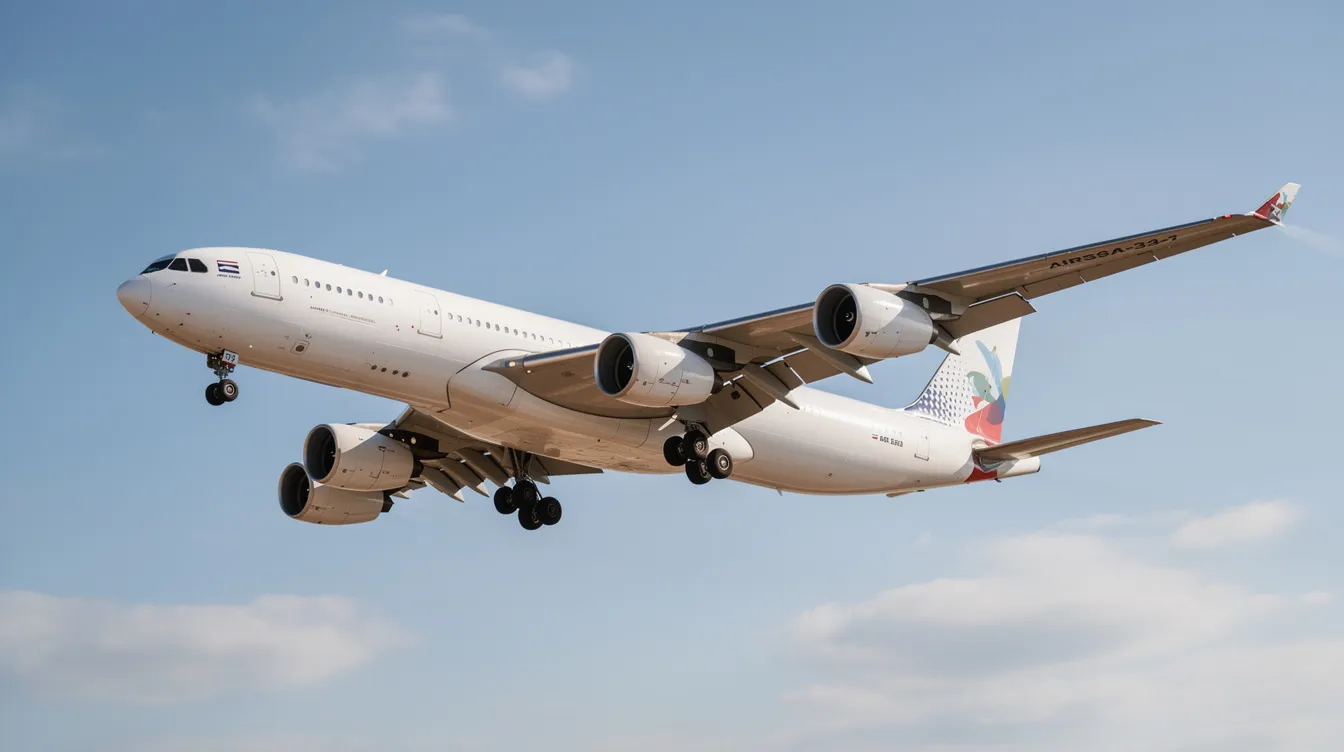
The Airbus A340-600 is the longest and largest variant of the A340 family—a four-engine widebody airliner that Airbus launched in 1997 and brought into commercial service in 2002 with Virgin Atlantic. Built for long-haul, high-capacity routes, it defined flagship sectors like London–Tokyo and Frankfurt–Johannesburg, giving airlines a high-capacity alternative to the Boeing 747 and early 777 variants. Today, the A340-600 remains relevant less in scheduled airline fleets than in charter, VIP, and special-mission flying, where cabin space, range, and availability still matter.
The A340-600 was designed to compete with the Boeing 777-300ER by offering four-engine reliability at a time when ETOPS restrictions still limited where twinjets could operate. That made it a practical fit for long overwater sectors and remote routing—and it still draws interest from corporate executives, high-net-worth travelers, and group planners comparing large, long-range aircraft for private or charter travel.
This article examines the A340-600’s development, technical specifications, cabin layouts, safety record, and operational history, then looks at its role in today’s charter market, how booking works through Jettly for large-group or special-mission flights, how it compares with similar aircraft, and what its future looks like. For readers weighing long-range, high-capacity charter options, that context helps clarify whether an A340-600 is the right choice for availability, mission fit, and service flexibility.
The Airbus A340-600 is the longest member of the A340 family.
Entered commercial service in August 2002.
Designed for high-capacity, ultra-long-range routes.
Powered by four Rolls-Royce Trent 556 engines.
Typically carries 320 to 370 passengers in a three-class configuration.
Offers a range of roughly 7,500–7,900 nautical miles.
Measures 75.36 m in length, making it the second-longest passenger aircraft in the world.
Many airlines have retired the A340-600 in favor of more fuel-efficient twinjets.
Remains relevant for charter, ACMI, VIP, and special-mission operations.
Platforms like Jettly arrange A340-600 charters for various missions.
The A340 family has completed over 2.5 million flights.
Has never been involved in a fatal accident, highlighting its strong safety record.
Robust flight safety systems are standard on the A340-600.
Jettly emphasizes rigorous operator vetting and security verification for passengers and operators.

Airbus stretched the original A340-300 into the -500 and -600 variants to meet airline demand for greater capacity and range. Following early discussions in the mid-1990s, the company formally launched the A340-600 program in 1997 as part of the broader A340 family expansion.
The A340-600 has a stretched fuselage that is 11.7 meters longer than the earlier models - an extension of roughly 20–22 fuselage frames. The wings grew to a span of approximately 63.8 m, and the landing gear was reinforced with a distinctive four-wheel undercarriage bogie on the fuselage centerline to manage the increased takeoff weight.
The powerplant upgrade was equally significant. Earlier A340-300 variants used CFM56-5C engines, but the -600 switched to Rolls-Royce Trent 500 turbofans with thrust ratings in the 52,000–60,000 lbf range. This gave pilots improved takeoff performance and climb capability, especially at high-altitude airports.
The aircraft represented a significant transition to four-engine long-haul airliners isolated from early twinjet limitations by ETOPS restrictions. Airbus invested in advanced assembly infrastructure around Toulouse-Blagnac and at partner facilities in the UK (Filton and Broughton) to handle the longer fuselage sections and automated wing-fuselage mating. The first flight took place on 23 April 2001, with first delivery to Virgin Atlantic following in 2002.
This section covers the core technical data that matter most to airlines, operators, and charter clients evaluating an A340-600.
The aircraft is 75 m long, making it the longest commercial aircraft at the time of its introduction and currently recognized as the second-longest passenger aircraft in the world, after the Boeing 747-8. Its wingspan measures 63.45–63.8 m (about 208–209 ft), and the tail stands roughly 17.9 m high.
Key weight and capacity figures:
Maximum takeoff weight (MTOW): 380,000 kg
Powered by four Rolls-Royce Trent 556 engines
Substantial lower-hold cargo volume for luggage and freight
The cruising speed of the Airbus A340-600 is around Mach 0.82, with typical cruise at Mach 0.82–0.83. The maximum range of the Airbus A340-600 is approximately 12,900 kilometers in standard configuration, extending to about 13,900 km in the High Gross Weight (HGW) version - enabling nonstop sectors like London–Hong Kong or Frankfurt–Buenos Aires.
Compared to modern twin-engine jets, the A340-600 is less fuel-efficient due to its four-engine configuration. This is a key reason airlines later favored aircraft like the 777-300ER or A350-900 for lower seat-mile costs, while the A340-600 found a niche in charter, ACMI, and government roles where acquisition cost and availability matter more than fuel burn—factors that can be explored in more detail using Jettly's private jet charter cost estimator tool.
The A340-600's unique features include a spacious cabin and higher passenger capacity compared to some long-haul competitors. It can carry 379 passengers in a three-class layout, with typical configurations seating 320 to 370 across first, business, and economy. High-density charter layouts have exceeded 400 seats.
Typical cabin zones followed a standard pattern: first or business class forward, premium economy in the mid-section, and a large economy cabin aft. Operators like Virgin Atlantic, Lufthansa, and South African Airways each displayed distinct branding and service philosophies within the same airframe.
Comfort factors:
Wide twin-aisle layout for easy movement and service
Relatively quiet cabin with engines positioned well outboard on the wings
Generous galley space for full-service catering on long flights
Large lavatory counts suited to 12+ hour sectors
In the private and charter market, the A340-600 has been reconfigured into VIP and head-of-state layouts with 50–100 seats, lounge-style zones, private bedrooms, conference tables, and bespoke entertainment systems, often paired with dedicated in-flight catering for private jets to match the elevated onboard experience. Sports teams, governments, and corporate groups regularly use these configurations.

The A340-600 entered commercial service in August 2002, initially targeting trunk routes where airlines needed both range and a lot of seats from European hubs.
The A340-600 was associated with major operators such as Virgin Atlantic and Lufthansa. Virgin Atlantic served as the launch customer, followed by Lufthansa, Iberia, South African Airways, and Qatar Airways (through leased examples). These carriers deployed the type on routes like London–Shanghai, Frankfurt–Johannesburg, and Madrid–Buenos Aires. Notably, Singapore Airlines operated the longest non-stop flight with the A340-500 - the ultra-long-range sibling - demonstrating the family's reach.
Lufthansa was the largest operator of the A340-600 by 2021, having used the type as a long-haul workhorse for nearly two decades. The -600 replaced or supplemented older 747 fleets on high-yield routes, offering modern avionics and four-engine overwater reassurance, while other carriers favored efficient twins such as the Airbus A330-300 for similar missions.
From the mid-2000s onward, rising fuel prices and expanding ETOPS rules shifted the equation. Twin-engine aircraft like the Boeing 777-300ER and later the A350-900 offered better seat-mile economics. Many carriers retired their A340-600 fleets through the 2010s, as operators increasingly focused on aircraft that aligned with broader affordable private jet charter cost considerations.
In recent years, Lufthansa temporarily reactivated some A340-600s around 2021–2022 due to delayed delivery of newer models - illustrating the type's continued usefulness as a capacity buffer. The airline's final scheduled A340-600 flight is planned for October 2026, marking the end of an era for the type in European legacy carrier service.
The A340 family, including the -600, holds an excellent safety record. The A340 has never been involved in a fatal accident. Across the type's history, there have been six hull-loss events - all without fatalities. These incidents typically involved ground accidents or runway excursions, not in-flight failures, which speaks to the design's structural resilience. The Aviation Safety Network database confirms these figures.
Technical safety systems on the A340-600 include:
Advanced fly-by-wire controls (the Airbus A340-600 uses fly-by-wire technology and shares cockpit compatibility with A330)
Multiple redundant hydraulics and electrical systems
Four-engine redundancy for overwater and remote-area flying
Sophisticated flight deck warning and management systems
Beyond the aircraft itself, operational security matters. Reputable charter operators and platforms apply rigorous oversight. This includes background checks, regulatory compliance audits, and performing security verification of passengers and crew as required by law or airport rules—standards that mirror those governing Part 135 charter companies and their safety frameworks.
In a typical charter workflow, a security service at the FBO or terminal handles ID checks and manifest cross-referencing. The system verifies each passenger against the approved list. On Jettly's website, a security service may also protect the booking page from malicious bots - systems respond with a ray ID to confirm legitimate access and filter out any unauthorized bot traffic. Once verification is successful, steps are completed, and ground staff escort passengers directly to the waiting A340-600 on the ramp, reducing time spent in terminals.
Although most major airlines have retired the A340-600 from scheduled service, the aircraft has found renewed life in charter, ACMI (Aircraft, Crew, Maintenance, Insurance), humanitarian, and government roles.
Charter operators use the A340-600 for high-capacity missions: transporting sports teams and fans, music tours, religious pilgrimages, corporate incentive trips, and government relief flights. These missions are typically arranged through platforms that offer access to a broad range of private charter aircraft. Germany-based USC Aero, for example, acquired five former Lufthansa A340-600s - returning two to service with roughly 400-seat layouts while using three for spare parts.
Other active operators include Mahan Air (Iran) and various government and VIP operators in the Middle East and South America, sitting alongside a wider ecosystem of carriers covered in Jettly's charter airlines guide to private flights.
The economics work differently from smaller private jets. An A340-600 charter costs more in total, but the cost per seat for 250–300 passengers on a transcontinental route can be competitive with premium commercial tickets - especially for groups with fixed schedules and specific routing needs, or for those considering crowdsourced private jet flights and shared empty seats to optimize budgets.
Digital marketplaces like Jettly aggregate available widebody charter aircraft, including occasional A340-600s, allowing trip planners to compare pricing, cabin layouts, and availability. Tools such as Jettly's airport locator platform also help confirm which departure and arrival points can accommodate such a large aircraft. One important limit: the A340-600 requires long runways and wide taxiways, making it most suitable for large international airports rather than smaller executive fields.
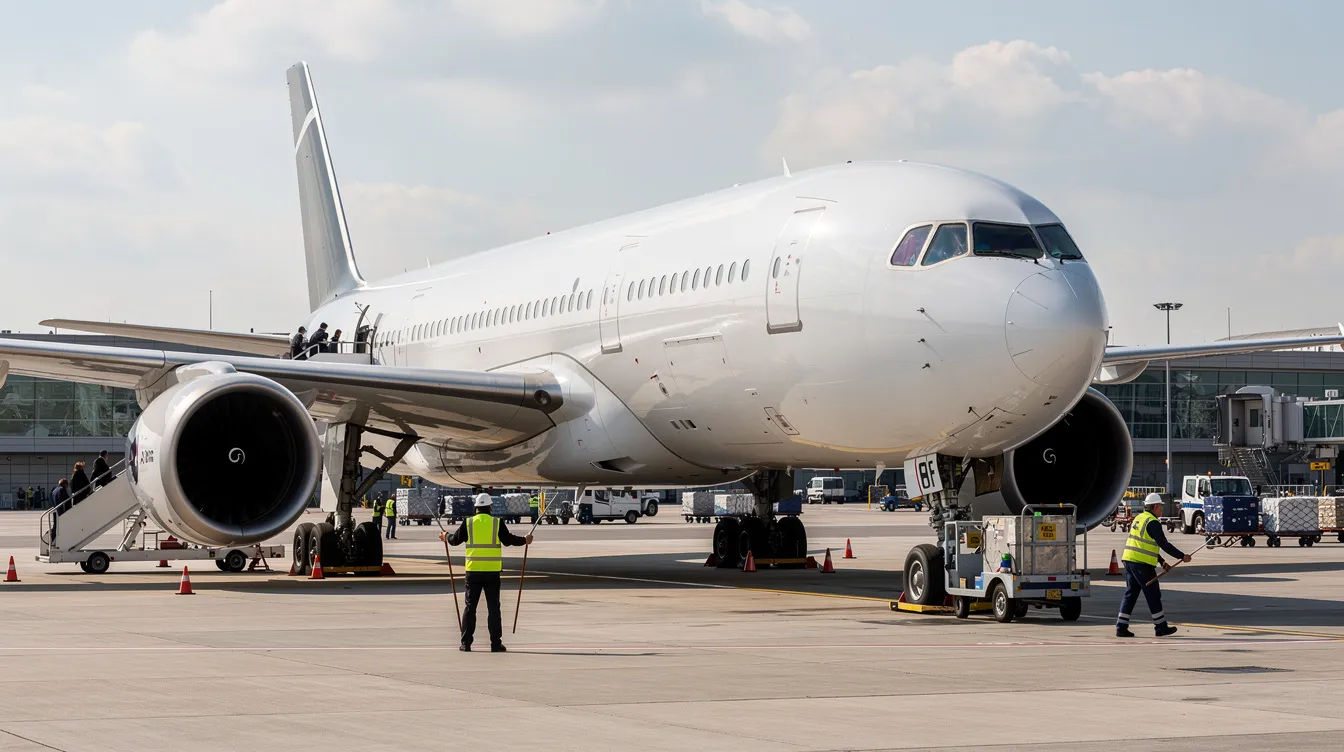
Jettly is a digital private jet charter marketplace connecting clients to a global fleet of over 20,000 aircraft, including large airliners like the A340-600 for special group missions, as well as providing opportunities for partners through its ULTRA High Ticket Affiliate Program.
The typical booking process for an A340-600:
Submit route, dates, and passenger count through Jettly's platform
Specify service expectations (catering, branding, cabin configuration)
Receive instant or rapid pricing where available
Review multiple operator proposals and compare options
Jettly emphasizes transparent pricing without opaque markups. This lets organizers of corporate roadshows, government delegations, or event shuttles understand exactly what drives the cost of operating a four-engine widebody over long distances, and complements tools like Jettly's jet card flight cost estimator for shorter, recurring trips.
Integrated trip support covers ground transportation coordination, bespoke catering, baggage planning for large groups, and assistance with airport slot management and overflight permissions - all of which are often required for intercontinental A340-600 charters. For travelers who fly more frequently, Jettly's private jet memberships can streamline access to these services. For a step-by-step guide, see How to Book a Private Jet.
Ready to compare an A340-600 with other widebody options? Explore flight possibilities across Jettly's global private charter aircraft network or request a tailored quote at https://www.jettly.com.
Clients considering an A340-600 charter often compare it against several alternatives. Here's how the key options stack up:
|
Feature |
A340-600 |
Boeing 777-300ER |
Airbus A350-900 |
A330-300 |
|---|---|---|---|---|
|
Engines |
4 |
2 |
2 |
2 |
|
Typical seats (3-class) |
320–380 |
350–400 |
300–350 |
250–300 |
|
Range (km) |
~12,900–13,900 |
~13,600 |
~15,000 |
~11,750 |
|
Relative fuel burn |
Higher |
Moderate |
Lower |
Moderate |
|
Charter availability |
Limited |
Moderate |
Limited |
Moderate |
Aircraft like the Airbus A350-1000 and Boeing 777-300ER offer better fuel efficiency and lower operating costs per seat. However, charter pricing also depends on aircraft availability, ownership costs, and market conditions at the time of booking, especially for clients comparing on-demand charter with structured jet card programs for corporate travel.
From a passenger experience standpoint, newer aircraft offer improved cabin humidity and pressure. But VIP-configured A340-600s can still deliver a premium experience through modern refits, and the four-engine layout keeps cabin noise lower in some seating zones, especially when compared with efficient widebodies like the Airbus A330-300 and its charter-friendly specs.
Via Jettly, a planner can directly compare an A340-600 against other transcontinental aircraft for the same itinerary, using rapid quotes to decide whether to prioritize capacity, schedule, cabin style, or budget per seat.
Only a modest number of A340-600s remain in active service as of mid-2026. Production of the Airbus A340-600 ended in 2011 after 377 units were delivered across the entire A340 family. Most are now stored, parted out, or operating with a handful of charter firms and government operators.
Several factors shape the type's future:
Rising fuel costs make four-engine operations expensive for routine scheduled service
Environmental pressures and stricter emissions rules favor efficient twinjets
Airlines' fleet renewal strategies continue to prioritize the A350 and 787 families
In the secondary market, some retired airline frames are converted to VIP, government, military transport, or high-density charter roles. With proper maintenance and regulatory upgrades, these aircraft can extend their useful lives well beyond 25 years, much like long-range widebodies such as the Boeing 767-300ER chartered through Jettly.
Operators may respond to tightening regulations through engine maintenance programs, operational efficiency measures, or carbon-offset programs tied to charter flights, sometimes combining these strategies with structured jet card solutions for frequent flyers.
While the A340-600 will never again start as a mainstream flagship for large airlines, it is likely to remain visible in the charter and special-mission world for years to come. Its combination of capacity and range still appeals for specific missions bookable through platforms like Jettly, particularly for clients leveraging flexible private jet memberships.
These FAQs address practical questions not fully covered above, focusing on charter logistics, costs, and planning for corporate travel planners, event organizers, and group coordinators, including those exploring innovations like crowdsourced private jet flights and shared seats.
A340-600 charter pricing typically falls in the range of $150,000 to $500,000+ per flight, depending on route length, positioning legs, airport fees, season, and onboard service level. A transatlantic charter for 250–300 passengers from New York to London, for example, might fall in the $300,000–$450,000 range - though precise quotes are generated per mission through platforms like Jettly, which also shares guidance on affordable private jet charter for a variety of mission profiles.
When costs are divided across seats, widebody charters can be competitive with premium cabin commercial tickets for very large groups with fixed schedules. Travelers weighing their options can also review Jettly's advice on booking the cheapest private jet flights. For more detail on charter economics, see Jettly's aircraft charter guide.
The A340-600 requires long runways (typically 3,000 m or more at higher weights), wide taxiways, and suitable pavement strength. It operates best from major international airports like London Heathrow, Frankfurt, Dubai, New York JFK, and Johannesburg OR Tambo.
Some secondary hubs can accommodate the type if they meet runway and handling criteria. Jettly and its partner operators evaluate runway length, obstacle clearance, and local regulations during trip planning to confirm whether a chosen airport pair is feasible, drawing on their broader private charter aircraft database to propose suitable alternatives if needed.
Widebody charters are best arranged weeks or even months in advance, especially for peak travel seasons, major sporting events, or complex multi-leg itineraries. A practical target is 4–12 weeks of lead time for large corporate or event flights, while shorter routes on smaller aircraft may instead be booked via tools like Jettly's jet card flight cost estimator.
Last-minute missions are sometimes possible but depend heavily on aircraft positioning, crew duty limits, and slot availability at major airports. Starting early gives Jettly and operators time to secure optimal aircraft, ground services, and pricing, and it also allows planners to run detailed scenarios with the private jet charter cost estimator to understand budget impacts.
The A340-600 has substantial cargo hold capacity and can generally handle standard checked baggage for each passenger plus reasonable oversize items like sports equipment or musical instruments. Weight and balance still matter: very heavy baggage loads may reduce maximum range or passenger count on ultra-long sectors, which is one reason experienced planners look for tips on booking the cheapest private jet flights while staying within performance limits.
Organizers should share detailed baggage estimates with Jettly during the quote phase so operators can confirm feasibility and plan cargo loading accordingly, just as they would when exploring other ways to get a seat on a private jet easily for smaller groups.
Passenger identification, manifest checks, and advance passenger information submissions to border authorities are standard on large aircraft charters. Performing security verification may include ID checks at the FBO or terminal, screening of baggage and cargo, and operator vetting before contracts are finalized - mirroring or exceeding commercial airline security standards and aligning with best practices outlined in comprehensive guides to charter airlines and private flights.
Once all verification steps are completed, passengers are typically escorted directly to the aircraft, benefiting from reduced waiting times and a more private boarding experience compared with scheduled airline travel—a process that contrasts with the more casual approach when you simply buy a seat on a private jet on a shared service.
The A340-600 defined many flagship routes in the 2000s as a long, four-engine, high-capacity Airbus widebody. Today, it serves niche but important roles in charter and VIP markets.
Key decision factors for charter clients include group size, range requirements, airport suitability, desired cabin standard, and aircraft availability versus absolute fuel efficiency. An A340-600 charter can be ideal for large corporate roadshows, sports teams, event shuttles, or government delegations needing nonstop intercontinental capability.
Safety, reliability, and thorough security verification of operators and passengers underpin every widebody charter arranged through professional platforms, especially when working with properly certified Part 135 charter companies. Only once verification steps are completed successfully does the pilot receive clearance to proceed.
Ready to experience private travel on your terms? Whether you're a traveler or interested in Jettly's ULTRA high-ticket affiliate program, you can compare A340-600 options against other aircraft and explore flight possibilities or request a tailored quote at https://www.jettly.com.
Share this post:
Jay Franco Serevilla
Jul 22, 2026
|
5
min read
Discover tips and trends in the industry.
5
min read
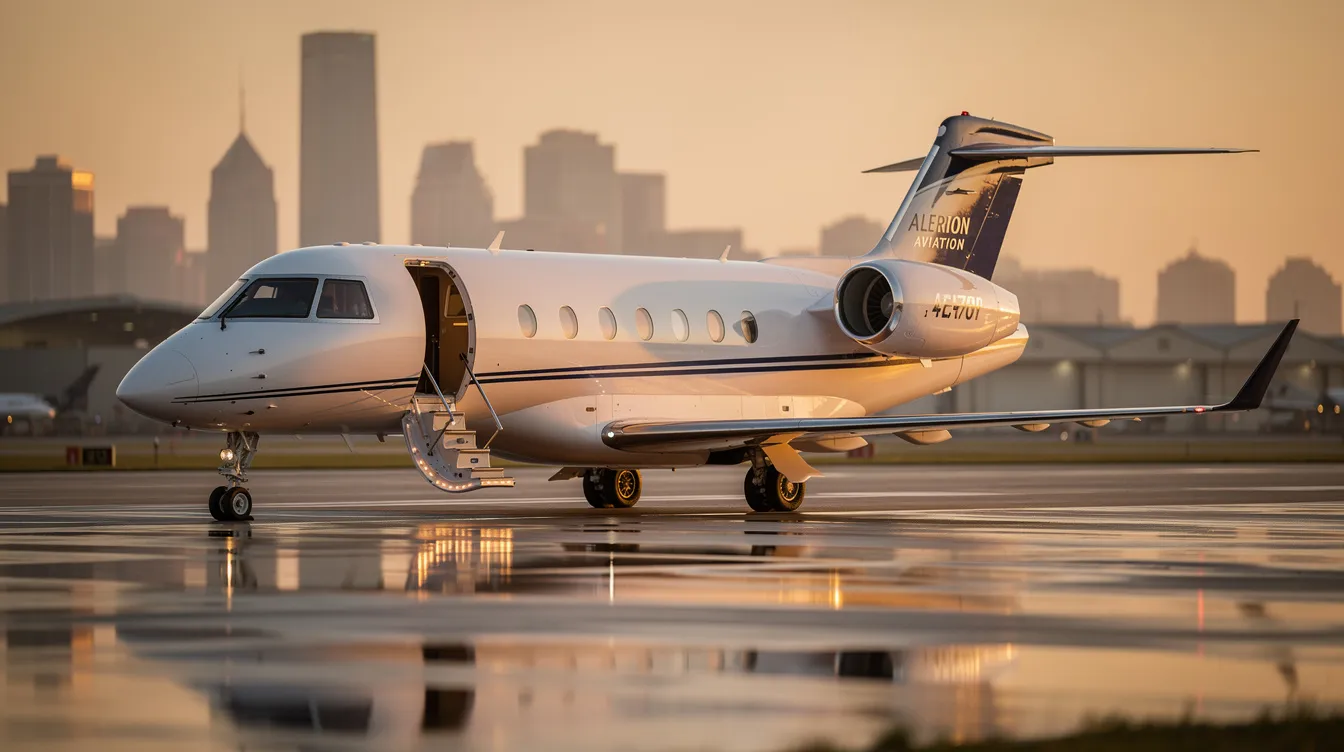
Alerion Aviation: Charter, Aircraft Management, and How Jettly Helps You Compare Options
Alerion Aviation is a premier boutique private aviation company specializing in aircraft management, on-demand charter, and in-house maintenance. With a strong safety record and a large fleet operating from key U.S. locations, Alerion offers personalized service for travelers and aircraft owners. Jettly enhances the experience by providing a digital marketplace for comparing charter options, ensuring travelers find the best fit for their needs.
Read More
5
min read
Busy airports for private jets during back-to-school season
Late August to early September triggers a surge in private aviation as summer travel ends, corporate travel resumes, and families transport students to major universities. Key hubs like Teterboro Airport (KTEB) and Dallas Love Field (KDAL) experience significant congestion, tight landing slots, and higher rates. To navigate these seasonal bottlenecks, charter operators must plan logistics and crew schedules in advance to accommodate flyer demand and ensure seamless travel.
Read MoreStay updated with our latest insights and tips to elevate your journey with us.
MEMBERSHIPS AND ASSOCIATIONS



Disclaimer: Jettly operates as a charter broker, offering access to a global digital jet charter marketplace. Jettly is not a direct air carrier and does not own or operate aircraft. All advertised flights are conducted by third-party air carriers that are fully licensed and hold the appropriate Part 135 or Part 121 certifications issued by the Federal Aviation Administration (FAA) or equivalent regulatory authorities under U.S. or foreign law. Jettly complies fully with the U.S. Department of Transportation's Part 295 and Part 298 Charter Broker regulations. Jettly does not carry additional liability insurance. Passengers are covered by aircraft operator insurance. TICO: 50023770


