


Login
Get Instant Pricing On 23,000+ Aircraft


This guide outlines strategies for finding affordable Cessna aircraft in 2026, emphasizing the importance of understanding what "cheap" means in the context of model, condition, and avionics. Prices for Cessna models can range from $15,000 for older taildraggers to over $500,000 for newer, high-performance options, with operating costs adding significant annual expenses. Buyers are advised to prioritize maintenance history and conduct thorough pre-buy inspections to avoid hidden costs, while also considering chartering options through platforms like Jettly for those flying fewer hours annually. Overall, informed decision-making and negotiation strategies are crucial for securing a good value deal without compromising safety.
Jay Franco Serevilla
Apr 24, 2026
|
5
min read



View all
Davinci Jets is a premier private aviation company based in Charlotte, NC, offering a diverse fleet and comprehensive services including aircraft management and charter. With a focus on safety and personalized service, Davinci Jets caters to business travelers and jet owners, providing a high-touch experience that contrasts with digital charter platforms like Jettly, which offer instant booking and access to a wider range of aircraft. This guide explores Davinci Jets' offerings and how they compare to digital alternatives.
Jay Franco Serevilla
Sep 6, 2026
|
5
min read

View all
Jet International Company has been a key player in the aviation industry since 1979, providing essential components and solutions to keep commercial aircraft operational. By ensuring reliable parts and efficient repair services, they help reduce delays and cancellations, benefiting both commercial and private travelers. Meanwhile, platforms like Jettly offer seamless access to private jet charters, enhancing travel flexibility and convenience.
Jay Franco Serevilla
Sep 6, 2026
|
5
min read

View all
Travelers seeking the best jets for international travel can benefit from understanding both Best Jets International and Jettly. Best Jets International is a reputable aircraft management company, while Jettly offers a digital marketplace for private jet charters, providing flexibility and access to a wide range of aircraft. This guide helps travelers make informed decisions about their flying needs, ensuring a comfortable and efficient journey.
Jay Franco Serevilla
Sep 6, 2026
|
5
min read

View all
The debate over TSA privatization is intensifying as the government considers expanding contractor-run checkpoints at airports. This shift could significantly impact travelers, TSA employees, and the overall security landscape, raising questions about efficiency, accountability, and labor conditions. Understanding the implications of privatization is essential for anyone navigating the evolving airport security environment.
Jay Franco Serevilla
Sep 6, 2026
|
5
min read

View all
Traveling from Nairobi to Isiolo offers various options, including driving, bus, and private jet charter. The distance is approximately 260 to 280 kilometers by road, taking around 4 to 5 hours by car, while a private flight can reduce travel time to under 2 hours. Jettly provides a convenient platform for booking private flights, making it an ideal choice for those seeking speed and flexibility.
Jay Franco Serevilla
Sep 6, 2026
|
5
min read

View all
Understanding the fuel burn of the King Air 200 is vital for charter planning and ownership evaluation. With typical consumption ranging from 100 to 115 gallons per hour, this turboprop offers an efficient alternative for regional flights under 1,000 nautical miles. Jettly provides instant pricing that reflects real-world fuel costs, making it easier for travelers to compare charter options.
Jay Franco Serevilla
Sep 6, 2026
|
5
min read
Explore our latest articles and updates.
5
min read
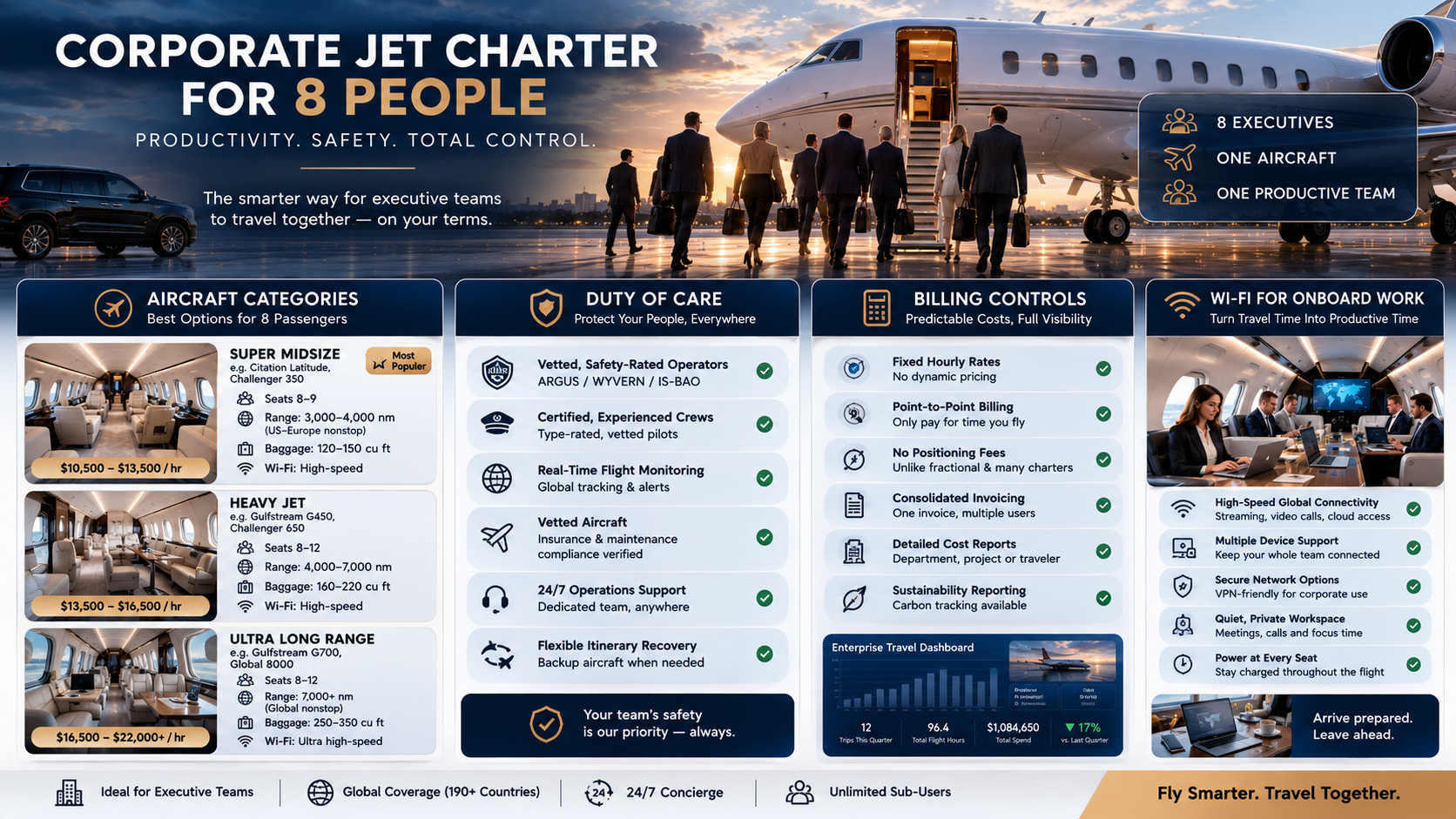
Corporate Jet Charter for 8 People: Aircraft Categories, Duty of Care, Billing Controls, and Wi‑Fi for Onboard Work
This comprehensive guide outlines the essentials for corporate jet charters accommodating teams of eight, focusing on aircraft categories, duty of care, billing controls, and onboard connectivity. It emphasizes the importance of selecting the right jet type, ensuring reliable Wi-Fi for work, and implementing effective billing practices to manage costs. By understanding these factors, organizations can enhance their private aviation experience and ensure smooth travel for their leadership teams.
Read More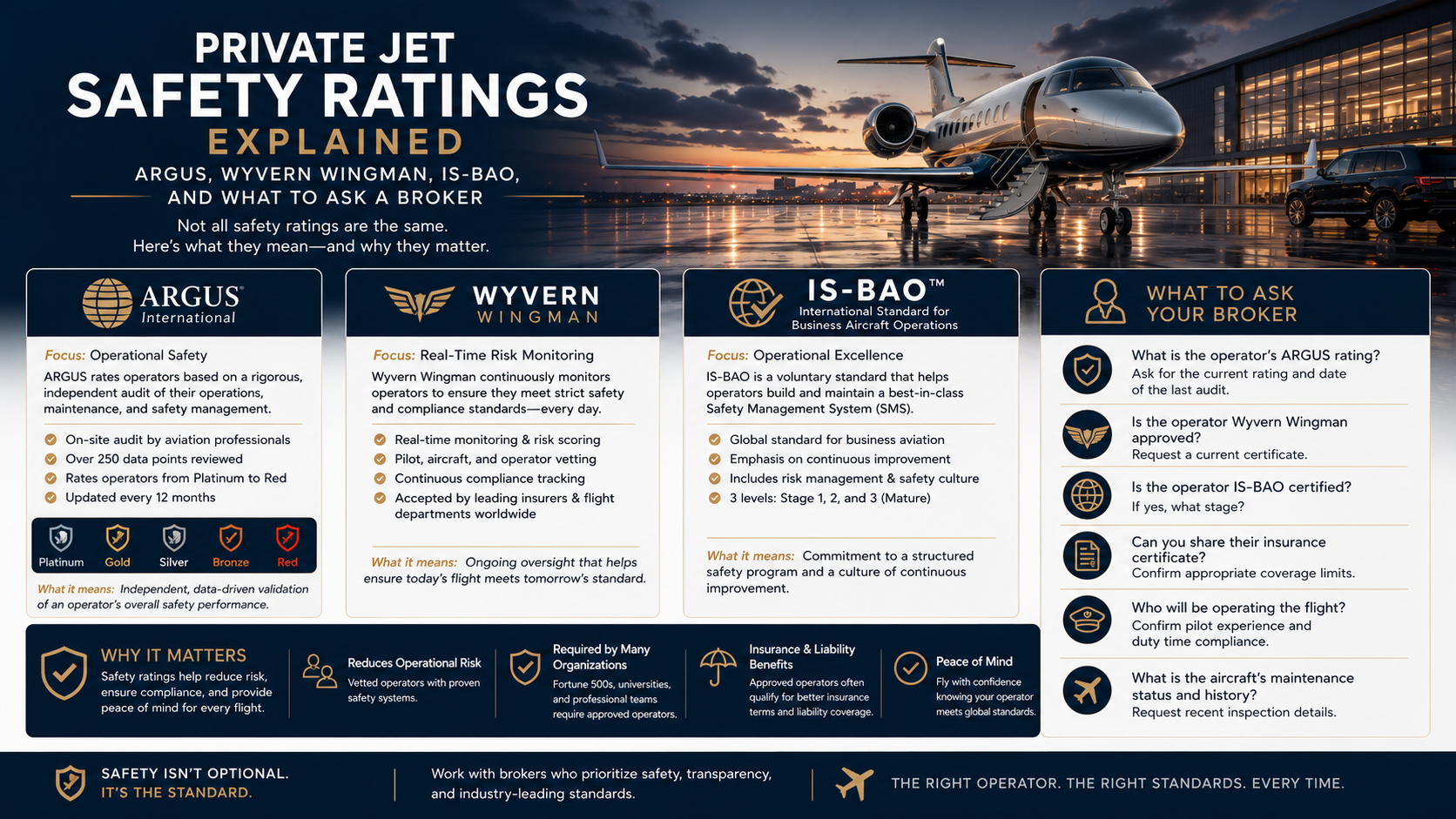
5
min read
Private Jet Safety Ratings Explained (ARGUS, WYVERN Wingman, IS-BAO, and What to Ask a Broker)
Private jet safety ratings, such as ARGUS, WYVERN, and IS-BAO, are essential tools for evaluating charter operators. These ratings assess how well operators train crews, maintain aircraft, and manage risks, providing an extra layer of safety assurance. Understanding these ratings and verifying the operator's credentials can significantly enhance your travel safety.
Read MoreJoin our community and receive the latest blog updates directly in your inbox.
MEMBERSHIPS AND ASSOCIATIONS



Disclaimer: Jettly operates as a charter broker, offering access to a global digital jet charter marketplace. Jettly is not a direct air carrier and does not own or operate aircraft. All advertised flights are conducted by third-party air carriers that are fully licensed and hold the appropriate Part 135 or Part 121 certifications issued by the Federal Aviation Administration (FAA) or equivalent regulatory authorities under U.S. or foreign law. Jettly complies fully with the U.S. Department of Transportation's Part 295 and Part 298 Charter Broker regulations. Jettly does not carry additional liability insurance. Passengers are covered by aircraft operator insurance. TICO: 50023770


