


Login
Get Instant Pricing On 23,000+ Aircraft


Knowing when to book a flight can significantly impact travel costs, with optimal booking windows varying for domestic and international flights. Private jet charters through Jettly offer more flexibility, allowing travelers to book closer to departure without the constraints of commercial fare cycles. This guide provides insights into the best times to book flights and how private aviation changes the rules.
Jay Franco Serevilla
Aug 30, 2026
|
5
min read



View all
The Gulfstream G100 is a versatile midsize business jet known for its speed, range, and cost-effectiveness. With a maximum range of 2,790 nautical miles and seating for up to 8 passengers, it is ideal for both business and leisure travel. This guide provides insights into its performance, charter costs, and how to book through Jettly's platform.
Jeff Ryan Serevilla
Oct 4, 2026
|
5
min read

View all
The Gulfstream GV is a pioneering ultra-long-range business jet, offering a maximum range of approximately 6,500 nautical miles. With its spacious cabin designed for comfort and productivity, it accommodates up to 18 passengers and is ideal for intercontinental flights. Charter options through Jettly provide flexible access without the costs of ownership.
Jeff Ryan Serevilla
Oct 4, 2026
|
5
min read

View all
Flying a plane requires skilled, licensed pilots who undergo extensive training. This article explores the various types of pilots, their training processes, and the controls they manage during flights. It also highlights the role of private jet charter services like Jettly in connecting travelers with professional pilots and aircraft.
Jay Franco Serevilla
Oct 1, 2026
|
5
min read

View all
Free flight trackers have revolutionized how we monitor aircraft in real-time, providing accessible tools for tracking both commercial and private flights. These platforms aggregate data from various sources to deliver live updates on flight status, routes, and estimated arrivals. While free versions offer essential features, premium options and services like Jettly enhance the experience by enabling booking and detailed trip management.
Jay Franco Serevilla
Oct 1, 2026
|
5
min read

View all
Finding the nearest private airport can significantly reduce travel time for private jet travelers. Jettly's platform simplifies the process by identifying suitable airports based on various factors, including runway length and customs availability. This guide provides insights into choosing the best airport for your private flight needs.
Jay Franco Serevilla
Oct 1, 2026
|
5
min read

View all
Jet flying offers a thrilling contrast between adrenaline-pumping fighter jet flights and the luxurious comfort of private jet charters. This guide explores both experiences, helping aviation enthusiasts and business travelers choose the right option for their needs. Jettly stands out as a premier platform for private jet charters, providing instant pricing and access to a global fleet.
Jay Franco Serevilla
Oct 1, 2026
|
5
min read
Explore our latest articles and updates.

5
min read
Cloud Fraction in 2026 (How It Works, Full Costs, and a Fractional Ownership Comparison)
Cloud Fraction is Jettly's fractional-style access program that allows users to license access to an aircraft class for a fixed term of 36 months, without taking ownership of a specific aircraft. The program includes a one-time license fee, a monthly management fee, and a fixed hourly rate for flights, with no fuel surcharges or positioning fees. Pricing varies by aircraft class, with license fees ranging from $325,000 to $725,000, monthly fees from $12,000 to $22,000, and hourly rates from $5,250 to $8,900, all covering 50 flight hours per year. This model provides flexibility and predictability in costs, differentiating it from traditional fractional ownership by eliminating depreciation risks and allowing access to any compliant aircraft within the contracted class.
Read More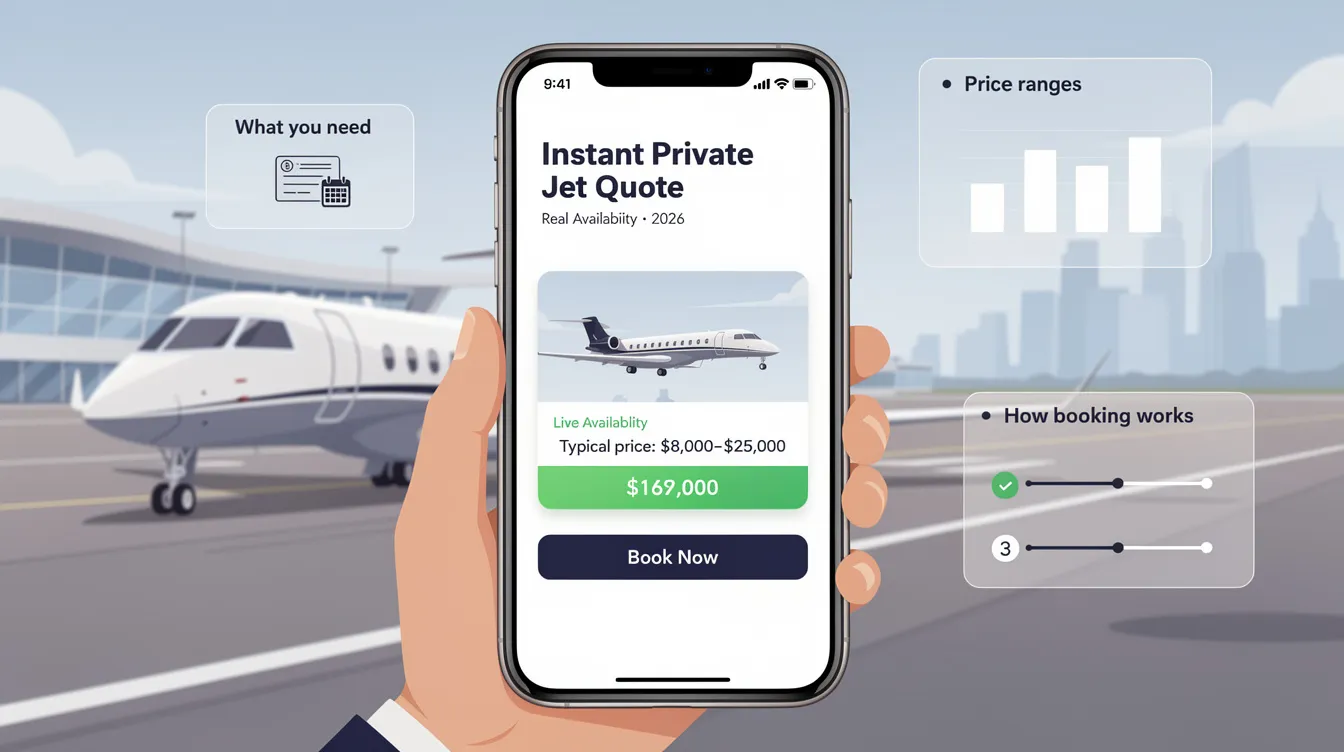
5
min read
Instant Private Jet Quote With Real Availability (2026): What You Need, Typical Price Ranges, and How Booking Works
An instant private jet quote provides a quick price estimate based on specific travel details, but actual flight confirmation requires operator acceptance, a signed charter agreement, and secured payment. Pricing is dynamic and can change rapidly due to factors like aircraft positioning and crew availability, making it essential to understand the difference between an instant quote and real availability. For accurate pricing, travelers should provide detailed information including exact airports, travel dates, passenger counts, and flexibility in scheduling. Booking 24 to 72 hours in advance typically offers the best selection and pricing, while same-day trips may be possible under certain conditions.
Read MoreJoin our community and receive the latest blog updates directly in your inbox.
MEMBERSHIPS AND ASSOCIATIONS



Disclaimer: Jettly operates as a charter broker, offering access to a global digital jet charter marketplace. Jettly is not a direct air carrier and does not own or operate aircraft. All advertised flights are conducted by third-party air carriers that are fully licensed and hold the appropriate Part 135 or Part 121 certifications issued by the Federal Aviation Administration (FAA) or equivalent regulatory authorities under U.S. or foreign law. Jettly complies fully with the U.S. Department of Transportation's Part 295 and Part 298 Charter Broker regulations. Jettly does not carry additional liability insurance. Passengers are covered by aircraft operator insurance. TICO: 50023770


