


Login
Get Instant Pricing On 23,000+ Aircraft

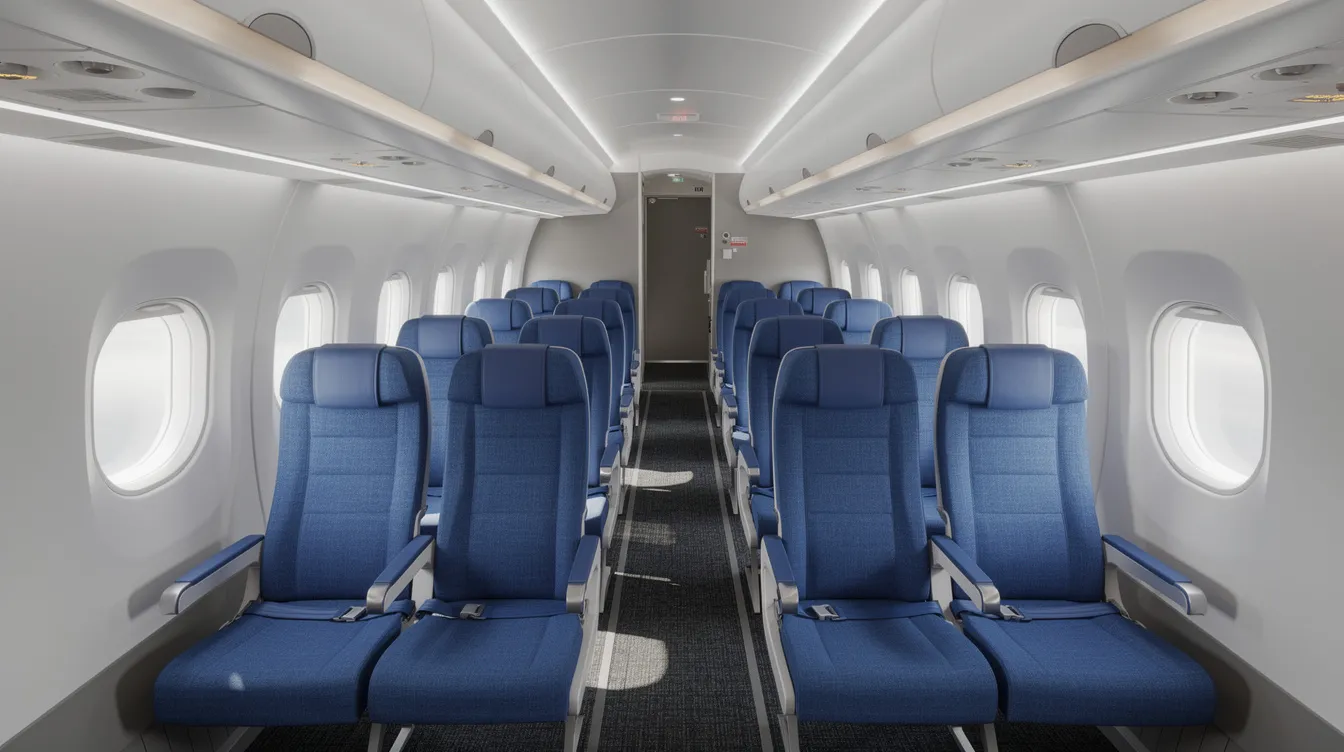
The Boeing 737-700 features a 3-3 economy layout with 137 to 143 seats, making seat selection crucial for comfort. Rows 1-6 and exit row 15 offer extra legroom, while the last rows near lavatories are less desirable. For those seeking flexibility and comfort, private jet charters through Jettly provide a tailored flying experience.
Jay Franco Serevilla
Aug 9, 2026
|
5
min read


View all
Jettly offers leading-edge helicopter experiences that combine advanced rotorcraft, skilled pilots, and a seamless booking process. Ideal for both business and leisure travelers, Jettly connects users to a variety of helicopter tours and charter flights worldwide, ensuring safety and transparency in costs.
Jay Franco Serevilla
Jul 26, 2026
|
5
min read

View all
The Mil Mi-26 is the largest passenger helicopter, accommodating up to 83 people, while the Sikorsky S-92 is the leading choice for civil aviation with a capacity of 19 passengers. These helicopters play vital roles in offshore transport, search and rescue, and VIP services. Charter options are available through platforms like Jettly, which facilitate access to helicopters for specialized missions.
Jay Franco Serevilla
Jul 26, 2026
|
5
min read

View all
Helicopters typically produce noise levels ranging from 83 to over 100 decibels, depending on the aircraft type and flight phase. Understanding these noise levels is crucial for passenger comfort and community impact, especially for those considering private helicopter travel. Modern advancements in helicopter design and noise-reduction technologies are helping to mitigate these sound levels.
Jay Franco Serevilla
Jul 26, 2026
|
5
min read
View all
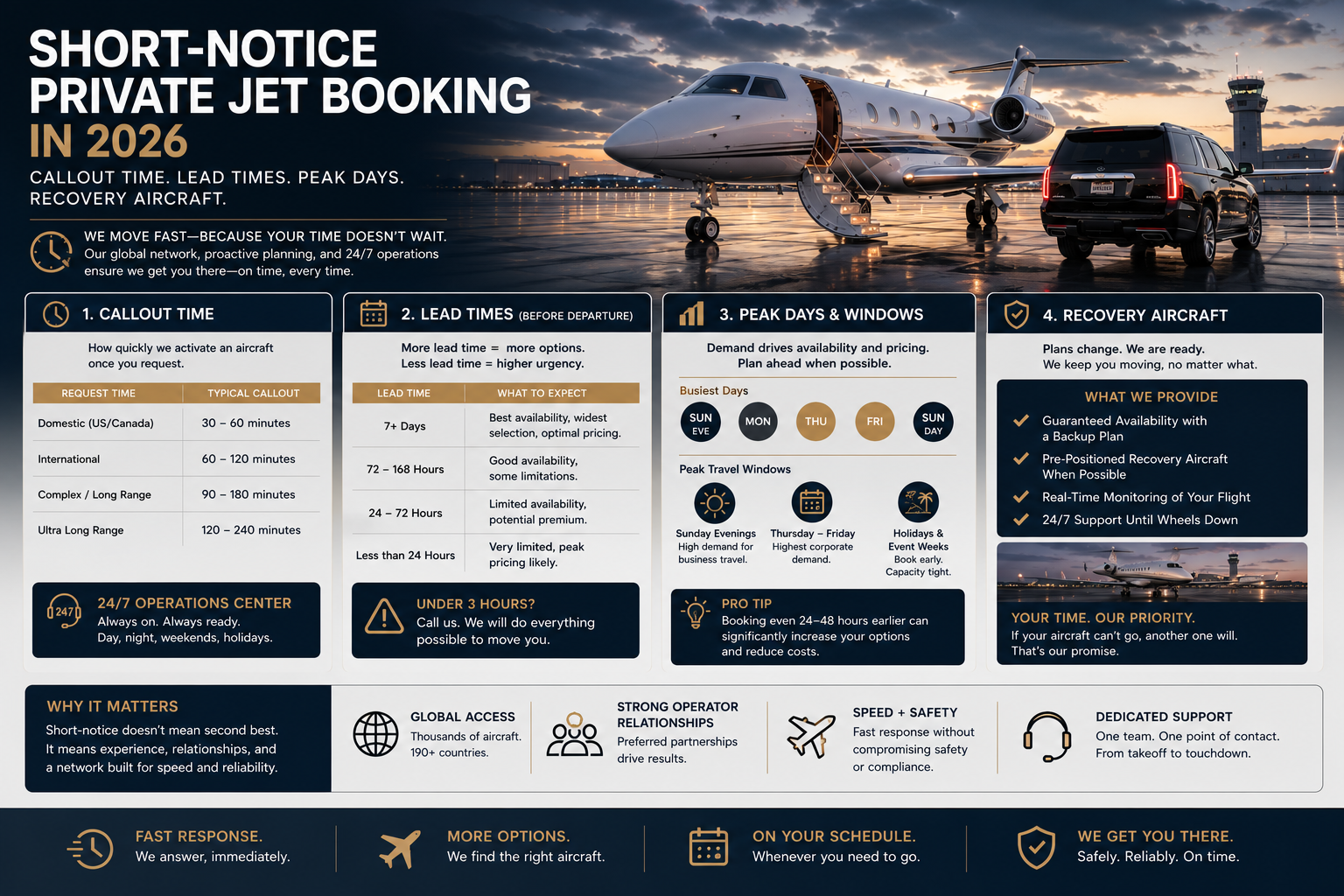
Short-notice private jet booking requires understanding key factors like callout time, lead times, and peak-day rules. While ordinary days may allow flights within hours, peak travel days necessitate longer planning and flexibility. This guide helps you navigate the complexities of private aviation to ensure a smooth booking experience.
Jay Franco Serevilla
Jul 25, 2026
|
5
min read
View all
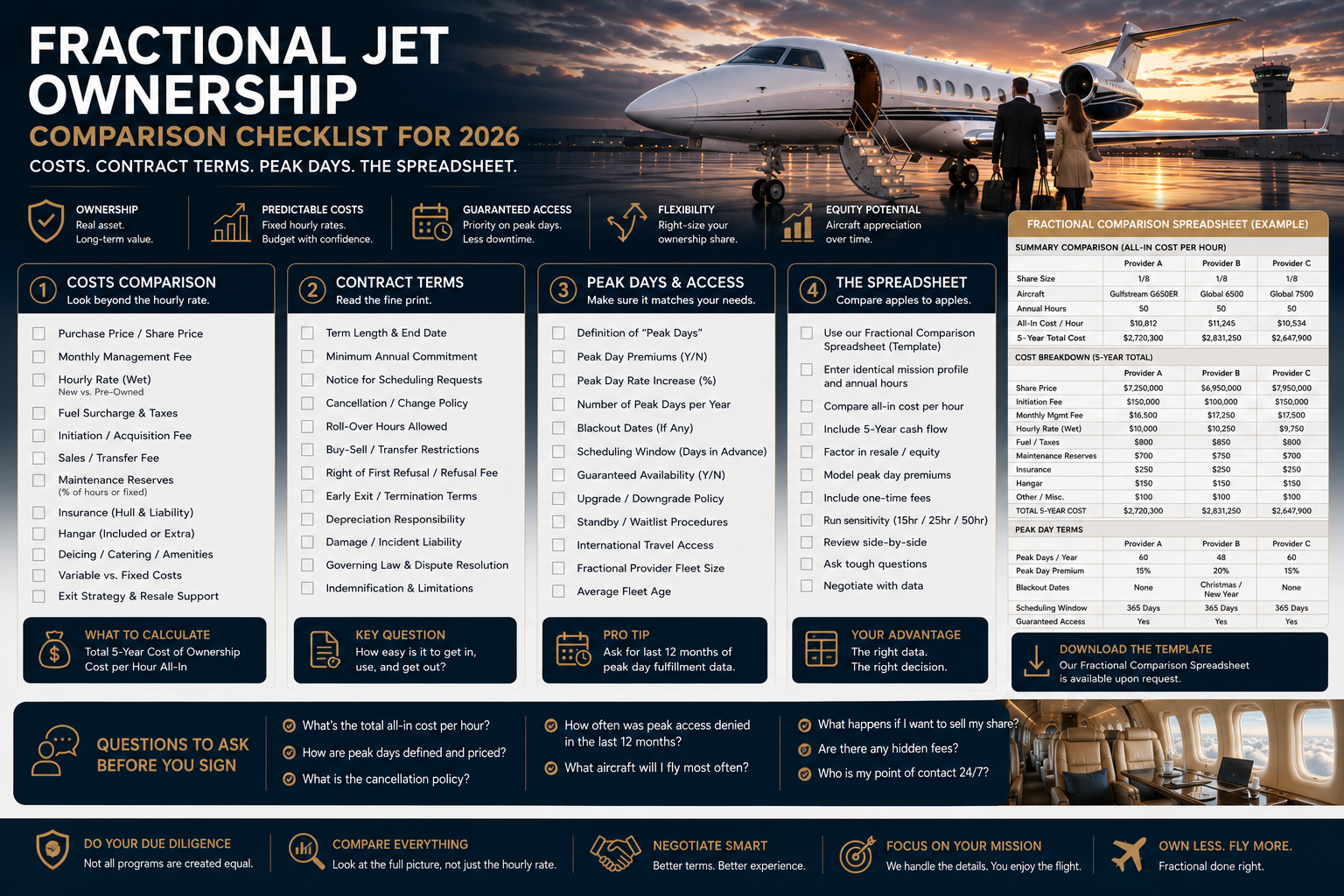
The 2026 Fractional Jet Ownership Comparison Checklist is essential for buyers to evaluate proposals effectively. It standardizes quotes into an effective cost per occupied hour, ensuring transparency in costs and contract terms. This comprehensive guide also addresses peak-day reliability, helping buyers make informed decisions in fractional jet ownership.
Jay Franco Serevilla
Jul 25, 2026
|
5
min read
View all
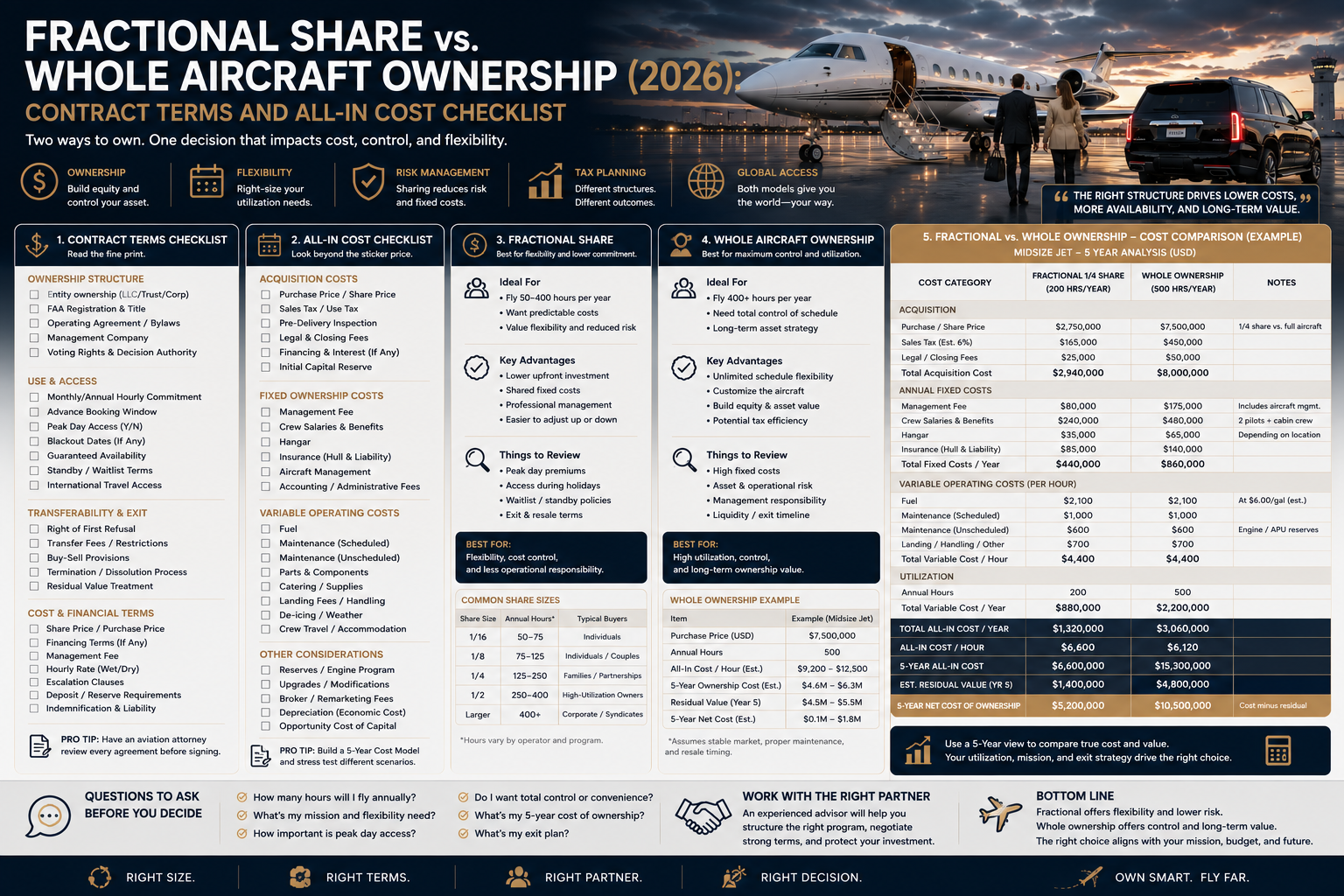
In 2026, buyers of private aviation must weigh fractional share ownership against whole aircraft ownership based on their flying needs, capital commitment, and operational flexibility. This guide provides a comprehensive checklist to evaluate contract terms and all-in costs, emphasizing the importance of understanding effective cost per occupied hour and peak-day reliability. By aligning ownership structures with flight patterns and financial goals, buyers can make informed decisions that suit their unique aviation requirements.
Jay Franco Serevilla
Jul 25, 2026
|
5
min read
Explore our latest articles and updates.
5
min read
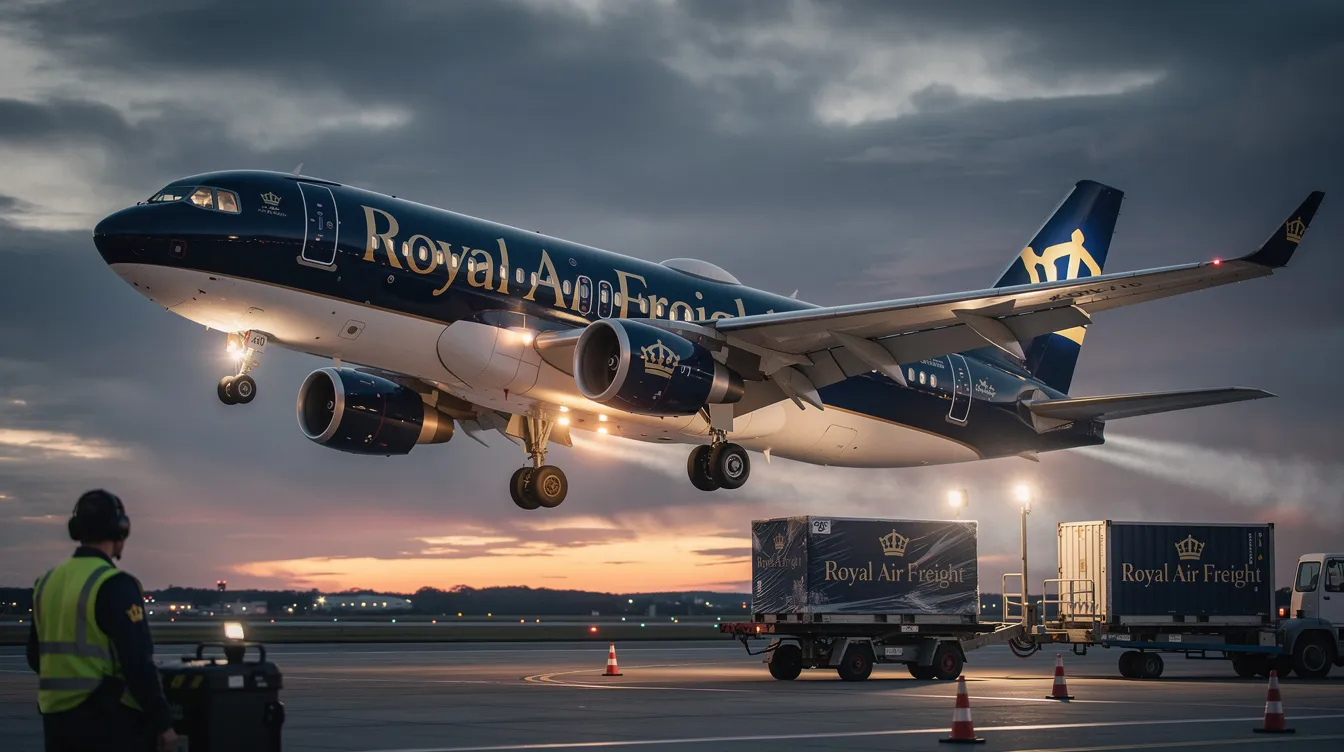
Royal Air Freight Inc: Chartering Alternatives with Jettly
Royal Air Freight Inc. has been a trusted name in charter and air freight services since 1961, specializing in expedited cargo and passenger flights across North America. Jettly, a digital charter broker, offers a broader marketplace for comparing private jet and cargo flight options, providing travelers with greater flexibility and instant pricing.
Read More
5
min read
Jet Aviation Bozeman: Private Jet Access to Big Sky Country with Jettly
Jet Aviation Bozeman provides private jet access to the stunning landscapes of Big Sky Country, located at Bozeman Yellowstone International Airport. With a full-service FBO and Jettly's digital charter marketplace, travelers can easily book flights and enjoy seamless ground transportation to popular destinations like Big Sky Resort and Yellowstone National Park.
Read MoreJoin our community and receive the latest blog updates directly in your inbox.
MEMBERSHIPS AND ASSOCIATIONS



Disclaimer: Jettly operates as a charter broker, offering access to a global digital jet charter marketplace. Jettly is not a direct air carrier and does not own or operate aircraft. All advertised flights are conducted by third-party air carriers that are fully licensed and hold the appropriate Part 135 or Part 121 certifications issued by the Federal Aviation Administration (FAA) or equivalent regulatory authorities under U.S. or foreign law. Jettly complies fully with the U.S. Department of Transportation's Part 295 and Part 298 Charter Broker regulations. Jettly does not carry additional liability insurance. Passengers are covered by aircraft operator insurance. TICO: 50023770


