


Login
Get Instant Pricing On 23,000+ Aircraft


Knowing the best time to buy airfare can save you money on flights. For domestic trips, booking 1 to 3 months in advance is ideal, while international flights are best booked 2 to 8 months ahead. This guide also explores when private jet charters may be a more convenient option, especially when commercial flights become costly or inconvenient.
Jay Franco Serevilla
Sep 15, 2026
|
5
min read



View all
In 2026, the cost of owning a Robinson R44 helicopter varies significantly, with new models priced around $646,000 and used options starting under $100,000. Operating costs can range from $35,000 to $55,000 annually, depending on usage, while chartering offers a flexible alternative for those flying less frequently. This guide provides a comprehensive overview of purchase prices, operating expenses, and charter options to help potential buyers make informed decisions.
Jay Franco Serevilla
Jul 25, 2026
|
5
min read

View all
The Eurocopter AS365 N3 Dauphin is a versatile medium twin-engine helicopter ideal for private charters, offering speed, range, and comfort for various missions. With a capacity of 6-8 passengers, it excels in challenging environments and is supported by a robust global network. This guide provides essential insights into its capabilities, booking process, and operational history.
Jay Franco Serevilla
Jul 25, 2026
|
5
min read

View all
Sacramento Executive Helicopters offers efficient air travel solutions for business and leisure travelers in Northern California. Partnered with Jettly, a digital charter broker, they provide access to a reliable fleet of helicopters, ensuring safety and convenience for various travel needs. From executive transfers to scenic tours, booking a helicopter charter has never been easier.
Jay Franco Serevilla
Jul 25, 2026
|
5
min read

View all
Heavy lift helicopters are designed to transport oversized cargo to remote locations where traditional aircraft cannot operate. Models like the CH-53K King Stallion and Mil Mi-26 exemplify the capabilities of these aircraft, which are essential for military, construction, and disaster relief missions. While not available for private charter, platforms like Jettly facilitate access to certified commercial heavy lift helicopters.
Jay Franco Serevilla
Jul 24, 2026
|
5
min read

View all
Helicopter ambulance costs in 2026 can range from $25,000 to over $100,000, depending on distance, medical complexity, and insurance coverage. Understanding these costs is crucial to avoid unexpected bills, as many patients face significant out-of-pocket expenses. Jettly offers a tech-driven platform for non-emergency private flights, providing transparency in pricing for urgent medical travel needs.
Jay Franco Serevilla
Jul 24, 2026
|
5
min read

View all
Experience the breathtaking views of Dallas from above with helicopter tours that offer unique perspectives of the city's skyline and landmarks. Whether you're looking for a scenic flight or a private charter, Jettly simplifies the booking process, ensuring a memorable aerial adventure. Discover the best times to fly, safety standards, and how to tailor your experience to fit your needs.
Jay Franco Serevilla
Jul 24, 2026
|
5
min read
Explore our latest articles and updates.
5
min read
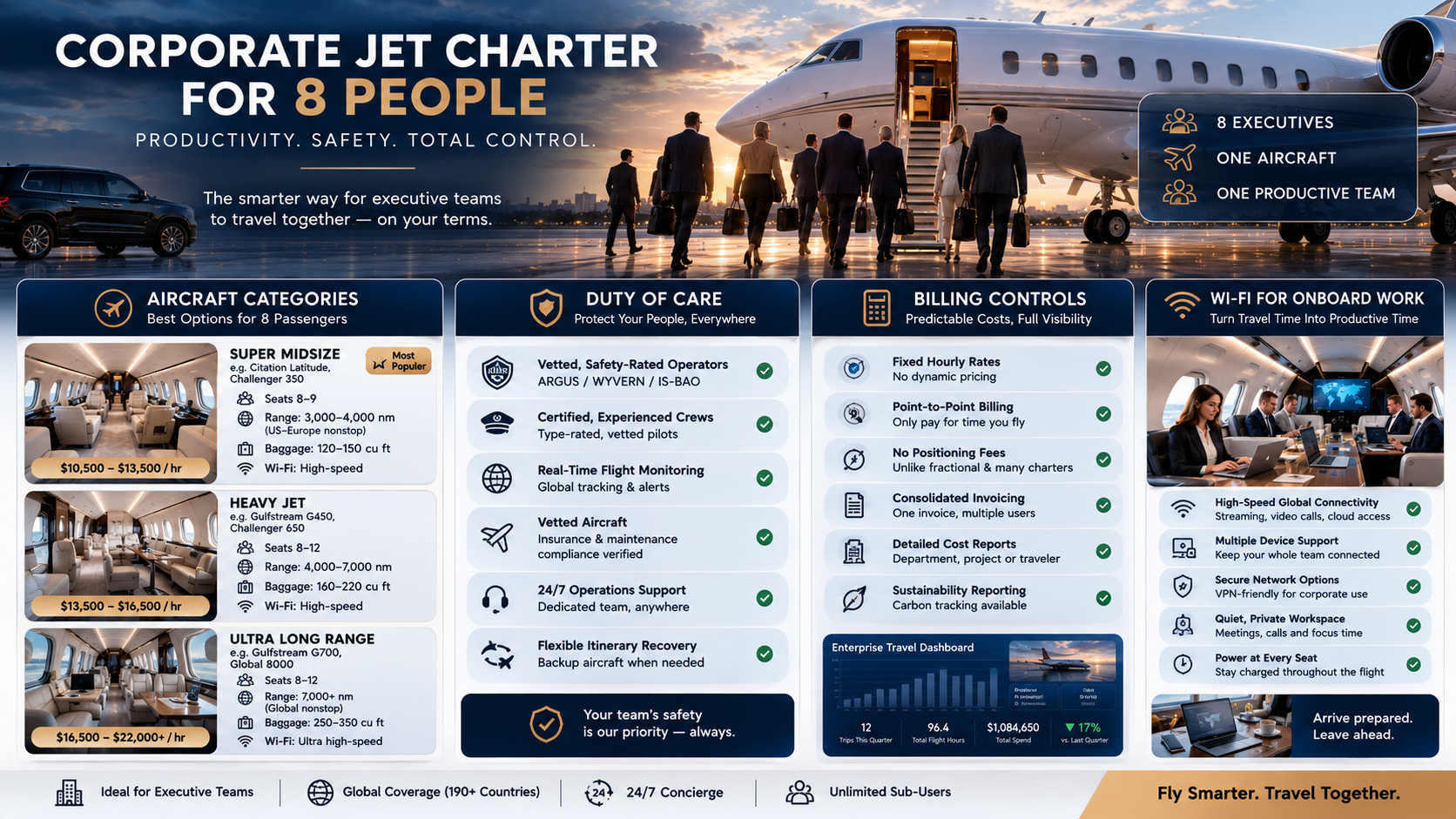
Corporate Jet Charter for 8 People: Aircraft Categories, Duty of Care, Billing Controls, and Wi‑Fi for Onboard Work
This comprehensive guide outlines the essentials for corporate jet charters accommodating teams of eight, focusing on aircraft categories, duty of care, billing controls, and onboard connectivity. It emphasizes the importance of selecting the right jet type, ensuring reliable Wi-Fi for work, and implementing effective billing practices to manage costs. By understanding these factors, organizations can enhance their private aviation experience and ensure smooth travel for their leadership teams.
Read More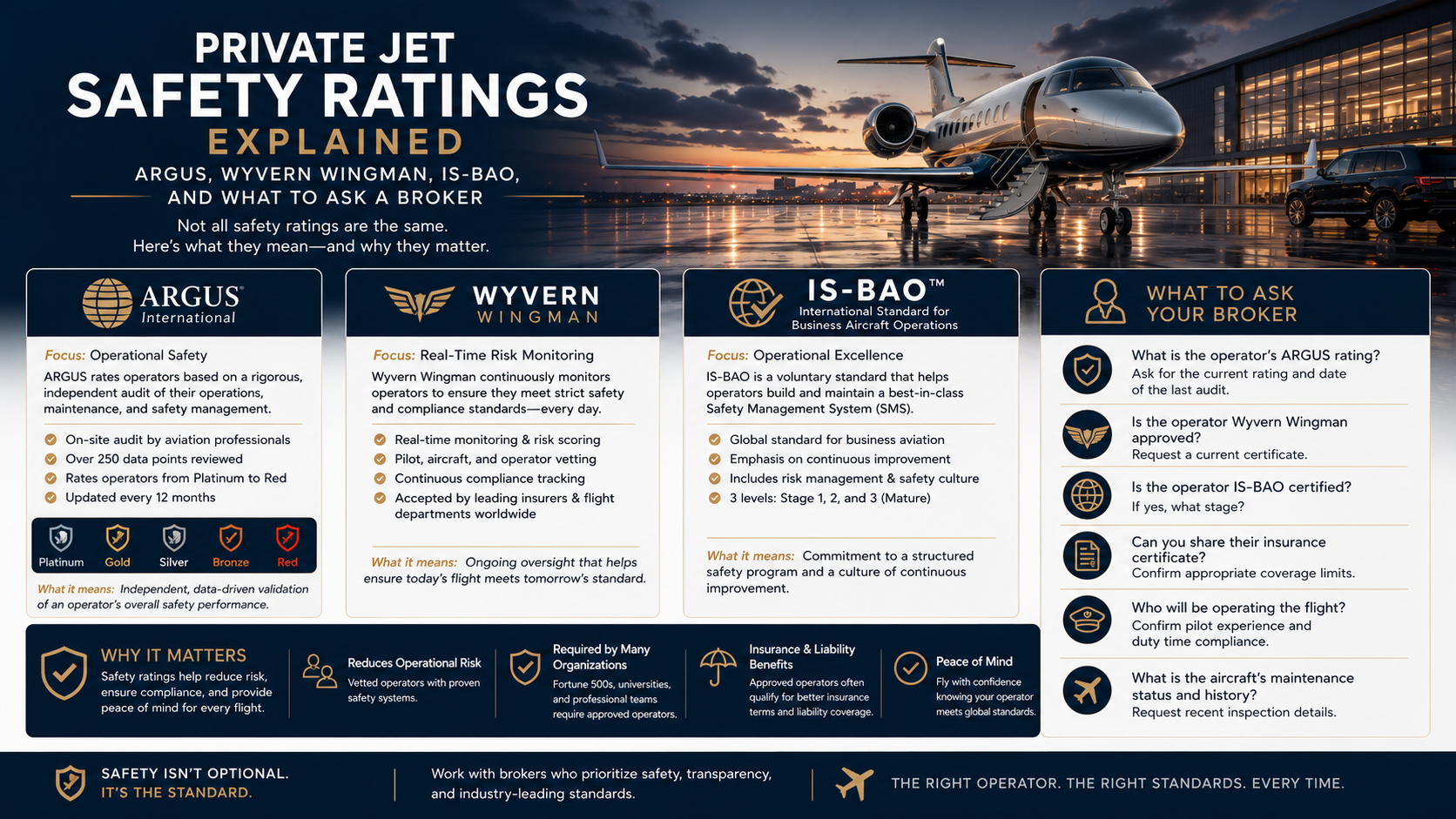
5
min read
Private Jet Safety Ratings Explained (ARGUS, WYVERN Wingman, IS-BAO, and What to Ask a Broker)
Private jet safety ratings, such as ARGUS, WYVERN, and IS-BAO, are essential tools for evaluating charter operators. These ratings assess how well operators train crews, maintain aircraft, and manage risks, providing an extra layer of safety assurance. Understanding these ratings and verifying the operator's credentials can significantly enhance your travel safety.
Read MoreJoin our community and receive the latest blog updates directly in your inbox.
MEMBERSHIPS AND ASSOCIATIONS



Disclaimer: Jettly operates as a charter broker, offering access to a global digital jet charter marketplace. Jettly is not a direct air carrier and does not own or operate aircraft. All advertised flights are conducted by third-party air carriers that are fully licensed and hold the appropriate Part 135 or Part 121 certifications issued by the Federal Aviation Administration (FAA) or equivalent regulatory authorities under U.S. or foreign law. Jettly complies fully with the U.S. Department of Transportation's Part 295 and Part 298 Charter Broker regulations. Jettly does not carry additional liability insurance. Passengers are covered by aircraft operator insurance. TICO: 50023770


