



Login
Get Instant Pricing On 23,000+ Aircraft


Choosing the best starter plane is crucial for new pilots, impacting their flying habits and costs. This guide outlines practical aircraft options, ownership costs, and the benefits of mixing rental flying with private jet charter for more complex missions. Key considerations include mission definition, budget, and experience level, with popular choices like the Cessna 172 and Piper PA-28 highlighted for their stability and support networks.
Jay Franco Serevilla
Jul 29, 2026
|
5
min read



View all
In 2026, the salary of commercial pilots continues to rise due to strong demand and expanding aviation opportunities. Airline pilots earn a median annual wage of $226,600, while commercial pilots in non-airline roles earn around $122,670. This guide explores pay structures, career paths, and the factors influencing pilot salaries, highlighting the lucrative potential of a pilot career.
Jay Franco Serevilla
Sep 23, 2026
|
5
min read

View all
The Cessna 185 Skywagon is a versatile aircraft known for its impressive takeoff capabilities, requiring approximately 1,000 to 1,430 feet to clear a 50-foot obstacle under ideal conditions. Factors such as weight, density altitude, and runway surface can significantly affect these distances, making careful planning essential for safe operations. Understanding these variables is crucial for pilots and charter clients navigating remote airstrips.
Jay Franco Serevilla
Sep 23, 2026
|
5
min read

View all
Flying private in India has become increasingly accessible for both business and leisure travelers. This guide provides insights on chartering private planes, including costs, benefits, and popular routes, making it easier to decide if private aviation suits your travel needs. With Jettly's platform, travelers can enjoy flexibility, luxury, and time savings while exploring over 20,000 aircraft options worldwide.
Jay Franco Serevilla
Sep 23, 2026
|
5
min read
View all
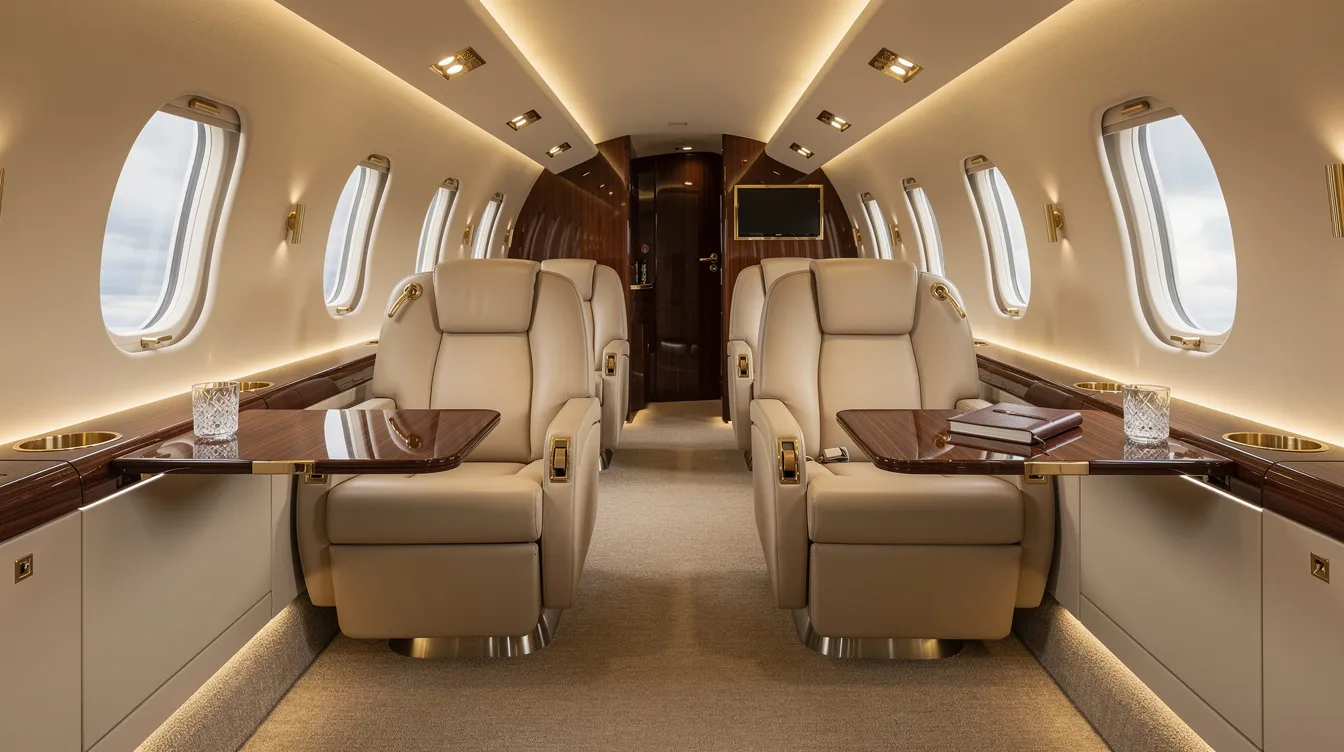
Private jet customization has transformed travel in 2026, allowing passengers to tailor each flight without owning an aircraft. Jettly connects travelers to over 20,000 aircraft, enabling personalized choices in cabin layouts, services, and amenities for every trip. This flexibility enhances the flying experience, making luxury travel accessible and efficient.
Jay Franco Serevilla
Sep 23, 2026
|
5
min read

View all
Searching flights from nearby airports can significantly enhance your travel experience by revealing better prices, more convenient schedules, and faster routes. This guide provides insights on how to effectively utilize flight search tools like Google Flights and Jettly to maximize your options, whether flying commercially or privately. By expanding your search beyond a single airport, you can unlock a wealth of travel opportunities that cater to your needs.
Jay Franco Serevilla
Sep 23, 2026
|
5
min read

View all
The Wheels Up private jet center FBO at Cincinnati/Northern Kentucky International Airport has transitioned to PremierFBO, operated by Premier Private Jets since April 2025. This guide details the changes, current services, and booking processes for private aviation travelers using this key facility.
Jeff Ryan Serevilla
Sep 22, 2026
|
5
min read
Explore our latest articles and updates.

5
min read
Ride a Helicopter in New York: How to Choose and Book the Best NYC Helicopter Tour
A helicopter ride in New York offers breathtaking views of iconic landmarks like the Statue of Liberty and Central Park. Tours typically last between 12 to 30 minutes and can be booked as shared sightseeing flights or private charters. Jettly provides a platform for arranging customizable helicopter experiences, making it easy to explore the city from above.
Read More
5
min read
Chinook Helicopter Guide: CH-47D, CH-47F, Uses, Performance, and Charter Access
The CH-47 Chinook helicopter, developed by Boeing Vertol, is a versatile heavy-lift aircraft known for its twin-engine, tandem rotor design. With variants like the CH-47D and CH-47F, it plays a crucial role in military operations, disaster relief, and commercial heavy-lift tasks. Organizations often utilize charter services like Jettly to access Chinook capabilities without the burdens of ownership.
Read MoreJoin our community and receive the latest blog updates directly in your inbox.
MEMBERSHIPS AND ASSOCIATIONS



Disclaimer: Jettly operates as a charter broker, offering access to a global digital jet charter marketplace. Jettly is not a direct air carrier and does not own or operate aircraft. All advertised flights are conducted by third-party air carriers that are fully licensed and hold the appropriate Part 135 or Part 121 certifications issued by the Federal Aviation Administration (FAA) or equivalent regulatory authorities under U.S. or foreign law. Jettly complies fully with the U.S. Department of Transportation's Part 295 and Part 298 Charter Broker regulations. Jettly does not carry additional liability insurance. Passengers are covered by aircraft operator insurance. TICO: 50023770


