


Login
Get Instant Pricing On 23,000+ Aircraft


Flying a plane requires skilled, licensed pilots who undergo extensive training. This article explores the various types of pilots, their training processes, and the controls they manage during flights. It also highlights the role of private jet charter services like Jettly in connecting travelers with professional pilots and aircraft.
Jay Franco Serevilla
Oct 1, 2026
|
5
min read



View all
Private jet emissions have drawn significant scrutiny due to their disproportionate environmental impact, with private jets emitting approximately 15–16 million tonnes of CO2 in 2023, representing about 1.7–1.8% of civil aviation emissions while serving a tiny fraction of passengers. The emissions per passenger are extraordinarily high, with private jets emitting 5–14 times more CO2 per passenger-kilometre than commercial flights, largely due to low occupancy rates. A small group of ultra-wealthy individuals and corporations accounts for the majority of these emissions, highlighting stark inequalities in carbon footprints. To mitigate their environmental impact, travelers can consider options like utilizing empty leg flights, choosing more efficient aircraft, and prioritizing sustainable aviation fuels.
Jay Franco Serevilla
Feb 8, 2026
|
5
min read

View all
Charter air freight is increasingly favored by businesses for urgent shipments, offering unmatched speed, flexibility, and control compared to standard shipping options. Companies can choose between full charters, which provide exclusive use of an aircraft, and part charters, which allow sharing capacity for smaller loads. This service is vital across various industries, including automotive and pharmaceuticals, where delays can lead to significant financial losses. By leveraging charter air freight, organizations can ensure timely deliveries, mitigate risks, and maintain competitive supply chains.
Jay Franco Serevilla
Feb 8, 2026
|
5
min read

View all
The Private Jet Villa experience combines luxury private jet travel with exclusive villa stays, exemplified by a unique Boeing 737 villa in Bali. This concept allows travelers to access high-end accommodations through cost-effective empty leg flights, significantly reducing private aviation costs by 70-90%. Guests enjoy unparalleled privacy, bespoke services, and stunning views, making it ideal for affluent travelers seeking unique getaways or milestone celebrations. Platforms like Jettly facilitate seamless booking and coordination of flights and villa stays, enhancing the overall luxury experience.
Jay Franco Serevilla
Feb 7, 2026
|
5
min read

View all
The real value of private aviation is access, not luxury. Commercial airlines serve about 500 U.S. airports, while private aviation reaches more than 5,000, creating a structural advantage for organizations operating outside major hubs. As commercial networks continue to consolidate due to aircraft shortages and rising costs, private aviation expands point-to-point access and reduces hidden time and productivity losses. This widening accessibility gap turns mobility into a strategic and financial asset for businesses with distributed operations.
Jay Franco Serevilla
Jan 22, 2026
|
5
min read

View all
Private aviation’s greatest value isn’t short-hop convenience, but the ability to fly intercontinental routes nonstop. Over decades, range advances—from early jets like the Jetstar to modern aircraft like the Gulfstream G800 and Global 8000—have pushed private jets into true long-haul territory. These ultra-long-range capabilities are driving strong market growth as businesses prioritize time savings and global reach over layovers. While future range gains will be limited by fuel physics, today’s 7,000–8,000 nautical-mile jets already cover nearly all global city pairs.
Jay Franco Serevilla
Jan 22, 2026
|
5
min read
View all
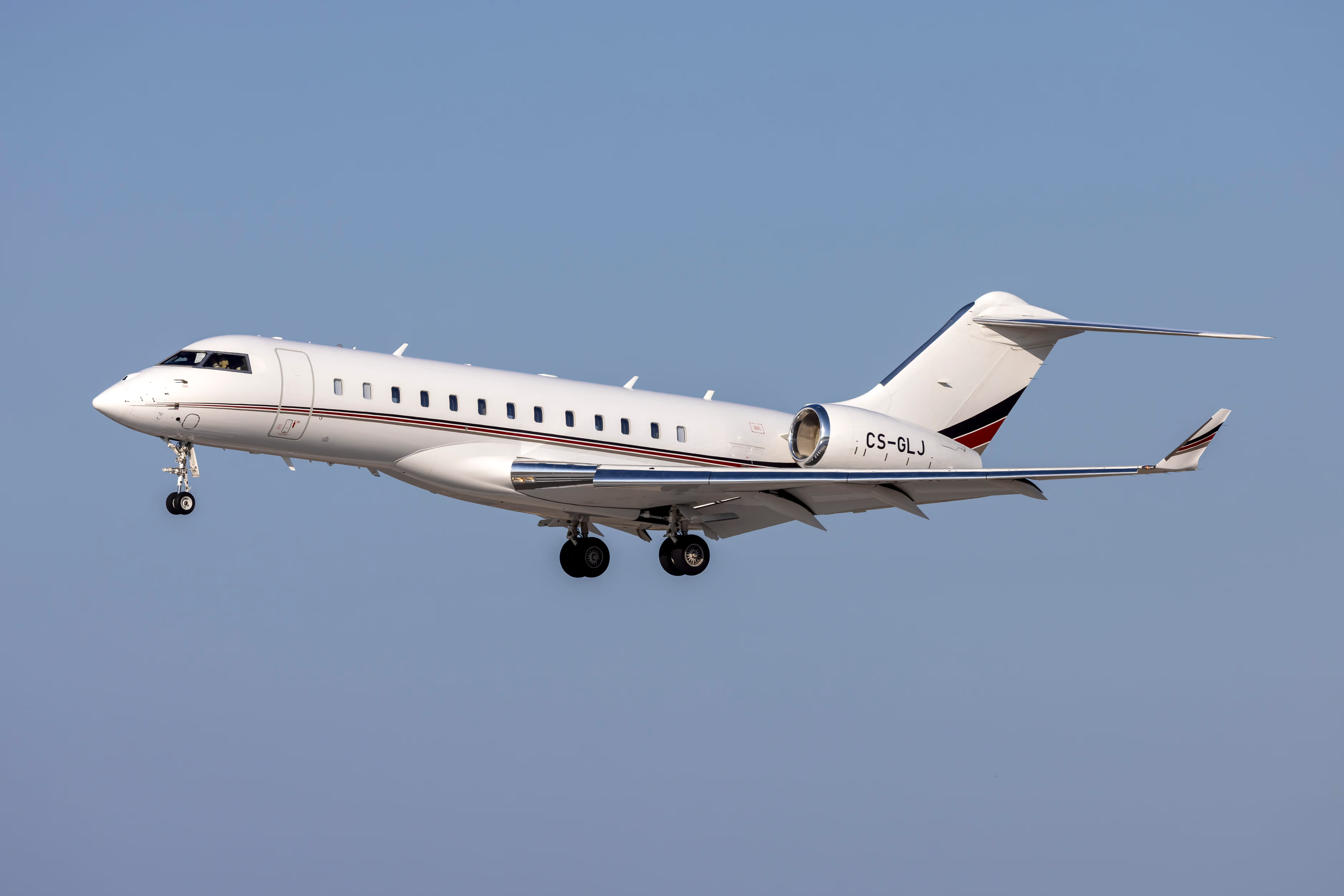
Private aviation programs differ more in structure than in appearance. This page compares Jettly, NetJets, and Flexjet across contracts, capital requirements, flexibility, and exit friction. Traditional fractional ownership was built for long-term commitments and fixed flying patterns. Modern access models are designed for change.
Jay Franco
Jan 13, 2026
|
5
min read
Explore our latest articles and updates.

5
min read
Buying a Jet: A Practical Guide for Modern Private Flyers
This guide outlines the complexities of private jet ownership, emphasizing the importance of a thorough cost-benefit analysis based on flight hours. For those flying under 150 hours annually, chartering is generally more economical, while ownership may be justified for those flying over 300 hours per year. Key considerations include ongoing costs, regulatory compliance, and the choice between new and pre-owned aircraft, with professional advice recommended to navigate the purchasing process. Platforms like Jettly offer flexible charter options, allowing travelers to experience private aviation without the long-term commitment of ownership.
Read More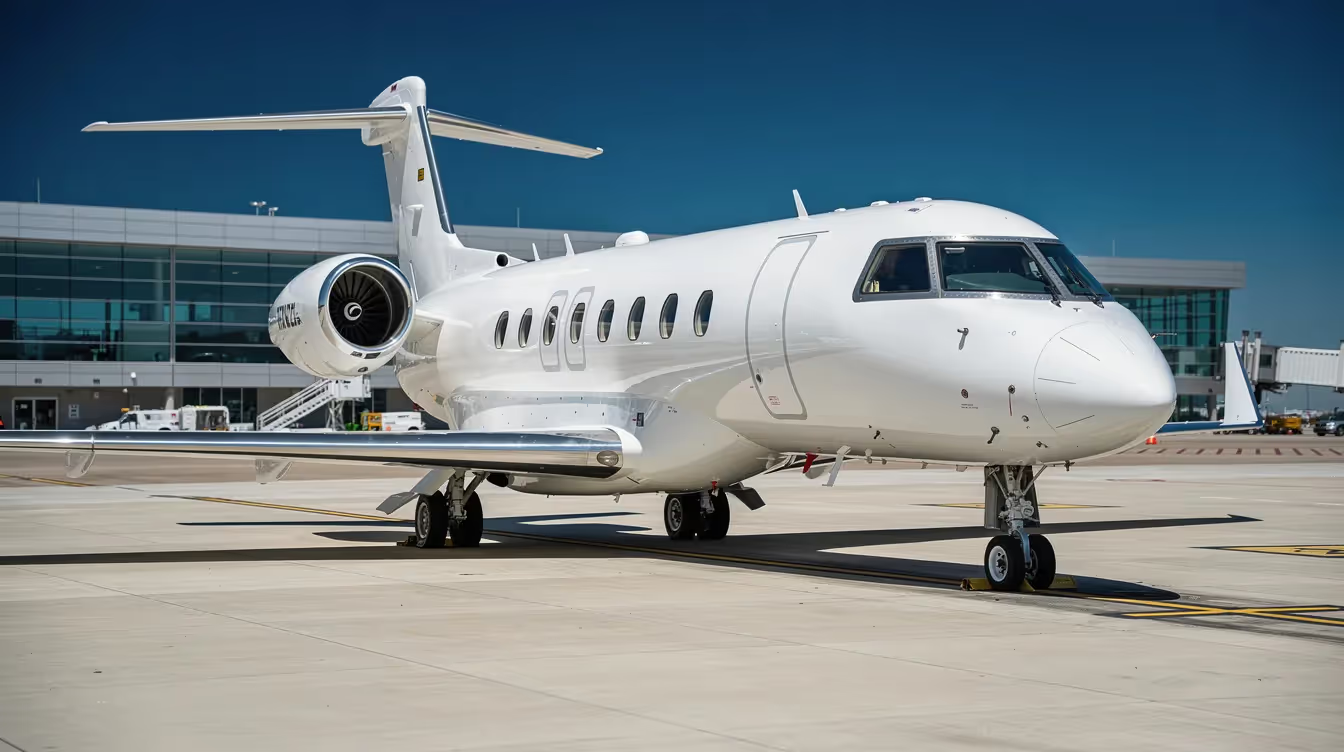
5
min read
Purchasing a Private Jet: Costs, Steps, and Smarter Alternatives
Purchasing a private jet involves significant financial and operational commitments, with total ownership costs often far exceeding the initial purchase price. Buyers should consider their flight patterns, as ownership typically makes sense for those flying over 200-250 hours annually; otherwise, chartering or membership options may be more cost-effective. The acquisition process can take 60-120 days for pre-owned jets and up to 24 months for new ones, requiring careful analysis of mission needs, operating costs, and potential depreciation. Engaging aviation professionals and utilizing platforms like Jettly can help prospective buyers assess their options and avoid common pitfalls.
Read MoreJoin our community and receive the latest blog updates directly in your inbox.
MEMBERSHIPS AND ASSOCIATIONS



Disclaimer: Jettly operates as a charter broker, offering access to a global digital jet charter marketplace. Jettly is not a direct air carrier and does not own or operate aircraft. All advertised flights are conducted by third-party air carriers that are fully licensed and hold the appropriate Part 135 or Part 121 certifications issued by the Federal Aviation Administration (FAA) or equivalent regulatory authorities under U.S. or foreign law. Jettly complies fully with the U.S. Department of Transportation's Part 295 and Part 298 Charter Broker regulations. Jettly does not carry additional liability insurance. Passengers are covered by aircraft operator insurance. TICO: 50023770


