


Login
Get Instant Pricing On 23,000+ Aircraft


This article provides developers and travel planners with essential insights into accessing JetBlue's aviation data, including flight schedules and real-time status. It highlights the importance of integrating JetBlue's API with private charter services like Jettly to enhance travel solutions and optimize trip planning. Understanding these options allows for seamless passenger experiences and operational advantages.
Jay Franco Serevilla
Sep 13, 2026
|
5
min read



View all
In 2026, the Boeing 747-8i remains the fastest commercial jet, cruising at Mach 0.855. While modern airliners prioritize fuel efficiency over speed, private jets like the Bombardier Global 8000 offer competitive speeds and greater flexibility, often resulting in shorter total travel times. This guide explores the nuances of commercial jet speeds and the advantages of private aviation.
Jay Franco Serevilla
Sep 13, 2026
|
5
min read

View all
Choosing the best airline to work for in 2026 is crucial for aviation professionals, as it impacts pay, culture, and career progression. This guide evaluates top U.S. and international carriers based on key factors like compensation, work-life balance, and employee satisfaction, helping candidates find the right fit for their aviation careers.
Jay Franco Serevilla
Sep 13, 2026
|
5
min read

View all
Richmor Aviation, Inc. has been a key player in New York's aviation sector since 1967, offering charter services and a renowned flight school. For those seeking to compare private jet options beyond Richmor, Jettly provides a digital marketplace to explore a vast network of aircraft and operators. This guide details Richmor's offerings and how Jettly enhances the travel experience.
Jay Franco Serevilla
Sep 13, 2026
|
5
min read

View all
Most commercial planes fly between 9 to 12 km, while private jets can reach up to 15.5 km. The chosen altitude balances fuel efficiency, safety, and passenger comfort. Understanding these heights helps travelers appreciate the dynamics of air travel and optimize their flight experience.
Jay Franco Serevilla
Sep 12, 2026
|
5
min read

View all
Travel insurance for airfare is crucial for protecting your investment in non-refundable tickets against cancellations and delays. Whether you're flying commercially or chartering a private jet, understanding the nuances of flight insurance can save you from significant financial loss. This guide covers what flight insurance entails, its benefits, and when it's worth purchasing.
Jay Franco Serevilla
Sep 12, 2026
|
5
min read

View all
This article compares Vonlane, a luxury motorcoach service in Texas, with Jettly, a private jet charter platform. While Vonlane offers a comfortable and convenient ground travel experience, Jettly provides flexibility and privacy for air travel. Discover which option suits your travel needs best.
Jay Franco Serevilla
Sep 12, 2026
|
5
min read
Explore our latest articles and updates.
5
min read
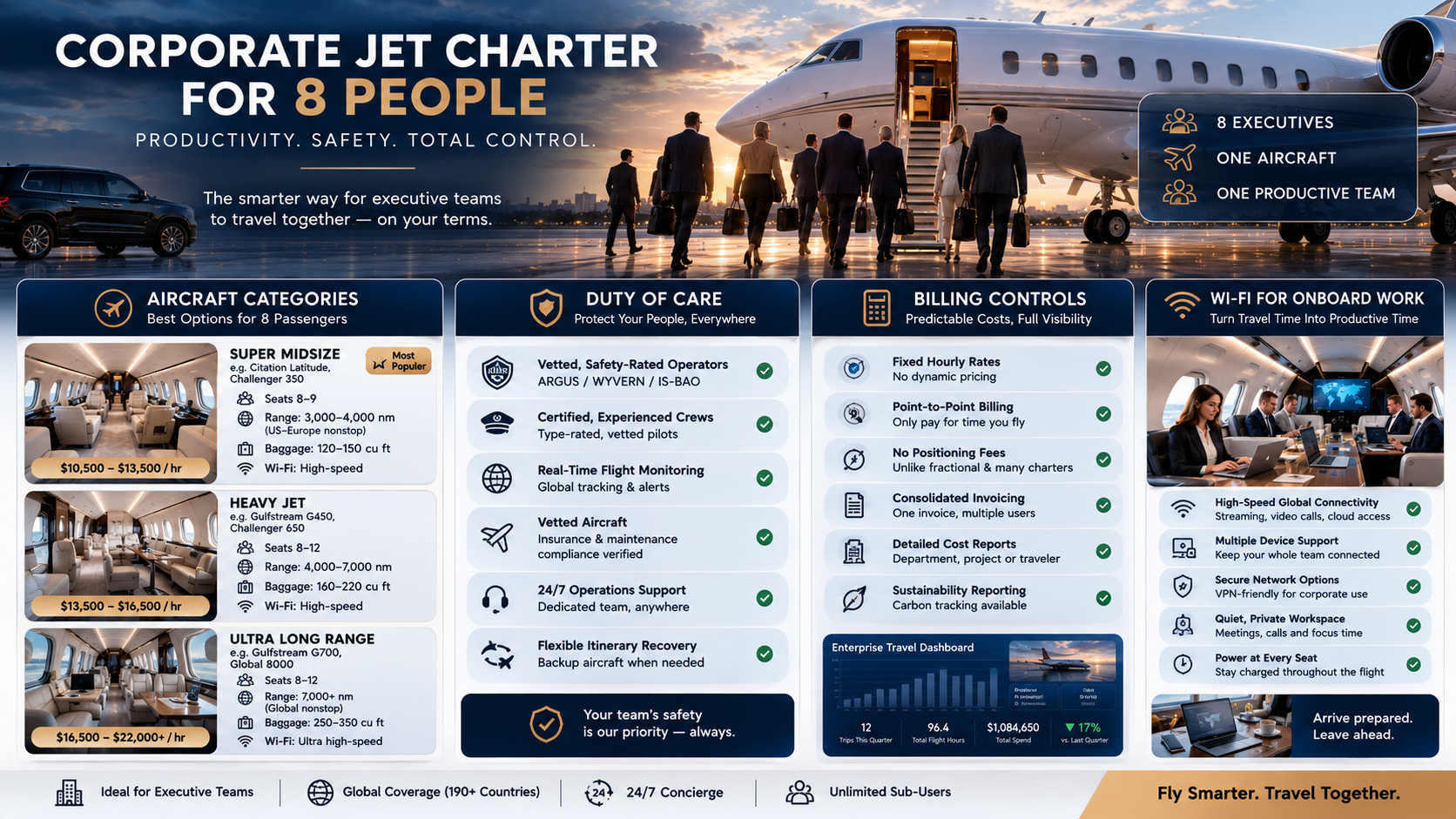
Corporate Jet Charter for 8 People: Aircraft Categories, Duty of Care, Billing Controls, and Wi‑Fi for Onboard Work
This comprehensive guide outlines the essentials for corporate jet charters accommodating teams of eight, focusing on aircraft categories, duty of care, billing controls, and onboard connectivity. It emphasizes the importance of selecting the right jet type, ensuring reliable Wi-Fi for work, and implementing effective billing practices to manage costs. By understanding these factors, organizations can enhance their private aviation experience and ensure smooth travel for their leadership teams.
Read More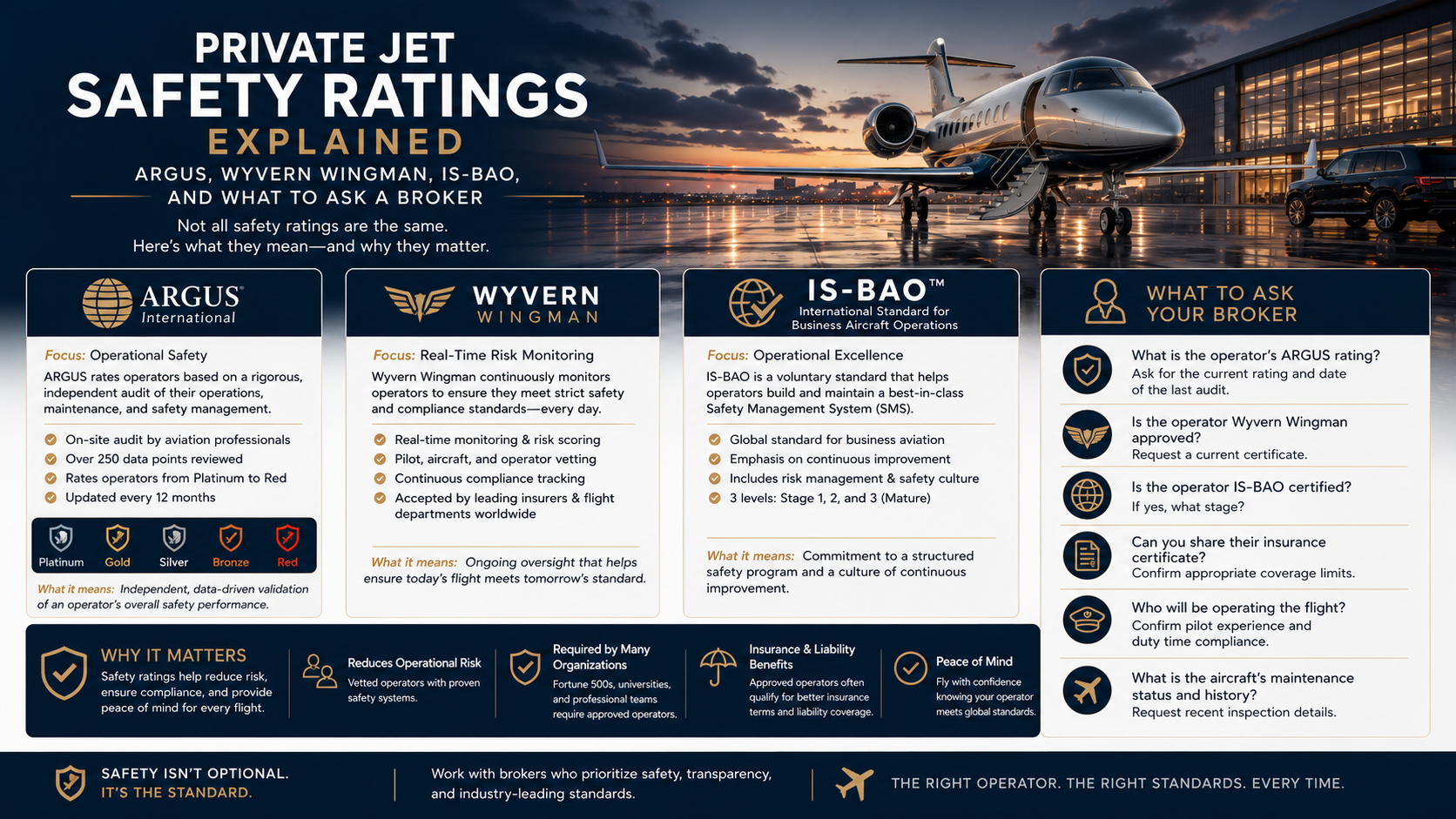
5
min read
Private Jet Safety Ratings Explained (ARGUS, WYVERN Wingman, IS-BAO, and What to Ask a Broker)
Private jet safety ratings, such as ARGUS, WYVERN, and IS-BAO, are essential tools for evaluating charter operators. These ratings assess how well operators train crews, maintain aircraft, and manage risks, providing an extra layer of safety assurance. Understanding these ratings and verifying the operator's credentials can significantly enhance your travel safety.
Read MoreJoin our community and receive the latest blog updates directly in your inbox.
MEMBERSHIPS AND ASSOCIATIONS



Disclaimer: Jettly operates as a charter broker, offering access to a global digital jet charter marketplace. Jettly is not a direct air carrier and does not own or operate aircraft. All advertised flights are conducted by third-party air carriers that are fully licensed and hold the appropriate Part 135 or Part 121 certifications issued by the Federal Aviation Administration (FAA) or equivalent regulatory authorities under U.S. or foreign law. Jettly complies fully with the U.S. Department of Transportation's Part 295 and Part 298 Charter Broker regulations. Jettly does not carry additional liability insurance. Passengers are covered by aircraft operator insurance. TICO: 50023770


