


Login
Get Instant Pricing On 23,000+ Aircraft


Celebrity jet tracking has emerged as a significant topic at the intersection of technology, privacy, and environmental accountability. Initiated by Jack Sweeney, this practice involves monitoring and publicly sharing the flight movements of private jets owned by celebrities, raising important discussions about privacy, safety, and the environmental impact of private aviation. As public interest grows, platforms like Jettly adapt to meet the evolving expectations of privacy and responsibility in private jet travel.
Jeff Ryan Serevilla
Oct 9, 2026
|
5
min read



View all
The best time to buy flights varies based on several factors, including booking windows, seasonality, and route demand, rather than a specific day or hour. For domestic flights, booking 1 to 3 months in advance is ideal, while international flights are best booked 2 to 8 months ahead. Midweek flights, particularly on Tuesdays and Wednesdays, tend to be cheaper, and travelers can save significantly by monitoring price alerts and being flexible with travel dates. Private jet pricing operates differently, focusing on aircraft availability and mission costs, with empty leg flights offering substantial discounts compared to standard charters.
Jay Franco Serevilla
May 24, 2026
|
5
min read

View all
The Embraer Phenom 300E is a leading light jet in the private charter market, celebrated for its speed, comfort, and advanced technology, making it ideal for both business and leisure travel. With a range of up to 2,010 nautical miles and a cruising speed of 464 knots, it efficiently serves regional and transcontinental routes while accommodating 6–8 passengers in a spacious cabin. Jettly offers a streamlined booking process for the Phenom 300E, providing instant access to pricing and aircraft options without the long-term commitments of ownership. Overall, the Phenom 300E combines performance and luxury, making it a top choice for travelers seeking flexible private aviation solutions.
Jay Franco Serevilla
May 23, 2026
|
5
min read
View all
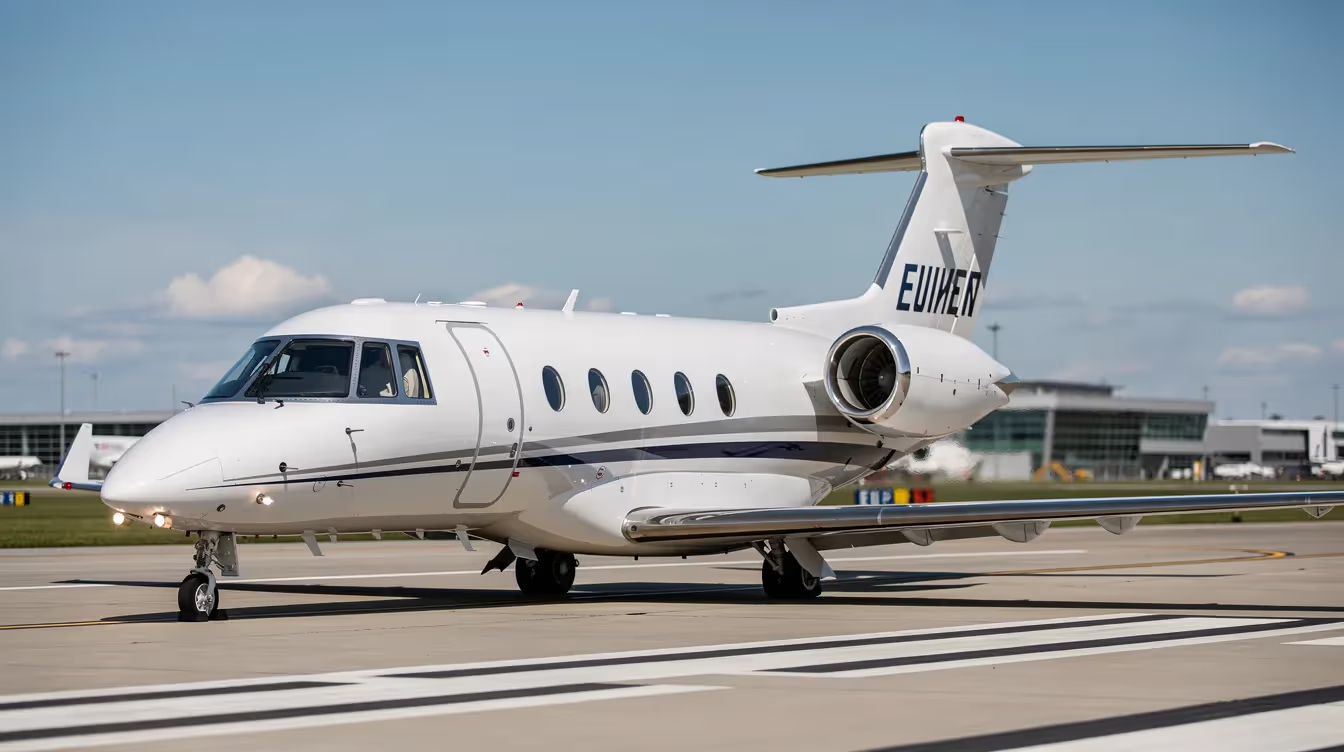
The Cessna 560 Citation V is a well-regarded light-to-midsize business jet, known for its speed, comfort, and operational efficiency, making it ideal for short- to mid-range flights. With a spacious cabin accommodating up to eight passengers and strong short-field performance, it remains a popular choice among business and leisure travelers, often booked through platforms like Jettly. The Citation V family includes later variants such as the Citation Ultra and Encore, which offer enhanced features and performance. Overall, the Citation V is celebrated for its reliability, competitive charter rates, and ability to access smaller airports, making it a favored option in private aviation.
Jay Franco Serevilla
May 23, 2026
|
5
min read
View all
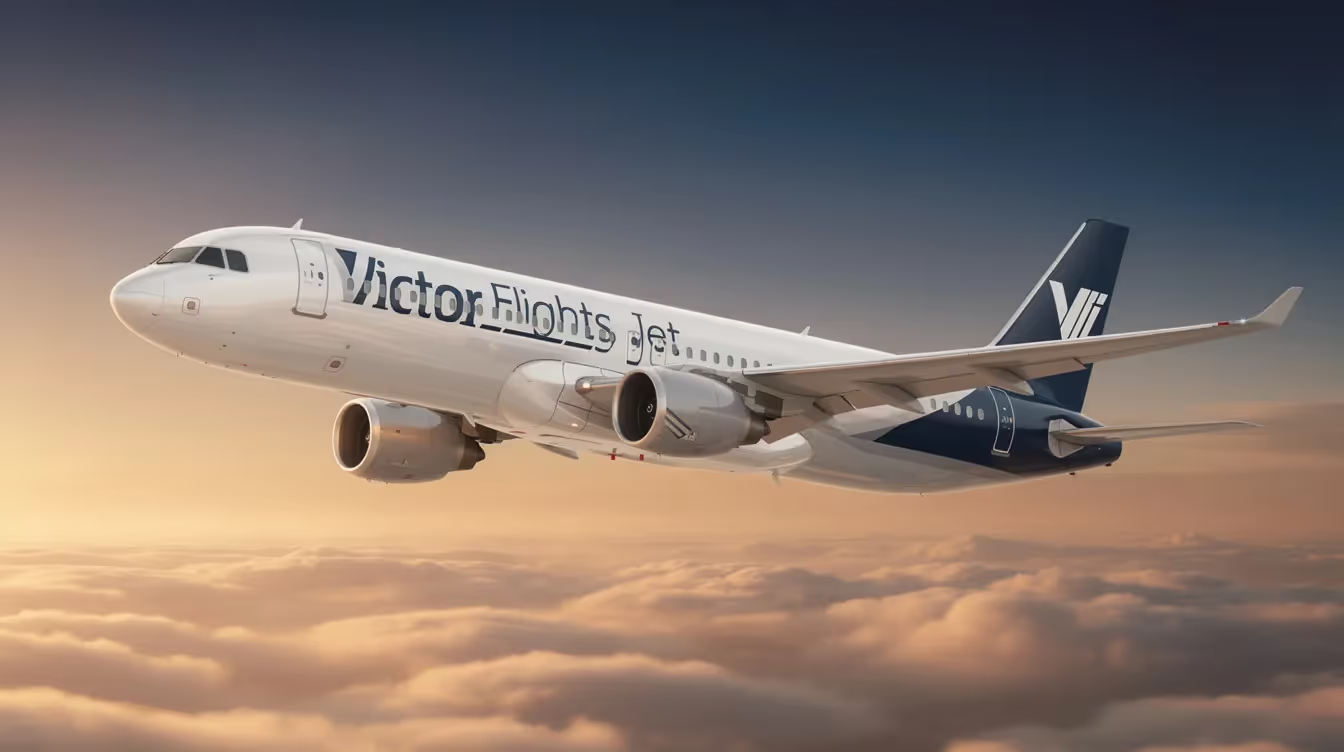
Victor Flights refers to a transparent private jet charter service that emphasizes quick booking without ownership commitments. Jettly offers a similar digital experience, providing instant pricing and access to over 20,000 aircraft globally, allowing travelers to book on-demand with clear costs and aircraft details. The platform supports various travel needs, including empty leg flights and cost-sharing options, enhancing affordability while maintaining safety and comfort. Overall, Jettly positions itself as a modern alternative to traditional brokers, catering to the growing demand for flexible and efficient private aviation solutions.
Jay Franco Serevilla
May 23, 2026
|
5
min read

View all
Gulfstream aircraft are highly regarded in private aviation for their speed, range, and comfort, making them a preferred choice for executives and discerning travelers. This guide details the features, history, and charter options of Gulfstream jets available through Jettly, emphasizing their reliability for long-distance travel. Models like the G550, G650ER, G700, and G800 offer spacious interiors and advanced technology, catering to various passenger needs. Jettly provides on-demand access to these aircraft with instant pricing and booking, allowing travelers to efficiently plan their journeys without ownership commitments.
Jay Franco Serevilla
May 23, 2026
|
5
min read

View all
The King Air 350 is a versatile twin-engine turboprop ideal for private charter, offering a spacious cabin for up to 9 passengers and the ability to operate from shorter runways. With a maximum range of 1,806 nautical miles and cruise speeds around 312 knots, it balances performance and efficiency, making it suitable for corporate travel, air ambulance services, and leisure trips. Charter rates typically start in the mid-$2,000s per hour, while ownership costs can exceed $1 million annually. Jettly provides on-demand access to the King Air 350, emphasizing transparent pricing and flexible booking options for travelers.
Jay Franco Serevilla
May 23, 2026
|
5
min read
Explore our latest articles and updates.

5
min read
Boise Charter Flights with Jettly: Private Jets, Pricing & Top Routes
Boise charter flights with Jettly offer travelers a flexible and efficient way to fly in and out of Idaho's capital. With access to over 20,000 aircraft, Jettly provides personalized scheduling, enhanced privacy, and direct routing to numerous destinations, making it ideal for both business and leisure travel.
Read More
5
min read
Falcon 900EX EASy: Long-Range Comfort with Modern Avionics
The Falcon 900EX EASy is a long-range tri-engine jet by Dassault Aviation, designed for comfort and efficiency. With a maximum range of 4,725 nautical miles and a modern EASy flight deck, it caters to corporate and family travelers alike, offering a spacious cabin and advanced avionics. This guide details its performance, charter options, and how Jettly simplifies the booking process.
Read MoreJoin our community and receive the latest blog updates directly in your inbox.
MEMBERSHIPS AND ASSOCIATIONS



Disclaimer: Jettly operates as a charter broker, offering access to a global digital jet charter marketplace. Jettly is not a direct air carrier and does not own or operate aircraft. All advertised flights are conducted by third-party air carriers that are fully licensed and hold the appropriate Part 135 or Part 121 certifications issued by the Federal Aviation Administration (FAA) or equivalent regulatory authorities under U.S. or foreign law. Jettly complies fully with the U.S. Department of Transportation's Part 295 and Part 298 Charter Broker regulations. Jettly does not carry additional liability insurance. Passengers are covered by aircraft operator insurance. TICO: 50023770


