


Login
Get Instant Pricing On 23,000+ Aircraft


Flying private offers a range of costs and options, making it more accessible than many think. With hourly rates varying by aircraft type and additional fees, understanding pricing can help travelers save. Jettly provides transparent pricing and flexible booking, making private aviation a viable choice for both business and leisure travel.
Jeff Ryan Serevilla
Oct 5, 2026
|
5
min read



View all
Transcontinental private jet travel offers unparalleled speed, convenience, and comfort, allowing passengers to fly nonstop across vast distances without the hassles of commercial air travel. Jettly's platform simplifies the booking process, providing access to a global fleet of long-range jets, including popular models like the Bombardier Global and Gulfstream G650ER, ideal for routes such as New York–London and Los Angeles–Tokyo. Charter costs typically range from tens of thousands to over $150,000 one-way, depending on aircraft type and route, while Jettly helps users compare options and find the best pricing. Overall, private jet travel enhances flexibility, privacy, and the ability to work or relax en route, making it a valuable choice for business executives and leisure travelers alike.
Jay Franco Serevilla
May 18, 2026
|
5
min read

View all
FAR Part 135 is a regulation enforced by the FAA that governs commercial charter operations, ensuring high safety standards for on-demand flights, including air taxis and small commuter services. It requires operators to obtain an Air Carrier Certificate and adhere to strict pilot qualifications, maintenance standards, and operational procedures. Travelers should confirm if their charter flight operates under Part 135, as this impacts safety, pricing, and regulatory oversight compared to Part 91 and Part 121 operations. Jettly connects users with vetted Part 135 operators, facilitating informed booking decisions in private aviation.
Jay Franco Serevilla
May 18, 2026
|
5
min read

View all
As of 2026, there are 174,155 active private pilots in the U.S., part of a total pilot population of 887,519, which includes various certification categories. The number of private pilots has fluctuated over the years, peaking in 1980 and recently stabilizing due to increased demand for flight training and aviation careers. Understanding these statistics is crucial for aspiring aviators and industry stakeholders, as they reflect trends in training costs, medical regulations, and the evolving role of private aviation. Platforms like Jettly facilitate private travel for those without pilot certificates, highlighting the broader participation in private aviation beyond just licensed pilots.
Jay Franco Serevilla
May 18, 2026
|
5
min read

View all
The Flightradar24 app is a vital tool for travelers and aviation enthusiasts, offering real-time flight tracking and insights into flight status, routes, and airport activity. It features live maps, flight history, and airport panels, making it particularly useful for coordinating commercial flights with private jet transfers. Subscription options, including Silver and Gold plans, provide additional features such as extended flight history and advanced weather layers. The app complements private jet charter services like Jettly by enhancing situational awareness and travel planning for users.
Jay Franco Serevilla
May 18, 2026
|
5
min read

View all
Thumrait Air Base in Oman serves as a strategic military hub for the Royal Air Force of Oman, located about 70–80 km north of Salalah. While civilian access is restricted, private travelers can utilize Salalah International Airport for flights to the region, with Jettly providing charter options and logistical support. The base plays a crucial role in regional security and multinational military exercises, supporting U.S. and allied operations. Jettly offers flexible private jet charter solutions, ensuring efficient travel to southern Oman for various purposes.
Jay Franco Serevilla
May 18, 2026
|
5
min read
View all
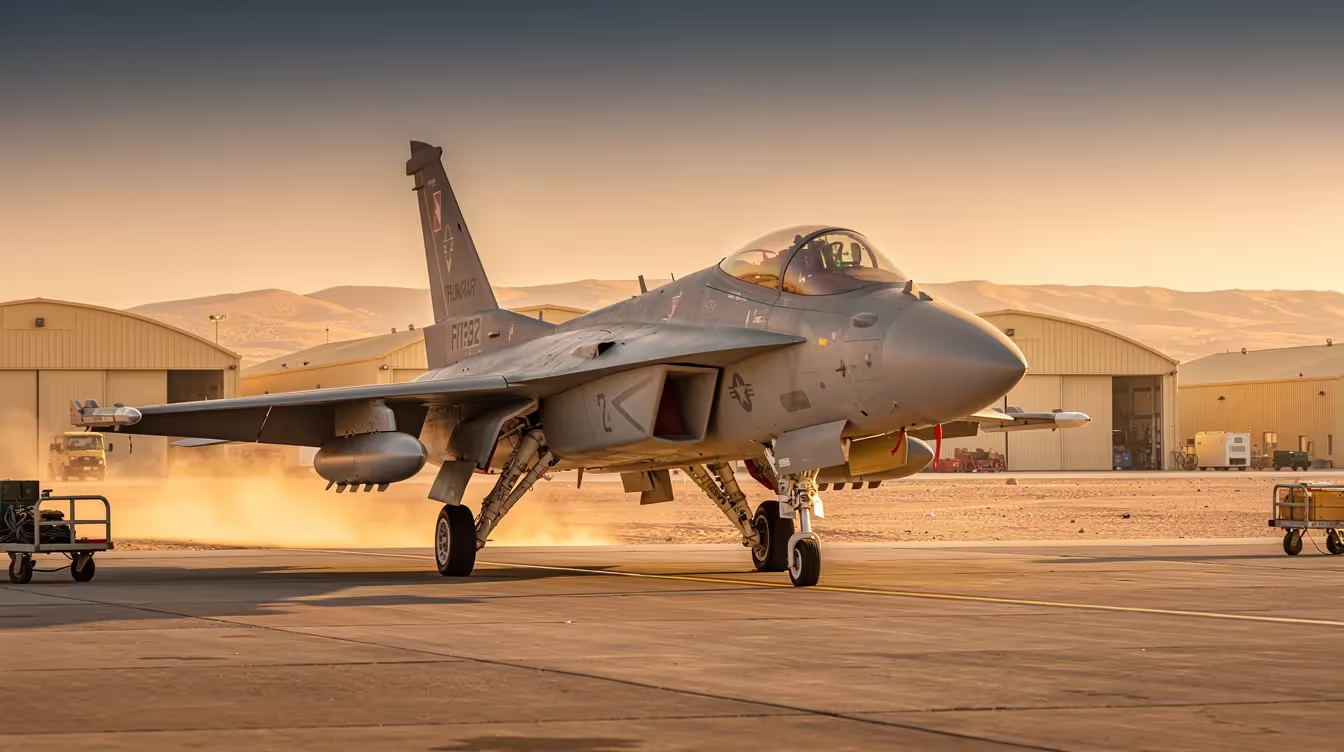
Thumrait Air Base in Oman serves as a crucial military hub for the Royal Air Force of Oman, strategically located near key transport routes and conflict zones. Civilian access is largely restricted, with most private travelers utilizing Salalah International Airport, approximately 70–80 km away. Jettly provides private jet charter services to facilitate travel to the region, offering a range of aircraft options and support for ground transportation. The base plays a significant role in regional security and multinational military exercises, underscoring its importance in the Arabian Peninsula.
Jay Franco Serevilla
May 18, 2026
|
5
min read
Explore our latest articles and updates.

5
min read
Piper PA-46 Family: Malibu, Mirage & Meridian Guide
The Piper PA-46 family, including the Malibu, Mirage, and Meridian, offers a blend of performance, comfort, and efficiency for private pilots and charter operators. With spacious cabins and advanced avionics, these aircraft are ideal for regional travel, bridging the gap between piston aircraft and light jets. This guide covers their history, features, and charter options, showcasing their popularity among private flyers worldwide.
Read More
5
min read
Private Jet vs Business Class: Which Makes More Sense for Your Next Trip?
Choosing between private jet travel and business class involves weighing factors like cost, convenience, and privacy. Private jets offer tailored experiences and scheduling flexibility, while business class provides a premium option on commercial flights at a lower price. This guide helps you navigate the differences to determine the best choice for your next trip.
Read MoreJoin our community and receive the latest blog updates directly in your inbox.
MEMBERSHIPS AND ASSOCIATIONS



Disclaimer: Jettly operates as a charter broker, offering access to a global digital jet charter marketplace. Jettly is not a direct air carrier and does not own or operate aircraft. All advertised flights are conducted by third-party air carriers that are fully licensed and hold the appropriate Part 135 or Part 121 certifications issued by the Federal Aviation Administration (FAA) or equivalent regulatory authorities under U.S. or foreign law. Jettly complies fully with the U.S. Department of Transportation's Part 295 and Part 298 Charter Broker regulations. Jettly does not carry additional liability insurance. Passengers are covered by aircraft operator insurance. TICO: 50023770


