


Login
Get Instant Pricing On 23,000+ Aircraft


Royal Air Freight Inc. has been a trusted name in charter and air freight services since 1961, specializing in expedited cargo and passenger flights across North America. Jettly, a digital charter broker, offers a broader marketplace for comparing private jet and cargo flight options, providing travelers with greater flexibility and instant pricing.
Jay Franco Serevilla
Sep 27, 2026
|
5
min read


View all
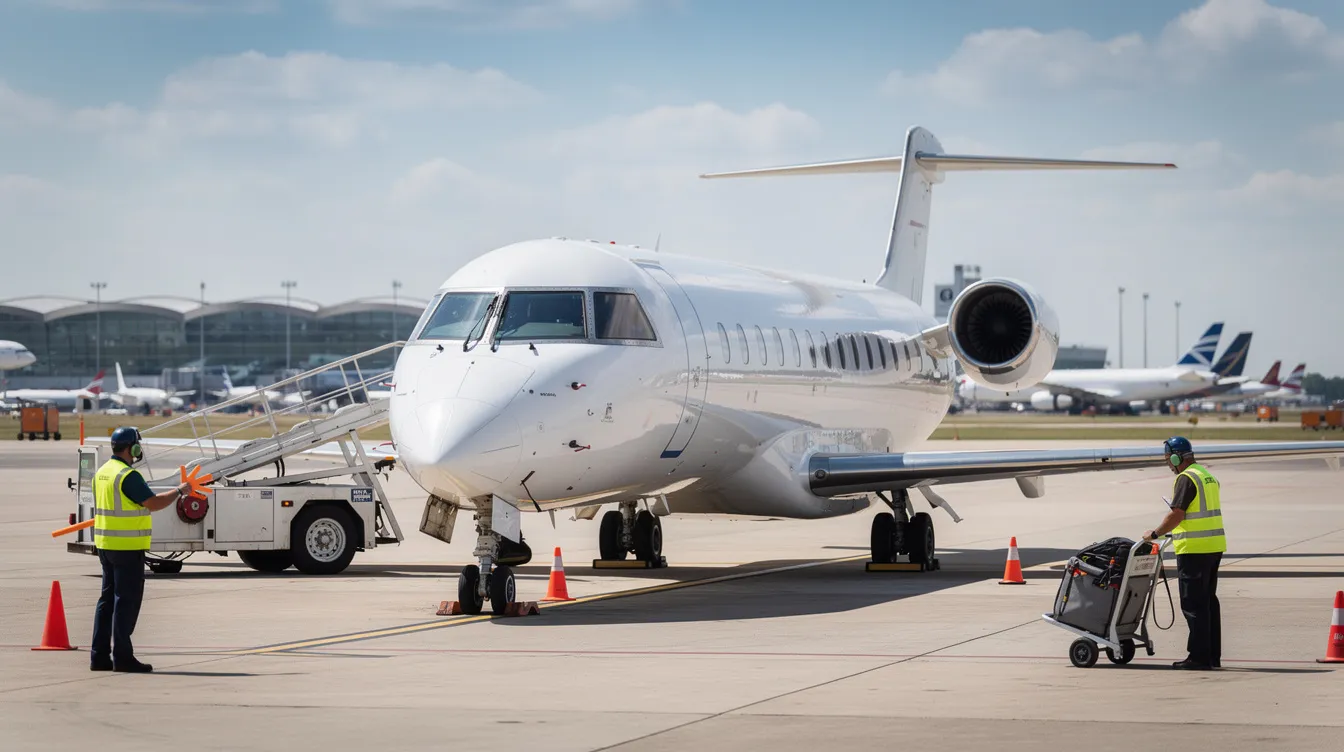
The Bombardier CRJ 200's price varies significantly based on configuration, with used regional airliners typically costing between $1.5 million and $4 million, while VIP conversions can range from $8 million to $18 million. Charter rates also fluctuate, starting at approximately $8,000 to $12,000 per hour for standard configurations and reaching $15,000 to $20,000 or more for VIP layouts. This aircraft is particularly cost-effective for groups of 14 to 30 passengers, offering lower per-seat costs compared to smaller private jets. Platforms like Jettly facilitate instant pricing comparisons for CRJ 200 charters, making it easier for clients to evaluate options based on their travel needs.
Jay Franco Serevilla
Jul 1, 2026
|
5
min read

View all
CRJ can refer to either the Canadair Regional Jet in aviation or the Cash Receipt Journal in accounting. The Canadair Regional Jet, manufactured by Bombardier, is a family of regional airliners used primarily for connecting smaller cities to major hubs, with models like the CRJ100, CRJ200, CRJ700, and CRJ900 accommodating 50 to over 100 passengers. In accounting, the Cash Receipt Journal is a tool for tracking incoming cash transactions, commonly taught in bookkeeping courses. This guide emphasizes the aviation definition due to its relevance in private jet charter and group travel, highlighting the CRJ's role in corporate shuttles and group charters.
Jay Franco Serevilla
Jul 1, 2026
|
5
min read

View all
Executive Jet Management (EJM) offers comprehensive aircraft management and charter services, making it ideal for high-frequency flyers or corporations with predictable travel needs, while Jettly provides a flexible, on-demand private jet charter platform for those flying less frequently. EJM, a Berkshire Hathaway company, manages over 230 aircraft and emphasizes safety and operational efficiency, whereas Jettly connects travelers to a global network of over 20,000 aircraft without ownership commitments. For travelers flying under 200-250 hours annually, Jettly is typically more cost-effective, while ownership with EJM becomes financially viable for those exceeding that threshold. Ultimately, the choice between EJM and Jettly depends on individual travel patterns, budget, and preferences.
Jay Franco Serevilla
Jun 30, 2026
|
5
min read

View all
The Embraer ERJ family, introduced in the mid-1990s, revolutionized regional aviation with its series of twin-engine jets designed for regional airlines, including the ERJ-135, ERJ-140, and ERJ-145 models. These aircraft are known for their efficiency on short- to medium-haul routes, accommodating up to 60 passengers and offering a maximum range of 2,000 nautical miles. Jettly provides a platform for booking ERJ charters, catering to corporate shuttles, group travel, and special missions, with competitive pricing based on passenger capacity. Despite newer aircraft entering the market, approximately 40% of ERJs remain active, highlighting their ongoing relevance in private and charter aviation.
Jay Franco Serevilla
Jun 30, 2026
|
5
min read

View all
The abbreviation BBJ has multiple meanings based on context: in adult slang, it refers to "Bare Blow Job," indicating unprotected oral sex, while in aviation, it stands for "Boeing Business Jet" and is also the airport code for Bitburg Airport in Germany. Understanding the term requires attention to the surrounding conversation, as its implications differ significantly between adult discussions and aviation contexts. Jettly, a private jet charter platform, uses BBJ exclusively to refer to aircraft, emphasizing clarity and safety in its communications. Users should be mindful of context to avoid misunderstandings when encountering the term.
Jay Franco Serevilla
Jun 30, 2026
|
5
min read

View all
The Bombardier CRJ 200 is a 50-seat regional jet that has transitioned from commercial airline service to private charter, offering configurations for corporate shuttles and VIP travel. With a maximum range of approximately 1,956 statute miles, it is well-suited for short to medium-haul flights, making it ideal for transporting larger groups efficiently. The aircraft features various cabin layouts, from standard airline seating to luxurious VIP conversions, allowing for flexibility based on customer needs. Chartering through platforms like Jettly provides access to competitive pricing and a range of options tailored to specific travel requirements.
Jay Franco Serevilla
Jun 30, 2026
|
5
min read
Explore our latest articles and updates.
5
min read
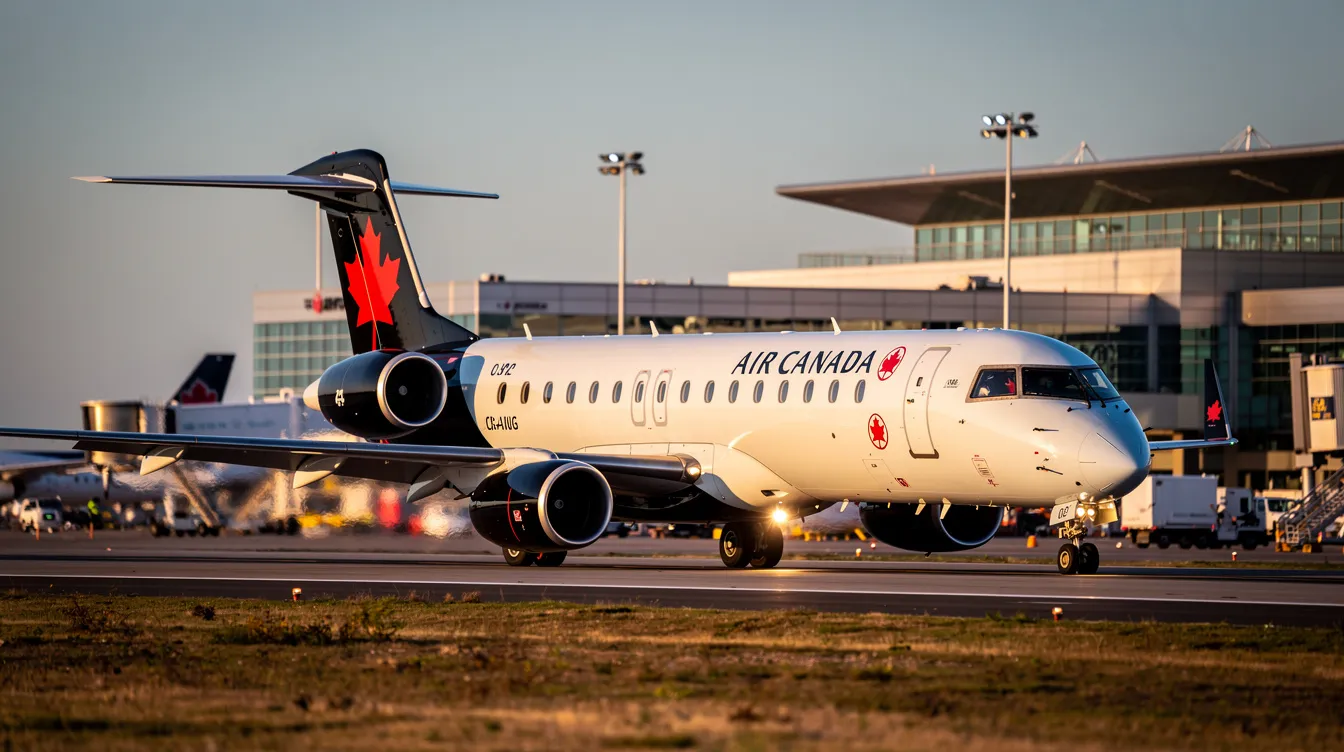
Air Canada RJ900: Air Canada Express Business and Economy Class Guide
Air Canada Express operates the Bombardier CRJ 900 regional jet on short-haul routes, offering a dual-class configuration with 12 business class and 64 economy seats. Business class passengers enjoy priority check-in, lounge access, and complimentary meals on longer flights, while economy class features a 2-2 seating layout with limited in-flight service. The CRJ 900 is designed for efficiency and comfort, making it suitable for regional travel across Canada and the U.S. However, travelers seeking more flexibility and privacy may consider private jet charters through platforms like Jettly as an alternative.
Read More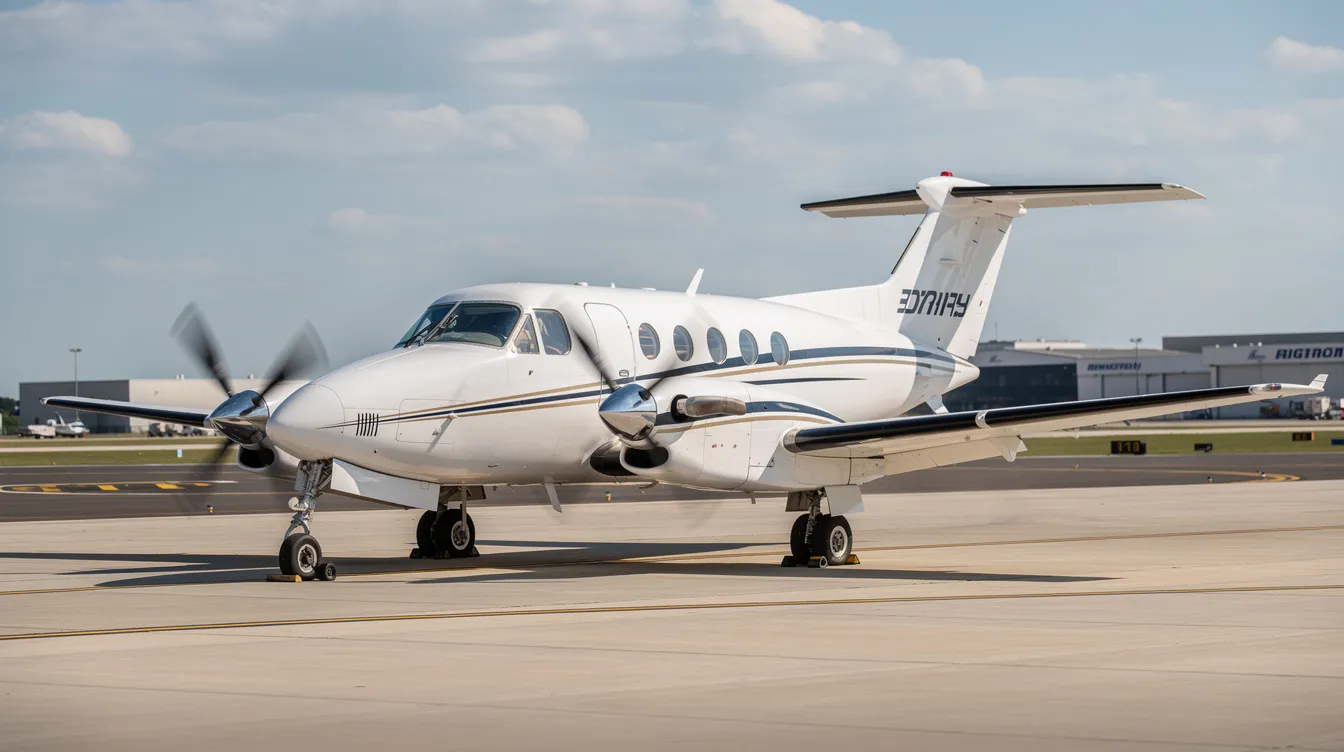
5
min read
Beechcraft King Air F90 Overview
The Beechcraft King Air F90, produced from 1979 to 1985, is a high-performance twin-engine turboprop that seats 6 to 8 passengers and offers a cruise speed of up to 265 knots with a range of 1,200 to 1,600 nautical miles. It is well-regarded for its efficiency, short-field capability, and comfort, making it suitable for corporate shuttles, regional charters, and medical evacuations. Although no longer in production, the F90 remains popular in the charter market due to its lower operating costs compared to light jets and its ability to access smaller airports. Jettly provides a digital platform for booking the King Air F90 and similar turboprops, offering transparent pricing and flexible charter options.
Read MoreJoin our community and receive the latest blog updates directly in your inbox.
MEMBERSHIPS AND ASSOCIATIONS



Disclaimer: Jettly operates as a charter broker, offering access to a global digital jet charter marketplace. Jettly is not a direct air carrier and does not own or operate aircraft. All advertised flights are conducted by third-party air carriers that are fully licensed and hold the appropriate Part 135 or Part 121 certifications issued by the Federal Aviation Administration (FAA) or equivalent regulatory authorities under U.S. or foreign law. Jettly complies fully with the U.S. Department of Transportation's Part 295 and Part 298 Charter Broker regulations. Jettly does not carry additional liability insurance. Passengers are covered by aircraft operator insurance. TICO: 50023770


