


Login
Get Instant Pricing On 23,000+ Aircraft


Fighter jets are advanced military aircraft designed for air superiority and ground attack missions, playing a crucial role in global security. They have evolved significantly from early biplanes to modern stealth fighters, integrating cutting-edge technology for enhanced performance. Civilian experiences in demilitarized trainers offer a glimpse into the thrilling world of high-performance aviation.
Jay Franco Serevilla
Jul 26, 2026
|
5
min read



View all
To find the cheapest flights to Italy in 2026, travelers should consider off-peak travel periods (January-March, November), flexible dates, and strategic routing through European hubs like Dublin or Lisbon. Utilizing tools like Google Flights and Skyscanner can help identify round-trip fares under $400 from major U.S. cities, while budget airlines offer affordable intra-European flights. For families or groups, private jet charters through platforms like Jettly can become cost-effective, especially when leveraging empty-leg flights, potentially rivaling business-class fares. Overall, balancing ticket prices with total trip costs, including convenience and flexibility, is key to optimizing travel expenses.
Jay Franco Serevilla
Apr 11, 2026
|
5
min read

View all
Intercontinental private jets, such as those offered by Jettly, facilitate nonstop travel on long-haul routes, significantly enhancing convenience for executives and families. Jettly's platform connects users to a global network of over 20,000 aircraft, allowing for easy comparison and booking without long-term commitments. These ultra-long-range jets typically cover distances of 5,500 to 8,000 nautical miles, with costs ranging from $5,000 to $50,000 per flight hour, making them a flexible alternative to ownership. With modern amenities designed for comfort and productivity, intercontinental private jets provide a superior travel experience compared to commercial options, saving time and ensuring privacy.
Jay Franco Serevilla
Apr 11, 2026
|
5
min read

View all
Private jet travel has become more accessible through digital platforms like Jettly, allowing users to book flights on demand without the need for ownership or long-term commitments. Travelers can quickly find and compare private jet options for various routes, benefiting from significant time savings and flexibility. The costs of private flights vary by aircraft type and distance, with strategies like empty-leg flights helping to optimize expenses. Jettly simplifies the booking process, making private aviation a viable option for business professionals, families, and anyone seeking a convenient travel experience.
Jay Franco Serevilla
Apr 10, 2026
|
5
min read

View all
This guide outlines the complexities of private jet ownership, emphasizing the importance of a thorough cost-benefit analysis based on flight hours. For those flying under 150 hours annually, chartering is generally more economical, while ownership may be justified for those flying over 300 hours per year. Key considerations include ongoing costs, regulatory compliance, and the choice between new and pre-owned aircraft, with professional advice recommended to navigate the purchasing process. Platforms like Jettly offer flexible charter options, allowing travelers to experience private aviation without the long-term commitment of ownership.
Jay Franco Serevilla
Apr 10, 2026
|
5
min read
View all
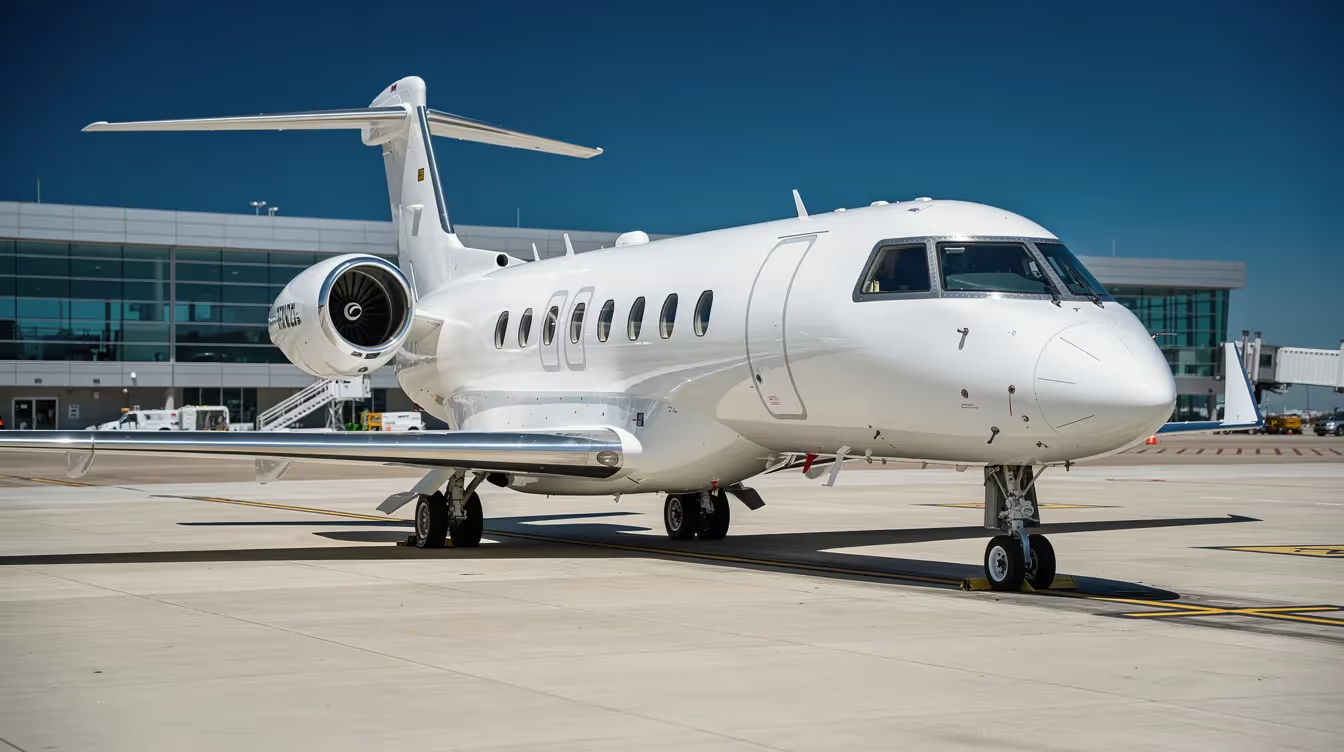
Purchasing a private jet involves significant financial and operational commitments, with total ownership costs often far exceeding the initial purchase price. Buyers should consider their flight patterns, as ownership typically makes sense for those flying over 200-250 hours annually; otherwise, chartering or membership options may be more cost-effective. The acquisition process can take 60-120 days for pre-owned jets and up to 24 months for new ones, requiring careful analysis of mission needs, operating costs, and potential depreciation. Engaging aviation professionals and utilizing platforms like Jettly can help prospective buyers assess their options and avoid common pitfalls.
Jay Franco Serevilla
Apr 10, 2026
|
5
min read

View all
The Cessna 182T Skylane is a four-seat, single-engine light aircraft known for its stability, reliability, and robust performance, making it suitable for training, family travel, and utility missions. It features a 230 hp Lycoming engine, a cruise speed of approximately 140-145 knots, and a range of about 915 nautical miles, with modern Garmin G1000 avionics enhancing its operational capabilities. The aircraft's fixed landing gear simplifies maintenance and improves durability, while its spacious cabin accommodates four passengers comfortably. For those considering private aviation, Jettly offers charter options that provide flexible access to similar performance aircraft without the long-term commitment of ownership.
Jay Franco Serevilla
Apr 10, 2026
|
5
min read
Explore our latest articles and updates.

5
min read
Best Time to Purchase Plane Ticket: Data-Backed Timing Tips for Cheap Flights
Knowing the best time to purchase plane tickets can lead to significant savings on air travel. This guide provides data-backed insights on when to book flights for both domestic and international travel, highlighting optimal booking windows and strategies for securing the best fares.
Read More
5
min read
What Months Are the Cheapest to Fly? (And How to Actually Book at the Best Price)
Finding the cheapest months to fly can save travelers significant money on airfare. Generally, January and September are the most affordable months for domestic and many international flights, while June and July tend to be the most expensive. This guide provides insights into seasonal pricing patterns and practical tips for booking flights at the best prices.
Read MoreJoin our community and receive the latest blog updates directly in your inbox.
MEMBERSHIPS AND ASSOCIATIONS



Disclaimer: Jettly operates as a charter broker, offering access to a global digital jet charter marketplace. Jettly is not a direct air carrier and does not own or operate aircraft. All advertised flights are conducted by third-party air carriers that are fully licensed and hold the appropriate Part 135 or Part 121 certifications issued by the Federal Aviation Administration (FAA) or equivalent regulatory authorities under U.S. or foreign law. Jettly complies fully with the U.S. Department of Transportation's Part 295 and Part 298 Charter Broker regulations. Jettly does not carry additional liability insurance. Passengers are covered by aircraft operator insurance. TICO: 50023770


