


Login
Get Instant Pricing On 23,000+ Aircraft


The Douglas DC-9 revolutionized regional air travel with its efficient design and quick turnaround capabilities, serving as a vital link for short-haul routes. Although most DC-9s are retired, their legacy continues in modern private jet charters, which offer enhanced comfort and flexibility for travelers. Jettly connects clients with a diverse fleet of aircraft that embody the DC-9's mission of fast, point-to-point flying.
Jeff Ryan Serevilla
Sep 25, 2026
|
5
min read



View all
Choosing between private jet travel and business class involves weighing factors like cost, convenience, and privacy. Private jets offer tailored experiences and scheduling flexibility, while business class provides a premium option on commercial flights at a lower price. This guide helps you navigate the differences to determine the best choice for your next trip.
Jay Franco Serevilla
Jul 15, 2026
|
5
min read

View all
Flying private with Jettly transforms travel by eliminating crowded airports and long waits, allowing passengers to check in just 15-30 minutes before departure. This comprehensive guide covers everything from choosing the right aircraft to understanding pricing and packing for your journey, making private jet travel accessible and convenient for both business and leisure trips.
Jay Franco Serevilla
Jul 15, 2026
|
5
min read

View all
Flying in a private jet with Jettly offers a seamless and efficient travel experience, providing access to thousands of aircraft worldwide. This guide covers everything from costs and booking processes to what travelers can expect on the day of their flight, making private air travel more accessible than ever. With features like instant pricing and flexible scheduling, Jettly caters to both first-time flyers and seasoned travelers.
Jay Franco Serevilla
Jul 15, 2026
|
5
min read

View all
Private jet ferry flights, or repositioning flights, are essential for moving aircraft without passengers. They offer savvy travelers significant savings through empty leg opportunities, often reducing costs by 30-75%. Jettly's marketplace simplifies access to these discounted flights, providing transparent pricing and flexible options for private jet travel.
Jay Franco Serevilla
Jul 15, 2026
|
5
min read

View all
Ultralight flights offer an accessible entry into aviation with lightweight, single-seat aircraft designed for recreational flying. This guide explores the differences between ultralight flying and private jet travel, highlighting their unique benefits and purposes. Whether you're seeking local adventure or efficient long-range travel, understanding these options can enhance your flying experience.
Jay Franco Serevilla
Jul 15, 2026
|
5
min read

View all
Choosing the safest small plane is crucial for pilots and travelers alike. The Diamond DA40 and Cessna 172S are top contenders, boasting low fatal accident rates and advanced safety features. This guide explores their safety data, design characteristics, and when to consider transitioning to private jets for enhanced safety and reliability.
Jay Franco Serevilla
Jul 15, 2026
|
5
min read
Explore our latest articles and updates.

5
min read
Compare Ways to Fly Private (Jettly Edition), Charter vs Monthly Membership vs Jet Card vs Cloud Fraction
The Jettly guide outlines four primary models for accessing private aviation: on-demand charter, monthly membership, jet card, and Cloud Fraction, each varying in cost, booking speed, and flexibility. On-demand charter is ideal for occasional flyers with varying routes, while monthly memberships suit those seeking low commitment and easy repeat bookings. Jet cards provide predictable pricing for frequent travelers, and Cloud Fraction offers fractional-style access without ownership. Ultimately, the best choice depends on individual travel patterns, budget, and the need for availability guarantees, emphasizing that understanding the terms behind pricing is crucial for making an informed decision.
Read More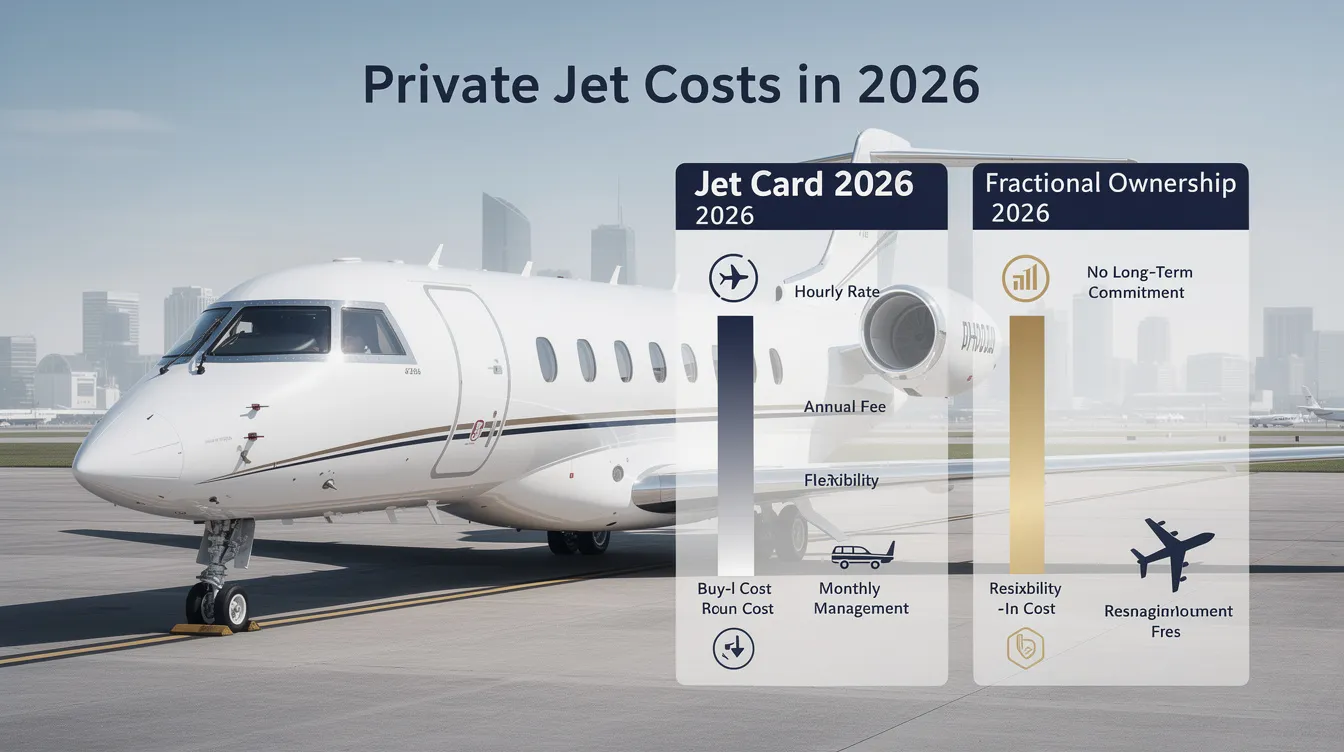
5
min read
Jet Card vs Fractional Share Costs in 2026 (Upfront Funds, Monthly Fees, Hourly Rates, and Terms)
In 2026, private jet access options include jet cards and fractional shares, each with distinct cost structures. Jet cards offer prepaid flight access without ownership, typically involving lower upfront costs and no monthly fees, while fractional shares require significant upfront capital, monthly management fees, and hourly operating charges tied to a multi-year contract. Cost comparisons should consider four key buckets: upfront funds, recurring fees, hourly charges, and contract terms, as well as factors like peak-day surcharges and minimum billing rules. Ultimately, the choice between these options depends on individual flying frequency, budget, and desired flexibility, with Jettly providing a platform for transparent comparisons and bookings.
Read MoreJoin our community and receive the latest blog updates directly in your inbox.
MEMBERSHIPS AND ASSOCIATIONS



Disclaimer: Jettly operates as a charter broker, offering access to a global digital jet charter marketplace. Jettly is not a direct air carrier and does not own or operate aircraft. All advertised flights are conducted by third-party air carriers that are fully licensed and hold the appropriate Part 135 or Part 121 certifications issued by the Federal Aviation Administration (FAA) or equivalent regulatory authorities under U.S. or foreign law. Jettly complies fully with the U.S. Department of Transportation's Part 295 and Part 298 Charter Broker regulations. Jettly does not carry additional liability insurance. Passengers are covered by aircraft operator insurance. TICO: 50023770


