



Login
Get Instant Pricing On 23,000+ Aircraft

>

A private jet is an aircraft used outside the fixed schedules and ticketing systems of commercial airlines. A private jet is a small, specialized aircraft designed for exclusive use by individuals or corporations, offering luxury, privacy, and maximum flexibility. It can be owned privately, operated through a charter company, or booked on demand through a platform like Jettly. In practical terms, private jet travel is built around the traveler’s schedule rather than the airline’s timetable. Jettly also offers access to a wide range of aircraft, instant quotes, and on-demand booking without requiring a membership, while still offering private jet membership options and jet card programs for frequent flyers. Private jets represent a unique form of air transportation, providing an alternative to commercial air travel with greater privacy, scheduling flexibility, and luxury.
For many travelers, the appeal is simple: less airport friction, more flexibility, and access to airports that commercial airlines do not serve. In the U.S., business aviation reaches more than 5,000 public-use airports, while fewer than 500 have commercial airline service, which helps explain why private aviation can significantly reduce ground transfer time on many trips. Private jets are categorized into seven basic types: light jets, super-light jets, mid-size jets, super-mid-size jets, heavy jets, ultra-long-range jets, and executive airliners.
This guide explains what a private jet is, how private jet charter works, what the main aircraft categories look like, and what travelers should expect on pricing, operations, and trip planning. In summary, private jet travel offers all the benefits of efficiency, comfort, and a personalized experience.
The term “private jet” usually refers to a turbine-powered aircraft used for non-scheduled travel. That can include charter flights, corporate aircraft, jet card usage, fractional programs, and full ownership. Unlike commercial airline flights, private flights are arranged around a specific mission: who is flying, where they need to go, how many passengers are traveling, how much baggage is involved, and how quickly the trip needs to happen.
Private jet travel is different from commercial air travel in four major ways. Private jet work offers efficiency, flexibility, and luxury for business travelers, providing personalized flight options and convenient scheduling tailored to clients’ needs.
First, it is on demand. Travelers choose departure times rather than selecting from a fixed airline schedule. Second, it offers more airport access, especially through smaller regional airports and FBOs, or fixed-base operators. Third, it reduces time spent at the airport, because the boarding process is much shorter than a typical airline experience. Fourth, it allows for a more tailored cabin and service setup, from catering and baggage flexibility to passenger privacy. Private jets are generally designed for faster air travel and more personal comfort than commercial aircraft.
Commercial flights are built for scale. They spread operating costs across many passengers, which is why they are usually more cost-effective on a per-seat basis. Commercial jets operate on fixed schedules, serve numerous hubs, and follow strict security procedures, while private jets offer more flexibility in departure times and airport choices. That cost structure works well when airline schedules, large hub airports, and standardized service fit the trip.
Private aviation works differently. The traveler is effectively securing the aircraft, crew, and itinerary for a specific mission. That makes private travel more expensive per passenger in most cases, but it also changes the value equation.
A commercial itinerary may require early arrival, check-in, security queues, a connection, baggage waiting, and then a long ground transfer from a major airport. A private flight can often depart closer to the traveler’s preferred time, use a smaller airport nearer to the final destination, and minimize idle time before departure. On time-sensitive trips, those savings matter. Private jets fly faster, often cruising at speeds up to 600–700 mph compared to the 500–570 mph average for commercial airliners, and typically provide a more luxurious and comfortable travel experience than commercial airlines.
The cabin experience is different too. Commercial airlines standardize their product by fare class, with business class offering premium amenities and comfort, but still less customization and privacy than private jet services. Private flights are more flexible. Depending on the aircraft category, passengers may have club seating, quiet cabins for meetings, sleeping arrangements on longer sectors, and customized catering.
It is not always true that a private jet is dramatically faster in cruise than every commercial aircraft. Large airliners can be very efficient at high speed. The real advantage of private aviation is usually total trip time, not just airborne speed. Flight time for private jets includes both airborne and positioning hours, which impacts costs and scheduling flexibility.
Private aircraft often use smaller airports closer to the true origin or destination, which is where an airport locator tool for private jet charters becomes especially useful. Business aviation also avoids much of the time lost in commercial terminals. Private jets offer faster cruise speeds and shorter flight durations compared to commercial flights, further reducing overall travel time. Many trips that involve connections or long transfers by airline can become nonstop private missions. That is one reason business aviation remains valuable for executives and travelers reaching secondary cities or multiple stops in a day.
For example, a traveler going from a business district near New York to a meeting near Miami may value the ability to depart from a more convenient airport and land closer to the final destination, rather than building the day around airline hub schedules. With private aviation, arranging the next flight can be done with minimal notice, offering unmatched flexibility.
Passengers typically save 1–5 hours per flight by using private jets, avoiding security lines and layovers.
Private jets are typically grouped by four main factors: passenger capacity, range, cabin size, and operating cost. Aircraft size and cabin space are key factors in categorizing private jets and determining passenger comfort, especially for longer flights or high-end travel. Jettly’s estimator also organizes choices by aircraft class, including turboprops, light jets, midsize jets, super midsize jets, and heavy jets.
In general, aircraft selection depends on mission profile. Choosing the right private jet involves considering aircraft size, amenities, and operational costs to ensure the best fit for your specific travel needs and budget.
A short regional hop does not need the same aircraft as a coast-to-coast business trip. A transatlantic or intercontinental mission requires very different range, baggage, cabin, and crew considerations.
Private jets are available in a wide range of sizes and configurations, from agile light jets designed for short city hops to ultra-long-range heavy jets capable of nonstop intercontinental flights, and choosing among them often starts with understanding how many passengers different private jet types can carry.
Very light jets, also known as entry level jets, are typically the entry point into jet charter, making them an accessible and cost-effective option for those new to private aviation. These aircraft usually seat about 4 to 6 passengers and are best suited for short regional trips. A super light jet offers greater range and passenger capacity than a standard light jet, providing more comfort and flexibility for longer private flights.
Very light jets (VLJs) are the smallest category of private jets, designed for short flights and typically accommodating up to four passengers.
Their main advantage is efficiency. They tend to have lower charter rates than larger jets and can be well matched to short business hops, quick leisure trips, or point-to-point flights where airport access matters more than cabin volume. Jettly notes that very light jets commonly fall around $2,000 to $3,000 per hour, making them one of the more accessible private jet categories.
These aircraft can also operate from shorter runways than larger jets, which may open up airport options that commercial service cannot use.
Light jets usually seat about 5 to 8 passengers and serve a large share of domestic charter missions. They offer more range than very light jets, more baggage capacity, and a more comfortable cabin for trips that stretch beyond a short regional sector.
Jettly’s published ranges put many light jet charter costs around $2,500 to $4,000 per hour. That makes them a common choice for day trips, short executive travel, and small-group family travel.
Many light jets include an enclosed or semi-private lavatory, but they generally do not offer the cabin size or cabin-service options of larger categories.
Mid size jets are often where comfort and productivity begin to noticeably improve. They usually support longer domestic missions, offer more stand-up or near-stand-up space depending on model, and carry more baggage than light jets.
Jettly’s cost guidance places midsize aircraft around $4,000 to $6,000 per hour, though exact pricing depends on aircraft type, route, airport fees, and repositioning needs.
For executives flying across the U.S. or travelers who want more cabin room without stepping into heavy-jet pricing, midsize aircraft can be a strong fit.
A super mid size jet is designed to stretch farther and carry more, while still remaining more cost-efficient than many heavy jets on the right routes. They are popular for transcontinental nonstop missions and longer business itineraries.
Super-mid-size jets combine the features of mid-size jets with greater range and capacity, accommodating 10-11 passengers over a range of 3,420 nautical miles.
Compared with older midsize aircraft, newer super midsize jets often bring stronger connectivity, quieter cabins, and better fuel performance. This category is widely used when travelers want a meaningful jump in range and cabin experience without moving all the way to a heavy jet. NBAA notes that business aircraft range from smaller propeller-driven models to jets capable of nonstop international travel, which places super midsize jets in a useful middle-to-upper tier for long missions.
Large private jets, also known as heavy jets, are built for larger groups, longer sectors, and more complete onboard service. They typically offer stand-up cabins, full galleys, greater baggage capacity, and the option for flight attendants depending on mission and operator.
Large and ultra-long-range jets cost between $8,000 and $14,000 per hour within the US.
These aircraft are commonly used for cross-country group travel, premium long-range leisure trips, and international business missions. Jettly’s public pricing indicates that larger charter aircraft can range well above midsize categories, with the broader platform range extending up to $17,800 per hour depending on aircraft type and mission complexity.
Ultra long range jets are designed for true intercontinental travel. They can cover roughly 6,000 to 8,000+ nautical miles nonstop, depending on aircraft model, payload, and weather conditions. NBAA describes the worldwide fleet as including ultra-long-range business jets capable of carrying 20 or more passengers nonstop between distant international business centers.
These aircraft often include multiple cabin zones, lie-flat sleeping arrangements, larger galleys, and strong connectivity. For travelers who need to avoid fuel stops and keep a long-haul schedule intact, this is the category that makes the mission possible.
Executive jets, also known as bizjets, such as BBJ and ACJ variants, take commercial airframes and convert them into VIP layouts. These executive airliners are commercial-sized aircraft converted into luxury private jets, often featuring extravagant amenities. These aircraft are in a different category from standard business jets.
VIP airliners are selected for very large groups or highly customized missions that may require conference space, private bedrooms, high-capacity baggage, or long-duration onboard living space. The tradeoff is cost. Both acquisition and operating expenses are substantially higher than a typical business jet. Ultra-luxury VIP airliners can cost anywhere from $16,000 to $23,000 per billable flight hour.

The simplest way to understand how private jet travel works is to break it into three common access models.
The first is on-demand charter. This is the most flexible option. The traveler requests a specific trip and receives aircraft options based on route, passenger count, and preferences. Charter providers own, manage, or rent aircraft to offer a variety of private jet options, making private air travel accessible and tailored to individual needs.
The second is jet card access. Jet cards usually involve prepaid hours or funds in exchange for simpler pricing and, in some cases, availability benefits, a structure explored in more depth in our guide on what a jet card is and how it works.
The third is ownership or fractional access, including fractional jet ownership, which fits travelers with very high annual usage and may involve comparing the best fractional jet ownership companies.
Jettly’s platform is built around the on-demand model while also offering memberships and jet cards for repeat users, positioning it as a flexible alternative to fractional providers like NetJets. It also provides a cost estimator and instant quote workflow to simplify aircraft selection and budgeting.
A typical charter process looks like this:
Route and passenger details are submitted.
Suitable aircraft options are sourced.
Pricing is presented based on aircraft class, trip time, airport factors, and other operating costs.
Once booked, the operator handles flight planning, crew assignment, and airport coordination. Charter operators manage operational and maintenance tasks for multiple clients, ensuring smooth and reliable service.
Passengers arrive at the FBO shortly before departure rather than following a standard airline check-in window.
Charter jets provide flexibility, convenience, and a premium experience compared to commercial airlines, with access to a wider range of airports and personalized amenities.
Behind the convenience, private aviation is a regulated operating environment. In the U.S., many on-demand charter flights are conducted under FAA Part 135, which governs certification requirements and operating rules for these air carriers. The aviation industry enforces strict safety and certification standards for both commercial and private aviation, ensuring a high level of regulatory oversight across the sector. FAA materials make clear that Part 135 certification is a formal regulatory process, not just a marketing label.
That matters because each trip involves much more than matching a passenger to an airplane. Operators must manage flight planning, performance calculations, weight and balance, fuel, weather, crew duty limits, and airport logistics. Private pilots can land at smaller, remote airports not serviced by commercial airlines, providing greater flexibility and accessibility.
Maintenance is also tightly structured. The FAA’s Part 135 framework and EASA’s continuing airworthiness rules require aircraft to remain compliant with inspection and maintenance standards. In Europe, EASA’s continuing airworthiness framework governs how aircraft remain fit for operation over time. Private jet operators handle all aspects of aircraft operation and maintenance, ensuring safety and compliance with regulations.
For travelers, the practical takeaway is straightforward: operator quality matters. Aircraft condition, pilot training, maintenance discipline, and regulatory oversight are central to safety.
When considering private jet ownership or even frequent private jet charter, insurance and financing are essential factors to plan for. Insurance for a private jet typically covers hull damage, liability, crew, and passenger risks, with annual premiums generally ranging from 2% to 5% of the aircraft’s value. The exact rate depends on variables such as the aircraft’s age, model, usage patterns, and the operator’s safety record. For example, insuring a newer jet aircraft used primarily for business flights may cost less than insuring an older model with higher flight hours or more specialized missions.
Financing a private jet is also a major consideration, as the upfront costs can be significant. Buyers can choose from traditional loans, leasing arrangements, or fractional ownership programs. Loans for private aircraft often come with repayment terms of 10 to 20 years, allowing owners to spread out the cost over time. Leasing is another option, providing flexibility without the long-term commitment of full ownership. For those not ready for full ownership, fractional programs offer a share in a jet, granting access to the aircraft for a set number of hours per year.
Some private jet charter companies and jet charter providers even offer financing options for charter flights, enabling clients to pay for their trips in installments rather than upfront. Guides on affordable private jet charter can also help travelers understand pricing drivers and strategies to reduce overall costs. This can make private jet travel more accessible for businesses or individuals who want to manage cash flow while enjoying the benefits of private aviation.
Owning a private jet comes with a host of responsibilities beyond the initial purchase. Private jet management involves everything from routine maintenance and regulatory compliance to crew scheduling and operational logistics. Many private jet owners choose to partner with professional management companies or rely on private charter aircraft providers that handle these complex tasks, ensuring the aircraft is always ready for safe and efficient operation.
A management company can take care of scheduling, dispatch, maintenance, repairs, and even crew recruitment and training. This allows owners to focus on their travel needs while experts handle the day-to-day details of private jet operations. For those who prefer a hands-on approach, self-management is possible but requires significant time, expertise, and resources.
Ownership options in private aviation are diverse. Full ownership gives you complete control over the aircraft, including scheduling, customization, and usage, but it also comes with higher upfront and ongoing costs. Fractional ownership, on the other hand, allows you to purchase a share of a private jet, granting access to the aircraft for a set number of hours each year. This model reduces costs and responsibilities but may come with restrictions on availability and scheduling; understanding the advantages and disadvantages of fractional private jet ownership can help determine if it is the right fit and how it compares with major providers like NetJets, the industry leader in private aviation. Jet card programs offer another alternative, providing prepaid access to a fleet of jets without the complexities of ownership.
Choosing the right ownership or management structure depends on your travel frequency, budget, and desire for control versus convenience.
Private jet charter brokers are the matchmakers of the private aviation world, connecting travelers with the right aircraft and operators for their specific needs. Working on a commission-based model, brokers leverage their industry expertise and extensive networks to source the best available options for each charter flight.
A broker’s role goes beyond simply booking a jet. They assess the client’s requirements—such as preferred aircraft type (from very light jets and light jets to ultra long range jets), passenger count, route, and budget—and then present tailored options. Whether you need a nimble very light jet for a quick business trip or an ultra long range jet for transcontinental flights, a broker can identify the most suitable aircraft and operator.
In addition to arranging the flight itself, many brokers offer value-added services like catering and ground transportation, ensuring a seamless travel experience from door to door. Some specialize in particular types of missions, such as international charters or specialized routes, while others focus on specific aircraft categories.
By working with a reputable jet charter broker, travelers gain access to a wider range of aircraft, competitive pricing, and the peace of mind that comes from expert oversight of every detail of their charter flight.
One of the standout advantages of private jet travel is the ability to tailor the aircraft to your exact needs and preferences. Private jets can be customized in nearly every aspect, from the interior layout and materials to advanced onboard technology and entertainment systems.
Owners and charter clients can select bespoke cabin designs, including luxurious seating, custom lighting, and unique color schemes. Some private jets are equipped with state-of-the-art avionics and navigation systems, enhancing safety and operational efficiency. High-speed internet, satellite communications, and advanced entertainment systems are increasingly standard, and dedicated services like Jettly Eats in-flight catering for private jets allow passengers to tailor onboard dining while staying connected and entertained throughout the flight.
For specialized missions, private jets can be outfitted with medical equipment, cargo configurations, or enhanced security features. Manufacturers are also embracing sustainable technologies, such as electric or hybrid propulsion systems, to reduce environmental impact. For example, the HondaJet’s innovative over-the-wing engine design not only improves fuel efficiency but also reduces cabin noise and drag.
Whether for business, leisure, or specialized travel, private jet customization ensures that every flight meets the unique requirements of its passengers.
One of the most common questions is cost. There is no single answer because private jet pricing depends on aircraft type, trip distance, airport pair, time of year, repositioning, overnight crew needs, and taxes. Private jet travel is significantly more expensive than commercial air travel and is typically charged by the flight hour, with rates ranging from $1,200 to over $10,000 per hour.
Still, the broad hourly bands are useful.
Jettly’s published guidance lists approximate ranges such as:
Very light jets: $2,000–$3,000 per hour (the most economical private jets, such as turboprops and very light jets, cost around $2,000 to $4,000 per flight hour)
Light jets: $2,500–$4,000 per hour
Midsize jets: $4,000–$6,000 per hour
The cost to rent a private jet varies from $2,000 to $14,000 per billable flight hour. Its broader platform materials note total rental ranges that can extend from about $1,800 to $17,800 per hour depending on aircraft type.
Large and ultra-long-range jets cost between $8,000 and $14,000 per hour within the US, and ultra-luxury VIP airliners can cost anywhere from $16,000 to $23,000 per billable flight hour.
But the hourly rate is only part of the picture. Final trip pricing can also include:
Aircraft repositioning
Landing fees (typically $150–$500, varying based on the aircraft's size and weight)
Handling and FBO charges
Crew overnight and per diem fees ($200–$400 per crew member per night)
Fuel surcharges
Segment taxes or other regional fees, including Federal Excise Tax (7.5% for US domestic legs) and international fees ($500–$5,000+ depending on the route)
Deicing or special operational costs in some conditions
Wi-Fi fees ($3.00–$8.50 per megabyte depending on the region)
For that reason, a real quote is more useful than a generic hourly estimate, especially on multi-leg or international trips. Jettly’s private jet charter cost estimator is designed for exactly that purpose.
Onboard service can vary, but a flight attendant is typically available on larger or more luxurious private jets, enhancing comfort and service during extended or high-end flights.
A major reason travelers choose private aviation is airport access. NBAA states that business aviation reaches more than 5,000 public-use airports in the U.S., while commercial airline service reaches fewer than 500. Private jets can access smaller airports and remote destinations not served by commercial airlines, making it possible to reach places like Caribbean islands or European vineyards with ease.
That gap changes the travel equation. Instead of routing through a hub and then continuing by car, travelers can often land much closer to the final destination. FBOs also streamline arrivals and departures with private lounges, fast curb-to-aircraft transfers, and a much simpler boarding process than a crowded commercial terminal. Private terminals facilitate rapid check-in for private jet travel, allowing for direct tarmac access.
Passengers on private jets typically only need to arrive at the airport 20 minutes before departure.
This is especially useful for secondary cities, resort areas, manufacturing sites, and business parks that are poorly served by scheduled airline networks. Whether you are flying into a major hub like New Delhi using private jet charter services in Delhi or into a smaller field, private air travel comes with higher expenses, but offers advantages such as speed, flexibility, and access to remote destinations.

Many private jets are designed to maximize both productivity and relaxation, transforming travel time into valuable work or leisure hours. Onboard Wi-Fi and satellite communications are standard on many private jets, enabling passengers to conduct business, join video conferences, or stay in touch with colleagues and family while in the air.
For entertainment, private jets often feature high-definition screens, surround sound systems, and even gaming consoles, providing a premium in-flight experience. Spacious cabins can be configured with conference tables, presentation facilities, and comfortable seating arrangements, making it easy to hold meetings or collaborate with team members during flight, even when you’ve simply bought a seat on a private jet via shared or semi-private options.
Aircraft like the Gulfstream G650ER exemplify this blend of productivity and comfort, offering a large cabin with seating for up to 19 passengers, a dedicated conference area, and advanced connectivity options. Whether you need to finalize a business deal, relax with a movie, or enjoy a family game night, many private jets are equipped to make the most of your time in the sky.
This unique combination of productivity, entertainment, and comfort is one of the key reasons travelers choose private jet travel over commercial flying, especially when every hour counts.
International private flights involve more planning than domestic charters. International private jet operations often involve landing at an international airport, which requires permits, regulatory compliance, and immigration procedures. Depending on the route, operators may need overflight permits, landing permissions, customs coordination, and careful crew-duty management.
Ultra long range aircraft reduce the need for fuel stops, but they do not remove the regulatory side of international flying. International flights require understanding customs and immigration procedures, documentation requirements, and the streamlined processes that private aviation offers for international journeys. Trip support teams still have to coordinate ports of entry, handling, and local operational requirements. International fees can cost anywhere from $500 to $5,000 or more, depending on the route. That is why experienced operator support is such a key part of long-haul charter execution.
Private aviation does not mean unregulated aviation. Legitimate charter operations must comply with national aviation rules, crew training requirements, and maintenance obligations. In the U.S., that includes FAA certification and operating requirements for charter carriers. In Europe, it includes EASA airworthiness and continuing maintenance requirements.
Private terminals may offer faster screening than large airline hubs, but that does not remove safety protocols. It simply changes the workflow. For travelers evaluating a charter option, the most important signals are the operator’s certification, maintenance quality, crew standards, and oversight structure.
Private jet travel is not only about comfort. For business users, it is often about time management and access. Private jets are known for their personalized service, offering tailored amenities, concierge support, and customized experiences that enhance comfort, convenience, and exclusivity for each passenger.
Executives use private flights to reach smaller markets, build same-day multi-stop itineraries, protect confidential conversations, and reduce lost time in airports. Private jets also offer tailored in-flight catering customized to dietary needs and preferences, making it easier for business travelers to conduct business efficiently while in the air. Leisure travelers use them for direct family travel, ski and resort access, event travel, medical or urgent trips, and more flexible holiday scheduling.
A family flying to a resort area with limited airline service has very different needs from a leadership team visiting three facilities in one day. Private jet passengers can use electronics freely during the flight, and many jets provide Wi-Fi for business use, adding to the convenience for both business and leisure travelers. The right aircraft category depends on that mission.
Private jets generally provide more spacious seating and greater legroom than commercial flights, significantly enhancing passenger comfort.
Environmental impact is one of the most important realities in private aviation. On a per-passenger basis, emissions are often higher on private flights than on commercial flights, especially when cabin occupancy is low. That should be stated clearly. At the same time, the industry is pushing toward better operational efficiency, newer aircraft, and wider use of sustainable aviation fuel.
IATA states that SAF can reduce lifecycle CO2 emissions by up to 80% compared with conventional jet fuel, depending on feedstock and production pathway. It also notes that supply remains limited. Reuters reported that IATA expected SAF production to double in 2025 to around 2 million tonnes, but that would still represent only a small share of total aviation fuel demand.
For travelers and platforms alike, the practical sustainability tools today include newer aircraft, smarter routing, higher cabin utilization, and carbon-offset or SAF-related programs where available.
The best aircraft is not always the largest aircraft. Matching the mission correctly is what creates value.
Short regional hops often favor very light jets or light jets because they keep costs lower and maintain access to smaller airports. Turboprop aircraft are also a traditional and efficient alternative for short-range, cost-effective transportation, offering affordability and operational versatility, especially for regional travel and airports with short runways.
Cross-country domestic trips often fit midsize or super midsize jets because they balance range, baggage, and cabin comfort well.
Long-haul international travel usually requires heavy jets or ultra long range aircraft to minimize stops and preserve schedule efficiency.
That is why aircraft sourcing matters. The mission drives the jet, not the other way around. The most economical private jets, such as turboprops and very light jets, cost around $2,000 to $4,000 per flight hour.
Private aviation makes the most sense when time, flexibility, airport access, privacy, or schedule control matters more than lowest-cost seat pricing.
Commercial aviation makes the most sense when airline schedules work well, hub access is convenient, and keeping per-passenger cost low is the priority. Commercial airliners are designed for efficiency, large capacity, and cost-effectiveness, but they generally offer less comfort, slower boarding, and less flexible schedules compared to private jets, which focus on speed, accessibility, and personalized service.
Many travelers use both. A commercial network may work well for some routine routes, while private charter becomes the better option for urgent travel, complex itineraries, direct regional access, or high-value group trips.
So, what is a private jet in practical terms? It is not just a smaller airplane or a premium cabin. It is a different travel model built around direct access, flexible timing, and mission-based aircraft selection. The value comes from matching the trip to the right aircraft, operator, and booking structure.
From very light jets for short regional hops to ultra long range aircraft for intercontinental travel, private aviation covers a wide spectrum of use cases. Costs vary widely, safety depends on proper operator standards, and the real advantage usually comes from total time saved and airport access rather than cabin image alone. For travelers comparing charter, jet cards, and commercial alternatives, the smartest choice is the one that fits the mission.
Learn more about Jettly’s charter options at https://www.jettly.com.
Ready to experience private travel on your terms? Explore flight options or request a quote at https://www.jettly.com.
Share this post:
Jay Franco Serevilla
Mar 10, 2026
|
5
min read
Discover tips and trends in the industry.

5
min read
Private Jet NYC to Vegas: Charter Guide, Costs & Best Jets
Chartering a private jet from NYC to Vegas offers unmatched convenience and comfort, with flight times of 5 to 6 hours. Prices range from $28,000 to $70,000, depending on the aircraft type and travel dates. Jettly provides a marketplace with over 20,000 aircraft, ensuring travelers can find the perfect jet for their needs.
Read More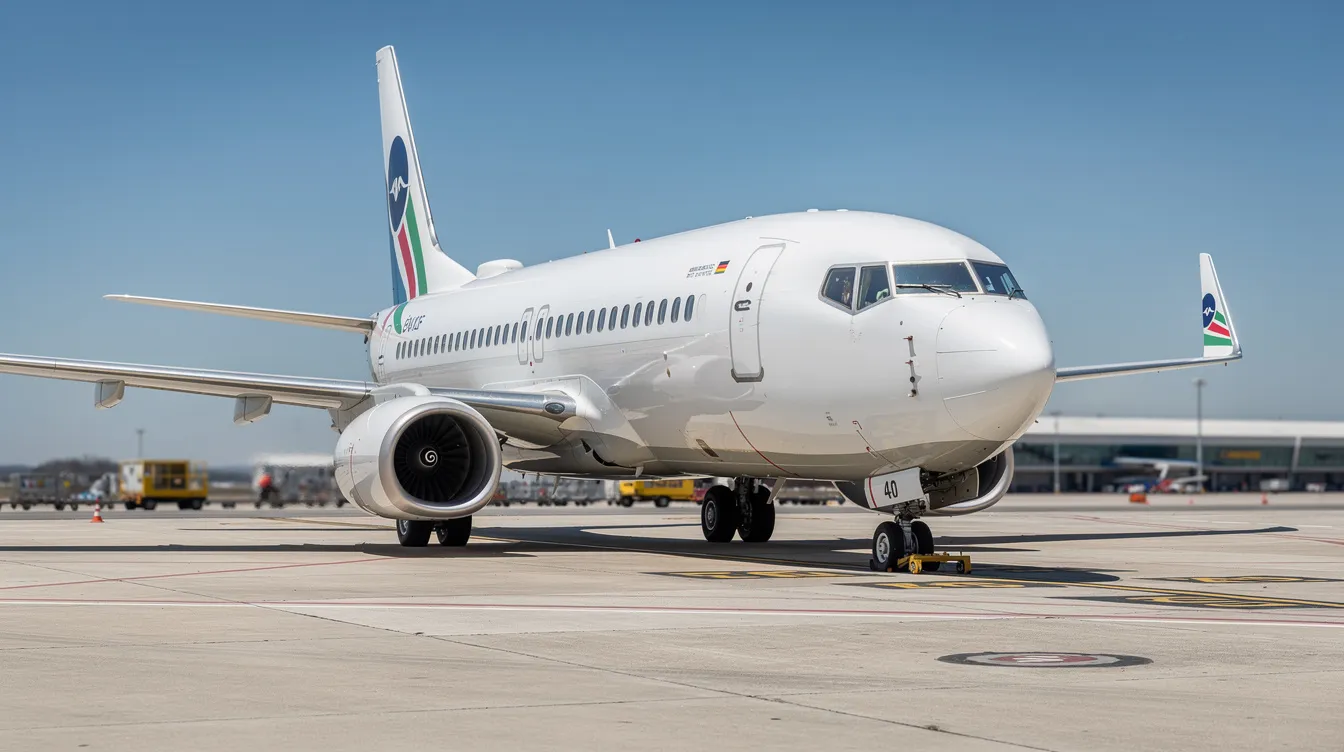
5
min read
Boeing 737-700 Safety: What Passengers and Private Charter Flyers Should Know
The Boeing 737-700 boasts a strong safety record since its introduction in 1998, distinct from the 737 MAX series. Governed by the FAA and other global regulators, its safety is maintained through rigorous inspections and operator compliance. Passengers can trust the 737-700 for both commercial and private charters, as it lacks the controversial MCAS system found in the MAX models.
Read MoreStay updated with our latest insights and tips to elevate your journey with us.
MEMBERSHIPS AND ASSOCIATIONS



Disclaimer: Jettly operates as a charter broker, offering access to a global digital jet charter marketplace. Jettly is not a direct air carrier and does not own or operate aircraft. All advertised flights are conducted by third-party air carriers that are fully licensed and hold the appropriate Part 135 or Part 121 certifications issued by the Federal Aviation Administration (FAA) or equivalent regulatory authorities under U.S. or foreign law. Jettly complies fully with the U.S. Department of Transportation's Part 295 and Part 298 Charter Broker regulations. Jettly does not carry additional liability insurance. Passengers are covered by aircraft operator insurance. TICO: 50023770


