


Login
Get Instant Pricing On 23,000+ Aircraft

>
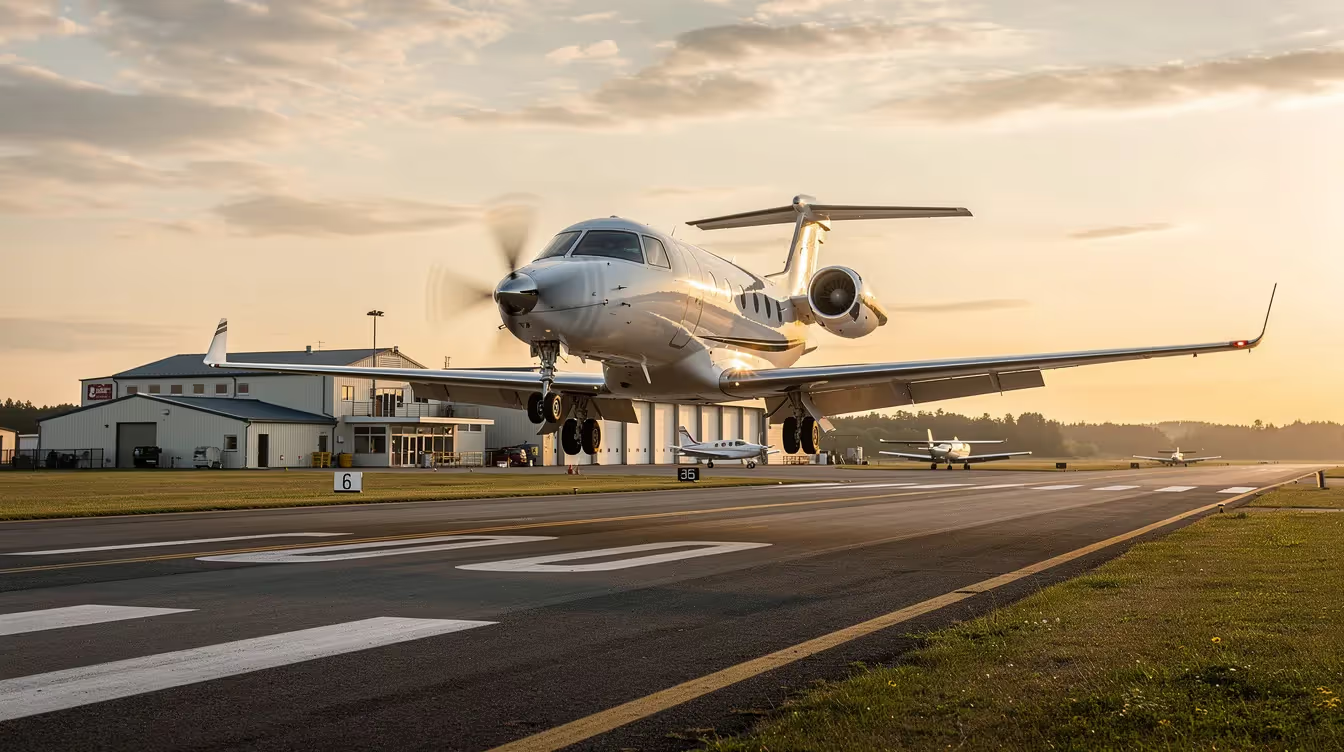
The weight of a private jet is a fundamental factor influencing its performance, operating costs, and passenger comfort. From very light jets designed for quick regional hops to heavy jets capable of nonstop intercontinental flights, understanding how weight shapes these aircraft helps travelers make informed choices. This guide explores the typical weight ranges of private jets, explains key weight-related terms, and examines how weight affects everything from runway requirements to onboard amenities. Whether planning a short business trip or a long-haul journey, grasping the role of aircraft weight is essential for selecting the ideal private jet that balances efficiency, convenience, and comfort.
Private jets vary widely in weight, from very light jets weighing approximately 6,000 pounds to heavy jets exceeding 100,000 pounds, with maximum takeoff weight (MTOW) serving as the primary benchmark for performance and capability.
The extensive aircraft offer spans categories including very light jets, light jets, mid-size jets, super mid-size jets, and large cabin aircraft, each providing a range of options and amenities tailored to different passenger needs and travel purposes.
MTOW, basic operating weight, and payload directly determine where an aircraft can fly, how many passengers it can carry, and which airports it can access.
Heavier jets approach commercial airliners in weight and capabilities, supporting long-range business aviation missions and offering luxury features such as fully equipped galleys, full-sized bathrooms, and advanced entertainment systems that enhance passenger comfort, but command higher hourly charter rates.
Jettly uses aircraft weight and performance data across 20,000+ aircraft to match travelers with the most efficient jet for each trip.
When discussing the weight of a private jet, the key figure to understand is maximum takeoff weight (MTOW). This represents the certified maximum weight at which an aircraft is authorized to take off safely, encompassing the airframe, fuel, passengers, baggage, and cargo. For charter customers, MTOW serves as a practical indicator of an aircraft’s size, range, and capabilities. Higher MTOW, combined with specific aircraft design, enables certain jets to fly nonstop over long distances, making them ideal for long-haul and ultra-long-range missions.
Private aircraft span a broad spectrum:
Very light jets: approximately 6,000–10,000 lbs MTOW
Light jets: approximately 10,000–20,000 lbs MTOW
Mid-size jets and super mid-size jets: approximately 20,000–50,000 lbs MTOW
Heavy jets: often exceeding 60,000–100,000+ lbs MTOW
To put these figures in context, the Embraer Phenom 100 comes in around 10,472 lbs MTOW, the Citation XLS+ at approximately 20,200 lbs, the Gulfstream G650ER at roughly 103,600 lbs, and the Bombardier Global 7500 at about 114,850 lbs. For comparison, a Boeing 737-800—a common commercial narrow-body—has an MTOW around 174,200 lbs.
Jettly’s private jet charter cost estimator factors in aircraft weight and performance when presenting charter options and estimated operating costs, helping travelers quickly identify jets that match their mission.
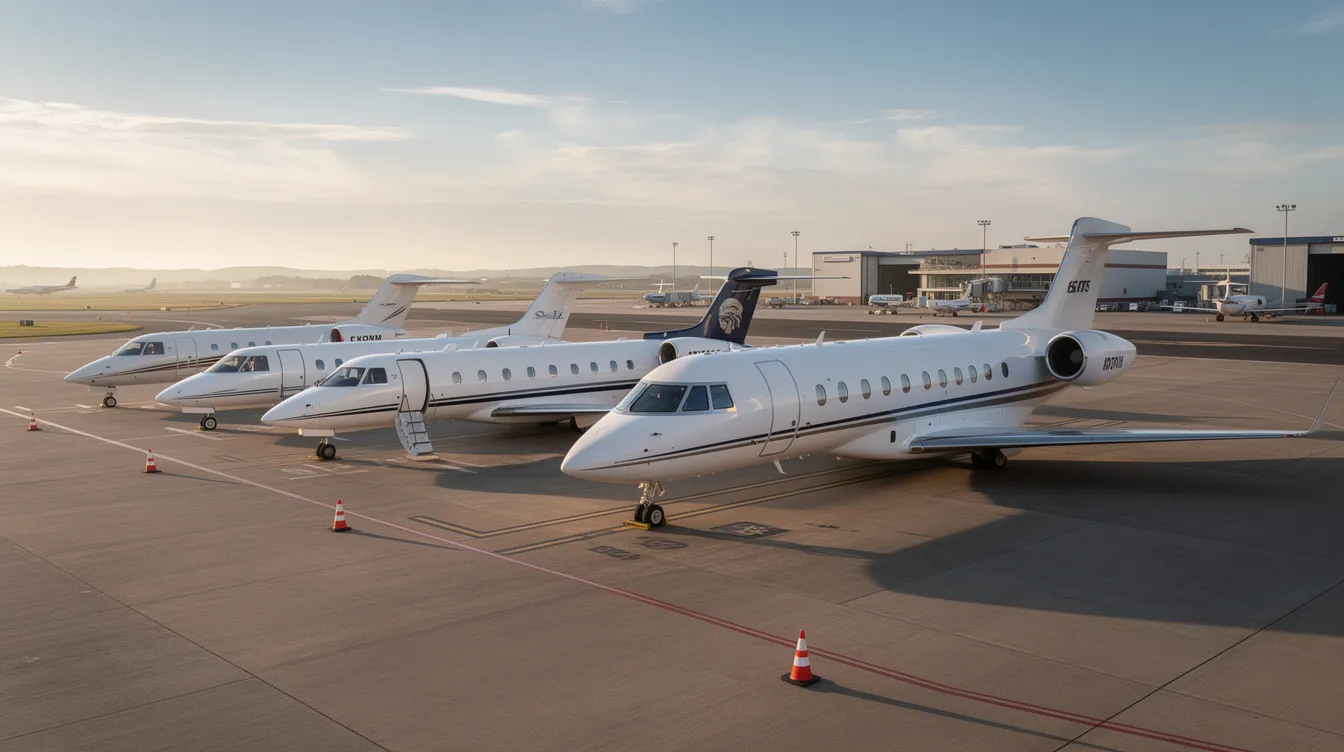
Several standardized weight definitions, established by aviation authorities like the FAA and EASA, govern flight planning and performance calculations. Understanding these terms helps travelers interpret aircraft specifications and make informed charter decisions. Aviation regulations also dictate the procedures and responsibilities required to operate aircraft safely within certified weight limits, ensuring compliance and minimizing risk.
Maximum Takeoff Weight (MTOW) is the highest weight at which an aircraft is certified to safely take off, including the aircraft itself, passengers, cargo, and fuel. Exceeding MTOW is prohibited under safety regulations and compromises structural integrity and engine performance.
Basic Operating Weight (BOW) or manufacturer’s empty weight includes the airframe, engines, fixed equipment, unusable fuel, oils, and standard crew. This figure typically represents 50–70% of MTOW and excludes payload and trip fuel.
Ramp Weight (or taxi weight) is the weight before engine start and taxi. It slightly exceeds MTOW because it includes fuel burned during taxiing—typically 200–500 lbs.
Payload represents the combined weight of passengers, baggage, and cargo that can be carried without exceeding MTOW. This figure drives real-world seating capacity and luggage allowances.
Consider a practical example: a mid-size jet with 30,000 lbs MTOW and 20,000 lbs basic operating weight has approximately 10,000 lbs available for fuel plus payload. On a shorter flight requiring less fuel, more passengers and baggage can be accommodated. On longer routes, fuel takes priority, potentially reducing passenger count.
Weight categories directly correlate with cabin size, range, and seating capacity. Passenger capacity varies significantly across private jet categories, depending on aircraft size, interior configuration, and safety regulations that set limits on the number of passengers each jet can accommodate. Charter platforms like Jettly organize aircraft into clear classes—very light jets, light jets, mid-size jets, super mid-size jets, large cabin aircraft, and executive airliners—making comparison straightforward for travelers.
Very light jets are defined as having a maximum takeoff weight of less than 12,500 pounds and typically accommodate up to 4 passengers, making them ideal for short-haul flights. These aircraft represent the lightest jet category in private aviation, optimized for regional hops, similar in mission profile to efficient light twins like the Cessna 340.
Seating capacity: generally 2–4 primary passengers, sometimes up to 6 in high-density layouts
Typical range: 600–1,200 nautical miles (1–2 hours of flight time)
Cabin characteristics: lower ceiling height (around 4.9 feet), compact baggage area (65 cubic feet)
Popular examples include the Embraer Phenom 100 (approximately 10,472 lbs MTOW) and Cessna Citation Mustang (8,645 lbs MTOW). Their low weight allows operations from shorter runways—often under 3,500 feet—and access to smaller airports. For instance, a VLJ can easily operate from a short runway at Aspen (7,820 ft elevation) with appropriate payload adjustments, highlighting their flexibility for regional business trips and personal travel.
VLJs typically feature lower charter rates and operating costs, but limited cabin space and luggage capacity. Jettly can flag these trade-offs during trip planning, ensuring travelers understand what to expect.
Light jets have a maximum takeoff weight ranging from 10,000 to 20,000 pounds, accommodate 4 to 8 passengers, and are ideal for short to medium-distance flights. They represent a step up in cabin volume and comfort from VLJs.
Seating capacity: 4–8 passengers
Typical range: 1,500–2,000 nautical miles (2–3 hours nonstop)
Cabin features: slightly taller, wider cabins with 74–88 cubic feet of baggage space
Popular light jet models include the Embraer Phenom 300 (MTOW approximately 17,968 lbs) and Cessna Citation CJ3+ (17,110 lbs MTOW). These aircraft access many regional airports with runways around 3,500–4,000 feet, offering strong flexibility for business aviation schedules.
Jettly often recommends light jets as the go-to choice for small groups traveling between major business hubs—routes like New York to Boston or Los Angeles to Las Vegas.
Midsize jets typically accommodate 7 to 9 passengers, are designed for medium-range flights, and offer enhanced cabin comfort compared to lighter jets. Super mid-size jets typically accommodate 8 to 10 passengers and offer greater range and cabin space than midsize jets, making them well-suited for longer medium-haul flights
These types of private jets occupy the 20,000–50,000 lbs MTOW band, providing ample space for business travelers who need productivity on longer routes.
|
Category |
Typical MTOW |
Seating |
Range |
|---|---|---|---|
|
Midsize |
20,000–35,000 lbs |
7–9 passengers |
2,000–3,000 nm |
|
Super Mid-Size |
35,000–50,000 lbs |
8–10+ passengers |
3,000–4,500 nm |
Specific examples include:
Midsize: Hawker 800XP (approximately 28,000 lbs), Citation XLS+ (20,200 lbs)
Super Mid Size: Gulfstream G280 (39,600 lbs), Bombardier Challenger 3500 (40,600 lbs)
Increased weight translates into stand-up cabins (often around 5.7–6 feet high), more luggage volume, and better in-flight amenities such as full lavatories and fully equipped galleys. A super midsize jet often serves routes like Los Angeles to New York or Toronto to Vancouver, where nonstop capability and cabin comfort matter.
Heavy jets are classified as having a maximum takeoff weight exceeding 60,000 pounds and can accommodate up to 16 passengers. They are designed for intercontinental travel and offer enhanced features for passenger comfort and convenience.. Large cabin aircraft sit at the top of the private jet spectrum, rivaling small commercial airliners in size and performance.
Seating capacity: 10–16+ passengers
Range: up to 7,500–8,700 nautical miles (12–16+ hours)
Cabin features: full stand-up cabins with multiple living zones, lie-flat beds, entertainment systems, and high-speed internet
Notable examples include:
Gulfstream G650ER: approximately 103,600 lbs MTOW, 7,500 nm range
Gulfstream G700: approximately 107,600 lbs MTOW, 7,750 nm range
Dassault Falcon 8X: approximately 73,000 lbs MTOW, 6,450 nm range
Bombardier Global 7500: approximately 114,850 lbs MTOW, 8,700 nm range
These large jets require longer runways (often 5,500+ feet) and higher fuel burn, but deliver unmatched comfort and nonstop intercontinental reach—Hong Kong to New York, Los Angeles to Sydney. For example, a fully loaded Bombardier Global 7500 requires a larger runway and airport field than a VLJ operating from a high-elevation airport such as Aspen, demonstrating how increased weight and fuel capacity impact flight planning and airport selection.
On Jettly’s platform, large cabin jets are often selected for international roadshows, government officials' travel, and high-level corporate missions where productivity, privacy, and sleeping arrangements matter.
Executive airliners represent converted commercial airliners used in business aviation, with MTOWs often exceeding 150,000 lbs and seating capacities ranging from 19 up to 75+ in VIP configurations.
Examples include:
Airbus ACJ319 (based on A319): approximately 171,000 lbs MTOW
Boeing BBJ1 (based on 737-700): approximately 171,000 lbs MTOW
These aircraft serve head-of-state travel, sports teams, large corporations, and high-end group travel where expansive cabin size and multiple zones are valued, often arranged through instant-book charter services like Zenflight. They require longer runways and higher operating costs, making them a niche category within Jettly’s global aircraft inventory. For clients needing business jets with airline-level seating capacity and range, Jettly can surface executive airliner options.
The weight of a private jet significantly influences its range, fuel efficiency, cruising speed, and the types of airports it can operate from. Understanding these relationships helps travelers select aircraft that meet their mission requirements without technical complications.
The basic trade-off: more weight (from fuel, passengers, or baggage) increases lift and drag requirements, affecting climb rates, cruise speed, and fuel burn. Heavier jets generally have longer range and superior performance but require longer runways and consume more fuel, while lighter jets offer better fuel efficiency and can access smaller airports with shorter runways.
Jettly’s routing and aircraft suggestions factor in airport elevation, runway length, and expected passenger count to propose jets that meet performance requirements without unnecessary fuel stops.
Runway length ties directly to aircraft weight and performance, determining which private jets can use smaller regional airports versus only large hubs.
Approximate runway requirements by category:
|
Aircraft Type |
Typical Runway Needed |
|---|---|
|
VLJs and Light Jets |
Under 3,500–4,000 ft |
|
Mid-Size Jets |
4,000–5,000 ft |
|
Heavy Jets |
5,500–6,500+ ft |
Heavier jets need longer runways for safe takeoff due to their greater weight and fuel capacity, which affects flight planning and the choice of airports.For example, a VLJ can easily operate from a short runway at Aspen (7,820 ft elevation) with payload adjustments, while a fully loaded Global 7500 would require a larger field.
This increased airport accessibility is a major reason many Jettly customers select lighter aircraft for domestic and regional trips—they can access smaller airports closer to their final destinations, saving significant ground time, especially when using tools like Jettly’s airport locator platform to compare options.
Jet engines must work harder to lift heavier aircraft, impacting climb performance and optimal cruise altitudes. Higher weight can reduce initial climb rates and delay the point at which an aircraft reaches fuel-efficient cruising levels (typically FL410–450).
Modern heavy jets use advanced aerodynamics—winglets, clean wing designs—and efficient engines to manage fuel burn, but still consume more fuel per hour than smaller aircraft. For instance, a Gulfstream G650 burns approximately 450 gallons per hour at cruise, versus around 180 for a Citation CJ3+.
Jettly’s pricing estimates factor in increased fuel burn of heavier jets, helping customers understand why ultra-long-range jets command higher hourly rates. However, while heavier jets burn more fuel per hour, they can reduce total travel time and eliminate fuel stops on long-haul flights, sometimes offsetting operational costs—especially for frequent flyers using structured jet card programs.
Higher MTOW correlates with structural strength, larger wings, and the ability to support larger, more complex cabins. This translates directly into the spacious cabin environments and luxury amenities that distinguish business and leisure travel on large private jets.
Increased weight capacity allows for features like:
Lie-flat beds and comfortable seating for overnight flights
Conference tables and work areas
Full-service galleys with hot meal preparation
Larger lavatories—including showers on some ultra-long-range jets
Advanced entertainment systems and high-speed internet
Advanced avionics systems, such as synthetic vision and auto-throttle, are integrated into modern jets to enhance safety, navigation, and overall flight efficiency
Cabin size and layout choices impact payload: more built-in furniture, heavier materials, and additional systems reduce available passenger and baggage weight. For many Jettly clients, this trade-off favors comfort on longer flights, especially overnight transatlantic or transpacific missions.
Consider the contrast: a light jet offers a compact but efficient cabin, while a large cabin jet with significantly higher MTOW supports multiple living areas similar to boardrooms or private suites.
Published seating capacities (e.g., “up to 9 passengers”) don’t always equate to practical seating on a specific charter flight. Weight and comfort considerations frequently come into play.
Long-range flights may operate below maximum seat count to allow additional fuel within MTOW limits. This is especially common on super mid-size jets and heavy jets flying near their range limits. VIP configurations with wider seats, divans, and tables can also reduce total seat count in favor of providing ample space, even when payload capacity could support more passengers.
Jettly’s aircraft listings show both maximum certified seating capacities and typical charter configurations, helping customers set realistic expectations for group size. For complex itineraries, Jettly’s support team may recommend stepping up to a heavier jet class if passengers, baggage, and range requirements would push a smaller aircraft close to its weight limits.
Luggage and equipment weight can be decisive when choosing between two jet categories with similar seating capacity. Heavier jets and large cabin aircraft generally offer more generous baggage holds and higher allowable baggage weight per passenger than light jets or VLJs, and they can also better accommodate premium services such as dedicated in-flight catering through Jettly Eats.
Specific items require careful consideration:
Golf bags and ski equipment demand both volume and weight allowance
Trade-show equipment may exceed standard baggage limits
Musical instruments or sensitive equipment need secure, climate-controlled storage
Jettly typically requests details about luggage type and approximate weight during the quoting process to ensure the chosen aircraft can safely carry all items within MTOW and balance limits. For example, a mid-size jet might suffice for passenger count alone, but a super mid-size or heavy jet becomes appropriate once cargo is factored in.
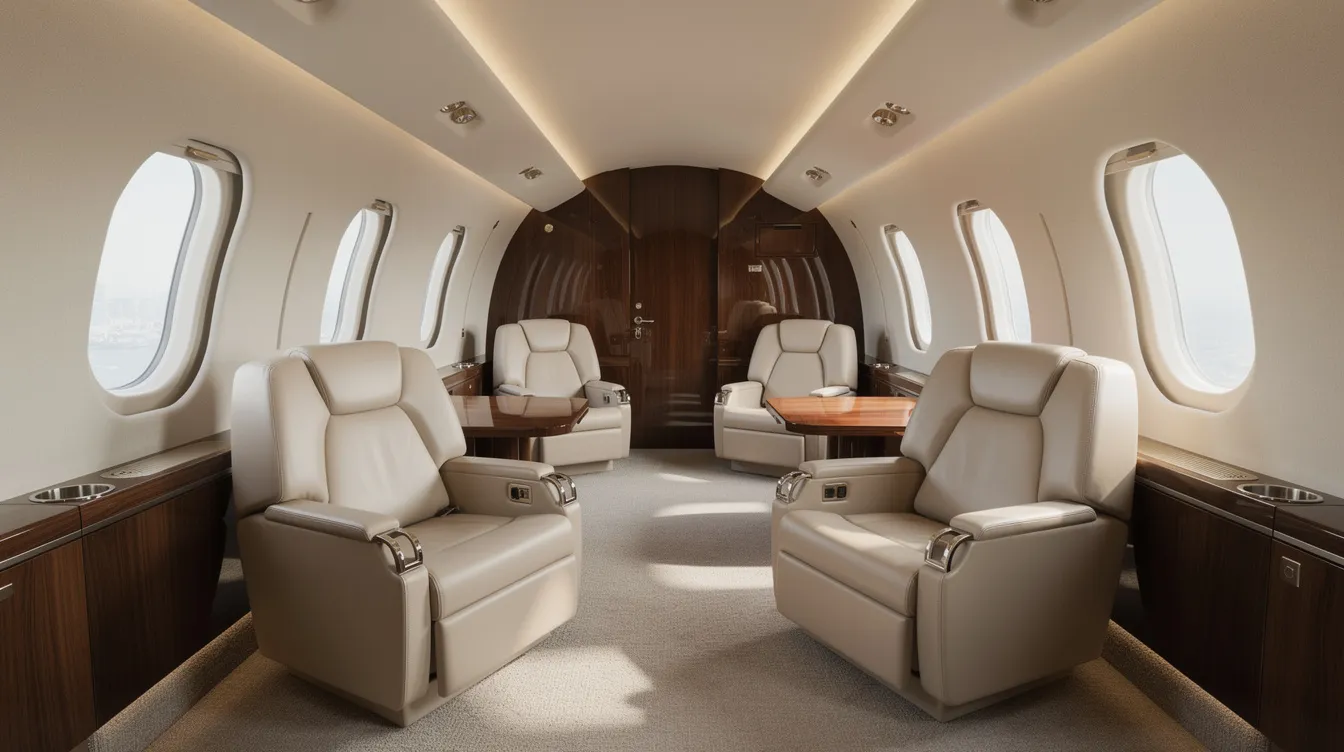
Weight is closely tied to operating costs in private air travel, affecting fuel burn, maintenance, and crew requirements. These factors are all reflected in hourly charter rates.
Heavier jets consume more fuel per hour and may require more crew members (two pilots plus additional cabin crew), raising direct operating costs compared with light jets. Maintenance for heavy jets can be more complex due to larger landing gear, more powerful engines, and additional systems, leading to higher hourly maintenance reserves. However, advanced avionics systems in modern jets help reduce pilot workload, enhancing safety and efficiency even as aircraft become more complex.
Despite higher costs, heavy jets can be more cost-effective per seat-mile for larger groups on long-haul trips, whereas very light jets and light jets are often more economical for small groups on short sectors—a dynamic explored in Jettly’s guide to affordable private jet charter pricing.
Jettly uses transparent, data-driven pricing that incorporates aircraft weight class and expected operating costs, allowing customers to compare light jets, mid-size jets, and heavy jets side by side and leverage tools like its jet card flight cost estimator.
Fuel, maintenance, and crew represent the three major cost components influenced by aircraft weight.
Fuel burn rises with aircraft weight and power. Light jets typically consume 150–250 gallons per hour, while heavy jets burn 400–700 gallons per hour. At current fuel prices, this difference significantly impacts charter flight costs.
Maintenance follows more stringent or frequent programs on heavier jets due to higher structural loads. Landing gear overhauls, engine inspections, and avionics updates all scale with aircraft complexity.
Crew requirements vary by category. Many very light jets and light jets allow single-pilot operation, reducing crew costs. Heavier aircraft require at least two pilots and often a dedicated flight attendant for longer missions.
Jettly’s platform factors these variables into flight quotes, helping customers understand why two jets covering the same route can have different hourly prices.
Hourly charter rates vary widely by weight and category. While specific figures fluctuate with market conditions and region, general ranges provide useful guidance:
|
Category |
Approximate Hourly Rate Range |
|---|---|
|
VLJs / Light Jets |
$2,500–$5,000 |
|
Mid-Size Jets |
$5,000–$8,000 |
|
Super Mid-Size Jets |
$8,000–$12,000 |
|
Heavy Jets |
$12,000–$18,000+ |
|
Executive Airliners |
$20,000+ |
Factors such as repositioning, airport fees, and crew overnights influence final trip cost, but the underlying aircraft weight class remains a major driver, alongside booking strategies like finding the cheapest private jet flights through empty legs or shared charters.
Jettly’s instant-pricing tools allow customers to toggle between aircraft classes, clearly showing how moving from a midsize jet to a super midsize or heavy jet affects the total trip budget. For complex itineraries or multi-leg tours, Jettly’s aviation specialists can recommend aircraft weight categories that balance comfort and cost across the entire schedule.
While some heavy private jets approach smaller commercial airliners in weight, their roles and operating patterns differ significantly. Understanding this distinction helps high-net-worth individuals and business travelers appreciate the value proposition of private aviation.
Typical narrow-body commercial airliners have substantially higher MTOW:
Boeing 737-800: approximately 174,200 lbs
Airbus A320neo: approximately 172,000 lbs
Large cabin business jets range from approximately 70,000–115,000+ lbs, which is significant, but they carry far fewer passengers.
Commercial airliners prioritize seating capacity and operating efficiency for large passenger counts. Private jets prioritize flexibility, time savings, and customized cabin layouts. A Boeing 777 or Airbus A380 dwarfs any business jet in weight and capacity, but cannot match private aviation’s schedule flexibility, which modern charter platforms and private charter airlines are designed to maximize.
Private jets typically have a lower weight and smaller aircraft size, enabling access to many more airports than larger commercial airliners. Commercial narrow-body and wide-body aircraft are generally limited to major airports with long runways and extensive infrastructure. Light and mid-size private jets can use thousands of smaller airfields.
Private jets can often depart within minutes of passengers arriving at the terminal, without long boarding processes or strict departure windows. Turnaround times average 15–30 minutes versus 45–90 minutes for commercial flights.
Jettly’s platform lets travelers choose departure and arrival airports closer to homes, offices, or final destinations, capitalizing on the weight and size advantages of private jets and its global inventory of private charter aircraft. A business traveler flying a light jet from Teterboro to Westchester might save hours door-to-door compared to navigating commercial service through major hubs.
Weight-related regulations from aviation authorities like the FAA and EASA are central to the safe operation of private jets. Each aircraft’s certified MTOW, landing weight, and zero-fuel weight are established during design and testing. Operators must stay within these limits on every flight.
Regulatory bodies periodically update assumptions such as average passenger weight—recent FAA revisions set summer standards at 215 lbs per passenger, which affects payload calculations and seating policies.
Weight also influences requirements for emergency equipment, evacuation procedures, and minimum cabin crew on larger jets and executive airliners. All aircraft offered on Jettly’s marketplace, including operators like Dexter Air Taxi, are flown by licensed carriers who must comply with these safety regulations on every charter.
Accurate weight and balance calculations are a pre-flight requirement for every private jet mission. Pilots and dispatchers account for passenger count, baggage, fuel load, and airport conditions when planning takeoff and landing weights.
Exceeding weight or mismanaging balance impacts controllability and performance, which is why operators use detailed charts and software for each aircraft type. For longer routes near an aircraft’s range limits, planners may schedule fuel stops or advise a different jet category if the payload would otherwise push weights too high.
Jettly’s trip planning process captures key inputs—passenger numbers, luggage, desired route—early so operators can perform thorough weight and balance checks well before departure day.
Heavier jets burn more fuel per hour, which generally results in higher CO2 emissions and a larger environmental footprint per flight. While business aviation accounts for a small fraction of global aviation activity (approximately 1.8%), emissions per passenger can be higher than those of commercial airliners due to fewer seats and premium layouts.
The growing adoption of Sustainable Aviation Fuel (SAF) offers promise. Using SAF can reduce lifecycle emissions even for heavy jets—aircraft like the Global 8000 are already SAF-capable.
More efficient aerodynamics, next-generation engines, and lighter composite materials are gradually reducing the weight and fuel burn of new private jet models. Many Jettly customers show interest in carbon-offsetting and smarter aircraft selection—choosing the smallest viable jet weight class that still meets mission needs and exploring NetJets alternatives like Jettly for flexible access.
Picking an appropriately sized aircraft for the mission can reduce unnecessary fuel burn and emissions.
Practical suggestions—especially when paired with options to share or crowdsource private jet flights:
Small groups should consider very light jets or light jets for short trips, rather than automatically choosing heavier aircraft with unused capacity
Super mid-size jets offer an efficient compromise for medium-sized groups flying longer routes, balancing range, cabin size, and fuel efficiency
Avoid “upsizing” for prestige when a lighter jet adequately covers trip requirements
Jettly’s platform makes it easy to compare multiple aircraft categories for a route, helping travelers identify when a lighter jet can handle their mission. As technology advances, future business aviation may include electric or hybrid propulsion for lighter aircraft categories, further reducing the climate impact of short-haul private flights.
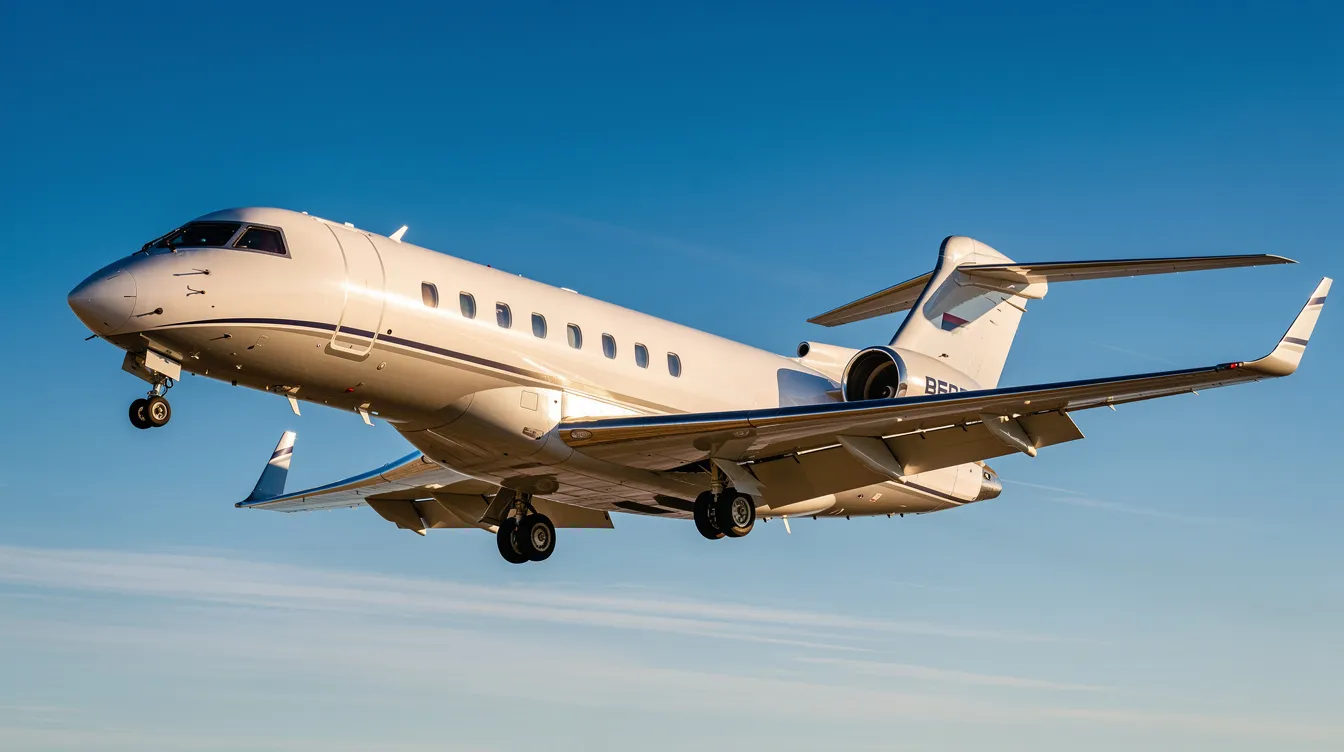
Jettly operates as a digital private jet charter marketplace connecting travelers with over 20,000 aircraft worldwide, from very light jets to heavy jets and executive airliners, and offers flexible private jet memberships for frequent flyers.
Jettly’s search and instant-pricing tools allow users to filter by aircraft size, cabin class, and range—all closely tied to weight categories. Customers input trip details (route, date, passenger count, luggage needs) and receive aircraft options where weight, seating capacity, and performance align with their mission.
Key platform capabilities, which are also promoted through Jettly’s high-ticket affiliate program:
Instant comparison across multiple jet weight classes
Transparent pricing that reflects aircraft category and operating costs
Aviation specialists who can advise when to move up or down a weight class
For example, Jettly might suggest a super mid-size jet instead of a light jet if luggage weight or runway length raises performance concerns for a specific route.
Ready to find the ideal aircraft for your next trip? Learn more about Jettly’s charter options and explore transparent pricing today.
Even smaller aircraft like very light jets weigh several thousand pounds empty, making them roughly 8–15 times heavier than a typical car, weighing around 3,000–4,000 lbs. A heavy jet such as the Gulfstream G650ER exceeds 100,000 lbs MTOW—comparable to several dozen automobiles combined. This substantial weight reflects the structural requirements, fuel capacity, and systems needed for safe, high-altitude flight.
Heavier jets tend to offer larger cabins and more amenities, which often improve cabin comfort. However, design quality, noise levels, and seating layout also significantly impact the passenger experience. A well-designed midsize jet can feel very comfortable for most trips, while some older heavy jets may have dated interiors. Turboprop aircraft, though lighter, can also deliver excellent comfort for shorter regional flights, but passenger comfort still depends on how many people are on board relative to capacity, as explored in Jettly’s guide on how many passengers private jets can carry.
In some cases, yes. Runway length, temperature, and elevation may restrict a fully loaded jet from using a particular airport. Operators might suggest a different departure field, reduced payload, or a fuel stop to accommodate aircraft weight limits. Jettly and its partner operators flag such issues during flight planning to avoid surprises on travel day.
Operators typically want a fairly accurate passenger count and a realistic luggage weight estimate at the time of booking. For international trips, final confirmations are generally needed several days before departure. Domestic charters usually require final details at least 24 hours before takeoff when possible. This allows proper weight and balance calculations and ensures the selected aircraft can safely accommodate your group.
Jettly provides key specifications such as typical seating capacity, range, and aircraft category linked to weight class for all available aircraft. Customers can request more detailed performance information from Jettly’s support team when comparing options or planning complex itineraries. This transparency helps travelers make informed decisions about which aircraft best fits their mission.
Understanding the weight of private jets—across very light jets, light jets, mid-size, super mid-size, and large cabin aircraft—helps travelers select the right balance of range, cabin comfort, airport access, and cost.
MTOW, payload, and cabin size work together to define how many passengers and how much luggage a jet can carry, and which airports it can safely use.
Jettly’s digital platform translates these technical weight and performance details into clear recommendations and instant pricing, simplifying aircraft selection for both business and leisure travel.
Ready to experience private travel on your terms? Explore flight options and compare multiple jet weight classes at https://www.jettly.com.
Share this post:
Jay Franco Serevilla
May 11, 2026
|
5
min read
Discover tips and trends in the industry.
5
min read
British Aerospace BAe 146: Overview and Charter Guide
The British Aerospace BAe 146, known as the 'Whisperjet,' is a versatile regional jet designed for short runways and noise-sensitive airports. With a capacity ranging from 70 to 112 passengers, it serves various roles including passenger transport, cargo, and specialized missions. This guide provides insights into the BAe 146's history, design, operational capabilities, and charter options for travelers seeking access to challenging airports.
Read More
5
min read
Trinity Jet Charter: Dallas-Based Private Aviation with Managed Fleet Solutions
Trinity Jet is a leading Dallas-based private aviation operator, offering managed fleet solutions and a diverse range of charter aircraft. This guide explores Trinity Jet's operations, fleet, and how it compares to digital marketplaces like Jettly, which connects travelers to a broader network of charter options. With a focus on safety and efficiency, Trinity Jet provides tailored services for both business and leisure travel.
Read MoreStay updated with our latest insights and tips to elevate your journey with us.
MEMBERSHIPS AND ASSOCIATIONS



Disclaimer: Jettly operates as a charter broker, offering access to a global digital jet charter marketplace. Jettly is not a direct air carrier and does not own or operate aircraft. All advertised flights are conducted by third-party air carriers that are fully licensed and hold the appropriate Part 135 or Part 121 certifications issued by the Federal Aviation Administration (FAA) or equivalent regulatory authorities under U.S. or foreign law. Jettly complies fully with the U.S. Department of Transportation's Part 295 and Part 298 Charter Broker regulations. Jettly does not carry additional liability insurance. Passengers are covered by aircraft operator insurance. TICO: 50023770


