


Login
Get Instant Pricing On 23,000+ Aircraft

>

When people ask about types of planes, they typically mean heavier-than-air aircraft—jet aircraft and propeller-driven planes that generate lift through their wings and forward motion through the surrounding air. In this article, aircraft refers to vehicles designed for flight, covering aspects such as how they cover distance, their fuel capacity, energy-gain methods, and the controls and stability involved in flight dynamics and maneuvering. This article covers those mainstay fixed-wing aircraft while also touching on helicopters, gliders, and lighter-than-air aircraft for context.
The history of aviation spans over two millennia, beginning with early innovations like kites and attempts at tower jumping. In the late 18th century, the Montgolfier brothers invented the hot-air balloon, leading to the first manned flights. Balloons were used for military purposes from the end of the 18th century, with France establishing balloon companies during the French Revolution. The first airships were rigid, steerable balloons pioneered by Ferdinand von Zeppelin, which dominated long-distance flight until the 1930s. The Wright brothers, Wilbur and Orville, successfully achieved controlled, powered, manned heavier-than-air flight for the first time in 1903 by incorporating all the required elements to create and fly the first airplane. Various theories in mechanics during the late 18th century, such as fluid dynamics and Newton's laws of motion, led to the development of modern aerodynamics. After World War II, flying boats were replaced by land-based airplanes, which were made more capable by improved propellers and jet engines. The development of digital electronics in the latter half of the 20th century led to major advances in flight instrumentation and 'fly-by-wire' systems. The 21st century has seen the widespread use of pilotless drones for military, commercial, and recreational purposes.
Aircraft can be grouped by broad purpose (commercial, cargo, military, private, special-purpose) or by technical classification (fixed-wing, rotary-wing aircraft, lighter-than-air). The Boeing 707 launched the commercial jet era in 1958. The Airbus A320 entered service in 1988 and remains a narrow-body workhorse. Modern aircraft like the Gulfstream G650 and Bombardier Global 7500 represent the cutting edge of private aviation.
Jettly is a tech-driven private jet charter platform that helps travelers match their trip requirements to the right aircraft, drawing on a global inventory of private charter aircraft. Each section below explains what a category is, what it’s used for, typical capacity and range, and when a traveler might choose it.
The term types of plane encompasses commercial airliners, cargo aircraft, military aircraft, private jets, turboprops, rotorcraft, gliders, and lighter-than-air craft—each designed for specific missions.
This article focuses primarily on civil aviation and private aircraft, with guidance on how Jettly connects travelers to different plane types through its charter platform.
Different aircraft suit different needs: scheduled airline routes use commercial airliners, while on-demand business travel, cargo logistics, medical flights, and remote area access rely on specialized aircraft.
Private jets (light, midsize, and heavy jets, plus turboprops) offer the greatest time savings and flexibility for travelers seeking alternatives to commercial airlines.
Explore specific aircraft and request charter quotes via Jettly at https://www.jettly.com.
Most aircraft can be grouped by their primary mission: commercial passenger transport, cargo hauling, military operations, private and business travel, or special-purpose work like firefighting and medical evacuation. An aircraft's weight is a key factor in determining its certification category and operational limits, influencing how it is grouped and regulated.
The Federal Aviation Administration (FAA) and other aviation organizations use categories to broadly classify aircraft based on their intended use and operating environment. Fixed-wing aircraft require a runway, while rotary-wing aircraft like helicopters use rotating blades for lift. General aviation encompasses all civil flying that is not a scheduled airline or military flight. General aviation aircraft are small, often single-engine propeller planes, used for flight training, leisure, and regional travel.
Here’s how they break down:
Commercial passenger
Primary Purpose: Scheduled airline routes
Examples: Boeing 737, Airbus A320 (including charter-friendly variants like the Boeing 737-800 with detailed specs and charter rates)
Cargo/Freighter
Primary Purpose: Goods movement
Examples: Boeing 777F, Antonov An-124
Military
Primary Purpose: Defense and government
Examples: F-35, C-130 Hercules
Private/Business
Primary Purpose: On-demand travel
Examples: Citation CJ3+, Gulfstream G650
Special-mission
Primary Purpose: Firefighting, medevac, survey
Examples: Pilatus PC-12, King Air 200
Consider the difference between a Boeing 737 carrying 180 passengers on a scheduled route and a Cessna Citation light jet carrying eight passengers on a custom itinerary. Size, range, and cabin experience vary dramatically by category. For private jets, especially light jets, maximum takeoff weight is a primary classification criterion, defining their size, efficiency, and suitability for short- to medium-haul flights. Additionally, different aircraft categories may require different pilot license endorsements or type ratings, depending on the aircraft's complexity and regulatory requirements. To fly an aircraft that weighs more than 12,500 pounds or a jet, pilots require a type rating. The typical entry-level certificate for general aviation flying in the United States is the Private Pilot Certificate issued by the Federal Aviation Administration (FAA). Lighter-than-air aircraft typically do not require a pilot's license in the United States.
Jettly primarily connects travelers with civil aircraft—private jets and turboprops—along with helicopters in selected markets, and its airport locator tool helps match those aircraft to convenient departure and arrival points. The following sections break these categories into specific aircraft families in service as of the mid-2020s.
Commercial airliners form the backbone of scheduled passenger travel. They carry millions of travelers daily on routes like New York–London, Toronto–Vancouver, and Dubai–Sydney. Commercial aircraft are designed to transport passengers efficiently and safely over long distances.
The aviation industry typically divides commercial aircraft into three segments: regional aircraft, narrow-body aircraft, and wide-body aircraft. Each serves a different route length and passenger volume.
General seating capacities:
Regional jets: 50–100 passengers
Narrow-body: 140–220 passengers
Wide-body: 250–400+ passengers
While commercial airlines operate fixed schedules from major hubs, private charters on smaller jets can access more airports and depart exactly when travelers need. That flexibility is why many corporate travel departments evaluate Jettly as an alternative to fractional ownership models like NetJets alongside commercial tickets and compare leading fractional jet ownership companies and programs when deciding how to structure their private aviation use.
Chartering an entire commercial aircraft is possible for large events, sports teams, or corporate shuttles—but for most small groups, private jets offer a more practical solution, and tools like Jettly’s private jet charter cost estimator help compare pricing against premium commercial options.
Regional jets and narrow-body jets handle domestic and short-to-medium-haul routes efficiently. Regional aircraft such as the Embraer E175 and the Bombardier CRJ700 series connect smaller cities to major hubs. Narrow-body workhorses—the Boeing 737 MAX family and Airbus A320neo family—dominate routes like Los Angeles–San Francisco and Paris–Rome.
Airlines favor these planes for busy corridors because they offer:
Quick turnaround times between flights
Strong fuel efficiency per seat
Compatibility with smaller or noise-restricted airports
For small groups, comparing a commercial narrow-body flight to a light or midsize private jet reveals significant differences in door-to-door travel times. Avoiding security lines, layovers, and connecting flights through Jettly’s point-to-point charters often substantially cuts total travel time.
Some narrow-body aircraft now handle transatlantic missions. The A321LR operates “long thin” routes like New York–Dublin, demonstrating how extended-range variants expand operational flexibility.
Wide-body aircraft are twin-aisle planes designed for long-haul flights and high-demand routes connecting continents. They include the Boeing 777 (first delivered in 1994), the Boeing 787 Dreamliner (entered service in 2011), and the Airbus A350 (2015).
The iconic Boeing 747 and Airbus A380 defined an era of jumbo jet travel, though several commercial airlines have retired or reduced their fleets of these aircraft since 2020 in favor of more fuel-efficient twin-engine wide-bodies.
Typical configurations:
250–350 seats for standard wide-bodies
Up to 500+ seats in high-density A380 layouts
These aircraft serve routes like London–Singapore and New York–Tokyo. Some are configured as freighters or VIP transports, but chartering an entire wide-body remains reserved for large groups or government delegations.
For smaller parties requiring similar long-distance capability, ultra-long-range private jets offer schedule flexibility that commercial wide-bodies cannot match, and guides on affordable private jet charter pricing explain how costs change with aircraft size and route length.
Cargo aircraft are optimized to move goods rather than passengers. Many fly overnight to maintain global supply chains while passenger aircraft fill daytime slots.
Dedicated freighters include the Boeing 747-8F and Boeing 777F, purpose-built with strengthened floors and large cargo doors. Converted passenger aircraft, such as the 767-300BCF, also serve freight markets.
Notable cargo planes:
Antonov An-124 Ruslan: still active in heavy-lift roles
Antonov An-225 Mriya: the world’s heaviest aircraft, destroyed in 2022 during the conflict in Ukraine
Express freight networks (FedEx, UPS, DHL) use narrow-body and wide-body freighters in hub-and-spoke models to move packages globally overnight.
Some smaller turboprop and cargo planes used for regional flights are similar to aircraft available through platforms like Jettly for urgent logistics, medical supplies, or time-critical shipments.
Cargo planes have spacious interiors, making cargo loading and unloading easy.
Turboprop planes combine a turbine engine with a propeller and are capable of excellent short-field performance.
Military aircraft are specialized by mission: air superiority, ground attack, strategic bombing, surveillance, transport, and aerial refueling.
Examples by category:
Military planes are specialized by mission types, including:
Fighters, such as the F-16 Fighting Falcon and F-35 Lightning II
Bombers, including the B-2 Spirit and B-52 Stratofortress
Transport aircraft like the C-130 Hercules and C-17 Globemaster III
Tankers, for example, the KC-135 and KC-46
Surveillance platforms such as the Boeing E-3 Sentry (AWACS) and P-8 Poseidon
Specialized platforms like AWACS aircraft and maritime patrol aircraft use powerful radar and sensors for military purposes.
Military planes often pioneer technologies that migrate into civil aviation—composite materials, fly-by-wire control systems, and advanced avionics all trace roots to air force research. Dating back to World War I, military demand has driven aviation innovation. World War II developments significantly accelerated jet engine technology.
Military aircraft encompass bombers, fighter jets, stealth planes, transport aircraft, trainers, and vintage warbirds.
Military aircraft are not part of Jettly’s charter offering. However, some former military airframes are converted into civil freighters or special-mission aircraft operating in the private sector.
Private jets are fixed-wing aircraft operated on flexible, on-demand schedules. Platforms like Jettly connect travelers with these aircraft for business trips, family vacations, and urgent travel, and understanding how many passengers different private jet types can carry is central to choosing the right category for each mission.
The main private jet categories relevant to charter include:
Very light jets (VLJs)
Light jets
Midsize and super-midsize jets
Heavy and ultra-long-range jets
Each balances speed, range, and cabin size differently. Day trips between nearby cities might call for a VLJ, while non-stop intercontinental missions require heavy jets.
Private jets often use smaller airports closer to city centers. On popular routes such as New York–Miami, Los Angeles–Las Vegas, or Toronto–Montreal, this advantage can significantly reduce total travel time compared to commercial alternatives.
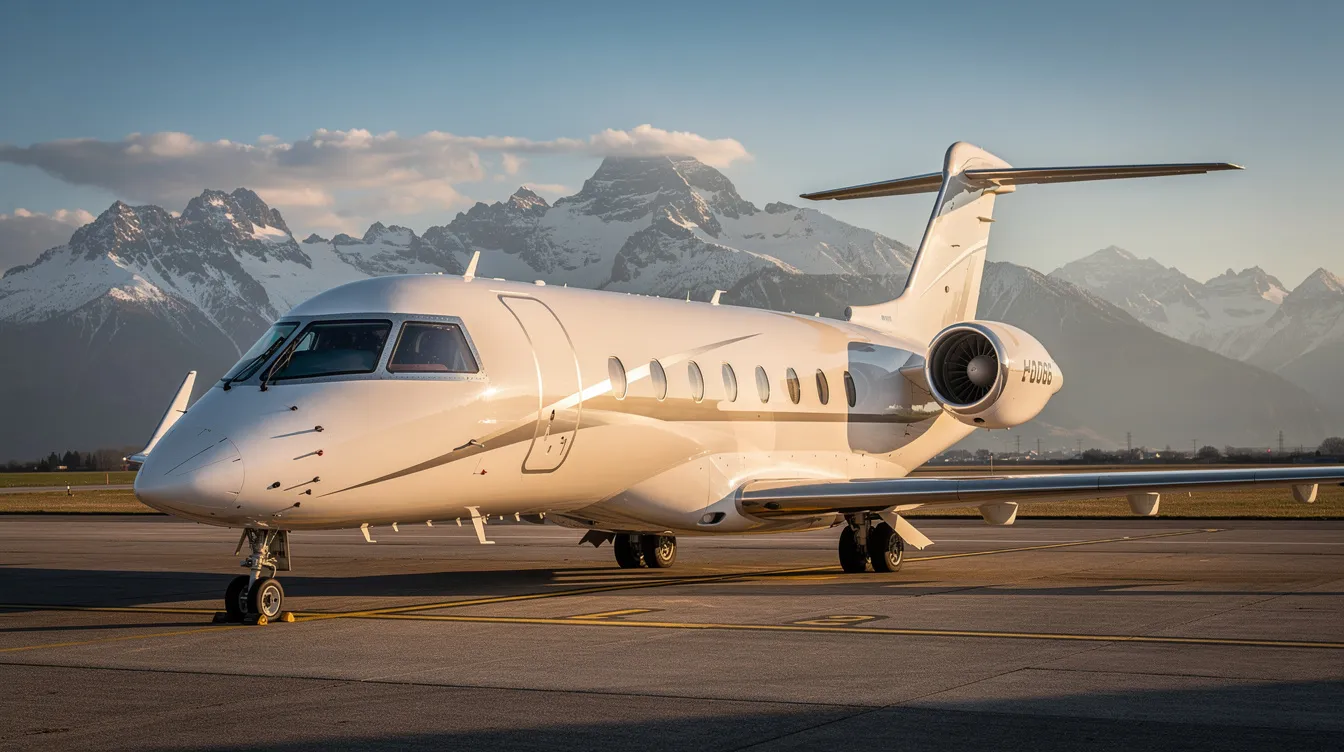
VLJs are compact, powered aircraft built for efficiency on short routes. Many are certified for single-pilot operation and seat 4–6 passengers. The Eclipse 500 (mid-2000s) and HondaJet HA-420 (entered service in 2015) exemplify this category, with ranges of 1,000–1,200 nautical miles.
Light jets expand capacity to 6–8 passengers. Popular models include:
Cessna Citation CJ3+
Embraer Phenom 300
Learjet 45
These aircraft comfortably handle routes such as Chicago–Dallas or London–Málaga.
Ideal use cases for VLJs and light jets:
Same-day business trips, avoiding overnight stays
Regional team travel for corporate groups
Medical appointments requiring quick turnarounds
Quick leisure escapes for small parties
Jettly’s platform displays aircraft profiles, cabin photos, and configurations so travelers can compare VLJs and light jets before requesting quotes, and frequent flyers can leverage private jet memberships to streamline repeat travel.
Midsize jets offer larger cabins—often with stand-up or near stand-up height—seating roughly 7–9 passengers. Typical ranges reach 2,000–3,000 nautical miles.
Popular midsize models:
Cessna Citation XLS+
Gulfstream G150
Bombardier Challenger 300/350
These handle cross-country missions like Los Angeles–Chicago or Toronto–Vancouver efficiently.
Super-midsize jets (Gulfstream G280, Dassault Falcon 2000 series) push range and comfort further. They support missions like New York–Los Angeles or London–Dubai with fewer fuel stops.
Corporate travel departments favor this category because it balances:
Operating cost versus capability
Cabin productivity (Wi-Fi, conferencing space)
Access to secondary airports near meeting locations
Jettly members can often compare midsize and super-midsize options for the same route, evaluating trade-offs between cost and non-stop range, especially when using structured solutions like jet card programs with fixed hourly rates.
Heavy jets feature generous cabins configured for 10–16 passengers, often with lie-flat seating, separate meeting areas, or private bedrooms.
Leading heavy jet models:
Gulfstream G550: 6,750 nm range, proven long-range workhorse
Gulfstream G650/G650ER: 7,000+ nm range, speed, and range leader
Bombardier Global 6000: 6,000 nm range, large cabin volume
Bombardier Global 7500: 7,700 nm range, four living spaces
Dassault Falcon 7X/8X: 6,450 nm range, three-engine reliability
These aircraft enable nonstop flights such as New York–Tokyo or London–Buenos Aires, illustrating the broader capabilities of private jets flying internationally across oceans and borders.
Ideal use cases include global executive travel, multi-leg international roadshows, entertainment tours, and high-stakes trips where avoiding connections saves substantial time.
Jettly offers multiple heavy-jet options with transparent pricing, complemented by jet cards that prepay blocks of flight time for frequent long-range travelers. Some operators now use sustainable aviation fuel (SAF) on long-range flights, an increasingly important factor for environmentally conscious travelers.
Propeller-driven planes remain vital for shorter routes, remote airfields, and missions where runway length is limited. They use conventional aircraft designs optimized for low-speed flight and operational efficiency.
Piston-engine aircraft are mainly used for flight training and recreational flying. These aircraft use internal combustion engines, which burn fuel to generate propulsion. Turboprops—turbine engines driving propellers—handle commercial and charter operations more commonly. In contrast to these powered aircraft, some experimental types are human-powered, relying on human effort for propulsion rather than engines.
Well-known turboprops for charter:
Pilatus PC-12
Beechcraft King Air 200/350
Cessna Caravan
Typical capacities range from 6–10 passengers, with ranges of 800–1,500 nautical miles, suitable for routes such as Seattle–Boise or Sydney–Hobart.
Jettly clients often choose turboprops over jets for short hops into smaller airstrips. While cruising speeds are slower, shorter ground travel times and lower charter costs offset the difference for many routes, especially when travelers are open to buying just a seat on a private jet through shared or semi-private options instead of chartering the whole aircraft.
Single-engine utility aircraft such as the Cessna 208 Caravan and Quest Kodiak 100 serve as rugged workhorses. They handle gravel strips, grass runways, and short fields that would challenge larger aircraft.
These planes support missions in remote areas—Alaska, the Canadian North, the Caribbean islands, and Pacific archipelagos —as well as regional hubs in emerging markets, such as private jet charter services to Chennai in Tamil Nadu.
Amphibious aircraft and flying boats extend access further:
De Havilland Canada DHC-6 Twin Otter on floats
Cessna Caravan Amphibian
Real-world applications include fishing trips to remote lodges, humanitarian supply drops, and access to communities without paved airports. The approach category for these aircraft, built for utility, emphasizes slow-speed handling and short-field performance.
Some specialized aircraft intended for remote operations can be sourced through charter marketplaces like Jettly in regions where they form core local transport infrastructure.
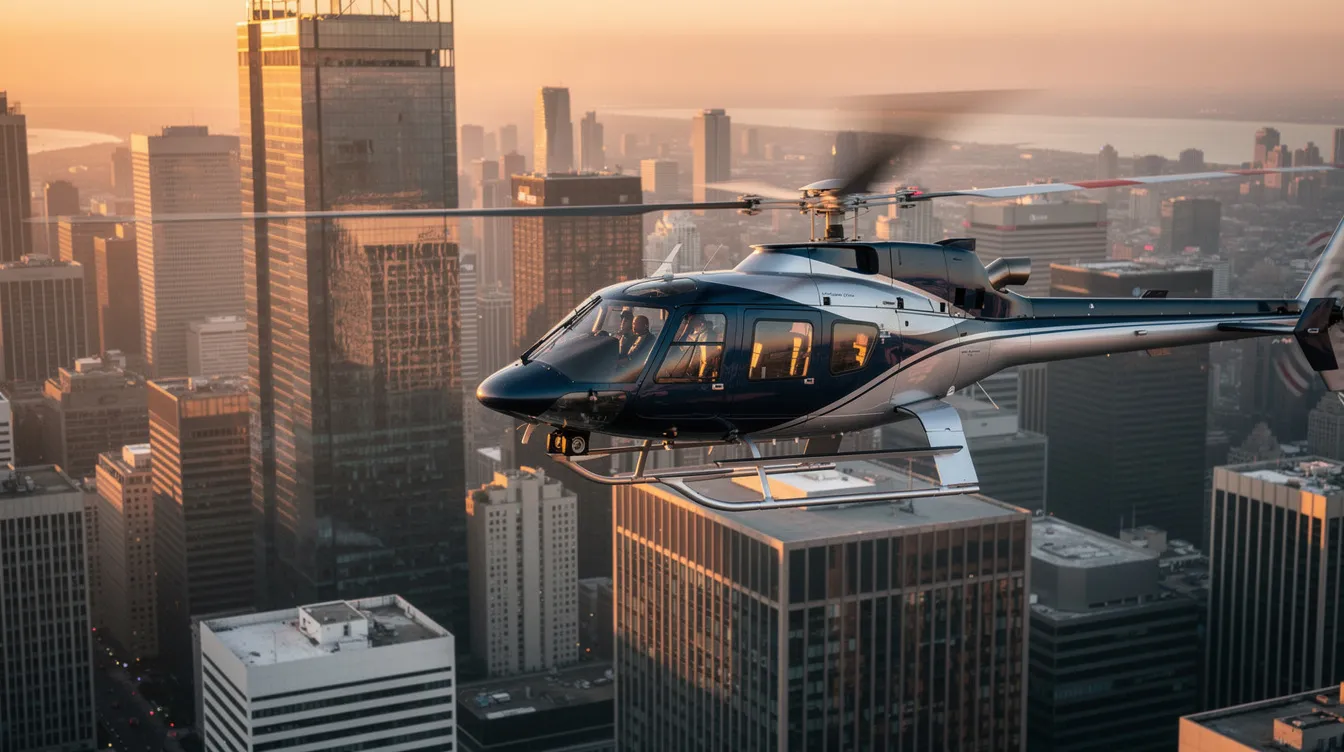
Rotorcraft generate lift from rotating blades rather than fixed wings, enabling vertical takeoff, hovering, and precise maneuvering at low speeds through the surrounding air.
Main rotorcraft types:
Helicopters (most common for civil and charter)
Gyroplanes/autogyros
Modern VTOL concepts
Tilt rotors are a type of experimental aircraft that combine the advantages of fixed-wing and rotary-wing designs, offering both vertical takeoff and efficient forward flight.
Civil helicopters commonly used for charter include:
Manufacturers and models include:
Airbus: H125, H130, H145
Bell: 206, 429
Leonardo: AW109, AW139
Typical missions:
Airport transfers (Manhattan to JFK, London Battersea to Heathrow)
Sightseeing tours
The offshore oil platform runs
Air ambulance flights
Search and rescue operations
Jettly can arrange helicopter transfers in selected markets as part of end-to-end trips that combine fixed-wing flights with heli-shuttles to final destinations, including integrations with key gateways, such as private jet charter services in New Delhi, India.
eVTOL (electric vertical takeoff and landing) aircraft represent a new generation of powered lift vehicles designed for urban air mobility. These experimental aircraft aim for quieter operations and zero local emissions when powered by renewable electricity.
Prominent development programs:
Joby Aviation
Archer Aviation
Lilium
Many target commercial certification in the late 2020s.
These aircraft are designed for short-range hops of 20–150 kilometers over congested road corridors. While not yet widely available for charter as of March 2026, they may soon offer urban and regional services in select markets.
Challenges include infrastructure development, regulatory frameworks, and airspace integration. Platforms like Jettly are positioned to integrate new powered aircraft types into digital booking tools once certified for commercial service.
Gliders and lighter-than-air craft represent niche yet important categories of aviation used for sport, scientific exploration, and specialized missions.
Gliders are fixed-wing aircraft without engines. They rely on rising air currents—thermals, ridge lift, wave lift—and launch via aerotow or winch. Models like the Schleicher ASW series exemplify high-performance soaring. Any aviation enthusiast appreciates the pure flying experience that gliders and hang gliders offer.
Lighter-than-air aircraft include:
Hot air balloons (heated air for lift)
Gas balloons (gases lighter than air)
Modern airships with rigid structure (Zeppelin NT, Airlander 10 prototype)
Balloon flights remain popular in regions such as Cappadocia and the Loire Valley, evoking the early history of aviation. Modern airships serve advertising, surveillance, and potential heavy-lift or eco-tourism missions.
These aircraft fall within a broader category of aviation but are rarely used for point-to-point charter compared to jets and turboprops. For travelers focused on premium on-demand travel, overviews of the best private jet charter companies and how to choose among them are usually more relevant than niche categories like gliders or airships.
Gliders achieve and sustain flight without engines by relying on gravity and rising air currents.
Acrobatic aircraft are designed with no flight-maneuver restrictions and can withstand high G-forces that would damage other planes. These specialized aircraft are used in aerobatic competitions and airshows, showcasing pilot skill and aircraft agility.
Safety is the foundation of the aviation industry, and rigorous aircraft maintenance is what keeps every flight—whether on commercial airliners, private jets, or cargo aircraft—operating smoothly and securely. The Federal Aviation Administration (FAA) and similar global authorities set comprehensive standards for the upkeep and operation of all commercial aircraft, including both fixed-wing aircraft and rotary-wing aircraft.
For heavier-than-air aircraft, such as fixed-wing planes and helicopters, maintenance is a continuous process. Every commercial airliner and cargo aircraft undergoes scheduled inspections at regular intervals, ranging from daily pre-flight checks to extensive overhauls after a set number of flight hours or cycles. These procedures ensure that every component, from engines and control surfaces to avionics and landing gear, meets strict airworthiness criteria.
Private jets and other commercial aircraft are held to the same high standards. Operators must document all maintenance activities, and only certified technicians are authorized to perform repairs or inspections. The FAA mandates that maintenance records be kept up to date and available for review, providing transparency and accountability across the aviation sector.
Rotary-wing aircraft, such as helicopters, require specialized attention due to their unique design and the stresses on rotating blades and transmission systems. Regular inspections focus on critical components such as rotor assemblies to ensure safe vertical takeoff and landing operations.
Travelers can take comfort in knowing that every aircraft intended for passenger or cargo service is subject to these rigorous protocols. Before boarding, it’s reasonable to ask your operator about their maintenance program, safety certifications, and crew training standards. Reputable charter providers, including those in the private jet sector, will readily share this information and often exceed regulatory requirements with additional safety audits.
Ultimately, the combination of regulatory oversight, advanced technology, and a culture of safety ensures that modern aircraft—whether fixed-wing or rotary-wing—remain among the safest modes of transportation. By understanding the basics of aircraft maintenance and safety, travelers can fly with confidence, knowing that every precaution has been taken to protect them in the air, while premium services like Jettly Eats in-flight catering for private jets enhance comfort and experience aboard many charter flights.
The best type of aircraft depends on distance, group size, destination airport, budget, and schedule flexibility.
Key decision factors:
Trip distance: Short hop vs. intercontinental
Passenger count: 2 people vs. 12 people
Baggage/cargo: Golf clubs, heavy machinery, or just carry-ons
Airport infrastructure: Runway length, surface type, weather conditions
Cabin comfort: Basic transport vs. lie-flat productivity
Simple scenario guidance:
Scenario and Recommended Type of Plane:
4 people, 500 miles: VLJ or light jet
8 people, coast-to-coast: Midsize or super-midsize jet
Remote airstrip access: Turboprop (PC-12, King Air)
10+ people, intercontinental: Heavy jet
Jettly uses these criteria to filter aircraft options, display transparent estimated pricing, and let travelers compare multiple aircraft categories before booking, whether they are considering on-demand charter or exploring longer-term options such as a private jet lease and its true cost structure.
Focus on total journey time—home to meeting—rather than just flight time. Private aviation often converts multi-day commercial itineraries into same-day returns.
Different types of planes have different fuel burn, emissions, and noise profiles. These factors influence environmental impact and operating costs.
Modern commercial airliners like the Airbus A320neo and Boeing 787 are significantly more fuel-efficient per seat than older models, thanks to advanced jet engine technology and lighter composite structures.
Private jets are less efficient per passenger on single flights. However, operational factors can improve their environmental profile:
Careful routing and higher speeds reduce flight time
Higher load factors (filling more seats)
Newer, fuel-efficient models
Emerging measures include:
Sustainable aviation fuel (SAF)
Operational improvements (continuous descent approaches, optimized routing)
Future electric or hydrogen aircraft under development
The Federal Aviation Administration and other regulators increasingly emphasize efficiency standards. Environmentally conscious travelers should ask charter brokers—including Jettly—about newer aircraft types, fuel options, and carbon offsetting programs when planning flights.
Ready to choose the perfect plane for your upcoming trip? Discover flight options or request a personalized quote at https://www.jettly.com.
For 2–5 passengers flying up to roughly 500–800 nautical miles, VLJs, light jets, or turboprops (such as a Phenom 300 or King Air 200) are typically the most cost-effective charter options. Turboprops may be cheaper per hour and better for very short legs or short runways, while light jets save time on slightly longer routes.
Pricing also depends on aircraft availability, repositioning distance, and airport fees—factors Jettly’s platform incorporates into instant quotes. Compare both a turboprop and a light jet for the same itinerary to see the trade-off between time and cost. The “cheapest” option may differ from the best value when schedule flexibility and productivity matter.
Both commercial airliners and private jets must meet strict airworthiness and maintenance standards set by national authorities like the FAA, Transport Canada, or EASA. Charter operators flying private jets hold commercial operating certificates, follow scheduled maintenance protocols, and employ properly trained, type-rated pilots.
Many private charter operators adopt additional safety audits (ARGUS, IS-BAO) to demonstrate higher operational standards. Jettly works with vetted operators complying with all relevant requirements. Travelers can request to see an operator’s certifications before booking. Safety depends more on operator standards than on the specific aircraft type.
In many cases, yes. Travelers can request specific models (Citation CJ4 vs. Learjet 45, or Gulfstream G550 vs. Global 6000) when those aircraft are available in the desired region and time window. Charter quotes typically feature the “best available” aircraft in a suitable category, but Jettly’s platform can filter by aircraft type, cabin size, or age.
Requesting a specific model may limit availability or price flexibility, especially on short notice. Specify must-have features (stand-up cabin, in-flight Wi-Fi, enclosed lavatory) and allow comparable types to be quoted. Mention preferred models when requesting a quote through https://www.jettly.com.
Turboprops and jets operating under commercial regulations meet similar safety and maintenance standards. Accident rates correlate more with operational quality than propulsion type. Modern turboprops like the Pilatus PC-12 and King Air series maintain strong safety records when properly operated.
Turboprops cruise at lower altitudes and speeds than jets, which affects ride smoothness and flight time but not fundamental safety within certified envelopes. Focus on reputable operators, pilot experience, and aircraft maintenance history. For very short sectors into smaller airports, a turboprop may actually be the most operationally suitable choice.
Booking 7–14 days in advance typically provides more aircraft choice and better pricing. However, Jettly can often source aircraft on shorter notice for urgent trips. Smaller jets and turboprops are generally easier to find at short notice, while heavy and ultra-long-range jets may require more lead time during peak seasons.
Complex itineraries—multi-leg international trips or flights to remote airports—benefit from early booking to secure the right aircraft type, permits, and crew planning. Check Jettly’s live inventory to confirm options for specific dates. For fixed dates or larger groups, lock in preferred aircraft types early to avoid compromises.
The term "plane" spans everything from regional airliners and jumbo jets to private jets, turboprops, helicopters, gliders, and balloons. Each aircraft type is optimized for specific missions within general aviation and commercial markets.
For most business and leisure travelers, the most relevant categories are commercial airliners, private jets (VLJ, light, midsize, heavy), and turboprops. These aircraft cover the majority of real-world trips where time savings and flexibility matter.
Understanding the basics of each plane type helps travelers ask better questions, compare options confidently, and tailor travel to their priorities of time, comfort, and cost.
The pilot’s license and type rating requirements ensure qualified crews operate each aircraft type safely. Whether you need a single-engine turboprop for a remote lodge or an ultra-long-range jet for a global roadshow, knowing how to classify aircraft makes the selection process clearer.
If you are interested in becoming a pilot or learning more about flight training, reputable institutions like Epic Flight Academy offer accredited programs, a modern aircraft fleet, and a strong track record of student success, while industry leaders such as NetJets in the private aviation sector illustrate where many professional pilots ultimately build long-term careers.
Share this post:
Jay Franco Serevilla
Mar 31, 2026
|
5
min read
Discover tips and trends in the industry.
5
min read
ATR 72: Guide to the Regional Turboprop (For Charter and Commercial Use)
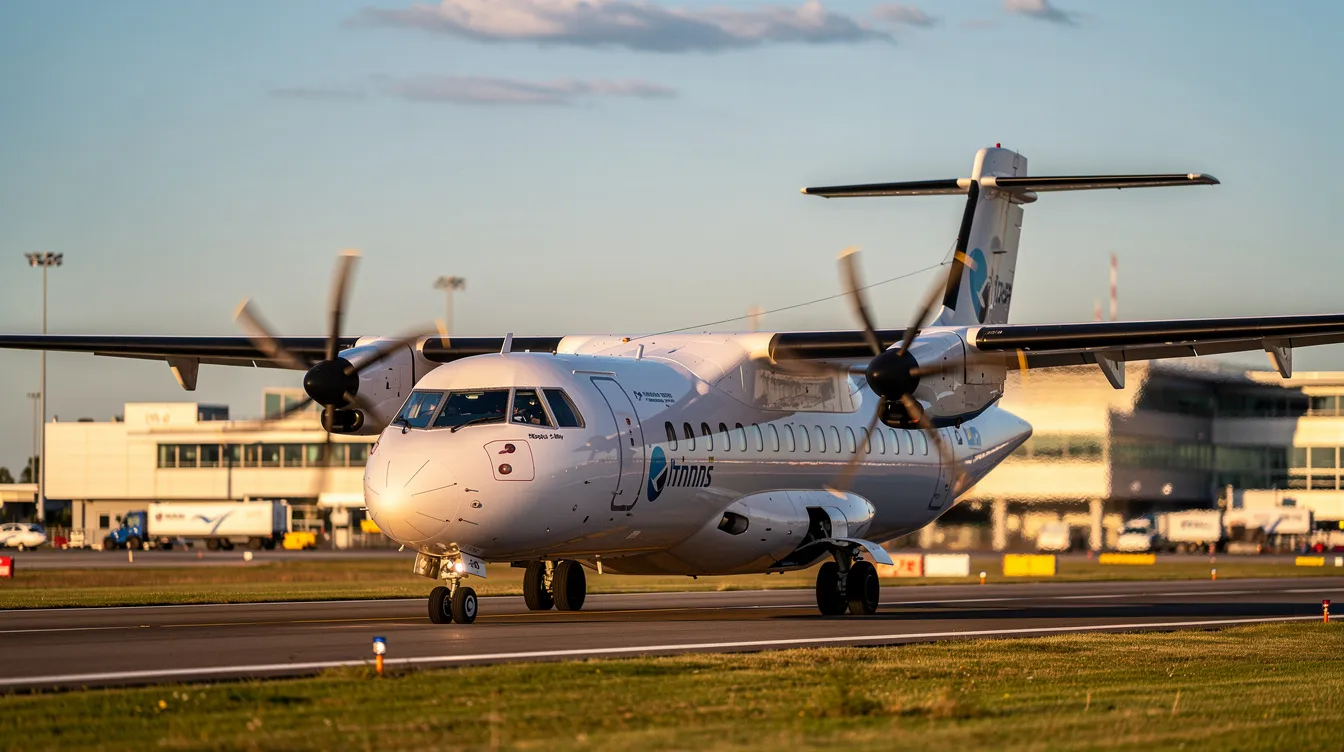
The ATR 72-201 and ATR 72-202 are efficient turboprop aircraft designed for regional group charters, accommodating 66 to 72 passengers. With their reliable Pratt & Whitney engines and versatile landing gear, they excel in short- to medium-haul operations. Ideal for corporate shuttles, sports teams, and tour operators, these aircraft offer cost-effective alternatives to larger jets.
Read More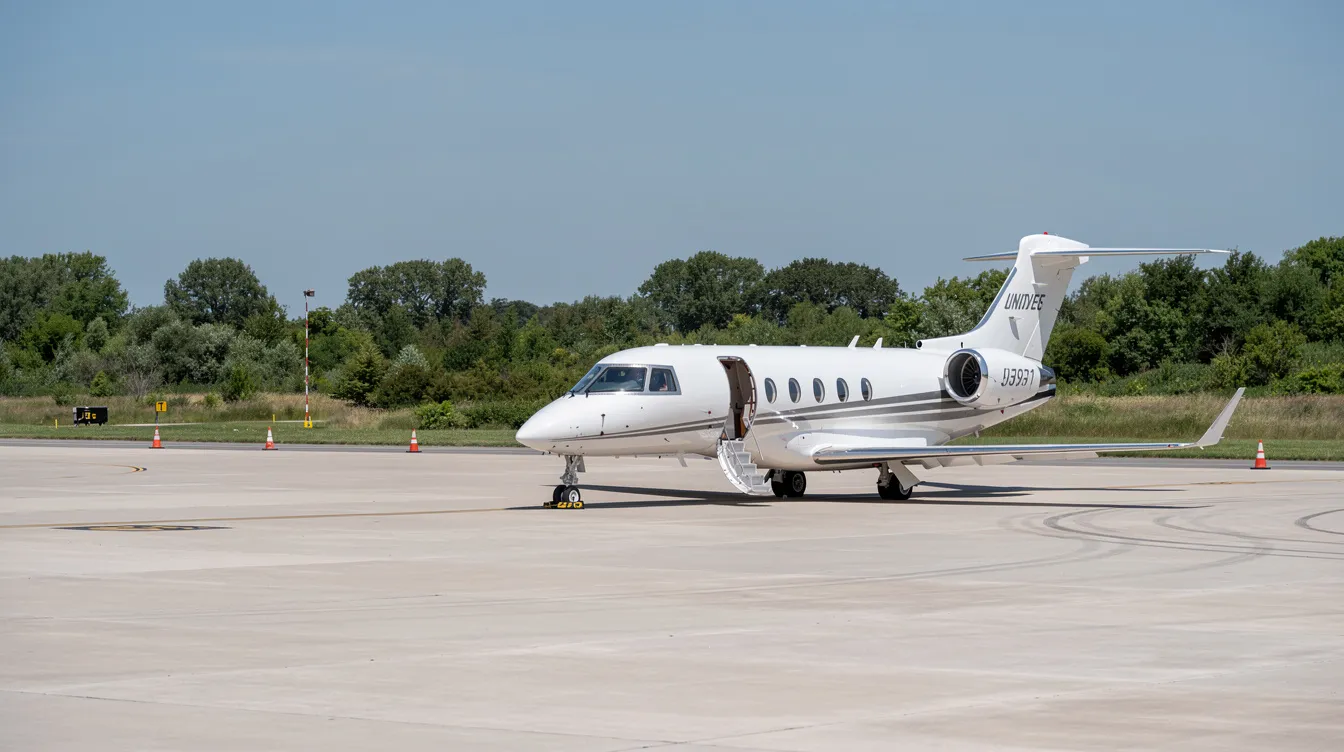
5
min read
Stebbins Aviation Inc: Charter Services, Location, and How Jettly Helps You Compare Options
Stebbins Aviation Inc, based at East Texas Regional Airport, has been providing charter services since 1987, specializing in Cessna Citation jets for short-haul flights. While it offers reliable local options, Jettly's digital marketplace provides access to a broader range of aircraft and instant pricing, making it a valuable resource for travelers with diverse needs.
Read MoreStay updated with our latest insights and tips to elevate your journey with us.
MEMBERSHIPS AND ASSOCIATIONS



Disclaimer: Jettly operates as a charter broker, offering access to a global digital jet charter marketplace. Jettly is not a direct air carrier and does not own or operate aircraft. All advertised flights are conducted by third-party air carriers that are fully licensed and hold the appropriate Part 135 or Part 121 certifications issued by the Federal Aviation Administration (FAA) or equivalent regulatory authorities under U.S. or foreign law. Jettly complies fully with the U.S. Department of Transportation's Part 295 and Part 298 Charter Broker regulations. Jettly does not carry additional liability insurance. Passengers are covered by aircraft operator insurance. TICO: 50023770


