


Login
Get Instant Pricing On 23,000+ Aircraft

>

The story of transatlantic planes spans over a century of aviation progress, from the open-cockpit biplanes that first conquered the Atlantic Ocean in the historic first flight across the Atlantic—a pivotal aviation milestone—to the ultra-long-range private jets now capable of connecting New York to London without a fuel stop. What began as a dangerous, prize-driven race across 3,000 miles of unforgiving ocean has evolved into a sophisticated global network of commercial and charter options.
Today, travelers can choose between premium economy on an Airbus A350, business class on a Boeing 787, or a fully private cabin aboard a Gulfstream G650ER. This guide traces that evolution and explains what modern travelers need to know about crossing the Atlantic by air.
Transatlantic planes evolved from early flying boats and record-setting biplanes to today’s fuel-efficient widebodies and ultra-long-range private jets capable of nonstop flight across the Atlantic Ocean.
The first transatlantic flight with stops was completed by the Curtiss NC-4 in May 1919, while on 14-15 June 1919, British aviators John Alcock and Arthur Whitten Brown made the first non-stop transatlantic flight, flying from Newfoundland to Ireland in a modified Vickers Vimy aircraft, completing the journey in less than 16 hours. Charles Lindbergh then achieved the first solo nonstop crossing in May 1927.
Modern transatlantic routes over the North Atlantic rely on daily North Atlantic Tracks, ETOPS rules for twin-engine aircraft, and advanced navigation systems. The air route between London in the UK and New York in the USA serves around 5 million passengers per year, making it one of the busiest transatlantic city pairs.
Commercial transatlantic planes now range from narrow-body Airbus A321LR/A321XLR and Boeing 737 MAX variants to long-range widebodies like the Boeing 777 and Airbus A350, while many modern private jets can fly nonstop between North America and most of Europe.
Jettly operates as a digital private jet charter platform that helps travelers compare aircraft for transatlantic flights, access transparent pricing, and book suitable nonstop or one-stop options at https://www.jettly.com, while its range of private jet memberships offers additional flexibility and wholesale-rate access for frequent flyers.
Crossing the Atlantic Ocean by air was one of aviation’s earliest and most dangerous ambitions. In the 1910s, the distance of roughly 3,000 miles meant pilots faced limited fuel capacity, unreliable engines, no radio navigation, and unpredictable weather over open water. A failed crossing meant almost certain death.
The 1913 Daily Mail prize changed everything. The British newspaper offered £10,000 (equivalent to over £1 million today) for the first nonstop transatlantic flight within 72 hours from North America to Great Britain or Ireland. This prize transformed the Atlantic from a stunt target into a serious engineering challenge.
The U.S. Navy’s Curtiss NC-4 flying boat completed the first transatlantic flight in May 1919. The aircraft departed from the Rockaway naval air station in New York and reached Plymouth, England via multiple stops through Newfoundland, the Azores, and Portugal. The journey took about 53 hours 58 minutes of actual flying time spread across 23 days due to repairs and weather delays.
While historic, this achievement did not qualify as a nonstop flight. The mission demonstrated that coordinated long-distance oceanic flight was possible with careful planning and support vessels, but it was not the prize-winning feat aviators sought.
Just one month later, British pilots John Alcock and Arthur Whitten Brown claimed the Daily Mail prize. On 14-15 June 1919, they flew a modified Vickers Vimy bomber plane from St. John’s, Newfoundland, to Clifden, County Galway, Ireland in approximately 16 hours and 27 minutes.
The conditions were brutal. The two pilots flew in an open cockpit through freezing rain, fog, and turbulence with only basic instruments. Their success proved that nonstop transatlantic flight was physically achievable, even if far from practical for routine passenger service.
Notably, the first transatlantic flight by rigid airship was made by Major George Herbert Scott on 2 July 1919, flying the R34 from Scotland to New York, covering approximately 3,000 miles in about four and a half days.

The Orteig Prize, established in 1919, offered $25,000 for the first nonstop flight between New York and Paris in either direction. This challenge attracted aviators throughout the 1920s, though several died in the attempt.
Charles Lindbergh completed the first solo nonstop transatlantic flight on 20-21 May 1927, flying from New York to Paris in the Spirit of St. Louis, a journey that took 33.5 hours and covered 3,610 miles. He departed from Roosevelt Field on Long Island and landed at Le Bourget Airport near Paris to a crowd of over 100,000 spectators.
Lindbergh became the first person to fly solo nonstop across the Atlantic, and his achievement triggered an explosion of public interest in aviation. Investment poured into aircraft development, and long-distance flying captured global imagination.
Key limitation: While Lindbergh became an international icon, the technology of 1927 still made scheduled commercial transatlantic service impractical. The aircraft's range was a critical factor in planning and executing such a long-distance flight, as range limitations, primitive weather forecasting, and thin safety margins all posed significant challenges.
The first transatlantic flight between Spain and South America was completed in January 1926 by Spanish aviators on the Dornier Do J flying boat Plus Ultra, marking another significant milestone in long-distance flying before Lindbergh’s crossing.
Early record-setting transatlantic flights were dominated by white male pilots who had access to military training, financial sponsorship, and media attention. Women and people of color faced significant barriers to entry, including exclusion from flight schools and denial of aircraft loans.
Amelia Earhart became the first woman to cross the Atlantic by air as a passenger in June 1928, flying aboard the Friendship from Newfoundland to Wales with pilot Wilmer Stultz and mechanic Louis Gordon.
Four years later, she achieved a far greater feat. In May 1932, Earhart flew solo nonstop across the Atlantic from Harbor Grace, Newfoundland, to a field near Londonderry, Northern Ireland, in approximately 14 hours and 56 minutes. She piloted a Lockheed Vega 5B through storms, ice, and mechanical difficulties.
In 1936, Beryl Markham became the first woman to fly solo across the Atlantic from east to west, completing the journey from England to North America, which was a significant achievement in aviation history. Flying a Percival Vega Gull, she landed in Nova Scotia after battling the powerful headwinds that made westbound crossings far more challenging than eastbound routes.
These achievements mattered beyond the records themselves. They challenged assumptions about who could be a professional aviator and influenced later generations of airline hiring and training practices.
Notable milestone: Beryl Markham’s 1936 east-to-west crossing remains historically significant because westbound Atlantic flights face stronger headwinds, making them considerably more difficult than the typical eastbound route.
The transition from record flights to scheduled passenger service happened gradually through airships, flying boats, and eventually jet airliners. The introduction of new aircraft types, such as long-range flying boats and jetliners, played a crucial role in advancing transatlantic travel by enabling more reliable and efficient routes across the ocean.
In the 1920s and 1930s, rigid airships offered an alternative path across the Atlantic. The Graf Zeppelin completed multiple passenger crossings, while the Hindenburg could traverse the Atlantic in approximately 43 hours with luxury amenities unmatched by aircraft of the era.
The 1937 Hindenburg disaster at Lakehurst, New Jersey, killed 36 people and effectively ended commercial passenger airship travel overnight.
Flying boats like the Boeing 314 Clipper became the first real commercial bridge across the ocean. Pan American Airways introduced scheduled transatlantic passenger flights in 1939 using these aircraft, which featured:
Sleeping bunks
Dining rooms with full meal service
Lounge-style seating areas
Capacity for up to 74 passengers
These aircraft typically required intermediate stops in Newfoundland, the Azores, or Bermuda. They were chosen not for efficiency but because water landings offered flexibility in landing site selection when long runways were scarce, making it easier to secure suitable landing locations for these early transatlantic flights.
After World War II, land-based piston airliners improved reliability, but jets transformed transatlantic travel. The de Havilland Comet and Boeing 707 reduced crossing times to roughly 7-9 hours, making same-day travel between North America and mainland Europe possible.
Widebody jets such as the Boeing 747, Airbus A330, and Boeing 777 became the workhorses of transatlantic routes. Many airlines around the world adopted these aircraft for their transatlantic fleets, reflecting their popularity and continued support. These aircraft combined range, capacity, and passenger comfort while meeting the ETOPS requirements that allowed twin-engine planes to operate safely over vast stretches of ocean.

Today’s transatlantic network connects dozens of city pairs through a dense web of daily flights. The twenty busiest commercial routes between North America and Europe during June to August 2022 included major airports like New York JFK and London Heathrow, reflecting high passenger traffic on premium routes.
In addition to these main corridors, other routes across the Atlantic—such as those over the South Atlantic or via Bermuda—also play a significant role, highlighting the diversity of transatlantic flight paths.
In 2015, 44 million seats were offered on transatlantic routes, with London Heathrow Airport being the busiest European airport with 231,532 weekly seats to North America. Transatlantic routes are highly competitive and include legacy US carriers and major European flag carriers.
Major airlines operating transatlantic flights include United, Delta, American, British Airways, Air France, and Virgin Atlantic. Aer Lingus also serves important routes connecting Ireland with North America. Transatlantic airlines generally provide full-service amenities, including hot meals and in-flight entertainment, while a broader guide to charter airlines and private flights highlights how on-demand and membership-based operators complement these scheduled carriers.
Transatlantic flights are predominantly operated by wide-body jets designed for long-haul, high-capacity travel, with a growing use of single-aisle aircraft, such as the Airbus A321XLR, for thinner routes. These single aisle aircraft are increasingly popular for transatlantic service due to their fuel efficiency, ability to operate with sustainable aviation fuels (SAF), and enhanced passenger comfort features, and travelers considering private options can review dedicated guides to private jets that can fly to Europe to understand how business aviation fits into this landscape.
|
Aircraft Category |
Typical Examples |
Range |
Seat Count |
Cabin Features |
|---|---|---|---|---|
|
Widebody Jets |
Boeing 777, 787; Airbus A330, A350 |
7,000-8,500 nm |
250-400+ |
Lie-flat business class, premium economy, direct aisle access |
|
Narrow-body Long-Range |
Airbus A321LR/XLR |
4,000-4,700 nm |
180-220 |
Business class recliners or lie-flat on select carriers |
|
Private Jets |
Gulfstream G650ER, Global 7500 |
6,000-7,700+ nm |
8-19 |
Fully private cabins, exceptional comfort |
Widebody jets carry the vast majority of transatlantic passengers due to their range, cargo capacity, and passenger comfort. The four-engine jumbo jet era on transatlantic routes has declined, with its market share dipping below 2%.
Wide-body jets commonly used include the Airbus A330, Boeing 777, and Boeing 787, while the Airbus A321neo is increasingly common for transatlantic crossings. Narrowbody aircraft are increasingly used to serve niche, lower-demand city pairs directly without large capacity requirements.
The trend of using smaller aircraft for transatlantic flights allows airlines to operate on lower-demand routes profitably, as these narrowbody planes are cheaper to operate than traditional widebody aircraft. These advancements have enabled new transatlantic passenger flight options on routes that were previously unserved.
Flying across the Atlantic involves sophisticated coordination between pilots, dispatchers, and air traffic control centers spanning two continents. Every transatlantic flight operates under strict international civil aviation organization standards.
The North Atlantic Tracks (NATs) are organized oceanic routes that change daily based on wind patterns and traffic demand. These tracks optimize flight time and fuel efficiency by positioning eastbound flights to ride favorable jet stream winds overnight, while westbound flights adjust to minimize headwind exposure.
Key characteristics of the NAT system:
Routes are recalculated daily by air traffic control authorities
Eastbound traffic typically flies overnight, westbound flies during the daytime
Aircraft must report positions at designated waypoints
Radar coverage is limited over the open ocean, requiring satellite communication
Transoceanic operations demand specialized certification and equipment, including ETOPS (Extended-range Twin-engine Operational Performance Standards) for twin-engine aircraft, which requires them to remain within a safe distance of an alternate airport in case of engine failure.
Modern aircraft used for transatlantic flights, such as the Airbus A330, A350, Boeing 767, 777, and 787, must be ETOPS certified to ensure safety during long over-water routes.
Crossing the Atlantic involves navigating dynamic weather systems, with jet streams and high-altitude winds significantly influencing flight time, fuel burn, and routing. Pilots and dispatchers use:
Inertial reference systems
GPS positioning
Satellite-based communication (SATCOM)
HF radio when beyond VHF range
These tools allow continuous tracking, weather updates, and coordination even thousands of miles from land.
Many modern private jets can fly nonstop across the Atlantic, though smaller aircraft may require one or more fuel stops in Greenland, Iceland, Shannon (Ireland), or the Azores.
The most capable private jets for transatlantic missions include:
Gulfstream G650ER: Up to approximately 7,500 nautical miles range
Bombardier Global 7500: Up to approximately 7,700 nautical miles range
Dassault Falcon 8X: Up to approximately 6,450 nautical miles range
These aircraft can fly nonstop from New York to London, Paris, Geneva, Dubai, and even farther destinations depending on passenger count and weather conditions.
Smaller jets can handle shorter Atlantic crossings on favorable routes:
|
Route Example |
Typical Requirement |
|---|---|
|
Boston–Dublin |
Some super-midsize jets can fly nonstop |
|
New York–Shannon |
Possible nonstop for larger super-mids |
|
New York–London |
Usually requires a large cabin or ultra-long-range |
|
Miami–Lisbon |
Often requires a fuel stop for midsize jets |
Actual performance depends on the aircraft’s range, passenger load, baggage weight, and wind conditions.
Chartering a private jet for a transatlantic flight typically costs between $100,000 and $250,000 or more, influenced by various factors such as aircraft type and flight duration, and tools like a private jet charter cost estimator can help travelers understand how these elements affect pricing. Additional factors include:
Repositioning fees
Handling fees at departure and arrival airports
Overflight permits
Crew duty time and rest requirements
Catering and ground transportation
Executing a transatlantic private jet flight requires meticulous planning, including securing overflight permits, coordinating airport slots, and using an airport locator tool to identify suitable departure, arrival, and alternate airports to ensure legal passage and availability. Every transatlantic private flight begins with securing overflight permits from each country the aircraft will traverse and obtaining airport slots at both departure and arrival points, as well as planning for potential emergency landing options. These clearances are essential for international operations.

Jettly operates as a digital private charter aircraft marketplace, connecting travelers with a global fleet of over 20,000 aircraft for trips including transatlantic crossings.
The platform offers instant pricing for many transatlantic routes, allowing users to:
Compare nonstop versus one-stop options
Review different aircraft categories (super-midsize, large-cabin, ultra-long-range)
See transparent all-in pricing before booking
Coordinate ground transportation and catering
Popular transatlantic route searches on the platform include New York–London, Toronto–Paris, and Miami–Lisbon, and travelers can use Jettly’s private jet charter cost estimator to see how factors like aircraft category and distance influence pricing on these routes.
Jettly works with regulated operators and crews that comply with international standards for oceanic flying, partnering with operators such as Dexter Air Taxi, among many others. This includes:
Required navigation and communication equipment
Proper ETOPS certification, where applicable
Flight planning that accounts for alternates and fuel reserves
Crew training for oceanic operations
For travelers with flexible schedules, Jettly can help access empty leg flights on transatlantic repositioning routes. These occur when an aircraft would otherwise fly empty to pick up its next passengers, potentially offering significant savings on luxury air travel.
Ready to explore private transatlantic options? Visit https://www.jettly.com to compare aircraft, get instant pricing, and book your next transatlantic journey.
Selecting the right aircraft for a transatlantic trip depends on several interconnected factors beyond simple range numbers.
Range requirements: Does the route require 4,000 or 7,000 nautical miles of capability?
Passenger count: Larger groups need large-cabin or ultra-long-range jets
Baggage volume: Heavy luggage can reduce range
Cabin preferences: Lie-flat seating, separate work areas, or shower facilities
Schedule flexibility: Can travelers accommodate a fuel stop if needed?
|
Route |
Typical Aircraft Category |
Notes |
|---|---|---|
|
New York–London |
Ultra-long-range or large-cabin |
Nonstop is achievable with most ULR jets |
|
New York–Paris |
Ultra-long-range |
Slightly longer than London; nonstop typical |
|
Boston–Dublin |
Super-midsize to large-cabin |
Shorter crossing; more aircraft options |
|
Los Angeles–London (west coast departure) |
Ultra-long-range only |
Long distance requires maximum range |
Airport selection matters for private transatlantic trips. Busy hubs like London Heathrow face slot restrictions and higher fees, so many charter flights use alternatives such as:
London Luton
Farnborough
Biggin Hill
Paris Le Bourget
Jettly’s platform and support team can help match specific itineraries with suitable aircraft types, balancing cost, comfort, and operational requirements for each transatlantic trip, drawing on insights into the global fleet of private jets and where different aircraft categories are typically based.
The future of transatlantic aviation focuses on efficiency gains rather than revolutionary speed increases. This ongoing progress builds on a legacy of aviation milestones, including historic achievements such as the first world flight, which marked a significant step in advancing global air travel and set the stage for today’s innovations.
In 2025, approximately 56,500 transatlantic narrowbody flights are scheduled, marking a 50% increase from 2019, indicating a shift towards smaller aircraft for transatlantic travel.
The Airbus A321XLR, launched in November 2018 and entering service in November 2022, is designed for long-haul flights and is part of the trend towards using narrow-body aircraft for transatlantic routes, offering operational efficiency compared to larger widebodies. The introduction of long-range narrowbody aircraft like the Airbus A321XLR enables airlines to explore new non-stop routes that were previously unprofitable with larger aircraft.
All current Airbus aircraft have achieved significant reductions in fuel consumption compared to previous generations, and they are capable of flying on a 50% blend of sustainable aviation fuel (SAF), which is a key part of efforts towards lower-emission aviation.
Sustainable aviation fuel (SAF) can reduce CO2 emissions from flight by up to 80% across the fuel lifecycle, and all Airbus aircraft can fly using a 50% SAF blend. These fuel-efficient engines and cleaner fuels represent the near-term path to reducing aviation’s environmental impact.
Experimental hydrogen propulsion concepts and hybrid-electric systems are being researched for future aircraft. However, these technologies face significant challenges for transatlantic application:
Hydrogen storage requires substantial volume
Infrastructure doesn’t exist at scale
Energy density limitations affect range
Commercial deployment of alternative propulsion on long-haul flights remains years away.
In the nearshort term, efficiency gains, better route planning, and digital platforms like Jettly will make term, efficiency gains, better route planning, and digital platforms like Jettly will continue making it easier for passengers to access tailored nonstop flight options across the Atlantic, while programs such as its ULTRA high ticket affiliate program expand how these services are promoted and distributed.
Whether travelers choose an airliner with direct aisle access in business class or a private cabin aboard an ultra-long-range jet, the core mission remains unchanged: crossing the Atlantic safely, efficiently, and in comfort.

Many large-cabin and ultra-long-range private jets can fly nonstop on popular routes such as New York–London, New York–Paris, or Boston–Dublin. Aircraft like the Gulfstream G650ER and Bombardier Global 7500 offer ranges exceeding 7,000 nautical miles under optimal conditions.
However, nonstop capability depends on the specific aircraft’s range, passenger load, baggage weight, and weather conditions. Headwinds on westbound crossings can significantly affect range. A charter broker like Jettly can confirm whether a specific itinerary can be completed nonstop and recommend appropriate aircraft.
The Curtiss NC-4 flying boat completed the first crossing of the Atlantic by air in May 1919, though it required multiple stops through Newfoundland, the Azores, and Portugal. The journey took about 53 hours and 58 minutes of flying time over 23 days.
The first nonstop transatlantic flight came shortly after, when Alcock and Brown flew from Newfoundland to Ireland in June 1919. Charles Lindbergh achieved the first solo nonstop transatlantic flight in May 1927, flying from New York to Paris in 33.5 hours.
Most commercial flights between northeastern North America (New York, Boston, Toronto) and Western Europe (London, Paris, Dublin, Frankfurt) take roughly 6-8 hours eastbound and 7-9 hours westbound. The difference results from jet stream winds that typically blow west-to-east.
Private jets have similar flight time profiles, though smaller aircraft size and faster ground handling can reduce total trip time. Travelers considering domestic journeys first may find guidance on choosing the best cross-country plane useful before looking at longer transatlantic missions. San Francisco to London flights are longer, typically 10-11 hours, due to the greater distance from the West Coast.
Reputable private jet operators must follow the same overarching safety, maintenance, and crew training regulations as airlines when flying across the Atlantic. Oceanic routes require specific equipment, procedures, and contingency planning, and travelers comparing providers often weigh fractional models like NetJets against NetJets alternatives such as Jettly that focus on on-demand flexibility.
Required elements include proper navigation systems, satellite communication capability, life rafts, and flight crews trained for oceanic operations. Platforms like Jettly work exclusively with certified operators that meet these international standards.
The basic process involves entering your route and desired dates on Jettly’s platform, comparing available aircraft and pricing across different categories, and selecting preferred options. The platform shows nonstop versus one-stop alternatives and different aircraft types, and its integrated airport locator tool helps identify the most convenient departure and arrival airports.
After selection, travelers can coordinate final details, including catering, ground transportation, and any special requests. The entire process can happen digitally with transparent pricing throughout.
Transatlantic planes have come a long way since the daring early flights of the 20th century. Today’s advanced commercial airliners and private jets offer efficient, safe, and comfortable options for crossing the Atlantic Ocean. With innovations like long-range narrow-body aircraft and sustainable aviation fuels, the future promises even more accessible and environmentally conscious transatlantic travel.
Platforms like Jettly simplify private jet charter by providing transparent pricing, instant booking, and access to a wide range of aircraft suited for nonstop or one-stop transatlantic flights. Whether for business or leisure, travelers can now enjoy the convenience and flexibility of private aviation while saving valuable time on one of the world’s busiest and most important air routes.
Ready to experience private travel on your terms? Explore flight options or request a quote at https://www.jettly.com.
Share this post:
Jay Franco Serevilla
May 15, 2026
|
5
min read
Discover tips and trends in the industry.
5
min read
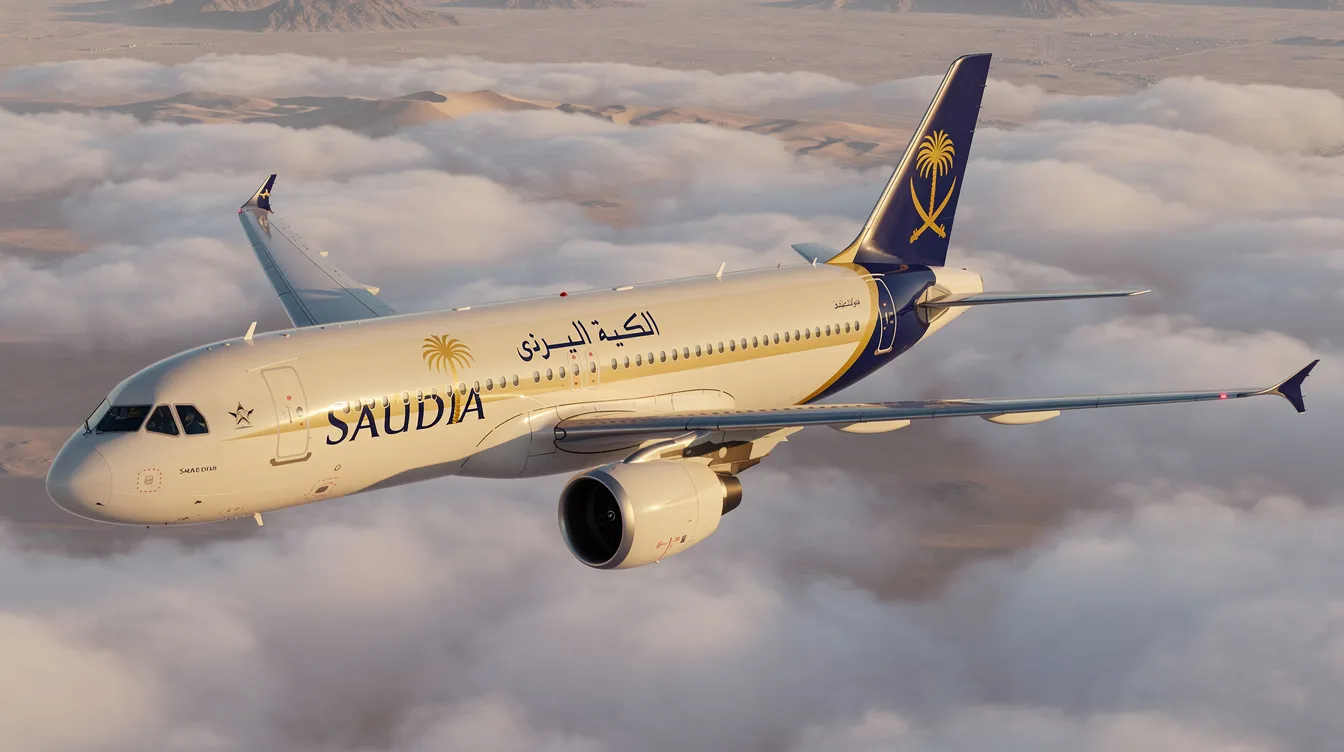
Saudi Jet: Military Tensions, Regional Security, and What It Means for Modern Air Travel
The term 'Saudi jet' often refers to military aircraft incidents involving the Royal Saudi Air Force, particularly in the context of regional tensions with Iran and Yemen. These incidents impact not only military operations but also civilian aviation, as airspace management is crucial for ensuring safety. Despite the risks, private and commercial flights operate under strict regulations to navigate around conflict zones effectively.
Read More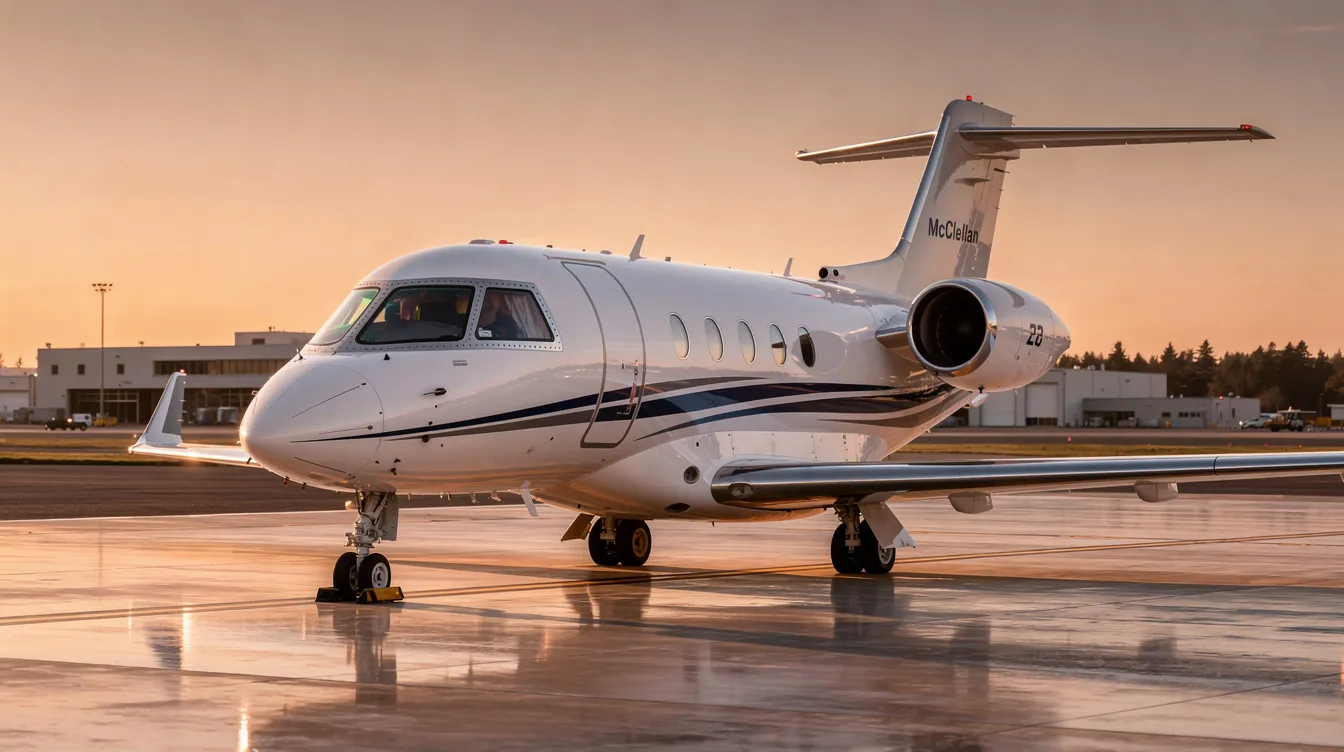
5
min read
McClellan Jet Services: FBO Facilities, Jet Services, and Charter Alternatives
McClellan Jet Services is a premier fixed-base operator (FBO) at McClellan Airport, offering comprehensive ground support and amenities for private jet travelers. With 24/7 operations, it provides fueling, ground handling, and passenger services, while Jettly's digital platform facilitates seamless private jet charter bookings. Together, they enhance the private aviation experience for business and leisure travelers in Northern California.
Read MoreStay updated with our latest insights and tips to elevate your journey with us.
MEMBERSHIPS AND ASSOCIATIONS



Disclaimer: Jettly operates as a charter broker, offering access to a global digital jet charter marketplace. Jettly is not a direct air carrier and does not own or operate aircraft. All advertised flights are conducted by third-party air carriers that are fully licensed and hold the appropriate Part 135 or Part 121 certifications issued by the Federal Aviation Administration (FAA) or equivalent regulatory authorities under U.S. or foreign law. Jettly complies fully with the U.S. Department of Transportation's Part 295 and Part 298 Charter Broker regulations. Jettly does not carry additional liability insurance. Passengers are covered by aircraft operator insurance. TICO: 50023770


