


Login
Get Instant Pricing On 23,000+ Aircraft

>
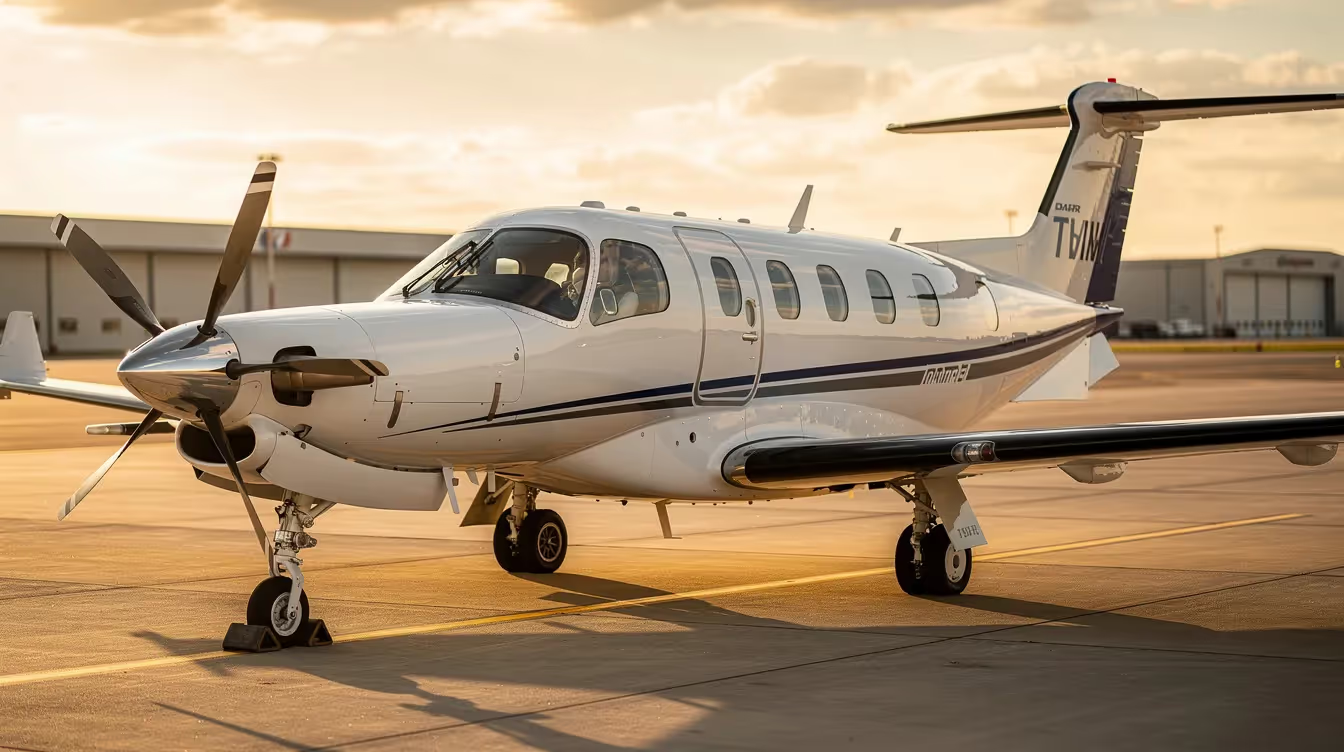
The TBM 960 is the latest in Daher’s family of high-performance single-engine turboprops, representing a compelling option for travelers seeking efficient regional private flights. This aircraft combines digital power management with jet-like performance, making it a standout choice within Jettly’s on-demand charter marketplace.
The TBM 960 is Daher’s flagship single-engine turboprop, powered by Pratt & Whitney Canada's PT6E-66XT and widely used on premium charter routes across North America and Europe.
Digital power management through the fully digital engine and optimized propeller delivers maximum efficiency, showcasing the advantage of today's turboprop technology with high efficiency and advanced digital control systems, while the advanced Garmin G3000 avionics reduce pilot workload significantly
Core performance numbers include a maximum cruise speed of 330 KTAS, maximum range of 1,730 nautical miles with 45-minute fuel reserve, and seating for 4–5 passengers in the stylish Prestige cabin
The aircraft matches jet-like cruise speeds while maintaining lower operational costs, making it ideal for regional business trips and family travel
Jettly customers can compare TBM 960 charter options, see transparent pricing, and book through the platform’s digital marketplace at jettly.com

The TBM 960 is a single-engine pressurized turboprop launched in 2022 as the flagship evolution of Daher’s TBM 900 series. Built on the proven TBM 700/900 airframe, it features digital power engine control, refined aerodynamics, and a high-comfort Prestige cabin designed for executive travel. The TBM 960's propulsion system integrates the advanced PT6E-66XT engine and an optimized lightweight propeller, enhancing performance, efficiency, and noise reduction for a smoother ride.
Core specifications include:
|
Specification |
Value |
|---|---|
|
Engine |
PT6E-66XT turboprop |
|
Nominal Power |
850 shp |
|
Maximum Power Output |
1,844 hp |
|
Usable Fuel |
292 U.S. gallons |
|
Service Ceiling |
31,000 feet |
|
Maximum Takeoff Weight |
7,615 lbs |
|
Basic Empty Weight |
4,806 lbs |
|
Maximum Payload |
1,446 lbs |
The aircraft delivers high-altitude, long-range capabilities matching the utility of light business jets. Typical missions include non-stop business hops such as New York–Miami, Los Angeles–Denver, or Toronto–Halifax with 3–5 passengers plus baggage, similar to how Jettly arranges private charter aircraft across its wider fleet. Advanced digital controls not only simplify operation but also help extend the engine's life by optimizing power management and reducing stress, contributing to greater reliability and longer time between overhauls.
At the heart of the TBM 960’s digital power concept is Pratt & Whitney Canada’s PT6E-66XT turboprop engine. This next-generation powerplant features dual-channel full-authority digital engine control (FADEC) that automates power management without pilot intervention, taking maximum advantage of today's turboprop technology for optimal performance and efficiency.
The digitally controlled turboprop engine enables the pilot to focus on flying rather than manual adjustments. The propeller electronic control system synchronizes with engine parameters through the Engine and Propeller Electronic Control System (EPECS), enabling easy monitoring and delivering simplified single lever operation for easier engine power management. This advanced technology is designed to serve the pilot by reducing workload and enhancing safety in the cockpit, especially when accessing smaller regional airports through Jettly’s airport locator tool that take advantage of the TBM 960’s short-field capabilities.
At Daher’s recommended cruise setting of 308 KTAS at FL280, the TBM 960’s digitally-controlled turboprop engine allows for precise settings that optimize fuel consumption, achieving a recommended cruise fuel burn of 57 U.S. gallons per hour. This translates to roughly 40 nautical miles per gallon—a 20-30% efficiency edge over light jets burning 100-120 gph for similar speeds.
The engine’s thermodynamic rating approaches 1,844 hp internally, though nominal power delivers 850 hp. This controlled turboprop engine enables strong hot-and-high performance while maintaining the PT6 family’s legendary reliability, with time between overhauls of 3,500 hours.
The lightweight Raptor five-blade composite propeller is fully integrated into the TBM 960’s propulsion system, enhancing performance and reducing noise. This integration helps reduce overall weight and improves the aircraft’s takeoff distance, climb, and cruise speeds, enhancing efficiency. Operating at 1,925 rpm maximum, this optimized propeller integrates seamlessly with the digital envelope protection system, making the TBM 960 a strong contender when evaluating the best cross-country planes for long regional journeys.
Performance highlights:
Maximum cruise speed: 330 KTAS at 28,000 feet
Fast cruise speed: 308 KTAS (typical operations)
Maximum range: 1,730 NM at 252 KTAS with a 45-minute reserve
The TBM 960 reaches its certified ceiling of 31,000 feet in 18 minutes and 45 seconds
The propeller’s design helps limit noise and cabin vibration to jet-like levels (under 80 dB at cruise), significantly improving passenger comfort on charters.
Takeoff distance over a 50-foot obstacle is approximately 2,535 feet, with similar landing ground roll. This performance enables operations on runways as short as 2,500 feet—airports like Toronto Buttonville that remain inaccessible to Citation-class jets requiring 4,000-5,000 feet.
The Garmin G3000 integrated flight deck represents the most advanced cockpit available on today’s turboprop technology. Tailored for single-pilot IFR operations, it incorporates advanced flight deck automation that enhances operational efficiency and safety by allowing pilots to focus on flying while the technology manages various flight parameters. Integrated graphical synoptics provide real-time monitoring and troubleshooting of electrical and fuel systems, giving pilots enhanced awareness and safety through comprehensive system management.
Key components include:
Three 10.4-inch primary flight displays
Central 12.1-inch multifunction display with smart engine indicating system
Dual touchscreen controllers for navigation, systems, and checklists
Electronic standby instrument (MD 302 class) providing solid-state backup
The advanced cockpit features the GWX 8000 Doppler weather radar—an all-digital weather radar system with zero blind range that can accurately profile weather cells up to 320 nm. Advanced surveillance features encompass lightning and hail prediction, turbulence detection, and ground clutter suppression to improve situational awareness.SurfaceWatch provides automatic threat analysis for runway incursion prevention, while Visual Approach mode supports operations into non-towered airports—capabilities that matter when comparing turboprops in guides to affordable airplane rent and charter options.
Applying flight deck automation through this suite reduces pilot workload by approximately 50%, according to NBAA surveys, enabling predictable control and fewer weather-related delays.
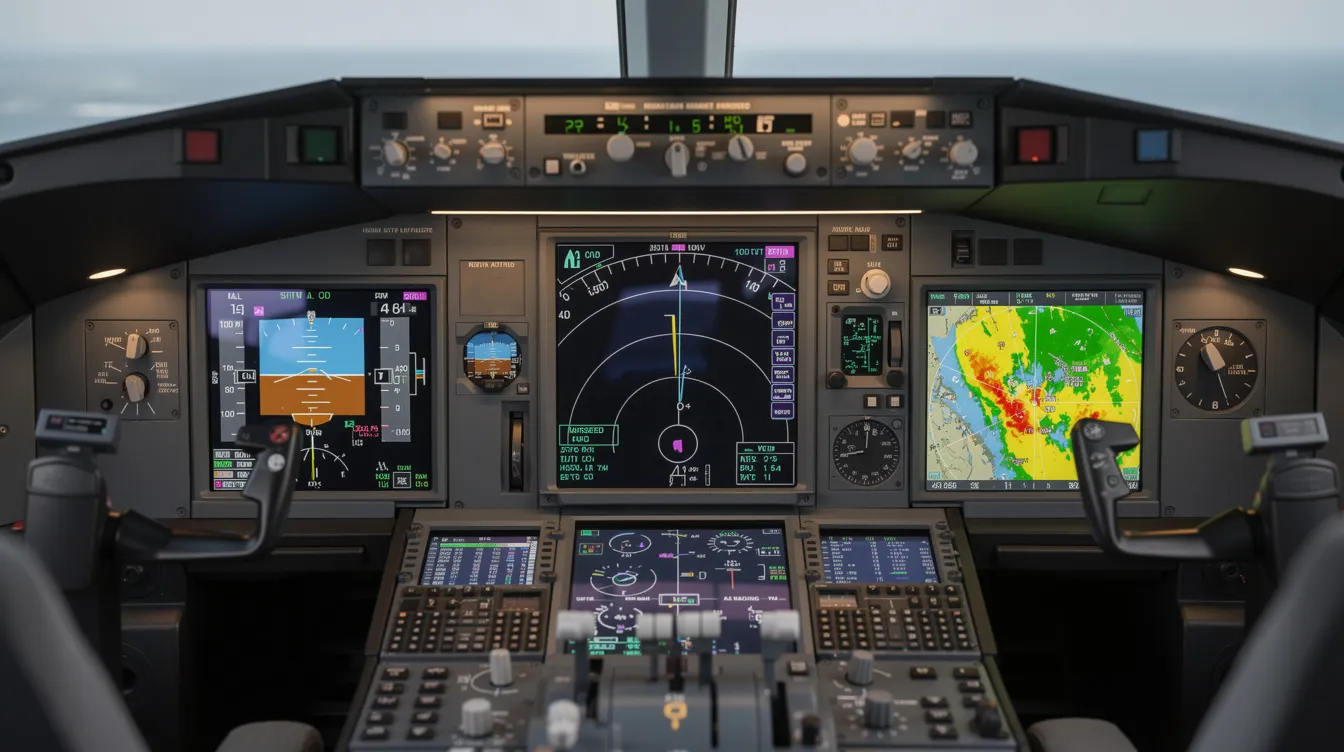
Safety specifically addresses why the TBM 960 excels in private charter operations. The aircraft features game-changing technology that provides multiple layers of protection for passengers and crew.
The TBM 960 features the HomeSafe™ emergency autoland system, which specifically addresses safety concerns by automatically ensuring a safe landing if the pilot becomes incapacitated, enhancing passenger safety. This system automatically brings the airplane to a runway touchdown if the pilot becomes incapacitated. Passengers can activate it via a dedicated red switch, or it engages automatically on dual flight computer failure. The system scans databases for suitable airports, executes approach, flare, rollout, and engine shutdown—all with zero pilot input required.
The automatic de-icing system includes a preventive and redundant solution for detecting icing conditions or accumulation, aiding the pilot in maintaining optimal protection. Certified for flight into known icing (FIKI), it includes automatic pneumatic boots and electric propeller heat with full digital envelope protection.
Connected safety features include Garmin Connext wireless for real-time database syncing and engine-health telematics via parameter analysis. These systems contribute to accident rates under 0.5 per 100,000 hours—comparable to twin-engine jets and in line with best practices highlighted in industry overviews of private charter airlines and operators.
Jettly works with certified operators maintaining these systems under Part 135 oversight, often with Wyvern Wingman or ARGUS Platinum audits, ensuring maximum safety compliance.
The TBM 960 features a stylish Prestige cabin that elevates comfort with a touchscreen-activated environmental control system, ambient lighting, and electrically-dimmable windows. The cabin measures 13 feet 3 inches long, with club-style seating for 4–5 passengers, and many charter operators further enhance the onboard experience with services like dedicated in-flight catering for private jets.
Comfort features include:
Electrically heated seats, allowing each occupant to select their preferred heating level
Ergonomic seating was developed with the help of an ergonomist, ensuring optimum comfort even on long-distance flights
Dual-glazed acrylic windows delivering 78-82 dB cruise noise levels
Overhead panel with integrated lighting and ambient LED strips
Passengers can control cabin ambient light through an electrically variable shading system. The electrically dimmable windows reduce glare and maintain temperature stability, with tint adjustment in 2-3 seconds. The cabin includes cupholders, headset holders, and coat hangers, enhancing the overall passenger experience.
Daher offers extensive customization through its configurator tool, which appeals to travelers and owners weighing TBM 960 charters against other affordable planes and budget-conscious aircraft. Customers can choose from five standard paint schemes and personalize with a selection of 105 colors. Interior options include eight exclusive harmonies and a premium selection tool, plus a ‘do it yourself’ option featuring 40 additional leather shades.
Storage accommodates 35 cubic feet of luggage (up to 507 pounds with four passengers), split between the aft baggage compartment and the nose compartment—ideal for rollaboards and briefcases on business trips.
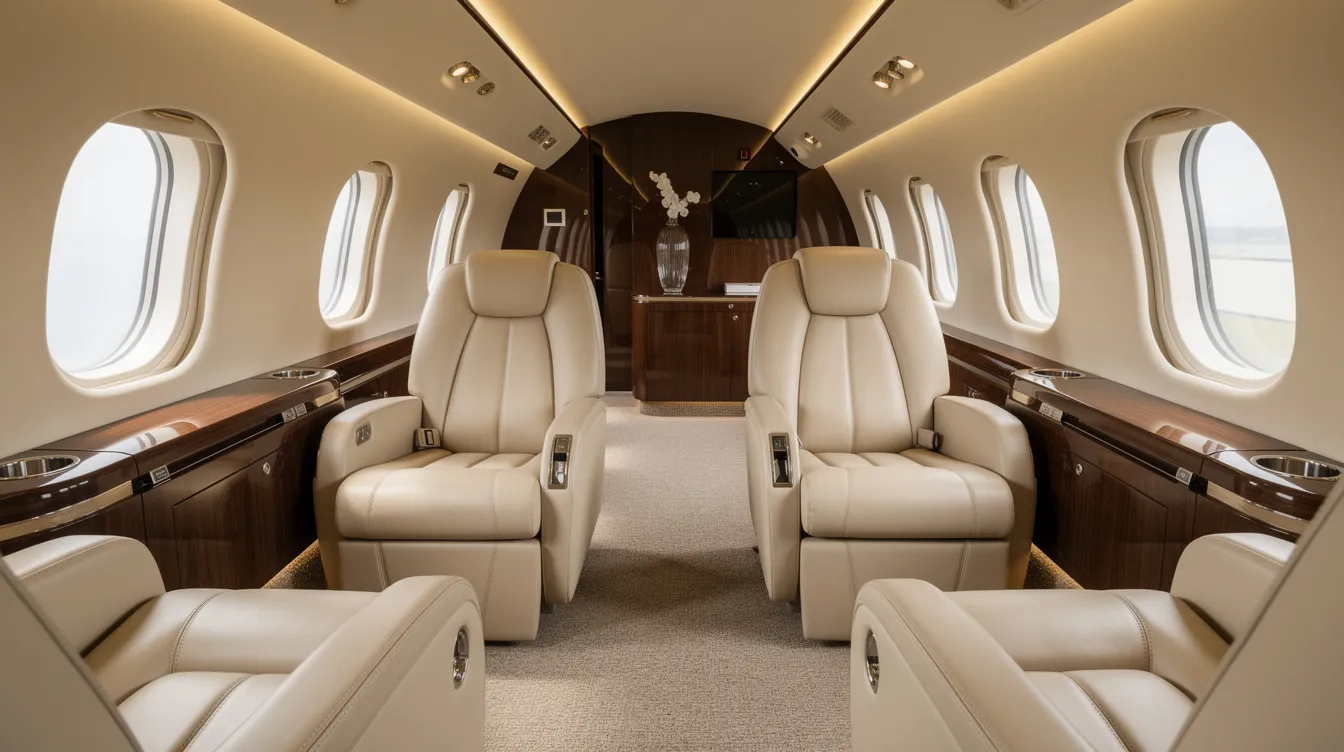
Within Jettly’s global aircraft inventory spanning turboprops, light jets, and larger cabin aircraft, the TBM 960 occupies a sweet spot for regional efficiency, especially for travelers comparing it with other affordable private jet charter options and pricing. The aircraft offers advantages for operators seeking near-jet speeds with single-engine operating costs.
Typical charter use cases:
Day-return business trips between regional cities (NYC-Boston in 1.2 hours)
Family weekends to resort destinations (LA-Aspen in 2.8 hours)
Point-to-point travel to airports not served by airlines
Operating economics favor the TBM 960 significantly, aligning with many strategies for booking the cheapest private jet flights, such as choosing efficient turboprops over light jets on regional routes. Charter hourly variable costs run approximately $1,100, including fuel, maintenance reserves, and crew, versus $2,000+ for comparable light jets. This represents 30-40% savings while maintaining similar block times on sub-1,000 nm routes.
Jettly’s digital booking platform allows users to filter or request turboprop aircraft, see transparent pricing, and compare options, complemented by a private jet charter cost estimator that helps forecast trip budgets before booking. Membership tiers unlock 10-15% discounts for frequent flyers, while on-demand access provides flexibility for occasional travelers, with Jettly’s range of private jet memberships tailoring benefits to different flying frequencies. Explore options at jettly.com.
While published annual operating costs for TBM 960 owners approach $400,000 (including hangar and insurance), charter customers pay hourly rates reflecting high efficiency relative to light jets. The aircraft operates as a smooth operator for regional missions, with dispatch reliability exceeding 98%.
The PT6E-66XT engine and optimized propeller deliver lower fuel burn per mile than comparable jets, reinforcing the TBM’s position among the most affordable private aircraft options for efficiency-focused travelers. Flying with maximum efficiency at long-range cruise settings, the TBM 960 burns just 36.9 gph—translating to approximately 50% lower emissions per seat-mile compared to heavy business jets per ICAO calculations.
Taking maximum advantage of today’s turboprop technology, direct routings, and access to closer secondary airports reduces total trip emissions versus commercial connections. Daher has certified 100% SAF compatibility, with Jettly’s platform supporting carbon offsetting programs for environmentally conscious travelers and positioning itself as a flexible NetJets alternative for cost-effective private flying.
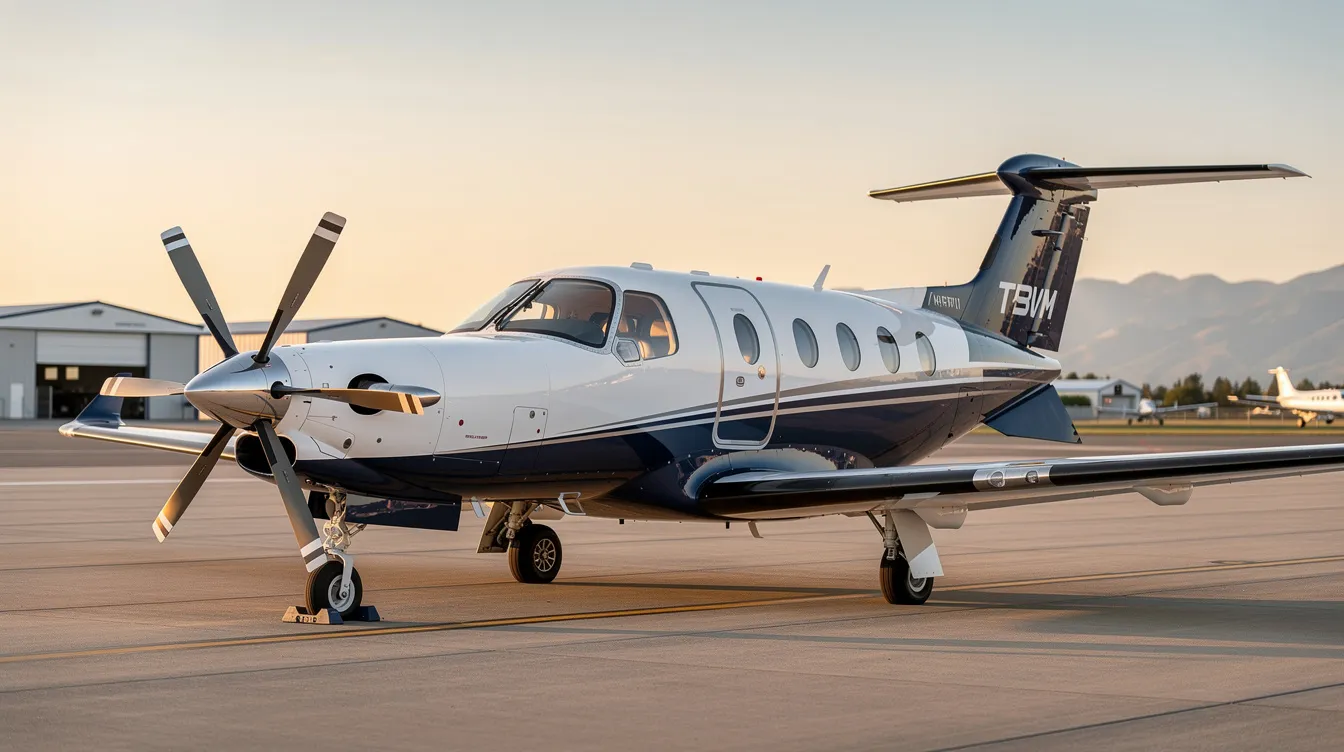
Aircraft choice should reflect distance, passenger count, luggage needs, schedule, and budget. The TBM 960 delivers maximum advantage for specific mission profiles.
The TBM 960 is ideal when:
Traveling with 2–5 passengers
Flying regional to mid-range legs up to 1,500 nm
Accessing shorter runways (under 3,500 feet)
Prioritizing cost-efficiency over a stand-up cabin
Light jets may suit larger groups, higher cruise altitudes, or specific maximum volume requirements—but typically at 30-40% higher cost, which is why many travelers instead explore ways to buy a single seat on a private jet rather than chartering an entire aircraft.
Submit trip details on Jettly (route, dates, passengers, luggage) to see TBM 960 options among best-value quotes. Flight advisors can help compare turboprop versus jet options through customer feedback and operational expertise, alongside digital tools that outline how to get a seat on a private jet easily using shared flights and flexible booking methods.
These FAQs address practical questions about chartering a TBM 960 through Jettly beyond what the main article covered, and readers interested in a broader pricing context can also consult Jettly’s private jet charter cost estimator and guide to affordable airplane rent.
Most TBM 960 aircraft are configured for up to five passenger seats plus the pilot, with four passengers being optimal for maximum comfort and baggage flexibility. The layout typically features a club configuration with facing seats and an accessible aft luggage area. Check specific operator configurations shown in your Jettly quote.
Baggage capacity varies with passenger count and fuel load. Typical charters accommodate several roll-aboard suitcases plus soft bags for 3–4 travelers. Dedicated baggage space exists in the aft cabin with additional storage areas. For oversize sports equipment, coordinate with operators through Jettly’s quote request.
Safety depends on regulation, maintenance, and crew training—not engine count alone. The TBM 960 features HomeSafe emergency autoland, advanced de-icing systems, and Garmin G3000 avionics with advanced Doppler radar. Jettly partners with approved operators meeting recognized safety standards and maintenance requirements.
The TBM 960 offers a pressurized, quiet cabin with premium materials and electrically heated seats, though without a full stand-up cabin. For flights under three hours with up to four passengers, comfort levels compare favorably—especially considering dimmable windows and refined environmental controls, which pair well with structured programs that use a jet card flight cost estimator to budget frequent trips. Many travelers find it an excellent jet alternative when prioritizing efficiency.
Submit your route and travel dates on Jettly, adding a note requesting a turboprop like the TBM 960, or explore structured access through Jettly’s jet card programs for frequent private flyers. The platform displays suitable aircraft with pricing, and support can prioritize TBM 960 options if multiple aircraft meet your profile. Flexible schedules often unlock attractive turboprop pricing for regional trips.
The TBM 960 combines digital power, efficient PT6E-66XT performance, and a comfortable Prestige cabin—making it a compelling choice for regional private charters. With jet-like higher cruising speed, Garmin G3000 avionics, and HomeSafe emergency autoland technology, it often undercuts light jets on cost for trips up to 1,700 nm.
Through Jettly’s digital marketplace, travelers can quickly see TBM 960 availability, compare options, and choose the best fit for their route and budget.
Ready to experience private travel on your terms? Explore TBM 960 charter options or request a quote at jettly.com, run cost projections using Jettly’s insights on jet card costs and pricing structures, or even earn by referring new flyers through Jettly’s ULTRA high ticket affiliate program.
Share this post:
Jay Franco Serevilla
May 15, 2026
|
5
min read
Discover tips and trends in the industry.
5
min read
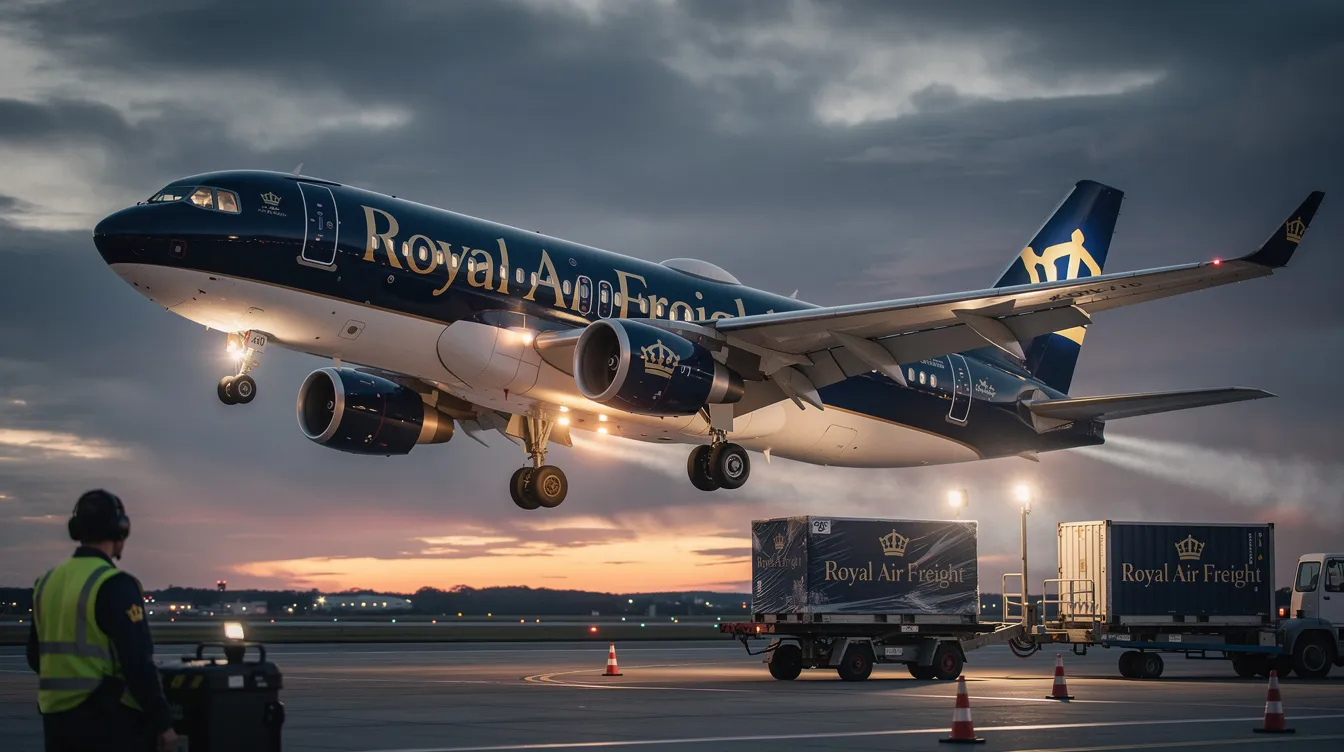
Royal Air Freight Inc: Chartering Alternatives with Jettly
Royal Air Freight Inc. has been a trusted name in charter and air freight services since 1961, specializing in expedited cargo and passenger flights across North America. Jettly, a digital charter broker, offers a broader marketplace for comparing private jet and cargo flight options, providing travelers with greater flexibility and instant pricing.
Read More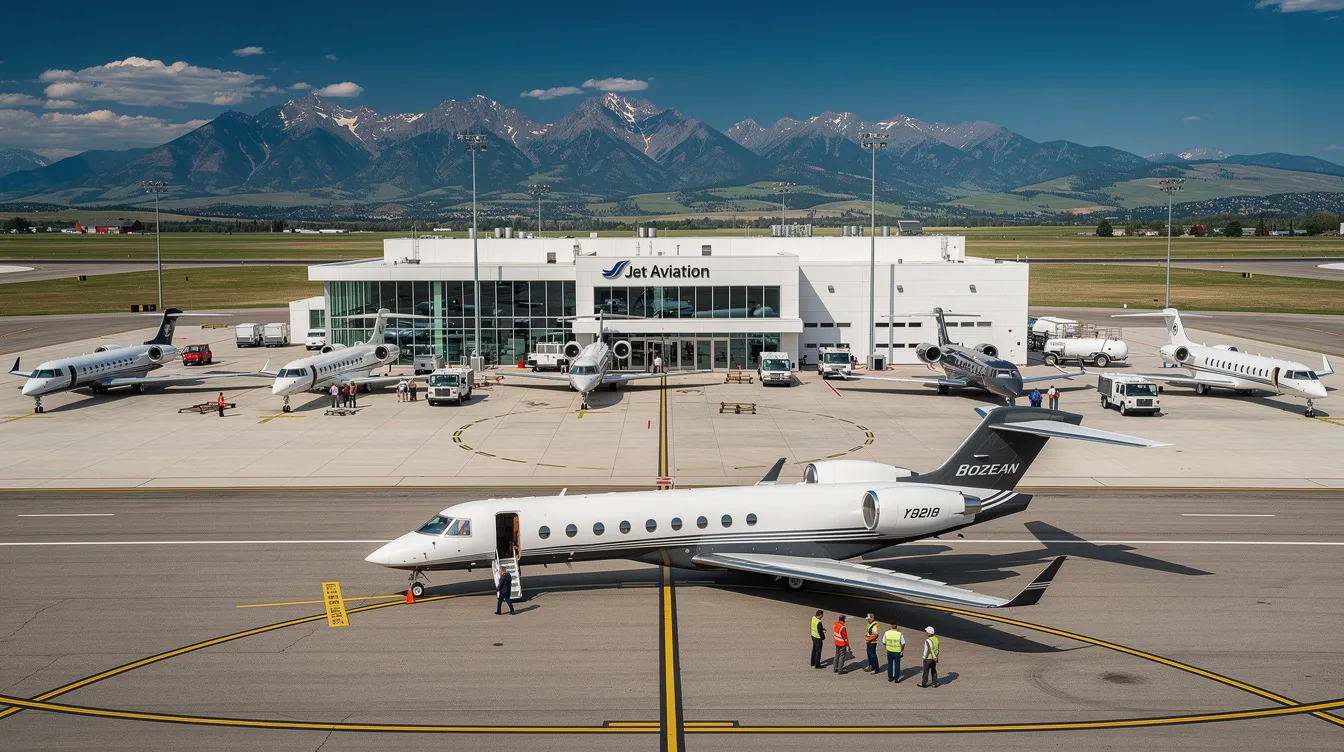
5
min read
Jet Aviation Bozeman: Private Jet Access to Big Sky Country with Jettly
Jet Aviation Bozeman provides private jet access to the stunning landscapes of Big Sky Country, located at Bozeman Yellowstone International Airport. With a full-service FBO and Jettly's digital charter marketplace, travelers can easily book flights and enjoy seamless ground transportation to popular destinations like Big Sky Resort and Yellowstone National Park.
Read MoreStay updated with our latest insights and tips to elevate your journey with us.
MEMBERSHIPS AND ASSOCIATIONS



Disclaimer: Jettly operates as a charter broker, offering access to a global digital jet charter marketplace. Jettly is not a direct air carrier and does not own or operate aircraft. All advertised flights are conducted by third-party air carriers that are fully licensed and hold the appropriate Part 135 or Part 121 certifications issued by the Federal Aviation Administration (FAA) or equivalent regulatory authorities under U.S. or foreign law. Jettly complies fully with the U.S. Department of Transportation's Part 295 and Part 298 Charter Broker regulations. Jettly does not carry additional liability insurance. Passengers are covered by aircraft operator insurance. TICO: 50023770


