


Login
Get Instant Pricing On 23,000+ Aircraft

>
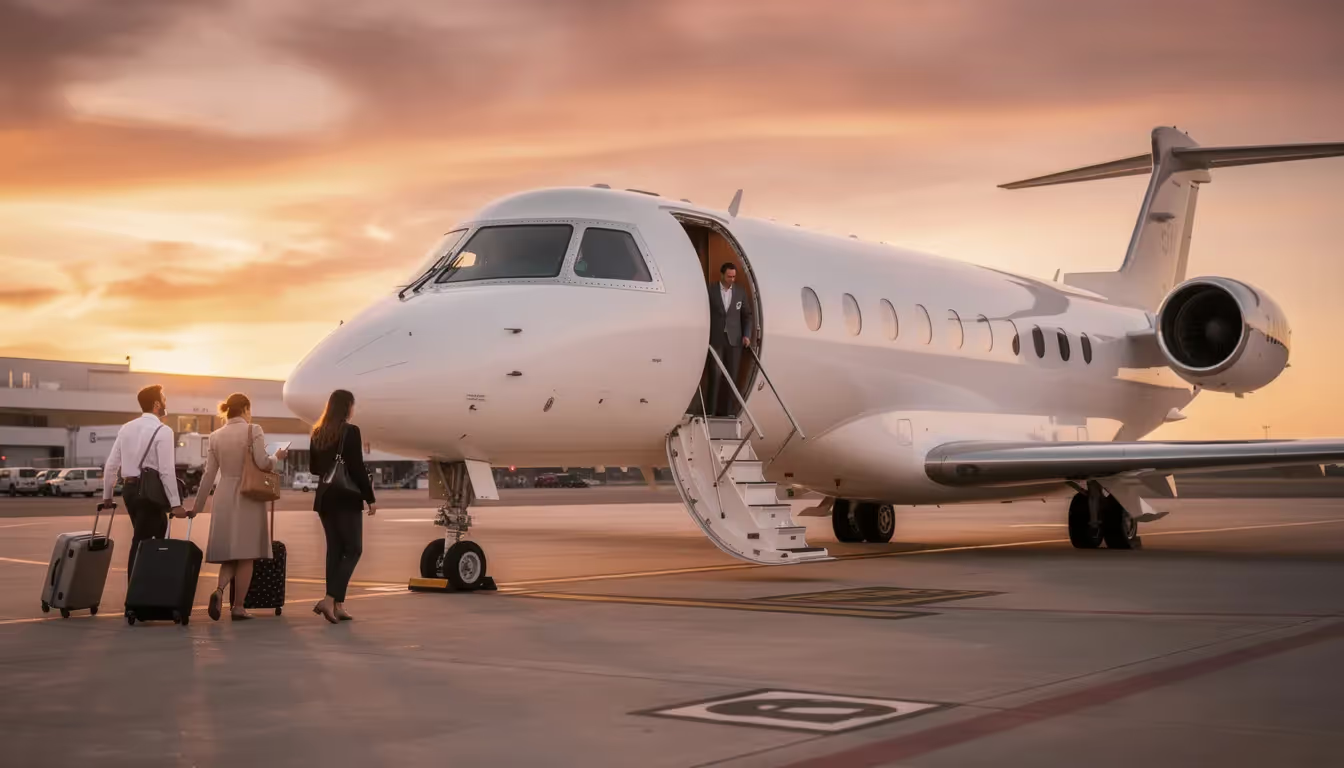
When you search for the “shortest private jet flight,” you’ll find two very different stories colliding. One involves Taylor Swift’s alleged 40-second hop across Los Angeles that sparked global warming debates and activist vandalism. The other is a charming 1.7-mile scheduled route between Scottish islands that’s been operating since the 1960s. This article unpacks both and shows how travelers can fly private at $0 per seat on empty legs that would otherwise fly without passengers.
Defining the shortest flight in the world gets complicated quickly. Are we talking about a celebrity’s 40-second city hop? A scheduled island-hopping service? Or a sub-minute maintenance test that never makes the news?
The truth is, there’s no single official global record for private jets. Many ultra-short flights—under 2 minutes—are unpublicized test legs or repositioning movements that operators run for logistical reasons, not luxury.
Here’s how to think about the different categories:
This article covers Taylor Swift’s reported 40-second journey, the legendary Westray–Papa Westray record, and why these short flights raise environmental and cost questions—plus how you can actually experience short private jet travel through empty leg bookings.
Few people have become more central to the debate on celebrity private jet emissions than Taylor Swift. Her aircraft movements, especially during and after The Eras Tour (2023-2025), have been tracked, analyzed, and criticized across every platform from Instagram to news outlets worldwide.
The most popular claim circulating in 2024-2025 videos involves an extremely short private jet flight of approximately 40 seconds in the Los Angeles area, reportedly covering roughly 6 km between parts of LAX or nearby airfields. Online commentators quickly labeled this “the shortest flight in the world”—though it lacks any official aviation record status.
At peak traffic around 5 pm in Los Angeles, the same ground route might take 10-15 minutes by car. For someone at Swift’s fame level, walking or using standard rideshare is essentially impossible without causing security chaos.
The criticism came swiftly (pun intended): how does a 6 km flight square with climate advocacy and public statements on global warming? Supporters point to security, scheduling, and safety as legitimate reasons. Critics see it as a sign of celebrity excess that even carbon credits can’t excuse.
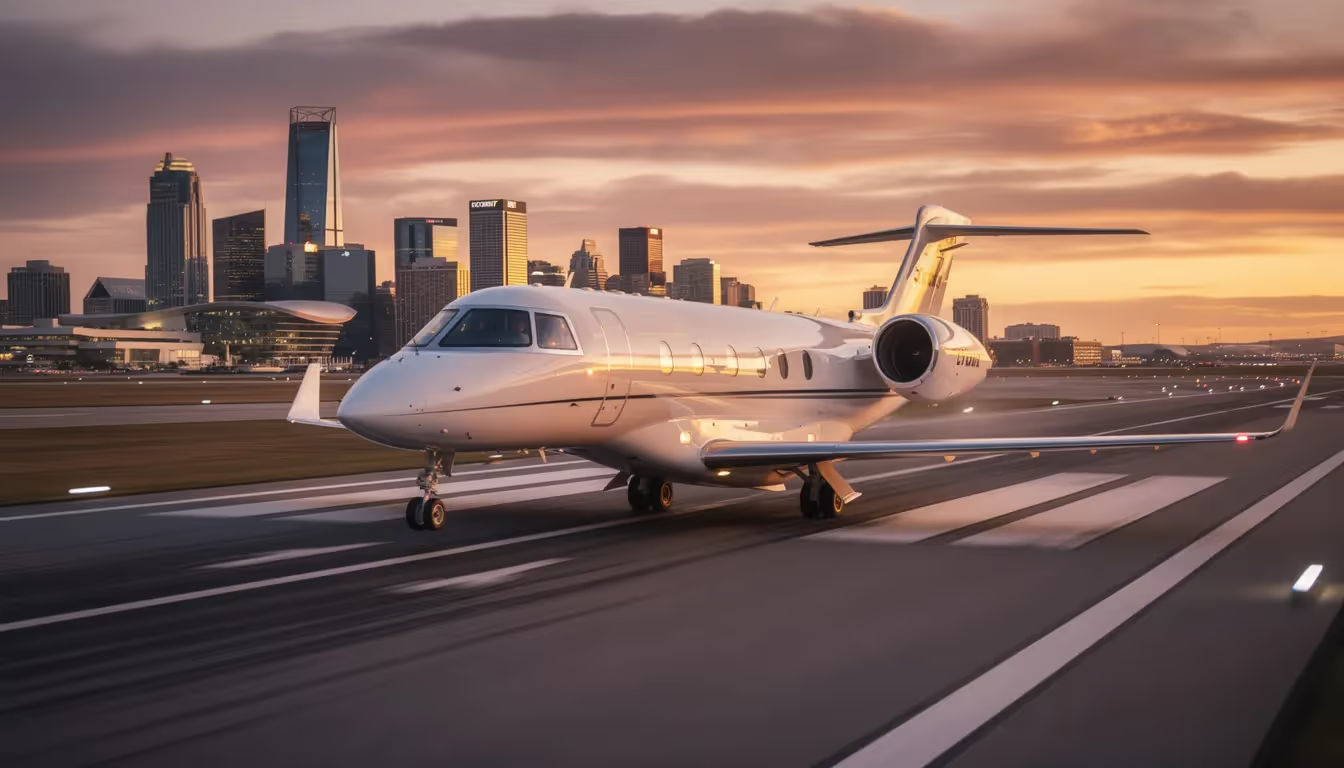
Let’s put some numbers around Taylor Swift’s reported shortest movements.
The alleged 40-second, 6 km hop in Los Angeles is dramatically shorter than typical private jet segments, which usually cover 300-1,500 km per leg. Flight tracking data from 2023-2025 shows multiple Swift-associated flights under 21 minutes, some likely tied to:
Aviation experts note that many of these ultra-short movements are probably not Swift personally trying to avoid a 10-minute drive. Instead, they’re likely:
In 2022, Swift topped several “celebrity private jet emissions” lists, which amplified scrutiny of every brief movement of her aircraft—even when those legs were for technical reasons that had nothing to do with avoiding traffic.
Swift has also reportedly attempted to mask her private jet travels using the FAA's privacy ICAO aircraft address program, reflecting efforts to balance privacy with public interest.
The backlash reached a dramatic peak in 2024 when climate activists from Just Stop Oil sprayed orange paint on Swift’s private jet at a London airport.
Their argument was stark: a single private jet flight can emit as much CO2 as an average EU citizen produces in an entire year. The stunt came after months of social media criticism and coincided with her Eras Tour visiting cities like Madrid and London.
The vandalism highlighted broader frustration with luxury emissions and triggered renewed debates about whether ultra-short celebrity flights should be regulated or taxed more heavily.
Regardless of personal views on the protest, the incident shows how public opinion is shifting. This is precisely why using existing empty legs more efficiently—rather than commissioning extra flights—has become increasingly important for the industry’s reputation and environmental footprint.
While celebrity private flights dominate headlines, the official title of “world’s shortest scheduled passenger flight” belongs to a humble route in Scotland’s Orkney Islands.
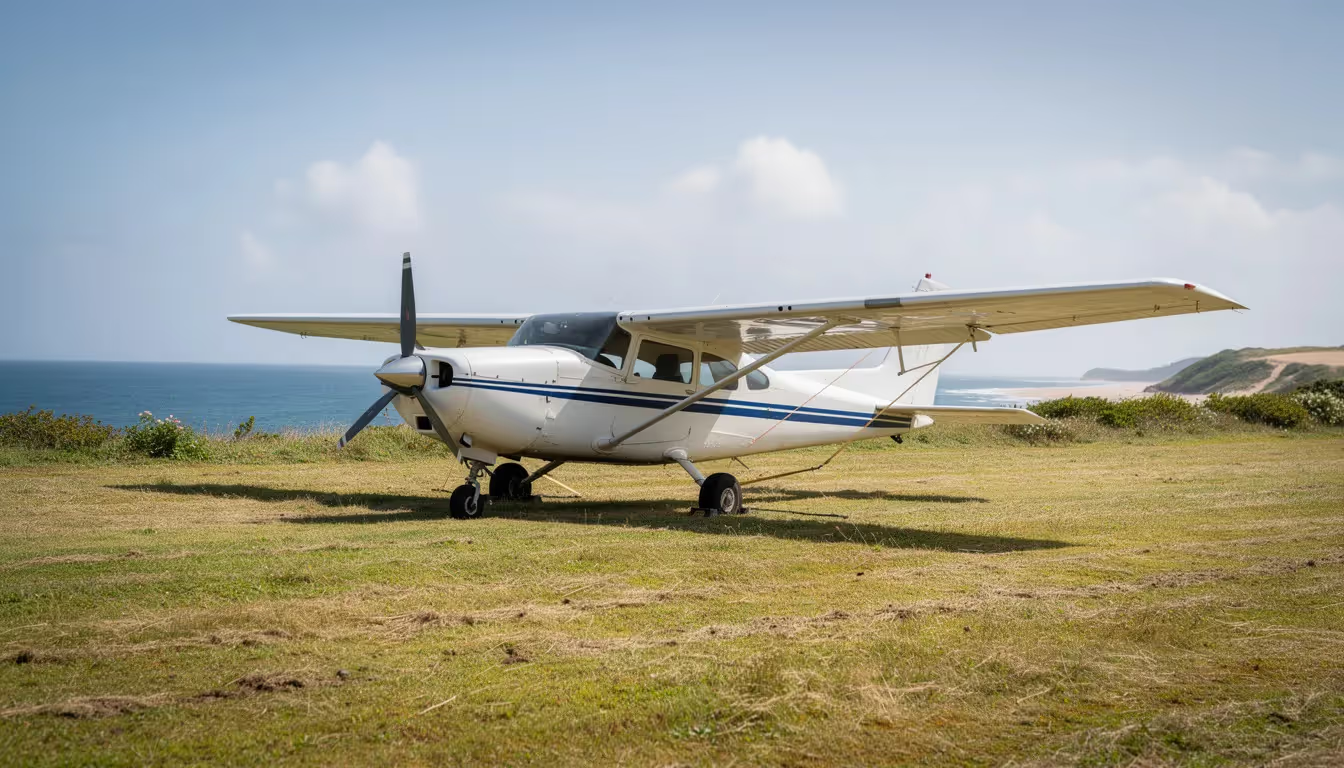
The Loganair Westray to Papa Westray route is the shortest scheduled passenger flight in the world, covering a total distance of just 1.7 miles (2.7 km). Flights typically last between 60 and 90 seconds airborne, with the fastest recorded crossing taking only 53 seconds, piloted by Stuart Linklater.
This subsidised public service obligation route has been operated continuously by Loganair since December 1967, providing a vital link for local residents. The aircraft used is a Britten-Norman BN2B-26 Islander, chosen for its ability to handle short runways and the challenging Scottish weather conditions.
The route is part of a three-airport loop including Kirkwall Airport on the Orkney mainland and serves as a genuine commuter link connecting residents to schools, healthcare, and government offices. The flight’s distance is actually shorter than the length of some major airport runways, such as those at Heathrow.
The Orkney Islands Council has long considered alternatives to such short flights.
Consultations began around 2014 to study fixed links—including a potential bridge or tunnel between Westray and Papa Westray—, but as of 2025, no construction has begun.
Current alternatives include:
While ferries and potential fixed links would reduce the need for tiny flights, unpredictable weather conditions and reliability concerns mean air service remains vital. The 1-minute flight versus a 25-minute ferry journey shows exactly why this route has survived for nearly six decades.
Short private jet flights are not limited to celebrity hops or tiny island routes. For example: Piper Aerostar 600.
These routes illustrate the variety of short-haul private jet travel, often involving hops between major cities and nearby vacation hubs, typically lasting under an hour.
Different aircraft types and operational factors greatly influence the experience and timing of short private jet flights:
Many ultra-short private jet flights have nothing to do with convenience or luxury. They exist because of operational necessities that most people never consider.
Here are the main reasons aircraft log extremely short legs:
These flights often occur without passengers. They might be logged as private movements, but they’re not “luxury trips” in any meaningful sense.
Because private jets operate from multiple nearby airports, such hops are sometimes the most efficient way to position aircraft for longer, revenue-generating flights. The plane has to move regardless—the question is whether those seats fly empty or get used.
This is exactly where private jet empty leg bookings come in: turning necessary short flights into useful travel rather than empty emissions.
Ultrawealthy celebrities often reposition their private jets for convenience, such as avoiding crowds at large international airports or moving to smaller general aviation airports nearby to avoid hassle.
The combination of high emissions per passenger and extremely short distances makes ultra-brief private jet flights a lightning rod for criticism.
The physics work against short flights: per kilometer, very short legs are often less fuel-efficient than longer ones. Takeoff and climb are the most fuel-intensive phases of any flight, and there’s little cruising time to average out that consumption.
Consider the numbers:
A 10-mile hop might burn 500 gallons in a Citation X, versus 200 gallons for the efficient cruise phase of a longer journey. The environmental cost per mile is disproportionately high.
Celebrity cases have become symbolic:
Mitigation efforts exist but remain controversial:
The last point is crucial. If an aircraft must fly anyway for repositioning, filling those seats doesn’t add emissions—it simply makes the flight more efficient per passenger.
While 40-second hops grab headlines, most “short” empty legs and private segments are in the 20-60 minute range—and they can be highly useful for real trips.
Here are realistic examples of short empty legs that private jet travelers might encounter:
How to take advantage:
Unlike a 6 km, 40-second celebrity flight, these short segments replace commercial flights or long drives. They give real utility to passengers while using the capacity that already exists.
How do very short private flights compare to alternatives? Let’s break it down.
For many travelers, the smartest path to experiencing short private jet trips is not commissioning a brand-new flight. It’s tapping into repositioning legs through empty leg bookings—getting the luxury experience without the luxury price tag or the environmental guilt of creating unnecessary flights.
The questions below cover safety, booking, flexibility, and environmental impact of short private jet flights and empty leg bookings—topics not fully addressed above.
Safety standards don’t change based on route length. Aircraft, pilots, and operators must meet the same regulatory requirements for a 2-minute flight as for a 2-hour one.
Many ultra-short flights are conducted by experienced crews for maintenance or repositioning purposes. They follow full pre-flight checks, briefings, and ATC procedures. Platforms like Jettly work only with vetted, certified charter operators who comply with strict national and international safety regulations.
NTSB data does show that approximately 15% of private aircraft incidents occur on flights under 100 miles, often related to visual flight rules in challenging weather—but this applies primarily to owner-flown light aircraft, not professionally operated charters.
Specific celebrity movements are usually private, non-commercial legs that aren’t offered for public booking. Even when similar ultra-short repositioning legs exist, they may be restricted due to security, airport, or operator constraints.
Instead of chasing novelty, use Jettly’s platform to discover short, publicly available empty legs—20-40 minute regional hops that offer nearly the same experience with real travel utility.
Empty legs are typically posted from a few days to a couple of weeks in advance, depending on when the underlying charter is confirmed.
Users can:
Last-minute flexibility dramatically improves your odds of catching interesting short flights on the platform.
Empty legs themselves don’t disappear—the aircraft must reposition whether or not passengers are on board. The emissions happen either way.
By placing travelers on those flights:
This doesn’t eliminate private aviation emissions, but it makes necessary operations more efficient. Flying on an empty leg is categorically different from commissioning a new flight for a 6 km hop.
Ideal users include travelers who:
Affluent but cost-conscious travelers who can adapt to last-minute opportunities typically extract the most value. If you frequently travel between major hubs or popular leisure destinations, empty leg bookings unlock short and medium-haul private legs throughout the year—turning what would be wasted capacity into your next private flight experience.
The world of the shortest private jet flights is more complex and fascinating than it first appears. From Taylor Swift’s much-discussed 40-second flight in Los Angeles to the historic Westray–Papa Westray route in Scotland, these ultra-short journeys highlight different facets of private aviation — from celebrity convenience and environmental debates to essential community connections.
While ultra-short flights often attract criticism for their environmental impact, understanding the operational realities behind repositioning, maintenance, and crew training flights reveals opportunities for smarter, more sustainable use of existing flights. Platforms like Jettly are pioneering this shift by offering travelers access to empty leg flights, turning what would otherwise be wasted capacity into affordable, convenient, and eco-friendlier private travel experiences.
By leveraging such platforms, users can enjoy the luxury and convenience of private jet travel without the excessive costs or environmental guilt often associated with bespoke charters. Whether you’re a frequent flyer seeking efficiency or simply curious about the shortest private jet flights, embracing empty leg opportunities is a compelling way forward in the evolving landscape of private aviation.
Share this post:
Jay Franco Serevilla
Feb 14, 2026
|
5
min read
Discover tips and trends in the industry.
5
min read
AVCARD: The Aviation Fuel Card Powering Smarter Fuel Purchasing
AVCARD is a versatile aviation fuel card from World Fuel, enabling operators to manage fuel purchases and operational expenses seamlessly at over 8,600 locations worldwide. It simplifies billing with detailed invoicing and supports various fuel types, making it essential for flight departments and charter operators. With no annual fee and integration with contract fuel programs, AVCARD enhances cost control and efficiency in aviation fuel procurement.
Read More
5
min read
How Much Weight Can a Plane Hold? (From Small Planes to Private Jets and Airliners)
Understanding how much weight a plane can hold is crucial for safe flight operations. Each aircraft has a certified maximum takeoff weight (MTOW) that dictates its capacity for passengers, baggage, and fuel. This knowledge helps travelers and pilots make informed decisions about flight planning and safety.
Read MoreStay updated with our latest insights and tips to elevate your journey with us.
MEMBERSHIPS AND ASSOCIATIONS



Disclaimer: Jettly operates as a charter broker, offering access to a global digital jet charter marketplace. Jettly is not a direct air carrier and does not own or operate aircraft. All advertised flights are conducted by third-party air carriers that are fully licensed and hold the appropriate Part 135 or Part 121 certifications issued by the Federal Aviation Administration (FAA) or equivalent regulatory authorities under U.S. or foreign law. Jettly complies fully with the U.S. Department of Transportation's Part 295 and Part 298 Charter Broker regulations. Jettly does not carry additional liability insurance. Passengers are covered by aircraft operator insurance. TICO: 50023770


