


Login
Get Instant Pricing On 23,000+ Aircraft

>
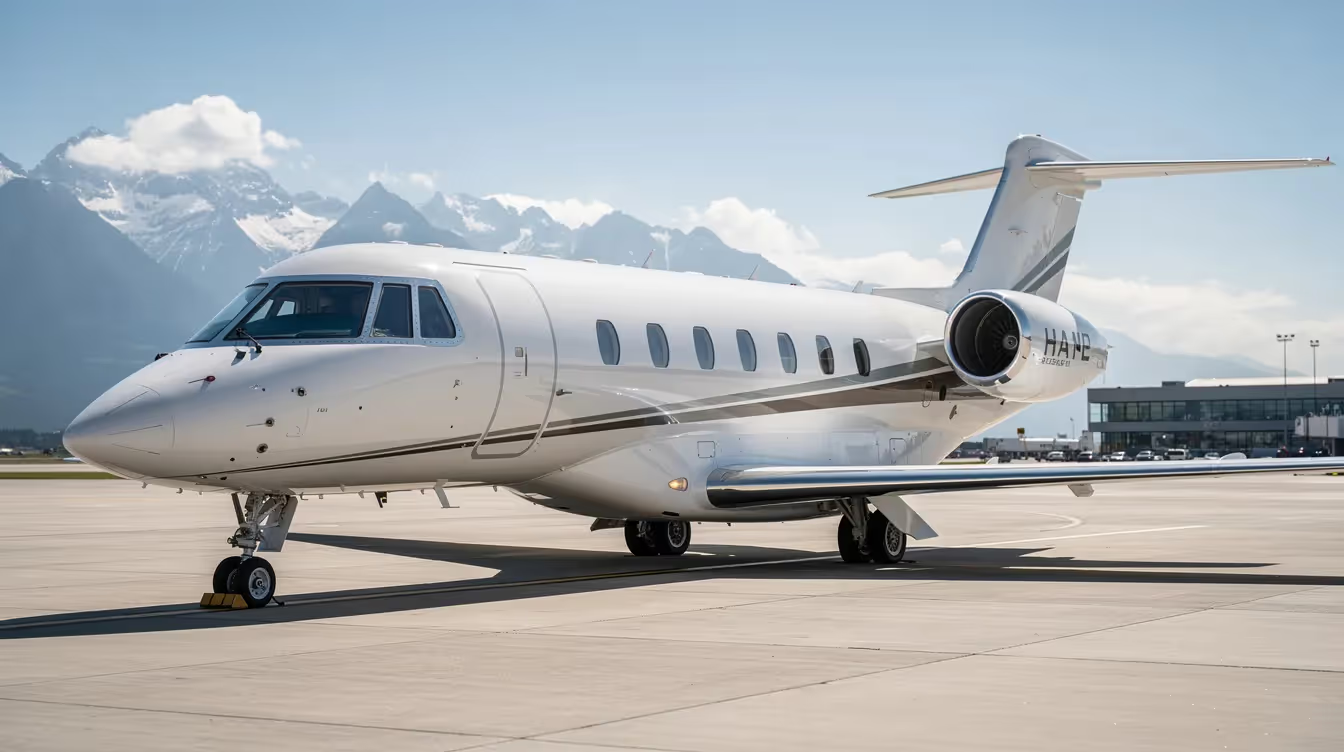
Selling a private jet is a significant decision that many owners face as their travel needs evolve or financial considerations change. However, divesting from full ownership does not mean giving up the benefits of private aviation. Numerous alternatives exist that allow travellers to maintain the convenience, flexibility, and comfort of private jet travel without the high costs and responsibilities associated with owning an aircraft outright.
This guide is designed for private jet owners considering selling their aircraft but wishing to maintain access to private aviation.
This article explores the most practical and cost-effective sell private jet alternatives available in 2026. From on-demand charter and jet card memberships to fractional ownership, leasing options, and per-seat alternatives, these solutions cater to different flight frequencies, budgets, and lifestyle preferences. By understanding these options, private jet owners can make informed choices that align with their current travel patterns and financial goals, ensuring continued access to private aviation on their own terms.
When exploring private jet alternatives for sale, owners can transition to charter, memberships, jet cards, fractional shares, leasing, or per-seat options—continuing private travel without full ownership burdens.
Frequent flyers logging 50–200 flight hours per year often save $200,000–$500,000 over five years by switching from full ownership to on-demand charter through platforms like Jettly.
Each alternative differs by commitment length, capital risk, and hourly cost—owners should evaluate key factors such as aircraft size, route length, and customer support, along with their actual flight history from the last 12–24 months.
Jettly offers on-demand private jet charter, memberships, empty leg access, and supports various leasing and management structures as practical, low-commitment solutions for those selling their aircraft.
Private jet ownership costs have escalated significantly through 2024–2026. Maintenance averages $500,000–$1.5 million annually for midsize jets. Crew salaries run $400,000–$800,000 per year. Insurance premiums rose 20–50% between 2023 and 2026 due to supply chain disruptions and weather-related claims.
Many owners face a common pain point: underutilization. Flying 100 hours annually on an aircraft capable of 800 hours means fixed costs dominate 70–90% of total expenses—even when the plane sits idle.
Market conditions have shifted, too. Used business jet inventory increased 30–40% from 2022 to 2025, softening resale values by 10–25% for popular models like the Citation XLS or Gulfstream G450. This price pressure pushes owners to consider “fly differently” rather than “stop flying.” The private aviation sector has evolved significantly, with fractional jet ownership transforming the landscape and offering high-net-worth individuals and business travellers more flexible, cost-effective private travel options.
This article helps owners compare full sale versus partial exits—including fractional ownership, jet cards, charter, memberships, and leasing—with concrete examples and cost benchmarks. Jettly is positioned as an ownership alternative, not a buyer or seller of aircraft, focused on replacing owned flying time with flexible, on-demand charter access and powerful tools like its airport locator platform to simplify global trip planning.
Before listing your aircraft or committing to any alternative, pull 12–24 months of flight data. This analysis reveals whether selling makes sense or if optimisation could work.
Utilisation Analysis:
Compare actual annual hours (75, 150, or 300) against break-even thresholds
For midsize and large jets, break-even typically sits at 250–350 hours per year
Below this range, aircraft utilisation becomes economically challenging
Cost Components to Tally:
Capital costs (depreciation or financing at 5–8% interest)
Crew salaries and benefits
Hangar/parking fees ($50,000–$200,000 yearly)
Insurance premiums
Maintenance programs and engine reserves ($800–$1,500 per hour flown)
Navigation subscriptions ($50,000/year)
Management fees (8–10% of operating budget)
Calculate Your True Hourly Cost: Divide the total annual cost by flight hours. Many owners discover their all-in hourly cost reaches $5,000–$10,000, while charter rates for similar aircraft run $3,000–$7,000; using a private jet charter cost estimator can help benchmark these numbers quickly.
For owners flying under 150–200 hours per year, on-demand charter, memberships, or leasing through a charter management program can reduce total cost and eliminate residual value risk in a softening private aviation market.
Decision Framework:
Keep & Optimise: More than 300 hours annually
Sell & Switch: Under 150 hours annually
Hybrid: Sell large jet, use charter plus occasional fractional or lease for specific missions
Understanding the full spectrum of options helps owners make an informed decision. Here’s a high-level map:
On-demand private charter: Sell the entire aircraft and replace flying with trip-by-trip booking through a digital marketplace like Jettly—maximum flexibility, no long-term commitment and access to a broad private charter aircraft fleet across categories.
Jet card programs and memberships: Pre-purchase hours or pay annual fees for fixed rates and guaranteed availability without aircraft ownership. Membership programs and jet cards offer flexibility and lower commitment compared to fractional ownership, allowing users to pay for flights as needed without long-term contracts.
Fractional jet ownership: Sell your own plane, reinvest smaller capital in a fractional share (e.g., 1/16 for 50 hours/year) with a major operator. Fractional ownership allows individuals to purchase a share of an aircraft, providing access to a fleet of jets while sharing costs with other owners, making it a cost-effective alternative to full ownership.
Leasing and Charter Management: Dry leasing provides only the aircraft, with the lessee responsible for crew and maintenance, while wet leasing includes crew and operational responsibilities. Leasing an aircraft can provide a steady revenue stream without the liability of day-to-day management. Charter management allows aircraft to be rented out when not in use, which can offset operational expenses.
Hybrid models: Mix charter, jet cards, leasing, and occasional fractional hours to match different trip requirements. Shared ownership allows multiple parties to collectively own an aircraft, splitting expenses and responsibilities. Joint ownership can help split the fixed costs of maintenance and crew while allowing for a more private experience compared to large fractional programs.
Per-seat and semi-private options: For routes like LA–Vegas or New York–South Florida, buying a seat on a private jet lets you book individual seats when a full aircraft charter isn’t necessary. Private jet seat sharing allows passengers to book individual seats on a private aircraft, making luxury private aviation more affordable by sharing the costs with others.
Empty leg flights: Empty leg flights, which are repositioning flights offered at discounts, can provide substantial savings for travellers looking to fly privately at a lower cost.
Private aviation programs include structured arrangements such as ownership shares, memberships, leasing agreements, and specialised financial programs designed to optimise capital use and provide flexible aircraft access, with fractional jet ownership providers and comparisons helping buyers understand the leading options.
For many former owners, on-demand charter becomes the default alternative once their private aircraft is sold. This model eliminates asset risk entirely—you pay only when you fly. Jettly’s no-repositioning-fee model helps clients save money by reducing overall transportation costs, eliminating additional fees that typically increase trip expenses.
Jettly connects travellers to over 20,000 unique aircraft globally under Part 135 regulations and equivalent standards. This global reach spans North America, Europe, and other key regions, while its focus on affordable private jet charter pricing helps former owners align costs with their new travel patterns.
How It Works:
Instant pricing and digital booking replicate ownership convenience
No management company required
Book common routes like Toronto–Vancouver, New York–Miami, or London–Nice in minutes
Aircraft Categories Available:
|
Category |
Range |
Seats |
Hourly Rate |
|---|---|---|---|
|
Turboprops |
Under 500nm |
4–8 |
$1,500–$3,000 |
|
Light jets |
500–1,500nm |
6–8 |
$3,000–$5,000 |
|
Midsize |
1,500–2,500nm |
8–10 |
$5,000–$8,000 |
|
Super-midsize/Heavy |
2,500+nm |
10–16 |
$8,000–$15,000 |
— These ranges are consistent with what you’ll see when comparing top private jet charter companies across the market.
Former owners downsizing from large jets can save 30–50% annually when flying under 200 hours by matching aircraft category to actual mission needs. By comparison, renting out a jet for 200 hours annually can potentially cover high fixed costs like pilot salaries and insurance, but switching to charter eliminates these ongoing ownership expenses entirely.
Jettly also integrates ground transportation, in-flight catering for private jets, and flexible routing to secondary airports—conveniences that may not have made sense with a larger owned aircraft but provide significant time savings now.

Jet card programs and memberships offer a middle ground between full jet ownership and ad-hoc charter. These options suit owners seeking predictable pricing without asset responsibility.
Jet Cards Defined:
Pre-purchased blocks of hours (typically 25–75 hours) through structured jet card programs
Fixed rate per aircraft category
Terms usually 25–36 months
Rates range $4,500–$6,000 per hour, avoiding fuel surcharges
Sentient Jet, for example, offers a no-commitment, flexible hour purchase model, making it attractive for travellers with unpredictable schedules compared to other jet card programs like VistaJet, especially for short-term or light jet access without long-term commitments.
Membership Models:
Annual fees of $5,000–$25,000 for private jet membership plans
Priority access and 10–20% discounts on charter sales
Similar to how Jettly structures some membership offerings
Key Benefits for Ex-Owners:
Predictable pricing simplifies budgeting
Guaranteed access during peak periods (with 24–72 hour notice)
No unused hours sitting on the balance sheet as a depreciating asset
Limitations to Consider:
Blackout dates around holidays
Peak surcharges may apply
Minimum daily charges ($5,000–$10,000)
Advance booking required for guaranteed availability
This model makes sense for owners who previously flew 50–150 hours annually and want cost-effective access without handling aircraft management or crew.
Some owners prefer stepping down from 100% ownership into a fractional structure rather than exiting asset-based flying entirely. Fractional aircraft ownership reduces capital at risk while maintaining access.
How Fractional Shares Work:
|
Share Size |
Annual Hours |
Typical Contract |
|---|---|---|
|
1/16 |
~50 hours |
3–5 years |
|
1/8 |
~100 hours |
3–5 years |
|
1/4 |
~200 hours |
3–5 years |
— a structure explored in detail in many fractional jet ownership cost breakdowns.
Cost Components:
Upfront investment: $300,000–$1 million (depending on aircraft model)
Monthly management fees: $10,000–$20,000
Occupied hourly rates: $4,000–$7,000
Potential fuel surcharges
Pros Versus Full Ownership:
Access to a larger fleet of aircraft types, which is one reason many buyers explore the good and bad of fractional private jet ownership
Guaranteed access windows
No direct responsibility for crew management or maintenance scheduling
Cons Versus Charter:
Multi-year contract locks capital
Share depreciation of 10–20% annually
Peak travel restrictions possible
Less flexibility to upgrade or downgrade trip-by-trip
Fractional programs from other providers like NetJets or Flexjet serve fractional owners well, but Jettly’s marketplace can undercut these options by 20–40% for equivalent access without ownership agreement obligations; a detailed look at fractional jet ownership pros, cons, and FAQs can clarify if these structures still fit your needs.
Not every trip after selling a private jet requires chartering the same aircraft you once owned. Per-seat and empty-leg business models offer attractive alternatives for specific routes.
Per-Seat and Semi-Private Services:
Book individual seats on scheduled private flights using strategies for getting a seat on a private jet
Popular corridors: New York–South Florida ($800–$1,500/seat), LA–Vegas ($1,000–$2,500/seat)
Aircraft: Light jets and turboprops seating 4–16 passengers
Retain private terminal access and time savings versus commercial travel
Private jet seat sharing allows passengers to book individual seats on a private aircraft, making luxury private aviation more affordable by sharing the costs with others.
Empty-Leg Flights:
Repositioning segments offered at 30–70% below standard charter prices via curated empty leg flights
Example: $3,000 for a repositioning flight versus the $10,000 standard rate
Limited flexibility in timing and routing
Empty leg flights, which are repositioning flights offered at discounts, can provide substantial savings for travellers looking to fly privately at a lower cost.
Jettly’s platform surfaces empty-leg and discounted opportunities dynamically, allowing former owners with flexible options to capture savings of 20–50%.
Trade-offs:
Less control over schedule and aircraft category compared with creating or joining crowdsourced private jet flights
Major cost savings
Retains most private travel benefits, especially those time savings at fixed base operators
Pulling previous options together helps clarify which alternative fits different profiles.
|
Alternative |
Hourly Cost |
Contract Length |
Capital at Risk |
|---|---|---|---|
|
On-demand charter (Jettly) |
$3,000–$15,000 |
None |
Zero |
|
Jet card |
$4,000–$8,000 |
25–36 months |
Low |
|
Fractional share |
$5,000–$10,000 |
3–5 years |
$300K–$1M+ |
|
Leasing/Charter Management |
Varies |
Flexible |
Low to Medium |
|
Per-seat/Empty-leg |
$500–$3,000 |
None |
Zero |
|
Full ownership |
$5,000–$10,000+ |
Indefinite |
$3M–$50M+ |
Example Scenario: A former Gulfstream owner now flying 120 hours annually across regional and international routes:
Charter via Jettly: $1.2–$1.8 million over 5 years
Jet card: $1.5–$2.2 million over 5 years
Fractional: $2.5–$4 million over 5 years (after upfront investment recovery)
Leasing/Charter Management: Potential steady revenue stream with reduced management liability, offsetting fixed costs
Retained ownership: $4–$6 million over 5 years
On-demand charter scores highest on flexibility and lowest on long-term commitment. Leasing and charter management offer revenue opportunities for owners who prefer to keep their aircraft but reduce operational burdens. For owners comparing Jettly against large incumbents, a dedicated NetJets alternative guide can highlight cost and flexibility differences. There is no single “best” alternative—the optimal solution depends on flight frequency, route patterns, and willingness to pre-commit capital.
Pull at least 12 months of prior flight logs to model these options accurately rather than relying on estimates.

Jettly operates as a tech-driven private jet charter marketplace built specifically for former owners and frequent flyers seeking personalised service without ownership burdens, including tools like its jet card flight cost estimator for those evaluating prepaid access.
Global Reach:
Access to 20,000+ aircraft, including light jets, midsize, large-cabin jets, turboprops, and helicopters
Coverage across North America, Europe, and key global regions
Service area extends to secondary airports closer to final destinations
Transparent Pricing:
Instant, real-time charter quotes before commitment
No broker markups
Easy comparison against historical ownership costs or other providers
Membership vs. On-Demand:
Members receive 15–25% lower per-flight fees, and Jettly even runs an ultra-high ticket affiliate program for partners who refer new members and charter clients
Dedicated support for high-volume travellers
Flexible—no multi-year contract required
Safety Standards:
All operators comply with FAA Part 135 (or equivalent)
Third-party audit ratings (ARGUS/WYVERN), where applicable
Maintains safety record standards matching or exceeding those of private ownership
Convenience Services:
Integrated ground transfers
Catering coordination
Access to smaller airports—improving door-to-door travel versus fixed base operators with larger aircraft and enabling localised solutions such as private jet charter in Kolkata, West Bengal
A structured 3–12 month transition plan helps owners move smoothly from ownership to alternatives.
Step 1: Audit the last 12–24 months of trips by city pair, passenger count (especially those travelling as a small group), and flight time to define your post-sale profile.
Step 2: Obtain charter, membership, fractional, and leasing quotes using that profile. Include sample pricing from Jettly for key routes and aircraft sizes, and review specific private jet membership options if recurring travel patterns justify them.
Step 3: Consider overlap—keep the aircraft temporarily while test-flying charter, jet card, or leasing solutions to gather real-world cost data.
Step 4: Coordinate with your aircraft broker, aviation attorney, and tax advisor. Structure the sale or lease with clear exit clauses, especially if reinvesting in fractional ownership programs.
Step 5: After closing, set rules for when to charter entire aircraft versus per-seat or commercial premium cabins. This maintains comfort and time savings while keeping total cost predictable.
Poorly planned transitions lead to frustration, missed private flights, or overspending despite selling the jet.
Avoid rigid contracts early: Don’t lock into multi-year memberships or large prepaid blocks before testing shorter-term charter or leasing
Plan for peak periods: Holidays and major events require 7–14 day advance booking—last-minute availability won’t match personal aircraft access
Factor total cost: Include ground transportation, overnight crew charges, and repositioning fees ($2,000–$5,000 one-way) for accurate budgeting
Verify safety credentials: Check operator certificates and ratings (ARGUS/WYVERN), especially those from new brokers or platforms
Build redundancy: Maintain at least two credible charter or leasing sources, including a marketplace like Jettly, to avoid dependence on any single operator and gain access to multiple options
These FAQs address common concerns from current and former aircraft owners considering alternatives.
Many owners find ownership hard to justify below roughly 200–250 hours per year, though the exact number varies depending on aircraft type, financing terms, and maintenance programs. Light jets may break even closer to 150–200 hours, while heavy jets often require 300+ hours.
Compute your all-in hourly cost using real expenses, then compare against charter or membership pricing for similar aircraft on Jettly. A professional aviation advisor can help validate break-even before making the final call. Use at least a full year of data to avoid decisions based on unusually busy or quiet periods.
Yes. Many owners run a 3–6 month trial period, flying some trips via charter while still owning the aircraft. This provides real-world cost and private aviation experience data.
Jettly’s on-demand model makes it easy to trial multiple aircraft types and operators without long-term commitment or cancellation terms concerns. Coordinate schedules carefully to avoid paying twice for the same trip.
Crew employment is typically tied to the aircraft or management company. Selling the jet usually ends or changes those arrangements.
Some owners negotiate placement support with the management company or help crew transition to roles with other aircraft owners. When using charter through Jettly, flight crews are provided by operators—removing the need to manage or payroll pilots directly. Plan crew transitions ethically and with advance notice.
Tax treatment varies widely by country and whether flights are primarily business or personal. Consult an aviation-savvy tax advisor before selling, especially if you’ve taken depreciation or bonus depreciation on the aircraft.
Charter and memberships typically become operating expenses rather than depreciable assets, changing the tax profile. Jettly provides detailed invoicing and usage data to support accounting and tax reporting, but does not offer tax advice.
Absolutely. Long-range missions like New York–London ($80,000–$120,000) or Los Angeles–Tokyo remain accessible via heavy jets and ultra-long-range aircraft in the charter market.
Jettly’s global inventory includes large-cabin jets suited to transoceanic routes, booked trip-by-trip. Some former owners mix charter heavy jets for occasional long-haul trips with light or midsize jets—or even commercial premium cabins—for shorter segments. Selling your aircraft doesn’t limit you to regional flights; it simply changes how those flights are sourced.
Selling a private aircraft doesn’t mean abandoning the private aviation industry—it means shifting to a model that better fits current travel patterns and eliminates unnecessary capital risk.
For many owners flying privately under 200 hours annually, on-demand charter, memberships, leasing arrangements, and occasional fractional use maintain convenience with simpler aircraft management and no depreciating asset on the balance sheet.
Jettly offers a digital, transparent way to access a global fleet on demand through mobile apps and instant booking, making it a practical primary alternative when exploring private jet alternatives.
Ready to experience private travel on your terms? Explore flight options or request a quote at https://www.jettly.com.
Share this post:
Jay Franco Serevilla
Apr 22, 2026
|
5
min read
Discover tips and trends in the industry.

5
min read
Helicopter Flying Time: How Long Your Helicopter Flight Really Takes
Helicopter flight time is a crucial factor for travelers considering charter services, influenced by distance, weather, and operational factors. This guide explains how flight time is calculated, typical durations for various trips, and the differences between airborne and block time. Understanding these elements helps passengers set realistic expectations for their helicopter journeys.
Read More
5
min read
Rent Helicopter Price: What It Really Costs to Charter a Private Helicopter
Renting a helicopter can range from $900 to over $8,000 per hour, depending on various factors like aircraft type and route. This guide details the costs associated with helicopter charters, including hidden fees and real-world examples, helping you understand what to expect in 2025–2026. Jettly's platform offers transparent pricing and easy comparisons to find the best helicopter rental for your needs.
Read MoreStay updated with our latest insights and tips to elevate your journey with us.
MEMBERSHIPS AND ASSOCIATIONS



Disclaimer: Jettly operates as a charter broker, offering access to a global digital jet charter marketplace. Jettly is not a direct air carrier and does not own or operate aircraft. All advertised flights are conducted by third-party air carriers that are fully licensed and hold the appropriate Part 135 or Part 121 certifications issued by the Federal Aviation Administration (FAA) or equivalent regulatory authorities under U.S. or foreign law. Jettly complies fully with the U.S. Department of Transportation's Part 295 and Part 298 Charter Broker regulations. Jettly does not carry additional liability insurance. Passengers are covered by aircraft operator insurance. TICO: 50023770


