


Login
Get Instant Pricing On 23,000+ Aircraft

>

Regional jets form the backbone of connectivity between smaller cities and major hubs worldwide, playing a crucial role in the aviation industry by enhancing regional connectivity and meeting specific market needs. These jet-powered aircraft are typically designed to carry between 30 and 100 passengers on short- to medium-haul routes, serving markets where larger airliners would be impractical. For travelers seeking private charter solutions for groups of 30 to 100+, platforms like Jettly can arrange regional jet charters for corporate shuttles, sports teams, and incentive travel, offering a perfect balance between operational efficiency and passenger comfort for short to medium-range flights as a flexible alternative to traditional fractional providers.
This guide is intended for travelers, aviation professionals, and anyone interested in how regional jets support regional connectivity, local economies, and the broader aviation ecosystem. It covers both private and commercial uses of regional jets, highlights major models and manufacturers, and explores future trends in the regional jet market. Regional jets matter because they are vital for regional connectivity, support local economies, and enhance global air travel by linking smaller communities to major hubs and facilitating efficient, frequent service on routes that would not be viable for larger aircraft.
Regional jets typically seat 50–110 passengers and operate on short to medium-haul routes of 200–1,500 nautical miles.
They enable airlines to offer high-frequency service on routes with lower passenger demand, connecting smaller communities to major hubs.
Regional jets and turboprop aircraft together form the backbone of regional aircraft fleets; jets are preferred for longer regional sectors, while turboprops excel on shorter hops.
Major regional jet models include the Bombardier CRJ family, Embraer E-Jets, the canceled Mitsubishi Regional Jet (Mitsubishi SpaceJet), and the Bombardier CSeries (now Airbus A220).
Jettly can source regional jets for private charter, providing cost-effective per-seat pricing for larger groups compared to traditional business jets.
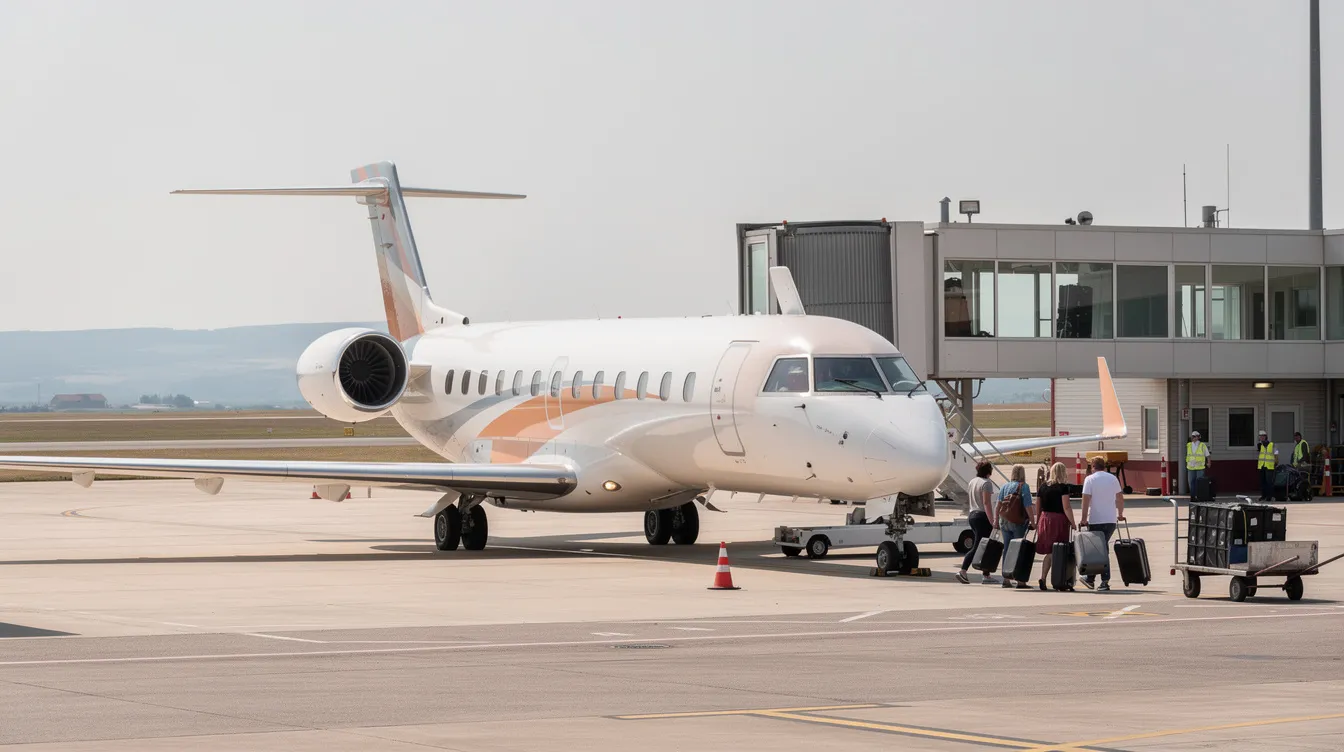
A regional jet (RJ) is a jet-powered airliner specifically engineered for short to medium-range flights, typically designed to carry between 30 and 100 passengers, and usually has a seating capacity of fewer than 150 seats. Regional jets are primarily used for short-haul flights, often within a country or a specific area of a continent.
A regional jet is a jet-powered regional airliner typically designed to carry between 30 and 100 passengers on short- to medium-haul routes, where private jet charter pricing is influenced heavily by distance and aircraft size. These smaller aircraft operate sectors ranging from approximately 200 to 1,500 nautical miles at cruise speeds of 450–530 knots and altitudes up to FL410.
Regional jets are specifically engineered for short to medium-range flights, making them ideal for regional connectivity. Regional airlines use these smaller aircraft primarily to connect smaller cities to major hubs and operate high-frequency routes where larger aircraft would be economically impractical.
Common seating layouts include 1x2 and 2x2 configurations. Most regional jets fall under the sub-100-seat category, though stretched variants like the E195 can approach 124 seats. Many popular regional jets have their engines mounted on the rear of the fuselage near the tail, unlike modern mainline jets, which have engines mounted under the wings.
Regional jets occupy a middle ground between small propeller planes and larger mainline jets used by major carriers like United Airlines. As smaller aircraft compared to mainline jets, regional jets are typically used for short-haul flights within specific regions, seating fewer than 150 passengers. They’re larger than most business jets but smaller than narrowbody aircraft like the Boeing 737 or Airbus A320. These jets strike a balance between operational efficiency and passenger comfort, enhancing accessibility of air travel in regions where larger aircraft may not be economically viable.
Typical routes include Chicago O’Hare to Cleveland Hopkins (approximately 300 nm) and Paris CDG to Geneva (around 240 nm), both served multiple times daily by regional jets such as the Canadair CRJ-200 regional jet.
Both regional jets and turboprop aircraft anchor regional fleets worldwide. Each aircraft type is optimized for specific distance and cost profiles, giving airlines flexibility in route planning.
Turboprops like the ATR 72 (68 seats, 800 nm range) and De Havilland Canada Dash 8-Q400 (78 seats, 1,000 nm range) excel on sectors below 300–400 nautical miles. Jets gain advantages on longer regional routes where their higher cruise speeds reduce block times significantly.
|
Aircraft Type |
Typical Cruise Speed |
Typical Range (nm) |
Typical Passenger Capacity |
|---|---|---|---|
|
Regional Jet |
450–500 knots |
1,200–2,000 |
50–90 |
|
Turboprop |
300–360 knots |
800–1,200 |
50–78 |
Regional jets generally fly slower and at lower altitudes than larger aircraft, which can increase travel time compared to mainline jets, but they still outpace turboprops considerably.
Regional jets often have lower trip costs compared to larger jets, but they are less fuel-efficient per passenger and have limited cabin space. Smaller jets can burn up to 60% more fuel per passenger mile compared to larger, more efficient mainline jets. Turboprops typically provide 20–30% lower direct operating costs on short hops.
For charter customers, Jettly might recommend a turboprop for cost-sensitive short hops under 300 nm or operations into smaller airports with shorter runways, or suggest crowdsourced private flights with shared seats to keep per-passenger costs low. Regional jets make sense for time-critical schedules on 500+ nm sectors, larger groups needing jet comfort, and missions where the 99% dispatch reliability of jets matters.
Regional jets have been produced by several key aircraft manufacturers since the late 20th century, with Embraer and Bombardier dominating approximately 70% of the market share.
The Sud-Aviation Caravelle, which began service in 1959 with a seating capacity ranging from 80 to 100 passengers, was the first regional jet produced. However, the modern regional jet era began with the Canadair Regional Jet in the 1990s.
|
Model/Family |
Typical Seats |
Notable Facts |
|---|---|---|
|
Bombardier CRJ Series |
50–104 |
Includes CRJ100/200, CRJ700, CRJ900, CRJ1000; 1,945 units delivered; production ended in 2020 |
|
Embraer ERJ 145 Family |
37–50 |
First-generation Embraer regional jets; 800+ units built |
|
Embraer E-Jet Series |
70–124 |
E170, E175, E190, E195; over 1,000 units produced; popular for regional and short-haul routes |
|
Mitsubishi SpaceJet (MRJ) |
76–88 |
Program canceled in 2023 after $10B in development; no deliveries |
|
Bombardier CSeries/Airbus A220 |
100–150 |
Now Airbus A220; 3,400 nm range; overlaps with larger regional jets and small mainline jets |
|
COMAC ARJ21 |
78–90 |
Serves China’s domestic market primarily |
|
Sukhoi SSJ100 |
75–98 |
Russian regional jet; serves Russia and select international markets |
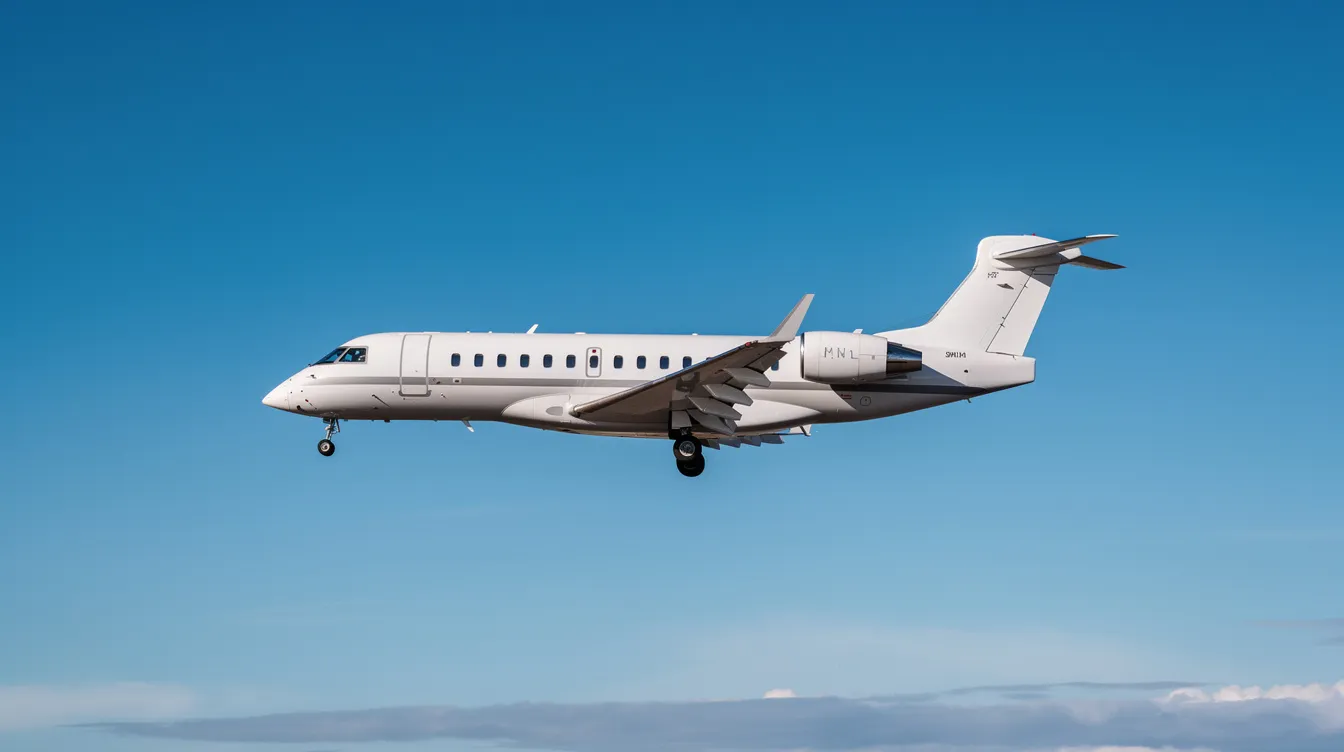
Regional airlines operate under their own brands or as regional affiliates of major carriers, complementing dense private charter markets in hubs like Atlanta, Georgia private jet charter. Operators like SkyWest (500+ regional jets, 2,400+ daily departures), Republic Airways, and Air France Hop fly branded services such as American Eagle and United Express.
Regional jets are a vital component of the aviation ecosystem, extensively utilized by airlines for connecting routes within regions or continents, including busy private and commercial corridors such as Chennai, Tamil Nadu private jet routes. These aircraft serve as a bridge between smaller turboprop aircraft and larger single-aisle jets, making them essential for airlines to operate economically on shorter routes.
Typical mission profiles include:
Hub-and-spoke feeder services (Atlanta to Asheville, Chicago to Cleveland)
Point-to-point routes between secondary cities (New York to Rochester)
High-frequency shuttle services on dense business corridors (Frankfurt to Nuremberg)
Regional jets play a crucial role in the strategic network development of airlines, providing vital links within and between regions that support local economies and enhance global connectivity. They often form 50–60% of daily departures at regional hubs, serving as a lifeline for smaller communities.
Regional jets require less runway length, allowing access to smaller, more local airports, which is especially valuable in markets like Kolkata, West Bengal, private jet operations. They typically need 4,500–6,000 ft runways versus 7,000+ ft for mainline narrowbodies. Most regional jets feature economy class only, with 31–32” seat pitch, though some carriers configure premium seating at the front with 8–12 business class seats.
Beyond airline schedules, regional jets are available as private charters, and there are now many ways to get a seat on a private jet easily. Jettly’s digital platform sources regional aircraft worldwide, offering access to over 20,000 private charter aircraft, including regional jets and turboprop aircraft.
Common charter use cases:
Corporate roadshows between multiple cities
Sports team travel (NBA, NFL teams regularly charter E175S and CRJ900s)
Incentive trips and music tours
Large family events and conference transfers
Booking through Jettly: Jettly also offers flexible private jet membership programs for frequent flyers.
Enter departure and arrival airports
Select dates and passenger count (30–100+)
Compare instant pricing across regional jets, turboprops, and business jets
Confirm and pay digitally
Charter advantages include schedule control, private terminal access, tools like Jettly’s airport locator for smaller airports, customized catering, and departures from smaller airports closer to offices. A 50-seat regional jet charter for a 500 nm round trip typically costs $25,000–$50,000, translating to $500–$1,000 per seat for larger groups, which you can refine further using Jettly’s private jet charter cost estimator tool.
Unlike traditional jet cards requiring $2M+ buy-ins or fractional ownership with minimum hour commitments, Jettly offers trip-by-trip pricing with no long-term commitment.
Regional jets and business jets both serve private charter markets but address different group sizes, and travelers can choose to buy a single seat on a private jet instead of chartering the entire aircraft. Regional jets typically carry 30–100 passengers in airline-style seating, while light, midsize, and heavy business jets accommodate 4–16 passengers in club-style layouts.
Cost comparison:
Regional jets may cost $4,000–$6,000 per flight hour total, working out to $50–$100 per seat for 70 passengers on a 1,000 nm sector. A midsize business jet costs approximately $5,000 per hour but serves only 8–10 passengers, resulting in $400–$600 per seat.
Some operators configure regional jets in VIP layouts with fewer, more spacious seats, onboard workspace, and enhanced in-flight catering services. Jettly can help locate these aircraft for groups seeking a comfortable journey with business-class amenities.
When to choose each:
Regional jet: Company offsite with 60 employees, sports team with equipment, music tour crew
Super midsize or heavy business jet: Executive leadership travel, small board meetings, long-range flights requiring transatlantic capability
The regional aircraft market is experiencing gradual upgauging from 50-seat to 70–100+ seat aircraft, improving cost per available seat mile by 15–20%. Airlines increasingly favor larger models for efficiency.
Regional jets face challenges such as fluctuating fuel prices, which can significantly impact operational costs and profitability. Environmental concerns are increasingly pressing for regional jets, prompting the industry to seek technological advancements to enhance efficiency and reduce emissions.
With CRJ production ended and the Mitsubishi SpaceJet canceled, future development concentrates on the Embraer E2 series (20% efficiency gains), Airbus A220, and new-generation turboprops like the ATR Evo.
The future of regional jets is leaning towards innovation in sustainability, with the exploration of electric propulsion and other green technologies to minimize their environmental footprint. Ampaire is testing hybrid-electric conversions targeting 50% fuel reduction.
Regional jets are categorized based on their seating capacity, range, and manufacturer, providing tailored solutions for airlines to efficiently serve regional networks, and they feature prominently among modern charter airlines and private operators. For charter travelers using Jettly, these trends may translate into quieter cabins, lower fuel burn, and potentially more modern regional jets entering the charter market over the next decade.
This section answers common questions for travelers considering regional jets through Jettly, and travel professionals can even earn via Jettly’s high-ticket affiliate partner program when referring new charter clients.
Regional jets meet identical international safety and certification standards as larger airliners, overseen by the FAA in the U.S. and EASA in Europe. Charter flights arranged through Jettly use certified operators with professionally trained crews who comply with strict maintenance regulations. U.S. accident rates for regional jets (0.15 per million departures, 2010–2023) are comparable to mainline aircraft.
Chartering a 50–90 seat regional jet for a short domestic round trip typically ranges from $20,000–$60,000 depending on distance, airport fees, and aircraft type. Total cost spread across passengers means $200–$800 per seat, often competitive with premium commercial tickets for corporate groups. For accurate, route-specific pricing, use Jettly’s instant quote tools.
Regional jets are designed to operate from 5,000–6,000 ft runways, shorter than mainline requirements but longer than light business jets need. Jettly’s team verifies runway length, performance limits, and local regulations before confirming operations. Popular regional airports like Aspen routinely handle CRJ700 operations.
Regional jets typically provide 200–400 cubic feet of hold baggage capacity, suitable for large groups with standard luggage. Oversized items like staging equipment or sports gear require advance confirmation. Share expected baggage volumes with Jettly during the quote process so appropriate aircraft can be selected.
Visit Jettly’s website, enter your route, date, and passenger details, then review available aircraft options, including regional jets and turboprops. Choose between on-demand booking or membership options based on travel frequency. Ready to experience private travel on your terms? Explore flight options or request a quote at https://www.jettly.com.
Regional jets play an essential role in modern aviation by connecting smaller cities to major hubs efficiently and economically. Their ability to operate from shorter runways and serve routes with lower passenger demand makes them indispensable in the regional market. For private travelers and groups seeking flexible, cost-effective charter options, regional jets offer a practical alternative to traditional business jets. Platforms like Jettly simplify access to these aircraft with transparent pricing, instant booking, and a wide selection of regional jets and turboprops worldwide.
As the regional jet market evolves, innovations in fuel consumption and sustainability will further enhance its appeal. Whether for corporate travel, sports teams, or family events, regional jets provide a valuable balance of comfort, convenience, and operational efficiency.
Ready to experience private travel on your terms? Explore regional jet charter options or request a personalized quote at https://www.jettly.com.
Share this post:
Jay Franco Serevilla
May 13, 2026
|
5
min read
Discover tips and trends in the industry.

5
min read
Best Time to Buy a Domestic Flight: Data-Backed Timing Tips for Cheap Flights
Knowing the best time to buy a domestic flight can save you hundreds of dollars. Booking 21-60 days in advance, flying midweek, and traveling during off-peak months are key strategies for securing the best fares. This guide provides data-backed tips for U.S. travelers looking to optimize their airfare.
Read More
5
min read
Lease a Cessna: How to Access Cessna Aircraft Without Buying
Leasing a Cessna aircraft provides an affordable alternative to ownership, allowing pilots, flight schools, and businesses to access various models without significant upfront costs. With options like dry and wet leases, operators can tailor agreements to their specific needs while enjoying predictable budgeting. For those seeking flexibility, platforms like Jettly offer on-demand charter services as a viable alternative.
Read MoreStay updated with our latest insights and tips to elevate your journey with us.
MEMBERSHIPS AND ASSOCIATIONS



Disclaimer: Jettly operates as a charter broker, offering access to a global digital jet charter marketplace. Jettly is not a direct air carrier and does not own or operate aircraft. All advertised flights are conducted by third-party air carriers that are fully licensed and hold the appropriate Part 135 or Part 121 certifications issued by the Federal Aviation Administration (FAA) or equivalent regulatory authorities under U.S. or foreign law. Jettly complies fully with the U.S. Department of Transportation's Part 295 and Part 298 Charter Broker regulations. Jettly does not carry additional liability insurance. Passengers are covered by aircraft operator insurance. TICO: 50023770


