



Login
Get Instant Pricing On 23,000+ Aircraft

>
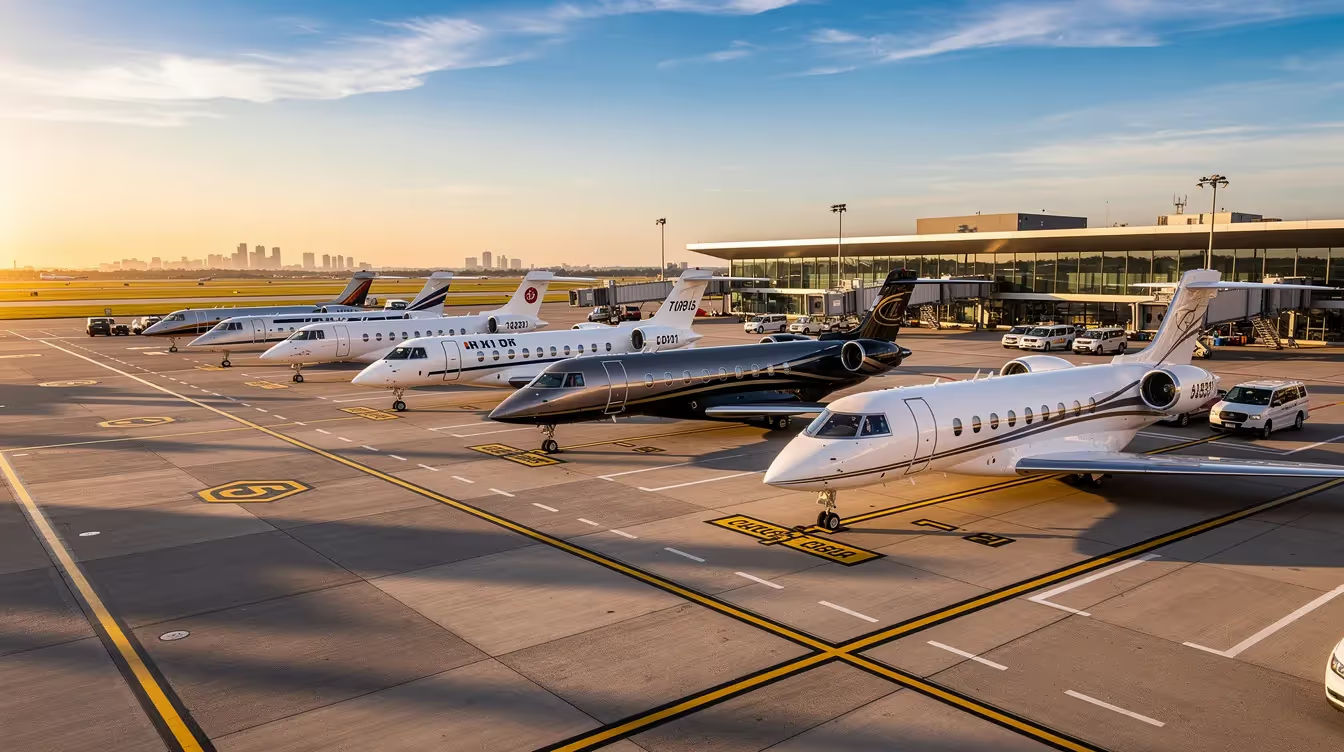
Private plane parking is a critical yet often overlooked aspect of private aviation. Whether for business or leisure, knowing where and how to park a private jet can influence travel convenience, costs, and overall trip planning. From short-term ramp spots to long-term hangar storage, each option offers different benefits and price points. This guide explores the essentials of private plane parking, typical fees at various airports, and how Jettly simplifies the process for travelers seeking flexible, transparent private jet charter solutions.
Private plane parking varies widely by airport type, aircraft size, wingspan, MTOW, and length of stay.
Major international airports and busy airports typically charge higher parking fees and handling fees than smaller regional or GA airports.
Real examples such as Teterboro, SFO, DFW, KLAX, and KTPA show overnight parking for a private jet can range from under $100 to several hundred dollars per day.
Some FBOs reduce or waive ramp fees when a minimum fuel purchase is met, especially for turboprops, light jets, and small aircraft.
Jettly helps travelers compare different airports, estimate total trip cost, and avoid unexpected charges by factoring parking, landing fees, and ground handling into charter quotes.
Private plane parking is one of the less visible parts of private aviation, but it matters. Every private jet trip needs a place for the aircraft to park, fuel, prepare, and wait for passengers or pilots.
For travelers, the good news is simple: when booking through Jettly, private plane parking is usually handled behind the scenes. The platform helps make the journey easier by showing more complete pricing and helping match the right airport, aircraft, and services to each trip.

Private plane parking refers to where a private jet, turboprop, or airplane stays on the ground at an airport. Parking a private plane requires planning and navigating options like outdoor tie-downs, enclosed hangars, or overnight transient parking.
These arrangements exist at an international airport, a regional airport, a local public airport, and a smaller airfield. The aircraft may stay on an open ramp, inside a hangar, or in a short-term transient area, depending on weather, space, security, and travel needs.
Fixed Base Operators, or FBOs, manage much of this process. A Communal FBO Apron/Ramp is the most common option at Fixed Base Operators (FBOs), providing immediate access to FBO terminals and ground services. Passengers usually use the FBO facility rather than airline gates, and understanding how renting a plane works helps clarify how these services fit into the overall travel experience.
Key terms include:
Ramp parking: open-air parking on the ramp or apron.
Overnight parking: parking that continues through the night or across multiple days.
Hangar storage: enclosed aircraft storage used to protect the plane from the weather.
Tie-downs: outdoor spots where an aircraft is secured to the ground.
Handling fees: charges for marshaling, towing, chocks, GPU, cleaning, and support.
Landing fees: airport charges are often based on aircraft weight.
Facility or security fees: charges tied to amenities, access control, or terminal use.
Outdoor Tie-Downs are the most basic and economical parking option for aircraft, secured to the ground using ropes or chains. Transient Ramp Parking is short-term, open-air parking available on a day-to-day basis.
For charter travelers using Jettly, private plane parking is not normally something they pay for directly at the counter. Standard parking fees, ramp fees, landing, and handling are typically included in the overall trip quote unless stated otherwise, and tools like Jettly’s private jet charter cost estimator help travelers understand how these items fit into total trip pricing.
Private plane parking fees vary significantly based on the airport, aircraft size, and length of stay, with major commercial airports typically charging higher fees than smaller regional airports. Prices also change as FBOs revise schedules, fuel rates, and airport charges.
At The Ohio State University Airport (KOSU), published 2026 fees show a size-based structure. Ramp fees can start around $10 per night for very small GA aircraft and rise sharply for larger aircraft, with waivers tied to minimum fuel purchases. This shows how even a single airport can price private plane parking by aircraft footprint. See the airport’s published fuel prices and fees.
At Dallas/Fort Worth International Airport (DFW), corporate aviation parking fees start at $100 per 24 hours for private jets, with larger aircraft incurring fees over $200 for the same period. A light to midsize jet may start around $100–$150 per day, while larger jets can climb above $200–$300 during peak periods.
At San Francisco International (KSFO), GA aircraft up to around 10,000 lbs may pay in the $60–$80 range for an 8-hour stay. Heavier private jets are often charged at higher commercial or weight-based rates, so the final cost depends on MTOW, wingspan, and time on the ground.
Teterboro Airport (KTEB), a major New York-area private aviation hub, is different from a quiet regional airport. Ramp parking for lighter business jets may start around $45–$75 per 8 hours and increase with weight, length of stay, FBO policy, and demand.
A few practical comparisons help set expectations for travelers evaluating the best private jet charter companies and the fees they may encounter at different airports:
At mid-sized US regional airports as of 2025, overnight ramp parking for a light jet might run $50–$100 per night, often discounted if a minimum fuel volume is purchased.
On average, private jet owners typically pay between $75 and $150 per night for ramp parking, while hangar storage tends to cost more depending on availability and the size of the aircraft.
|
Airport |
Aircraft Type |
Parking Type |
Typical Fee Range |
Notes |
|---|---|---|---|---|
|
Dallas/Fort Worth (DFW) |
Light to Midsize Jet |
Overnight Ramp |
$100–$150 per 24 hrs |
Larger jets pay over $200 per day |
|
San Francisco (SFO) |
GA Aircraft up to 10,000 lbs |
8-Hour Ramp |
$60–$80 |
Heavier jets charged higher |
|
Teterboro (TEB) |
Light Business Jet |
8-Hour Ramp |
$45–$75 |
Fees increase with weight and stay lengthThe |
|
Ohio State University (KOSU) |
Small GA Aircraft |
Overnight Ramp |
Starting at $10 per night |
Fuel purchase can waive fees |
|
Los Angeles (KLAX) |
Business Jet |
GA Ramp |
Varies, typically $100+ |
Parking near Terminal West |
Private jets rarely park at regular airline gates. Those gates are designed for scheduled airline traffic, jet bridges, and commercial passenger flow. Private aircraft usually park on GA ramps, dedicated business aviation terminals, or specialized private jet areas.
At KLAX, business jets typically park on the GA ramp area near the west side of the field, often associated with private operations around “Terminal West.” They do not normally use airline concourses or cargo aprons. At KTPA in Tampa, the International Jet Center shares the KTPA code but operates separately from the main passenger terminal, with its own ramp for private planes.
At London Heathrow (EGLL), most private jet traffic is limited by slot restrictions and the red tape involved in operating at one of the world’s busiest airports. When allowed, aircraft are handled through business aviation stands managed by FBOs, separate from airline gates, similar to how regional hubs like private jet charter in Kolkata, West Bengal route passengers through dedicated terminals and ramps.
Pilots and operators receive parking stand or “GA gate” assignments from the FBO or airport authority.
Simulators such as Infinite Flight may mark GA or private jet spots for realism, but real-world assignments depend on availability, slots, and security.
Some areas are off limits to passengers, owners, or crew unless authorized by the airport or FBO.

The main cost drivers are location, aircraft type, and the services required. Private plane parking at a high-demand city hub will usually cost more than parking at a quiet field with more space. When evaluating hangar locations, it’s important to consider not just the upfront price but the total money spent over time, including operational costs and long-term savings.
Landing and parking fees scale significantly with an aircraft’s Maximum Takeoff Weight (MTOW) and wingspan. A Citation CJ3 or Pilatus PC-12 occupies less ramp space than a Gulfstream G650 or Global 7500, so larger aircraft and larger jets usually pay higher fees.
Duration matters too. Same-day quick turns of 2–8 hours may have lower fees, especially with fuel. Overnight parking and multi-day stays add up quickly because each night can generate another ramp or hangar charge.
International airports such as KSFO, KDFW, and EGLL often charge more because of congestion, security overhead, runways, staffing, and limited ramp space. Smaller airfields can be cheaper and may offer affordable options for travelers whose destination is not tied to one specific airport, especially for those focused on affordable private jet charter and overall trip value.
FBO policies also affect the bill. Some facilities waive ramp fees if the operator buys a minimum fuel amount. Thresholds can range from around 20 gallons for piston aircraft to 150–350 gallons for light to heavy jets.
Additional expenses may include:
Ground handling and towing
GPU or air conditioning carts
De-icing in winter weather
After-hours callout fees
Customs support
Security or facility charges
Crew transportation, hotel, and ground transportation
For example, a light jet at an international airport may pay a few hundred dollars for a night of ramp parking and handling. A heavy jet at the same airport may pay several hundred dollars more due to size, fuel requirements, and service needs.
Many FBOs publish private plane parking rates alongside fuel minimums. The idea is simple: buy enough fuel, and certain ramp or handling fees may be reduced or waived.
Single-engine piston aircraft, such as a Cessna 172 or Piper Cherokee, may have low-cost parking or free parking if the operator buys around 20 gallons of avgas. At many public airports, this keeps the cost manageable for training, family trips, or short hops.
Light multi-engine and cabin-class piston aircraft, such as a Piper Seminole, Cessna 310, or Piper Navajo, may see fuel minimums around 50–75 gallons to waive ramp fees. These aircraft need more space than a small trainer, but still cost less to park than most jets.
Turboprops and light jets, such as a King Air 200, Pilatus PC-12, Citation CJ series, or Lear 35, often face fuel minimums around 125–150 gallons for fee waivers or discounted parking. Auburn’s 2025 FBO fee schedule, for example, shows how facility fees, overnight ramp fees, and fuel minimums can vary by aircraft class. See Auburn University Regional Airport’s published FBO fees.
Mid-size and heavy jet examples, such as a Hawker 800, Challenger 604, or Gulfstream G550, may have 250–350 gallon minimums. If fuel is not purchased, ramp fees can exceed $500 per day at some locations.
As of late 2025, at some US FBOs, published “CAA” or contract fuel rates may include separate daytime parking charges if the minimum fuel volume is not met. Prices are adjusted periodically, so operators check current schedules during flight planning.
Short-term ramp parking works well for a quick trip. Long-term hangar storage is different. It is designed to protect the aircraft, preserve value, and support maintenance over time, whether the aircraft is managed directly by the owner or through a major operator such as NetJets, a leader in private aviation.
Shared/T-Hangars are communal, enclosed buildings that shelter aircraft from weather conditions and are ideal for long-term storage. Shared hangars provide a cost-effective solution for aircraft storage, allowing owners to benefit from professional storage without the premium costs associated with private facilities, while charter-focused flyers may instead choose a NetJets alternative like Jettly to avoid storage responsibilities altogether.
Corporate/Private Hangars offer maximum security, privacy, and climate control but are typically reserved for an owner’s personal or fleet use. A private hangar offers unmatched security, privacy, and control, protecting the aircraft from weather and potential damage from other aircraft or ground equipment, and some travelers instead rely on jet card programs to enjoy similar convenience without directly managing facilities.
Renting space in a shared hangar can cost a few thousand dollars per month, while a private hangar rental will be considerably more, reflecting the exclusivity and control it offers. In North America as of 2024–2025, smaller-market hangar rent can vary widely, while major business aviation hubs often command much higher prices.
Choosing between a private and shared hangar depends on specific needs, budget, and long-term goals, with private hangars being ideal for those prioritizing asset protection and discretion. Shared hangars vary from expansive open bays to more segmented, defined spaces, providing flexibility for owners who appreciate a communal environment.
A hangar’s primary job is to protect the aircraft from environmental damage, including UV rays, hail, and wind, while also providing a climate-controlled interior to safeguard sensitive electronic systems. Advanced climate control systems in hangars are essential for preserving the integrity of a jet’s sophisticated components, protecting them from extreme temperatures and humidity.
Modern hangars should be equipped with multi-layered security systems, including video surveillance, controlled access points, and robust perimeter fencing to protect against theft and unauthorized access. Top-tier hangars provide comprehensive security measures, including continuous 24/7 surveillance, controlled access through secure gates, and professional security personnel to ensure that only authorized individuals can reach the aircraft.
FBOs offer short-to-medium-term covered hangar space that provides protection from weather, sun damage, and freezing temperatures. A high-quality hangar is a crucial part of aircraft ownership, acting as a secure base that preserves your jet’s condition, value, and readiness, and understanding affordable airplane rent costs and options can help owners and pilots budget for both storage and flight time.
Key features every hangar should have include climate control to protect sensitive avionics and easy access to FBO services for fueling and flight planning. A full-service hangar integrates comprehensive services directly into its offerings, ensuring that aircraft are not just stored but also maintained, cleaned, and prepared for flight by an expert team.
Hangar homes and residential airparks are another niche option. These communities combine homes and private hangars with taxiway access, though FAA rules generally restrict full-time residential use inside standard hangars at federally funded airports. Regardless of where an aircraft is based, services like Jettly Eats in-flight catering can enhance the onboard experience once the plane leaves the hangar.
For charter users, this is one reason Jettly can be attractive. Passengers avoid ownership costs like hangar rent, insurance, maintenance, and long-term storage, while still paying for trip-related parking through transparent quotes, and some may even offset trip expenses by crowdsourcing private jet flights and sharing empty seats.

For most private jet trips, private plane parking is only one part of the total cost. Fuel, crew time, aircraft time, maintenance reserves, landing fees, and operational costs usually matter more.
Owners deal with fixed costs such as hangar rent, insurance, scheduled inspections, and crew. They also pay variable costs such as fuel, landing fees, parking fees, de-icing, crew hotels, and catering. Flying more hours can spread fixed costs across more trips, but it does not remove the responsibility to pay for the airplane, whether they choose outright ownership or a private jet lease arrangement.
A simple example helps. A business trip on a midsize jet may cost $20,000–$30,000 in total. Two or three nights of parking at a busy international airport might add a few hundred to a couple thousand dollars, depending on aircraft size, location, and services, especially if the traveler is using a jet card flight cost estimator to understand how airport-related charges influence overall hourly rates.
For Jettly travelers, those charges are typically bundled into the quoted trip price. That means the passenger does not need to negotiate ramp space, fuel purchase terms, or handling fees directly with the airport or FBO, while owners evaluating broader economics can look at how much a private jet really costs beyond parking alone.
Jettly is a digital private jet charter marketplace with access to more than 20,000 aircraft globally. The platform focuses on transparent pricing, flexible access, and faster booking for business and leisure travel.
When travelers search for a flight on Jettly, partner operators factor in expected landing fees, parking fees, handling fees, and ground services at different airports. This makes the quote more complete and helps travelers know what to expect before the trip is planned, especially when using Jettly’s airport locator tool to compare different fields around a destination.
Jettly can also help compare airports around a city. In New York, travelers may look at Teterboro, Newark, or White Plains. In Los Angeles, they may compare Van Nuys, LAX, or Burbank. The right choice depends on access, parking cost, slots, traffic, and the car ride after landing, fitting into the broader landscape of private and charter airlines and services that business and leisure travelers can choose from.
Many busy airports require prior notice or landing slots to guarantee parking availability, especially during peak travel seasons or at high-traffic destinations. Jettly helps reduce that red tape by coordinating with operators who understand airport requirements and FBO procedures, drawing on a global fleet of private charter aircraft that can access a wide range of GA fields.
Jettly’s membership and on-demand options suit frequent flyers who want private aviation without hangar homes, ownership maintenance, or long-term storage commitments. Jettly’s range of private jet memberships gives travelers flexible access to aircraft while operators in Jettly’s network follow safety and regulatory standards, and efficient ground handling can reduce unnecessary repositioning and minimize emissions.
Learn more about Jettly’s charter options at https://www.jettly.com.
This FAQ answers common private plane parking questions for charter customers, aircraft owners, and travelers comparing airports.
Yes. At busy airports, major events, holidays, and peak travel seasons, operators usually book ramp or hangar space well in advance. Quieter regional airports often have same-day availability, but advance planning is still the first step for a smooth flight.
Usually not. Most airports and operators do not allow unattended overnight stays on board for safety, noise, and security reasons. Short rest periods on the ground may be possible with crew and FBO coordination, but passengers normally leave the aircraft.
Often, yes. In Europe, the Middle East, and parts of Asia, busy international hubs can have higher handling and parking fees than comparable U.S. airports. Costs depend on local regulations, demand, available GA infrastructure, customs, security, and slot rules.
Travelers can choose alternate airports with lower GA fees, minimize overnight stays when practical, and avoid peak arrival times. Working with a platform like Jettly helps select efficient routing and airports that balance access, cost, and convenience.
For Jettly users, standard airport parking, landing, and ground handling charges are typically built into the charter price unless stated otherwise. This gives travelers a clearer all-in trip cost and reduces surprise fees.
Private plane parking affects every private flight, from a short business hop to a family vacation or emergency travel. Costs depend on airport location, aircraft size, fuel policy, hangar availability, and the number of hours or nights on the ground.
With Jettly, travelers can make private plane parking part of a smarter planning process rather than a hidden expense. Ready to experience private travel on your terms? Explore flight options or request a quote at https://www.jettly.com.
Share this post:
Jay Franco Serevilla
May 19, 2026
|
5
min read
Discover tips and trends in the industry.

5
min read
How Many Planes Crashed This Year? (2026 Update)
In 2026, aviation safety continues to improve, with over 600 aviation accidents reported in the U.S. by September, primarily involving small general aviation aircraft. Fatal accidents remain rare in commercial aviation, with only a handful of incidents globally. Understanding the context of these numbers is crucial for travelers concerned about flying safety.
Read More
5
min read
Passenger Airline Crashes: History, Safety, and What Modern Travelers Should Know
Passenger airline crashes are rare, with commercial aviation being the safest mode of mass transportation today. In 2023, there were zero fatal accidents involving passenger jets, highlighting the effectiveness of safety regulations and advancements in technology. This article explores the history of airline crashes, safety measures, and what travelers should know about aviation safety.
Read MoreStay updated with our latest insights and tips to elevate your journey with us.
MEMBERSHIPS AND ASSOCIATIONS



Disclaimer: Jettly operates as a charter broker, offering access to a global digital jet charter marketplace. Jettly is not a direct air carrier and does not own or operate aircraft. All advertised flights are conducted by third-party air carriers that are fully licensed and hold the appropriate Part 135 or Part 121 certifications issued by the Federal Aviation Administration (FAA) or equivalent regulatory authorities under U.S. or foreign law. Jettly complies fully with the U.S. Department of Transportation's Part 295 and Part 298 Charter Broker regulations. Jettly does not carry additional liability insurance. Passengers are covered by aircraft operator insurance. TICO: 50023770


